Latex Mattress Benefits Explained for Better Sleep


A restless night can make the mattress feel like the obvious suspect. Someone in Norwich may fall asleep comfortably, wake with a sore shoulder or hip, then spend the early morning shifting position because the bed feels warm and unresponsive. The material beneath the sheets matters because it controls how the body is cushioned, supported, ventilated, and allowed to move.
Latex mattresses have earned attention for a distinctive combination of pressure relief, buoyant support, airflow, durability, and resistance to common household allergens. Those benefits don't feel identical to every sleeper, though. A side sleeper may notice less pressure at the shoulder, while a combination sleeper may value latex's easier movement more than its springy feel.
This guide explains the material in plain language, then applies it to the decisions families face in the showroom. It covers natural, synthetic, blended, all-latex, and hybrid designs without assuming that one construction suits everyone. Readers comparing options can also use this guide to choosing a mattress before visiting a local sleep department.
At Gorins, the Norwich showroom gives shoppers a chance to compare comfort by feel rather than rely entirely on an online description. A person can lie in a usual sleeping position, notice how quickly the surface responds, and compare temperature and support across different mattress designs without sales pressure.
Introduction to Latex Mattress Benefits for Everyday Sleep
Latex's appeal starts with what happens after the body settles onto the bed. Instead of allowing the sleeper to sink slowly into a deep impression, latex usually cushions the body while pushing back with a gentle, buoyant quality. That combination can feel supportive without creating the trapped sensation some people associate with slower foams.
Five practical benefits
The first benefit is more even pressure distribution. A mattress that spreads weight across a broader area can reduce the concentrated pressure that side sleepers often feel at the shoulder and hip. A peer-reviewed 2016 study found that latex reduced peak body pressure and distributed pressure more evenly than polyurethane foam in front, side, and back sleeping positions, with significantly lower mean peak contact pressures at the torso and buttocks on the latex mattress. The authors connected that lower-pressure profile with the potential for improved sleep comfort and quality. Read the peer-reviewed pressure study
The second is responsive support. Latex tends to recover its shape quickly when a sleeper turns, gets out of bed, or changes from back sleeping to side sleeping. The third is air movement, because open-cell latex allows air to travel through the material and can help limit heat buildup. This explanation of latex's open-cell airflow describes why the material can feel cooler than denser foams.
A fourth advantage is resilient comfort over time, while a fifth is resistance to dust mites, mold, and mildew in the foam structure. That last point needs a careful qualification, especially for households with a known latex allergy.
Practical rule: A latex mattress should feel gently lifting, not like a soft surface that swallows the sleeper.
The right choice still depends on sleeping position, preferred firmness, body shape, and whether a shopper wants an all-latex bed or a hybrid with coils. The next step is understanding how the material is produced, because the label alone doesn't tell the whole comfort story.
What Latex Mattresses Are and How They Are Made
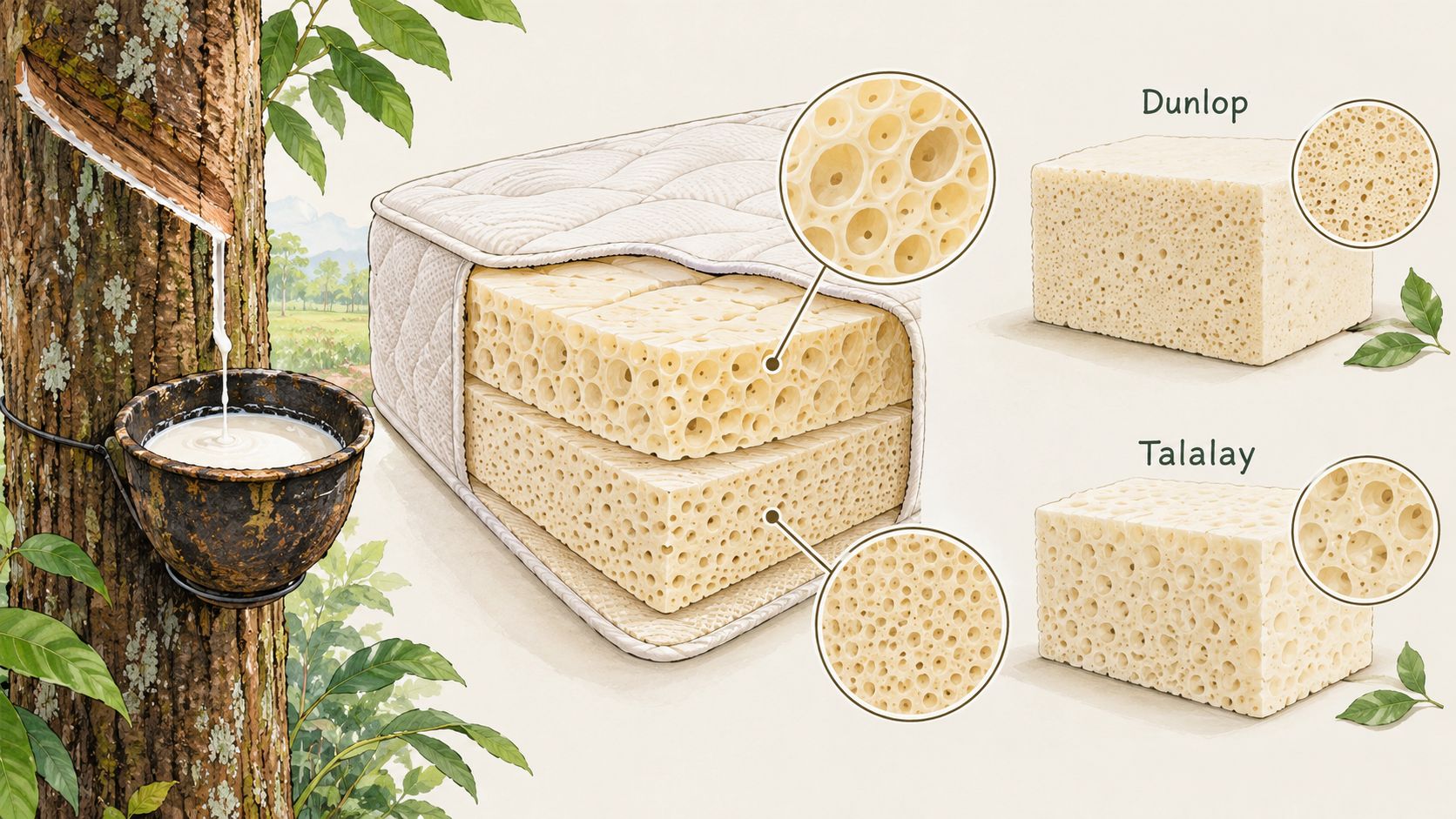
Latex is a resilient foam made from rubber. Natural latex comes from rubber tree sap, while synthetic latex is manufactured through a different process. Some mattress designs use a blend, so the word “latex” on a label doesn't automatically mean the entire bed contains natural rubber.
Latex has a long commercial history. The first latex mattress was sold by Dunlop in the early 1930s, and in 1935 latex mattresses were sold to Sears, Roebuck & Co. by Ansil Talalay and Joseph Leon, who later developed the Talalay process. This mattress history explains latex's early commercial development
Dunlop and Talalay in simple terms
The two major manufacturing processes are Dunlop and Talalay. Both create latex foam, but the process changes the finished feel.
Dunlop latex is generally denser and can feel more grounded. It often works well in a support core, where the sleeper wants a stable foundation. Talalay latex is commonly associated with a more uniform, buoyant feel and may be used in a comfort layer when a softer, lighter response is preferred. These are useful tendencies, not rules, because the final feel also depends on the layer thickness, firmness, cover, and support system.
A kitchen sponge offers a simple comparison. A dense sponge pushes back quickly and feels substantial under the hand. A more open, evenly aerated sponge compresses more easily and rebounds with a lighter sensation. Latex foam has its own construction characteristics, but the analogy helps explain why two mattresses made with the same broad material category can feel noticeably different.
All-latex and hybrid construction
An all-latex mattress uses latex throughout its comfort and support layers. A hybrid latex mattress pairs latex comfort layers with a coil support system. The coil unit can add a more traditional spring response, while latex supplies surface cushioning and pressure relief.
Shoppers may also encounter natural, synthetic, and blended latex labels. Natural latex emphasizes rubber tree sap as the raw material. Synthetic latex imitates some of latex's performance characteristics using manufactured rubber. Blended designs combine natural and synthetic components. Asking which layers contain which type is more useful than judging the product name alone.
Core Latex Mattress Benefits You Can Feel Every Night
At Gorins, the clearest latex benefits appear during a showroom test. Lie in your usual sleep position, notice whether your shoulder or hip feels supported, then roll to the other side. Latex changes how weight settles, how quickly the surface recovers, how air moves, and how easily the bed responds to movement.
Pressure relief without the stuck feeling
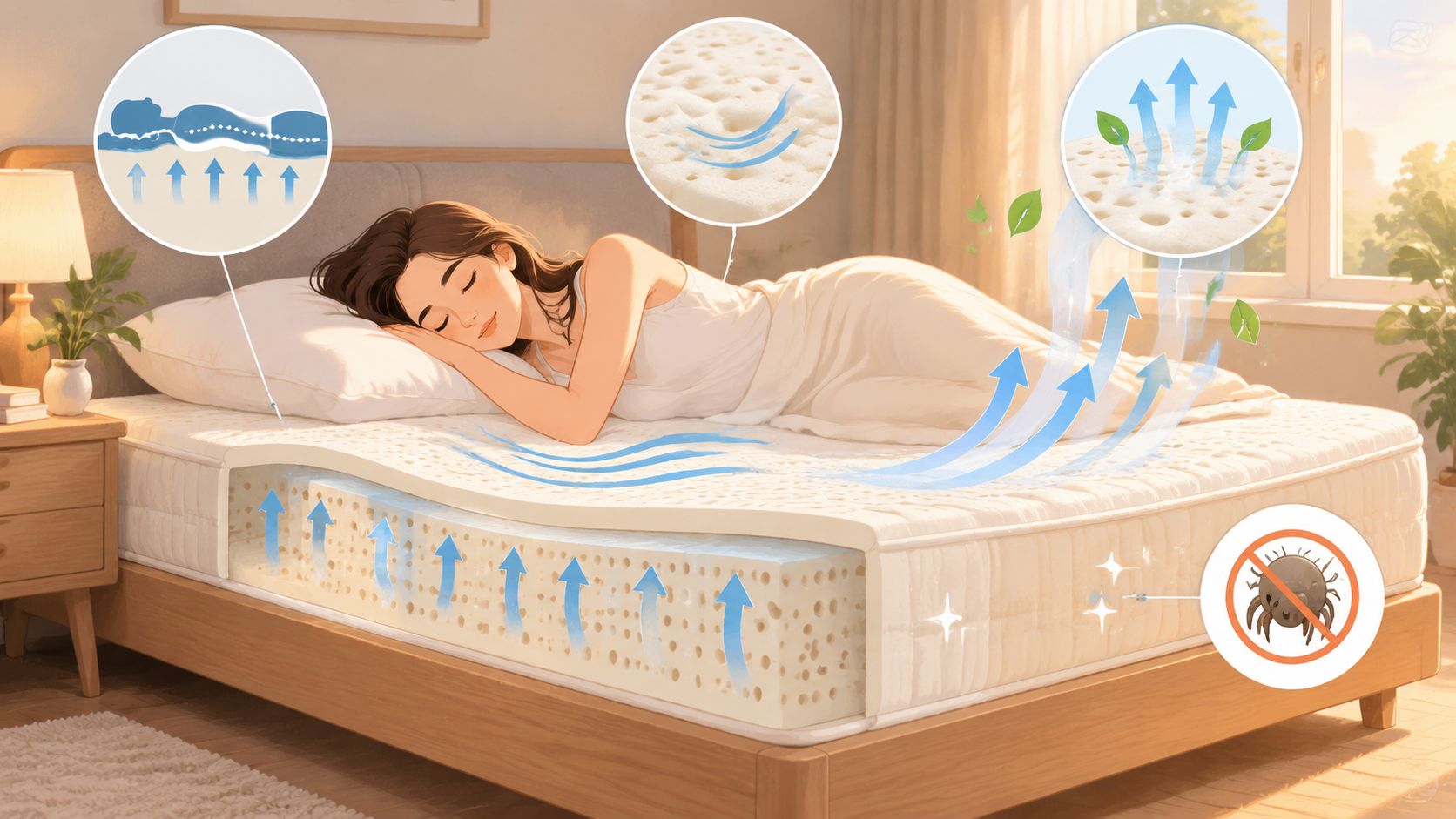
A latex comfort layer can shape itself around heavier areas without creating the deep, slow hug associated with some memory foam. Its structure lets weight settle while the surface remains responsive, so sleepers who dislike feeling held in one position may find movement easier.
The 2016 peer-reviewed study found lower mean peak body contact pressures at the torso and buttocks on latex than on polyurethane foam across front, side, and back postures. The study's findings on pressure distribution support a useful showroom observation: latex can cushion the body while still feeling supportive.
A pressure-relieving mattress doesn't need to feel soft everywhere. It needs to cushion sensitive areas while keeping the body supported.
A side sleeper may notice the difference around the shoulder and hip. A back sleeper may feel steadier support beneath the torso without a sharp pressure point. Firmness and layer thickness still matter, so the most comfortable latex mattress is the one that allows enough contouring without letting the body sink too far.
Responsive movement
Latex has a buoyant response and generally rebounds as the sleeper moves. Rolling from one side to the other can therefore feel easier than on a slower, more enveloping surface. Combination sleepers often appreciate this quality because changing positions does not require pushing through a heavy-feeling comfort layer.
A field study tracking more than 1,500 nights associated switching to a latex foam mattress with a 3-minute faster average sleep onset latency and a 2% increase in BodyScore, described in the study as age- and gender-normalized deep sleep. Participants also reported fewer nights of tossing and turning and fewer aches and pains. See the sleep study summary and its measured outcomes
These findings describe an association, not a promise for every sleeper. In practical terms, latex may help some people settle and move more comfortably, while personal fit remains the deciding factor.
Airflow and cooler nights
Natural latex has an open-cell structure that permits air movement through the foam. This can reduce heat buildup compared with denser materials that hold warmth close to the sleeper. The cover, bedding, bedroom temperature, and support system also shape the final experience.
Hot sleepers should remain on a mattress long enough to notice whether warmth builds under the body. A quick hand press cannot reveal that. At a Gorins showroom, comparing latex with dense foam and a coil-based hybrid can make differences in airflow and surface temperature easier to recognize.
Resilient support
Latex recovers its shape after pressure, which contributes to its reputation for durable support. It can feel stable beneath the body while retaining some springiness instead of staying permanently compressed after ordinary movement. Construction quality, foundation support, body weight, and care all affect performance over time.
A cleaner-feeling sleep surface, with an allergy warning
Latex is often considered by allergy-prone sleepers because its structure can resist dust mites, mold, and mildew. That does not make every latex bed suitable for every person. A PubMed-indexed paper notes that natural rubber mattresses contain latex allergens and may create a sensitization risk for people with latex allergy. Review the latex allergy caution
Anyone with a diagnosed latex allergy should discuss the material with a qualified healthcare professional and review the mattress construction carefully. Allergy resistance and allergy safety are different considerations.
Shoppers adjusting surface comfort rather than replacing the entire bed can review this mattress topper benefits guide to decide whether a topper may be a suitable change.
All Latex Versus Hybrid Latex Mattresses Compared
The material is only part of the decision. A mattress is a system, and the support core changes how latex feels. An all-latex design tends to offer a more consistent foam response from top to bottom, while a hybrid combines latex cushioning with coils that can add lift, edge structure, and a familiar spring sensation.
Recent market coverage places hybrid latex mattresses at roughly 30% to 35% of U.S. latex mattress demand, while direct-to-consumer e-commerce represents an estimated 40% to 50% of sales by value. Review the market coverage of hybrid demand and online purchasing These figures help explain why shoppers increasingly compare complete constructions rather than asking whether latex is good in isolation.
All-Latex vs Hybrid Latex At a Glance
| Feature | All-Latex Mattress | Hybrid Latex Mattress |
|---|---|---|
| Surface feel | Consistent, buoyant foam response | Latex comfort with a more pronounced spring response |
| Support | Layered latex support | Latex paired with a coil support system |
| Pressure relief | Tuned through latex layer thickness and firmness | Latex cushions pressure while coils provide underlying lift |
| Temperature | Open-cell latex can support airflow | Latex airflow combines with the ventilation of a coil unit |
| Movement | Responsive and steady | Often feels lively because of the coil system |
| Edge experience | Depends on the mattress's latex design | Coils may provide a more structured perimeter |
| Weight | Can be substantial because of dense foam layers | Also varies, with coils adding structure |
| Value question | Pays for a consistent latex construction | May offer a different balance of latex, coils, and price |
An all-latex bed may suit a sleeper who wants the material's characteristic feel throughout the mattress and prefers a quieter, more uniform surface. A hybrid can appeal to someone who wants latex pressure relief but also likes the lift and edge support associated with coils.
The choice becomes simpler when framed around lifestyle. A person who wants a pure latex sensation can test all-latex first. A couple who prefers stronger perimeter support or a springier feel can include hybrids in the comparison. A hybrid mattress guide can provide useful background before a showroom visit.
Who Benefits Most Based on Sleep Position and Health Needs
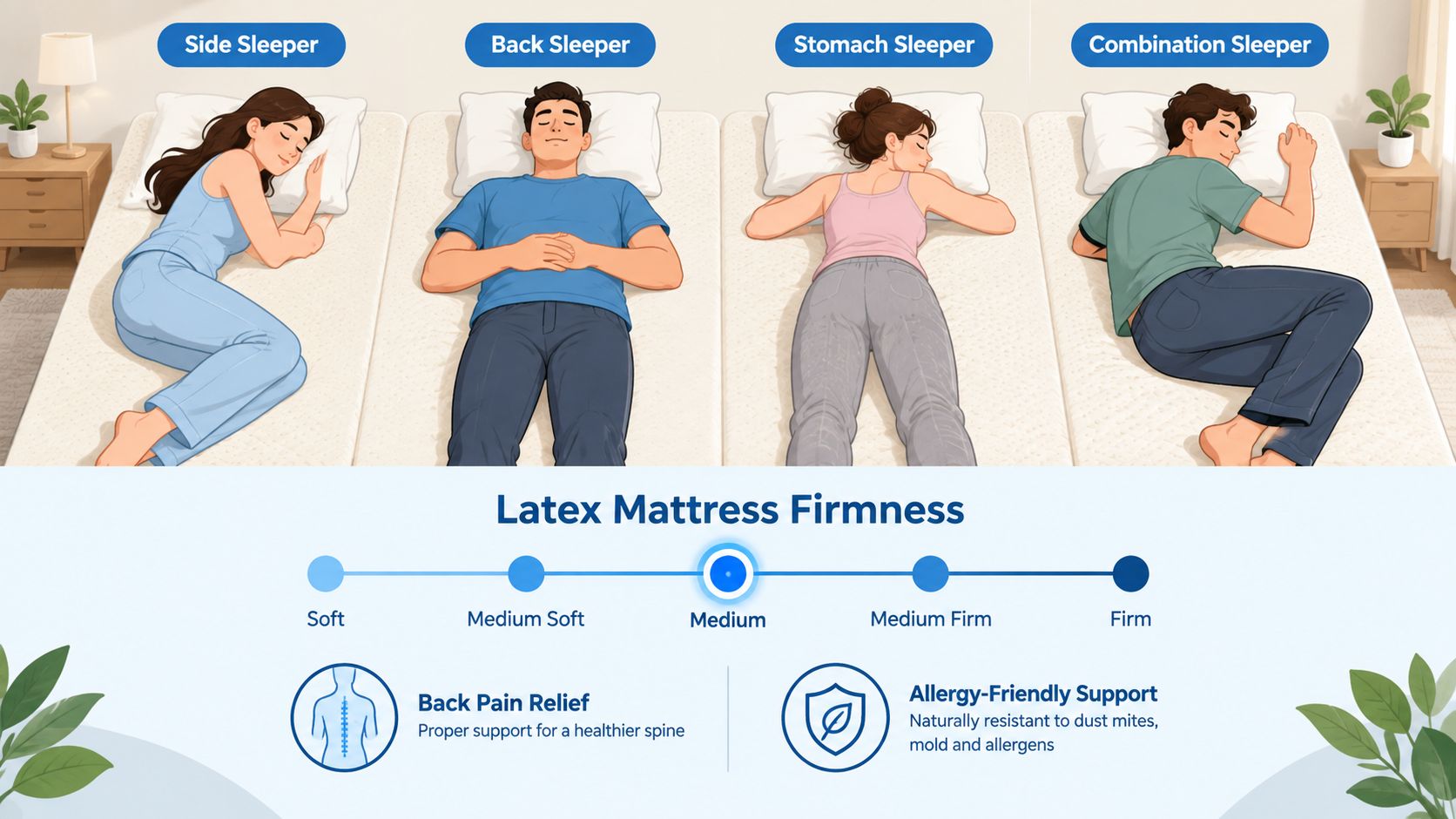
A latex mattress can suit several sleeping styles, but firmness matters more than the material name alone. The same latex construction may feel comfortably supportive to one person and too firm or too yielding to another.
Position-based starting points
- Side sleepers: A softer Talalay comfort layer may help cushion the shoulder and hip while the support core prevents excessive sinking. The shoulder should settle without the waist losing support.
- Back sleepers: A medium, balanced feel can support the torso while allowing enough contouring around the lower back. A denser Dunlop core may appeal to sleepers who prefer a steadier base.
- Stomach sleepers: A firmer design can help limit excessive sinking through the midsection. The surface should feel supportive rather than hammock-like.
- Combination sleepers: Responsive latex can make position changes easier. A medium feel often provides a practical starting point, but the sleeper's body shape and preferred pressure relief still decide the final choice.
People managing back, hip, or shoulder discomfort should focus on pressure distribution and neutral alignment rather than selecting the softest mattress available. The 2016 study's findings across front, side, and back positions show why latex deserves consideration for more than one sleep posture, but a mattress can't diagnose or treat a medical condition.
Neck comfort also depends on the pillow, not only the mattress. Readers looking at position guidance can find additional context in this resource on sleeping positions for neck pain, then test the mattress with a pillow that resembles the one used at home.
Matching household needs
Hot sleepers may prefer latex's open-cell airflow, while allergy-prone households should ask about covers, materials, and the latex allergy caution described earlier. Couples need to test movement transfer directly. Latex is responsive, so one partner may feel more surface movement than on a very slow foam design, even when the mattress absorbs some disturbance.
A body-type mattress guide can help organize the decision, but no chart replaces lying down in the usual sleep position. At the Sleep Gallery, shoppers can compare comfort by feel across Tempur-Pedic, Serta, and Beautyrest, while considering whether a latex-style response suits their healthier sleep goals.
Common Concerns About Latex Mattresses Answered
Latex can sound ideal until shoppers encounter questions about price, firmness, smell, or allergies. Those concerns deserve direct answers. Investment-grade quality only makes sense when the construction matches the sleeper's needs.
Myth versus reality
Myth: Every latex mattress feels hard.
Reality: Latex comes in different firmnesses and layer designs. A softer comfort layer can create cushioning, while a firmer core supplies underlying support. Talalay and Dunlop constructions may also produce different sensations, so a label can't replace an in-person test.
Myth: Latex feels like memory foam.
Reality: Latex usually feels more buoyant and responsive. It can contour around the body, but many sleepers notice less of the slow sink-in sensation. Gorins' mattress guidance describes latex foam beds as bouncy and pressure relieving without the deeper sink associated with memory foam.
Myth: A higher price automatically means better value.
Reality: Price should be weighed against construction, comfort, durability expectations, warranty terms, and the likelihood that the mattress will suit the sleeper. A cheaper mattress that causes repeated pressure or overheating may be poor value, while a well-matched latex design can represent affordable luxury and a long-term comfort investment.
Myth: Natural means risk-free for everyone.
Reality: Natural latex may appeal to shoppers seeking a rubber-tree-derived material, but natural rubber mattresses contain latex allergens. People with a known latex allergy should seek professional guidance before purchase and confirm the materials used.
Myth: A new latex mattress must have no smell.
Reality: New materials can have an odor, and the experience varies by product and person. Shoppers concerned about scent should ask about the cover, materials, and recommended airing process instead of assuming that “natural” guarantees an odor-free arrival.
Confidence comes from understanding trade-offs. The goal isn't to find the cheapest option or the softest surface. It's to find a construction that supports the sleeper's body, temperature preferences, movement habits, and household requirements.
How to Choose Try and Care for Your Latex Mattress at Gorins
A showroom test should resemble real sleep as closely as possible. Shoppers in Norwich can bring awareness of their usual position, pillow height, and pressure points rather than judging a mattress after a quick sit on the edge.
A practical testing checklist
- Lie in the usual position. Spend enough time on the side, back, or stomach to notice pressure and alignment.
- Change positions. Notice whether the surface rebounds easily or makes movement feel restricted.
- Test the perimeter. Sit and lie near the edge to assess how stable the mattress feels.
- Ask about layers. Confirm whether the design uses Dunlop, Talalay, natural, synthetic, blended, or coil components.
- Compare constructions. Try an all-latex design beside a hybrid so the difference becomes physical rather than theoretical.
- Discuss the foundation. A supportive base helps the mattress perform as intended.
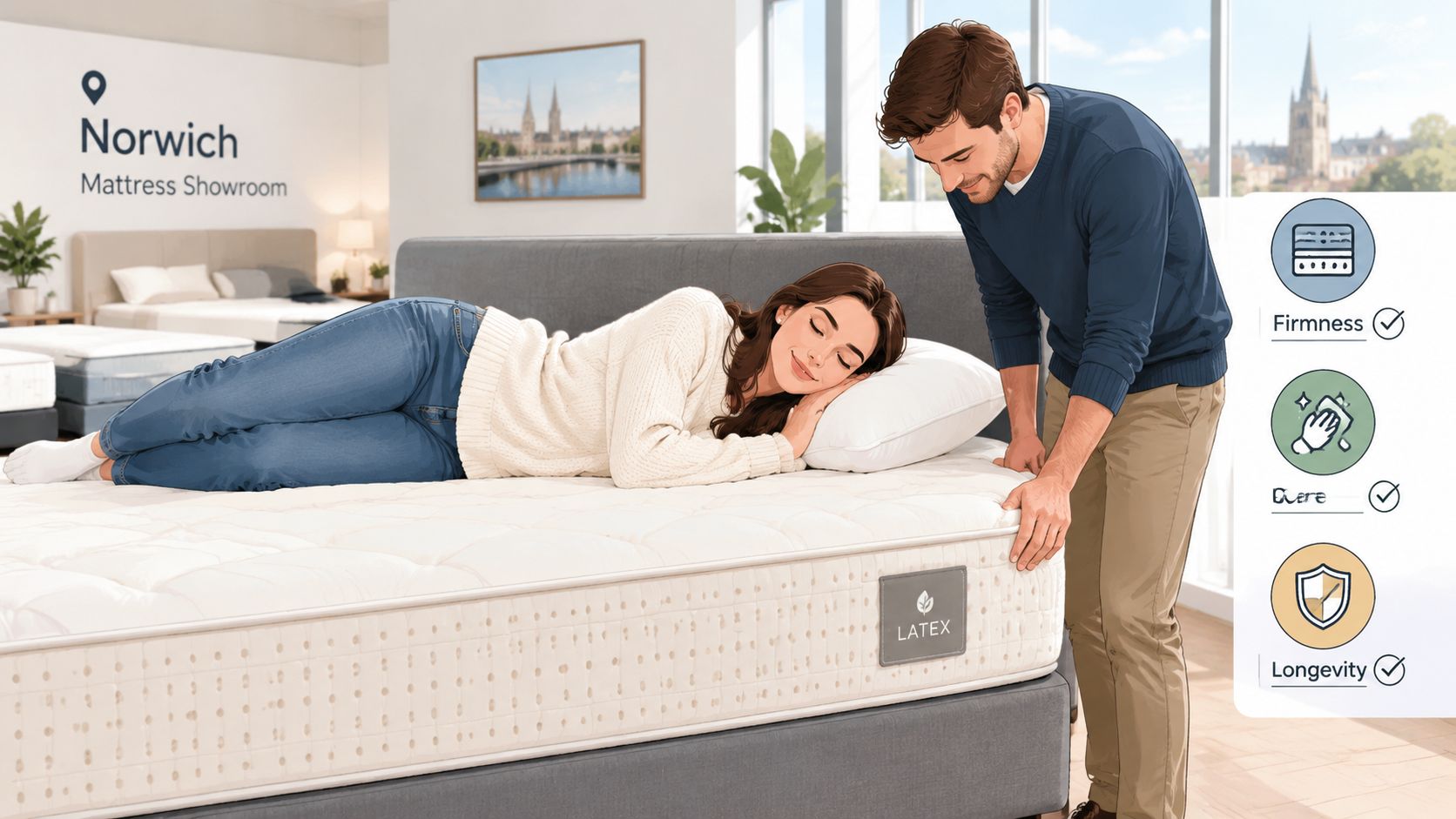
Care starts with a breathable protector, gentle spot cleaning, and a sturdy base. Direct sunlight and harsh cleaners can damage materials, so the care instructions should guide cleaning and handling. Regularly checking the surface and support system can help protect the comfort investment.
Gorins Furniture & Mattress offers Promotional Financing with equal monthly payments, subject to applicable approval and terms, which can make a larger sleep purchase easier to plan. The locally owned showroom serves Norwich, New London, Plainfield, Waterford, and surrounding Eastern Connecticut and Rhode Island communities, with guidance focused on comfort by feel rather than pressure.
Since 1936, Gorins Furniture & Mattress has helped Norwich and Eastern CT families create homes they love. From custom-designed Canadel dining sets to the latest in Tempur-Pedic sleep technology, they combine a massive selection with the personalized care only a local, family-owned business can provide. Visit them today to experience quality, value, and their 5-Star Delivery service.
Norwich sleepers can visit Gorins Furniture & Mattress to compare latex-style comfort, all-latex and hybrid constructions, and trusted Sleep Gallery options in person. The showroom team can also help with mattress guidance, Promotional Financing with equal monthly payments, the online Style Quiz, and Clearance options for value-driven savings.