Hybrid Mattress vs Innerspring: A Norwich Expert’s Guide

A lot of mattress shoppers in Norwich start in the same place. They walk into a showroom, see a row of beds that look almost identical, and hear terms like “hybrid” and “innerspring” as if the difference should be obvious.
It usually isn't.
One mattress feels cushioned at first touch. Another feels springier and flatter. One salesperson talks about pressure relief. Another mentions support. After a few minutes, many shoppers are left wondering whether they're comparing two different mattress types or just two versions of the same thing.
That confusion matters because the right mattress can make sleep feel easier night after night, while the wrong one can leave a sleeper tossing, shifting, and waking up sore. For families across Norwich and surrounding Eastern CT communities, a mattress isn't just another household purchase. It's part of daily wellness, comfort, and long-term value.
Since 1936, Gorins has helped local families sort through choices like these with a practical, no-pressure approach. The goal isn't to make mattress shopping sound complicated. The goal is to make the differences easy to feel, easy to understand, and easier to match to real sleep habits at home.
Table of Contents
- Choosing Your Next Mattress in Norwich
- The Building Blocks of Hybrid and Innerspring Beds
- A Side by Side Comparison Feel Support and More
- Which Mattress Is Best for Your Sleep Style
- How to Test a Mattress in Our Norwich Showroom
- Your Mattress as an Investment Durability and Value
- Find Your Perfect Sleep at Gorins Furniture
Choosing Your Next Mattress in Norwich
A common local shopping story goes like this. A couple from Norwich replaces a mattress after years of saying they'll “deal with it later.” They arrive expecting to pick a firmness, maybe compare a few brands, and head home. Instead, they run into a bigger question first. Should they even be looking at a hybrid or an innerspring?
That question is more important than many people realize. It shapes how the mattress responds under the shoulders, hips, lower back, and even how much one sleeper notices the other turning at night. It also affects how the bed feels in the first ten seconds and how it feels after a full night of sleep.
For shoppers who want a simple starting point, this mattress selection guide from Gorins helps narrow the field before anyone starts comparing surface fabrics or sales tags. It brings the focus back to what matters most. Body type, sleeping position, comfort preference, and budget.
A mattress category name isn't just a label. It's a clue to how the bed is built and how it will likely feel at home.
That's why the hybrid mattress vs innerspring debate is worth slowing down for. A shopper who likes a buoyant, lifted feel may react very differently from someone who wants more cushioning around the shoulders and hips. Both preferences are valid. They just point toward different constructions.
Families in Norwich, New London, Plainfield, and Waterford often want the same thing from this process. Clear information, enough time to try the beds properly, and guidance that translates industry language into something practical. Terms like support core, comfort layer, pressure relief, and motion isolation sound technical until they're tied to what a sleeper feels in real life.
What tends to confuse shoppers most
- Both mattress types use coils: That makes them look related from the outside.
- Showroom labels can sound similar: “Firm,” “plush,” and “supportive” can appear on both.
- Initial feel can be misleading: A bed that feels fine for one minute may feel very different after ten.
Once the construction becomes clearer, the choice usually gets easier. The next step is seeing what's inside each type of mattress.
The Building Blocks of Hybrid and Innerspring Beds
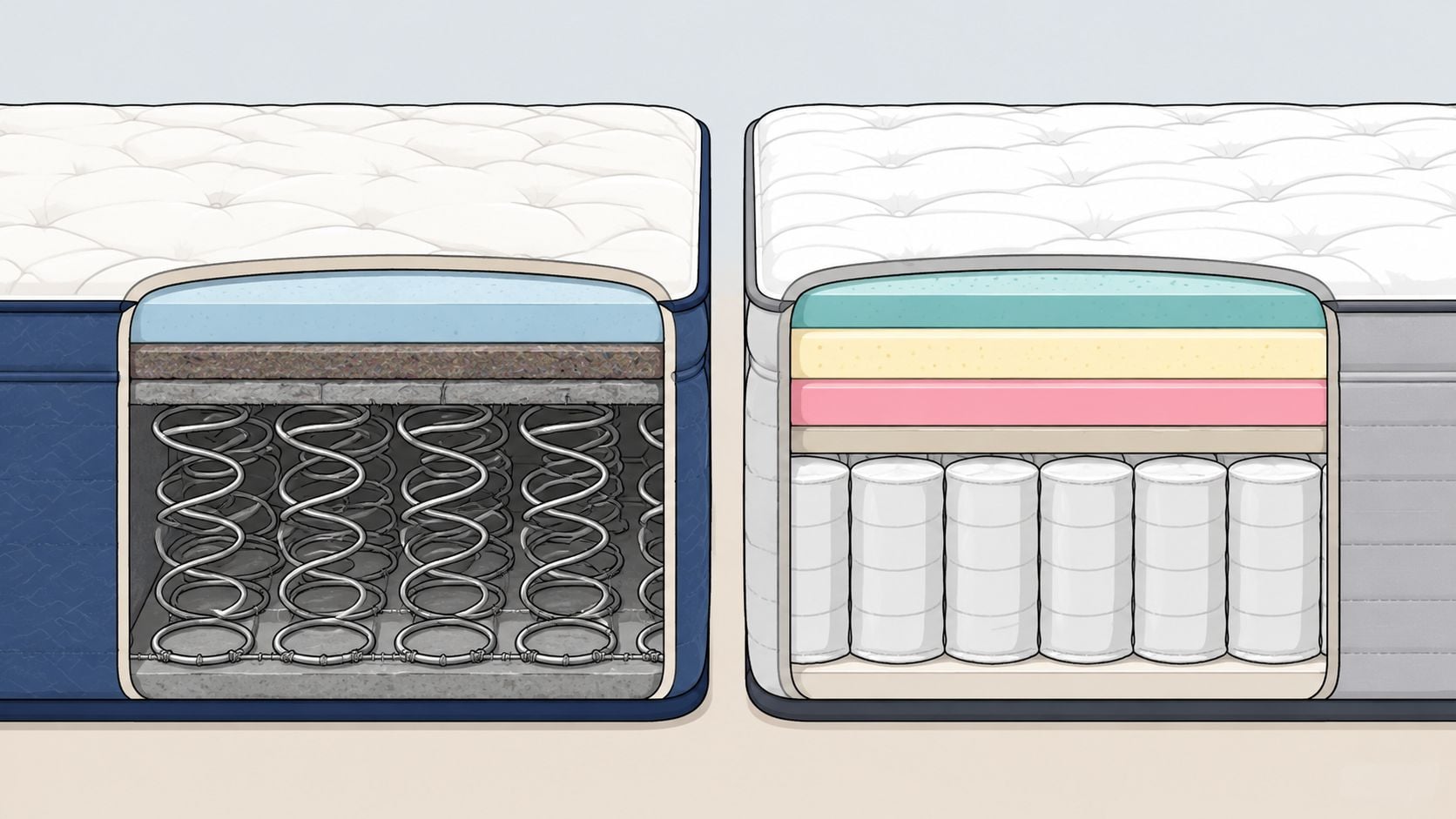
A lot becomes clearer once you look under the fabric. In our Norwich showroom, this is often the moment when a shopper stops hearing mattress jargon and starts connecting it to real feel. Press on the top of one bed and your hand meets the coils quickly. Press on another and there is more cushion before the support pushes back. That difference is the starting point.
Why innersprings feel traditional
A traditional innerspring mattress is coil-driven. The springs handle most of the support, and the material above them is usually thinner. On the showroom floor, that often translates into a flatter, more buoyant first impression.
The easiest way to feel this in person is to sit on the side, then lie back and change positions. An innerspring usually responds fast. It gives many shoppers that familiar “on the bed” sensation rather than a hugged or cradled feel.
A simple comparison helps here. An innerspring works like a mattress with a lighter cushion over a strong spring base. You notice the support sooner, and the bounce tends to feel more direct.
Why hybrids feel more cushioned
A hybrid mattress also uses coils, but the comfort layers above the coils play a much bigger role in the overall feel. One industry overview explains that hybrids typically pair a pocketed coil support core with thicker comfort materials, while innersprings stay more coil-dominant with thinner layers, as noted in this hybrid vs. innerspring overview.
That construction changes what your body feels in the first few seconds. In the Sleep Gallery, a hybrid often feels like there is a buffer between you and the springs. Your shoulders, hips, or lower back may settle in a bit before the deeper support takes over.
That is why hybrids are often associated with more cushioning, while innersprings usually feel springier and more immediate.
What to notice when you test them in store
For Norwich shoppers, the useful question is not just “Which one is softer?” The better question is “Where do I feel the support, right at the surface or a little farther down?”
Try this in the showroom. Lie still for a full minute, then roll from your back to your side. If the mattress feels coil-forward and quick to lift you, you are probably closer to the innerspring category. If you notice a thicker comfort layer softening first contact before the support pushes back, you are likely on a hybrid.
For shoppers comparing Serta and Beautyrest models at Gorins, this lens helps more than memorizing model names. It turns technical language into something you can feel with your own body.
A good next step is understanding how wrapped coil systems change that feel. This guide to pocket coil mattresses explains why some mattresses feel more adaptive and less connected across the surface.
The key distinction
- Innerspring: a coil-led build with lighter cushioning on top
- Hybrid: a coil support system with thicker comfort layers that shape the first feel
Once that distinction clicks, the category names stop sounding abstract. They become a practical way to predict what you will feel when you lie down.
A Side by Side Comparison Feel Support and More
A side by side comparison helps once you have felt the basic build differences in person. In the Gorins Sleep Gallery, this part is less about memorizing mattress jargon and more about noticing what your body feels in the first 10 seconds, then again after a few quiet minutes.
Hybrid vs. Innerspring at a glance
| Feature | Hybrid Mattress | Innerspring Mattress |
|---|---|---|
| Construction | Coil core with thicker comfort layers | Coil-dominant design with thinner padding |
| Surface feel | More contouring and cushioned | Firmer and more buoyant |
| Pressure relief | Generally stronger | Generally lighter |
| Motion transfer | Usually lower | Usually more noticeable |
| Responsiveness | Responsive with cushioning | Very springy and direct |
| Typical shopper appeal | Balanced comfort and support | Classic feel and simpler build |
That chart is a starting point. The key difference shows up when you lie down and ask, “Do I feel a welcome-in cushion first, or a quicker lift from below?”
Feel and firmness
Feel is the first thing many Norwich shoppers notice. A traditional innerspring often has a flatter, more straightforward surface. You lie down, and the mattress answers back quickly. A hybrid usually gives you a small buffer at the top before the support pushes up underneath you.
A simple in-store analogy helps here. An innerspring often feels like sitting on a firm upholstered bench. A hybrid can feel more like that same bench with a padded topper built into it. The support may still be solid, but the first contact is different.
Firmness adds another layer of confusion because soft and supportive are not opposites. A mattress can feel plush at the surface and still hold your spine in a healthy position. If you want help sorting out those labels before you visit, this guide to choosing mattress firmness gives a clear framework.
Support and pressure relief
Support is about keeping your body aligned. Pressure relief is about whether sharper contact points, usually shoulders, hips, or lower back, feel cushioned or pushed on.
That distinction matters in the showroom.
On a hybrid, many shoppers notice that their shoulders and hips settle in a bit before the deeper support catches them. On an innerspring, the body often stays more level on top of the mattress, with less shaping around those curves. Neither feeling is automatically better. The better choice is the one that lets your body relax without feeling twisted, pinched, or forced into one posture.
If you are unsure what to watch for, stay on each bed long enough for your body to stop “posing.” The first few seconds can be misleading.
Temperature regulation
Both types usually sleep more open and airy than dense all-foam beds because coils leave room for air to move. For many shoppers, that means either category can feel comfortable temperature-wise.
The bigger difference is often the material above the coils. Thicker comfort layers can create a slightly more insulated surface feel, while thinner quilted tops often feel lighter and less enveloping. In the showroom, this is easier to sense than to describe. One bed may feel closer to your body. Another may feel more open around you.
Motion isolation
Couples tend to notice this fast.
Hybrids usually soften movement better because the upper layers absorb some of the bounce before it reaches the other side. Innersprings often pass along more of that motion, especially if the feel is very spring-forward and lively.
You can test this in a practical way at Gorins. Have one person lie still with eyes closed while the other sits down, rolls over, and stands up. The sleeper will usually tell you within seconds whether the bed feels calm or busy.
Edge support
Edge support changes how secure the mattress feels near the perimeter. That matters for people who sit on the side to get dressed, couples who spread out across the full width, and anyone who dislikes the sensation of sliding off.
Many innersprings feel sturdy at the edge because the build stays more coil-forward from center to perimeter. Hybrids can also feel stable, but the comfort layers may make the edge feel a little softer at first contact. In store, sit on the side, then lie close to the edge. Those are two different tests, and both matter.
A quick decision shortcut
- Choose hybrid first if you want more cushioning at the surface and less motion from a partner.
- Choose innerspring first if you like a flatter, springier, more traditional feel.
- Test both if you keep saying, “I want support, but I do not want the bed to feel hard.”
That last group is common. It is also why in-person testing in Norwich helps so much. Your body can usually tell the difference faster than a spec sheet can explain it.
Which Mattress Is Best for Your Sleep Style
Specs matter less when they aren't tied to an actual sleeper. Sleep position, body pressure points, and whether the bed is shared usually matter more than category labels alone.
Side sleepers
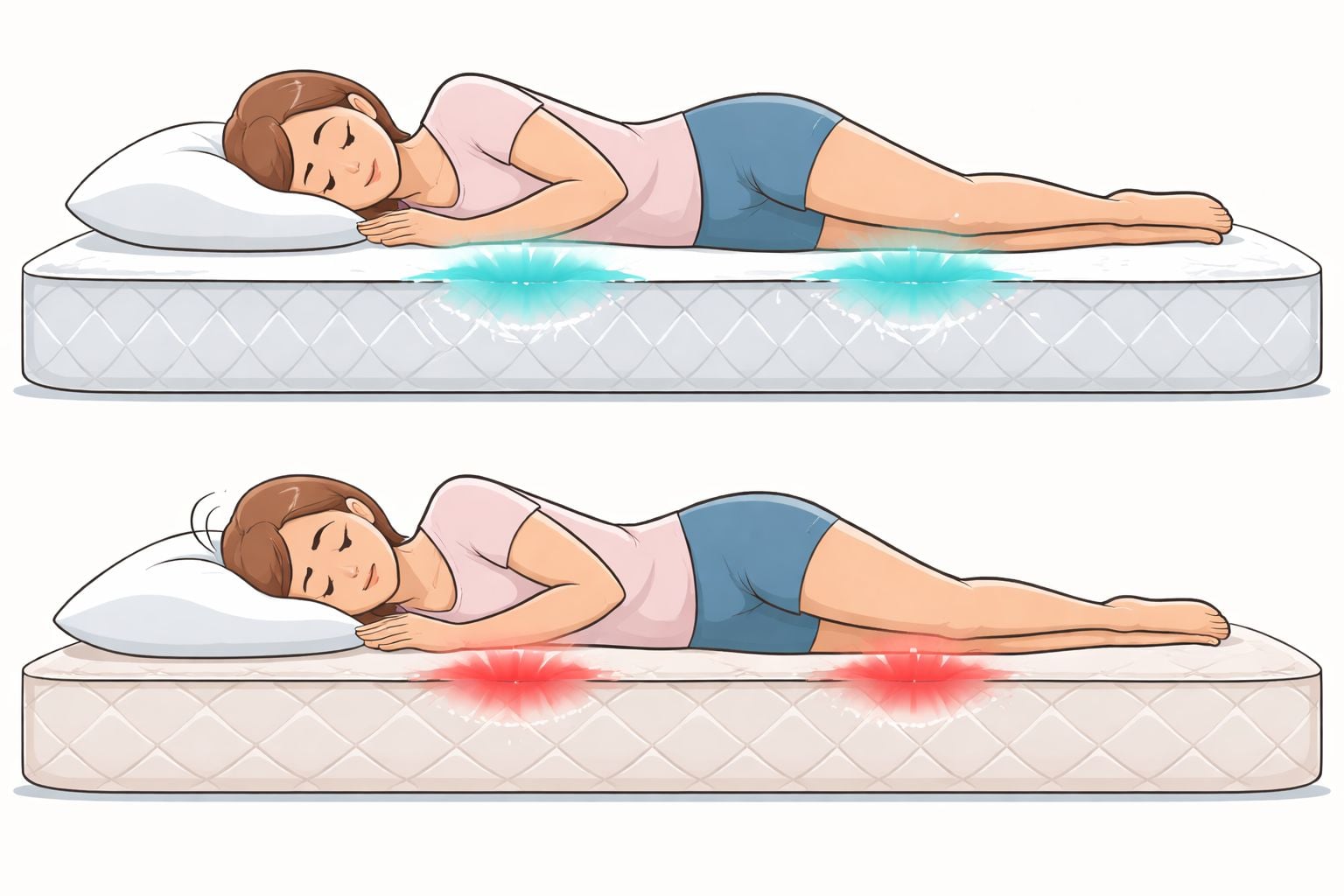
Side sleeping tends to put more direct contact on the shoulders and hips. That's why many side sleepers prefer the more cushioned surface feel that hybrids often provide. The extra comfort material can help the mattress feel less sharp or pushy at those contact points.
A side sleeper who says, “The bed feels fine at first, but my shoulder goes numb later,” often needs to pay close attention to pressure relief during testing. That sleeper may prefer a hybrid over a more traditional innerspring feel.
Back and stomach sleepers
Back and stomach sleepers often focus more on feeling lifted and stable through the torso and hips. For that reason, many of them like the firmer, flatter sensation associated with innersprings. Others prefer a firmer hybrid that still offers some surface comfort without too much sink.
The key isn't choosing the category by habit. It's checking whether the sleeper feels aligned and supported in the middle of the body.
A mattress should feel comfortable at the shoulders and hips without letting the midsection drop too far out of line.
Couples and light sleepers
When two people share a bed, the question changes from “How does it feel?” to “How does it feel when someone else moves?”
That's where hybrids often become appealing. The thicker comfort layers can help limit the ripple effect that one sleeper feels when the other rolls over or gets up early. For couples with different comfort preferences, a hybrid can also feel like a middle-ground choice because it blends support with cushioning.
Shoppers trying to match mattress design to personal sleep habits can use this sleeping-style mattress guide as a practical starting point.
Hot sleepers
Hot sleepers sometimes assume they must avoid hybrids. That's too simple.
Both innersprings and hybrids can be good options because both use coil systems that allow airflow. The better question is whether the sleeper prefers a lighter, more open surface feel or a more cushioned top with temperature-conscious materials.
A useful way to narrow the choice
- Hybrid may fit better for: side sleepers, many couples, and shoppers who want more cushioning
- Innerspring may fit better for: sleepers who like a firmer, more lifted feel
- Either can work for hot sleepers: if the overall feel and top materials match the sleeper's comfort preference
No online description replaces lying down and noticing what the body does in the first few minutes. That's where a showroom visit becomes more valuable than another hour of scrolling.
How to Test a Mattress in Our Norwich Showroom
You can read ten mattress descriptions and still feel unsure. Then you lie down on two beds in our Norwich showroom, and the difference becomes clear in about three minutes.
Start with the position used at home
A good showroom test should match real life. If you sleep on your side at home, test on your side here. If you rotate between your back and side during the night, do that on the mattress too.
Many shoppers lie down stiffly for a few seconds and try to make a decision. That usually hides the very clues your body is trying to give you.
Wear clothes that let you move easily. Tight belts, heavy coats, and stiff denim can mask pressure at the hips and shoulders. The goal is to feel the mattress, not your outfit.
Pay attention to three body signals
The easiest way to test a mattress is to listen for three simple signals from your body.
- Pressure points: Notice whether your shoulder, hip, ribcage, or lower back starts to feel pushed on.
- Alignment: Ask whether your body feels level, like a straight line is being gently supported from head to toe.
- Relaxation: See whether your muscles let go or stay slightly tense, as if they are still trying to hold you up.
A helpful comparison is a good pair of shoes. You can often tell quickly if something pinches, but true comfort shows up after a little time. Give each mattress a few minutes so the first soft or springy impression can settle into something more honest.
The right mattress often feels quieter to the body. You notice less pressure, less bracing, and less urge to adjust right away.
Test the edge and ease of movement
Now try the mattress the way people use it. Sit near the edge to see whether it feels steady or collapses more than you expected. Then lie close to that edge and check whether you still feel supported across the usable sleep surface.
Next, change positions naturally. Roll from your back to your side. Bend one knee. Scoot a little toward the center. That test often reveals the practical difference between a more buoyant innerspring feel and the more cushioned response many hybrids have.
In the Gorins Furniture & Mattress showroom, that side by side testing matters because your body can feel what product terms only describe. One mattress may let you move with a lighter, springier pushback. Another may soften the contact points more and feel a bit more absorbing when you settle in. Those are not abstract spec-sheet differences. They are sensations you can notice in real time while lying still, rolling over, and sitting at the edge.
A simple showroom checklist
- Wear easy-moving clothes
- Lie down in your usual sleep position
- Stay long enough to notice pressure or tension
- Roll and reposition the way you do at night
- Check the edge before crossing a mattress off your list
That kind of hands-on testing gives Norwich shoppers a clearer answer than a long list of mattress terms.
Your Mattress as an Investment Durability and Value
A mattress purchase often feels simple on day one. The true test is year four, year six, and year eight, when the bed either still supports you well or starts asking your body to compensate.
Why lifespan changes the value conversation
Price matters, especially for households trying to stay within a clear budget. But in the showroom, value usually becomes easier to understand once you connect the feel of a mattress with how long that feel is likely to last.
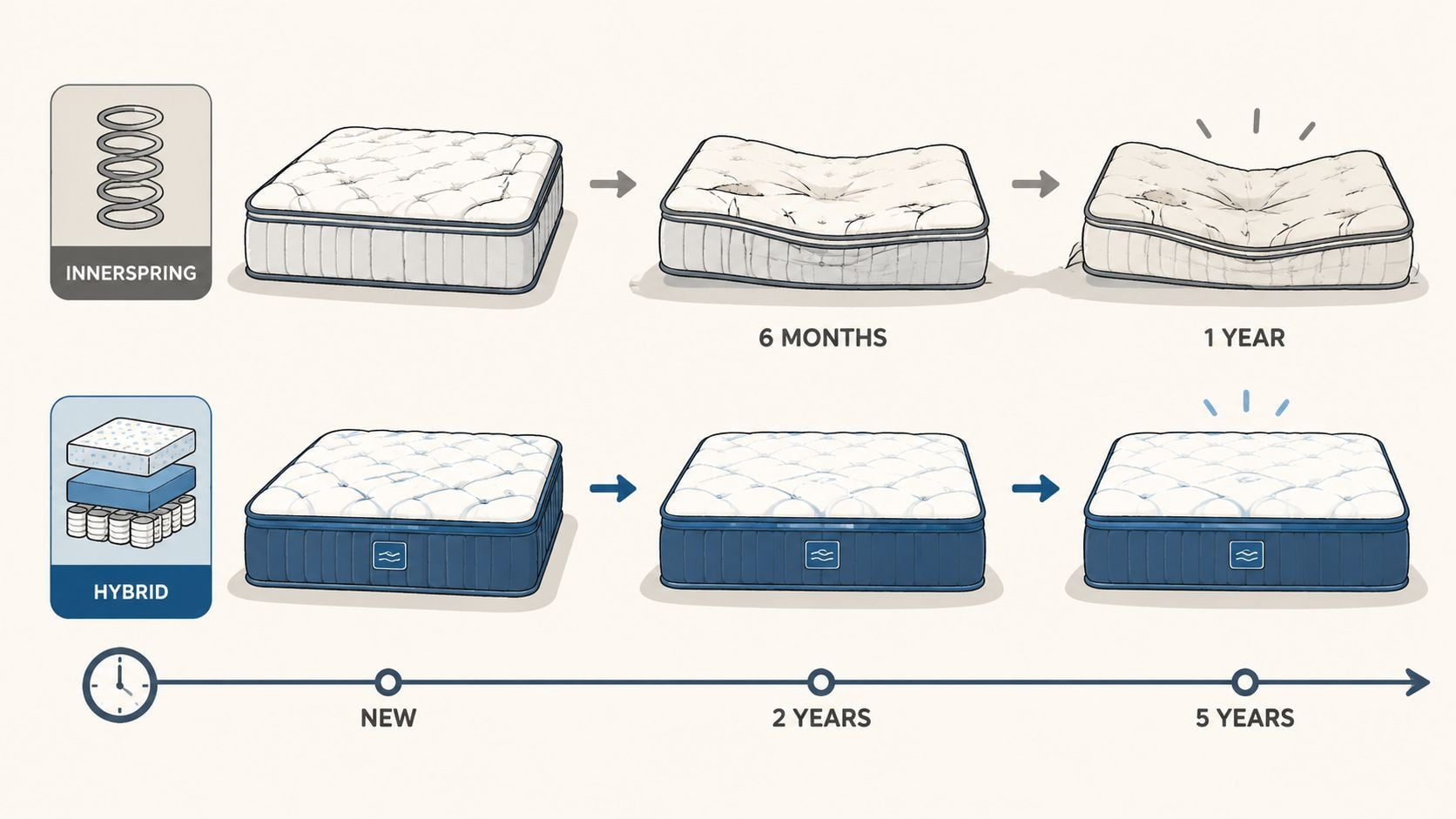
A recent mattress guide says hybrids typically outlast innerspring designs by 2 to 5 years, with many hybrids lasting about 8 to 10 years or more, while traditional innersprings are often estimated at 5 to 7 years, according to a mattress guide from Fawcett Mattress.
That difference helps explain what many Norwich shoppers notice in person. A hybrid often has more comfort material working above the coils, so it is built to cushion the body in a more layered way. A traditional innerspring can still be a smart buy, especially for a guest room, a kid's room, or someone who prefers a simpler, springier surface. For a primary bed used every night, durability can change the value picture quite a bit.
The same guide places hybrids at roughly CAD $1,200 to $3,500 and innersprings at roughly CAD $400 to $1,500 in that Canadian price comparison.
Paying attention to cost over years, not just cost today
That is why showroom testing matters. When you lie on two mattresses at Gorins and one feels noticeably better at your shoulders, hips, or lower back, the next question is not only, “Can I afford it today?” It is also, “How long do I want that comfort to hold up?”
A low upfront price can still be the right choice. A better long-term value often comes from matching the mattress to the sleeper, the room, and how many nights of use it will get every week.
For shoppers sorting through that question, this guide to how long a mattress should last gives a practical way to think about replacement timing. It helps turn the conversation from sticker price into years of support, comfort, and use.
For households considering a step-up model, Promotional Financing with equal monthly payments can make a higher-quality mattress easier to fit into the budget.
A smart mattress value comes from two things working together. The bed feels right for your body now, and it keeps doing that job over time.
That same practical mindset shows up across the showroom, whether a family is picking a mattress, exploring Canadel custom dining, or choosing the F9 Custom Sofa series for everyday living.
Find Your Perfect Sleep at Gorins Furniture
The best answer in hybrid mattress vs innerspring isn't universal. It depends on what the sleeper feels, how the body rests, and which tradeoffs matter most. Some people want more bounce and a simpler, firmer surface. Others want more cushioning and less movement across the bed.
What helps most is testing both with a clear sense of what to notice.
Since 1936, Gorins has helped Norwich and Eastern CT families make home decisions with helpful service, quality, and value at the center. In the Sleep Gallery, shoppers can compare trusted names such as Tempur-Pedic, Serta, and Beautyrest by feel, not just by label. That local, hands-on approach is still one of the easiest ways to turn mattress shopping into a confident decision.
The same personalized mindset carries across the showroom, from sleep solutions to custom living and dining, including Canadel options with thousands of combinations for shoppers who want a home suited to their lifestyle.
Visit Gorins Furniture & Mattress to explore the Norwich showroom in person, take the online Style Quiz to narrow down comfort preferences, or browse the Clearance section for value-driven savings. Since 1936, Gorins Furniture & Mattress has helped Norwich and Eastern CT families create homes they love. From custom-designed Canadel dining sets to the latest in Tempur-Pedic sleep technology, they combine a massive selection with the personalized care only a local, family-owned business can provide. Visit today to experience quality, value, and 5-Star Delivery service.