Dining Room Design Ideas: Top Trends for 2026

Creating a Dining Room You'll Love to Live In
A lot of homes around Norwich have the same problem right now. The dining room either feels underused, too formal for daily life, or too busy to handle everything a household asks of it. One night it's dinner for two, the next it's homework, holiday hosting, or a work-from-home landing spot that needs to look pulled together again by 6 p.m.
That's exactly why strong dining room design ideas matter. The best rooms don't just look good in a photo. They support real life in Eastern CT, whether that means a holiday meal in Plainfield, a casual weeknight dinner in Norwich, or a flexible open-plan setup in Waterford. Design has to earn its keep.
Since 1936, Gorins Furniture & Mattress has helped local families create rooms that feel personal, durable, and suited to their lifestyle. As a family-operated Norwich showroom, Gorins brings the kind of guidance that turns broad inspiration into practical decisions, especially with Canadel Custom Dining and its thousands of combinations for size, shape, finish, and fabric. For households planning larger gatherings, even details like table size and guest flow matter, which is why resources on selecting large event round tables can help frame the conversation before stepping into the showroom.
Formal dining rooms are changing fast, too. Research shared with Axios reports that nearly 80% of designers working on new homes saw formal dining spaces decline in importance over the last year, with separate dining rooms nearly removed from the design lexicon. That means today's smartest ideas focus on beauty, flexibility, and investment-grade quality.
1. Modern Minimalist Dining Clean Lines and Natural Wood with Warm Lighting
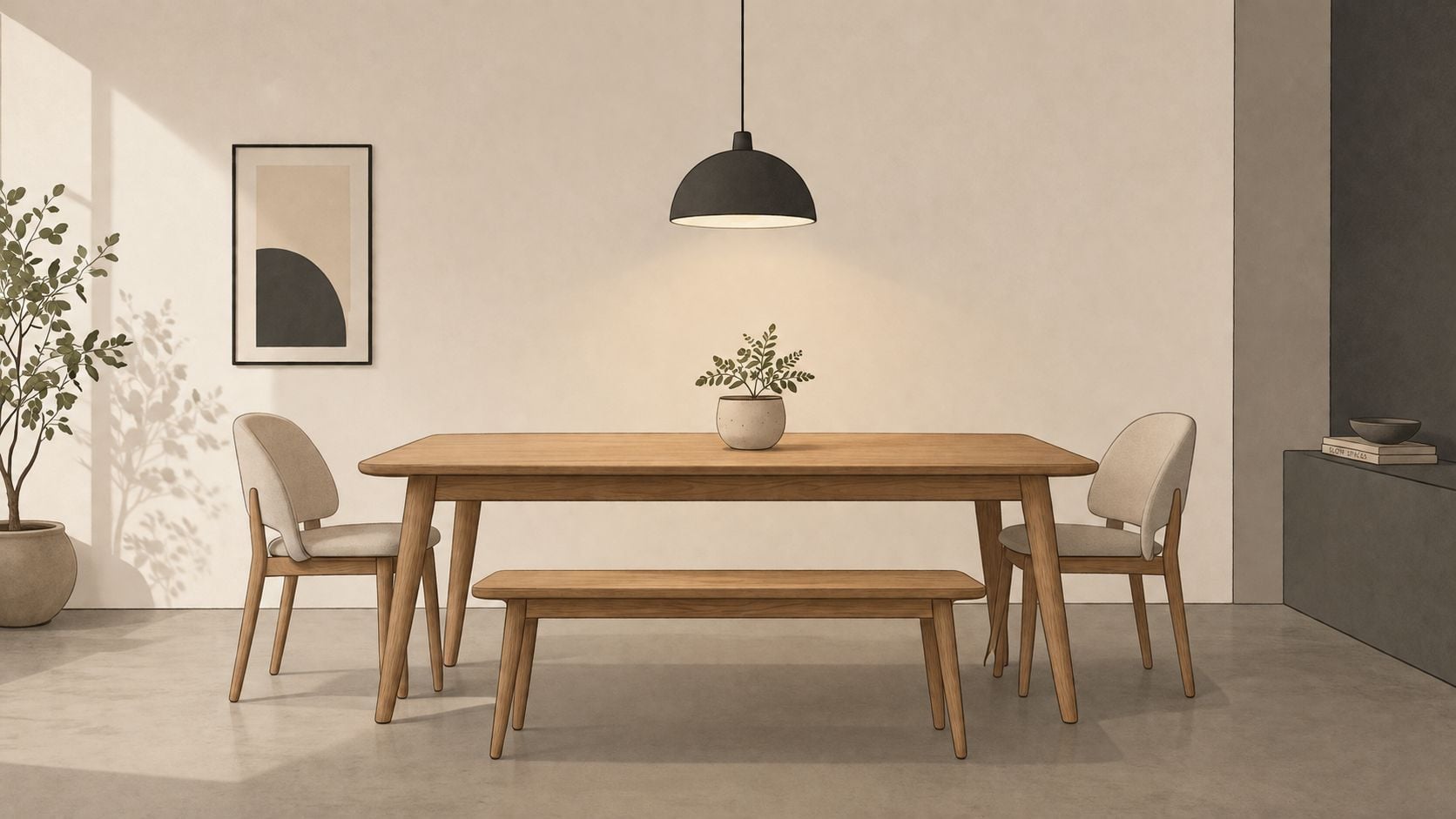
Minimalist dining works best when the furniture has enough substance to carry the room on its own. In a Norwich condo or a Scandinavian-inspired home in Eastern CT, that usually means one beautiful wood table, a small group of comfortable chairs, and lighting that adds softness instead of glare. A Canadel Custom Dining table in oak or walnut gives that kind of quiet presence.
This look shouldn't feel cold. Warm wood, off-white walls, and tactile layers keep it welcoming. Linen napkins, woven placemats, and a natural fiber runner do more for the room than extra decor ever will.
How to make minimalism feel lived in
A minimalist room needs fewer things, but every choice has to work harder. Warm-toned finishes are the difference between serene and sterile, especially in New England light.
- Anchor with craftsmanship: Choose a table with a simple leg profile and let the wood grain do the talking.
- Use restraint on color: Keep the palette calm, then add depth through texture instead of busy pattern.
- Install dimmers: Morning coffee and evening dinners need different light levels.
For households trying to keep clean lines without creating a flat, unfinished room, Gorins' guide to personalizing a minimal space without clutter is worth using as a practical companion.
Practical rule: In minimalist dining rooms, the table is the decor. If the table looks temporary, the whole room does.
This style suits open-concept homes particularly well because formal dining rooms are steadily disappearing from new residential plans. Builders are favoring integrated kitchen-dining layouts and flexible eating areas, which makes modern minimalist furniture a smart long-term choice for homeowners who want the room to adapt as life changes.
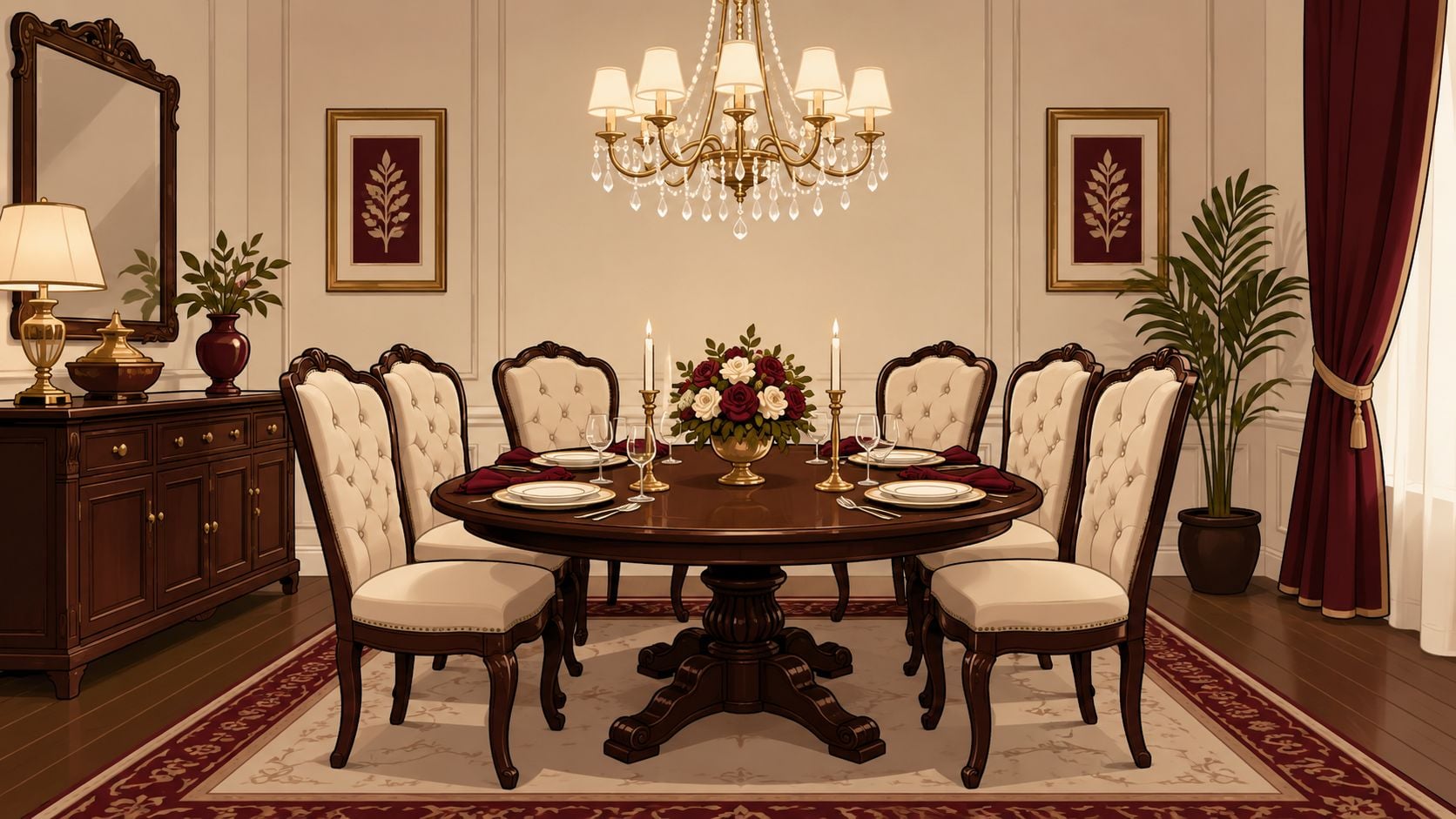
2. Traditional Formal Dining Rich Woods, Upholstered Seating and Chandelier Elegance
A traditional dining room still has a place in Eastern CT, especially in historic Norwich homes, colonial revivals, and houses where holiday hosting matters. The key is to keep the room gracious, not stiff. Rich wood finishes, upholstered chairs, and a statement chandelier create the look, but the room needs comfort to stay relevant.
A Canadel Custom Dining pedestal or trestle table works beautifully here because the details can be refined without looking fussy. Curved edges, selected finishes, and upholstered seating from Best Home Furnishings help the room feel formal in the right way.
What keeps it from feeling dated
Traditional design fails when every piece feels heavy. It succeeds when one or two classic notes are balanced by cleaner elements.
A good formula looks like this:
- Choose a rich wood table: Let that be the historical note.
- Pair it with softer seating: Upholstered side chairs make long dinners easier and visually lighten the room.
- Modernize the overhead fixture: A cleaner chandelier shape keeps the room current.
- Add a rug with purpose: It defines the room and helps absorb sound.
The budget conversation matters here because formal dining furniture is often an investment purchase. Gorins makes that easier with Promotional Financing and equal monthly payments, which can help families bring home affordable luxury instead of settling for a short-term solution.
The broader market supports that investment mindset. The global living and dining room market reached USD 183.09 billion in 2025 and is projected to grow to USD 241.61 billion by 2033, with a 3.6% CAGR from 2026 to 2033, according to Grand View Research's living and dining room market report. That kind of steady demand favors durable, well-made pieces over throwaway trend buys.
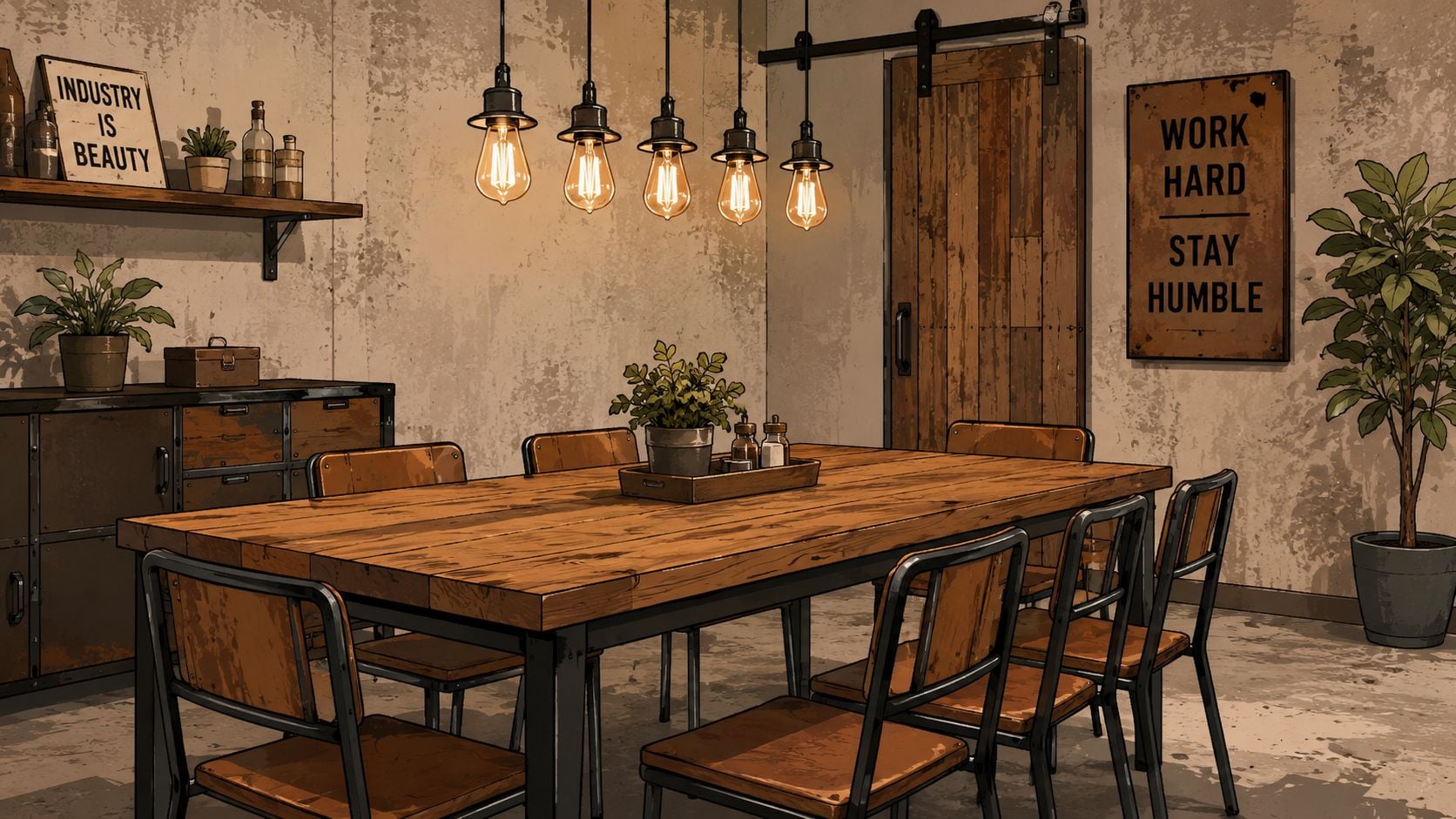
3. Industrial Chic Exposed Metal, Reclaimed Wood and Edison Bulb Accents
Industrial chic fits homes with character. That might be a converted mill-style space near Norwich, an urban apartment in New London, or a farmhouse remodel that needs some edge. The palette is straightforward. Distressed wood, blackened metal, warm bulbs, and a little patina.
What keeps this style from going hard and cold is upholstery. A table with a substantial top and metal base looks better when it's paired with chairs people want to sit in. Gorins carries seating from Flexsteel and other quality makers that soften the silhouette without losing the industrial feel.
The balancing act that makes this style work
Industrial rooms need contrast. If every surface is rough, dark, or metallic, dinner starts to feel like a workshop.
- Mix finishes on purpose: Matte black and brushed nickel can work together when wood bridges the gap.
- Add soft materials: Use an area rug, a runner, or upholstered seats to cut echo and visual hardness.
- Choose strong storage: A sideboard or cabinet keeps the room practical and reinforces the architecture.
Storage matters more than people expect in this style. Open-plan dining spaces often need one hardworking piece that hides serving ware, chargers, and the daily clutter. Gorins offers ideas for that in its guide to dining room storage furniture.
For homeowners leaning hard into this look, outside inspiration on industrial dining room tables and metal-forward styling can help refine the visual direction before choosing final finishes.
Hard materials need soft companions. In dining rooms, comfort is what turns industrial from interesting to usable.
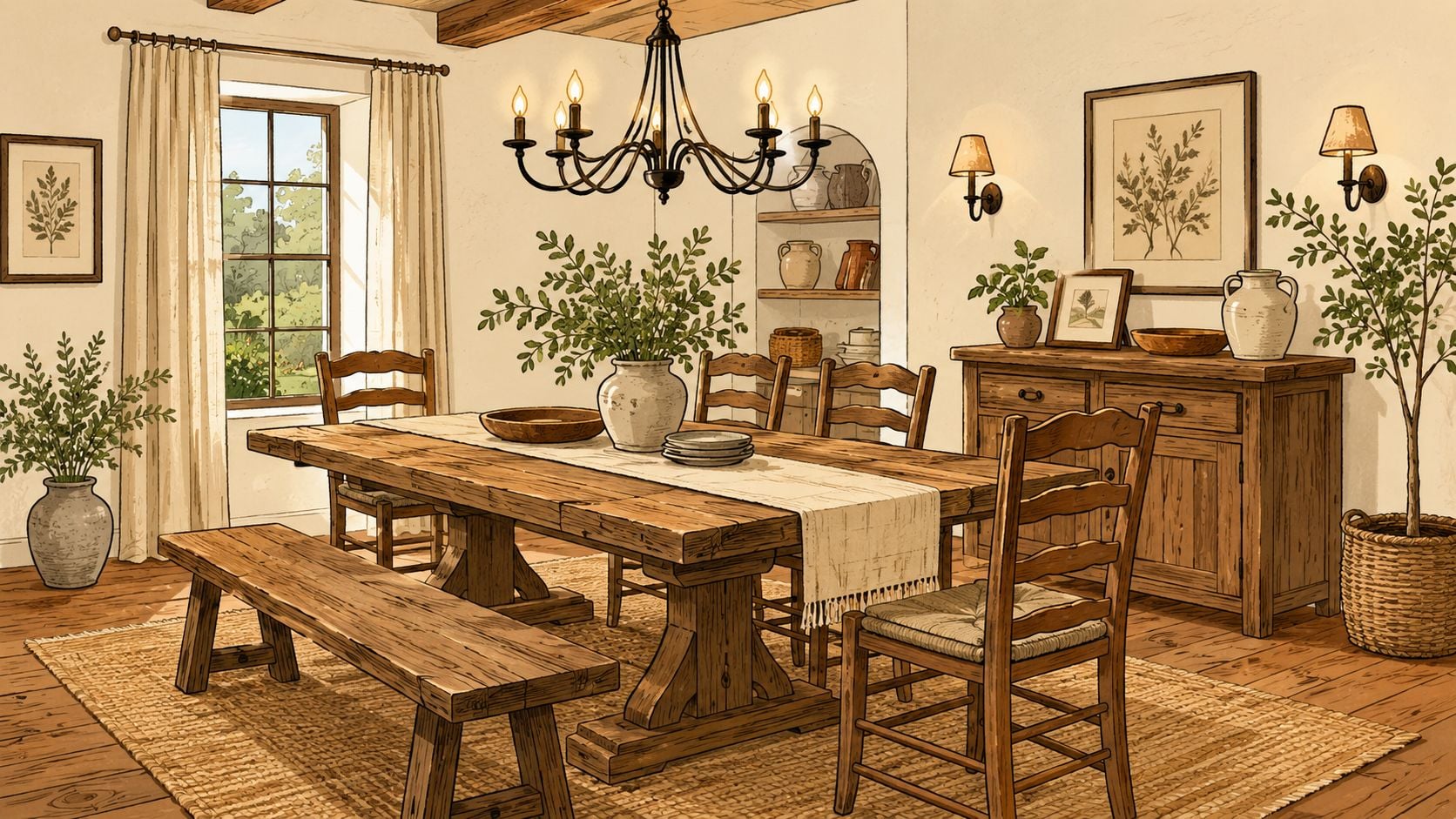
4. Rustic Farmhouse Weathered Finishes, Comfortable Seating and Warm Hospitality
Farmhouse style still works in Connecticut because it fits the rhythm of real homes. Mudrooms connect to kitchens. Guests gather casually. Dining rooms often need to handle birthdays, weekend breakfasts, and everyday family meals without feeling staged.
A rustic farmhouse room starts with a table that has presence. Canadel Custom Dining offers hand-scraped and distressed finishes that bring in that timeworn warmth without sacrificing construction quality. In Plainfield and surrounding towns, this is one of the easiest styles to make feel authentic.
The pieces that create the mood
Farmhouse style gets stronger when it isn't too matched. A bench on one side, chairs on the other, and a sturdy sideboard create a collected look that feels relaxed.
- Lead with the table: Choose a weathered finish and a shape that suits the room's traffic flow.
- Mix seating styles: Benches and chairs create flexibility and break up visual repetition.
- Layer practical textiles: A linen runner and natural rug make the room softer and quieter.
- Display useful pieces: Crocks, platters, and stoneware should be seen and used.
Farmhouse doesn't have to avoid metal, either. The right accents can sharpen the room without taking away the warmth. Gorins' article on using metal accents at home offers a smart way to introduce that contrast.
This style also connects well with how many households use the room now. Multi-use dining areas are common, so furniture that feels welcoming and hardworking makes more sense than delicate, room-specific pieces.
5. Mid-Century Modern Retro Elegance with Tapered Legs and Atomic-Age Details
Mid-century modern dining rooms still have staying power because the lines are clean, the forms are efficient, and the wood tones feel warm without being heavy. In updated Connecticut ranches and design-forward homes around Eastern CT, this style often works best when it's edited. One sculptural table, chairs with refined profiles, and lighting with a little visual lift.
This look gets strongest when homeowners resist turning it into a theme room. A few recognizable traits, such as tapered legs, curved backs, and geometric patterns, are enough. Then the space still feels current.
Smart ways to keep the room sharp
The best mid-century rooms rely on proportion. Tables should feel airy, not spindly. Chairs should have style, but they still need comfort for actual dinners.
- Pick one hero piece: A table with a sculptural base or a chair silhouette with classic lines is enough.
- Add a geometric rug carefully: It should support the room, not dominate it.
- Use contemporary lighting: That keeps the space from feeling frozen in another decade.
Shape matters a lot in mid-century dining because these rooms often sit in tighter floor plans or open layouts. Gorins' guide to table shapes and seating arrangements for dining spaces is especially useful for homeowners trying to pair style with better flow.
A practical Eastern CT example would be a modest open dining area with walnut tones, cream upholstery, a low-profile sideboard, and one brass-accented pendant. That's enough to nod to the era without overcommitting.
6. Mediterranean Coastal Warm Terracotta, Natural Light and Bohemian Comfort
Mediterranean coastal style brings warmth into a dining room without making it feel heavy. It works especially well in Waterford and New London homes where natural light can do some of the decorating. Terracotta, warm woods, pottery, and soft woven fabrics create a room that feels relaxed and layered.
This style should never look bleached out. The strongest version uses grounded color. Clay tones, sand, olive, deep sea blues, and sun-washed neutrals all play well together.
Materials matter more than matching sets
Dining rooms in this style look better when the room feels collected instead of purchased all at once. Upholstered seats in earthy fabrics, a substantial wood table, and ceramics on open display make the space feel lived in.
A few current material shifts support this look directly. Interest in darker woods surged 262% year over year, and more than 76% of design industry respondents identified travertine as a leading material for dining surfaces in 2026, according to Accio's 2026 dining room trends report. That combination of deeper wood and tactile stone suits Mediterranean coastal rooms perfectly.
Design note: If the room gets strong daylight, let the materials carry the style. Wood, linen, ceramic, and stone do more than decorative clutter ever will.
For a coastal Connecticut home, this might mean a walnut or warm oak table, upholstered chairs from Best Home Furnishings, a textured pendant, and a grouping of handmade bowls or glassware that doubles as decor.
7. Contemporary Scandinavian Light Woods, Functional Design and Hygge Warmth
Scandinavian-inspired dining rooms are ideal for households that want calm without sacrificing comfort. The room stays light, but it shouldn't feel blank. Pale wood tones, simple shapes, and soft textiles create a setting that feels fresh in the morning and cozy after dark.
This style fits many Norwich and New London homes because it works in smaller footprints. It also pairs well with how newer homes use dining spaces now, especially when the room opens to the kitchen or family area.
The practical side of Scandinavian style
This look depends on comfort as much as appearance. Seats need support. Surfaces need to be easy to live with. The room should be easy to reset after a meal or a work session.
For homes where the dining room has to do more than one job, flexibility matters. One source notes that 68% of households now use dining rooms for multiple purposes such as remote work or homework, alongside family meals, in a discussion of layout challenges and under-addressed lighting and acoustic issues in multi-use spaces at The Spruce's dining room layout ideas page. That makes Scandinavian design a natural fit because it prioritizes function, clear surfaces, and adaptable furniture.
- Start with light wood: A Canadel Custom Dining table in a pale finish gives the room structure without heaviness.
- Bring in softness: Wool rugs, linen napkins, and woven placemats create warmth.
- Use candlelight and layered lamps: Hygge depends on glow, not overhead glare.
A Scandinavian room in Eastern CT often looks best with fewer accessories and one or two living elements, such as a branch arrangement or a simple plant.
8. Global Eclectic Mixed Cultures, Vintage Treasures and Personal Collections
Global eclectic dining rooms feel personal because they don't follow one script. They blend travel finds, family pieces, artisan-made decor, and strong furniture that can ground everything else. In homes around Eastern CT, this style suits collectors, creatives, and anyone who wants a dining room with more story than showroom sameness.
The mistake here is trying to make every item compete. The better approach is to keep the furniture shapes steady, then let textiles, ceramics, and art provide the movement.
How to keep eclectic from turning chaotic
The room needs one unifying thread. That might be a repeated wood tone, a narrow color palette, or one consistent metal finish across the lighting and hardware.
- Choose a stable foundation: A quality dining table and well-built chairs hold the room together.
- Group collections deliberately: Pottery, baskets, or serving pieces look stronger when edited and displayed in clusters.
- Use rugs to connect styles: One patterned rug can tie together furniture from different traditions.
This style also pairs well with the current move away from ultra-minimal interiors. Dining trends for 2026 point toward more character, tactile depth, vintage silhouettes, and moody, saturated color palettes, including rich earth tones and jewel tones used in color-drenched rooms. Global eclectic spaces are perfectly positioned to absorb those ideas in a way that feels authentic rather than trend-chasing.
For homeowners interested in the warmer side of Nordic influence within an eclectic room, visual inspiration around Scandinavian home design and layered natural materials can help shape the palette.
9. Transitional Sophisticated Blending Traditional Warmth with Contemporary Clean Lines
Transitional style is one of the safest and smartest dining room design ideas for families who want longevity. It blends traditional comfort with cleaner modern forms, which makes it especially useful in updated colonials, ranches, and mixed-style homes across Connecticut.
A transitional dining room usually starts with a strong wood table, then softens and modernizes around it. Neutral upholstery, balanced lighting, and restrained accessories create a room that can host a holiday dinner and still feel right on a random Tuesday.
Why this style works so well locally
Many Eastern CT homes have traditional architecture but more casual day-to-day living. Transitional design respects the house without forcing the family into a formal lifestyle.
Canadel Custom Dining really shines. With thousands of combinations, homeowners can choose the exact shape, finish, base, and upholstery approach that bridges classic and current. A warm wood table with simpler lines, paired with upholstered seating from Best Home Furnishings, often lands in the sweet spot.
For anyone trying to build the room from the ground up, Gorins' article on where to start when designing a dining room gives a practical framework that fits transitional spaces especially well.
Transitional rooms age well because they don't chase a moment. They combine familiar comfort with enough restraint to stay fresh.
A local example would be an updated Norwich colonial with paneled walls, a custom rug, brushed metal chandelier, and a custom dining set that feels substantial but not ornate.
10. Modern Industrial-Organic Combining Raw Materials with Living Elements and Warmth
Industrial-organic style takes the edge of industrial and gives it a softer, healthier feel. The room still has black metal, strong lines, and grounded wood finishes, but now there are plants, curved forms, woven textures, and warmer light. It's a strong choice for newer homes, renovated loft-style interiors, and households that want character without harshness.
This look also fits how many dining areas function now. Instead of designing for a room used only on holidays, it supports work, family meals, entertaining, and everyday living.
Layout and sizing matter here
Industrial-organic rooms often include larger statement tables, benches, or surrounding storage, so circulation has to be planned correctly. The minimum clearance between the edge of the dining table and surrounding walls or furniture is 36 inches, and 48 inches works better when two people need to pass comfortably, according to Canadel dining room spacing guidance at Choice Furniture.
That spacing rule is the difference between a room that looks good and one that functions.
- Use living elements with purpose: Choose sturdy indoor plants that won't overwhelm the tabletop.
- Warm up metal finishes: Pair black or steel elements with wood and upholstery.
- Respect the walkway: Leave enough clearance for chairs to move and people to pass comfortably.
- Choose adaptable furniture: Extendable tables fit this style particularly well.
One broader trend supports this approach. Multifunctional extendable dining table sets are projected to grow at an annual rate of 2.4% through 2026, with search interest peaking at 68 in June 2025, reflecting ongoing demand for adaptable dining furniture in urban markets. That makes an extendable investment-grade table a practical choice, not just a stylistic one.
10 Dining Room Design Styles Comparison
| Style | Implementation complexity | Resource requirements | Expected outcomes | Ideal use cases | Key advantages |
|---|---|---|---|---|---|
| Modern Minimalist | Low–Medium, requires discipline and thoughtful layering | Quality hardwood table, neutral upholstery, minimalist lighting, dimmers | Timeless, uncluttered, calm dining environment | Compact apartments to spacious contemporary homes | Easy maintenance, flexible, timeless aesthetic |
| Traditional Formal | High, detailed joinery and ongoing wood care | Premium solid woods, upholstered seating, chandelier, formal storage | Elegant, formal dining; heirloom-quality presentation | Historic homes, formal entertaining, holiday gatherings | Timeless elegance, impressive presence, ages well |
| Industrial Chic | Medium, sourcing and balancing raw elements | Reclaimed/distressed wood, metal frames, statement pendant lighting | Bold, characterful, photogenic dining with patina | Lofts, urban condos, creative or converted spaces | Trendy, durable, hides wear, utilitarian appeal |
| Rustic Farmhouse | Medium, hand-finished pieces and curated layering | Hand-scraped wood, mixed seating, warm textiles, wrought iron accents | Warm, inviting, family-friendly dining with authentic charm | Farmhouses, cottages, casual family gatherings | Cozy, forgiving of wear, celebrates craftsmanship |
| Mid-Century Modern | Medium–High, careful curation for authenticity | Teak/walnut pieces or veneers, sculptural lighting, iconic chairs | Retro-elegant, sculptural focal points with functional design | Design-forward homes, eclectic interiors, statement rooms | Timeless, increases in value, functional and stylish |
| Mediterranean Coastal | Medium, commitment to warm palette and light | Warm terracotta/ceramics, natural wood, linen textiles, ample windows | Sun-filled, relaxed dining with vacation-like warmth | Coastal homes, Mediterranean-inspired renovations | Warm, welcoming, strong indoor-outdoor connection |
| Contemporary Scandinavian | Low–Medium, discipline to maintain minimalism and hygge | Light woods, quality textiles, layered soft lighting | Light, airy, cozy (hygge) and highly livable spaces | Small homes, apartments, families valuing simplicity | Makes spaces feel larger, calm, durable furnishings |
| Global Eclectic | High, strong curation to avoid chaos | Mixed vintage/new pieces, global textiles, art and collectibles | Deeply personal, layered, culturally rich dining room | Collectors, frequent travelers, eclectic homeowners | Unique, highly personal, evolves with collections |
| Transitional Sophisticated | Medium, balance of traditional and contemporary details | Quality hardwoods, neutral upholstery, refined lighting | Versatile, timeless dining that is approachable and polished | Families wanting modern comfort with classic warmth | Broad appeal, easy to refresh with accessories |
| Modern Industrial-Organic | Medium–High, integrates living elements and sustainable sourcing | Reclaimed/sustainably sourced wood, metal, plants, natural textiles | Edgy yet warm biophilic dining with wellness focus | Eco-conscious homes, wellness-focused or urban lofts | Sustainability, improved wellbeing, modern warmth |
Bring Your Vision to Life in Our Norwich Showroom
The strongest dining room design ideas always come down to fit. Not fit in the trend sense. Fit in the real-life sense. The room has to suit the home, the household, and the way people gather. That's why a minimalist condo dining area in downtown Norwich needs different solutions than a formal colonial room in Plainfield or a coastal dining space near Waterford.
That local context is where Gorins stands apart. Since 1936, this family-owned and operated Norwich business has helped neighbors throughout Eastern CT and nearby Rhode Island communities choose furniture with lasting value, better proportions, and the right level of customization. A dining room shouldn't feel generic, and it doesn't have to when Canadel Custom Dining offers thousands of combinations in sizes, shapes, finishes, and fabrics.
That flexibility matters more now because homes are changing. Separate formal dining rooms are less common in new floor plans, and many households expect one space to handle family dinners, entertaining, work, and daily overflow. A custom dining table, supportive seating, and smart storage solve that challenge far better than trying to force a one-size-fits-all set into the room.
Gorins also makes the process simpler. The Norwich showroom lets shoppers compare wood finishes in person, sit in chairs before ordering, and see how different styles translate from inspiration to actual scale. Whether the goal is a traditional dining room with richer wood tones, a Scandinavian setup with light finishes, or a transitional look that balances both, the team helps narrow the options to what will work in the home.
There's also value in shopping locally when the purchase is meant to last. Dining furniture gets daily use, and that's exactly where investment-grade quality earns its place. Gorins carries respected names such as Flexsteel and Best Home Furnishings, along with custom programs that allow households to create rooms suited to their lifestyle instead of compromising on size or finish. For living spaces beyond the dining room, the F9 Custom Sofa series extends that same personalized approach.
Budget matters, too, and affordable luxury is easier to reach when financing options are part of the conversation. Gorins offers Promotional Financing, including equal monthly payment options, so families can make a thoughtful long-term purchase without unnecessary pressure. That's a practical advantage for anyone furnishing a whole room, not just replacing a single piece.
Since 1936, Gorins Furniture & Mattress has helped Norwich and Eastern CT families create homes they love. From custom-designed Canadel dining sets to the latest in Tempur-Pedic sleep technology, they combine a massive selection with the personalized care only a local, family-owned business can provide. Visit them today to experience quality, value, and their 5-Star Delivery service.
Visit Gorins Furniture & Mattress in Norwich to explore Canadel Custom Dining, compare investment-grade quality in person, take the online Style Quiz, or browse the Clearance section for value-driven savings suited for homes across Norwich, New London, Plainfield, Waterford, and surrounding Eastern CT communities.