Floor Lamps with Tray Tables: Stylish & Functional Home

The usual scene is easy to recognize in homes around Norwich, New London, Plainfield, and Waterford. A favorite chair sits in the right corner, but the lighting is weak, the side table is overloaded, and the phone charger snakes across the floor. The room isn't missing more furniture. It's missing smarter furniture.
That's why floor lamps with tray tables deserve more attention than they get. They solve a real problem in a compact footprint. One piece adds light, gives a practical landing spot for a drink or book, and helps a seating area feel intentional instead of improvised. For anyone focused on creating an inviting home, this kind of layered, useful lighting matters more than another decorative accent that doesn't earn its keep.
A well-chosen lamp table combo also supports better room planning. A reading chair, a sofa corner, or a bedside setup works better when the light and the surface are designed together instead of forced together later. That same logic shows up in smart living room planning tips like putting your living room in the best light. The strongest rooms don't just look good. They work well every day.
Table of Contents
- Your All-in-One Solution for Light and Living
- The Benefits of Merging Function and Style
- Finding Your Perfect Match in Types and Materials
- Sizing and Placement for Your Norwich Home
- Styling Your Lamp Like a Professional Designer
- Experience Quality and Value at Gorins
Your All-in-One Solution for Light and Living
A floor lamp with a tray table fixes a common mismatch in real homes. The chair fits. The rug fits. The room even looks fine in daylight. Then evening hits, and the whole setup falls apart because the nearest surface is too far away and the ceiling light does nothing for reading, relaxing, or winding down.
That's where this type of piece stands out. It combines task lighting, ambient lighting, and usable surface space in one footprint. In a smaller condo, a classic Norwich colonial, or an apartment with limited room around the sofa, that combination is practical, not trendy.
Why this piece works so well
Many individuals don't need another decorative object. They require one item that efficiently handles several jobs at once. A tray table lamp does exactly that.
- It cuts clutter: The book, glasses, remote, or mug has a proper place.
- It sharpens the room layout: A reading corner feels planned instead of accidental.
- It improves comfort: Light lands where people sit, not where the ceiling fixture happens to be.
A room feels calmer when the light source and the drop zone sit in the same place.
There's also a styling advantage. Standard end tables can crowd a narrow walkway or make a compact room feel boxed in. A floor lamp with a tray table gives a similar function with a lighter visual profile. That matters in homes where every inch has to justify itself.
Where it makes the biggest difference
This isn't only a living room solution. It's especially effective in places where a full side table feels bulky.
A few strong uses stand out:
- Beside an accent chair: Ideal for reading, knitting, or evening screen time.
- At the end of a sofa: Useful when there's no room for a broad end table.
- Next to the bed: A smart substitute for a nightstand in tighter bedrooms.
- In a flex room: Helpful in home offices and guest spaces that need to do double duty.
Floor lamps with tray tables aren't filler furniture. They're one of the clearest examples of a piece earning its place.
The Benefits of Merging Function and Style
Function first. Style follows close behind. That's why this category keeps gaining traction with homeowners who want less clutter and better performance from the pieces they bring home.
The broader demand supports that shift. Homeowners are the dominant consumer segment for lamps, accounting for 62.71% of total sales in 2025, driven by the work-from-anywhere wave, home-office upgrades, and demand for living-room furniture that combines lighting with utility surfaces, according to Mordor Intelligence's table and floor lamps market report. That lines up with what many homes in Eastern CT need right now. Furniture has to do more than one job.
A smart guide to multi-functional furniture for modern homes follows the same principle. Pieces that combine roles often create a cleaner, more flexible room.
One footprint, two jobs
A tray table lamp replaces the old lamp-plus-end-table pairing with one cleaner solution. That's the biggest practical win.
In tighter spaces, that matters immediately. The room breathes better. Walkways stay clearer. The setup looks less crowded because there are fewer separate objects fighting for space.
A simple comparison makes the value obvious:
| Setup | What it requires | Common result |
|---|---|---|
| Separate lamp and end table | Two pieces, two positions, more cord management | Heavier look and more crowding |
| Floor lamp with tray table | One piece, one footprint, one visual anchor | Cleaner layout and easier use |
Better rooms look easier
The style benefit is just as important. Good interiors rarely come from adding more. They come from editing down to pieces that solve problems while supporting the overall look.
That's why floor lamps with tray tables fit so many homes. They can read warm and casual, sleek and modern, or relaxed and transitional depending on the finish and shade. Because the tray is built in, the whole piece looks intentional. It doesn't feel like a lamp and a random side table forced into a truce.
Practical rule: If a room feels busy, choose fewer pieces that do more.
Why this is a solid home investment
This isn't about chasing novelty. It's about choosing investment-grade quality that keeps a room working well over time. Homes evolve. Seating changes. Reading habits change. Charging needs change. A lamp table combo adapts without asking for more floor space.
For renters, it's flexible. For homeowners, it's efficient. For anyone updating a living room without a renovation, it's one of the easiest upgrades to justify.
The best functional furniture doesn't announce itself. It just makes everyday living smoother, and the room looks better because of it.
Finding Your Perfect Match in Types and Materials
Once the function is clear, the next decision is visual fit. Floor lamps with tray tables come in enough variations that the wrong one can look awkward fast. The right one feels like it belonged in the room all along.
Start with the room's existing language
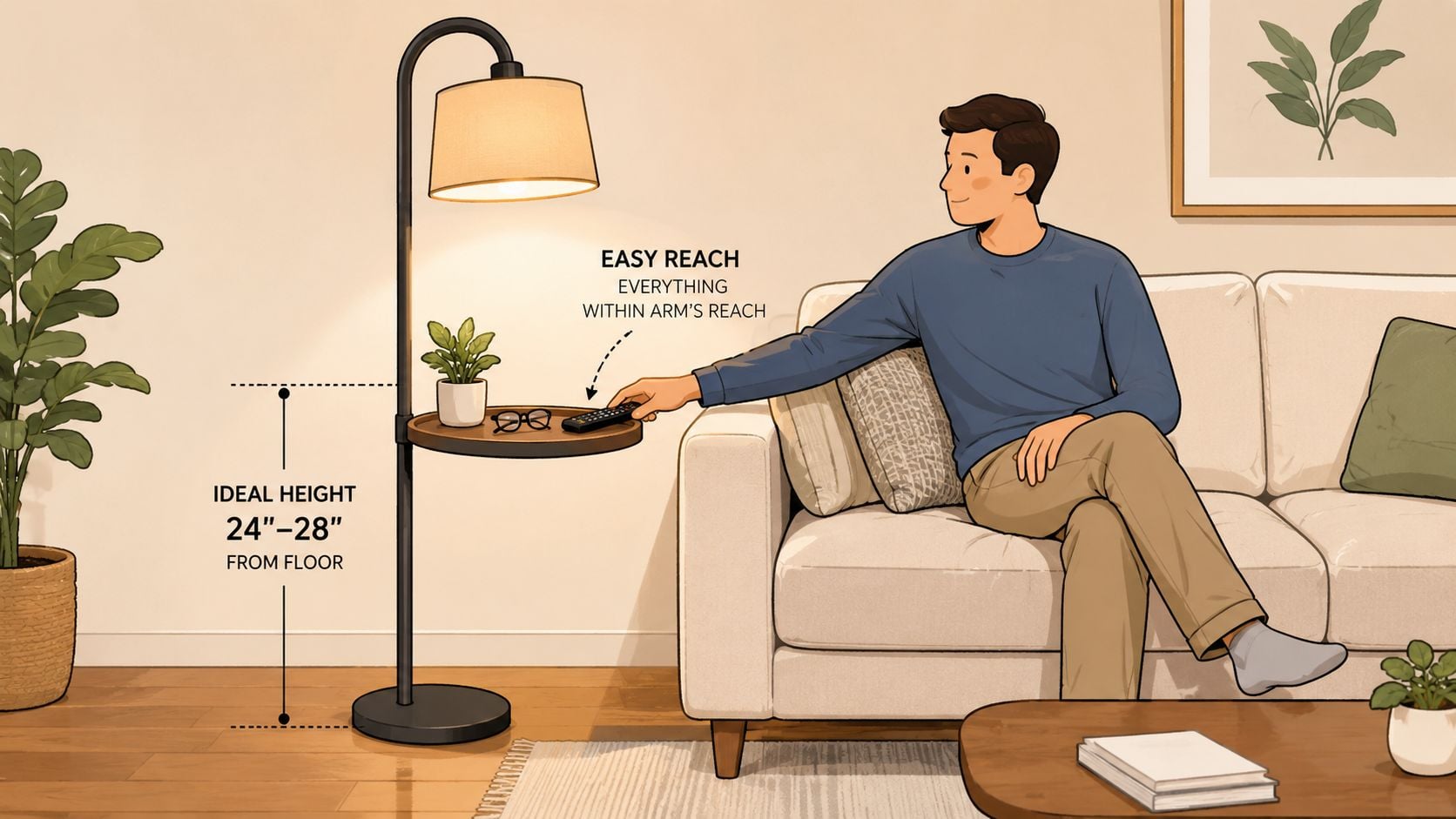
The simplest way to choose well is to look at what the room already says. If the space leans clean and structured, a slim metal frame and simple shade usually fit best. If the room has warmer woods, softer upholstery, and a more relaxed feel, a tray with a walnut or wood-tone finish tends to land better.
That's the same thinking behind choosing metal accents that work with the rest of a room. A finish shouldn't feel isolated. It should connect to something already present.
Three common style directions work especially well:
- Modern: Black metal, brushed finishes, simple drum shades, restrained lines
- Mid-century inspired: Walnut tones, rounded trays, warm neutrals, lighter visual weight
- Industrial or urban: Dark metal, stronger structure, visible hardware, bolder profile
Rooms with upholstered pieces from makers known for lasting comfort, such as Flexsteel or Craftmaster, usually benefit from the same approach. Keep the lamp substantial enough to hold its own, but not so heavy that it dominates the seating area.
Materials matter more than people think
A tray table lamp gets touched constantly. That means the finish can't just photograph well. It has to live well.
Here's what to evaluate:
- Wood or wood-look trays: Warm and approachable. Best for softening a room with a lot of upholstery or painted surfaces.
- Metal trays: Stronger visual edge. Good in cleaner, more architectural spaces.
- Fabric shades: Better for softer, diffused light in living rooms and bedrooms.
- Harder-edged shades: Better when the goal is sharper task lighting and a more modern look.
The tray is not just decorative. It's a work surface in disguise.
That's why flimsy construction is a mistake. The piece needs to feel stable when someone sets down a mug, reaches for glasses, or brushes past it in a tighter room.
Don't ignore the power features
This category has improved because newer designs do more than hold a drink. Modern floor lamps with tray tables often integrate USB-A ports (5V/2A), AC outlets (120V/15A), and dimmable LED lighting, reducing visible cable clutter by a reported 65% and turning the lamp into a charging and work station, according to Lamps Plus product category information.
That changes how useful the piece is in everyday life.
A good feature set can make a corner work harder:
| Feature | Why it helps |
|---|---|
| USB-A port | Charges a phone or e-reader without reaching for a wall outlet |
| AC outlet | Supports a laptop, small device, or additional charger |
| Dimmable light | Adjusts the mood from bright reading to softer evening light |
For homes with a F9 Custom Sofa or a favorite lounge chair used every night, those details matter. The lamp becomes part of a routine, not just part of the décor.
What to prioritize before buying
A quick checklist helps narrow the field:
- Match the finish to the room's anchor pieces, not to a random accent.
- Choose a tray surface that can handle daily use without looking precious.
- Prefer dimmable lighting over fixed brightness.
- Treat built-in charging as a real convenience, especially in reading areas and bedrooms.
- Keep the scale honest. A tiny lamp beside a deep sofa usually looks lost.
The best pick isn't the fanciest one. It's the one that supports how the room is used.
Sizing and Placement for Your Norwich Home
A floor lamp with a tray table can be beautifully made and still fail if the height is wrong. Many buyers frequently make an incorrect selection here. They focus on finish and forget ergonomics.
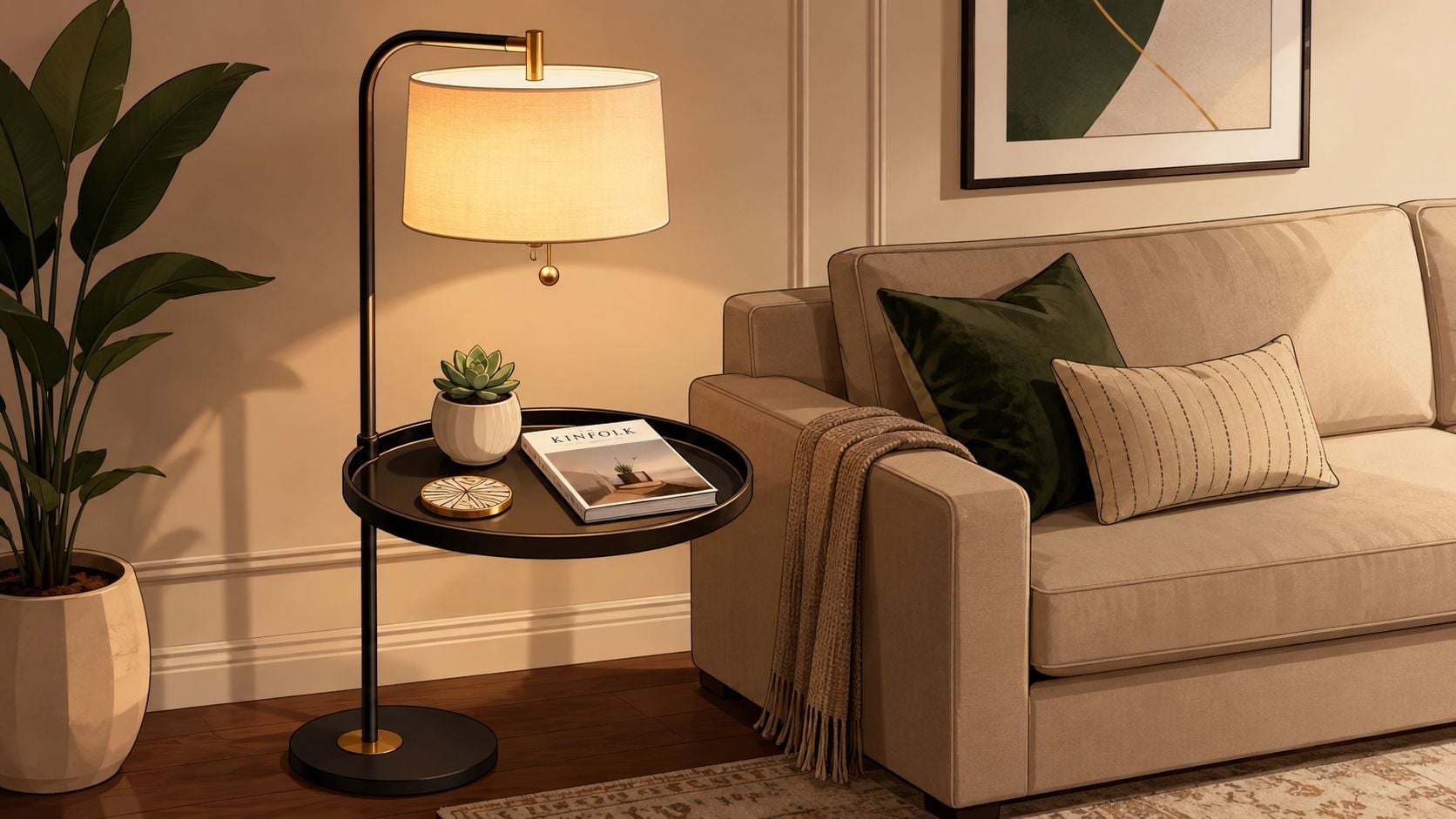
The lamp itself needs proper vertical placement. Floor lamps with trays are typically 58" to 64" tall to position the shade above a seated person's eye level and prevent glare. But the tray deserves equal attention. A standard tray height of 24 to 26 inches can cause strain for some users, and 38% of adults over 50 experience upper-limb strain during seated reaching tasks, according to this tray-table floor lamp guidance. That's the overlooked issue.
A room plan that supports comfort starts with basics like living room furniture placement. Reach, height, and spacing decide whether a piece is helpful or annoying.
Get the lamp height right first
The shade should sit high enough that someone seated doesn't stare straight into the bulb or lower edge of the shade. If glare shows up, the lamp is too low or poorly positioned.
Use this simple placement logic:
- Beside a reading chair: Keep the light close enough for task use, but high enough to stay out of direct sight lines.
- At the sofa corner: Align the lamp so it supports the seat that uses it most, not the geometric center of the sofa.
- Near a bed: Make sure the light can be reached comfortably without needing to lean far forward.
The tray height test people skip
This is the part that deserves more blunt advice. Don't buy a tray table lamp until the seated reach feels natural.
A standard tray may work well beside one chair and feel awkward beside another. Low-profile seats, deep cushions, and reclined lounging positions change the math. If the user has to twist, lift the shoulder, or reach behind the torso, the tray is badly matched to the seat.
If the tray only works when someone sits upright in one exact position, it doesn't work well enough.
A quick at-home test helps:
- Sit in the chair or sofa where the lamp will go.
- Rest the arm naturally at the side.
- Reach out as if setting down a mug.
- Notice whether the shoulder rises, the torso rotates, or the hand has to search.
If any of that happens, the tray is too low, too far back, or too far forward.
Best placement by room type
Different rooms need different priorities.
- Living room: Place the tray slightly forward of the seated shoulder line so it's easy to use without twisting.
- Bedroom: Keep the tray clear enough for essentials only, such as a phone, glasses, or water.
- Reading nook: Prioritize the relationship between chair arm height and tray height over everything else.
- Small apartment corner: Use the lamp to replace a side table, not compete with one.
A few placement mistakes show up repeatedly:
| Mistake | Result |
|---|---|
| Lamp tucked too far behind the chair | Reaching becomes awkward |
| Tray crowded by sofa arm | Surface becomes unusable |
| Shade too low | Glare and visual discomfort |
| Piece too large for the corner | Walkway feels blocked |
Good design isn't only visual. It's physical. A lamp people can reach easily and use comfortably will outperform a prettier one that asks too much of the body.
Styling Your Lamp Like a Professional Designer
Once the lamp is in the right place, styling should stay controlled. The tray is small by design. Treating it like a full side table is the fastest way to ruin the look.
Keep the tray useful, not crowded
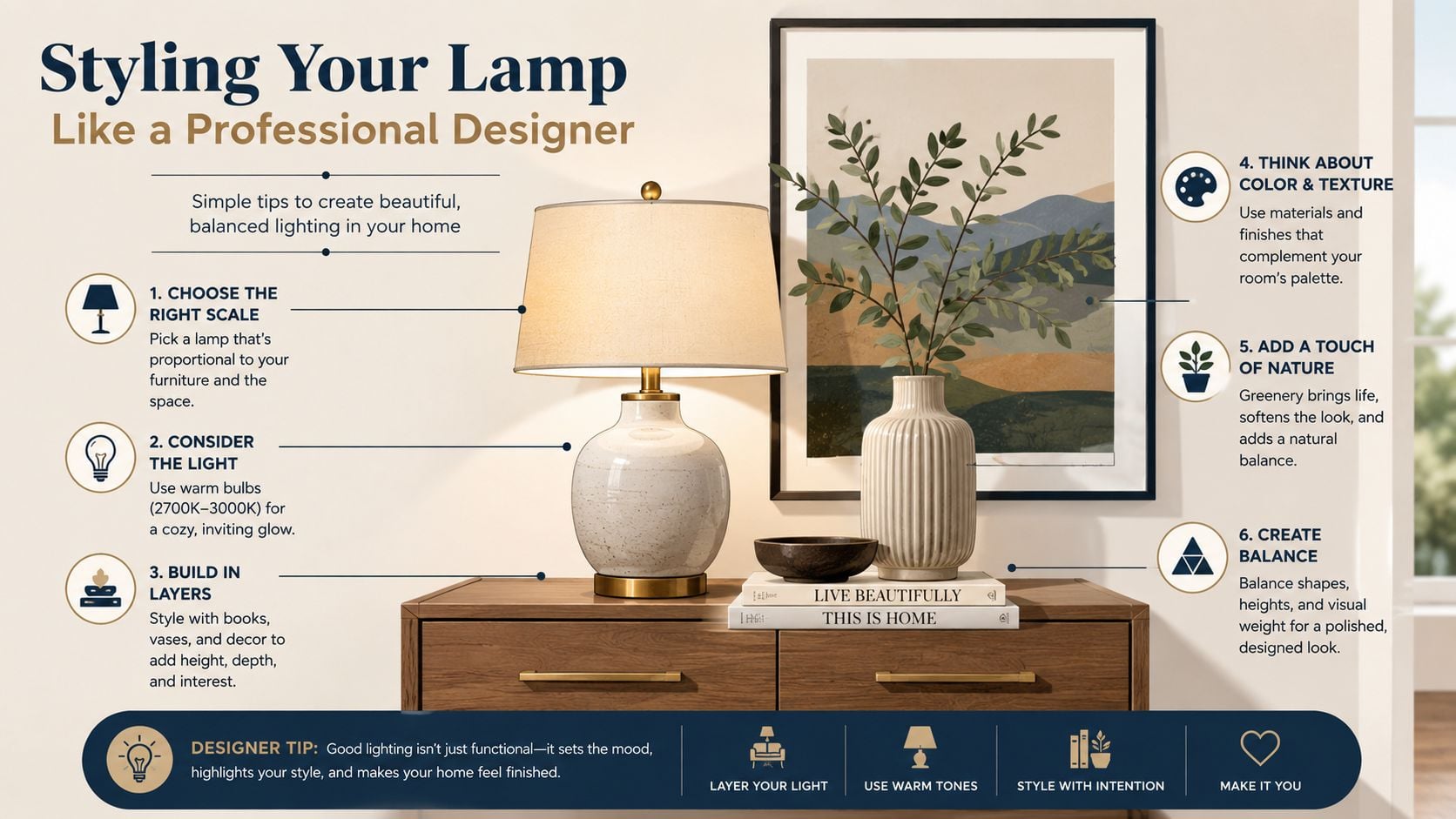
The best-styled tray table lamps look edited. One or two objects plus open space usually beat a pile of accessories.
A few combinations work well:
- Reading chair setup: a coaster, current book, and nothing else
- Living room sofa corner: a small candle, remote, and tidy drink spot
- Bedroom use: phone, glasses, and a single decorative touch
- Guest room: water glass and a small welcoming accent
That restraint matters because the lamp is already doing visual work. The tray doesn't need to prove anything.
Good styling leaves room for real life.
Match the lamp to the furniture around it
The tray table lamp should relate to nearby pieces in tone and scale. Beside an F9 Custom Sofa, a more refined lamp with a clean profile usually looks sharper than something rustic or overly ornate. In a softer, classic room, a warmer finish and fabric shade help the piece settle in.
The same principle applies in bedrooms. A tray table lamp can replace a traditional nightstand in a smaller layout, especially when paired with the premium comfort focus found in a Sleep Gallery built around names like Tempur-Pedic, Serta, and Beautyrest. The goal is comfort by feel, not visual clutter.
A few styling moves consistently work:
- Repeat one finish: Match the lamp to metal accents, wood tones, or hardware already in the room.
- Echo one shape: A round tray can soften a room full of square tables and straight arms.
- Use one organic element: A small plant or stem adds life without stealing space.
Smart home buyers should ask better questions
Tech-friendly buyers often assume a lamp with charging ports also supports automation. That's not always the case. A 2025 Pew Research Center report indicates that 62% of US homeowners use smart lighting, yet few product pages for tray table lamps mention smart features or compatibility, as noted in this discussion of tray-table lamp smart home gaps.
That gap matters because smart homes are now normal in many households, not niche. Anyone buying a lamp for a bedroom, reading nook, or living room should check whether the fixture works with a smart bulb, voice routine, or app-based lighting setup.
A simple decision guide helps:
| Buyer type | Best approach |
|---|---|
| Wants simple convenience | Choose built-in charging and dimming |
| Wants smart control | Confirm bulb compatibility before buying |
| Wants a bedroom substitute for a nightstand | Prioritize easy reach and soft evening light |
| Wants a reading corner upgrade | Prioritize focused light and minimal tray styling |
A professional-looking result usually comes from restraint, consistency, and a setup that supports the way the room is used after dark.
Experience Quality and Value at Gorins
Buying functional furniture should feel straightforward. It should also feel worth the investment. That's why local service still matters.
Gorins Furniture & Mattress was established in 1936, and the store offers promotional financing through partners such as TD Bank with equal monthly payment programs that help lower the barrier to entry for larger purchases, according to this business profile reference. For neighbors in Norwich and across Eastern CT, that legacy matters because it reflects staying power, not flash.
Why local guidance still wins
Floor lamps with tray tables look simple until the wrong height, finish, or scale lands in the room. Then the problems show up fast. The tray is awkward. The light glares. The metal clashes with the rest of the space.
That's where a family-operated showroom has an advantage. A good furniture decision usually needs context. What's next to the lamp. How deep the sofa is. Whether the chair sits low. Whether the room needs a warm wood tone or a cleaner metal finish.
Shoppers who care about materials often use outside reading to sharpen their eye. A quick guide to faux fur quality tests is a good example of how construction details reveal whether something is made well or made fast. That same thinking applies to lighting and occasional furniture. Quality shows up in stability, finish consistency, and how a piece handles everyday use.
More than one-room shopping
Gorins also stands out because the showroom supports full-home thinking, not isolated purchases. As a premier partner of Canadel Custom Dining, the store offers thousands of combinations of sizes, shapes, finishes, and fabrics for dining pieces designed to fit a household's lifestyle, as detailed on this custom furniture guidance page. The same custom approach carries into living room planning with custom options such as the F9 Custom Sofa series and trusted names like Best Home Furnishings.
For households also upgrading rest and recovery, the mattress side matters too. A local showroom gives buyers the chance to compare Tempur-Pedic, Serta, and Beautyrest by comfort feel instead of guessing from a screen. That's a smarter path to healthier sleep.
Promotional Financing helps, but the stronger value is the combination of neighborly guidance, customization, and long-term service. That's what makes a purchase feel considered instead of rushed.
Since 1936, Gorins Furniture & Mattress has helped Norwich and Eastern CT families create homes they love. From custom-designed Canadel dining sets to the latest in Tempur-Pedic sleep technology, the showroom combines a massive selection with the personalized care only a local, family-owned business can provide. Visit the Norwich showroom, take the online Style Quiz, or browse the Clearance section for value-driven savings and 5-Star Delivery service.