Maximize Your Home: Best Furniture for Small Spaces

A Norwich homeowner stands in a living room with sloped floors, a narrow entry, and one short wall that seems too small for a real sofa and too important to leave empty. The coffee table bumps knees. The bookshelf blocks a walkway. The room works, but only barely. That kind of problem isn't unusual in Eastern Connecticut, where older homes, apartments, and compact condos often ask one room to do several jobs at once.
The good news is that furnishing a small home isn't about settling for less. It's about choosing pieces that fit the room, the traffic flow, and the way daily life unfolds. For neighbors trying to find the best furniture for small spaces, smart planning usually matters more than buying the tiniest item on the floor.
Since 1936, Gorins has helped local families think through those decisions with a practical eye. The strongest small-space rooms don't look stripped down. They look intentional. For anyone who wants a few visual ideas before getting into measurements, Gorins shares helpful tips on how to make a small room feel big.
Table of Contents
- Making Big Style Happen in Small Norwich Spaces
- Measure Twice Buy Once Your Small Space Blueprint
- The Art of Multifunctionality Choosing Smart Furniture
- Furnishing Your Small Living Room with Confidence
- Creating a Dining Area in Any Corner
- Why Custom Furniture is Your Secret Weapon
- The Gorins Advantage From Showroom to Your Home
Making Big Style Happen in Small Norwich Spaces
Small rooms usually don't fail because they're small. They fail because every piece is trying to solve only one problem.
A compact Norwich living room might need to handle movie night, overnight guests, toy storage, and a place to answer emails. In many older homes, the walls aren't perfectly placed for standard furniture sizes. A radiator steals one corner. A doorway interrupts another. That's why off-the-rack advice often feels incomplete.
Local rooms rarely have standard proportions
A narrow New London apartment and a small Waterford cape can have the same square footage but need completely different furniture plans. One may need slimmer seating. Another may need a dining table that expands only when family visits. A third may need storage hidden in plain sight because there's no extra closet nearby.
That's where a local design mindset helps. Instead of asking, “What's the smallest sofa available?” the better question is, “What shape, scale, and function will let this room breathe?”
Small-space design works best when every item has a reason to be there.
That idea changes the shopping process. It shifts attention from bargain hunting to fit, use, and long-term comfort. It also keeps a room from looking like it was furnished with leftovers.
Investment-grade choices can still feel approachable
Many shoppers assume a small home calls for temporary furniture. That often backfires. Flimsy pieces may fit the room, but they don't hold up, and they rarely solve the deeper layout issue. Furniture chosen to fit your lifestyle tends to perform better because they account for the room's quirks from the start.
A thoughtful small-space room often includes:
- One anchor piece: usually the main seating or dining surface
- One hidden-storage piece: to reduce visible clutter
- One visually light piece: to keep the room from feeling heavy
- A clear path through the room: so movement feels natural
For homeowners and renters searching for the best furniture for small spaces, the goal isn't to strip personality out of the room. The goal is to make every inch work harder, without making the room feel crowded.
Measure Twice Buy Once Your Small Space Blueprint
Buying before measuring is one of the fastest ways to make a small room feel smaller. In compact homes, a piece doesn't just have to fit the floor plan. It also has to make it through the front door, around the stair turn, and past whatever tight hallway stands in the way.
Start with the room and the route
Measure the room first, then measure the path into it. That means wall lengths, window placement, and the distance between fixed features such as radiators or built-ins. After that, check doorways, stairwells, and hallways.
A simple sketch is enough. It doesn't have to be pretty. It just has to answer the questions that matter.
- Mark the usable walls: note where furniture can sit.
- Track swing space: doors need room to open without hitting furniture.
- Identify traffic lanes: people need to move through the room easily.
- Measure access points: a perfect sofa is still wrong if it can't get inside.
For anyone who wants a practical checklist before shopping, Gorins offers a room-planning guide on how to measure furniture.
Use the 40 percent rule as a guardrail
A foundational rule of thumb in interior design for optimizing small spaces is to limit furniture to occupy no more than 40% of the total floor area. Exceeding that 40% threshold causes a room to feel crowded and claustrophobic.
That number matters because small rooms need negative space. Empty floor isn't wasted floor. It's what allows the room to feel usable, open, and calm.
Practical rule: If the layout looks right on paper but leaves no breathing room, the room is already overfurnished.
A helpful way to think about it is this:
| Room planning question | Why it matters in a small space |
|---|---|
| Can someone walk through without turning sideways? | Good flow keeps the room functional |
| Does the biggest piece dominate the floor? | Heavy occupancy makes the room feel tight |
| Are there open areas left visible? | Floor visibility helps a room feel larger |
The same planning discipline shows up in commercial layouts too. Readers interested in how professionals think about circulation and layout can see similar principles in optimizing office environments.
Small-space planning isn't glamorous, but it prevents expensive mistakes. A tape measure does more for a room than guesswork ever will.
The Art of Multifunctionality Choosing Smart Furniture
In a small home, the strongest furniture pieces do more than one job. They sit, store, open, fold, or adapt. That's what turns a cramped room into a flexible one.
The pieces that earn their footprint
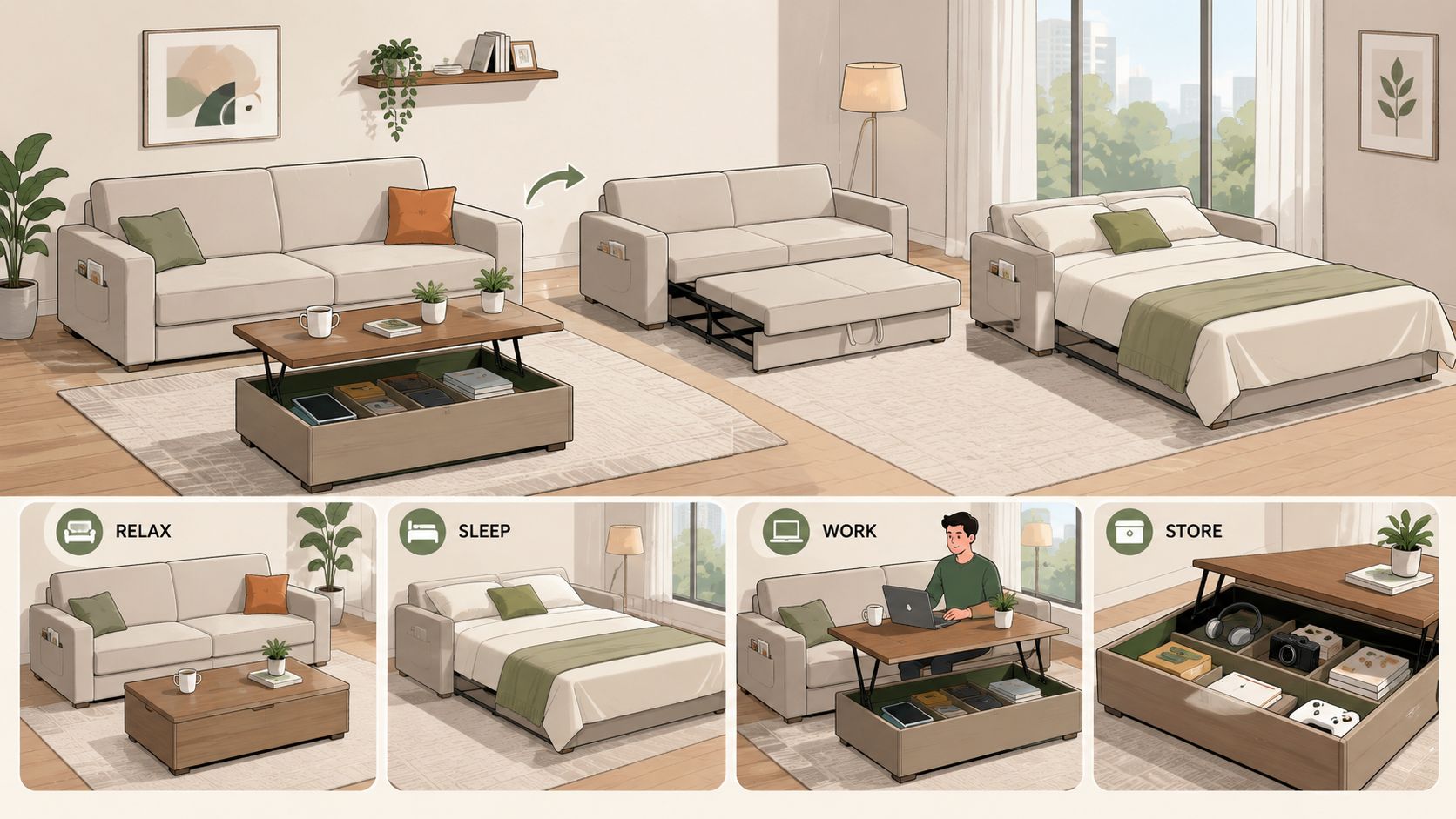
A living room that doubles as a guest room benefits from a sleeper. A coffee table that lifts can become a casual work surface. An ottoman with concealed storage can hold blankets, games, or seasonal items that would otherwise require another cabinet.
Furniture with hidden storage mechanisms, like under-cushion ottomans or lift-top tables, can effectively save 15-20 square feet of floor space per unit by reducing the need for secondary storage units.
That's a meaningful shift in a small room. Removing even one extra storage piece can change how open the whole layout feels.
A few especially useful categories include:
- Sleeper seating: gives a home a guest solution without dedicating a separate room
- Lift-top tables: support laptop use, casual dining, or homework in the living area
- Storage ottomans: hide everyday clutter while adding seating or a footrest
- Nesting tables: spread out when needed, tuck away when not
Readers who enjoy browsing more examples can find additional Endless Storage furniture ideas that show how dual-purpose pieces can reduce clutter.
How one room can do more without feeling busy
The trick isn't filling a room with gimmicks. The trick is selecting one or two pieces that solve real daily problems.
A compact room might work better with a sleeper sofa and one storage ottoman than with a standard sofa, separate guest bedding cabinet, and extra side chair. Fewer pieces can deliver more utility if the right ones are chosen.
Showroom testing is helpful. A multifunctional item still has to feel comfortable in its primary role. A sleeper should still work as everyday seating. A lift-top table should still feel stable and proportionate. Shoppers looking for examples in a living room setting can review multifunctional living room furniture to compare what earns its space and what doesn't.
A small room feels better when furniture adapts quietly instead of demanding attention.
That's why the best furniture for small spaces usually isn't the piece with the most features. It's the one that removes the need for something else.
Furnishing Your Small Living Room with Confidence
The initial focus tends to be on sofa length. In a small living room, depth often matters more.
A sofa can technically fit against the wall and still make the whole room feel blocked. That happens when the piece pushes too far into the walking area or looks visually heavy from every angle.

Why scale beats size
Scale is about proportion. A piece can be small in absolute terms and still feel wrong if it has oversized arms, a bulky base, or a low blocky profile.
That's why “buying smaller” doesn't always solve the issue. A compact room often responds better to furniture that looks lighter, even if the seating area itself remains comfortable.
One reliable visual strategy is choosing leggy furniture. Pieces supported on slender legs let more floor remain visible, which helps the room read as more open rather than interrupted by solid mass.
The eye follows the floor. When more floor stays visible, the room usually feels less crowded.
That principle matters for more than chairs. Consoles, accent seating, and some sofa profiles all benefit from visible clearance underneath.
What to look for in a sofa
Sofas designed for small spaces should have a depth of 38 inches or less to avoid overwhelming the room. Models under this 38-inch threshold are widely recommended by designers for apartment-sized living areas.
That benchmark gives shoppers a practical filter. If two sofas are the same length, the shallower one often preserves more walkway space and feels calmer in the room.
A quick evaluation checklist helps:
- Check the depth first: depth affects circulation more than many shoppers expect
- Look at the arms: slim arms can preserve seating space without adding bulk
- Study the base: raised legs create a lighter profile than a solid block base
- Test the sit: a good small-space sofa still needs to support daily comfort
Some readers also like to compare modular thinking before shopping, and Cubicle By Design furniture solutions offer one example of how flexible seating concepts are discussed in compact layouts.
For unusual rooms, standard dimensions may still miss the mark. The F9 Series is one custom-order option that allows adjustments to details such as arm style, depth, and overall scale so a sofa suits the wall and the room around it rather than forcing the room to work around the sofa. That's often the difference between a living room that looks almost right and one that finally feels settled.
Creating a Dining Area in Any Corner
Small homes don't always have a formal dining room, but that doesn't mean they can't have a real dining area. A corner of the kitchen, the end of a living room, or a window nook can all work if the table shape and seating plan are chosen carefully.

Shapes that help a small room breathe
Round pedestal tables are often helpful in tight areas because they soften traffic flow and remove hard corners. Drop-leaf tables work well where floor space has to change from day to day. Benches can slide in neatly and avoid the visual clutter of several chair backs.
Each shape solves a different problem:
- Round tables: improve movement in corners and pass-through spaces
- Drop-leaf styles: stay compact most days and expand when needed
- Benches: tuck away and reduce visual interruption
- Pedestal bases: make legroom more flexible than four-corner legs
The right table doesn't just fit the room. It fits how the room changes throughout the week.
Why custom dining solves awkward layouts
Given the challenges of fitting furniture in small spaces, custom sizing becomes especially useful. Standard tables often miss by just enough to create frustration. They're too wide for the walkway, too long for the wall, or visually too heavy for the spot where they need to live.
Custom dining tables from manufacturers like Canadel allow for over 3,000 unique combinations of sizes, shapes, finishes, and fabrics, enabling homeowners to create a bespoke centerpiece that perfectly fits their specific room dimensions.
That flexibility matters in homes where the dining area shares space with the kitchen or living room. Instead of settling for a piece that's close enough, shoppers can fine-tune the proportions and style so the room feels intentional.
A useful starting point for planning is this guide to dining furniture for small spaces.
A small dining area works best when the table supports the room instead of claiming the room.
For Norwich and Eastern CT households, custom dining can be the move that makes a hard-to-use corner become the most welcoming spot in the home.
Why Custom Furniture is Your Secret Weapon
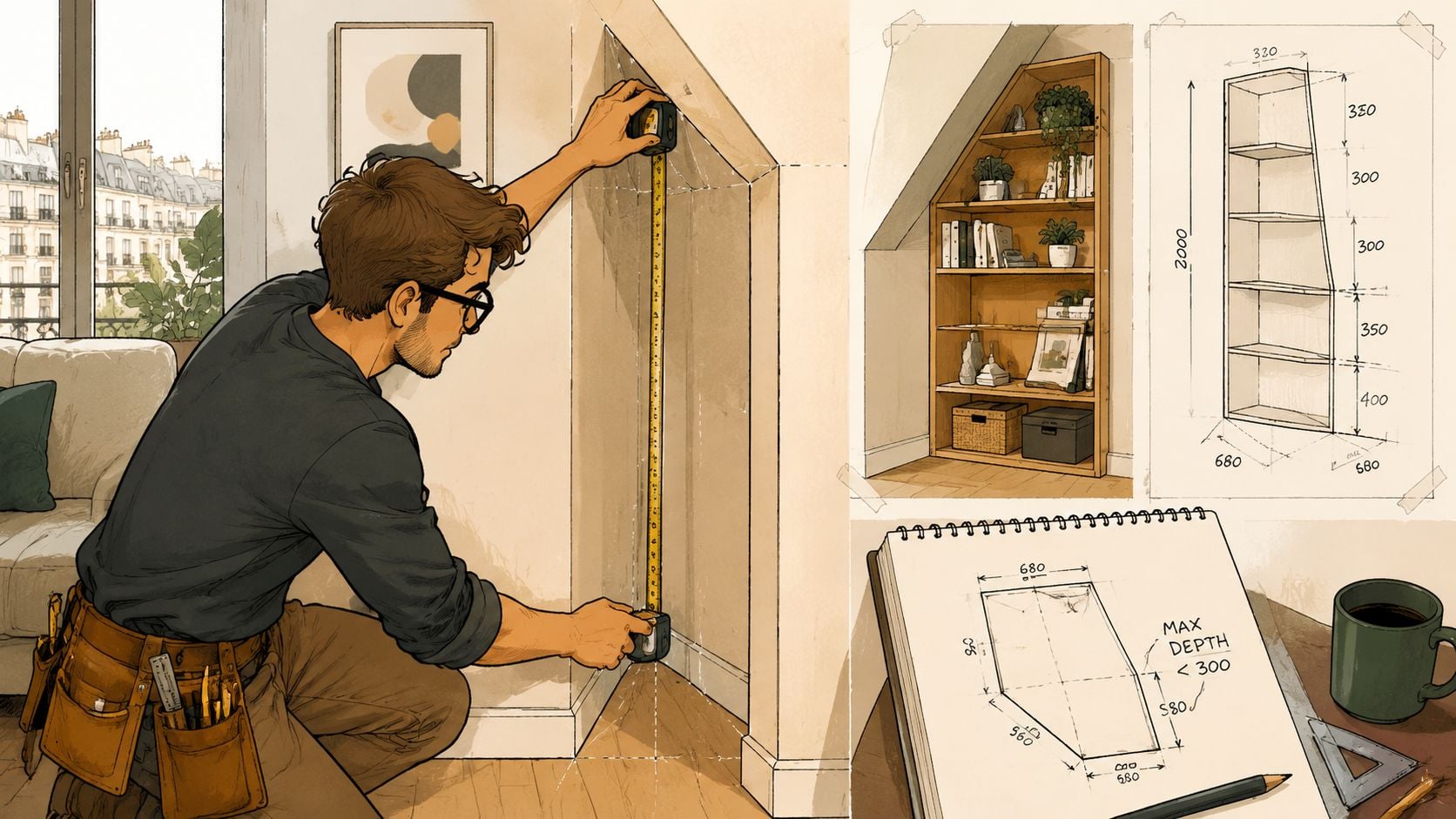
Generic small-space advice often boils down to one message: buy smaller pieces. That sounds logical, but it misses a crucial point. Small rooms often aren't standard rectangles, and individuals rarely live standard lives.
The problem with just buying small
An undersized sofa may leave awkward gaps. A tiny table may fit physically but fail functionally. A narrow cabinet may clear the wall but provide so little storage that clutter spills somewhere else.
That's the customization paradox. Small spaces need more precision, not less.
A 2024 NAHB study found that 68% of urban apartment owners with spaces under 600 sq. ft. struggle to find furniture that fits their specific room dimensions, a problem custom-order programs directly solve.
That finding lines up with what many shoppers already sense. The challenge usually isn't finding furniture that's technically small. It's finding furniture with the right width, depth, arm profile, storage capacity, or visual weight for one specific room.
A better fit for real homes
Custom ordering isn't only about style. It's often the practical route when a room has an odd wall length, a narrow opening, or multiple uses. The goal is to buy smart, not merely buy less.
That's why programs built around custom dimensions can make more sense than repeatedly trying to force standard pieces into nonstandard spaces. For readers exploring that route, custom furniture made simple outlines how made-to-order choices can be easier to evaluate than many expect.
A better small-space purchase usually does three things at once:
- Fits the room: without wasted gaps or blocked paths
- Supports the household: by matching real habits and storage needs
- Stays relevant longer: because it was chosen for the home, not just for a sale tag
For many compact homes, customization isn't an upgrade. It's the clearest path to a room that works.
The Gorins Advantage From Showroom to Your Home
A smart furniture plan still needs a smooth buying process. That's where local service matters.
Since 1936, a family-operated showroom approach has helped Eastern CT households slow down, compare options by feel, and make decisions with less pressure. That matters in small spaces because comfort and fit are hard to judge from a photo alone. It also matters for sleep shoppers, where comfort by feel can shape a better mattress choice from collections that include Tempur-Pedic, Serta, and Beautyrest.
Financial flexibility is part of that value too. Promotional Financing with equal monthly payments can make investment-grade quality more manageable when a shopper needs to solve a room properly instead of piecing it together in stages. Delivery matters just as much. A 5-Star Delivery service helps ensure the furniture arrives, is handled carefully, and is set in place with the room plan in mind.
For homeowners and renters in Norwich, Plainfield, New London, Waterford, and nearby Eastern CT and Rhode Island communities, the best furniture for small spaces is usually the furniture that removes friction from daily life. It fits. It functions. It lasts.
Since 1936, Gorins Furniture & Mattress has helped Norwich and Eastern CT families create homes they love. From custom-designed Canadel dining sets to the latest in Tempur-Pedic sleep technology, the showroom combines a massive selection with the personalized care only a local, family-owned business can provide. Visit the Norwich showroom, take the online Style Quiz, or browse the Clearance section for value-driven savings and experience quality, value, and 5-Star Delivery service.