
Mattress Protector for Hot Sleepers: A Practical Guide 2026

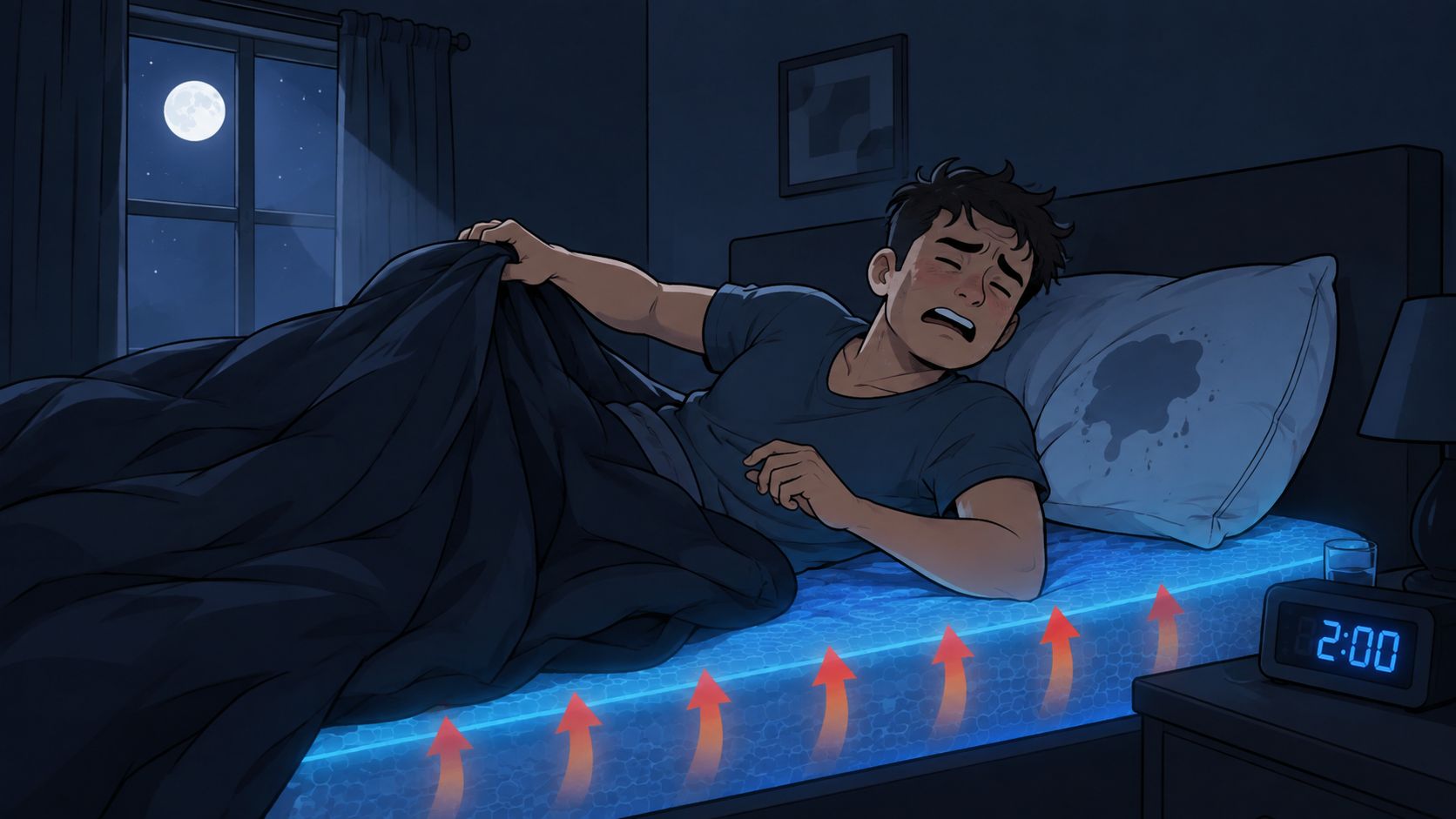
You know the drill on a warm Norwich night. The room feels fine when the lights go out, then somewhere around 2 a.m. the covers get kicked off, the pillow turns clammy, and sleep starts to break into little fragments. A mattress protector for hot sleepers can help with that, but only if it's doing the right job, because not every protector solves overheating.
A good cooling protector is a thermal-management layer, not just a hygiene cover. The right one can help move moisture away, keep liquid spills from reaching the mattress, and reduce the trapped-heat feeling that makes the second half of the night feel longer than the first. Gorins Furniture & Mattress has spent decades helping our neighbors in Norwich sort out those details with plain advice, and this guide follows the same approach, step by step.
If the bedroom feels stuffy too, small changes can help alongside bedding. A practical starting point is using a humidifier before bed, especially when dry indoor air makes sleep feel scratchy and uncomfortable. For a broader room-by-room approach, Gorins also keeps a helpful guide on how to sleep cooler at night.
Why Hot Sleepers Wake Up Tired
A hot sleeper rarely wakes up because of heat alone. More often, the body gets a little too warm, sweat builds up against the sleep surface, and the bed starts to feel damp, sticky, and hard to settle into again. That's why the familiar 2 a.m. flipping routine can feel endless, even when the mattress itself is otherwise comfortable.
Heat and moisture usually gather where the body meets the bed. If the surface can't move warmth and vapor away, the sleeper feels trapped in a pocket of humid air, and that discomfort can interrupt the smooth slide into deeper rest. A protector can help here, but only when it lets the bed breathe instead of sealing it off.
Population data show this isn't a niche complaint. A 2023 Gallup study reported by Consumer Reports found that 14% of U.S. adults say they are too hot when sleeping or trying to sleep all or most of the time, and women were about twice as likely as men to report it, at 18% versus 10% Consumer Reports. That helps explain why so many shoppers now ask about cooling bedding before they ask about firmness.
Practical rule: if the bed feels hot before the room feels hot, the sleep surface is part of the problem.
A mattress protector won't fix every source of night sweats. Still, the right one can be a meaningful first-line change because it works right where the discomfort starts, at the surface. A real-world field study published in SLEEP found measurable cooling-related sleep benefits after a cooling protector was used for six weeks, including a 7-minute reduction in sleep onset latency for participants who reported sleeping hot or having night sweats SLEEP.
How Heat Moves Through a Mattress Protector
A protector sits between the sleeper and the mattress, so it has to manage two things at once. It needs to stop liquid from reaching the mattress, and it needs to avoid creating a sealed layer that traps body heat and sweat vapor. The difference between those two jobs is the difference between sleeping cooler and just sleeping drier.
Why old-school waterproofing feels hot
Older vinyl-style protectors often failed hot sleepers because they blocked moisture too well. Sweat had nowhere to go, so warmth and humidity pooled under the body and made the bed feel sticky. That's why breathable construction matters more than a marketing label that says “cool.”
Modern designs use thin TPU or PU membranes with microscopic pores. Those membranes can block liquid water while still letting water vapor pass, which helps reduce the trapped-heat effect common in older protectors Ritual Guide. In plain language, the protector should keep spills out, but it shouldn't put the body in a plastic bag.
Why surface cooling matters
A useful clue comes from independent sleep research cited by Sleep.me. A 2026 Loughborough University study found that cooling the mattress directly, rather than the room, cut time spent awake at night by 40% Consumer Reports. That doesn't mean the room no longer matters, but it does show that the sleep surface itself is a serious lever.
Cooling works best when the bed can release heat instead of storing it.
That's the key idea behind a mattress protector for hot sleepers. It shouldn't only repel spills. It should support airflow, let moisture escape, and avoid turning the top of the bed into a heat trap. Once that's clear, the material choices start making sense.
Cooling Materials Worth Knowing
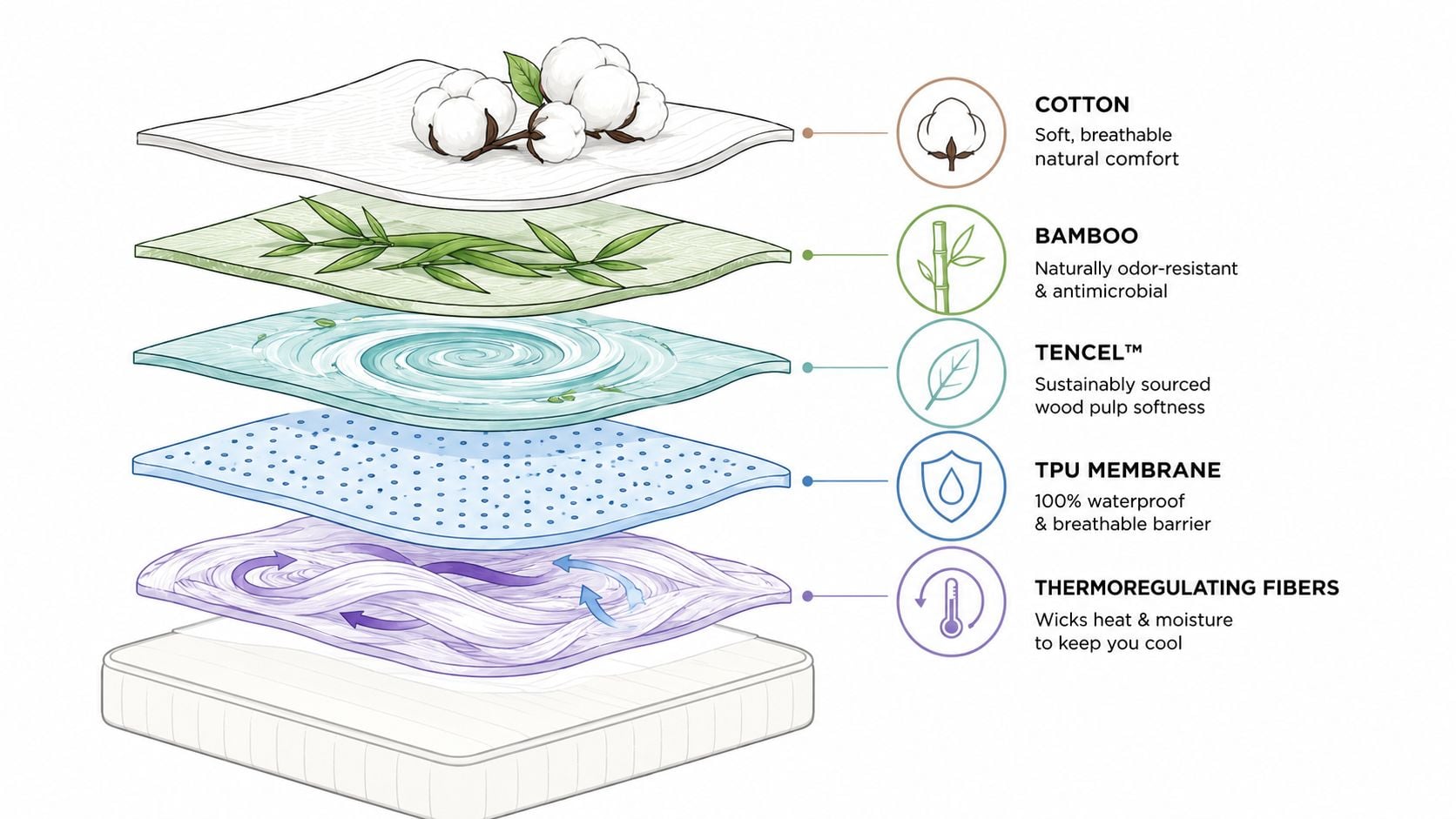
The smartest way to shop is to separate the materials by job, not by hype. Some fabrics help air move. Some pull moisture away. Others add waterproofing without turning the bed into a sweat trap. A few go further and actively regulate temperature during the warmest part of the night.
Breathable fabrics do the basic cooling
Cotton, bamboo, and TENCEL each bring a different kind of comfort. Mattress Clarity recommends breathable fabrics such as cotton, bamboo, and TENCEL because they help wick moisture and regulate temperature rather than adding a barrier that can trap heat Mattress Clarity. That matters for hot sleepers who want less clamminess, not just less mess.
A simple way to think about it is this. Cotton feels familiar and airy. Bamboo often feels soft and supple. TENCEL is known for moisture management, which can be helpful for people who wake up damp. The right choice depends on whether the main complaint is heat, sweat, or both.
Waterproofing and cooling can coexist
The old assumption says waterproof means hot. That's no longer true across the category. Independent coverage from Business Insider highlighted a waterproof protector for hot sleepers because it stayed cool, had excellent heat dissipation, and still kept liquids from penetrating through Business Insider. Good Housekeeping also singled out a protector as “Best for Hot Sleepers,” which shows that cooling is now a distinct performance standard in mainstream testing Good Housekeeping.
Active cooling materials add another layer
Some protectors go beyond passive breathability and use phase-change materials or thermoregulating fibers. Materials like HeiQ Smart Temp, Outlast, TitanCool, or Coolmax-style knits are designed to absorb excess heat during spikes and release it later, which can ease the start-of-night heat build-up that bothers many hot sleepers most. A product page for a temperature-balancing protector describes that kind of active thermal regulation clearly John Lewis.
The SLEEP field study makes this feel less abstract. Participants reported feeling cooler, more comfortable, less likely to sleep hot, and more well-rested in the morning, and those changes were statistically significant at p<.05 SLEEP. That doesn't mean every cooling protector works the same way, but it does show the category can produce real sleep benefits when the design is right.
Fit, Depth, and Warranty Considerations
A cooling protector can only do its job if it fits the mattress. Too shallow, and it pops loose at the corners. Too loose, and it bunches under the sheet, which can create hot spots and make the surface feel uneven. That's why depth matters just as much as fabric.
Compare the specs before buying
A useful checklist keeps the decision simple:
- Measure the length and width first: Those are the easy numbers, but they still need to match the mattress exactly.
- Measure depth at the deepest point: Pillow tops and plush tops often need more room than a standard slab mattress.
- Check the pocket rating: If the protector is built for a shallow bed, it won't stay smooth on a deeper one.
- Look for breathable waterproof construction: Perforated TPU or PU is the detail worth finding, not just the word “waterproof.”
An ill-fitting protector can undo the cooling benefit. A snug, smooth fit keeps the membrane close to the mattress without wrinkles that hold heat or create pressure points. That's especially important on premium mattresses where the comfort feel is part of the purchase decision.
Protect the sleep investment you already made
Gorins' Sleep Gallery carries brands such as Tempur-Pedic, Serta, and Beautyrest, and the point of a protector is to preserve that comfort by feel and healthier sleep experience, not change it. Gorins' own Platinum Protection Plan is one example of how shoppers can think about long-term protection as part of the mattress purchase, not an afterthought Platinum Protection Plan.
Good fit preserves comfort, bad fit steals it.
For bigger bedding upgrades, Gorins also makes Promotional Financing available through equal monthly payment options, which can help lower the barrier when a protector is purchased alongside a new mattress. That keeps the focus on choosing the right sleep setup, not just the cheapest item on the shelf.
Measuring, Caring for, and Keeping It Breathable
Getting the right protector starts with the right measurements, then stays right through the wash. A cooling layer can lose its edge if it gets treated like an old bath towel. Breathability comes from both the material and the care routine.
Measure once, buy once
A quick measuring habit avoids most fit mistakes. Use a tape measure and record these three numbers:
- Length
- Width
- Depth at the deepest point
That last number matters most when the mattress has quilting, a pillow top, or any added plush layer. If a topper is part of the setup, include that in the total height before choosing a size. The fitted sheet and protector need to work together, not fight for space.
Wash it in a way that keeps the pores open
Care is where many people accidentally ruin a breathable protector. A good routine looks like this:
- Use cool or warm water: Hotter water can be harder on membranes and elastics.
- Choose a mild detergent: Heavy-duty formulas are unnecessary for normal bedding care.
- Skip chlorine bleach: Harsh cleaners can shorten the useful life of the barrier.
- Dry on low heat: High heat can damage the waterproof layer or warp the fit.
- Avoid fabric softeners: They can leave residue that clogs breathable materials.
Those basics protect the moisture-wicking and waterproof performance at the same time. For a broader maintenance routine, Gorins also has a helpful guide on mattress care tips to keep cool, clean, all summer long.
If the protector starts to smell stale even after washing, or the surface no longer feels breathable, that's a sign it may be past its best. Professional textile care for high-use bedding, such as professional mattress cleaning for hotels, is a reminder that performance fabrics need proper upkeep to stay effective. The same logic applies at home, just on a smaller scale.
Common Myths Hot Sleepers Should Stop Believing
A lot of cooling advice sounds sensible until the bed is in use. That's where the myths start to fall apart. Hot sleepers don't need prettier marketing, they need a better filter for what affects temperature.
A cool top sheet is not the whole answer
A cool-to-the-touch sheet can feel nice at first contact, but that sensation doesn't always last through the night. The surface under the sheet still matters, because a mattress that holds heat will keep feeding warmth back into the bedding. That's why a breathable protector can be part of the fix, but it can't carry the whole load by itself.
Waterproof does not automatically mean sweaty
This one keeps sticking around because older products earned the bad reputation. Modern waterproof protectors can breathe, and a good membrane can keep liquid out without sealing vapor in. Bear Valley Plumbing & Heating has a useful overview of common heating and cooling myths debunked, and the same logic applies here, the label alone doesn't tell the whole story.
Thread count is not a cooling guarantee
Higher thread count can change feel, but it doesn't automatically improve airflow. A denser fabric can feel luxe and still sleep warm. For hot sleepers, construction and breathability matter more than chasing a bigger number on the package.
Cooling bedding should be judged by feel, airflow, and moisture control, not just the marketing language on the tag.
That fits Gorins' comfort by feel philosophy in the Sleep Gallery. The right question isn't whether a product sounds cooling. The core question is whether it helps the sleeper stay comfortable without creating a new problem somewhere else.
When a Protector Is the Wrong Tool
A protector is a smart buy for spills, sweat, and keeping a mattress cleaner for longer. It is not always the best first fix for heat. If the mattress itself is the warmest part of the setup, a protector that merely avoids making it worse may still leave the sleeper frustrated.
Pick the layer that matches the problem
If the mattress is the main heat sink, a cooling topper can make a bigger difference because it changes the sleep surface more directly. If the sheets are synthetic or dense, performance sheets may deliver a faster improvement than a protector. If the room feels stale, airflow changes often beat bedding changes because the entire sleep environment is part of the temperature problem.
Gorins keeps a guide on the best cooling mattress for hot sleepers for shoppers who are still deciding whether the issue starts in the mattress or the layers above it. That kind of decision matters because a thin protector can't compensate for a bed that already sleeps hot.
Use testing cues, not guesses
Sleepopolis notes that mattress protectors are commonly chosen for protection, but heat retention remains a specific selection factor in its reviews Sleepopolis. That's a useful mindset for shoppers. If a product doesn't clearly address heat management, it may protect the mattress without improving the sleep experience.
The best choice depends on where the heat is coming from. If the body feels warm from the moment it lies down, surface materials matter most. If the room warms up overnight, bedding alone won't fully solve it. If both are happening, the answer may be a combination rather than a single purchase.
Your Cooling Bedding Checklist and Next Steps

The simplest cooling plan is the one a shopper can use in the Norwich showroom. Start with the mattress depth, then pick the right fabric family, then make sure the waterproof layer breathes. After that, care and fit keep the whole setup working night after night.
Quick checklist for hot sleepers
- Confirm the mattress depth: Measure at the deepest point before ordering anything.
- Choose the right fabric family: Cotton, bamboo, or TENCEL can each suit different sleep needs.
- Verify breathable waterproofing: Look for perforated TPU or PU instead of old-style sealed plastic.
- Plan the wash routine now: Mild detergent, low heat, and no fabric softener.
- Decide whether the issue is really the protector: Sometimes a topper, sheets, or room airflow will do more.
For shoppers who want to feel the difference in person, the Norwich showroom is a good place to compare bedding options by touch instead of guessing from a label. The online Style Quiz can also narrow the choices before a visit, and the Clearance section can help when value matters as much as comfort. For larger sleep purchases, Promotional Financing can make a new setup more manageable without pushing the budget too hard.
Gorins has been part of Norwich since 1936, and that long local history shows up in the way the team talks about sleep, with practical guidance and no pressure. The right cooling protector should support Quality, Value, and Helpful Service, the same three pillars that have guided the showroom for generations. If the current bed still runs hot, the next step is simple, go feel the options, compare the fit, and choose the layer that solves the problem.
Visit Gorins Furniture & Mattress to compare cooling protectors, mattress options, and sleep accessories with a local team that understands how Norwich homes really sleep. If the current setup still wakes someone up hot, the showroom can help match the right breathable layer to the mattress already in the room. The best next move is to stop guessing and let a family-owned expert help narrow it down.