How to Sleep Cooler at Night: A Norwich Expert’s Guide for 2026


To truly get a handle on sleeping cooler, you need to look at three key areas: your room environment, your bedding, and your personal habits. The quickest, most effective changes often start with lowering your thermostat, choosing breathable materials for your bed, and taking a lukewarm shower to bring your body temperature down before you even get under the covers. These simple adjustments can be the difference between a hot, restless night and one of deep, restorative sleep.
Your Quick Guide to a Cooler Night’s Sleep
If you're one of our neighbors in Norwich who struggles with sleeping hot, you already know the frustration of tossing and turning. Kicking off the covers only to pull them back on, constantly flipping your pillow to the cool side—it’s a nightly battle that can feel impossible to win. You are certainly not alone in this.
Overheating at night is more than just an annoyance; it’s a real barrier to getting the quality rest your body needs. In fact, a 2023 Gallup survey revealed that a staggering 57% of adults report feeling too hot while trying to sleep, making it the third-leading cause of poor sleep nights. For those who identify as 'typically hot sleepers,' 46% describe their sleep as just fair or even poor.
Since 1936, Gorins Furniture & Mattress has been a locally owned, family-operated business dedicated to helping Norwich and Eastern CT families create homes they truly love. Our mission is to simplify the home furnishing process through expert guidance and high-value local service, and that applies just as much to achieving healthier sleep as it does to designing a new living room.
The Three Pillars of Cooler Sleep
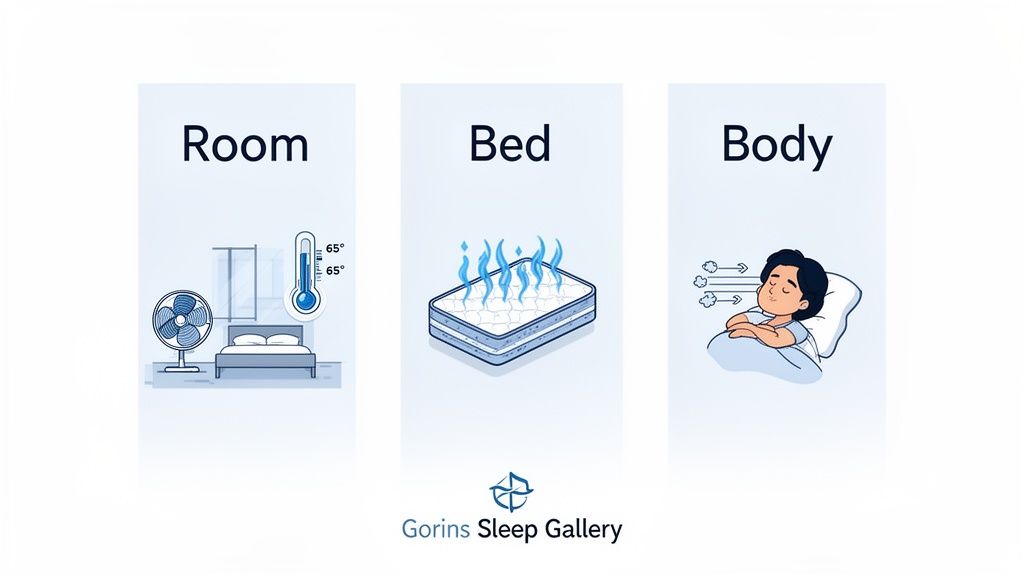
To get to the root of sleeping hot, we can break it down into three core areas. Think of this as your roadmap to a more comfortable and restorative night's sleep, tailored to your lifestyle.
- Your Room: The temperature, humidity, and airflow in your bedroom are your first line of defense against overheating.
- Your Bed: Your mattress, pillows, and sheets can either trap heat or actively work to disperse it, making a huge impact on your comfort.
- Your Body: Your routines and habits before bed play a crucial role in regulating your internal thermostat.
Key Takeaway: The ideal bedroom temperature for most adults is between 60°F and 67°F. A cooler room sends a powerful signal to your body that it's time for sleep.
This table provides a quick overview of how these three pillars work together to create a cooler, more comfortable sleep environment.
The 3 Pillars of Cool Sleep At-A-Glance
| Pillar | Quick Tip | Gorins' Local Solution |
|---|---|---|
| Room | Set your thermostat to 60-67°F and use blackout curtains to block daytime heat. | We can advise on bedroom layouts that maximize airflow and complement your cooling efforts. |
| Bed | Swap heavy comforters for breathable linens made from cotton, bamboo, or Tencel. | Explore our Sleep Gallery to test cooling mattresses and pillows from brands like Tempur-Pedic and Serta. |
| Body | Take a lukewarm shower 60-90 minutes before bed to help lower your core body temperature. | Let's chat about how the right mattress support can improve your sleep posture and reduce nighttime restlessness. |
Each pillar offers a chance to make meaningful improvements, and by addressing all three, you can build a comprehensive strategy for finally sleeping cool.
Throughout this guide, we'll dive deeper into each of these pillars with practical tips tailored to our community. Simple changes can make a massive difference, like creating cross-ventilation or using specific types of curtains. For more tips on how to cool a room without AC, this resource offers some excellent, practical advice.
We firmly believe that great sleep is an investment in your health and well-being. Our Sleep Gallery right here in Norwich was designed for this exact purpose—to let you experience "comfort by feel" with top-tier brands like Tempur-Pedic, Serta, and Beautyrest. We'll help you connect the dots between your sleep struggles and the real-world solutions available.
For more foundational advice, you can check out our guide on sleep hygiene tips for a better night's sleep. Consider this your first step toward transforming your sleep, with a local expert you can trust.
Creating a Cool Bedroom Sanctuary
Your bedroom should be your first line of defense against those hot, restless nights, especially during our humid Eastern CT summers. Learning how to sleep cooler often starts with a few smart changes to your room, long before your head even hits the pillow. It’s amazing how a few strategic tweaks can turn a heat trap into a cool, inviting retreat.
As your Local Expert Designer, we've seen firsthand how a room's environment directly affects sleep. Just turning down the AC is a start, but real comfort comes from a more holistic approach. This is an investment in your well-being, something we've championed since 1936 by helping our neighbors in Norwich improve their lives through a better home.
Master Your Airflow and Humidity
Stagnant, muggy air is a guaranteed recipe for a sweaty night. The trick is to keep the air moving and get that moisture out. A simple box fan can do wonders, but only if you place it correctly.
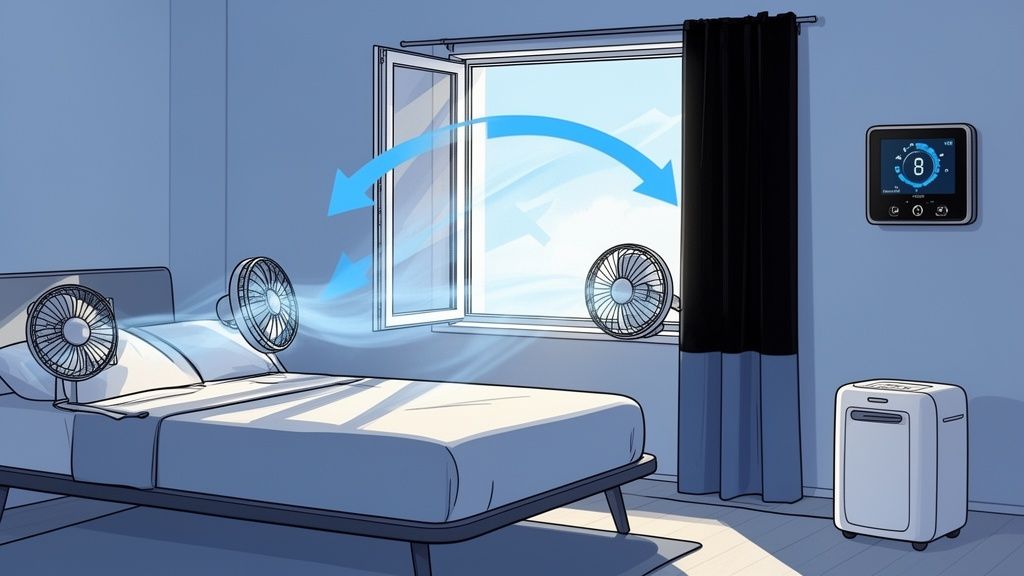
Don't just point a fan at your bed. Try creating a cross-breeze. Position one fan facing out of an open window to push the hot, stale air outside. Then, place another fan across the room to pull cooler air in from another part of the house. This creates a refreshing current of air that makes a world of difference.
Humidity is the other sleep-stealer. High humidity makes the air feel much warmer than it is, and it stops sweat from evaporating—your body’s natural AC system.
A dehumidifier is the unsung hero for cooler sleep in our New London and Waterford communities. Keeping your bedroom's humidity between 40% and 60% can make the air feel significantly cooler, letting you sleep comfortably even if the thermostat is a degree or two higher.
Block Out the Sun and Pre-Cool Your Space
During the day, your windows can work like giant heaters, letting sunlight stream in and bake your room. That trapped heat then sticks around all evening, right when you want to cool down.
- Install Blackout Curtains: These are an absolute must. They don't just block light; their thermal lining is specifically designed to reflect sunlight and insulate your room from the heat outside. Keep them shut during the sunniest parts of the day.
- Use a Programmable Thermostat: Don't wait until bedtime to start cooling things down. Set your thermostat to start lowering the temperature about an hour before you plan to head to bed. This pre-cooling ensures the room is already at your perfect sleep temperature when you walk in.
These small environmental changes add up to have a huge impact on your sleep quality. They lay the foundation for a truly restorative night, which is at the heart of what we do in our Sleep Gallery.
If you're thinking about how to design your entire space for better rest, our guide on designing a relaxing bedroom has even more fantastic insights from our local design experts.
Ultimately, creating a cool bedroom sanctuary is about building a system where every piece works together. The right airflow, controlled humidity, and smart temperature management set the stage perfectly. It’s this attention to detail that makes a house feel like a home—a principle that has guided our family-run business for decades.
Choosing the Right Cooling Mattress and Bedding
Once you've made your bedroom a cooler sanctuary, the next place to look is right underneath you. Your mattress can be your greatest ally or your worst enemy in the battle against sleeping hot. An older mattress, particularly one made from first-generation memory foam, can feel like a giant heat sponge, soaking up your body heat and trapping it all night long.
This is where modern sleep technology really shines. At Gorins, our mission is to simplify home furnishing with friendly, expert guidance, and that's especially true in our Sleep Gallery. We're here to help our neighbors from Norwich to New London find real solutions for healthier sleep, not just sell them a mattress.
Decoding Modern Cooling Mattresses
Walking into a mattress showroom can feel overwhelming with all the new terms and technologies. As your Local Expert Designer, we want to cut through the jargon and explain what these cooling features actually mean for you.
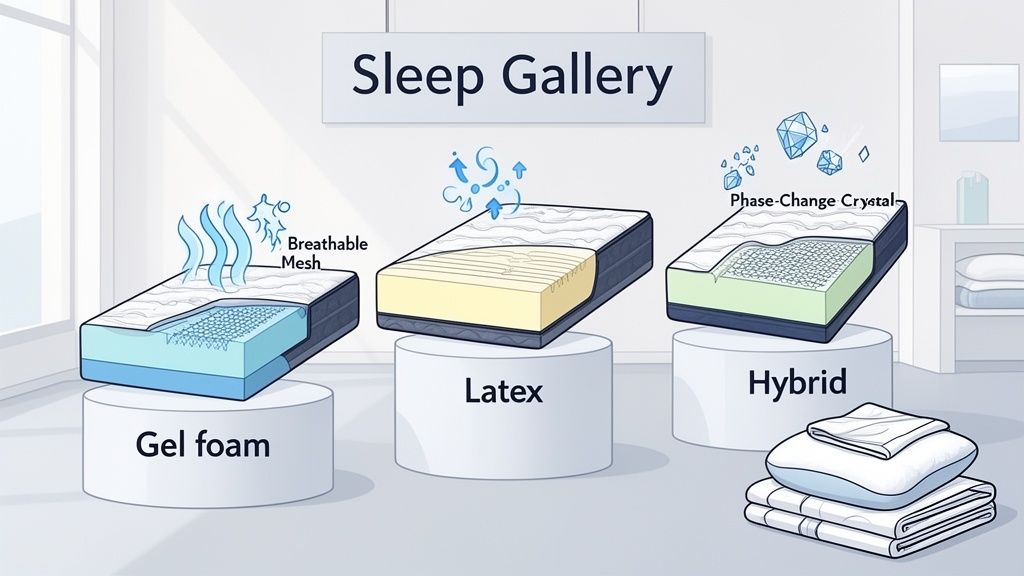
Gel-Infused Memory Foam: This isn't the stuffy memory foam from years ago. Top brands like Serta and Beautyrest now infuse their foam with tiny gel beads or swirls. These act like a heat magnet, pulling warmth away from your body and spreading it out so it doesn't build up around you.
Naturally Breathable Latex: Derived from the sap of rubber trees, latex foam has a naturally open-cell structure. Think of it as having thousands of tiny, built-in airways that let heat and moisture escape, making it an inherently cooler and more responsive choice than traditional foams.
Advanced Hybrid Designs: Hybrid mattresses give you the best of both worlds. They pair layers of cooling foam or latex with a core of individually pocketed coils. This coil system creates tons of empty space inside the mattress, allowing air to flow freely and carry heat away far more effectively than an all-foam bed.
A truly cool sleep system isn't a marketing term; it's a strategic combination of materials designed to manage temperature. The goal is to move from a mattress that passively traps heat to one that actively helps you regulate it.
The Power of Phase-Change Materials
The latest frontier in sleep tech involves something called phase-change materials (PCMs). Imagine microscopic crystals woven right into the mattress cover. These tiny wonders are engineered to absorb your body heat, and as they do, they change from a solid to a liquid state—creating a refreshingly cool-to-the-touch feeling the moment you lie down.
This isn't just a gimmick; it’s backed by science. Research shows that sleep efficiency can drop by 5-10% as temperatures climb from a comfy 77°F to a sweaty 86°F. In response, leading brands like Beautyrest and King Koil are using these advanced PCMs, which can lower a mattress's surface temperature by up to 5°F. That active cooling can make a world of difference in helping you fall asleep faster and stay asleep longer.
Finding Your Comfort by Feel in Our Sleep Gallery
Reading about technology is one thing, but feeling the difference for yourself is everything. Since we first opened our doors back in 1936, we've always believed the best decisions are made when you can see and feel the quality firsthand. That’s why we invite our neighbors from Norwich, Plainfield, and all over Eastern CT to come visit our Sleep Gallery.
Here, you can actually lie down and test out top-tier brands like Tempur-Pedic, Serta, and Beautyrest. Our friendly team acts as your personal sleep guide, not just salespeople. We’ll ask about your sleep habits and help you find your "comfort by feel," matching you with a mattress that truly fits your lifestyle. We’ve also put together more advice in our post on what you should know about your summer mattress.
Don't Forget the Cooling Accessories
Your mattress is the foundation, but the right accessories are what complete a cool sleep system. You want every layer touching your body to be chosen with breathability in mind.
- Cooling Pillows: A lot of your body heat escapes through your head and neck. Pillows made with shredded latex, gel-infused foam, or special phase-change covers can make a huge difference in keeping you comfortable.
- Breathable Sheets: It's time to ditch heavy polyester or microfiber sheets that trap heat and moisture. Instead, look for natural, airy fibers like cotton (especially a crisp percale weave) or linen, which is famous for its breathability.
- Moisture-Wicking Materials: When picking your bedding, think about materials that actively work for you. For instance, you can discover comfortable sleep with bamboo cooling sheets, which are great at regulating temperature and wicking moisture away from your skin.
An Investment in Health with Financial Flexibility
We truly believe a high-quality mattress is an investment-grade quality piece of furniture—one that pays you back every single day in better health and well-being. We also know it's a significant purchase.
To make healthier sleep accessible for every family in our community, we proudly offer Promotional Financing. With options for equal monthly payments, you can invest in a premium cooling mattress from Tempur-Pedic or Serta without straining your budget. It's all part of our commitment to providing the value, and helpful local service you can trust. Come on down to our Norwich showroom and let us help you build the cool, comfortable sleep you deserve.
Adjusting Your Pre-Sleep Routine for Cooler Rest
Sometimes, the secret to a cooler night's sleep isn't a high-tech gadget or a new AC unit. The small, simple habits you build into your evening can make all the difference in helping your body wind down and cool off for rest.
Your body has its own internal thermostat that naturally drops as it prepares for sleep. Your pre-sleep routine can either help that process along or get in its way.
The Warm Shower Paradox
It might sound strange, but a warm shower about 60 to 90 minutes before you hit the hay is a brilliant way to cool down. The warm water brings blood to the surface of your skin, and when you step out into the cooler air, your body radiates that heat away.
This rapid cooling effect sends a powerful signal to your brain that it’s time to sleep. Just be sure to keep the water comfortably warm, not steaming hot—a scalding shower can raise your core temperature and have the opposite effect.
What to Avoid Before Bed
What you do in the hours before sleep is just as important as your final wind-down routine. Certain foods and activities can fire up your metabolism and raise your body temperature, making it that much harder to drift off comfortably.
- Strenuous Exercise: A great workout is fantastic for sleep quality, but a high-intensity session within three hours of bedtime can leave you feeling energized and warm. If you need to move in the evening, stick to something gentle like a leisurely walk or some light stretching.
- Heavy or Spicy Meals: Your body generates heat when it works to digest a large meal. Spicy foods can also turn up your internal thermostat. If you’re hungry before bed, a light, easy-to-digest snack is a much better choice.
- Caffeine and Alcohol: We all know these are major sleep disruptors. Caffeine can linger in your system for hours, and while alcohol might make you feel drowsy at first, it often leads to night sweats and broken sleep later on. For a deeper dive, check out the 3 things to avoid before bedtime we've detailed before.
This decision tree shows how simple choices in your evening can lead to a cooler, more comfortable night.
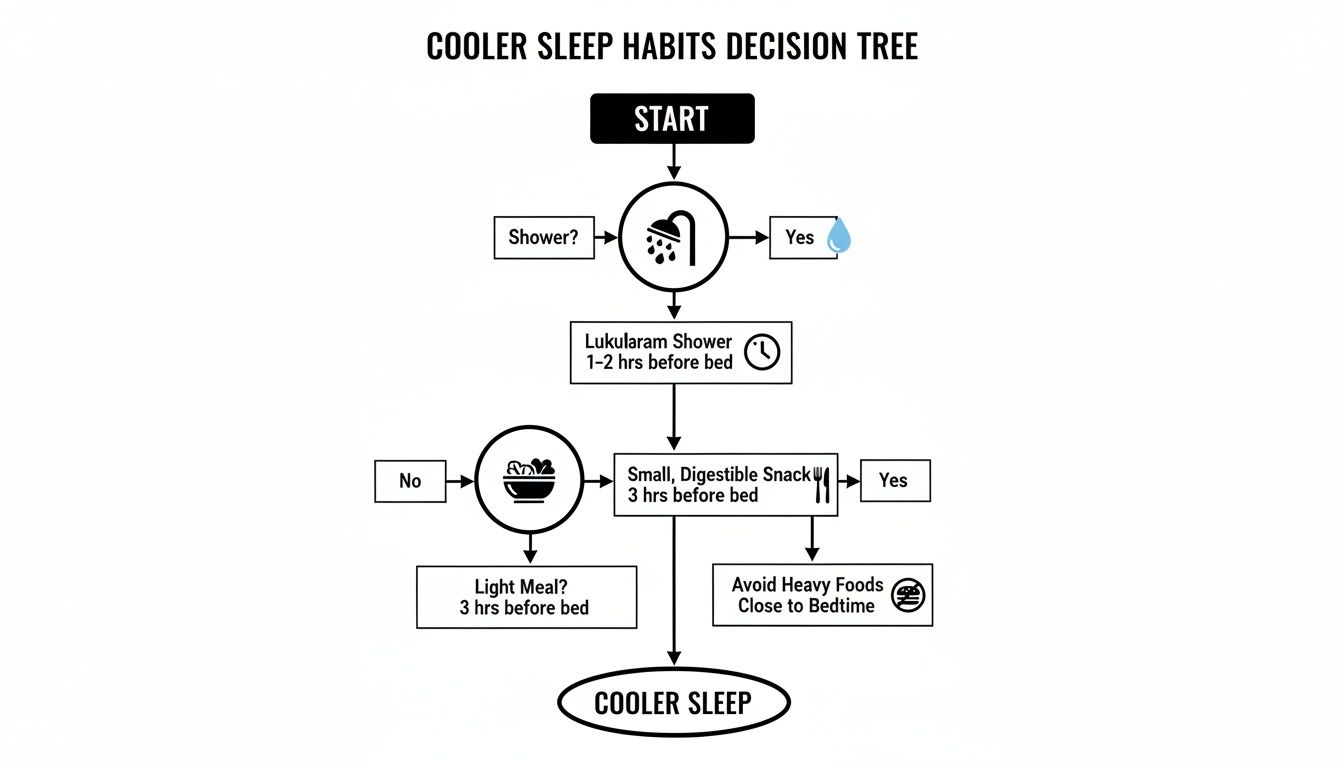
As you can see, small adjustments like opting for a light meal or a warm shower can set the stage for better rest.
Dress for Cool Success
Finally, let’s talk pajamas. Heavy, synthetic fabrics like polyester are notorious for trapping heat and moisture right against your skin. Instead, you'll want to choose sleepwear made from lightweight, breathable, and natural fibers.
Local Expert Tip: Look for sleepwear made from cotton, bamboo, or linen. These fabrics are fantastic at wicking moisture away and letting air circulate, which helps keep you feeling dry and cool all night.
Making these simple tweaks to your evening routine helps your body’s natural cooling process work for you, not against you. It's just another way we, as a local, family-operated business since 1936, are committed to helping our neighbors in Norwich and Eastern CT live and sleep better.
Troubleshooting Why You Overheat at Night
So you’ve done everything right—you’ve optimized the temperature, you’ve got a fan going—but you’re still waking up in a sweat. To figure out how to sleep cooler, you have to find the real source of the heat. More often than not, the culprit is hiding in plain sight: your mattress.
As your Local Expert Designer here in Norwich, we’ve seen this countless times. An older mattress, especially one made with first-generation memory foam, can essentially act like a giant insulator. It just soaks up your body heat all night long with nowhere for it to go, slowly baking you from underneath.
Is Your Mattress Working Against You?
The single most common reason our neighbors from Norwich, New London, and Plainfield come to us complaining about sleeping hot is an old, unsupportive mattress. If your mattress is over eight years old, it's not just about losing comfort. The materials inside have likely compressed and degraded over time, losing whatever breathability they once had.
Think about it: old-school memory foam was designed to contour to your body by reacting to your heat. The problem was, it never really let that heat escape. This creates a frustrating cycle of overheating that pulls you out of the deep, restorative sleep you need. It’s a very common issue, but luckily, one with some fantastic modern solutions.
Local Expert Insight: The single biggest leap forward in sleep technology has been the move from passive, heat-trapping foams to active cooling systems. The best way to truly grasp the difference is to feel it for yourself in our Norwich showroom.
Today's mattresses are engineered specifically to combat this problem. Instead of being a heat sponge, they're designed to be a heat conduit. Our Sleep Gallery is filled with incredible advancements from top-tier brands like Tempur-Pedic and Serta. These are not your parents' mattresses; they use sophisticated materials that actively pull heat away from your body.
For a deeper look, we've broken down some common sleep misunderstandings in our article about mattress myths and what you really need to sleep better.
Beyond the Mattress: Other Hidden Heat Traps
While your mattress is usually the prime suspect, a few other things in your bedroom could be adding to the problem. Let's look at a few other common issues.
Non-Breathable Bedding: Are you pairing a new cooling mattress with old polyester sheets and a heavy, down-alternative comforter? Synthetic fabrics are notorious for trapping air and moisture, completely undoing all the good work your mattress is trying to do. It’s like wearing a raincoat to the gym.
Incorrect Room Layout: Is your bed pushed into a corner with poor air circulation? Even with a fan running, if air can’t move freely around your bed, you’ll end up creating a little microclimate of hot, stagnant air right where you sleep.
The Wrong Foundation: Placing a modern foam or hybrid mattress on an old, solid-surface box spring can cut off all airflow from below. Today's mattresses are often designed to work with foundations that promote ventilation, helping them breathe.
Finding an Affordable Solution
We get it—a new mattress is a significant decision. It’s an investment in your home and, more importantly, in your health. If you’ve realized your old mattress is the problem but a brand-new, top-of-the-line model isn't in the budget right now, we still have some great solutions for you.
Since our founding back in 1936, we've been dedicated to providing real value for our community. Our Clearance section is a fantastic place to find a high-quality, supportive mattress at a value-driven price point. This allows you to upgrade from your old heat-trapper without breaking the bank. It's a practical, affordable first step toward a much cooler and more comfortable night's sleep.
Your Questions About Cooler Sleep Answered
As your local sleep experts here in Norwich, New London, and Plainfield since 1936, we've heard just about every question there is when it comes to getting a cool night's rest. We've gathered some of the most common ones we hear right here in our showroom, and we hope the answers help you on your journey to better sleep.
Are Cooling Mattresses Really Worth the Investment?
We get this question a lot, and the simple answer is yes. A quality cooling mattress isn't just an expense; it's a real investment in your health. When you're constantly tossing and turning because you're too hot, your body can't get into those deep, restorative stages of sleep. That affects everything from your mood and energy the next day to your long-term immune health.
Modern cooling mattresses from top-tier brands like Tempur-Pedic and Stearns & Foster use advanced technology that actively pulls heat away from you. At Gorins, we focus on that kind of long-term, investment-grade quality. And with our Promotional Financing, you can break that investment down into manageable equal monthly payments. Honestly, the best way to understand the value is to feel the difference for yourself in our Norwich showroom.
What’s the Difference Between a Cooling Gel Mattress and a Hybrid?
This is a great question that gets to the heart of how these mattresses work. A cooling gel-infused foam mattress, which you'll find in lineups from brands like Serta and Sealy, has gel particles mixed right into the foam layers. These particles are designed to absorb your body heat and pull it away from the surface.
A hybrid mattress, on the other hand, fights heat differently. It combines those foam layers with a classic innerspring coil system. This creates a whole network of channels for air to flow through, letting heat escape naturally for incredible breathability. The "best" one is a totally personal choice, and our Sleep Gallery experts are here to help you discover your own "comfort by feel," matching the right technology to how you sleep.
Can I Make My Current Mattress Cooler Without Buying a New One?
You absolutely can. There are a few excellent options that can bring some immediate relief and make a real difference tonight.
- Cooling Mattress Toppers: A good cooling topper is a fantastic first step. Many use the same gel-infused foams and advanced fabrics you'd find in a brand-new premium mattress.
- Breathable Bedding: Don't underestimate the power of your sheets! Pairing a topper with sheets made from natural fibers like cotton, linen, or Tencel™ is a powerful combination for a cooler night.
It is important to be realistic, though. If your mattress is more than eight years old, it has probably lost much of its support and breathability. Over time, the materials get compressed and can start trapping heat, no matter what you put on top of it. Stop by and our friendly team can help you explore all your options, from a simple topper to a complete new sleep system.
How Do I Choose the Right Cooling Pillow?
Your pillow is a surprisingly critical piece of the puzzle. You lose a lot of body heat through your head and neck, so choosing the right pillow is a key part of sleeping cooler.
Look for pillows made with breathable materials like shredded latex or gel-infused memory foam. Many also have special cooling gel pads built in or covers woven with fabrics that feel instantly cool to the touch. The most important thing, however, is that the pillow gives you the right support for your sleep position—whether you're a side, back, or stomach sleeper. Our associates can help you test out different pillows right in the showroom to find that perfect, cool-to-the-touch match.
Since 1936, Gorins Furniture & Mattress has helped Norwich and Eastern CT families create homes they love. From custom-designed Canadel dining sets to the latest in Tempur-Pedic sleep technology, we combine a massive selection with the personalized care only a local, family-owned business can provide. Visit our Norwich showroom today to experience quality, value, and our 5-Star Delivery service. Or, you can take our online Style Quiz or browse our Clearance section for value-driven savings.