Maroon Accent Chairs: How to Style and Buy Them


The sofa still works, the rug feels right, and the room has enough seating for ordinary evenings. Yet the corner beside the window looks unfinished. A maroon accent chair could give that space some personality, but a small photograph doesn't answer the important questions: Will the fabric look purple at home? Will it show pet hair? Will anyone enjoy sitting in it?
For homeowners around Norwich and southeastern Connecticut, the best choice starts with those practical questions. Maroon accent chairs should work as everyday furniture, not just decorative punctuation. Shade, upholstery, proportions, and support matter just as much as the color combination.
Why Maroon Works as an Accent Chair Color
A plain room doesn't necessarily need new furniture throughout. Sometimes it needs a single piece with enough presence to make the existing furniture feel intentional. Maroon can fill that role without the sharp visual intensity of a bright red chair.
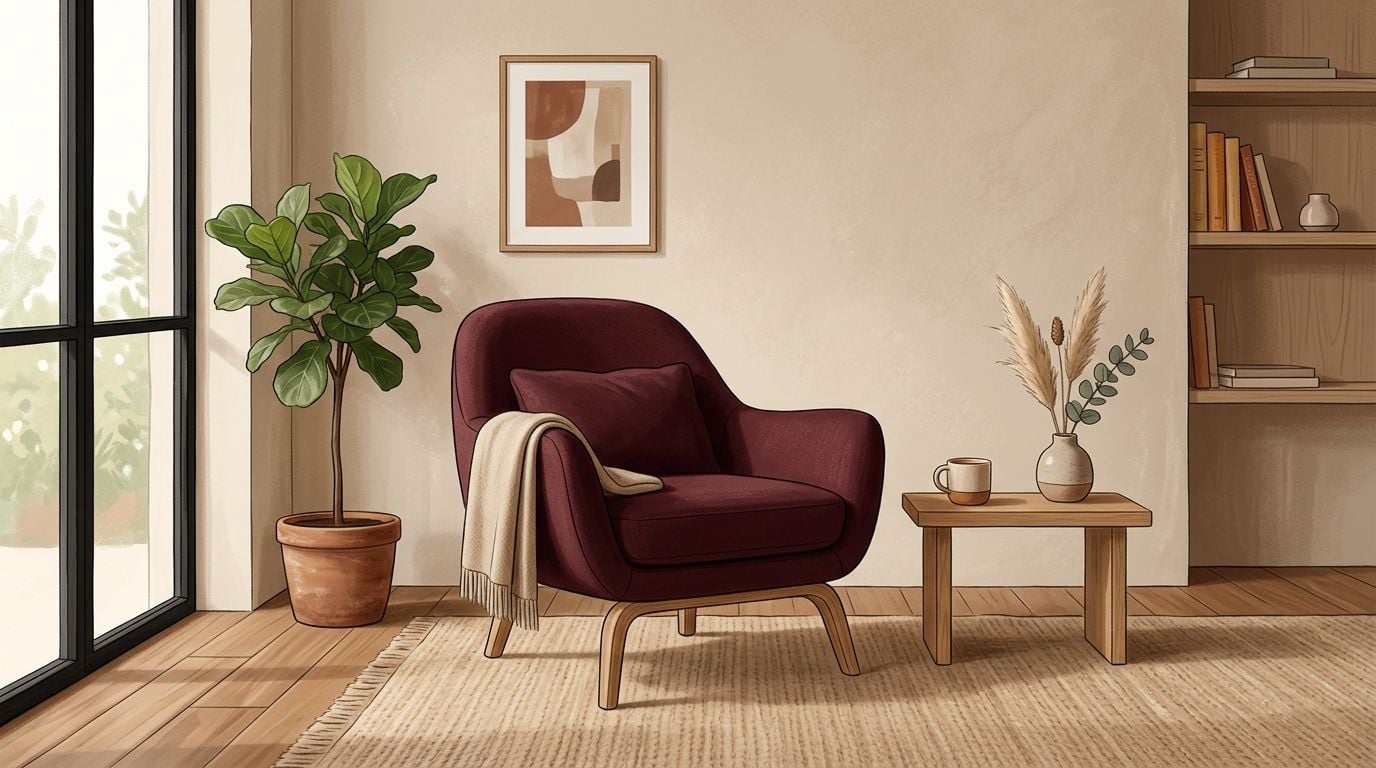
Think of maroon as red with a more grounded personality. Its darker appearance can feel traditional, formal, or substantial, depending on the chair's shape and surrounding materials. A curved upholstered chair might feel inviting, while a fitted silhouette with exposed wood can look more structured.
What Color Research Can Actually Explain
A consumer study of furniture-staining preferences found that brown and its tones led at 51.4%, followed by red and its tones at 23.0%, with blue and its tones at 19.8%, according to the published furniture-color preference research. That finding concerns staining colors, not maroon upholstered-chair sales, so it shouldn't be treated as proof that every household prefers a maroon chair.
The useful design takeaway is narrower: brown and red offer a sensible starting point for a warm, grounded furniture palette. Maroon sits comfortably within that conversation, especially when the room needs contrast rather than another neutral.
Practical rule: A strong accent color works best when the surrounding furniture gives it room to be noticed.
Why a Chair Is a Manageable Commitment
A maroon chair introduces a distinct finish without requiring a replacement sofa, new wall paint, or an entirely different rug. It can also provide useful seating where a purely decorative object would occupy valuable floor space.
Before choosing the shade, it helps to identify the room's intended focal point:
- Artwork first: A chair can pick up a red-brown detail already present in a painting.
- Seating first: A quiet wall can provide a simple backdrop for a more expressive chair.
- Architecture first: A restrained chair shape can complement a fireplace without competing with it.
For rooms built around a favorite painting or print, Striped Circle's color-psychology resource offers another way to consider how to set the mood around your wall art. The aim isn't to match everything. It's to give the room a clear relationship between its most noticeable elements.
Color Pairings That Flatter Maroon Chairs
Maroon beside navy feels different from maroon beside pale linen, even when the chair itself hasn't changed. The surrounding colors determine whether the combination feels refined, earthy, relaxed, or dramatic.
A useful starting point is the largest surface that will remain in the room. That might be a gray sofa, wood floor, stone fireplace, or patterned rug. Building around that existing feature usually produces a more coherent result than choosing accessories in isolation.
Comparing the Main Pairings
| Pairing | Suggested mood | What to watch |
|---|---|---|
| Navy and maroon | Classic and tailored | Keep some lighter surfaces so both dark colors remain distinct |
| Forest green and maroon | Earthy and enveloping | Avoid making every large surface equally dark |
| Natural stone and maroon | Grounded and restrained | Compare the stone's warm or cool undertone with the fabric |
| Linen tones and maroon | Soft and relaxed | Use texture to keep pale upholstery from looking flat |
| Wood and maroon | Warm and collected | Judge the actual finish rather than relying on the wood's name |
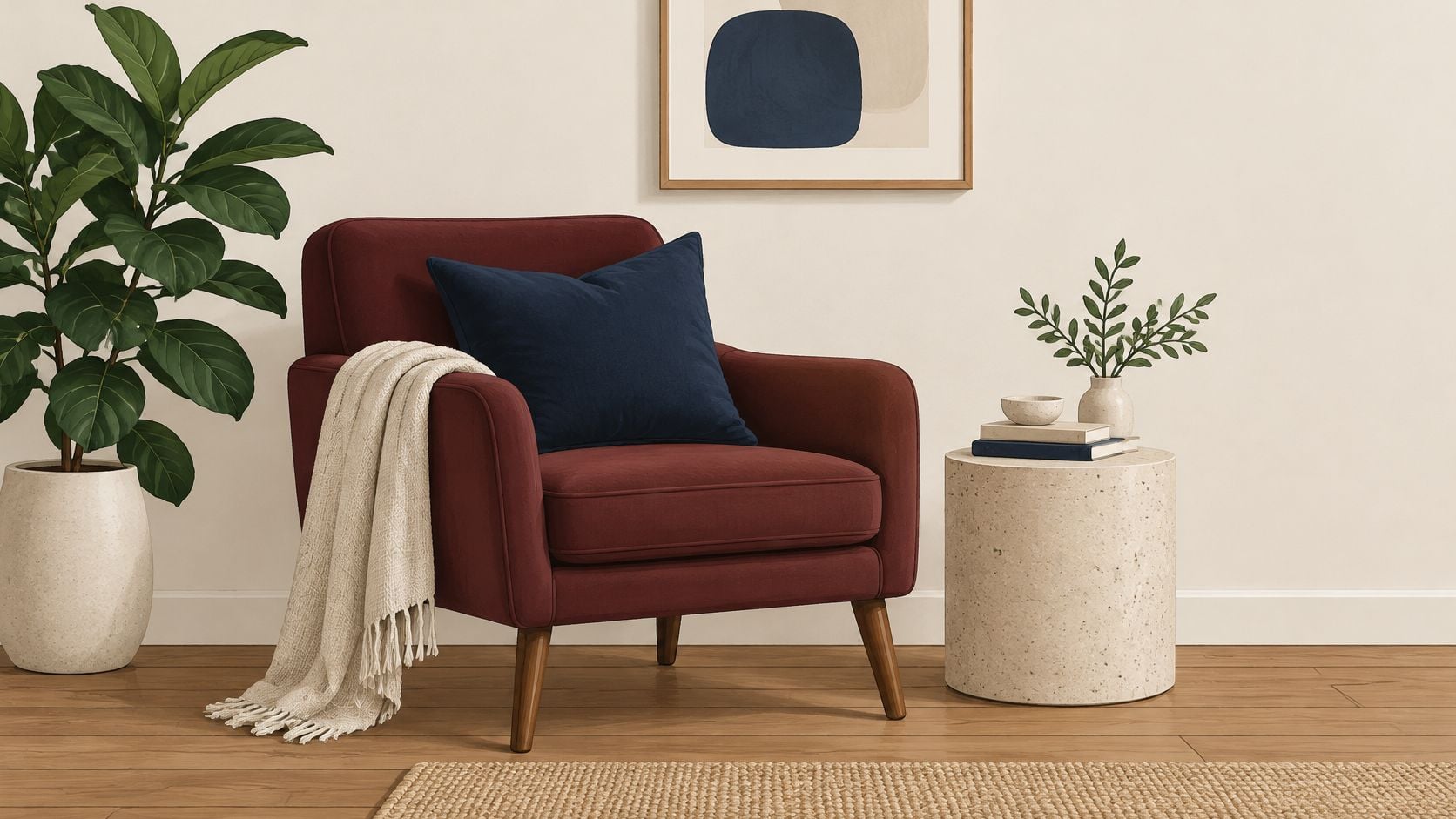
These are design directions, not fixed rules. A navy pillow on a maroon chair might be enough to establish the relationship; a navy sofa isn't necessary.
Let Existing Undertones Guide the Choice
A brown-leaning maroon is a sensible candidate beside warm wood and creamy upholstery. A cooler wine shade is worth testing beside blue-gray fabrics or cooler stone. Neither combination should be approved from color names alone.
Gray deserves particular care because a gray sofa or wall can carry a warm or cool cast. Homeowners working around existing gray finishes can compare grey-friendly interior paint palettes from CP Painting Company before narrowing the chair fabric.
A practical comparison includes these checks:
- Quiet room: Allow the chair to provide the strongest color, with a restrained pillow or throw.
- Patterned room: Pull a muted maroon from the rug rather than introducing an unrelated red.
- Richly colored room: Consider a simpler chair silhouette and less decorative detailing.
The guide to choosing a cohesive color palette provides a useful companion for organizing those decisions. A successful pairing doesn't require an exact match. It needs a reason for the colors to belong together.
Choosing Fabric and Finish for Daily Use
A deep color isn't a durability specification. Maroon upholstery may disguise some minor soil, but a solid dark surface can still reveal pale lint, shiny wear areas, or changes in color where hands and clothing repeatedly touch it.
Fabric selection should begin with the chair's likely workload. A guest-room chair and the household's favorite television seat shouldn't automatically receive the same upholstery recommendation.
Compare Construction Before Color
Velvet deserves close inspection for surface changes and maintenance requirements. A performance weave needs documented care and test information rather than an assumption that the label means stain-proof. Textured chenille should be assessed for feel and surface behavior, while heathered or melange fabric offers a less uniform appearance that may help disguise minor marks.
For a broader vocabulary of surfaces and constructions, Pandemonium Millinery's resource on interior design textiles can support fabric comparisons. The upholstery fabric guide also helps shoppers separate fabric categories from the specific performance information needed for a purchase.
The finish matters, too. Exposed legs and arms should complement nearby furniture, but households should also ask how those surfaces are cleaned and what the warranty covers.
Read the Abrasion Information Carefully
The Wyzenbeek method, standardized as ASTM D4157, evaluates abrasion by rubbing material against an upholstery specimen. Guidance commonly distinguishes 15,000 double rubs for lower-traffic upholstery and 30,000 for high-traffic use, while warning that cotton-duck and wire-screen results aren't directly interchangeable; the textile quality standards reference provides the supporting performance framework for the targets below.
Abrasion resistance isn't a complete lifespan prediction. Seams, pilling, cleaning products, weave, and the way the chair is used also matter.
Before ordering, shoppers should request:
- Test details: The abrasion method and rubbing material.
- Fabric identity: Fiber composition and the exact sample reference.
- Care requirements: Cleaning code and approved maintenance instructions.
- Appearance protection: Lightfastness information and relevant warranty terms.
A fabric that tolerates rubbing still needs a cleaning routine the household can realistically follow.
Double Rub Targets by Household Use
The targets below refer to the cotton-based Wyzenbeek guidance cited above, not a guarantee of service life.
| Use Case | Double Rub Guidance | Practical Note |
|---|---|---|
| Lower-traffic or private seating | 15,000 double rubs | Still check seams, care requirements, and light exposure |
| Frequent everyday seating | 30,000 double rubs | Confirm the exact test method |
| Busy household with children or pets | At least 30,000 double rubs | Also evaluate snagging, lint visibility, and cleaning needs |
Matching Maroon to Your Room's Light
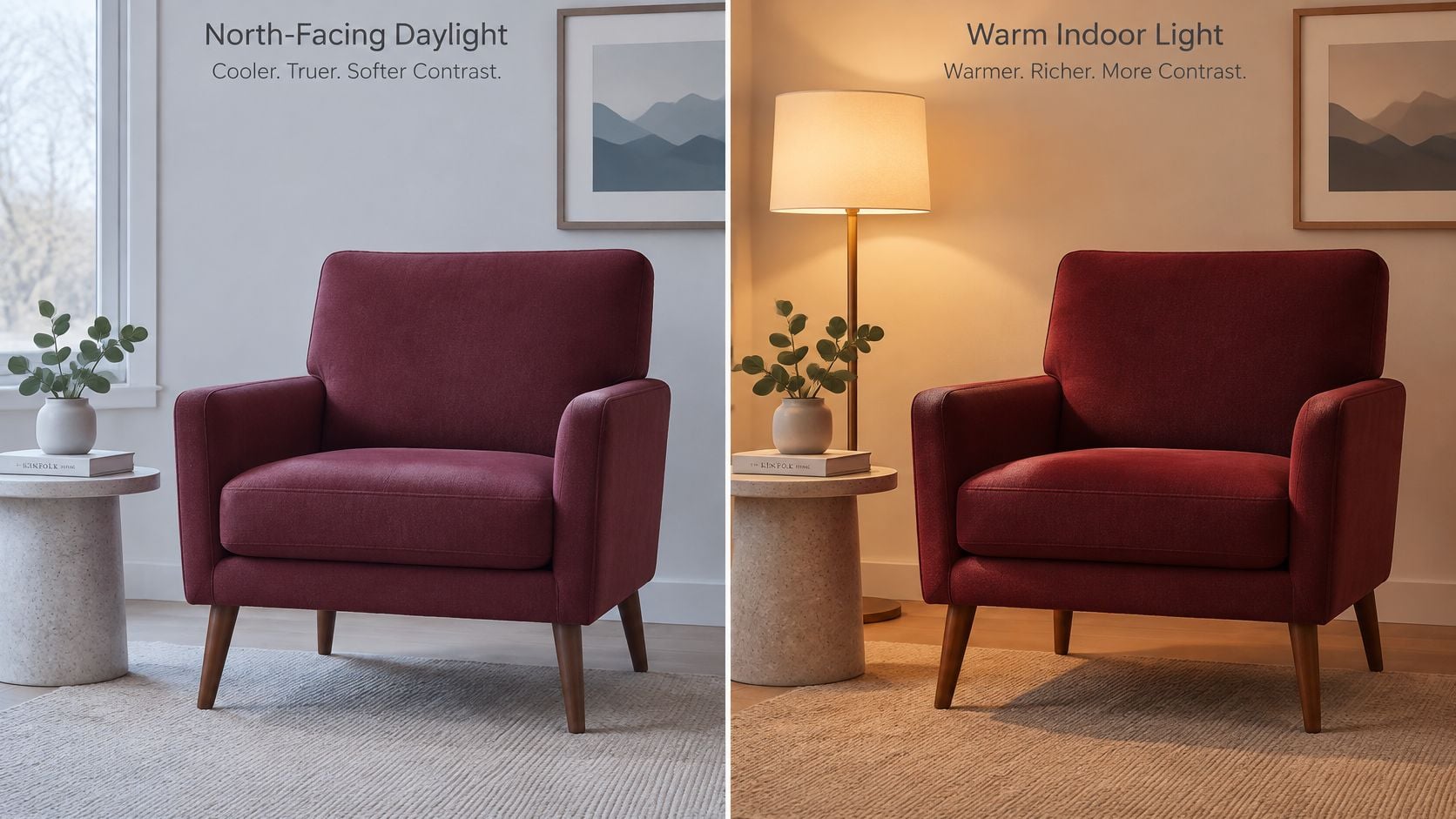
A chair that looks brown-red on a showroom floor can look closer to wine at home. That doesn't necessarily mean the wrong fabric arrived. Illumination and surrounding finishes can change how maroon is perceived.
Near a north-facing window or beneath cool LED lighting, maroon may appear darker and more violet. Warm-white lighting can bring out its red-brown side. Those differences deserve attention before a custom order becomes final.
A Useful At-Home Sampling Routine
A full-size fabric sample gives a more useful impression than a tiny color chip. It should be placed where the chair will sit, rather than carried around the house looking for the most flattering spot.
- Morning: Compare the sample with the nearby wall and flooring in daylight.
- Afternoon: Check whether the shade still relates to the sofa, rug, and wood finishes.
- Evening: Turn on the lamps and ceiling fixtures normally used in that room.
- From the doorway: Look at the sample from the usual entrance, not only from close range.
The sample should remain beside existing materials during each check. A maroon that looks balanced against a white sheet of paper may feel quite different beside honey-colored flooring or a cool gray sofa.
For homes with windows facing different directions, comparing those locations can help explain why an online photograph or another room gives a different impression. The final decision still belongs in the intended placement.
Check Surface Direction and Record the Details
Velvet and brushed fabrics can appear brighter or darker as the viewing angle changes. Turning the sample and viewing it upright helps reveal that directional effect before it covers an entire chair.
Dark, saturated upholstery can also feel visually substantial in a compact room. A lighter wall behind the chair creates a clearer outline, while a similarly dark background can make the whole corner feel denser.
Before ordering: Record the manufacturer's color name and sample reference. “Maroon” alone isn't a precise specification.
A short note describing the preferred sample is useful, but it shouldn't replace the actual reference. Retail descriptions may use burgundy, wine, and maroon for noticeably different shades.
The living-room lighting guide can help homeowners assess the placement of lamps and other light sources. The objective isn't to make the chair look identical at every hour. It's to choose a fabric that remains appealing during the hours the room is used.
Scale and Placement in Living Spaces
A chair can fit inside a room and still be wrong for the layout. Wide arms may consume useful space, a deep back may project into a walkway, or a small chair may look disconnected beside an oversized sectional.
The most useful planning exercise considers the chair's full footprint, not just its seat. Temporary floor markings can show where the back, arms, and front legs will land before delivery.
A Small Living Room With an Empty Corner
Consider a compact living room with a sofa facing a television and an unused corner near the window. A maroon chair angled toward the sofa could make that corner useful without requiring a second large seating piece.
The arrangement should preserve the route through the room. If someone must turn sideways between the chair and coffee table, the layout needs adjustment, even if the chair looks attractive from the doorway.
- Compare arm shapes: Broad upholstered arms occupy space differently from a more open frame.
- Check the approach: The sitter needs a straightforward route to the seat.
- Keep nearby furniture useful: A side table should remain reachable without blocking entry.
A Reading Corner With a Purpose
In a reading nook, placement begins with the activity rather than symmetry. The chair needs a usable relationship with a lamp, a surface for a book or drink, and any planned footstool.
A chair pushed tightly into a corner may look tidy but leave little room to reach a lamp switch or reposition a footrest. Moving it slightly forward can make the setting easier to use, provided the remaining walkway stays clear.
Plan the space around the chair for the actions that happen there, not just the outline of the furniture.
A Larger Conversation Area
In a more generous room, matching maroon chairs could frame a fireplace or face a sofa. That arrangement is a hypothetical layout option, not a reason to buy a pair automatically.
The important question is whether people can speak comfortably without twisting toward each other. A slight angle may create a more natural conversation group than placing every piece flat against a wall.
The living-room furniture placement guide offers additional planning context. Before approving any layout, homeowners should check door swings, access to storage, and the route between adjoining rooms. A handsome seating group shouldn't make ordinary movement awkward.
Comfort and Accessibility for Everyday Seating
A maroon chair may catch the eye, then become the spot someone uses for reading each evening. Check how it fits the intended sitter before treating its color as the deciding factor. A chair should support the body and the daily routine, much like a well-fitted shoe supports a regular walk.
Evaluate the Seat, Back, and Arms Together
Seat height should suit the user's lower-leg length. While seated, the person should be able to place both feet flat, with knees near a right angle. Usable seat depth should leave space behind the knees while allowing the sitter to reach the backrest without sliding forward.
Check back support in a natural sitting position. The backrest should support the lumbar area without making the user lean forward or perch at the edge. Cushion firmness also depends on preference: a very soft seat can let the body sink more than the sitter finds comfortable.
Armrests should let the shoulders rest naturally, not push them upward. Ask the intended user to sit down and stand up several times. They should be able to rise without excessive effort through the arms or trunk. This check deserves particular attention for older adults and people with limited mobility; a low-profile or armless chair may look light, but the user's ability to enter and leave comfortably matters more.
A Showroom Sit-Test
Have the person who will use the chair test it in ordinary clothing. Give them time to settle into their usual posture, rather than judging the seat from a quick perch.
- Feet and knees: Feet rest flat, with knees near a right angle.
- Lower back: The backrest supports the lumbar area without forcing a forward lean.
- Shoulders and arms: Shoulders remain relaxed when the forearms rest on the arms.
- Position changes: The sitter can shift comfortably rather than being held in one pose.
- Standing: The user can rise without excessive arm or trunk effort.
If a footstool is part of the setup, include it in the test. Its height can change how the legs and lower back feel, and the user should be able to move it aside comfortably.
An accent chair may suit occasional laptop use, but sustained desk work calls for separate checks of working height, adjustability, and equipment placement. The sofa and chair buying checklist can help organize those comparisons. Let the intended user's comfort and daily needs guide the final choice.
Finding Similar Maroon Chairs at Gorins
A chair that looks maroon online may appear more red, brown, or purple under the lights at home. At a local showroom, compare the upholstery with your room's colors and describe what you want in practical terms: shade, arm shape, back height, fabric feel, and how the chair will be used.
For shoppers looking for a furniture store in Norwich, CT, seeing a chair in person makes it easier to assess both color and construction. Bring room photographs and material samples, then compare the chair in different lighting. A fabric swatch can help, but it does not replace checking the actual chair.
A Local History With Practical Relevance
Gorins Furniture & Mattress was founded in 1936 by Samuel and Martha Gorin and has remained a locally owned, family-operated business in Norwich, as described in its company history. Samuel's upholstery background and Martha's work managing finances connect the store's beginnings to furniture knowledge and attentive local service.
That history matters when the details behind a chair affect daily use. Ask about the frame and upholstery, and look for clear information on fabric performance. A chair's appearance is only part of the decision; it also needs to suit the people and routines in your home.
Shoppers from Norwich, New London, Plainfield, Waterford, and nearby communities can prepare a simple comparison kit:
- Room photographs: Show the intended spot and nearby furniture.
- Material references: Bring rug, paint, flooring, or upholstery samples.
- Usage priorities: Note whether the chair is for guests, daily reading, or another regular use.
- Access information: Measure narrow doorways and consider the route into the room.
Customization Without Guesswork
An in-stock chair has a set combination of features to assess. With a custom order, first confirm which options are available, how they affect the finished chair, and what details will be recorded with the order.
Gorins' custom sofa and sectional program offers a starting point for discussing custom seating. Options may vary by product, so ask an associate to document which elements can be selected for the chair you are considering. Clarify arm style, back height, finish, welt details, cushion specifications, and fabric choices rather than assuming every option applies to every chair.
Before deciding, compare the fabric sample with your room's lighting, sit in the chair long enough to judge comfort, and check that the seat and arms suit the intended user. Ask about delivery access and confirm the selected specifications in writing. These checks keep a beautiful maroon chair practical for everyday use.
Gorins' focus on quality, value, and local service can support a more informed showroom visit. Ask about delivery arrangements and any current financing terms, including payment obligations, before committing to a purchase.
Homeowners can visit Gorins Furniture & Mattress in Norwich with room photographs and fabric references to compare seating for their color palette, comfort needs, and daily routine. The online Style Quiz can help narrow preferences beforehand, while the Clearance section offers another place to begin a value-focused search.