Furniture Assembly Help: Expert Tips & 2026 Guide


A flat-pack box is sitting in the middle of the living room, the instructions are spread across the floor, and a small bag of dowels has already gone missing under the sofa. A parent is wondering whether the next step is obvious, while a second person is trying to hold a side panel upright without scratching the floor. This is the moment when furniture assembly help starts to look less like a luxury and more like a practical way to protect time, energy, and the new piece itself.
Furniture assembly rarely goes wrong because a homeowner lacks basic intelligence or ability. Problems usually begin earlier, with an unsuitable workspace, an unchecked parts list, a rushed first connection, or a heavy panel being moved without enough support. The same preparation helps whether the job is handled at home or assigned to an experienced delivery and setup team.
The larger market also explains why assembly support matters. U.S. furniture and related product manufacturing employed 327.8 thousand people in July 2026, while the broader manufacturing sector employed 12.611 million people during the same month, according to the Bureau of Labor Statistics furniture manufacturing data. Furniture assembly sits within a long-standing, hands-on ecosystem that reaches from manufacturing to delivery and in-home setup.
Why Good Furniture Assembly Starts Before the First Turn
On a typical Saturday morning, the first temptation is to open the hardware bag and begin. A smoother approach starts with the room, the instructions, and the contents of the box. Those first decisions often determine whether the afternoon ends with a stable bookcase or a half-built cabinet surrounded by loose panels.
A homeowner should compare the parts list with every panel, cam lock, screw, dowel, hinge, and bracket before connecting anything. Missing hardware is inconvenient at the start, but discovering it after the frame is partly assembled creates a larger problem. Reassembling a joint can be harder than building it correctly the first time because panels may already be seated at angles they weren't designed to hold.
Practical rule: The first twenty minutes should reduce uncertainty, not create momentum.
A floor plan matters, too. The finished piece may fit against a wall, yet the route through a doorway, stairwell, or narrow hallway may not allow the assembled unit to reach that position. A little attention to room measurements and furniture proportions can prevent a difficult return to the starting point, which is why a guide to shopping for furniture smartly belongs beside the assembly instructions.
Preparation protects more than the furniture
A clear working area protects floors from dropped panels and prevents the builder from twisting around boxes or other furniture. It also gives large parts somewhere to rest while the frame is aligned. That extra room can be especially important for wardrobes, beds, dining tables, and storage units that become awkward to control once partially assembled.
Preparation protects the builder's back as well. Reaching across a panel, lifting from a bent position, or repeatedly turning a cabinet in a cramped space adds unnecessary strain. A careful start doesn't make the work slower. It limits the rework that turns a manageable assembly into an exhausting one.
Preparing the Room, Tools, and Furniture Parts
Pre-assembly works best as a checklist rather than a suggestion. The room should have a working area larger than the finished piece, with a blanket or cardboard underneath panels to protect flooring and finishes. The intended position should also leave room for doors and drawers to open, outlets to remain accessible, and the finished unit to be leveled without pressing against a wall.
A practical tool set includes:
- Hand tools: A rubber mallet, Phillips screwdriver, flathead screwdriver, hex or Allen key set, level, tape measure, and flashlight cover most standard tasks.
- Controlled power: A cordless drill can save effort when set to low torque, but cam locks and particleboard joints usually deserve hand control.
- Work protection: A padded surface prevents scratches while the main frame is unstable.
Readers building a broader home toolkit can use this essential homeowner tools guide for practical preparation. Before assembly, the room should also be measured carefully, including doorways and the final placement area, with the furniture measuring guide available for reference.
Check the package before construction
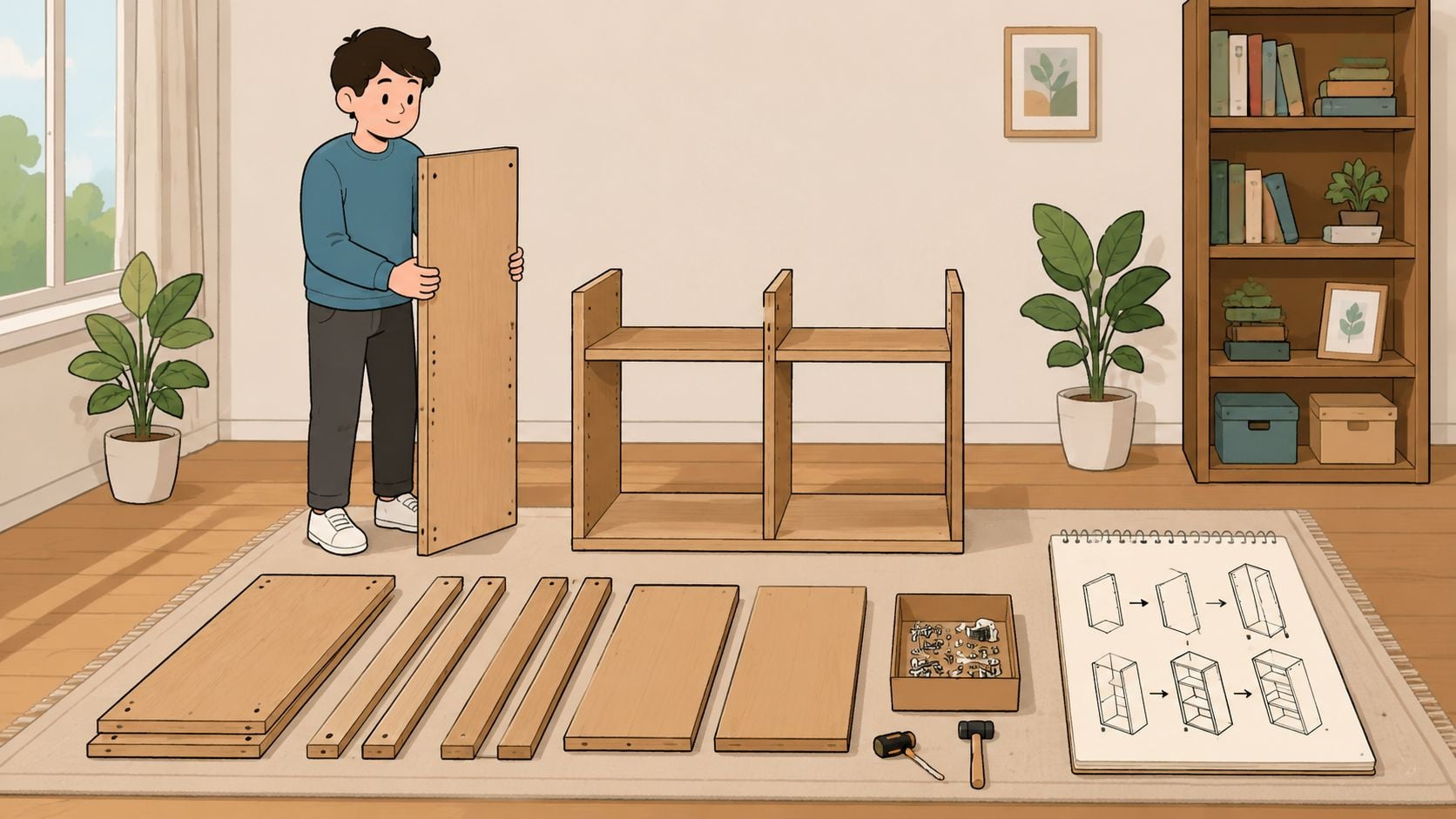
Confirm the number of boxes and compare the hardware bag with the parts list. Sort dowels, screws, cam bolts, and cam locks into shallow trays or small containers by type and size. A shallow tray is better than a deep box because small hardware stays visible and doesn't roll beneath the furniture.
Inspect every panel for chips, scuffs, damaged edges, or a missing pre-drilled hole. Match the printed part labels to the diagram, then dry-fit important connections without tightening anything. A dowel should seat fully, and a cam lock should rotate smoothly when the opposing bolt is correctly positioned.
Skipping this stage is a common reason a finished unit becomes scratched, wobbly, or impossible to complete. A short inspection at the beginning is far easier than dismantling a cabinet after discovering that one critical screw or reversed panel was overlooked.
Building Furniture With a Controlled Assembly Sequence
A controlled sequence turns a pile of boards into a stable piece without forcing the process. The first task is orientation. Each panel should be identified by its front, back, top, and bottom faces, then matched to the hardware diagram before a screw or cam bolt moves.
Establish orientation before fastening
Look for finished edges, visible holes, hinge cups, shelf-pin rows, and unfinished back edges. A side panel installed upside down may appear correct until drawers, doors, or shelves refuse to seat. Reversing that mistake later often requires partial disassembly.
Dry-fit the main panels first. Confirm that dowels enter their holes fully, edges meet flush, and the cam bolt reaches the lock without forcing the joint. Particleboard can crack when a misaligned connection is pulled together under pressure, so the right response to resistance is to stop and inspect orientation.
Build the largest subassemblies while the furniture is still lying flat. Attach the structural back panel before final tightening because it helps lock the frame square and limits racking. Many flat-pack guides also recommend a padded surface while the frame remains unstable, which protects the finish and keeps the assembly from sliding.
Tighten in deliberate stages
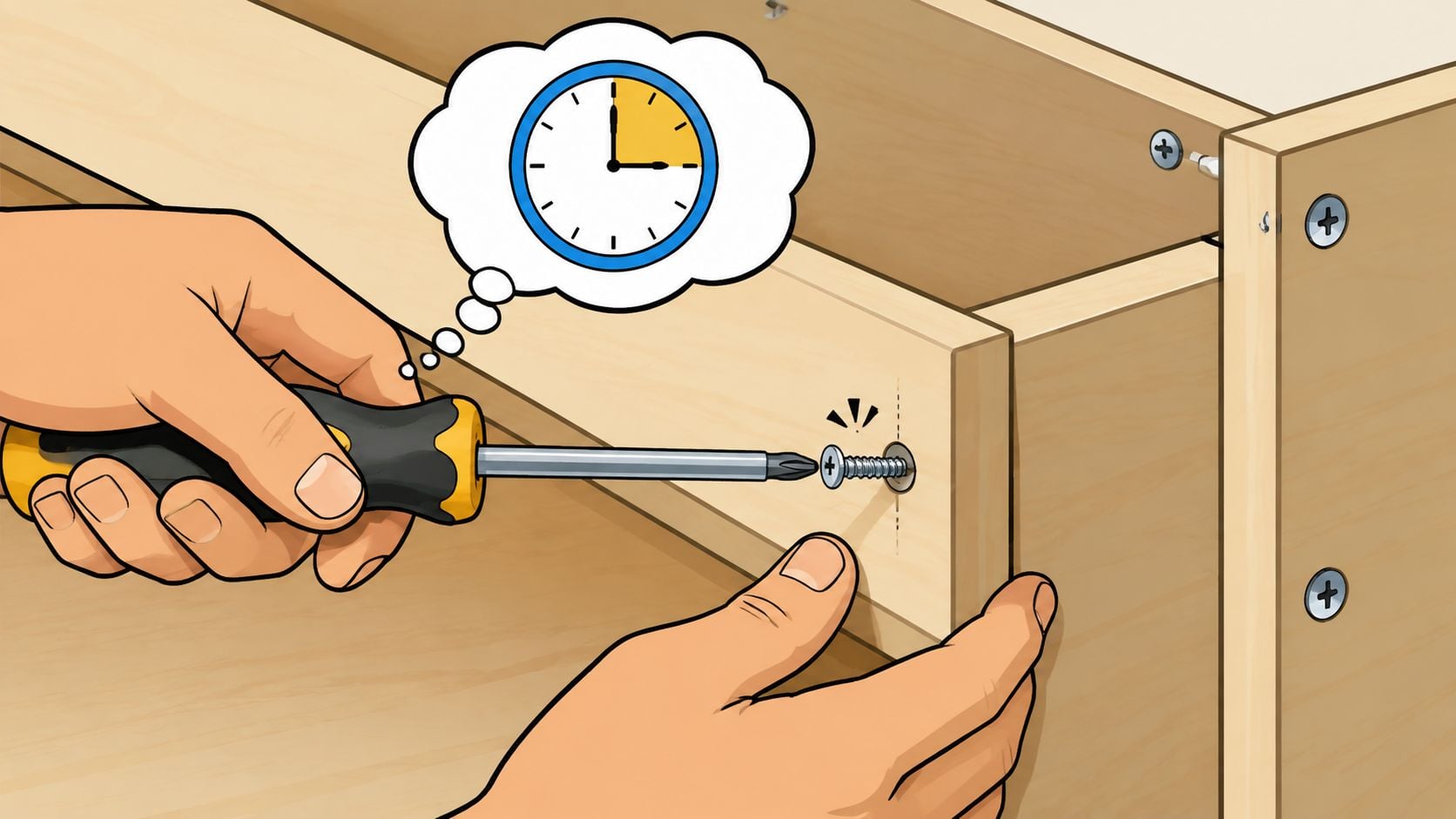
Start wood screws, cam bolts, and other fasteners by hand. This helps prevent cross-threading and makes it easier to feel when a screw has entered the correct hole. The main frame should remain snug but adjustable until the panels are aligned.
A useful sequence is:
- Seat the connectors by hand. Start each fastener without forcing it.
- Join the panels lightly. Bring edges together while leaving room for correction.
- Check the frame. Confirm that corners meet and the structure remains square.
- Install the back panel. Use it to stabilize the carcass before the final tightening pass.
- Tighten gradually. Work around the frame instead of fully tightening one side first.
- Raise the unit carefully. Use a second person for large or heavy pieces.
Power tools should be used only at low torque, if they're used at all, around cam locks and particleboard joints. Assembly-sequence research has found that formalizing the order can reduce unnecessary rework for specific furniture structures, while instruction-design research has linked more effective guidance with improved assembly time and error outcomes in controlled tasks, as described in this assembly instruction research.
For a mobility-focused item, such as a lift chair, installation has different handling and positioning concerns. The lift chair installation information can help a household decide when setup deserves more than ordinary flat-pack assembly.
Avoiding Costly Flat-Pack Furniture Mistakes
A flat-pack mistake often starts before the final screw. Locking one side too early can pull neighboring panels out of line, shift screw holes, split edges, and force several joints to be loosened. Treat the first tightening pass as positioning, not completion.
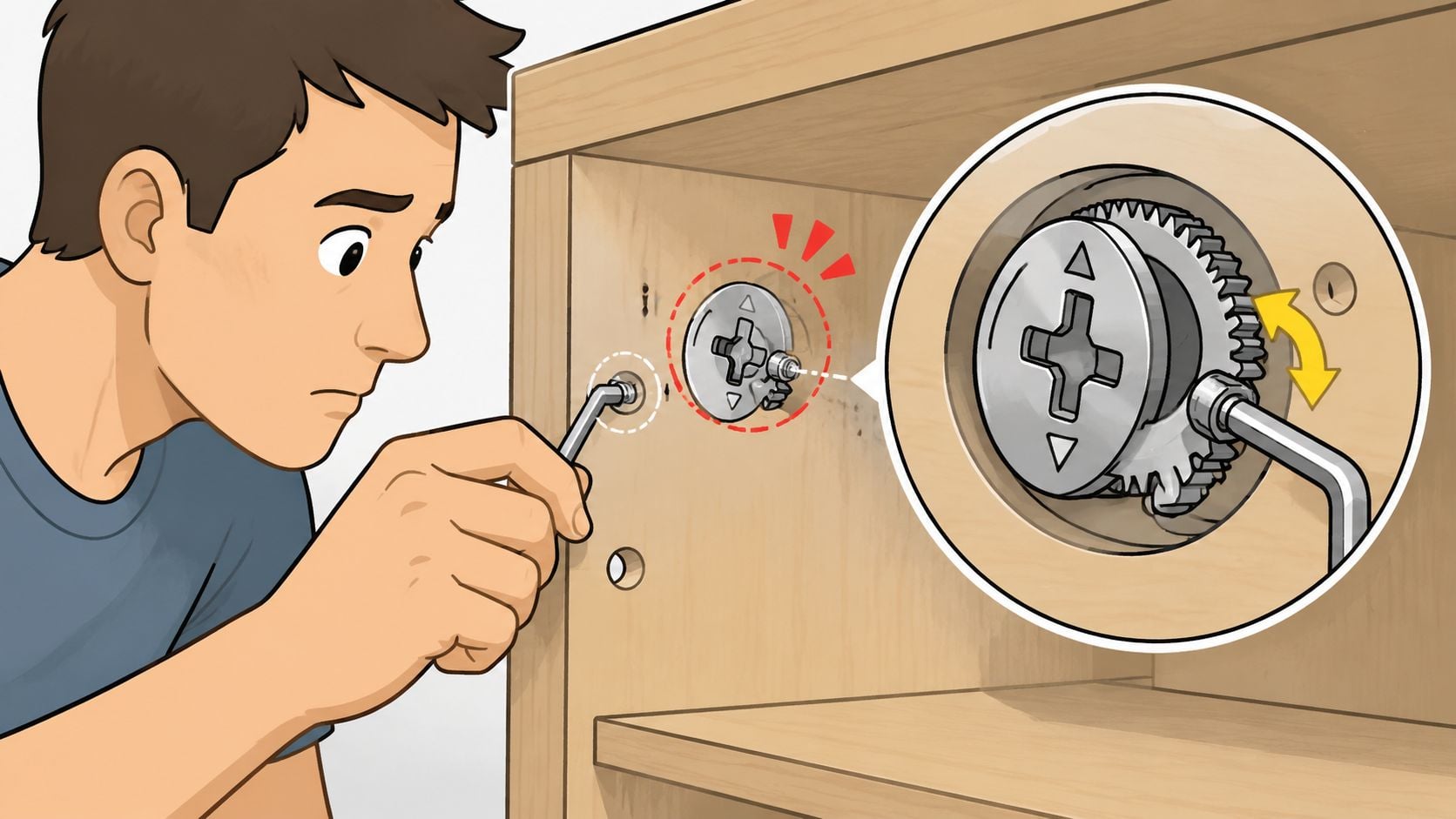
Use this working rule: hand-start every fastener, keep connections adjustable, and tighten fully only after the frame is square. Too much torque or forced alignment can fracture cam locks, blow out particleboard, or strip threads, as described in this furniture assembly performance research.
Small habits prevent larger repairs
Check panel orientation after every major step. A finished edge facing inward may look harmless until a door or drawer reveals it. Dry-fitting first can show a dowel that is too long, a misaligned cam bolt, or a panel turned around. If the piece was chosen without checking room dimensions, access, or intended use, review the dos and donts of furniture shopping before continuing.
Watch for these common, avoidable errors:
- High-torque drilling: Force can strip inserts and damage particleboard.
- Dragging furniture: Sliding a heavy unit may mark flooring and stress unfinished edges. Lift it with help or protect the route.
- Scattered hardware: Parts under a cabinet can be mistaken for missing pieces.
- Skipped wall anchoring: Tall furniture needs suitable hardware for the wall, especially after delivery and placement.
- Rushed leveling: A square frame can still wobble if one leg does not sit flat.
Pause after each stage. Confirm the orientation, match the hardware to the instructions, inspect the floor, and check that the unit is ready to carry its own weight. For a tall or heavy piece, secure it before regular use. If a joint requires force, an anchor point cannot be identified, or the furniture cannot be moved safely, stop and arrange professional furniture assembly help rather than risk damage or injury.
Troubleshooting Common Furniture Assembly Problems
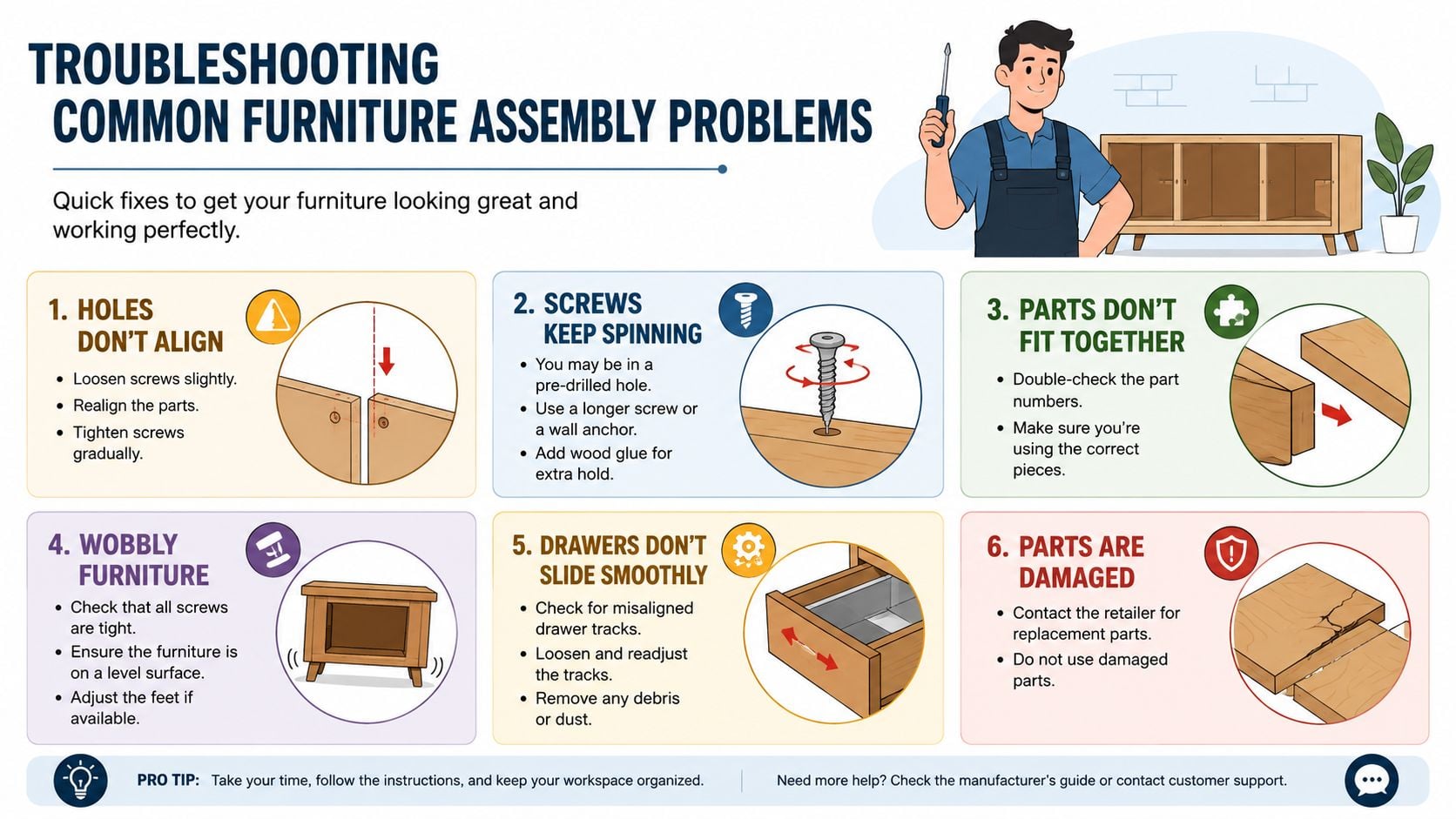
Diagnosis should begin with the first symptom, not the final appearance. A cam lock that won't turn often indicates that the opposing bolt is slightly misaligned, not that the lock is defective. Loosening the surrounding hardware, separating the panel carefully, and reseating the connection usually provides a better solution than applying more force.
A stripped insert needs restraint. For MDF, a small wooden toothpick with wood glue can sometimes help fill a damaged hole, while a slightly larger metric dowel may suit a connection that has clearly been overdrilled. Neither method should replace a damaged structural connection on a heavy or safety-critical piece.
Read the symptom carefully
A drawer that binds after the cabinet is square usually needs its runner screws reset. Forcing the frame out of shape can create a second problem instead of correcting the first.
Doors that swing open on their own may have a hinge cup sitting crooked or a hinge adjustment that needs correction. A slight wobble in an otherwise square piece often points to one leg not being fully seated or to uneven flooring. A thin shim under a short leg can solve that issue more safely than retightening every connection.
For a completed but unstable unit, a manual check should cover each cam, confirmat, dowel, leg, and bracket. Tall or heavy furniture requires particular care around wall anchoring and long-term stability. Tokyo consumer research found that 41.6% of respondents with assembly-furniture experience had trouble assembling it smoothly, 6.5% reported injuries, and loosened bolts or screws were the most common post-assembly problem, according to Tokyo consumer safety guidance on assembled furniture.
Choosing Professional Furniture Assembly Help
DIY assembly makes sense for a small side table or basic bookcase when the floor is clear, the instructions are straightforward, and another person isn't needed for lifting. Professional furniture assembly help becomes more sensible when the item is heavy, tall, complex, time-sensitive, or difficult to move through the home.
A wardrobe taller than six feet, a fitted storage system with several internal sections, a bed with a gas-lift mechanism, a large dining table, or gym equipment can create risks beyond ordinary screw turning. The same applies when the original packaging has already been discarded and a damaged panel or missing fastener would be difficult to identify.
| Factor | DIY Assembly | Professional Assembly |
|---|---|---|
| Complexity | Suitable for smaller, simpler pieces | Better suited to large or multi-section furniture |
| Physical demand | Requires lifting, bracing, and repositioning | A trained team can manage awkward components |
| Tools | Depends on the household toolkit | The crew arrives prepared for the product |
| Room access | The homeowner manages stairs and tight turns | The team can plan placement and protect access points |
| Safety | The homeowner handles leveling and anchoring | The service can include stability checks and wall anchoring |
| Time | Follows the homeowner's available hours | Scheduled help returns the room to use sooner |
| Packaging | Often remains for later disposal | Some services include packaging removal |
A delivery and assembly team can add value by combining transport, placement, floor protection, leveling, and setup in one visit. For broader moving and access planning, the Emmanuel Transport moving guide offers useful context on handling furniture through a home.
Local shoppers can review Gorins furniture assembly service when a new piece requires coordinated delivery and setup. The right decision isn't about whether DIY is admirable. It depends on whether the household has enough space, strength, time, tools, and confidence to complete the work without damaging the furniture or the home.
Schedule Local Help With Confidence
Booking assistance isn't a failure of practical skill. It can be the sensible choice when a family needs a bedroom ready, a dining room usable, or a tall storage unit secured without sacrificing an entire weekend. A scheduled service also gives the household a chance to explain access conditions before the furniture arrives.
A useful booking conversation covers the items, room location, stairs or narrow entries, parking or delivery access, wall type, and preferred timeline. The customer should receive a delivery window and ask what the crew brings, how floor protection is handled, whether packaging is removed, and whether wall anchoring is included.
The crew should arrive with suitable tools and protect the route through doorways and living areas. After assembly, a final walkthrough can confirm placement, level, moving parts, fastener security, and stability. That last inspection matters in bedrooms, nurseries, rental homes, and any room where a tall unit will carry substantial contents.
Gorins Furniture & Mattress has served Norwich since 1936 as a locally owned, family-operated business. Its showroom supports customers across Norwich, New London, Plainfield, Waterford, and surrounding Eastern Connecticut and Rhode Island communities, with delivery and setup services that can include assembly and packaging removal. Promotional Financing with equal monthly payments can help make an investment in furniture or a mattress easier to plan, subject to applicable approval and terms.
The Norwich showroom also connects assembly planning with broader furnishing decisions. Customers can explore Canadel Custom Dining and the F9 Custom Sofa series, with thousands of combinations available across custom options, while The Sleep Gallery includes Tempur-Pedic, Serta, and Beautyrest for shoppers comparing comfort by feel and healthier sleep. Those exploring living room furniture in Eastern CT, custom dining in Norwich, or mattresses in Norwich CT can gather measurements and access notes before scheduling delivery.
Gather the item list, record stairs and doorway details, and request a local appointment before delivery day. That small amount of information helps the team prepare, protects the home, and gives the household back its weekend.
Gorins Furniture & Mattress offers furniture selection, delivery, and setup support from its Norwich showroom, helping households move from boxed pieces to stable, usable rooms with less strain. Visit Gorins Furniture & Mattress to arrange local help, take the online Style Quiz, or browse the Clearance section for value-driven savings.