Chaise and Sofa Guide for Norwich Homeowners


A Norwich family can stand in a living room with a tape measure in one hand and a fabric swatch in the other, and still feel stuck. The sofa looks right for guests, the chaise looks right for evening lounging, and the key question is whether one piece, or a chaise and sofa together, will work with the room, the doorway, and the way the household lives every day.
That choice shows up a lot in Eastern Connecticut homes because the living room rarely has just one job. It has to handle movie nights, visiting relatives, quiet reading, and the everyday path from the kitchen to the hallway. At Gorins, the conversation usually starts with use first, then size, then style, because a comfortable room is built from those three decisions in that order.
The good news is that the differences are easier to understand than most shoppers expect. Once the basic vocabulary clicks, the measurements make more sense, the orientation problem gets simpler, and the whole showroom visit feels less like guesswork and more like a plan.
Why Norwich Homeowners Are Choosing a Chaise and Sofa Together
A local homeowner in Norwich often walks in with the same puzzle. The family wants enough seating for guests, but they also want a place to stretch out after work without taking over the whole room. A single sofa can feel too formal for nightly lounging, while a standalone chaise can feel too narrow for a household that needs shared seating.
That's why the combined search for a chaise and sofa keeps making sense. A sofa is built for sitting together, while a chaise gives one person a place to recline. When those two functions live in one arrangement, the room can serve both a weekday routine and a weekend gathering without forcing a compromise that feels awkward.
For Norwich and nearby Eastern CT homes, the primary issue is often not style first, it's how the room gets used. Open plans need clear walkways. Compact dens need pieces that don't eat the floor. Families who want a more customized look often start with a custom-order mindset, because it's easier to fit the home when the seating is chosen around the layout instead of the other way around.
Practical rule: If a room needs both conversation seating and a lounging spot, start by asking which activity happens there most often. The answer usually points to the right mix of sofa, chaise, or both.
That's also why the phrase shows up more often in local searches. Shoppers aren't just looking for a pretty silhouette, they're trying to solve a room problem. The rest of this guide gives them the language, the measurements, and the styling habits they need before they step onto the Norwich showroom floor.
Understanding the Core Difference Between a Chaise and a Sofa
A sofa is designed for shared seating. It usually has two armrests, a full back, and room for at least two to three people to sit together, which is why it works so well in family living rooms and conversation spaces. A chaise lounge is the opposite in function, it's built for one person to recline, with a long seat and a lower back on one end.
A chaise sofa blends those ideas. It's basically a sofa with an extended section for stretching out, so one end gives the body a place to lie back while the rest of the piece still functions like a regular couch. That's the source of a lot of showroom confusion, because the same word can describe both a lounging piece and a full seating arrangement.
A sectional is broader still, because it combines multiple sections into one larger seating unit. That can include a chaise, but it can also include extra corner pieces or seats that are arranged to fit a room more closely. For buyers who keep hearing the terms used loosely online, the safest approach is to decide whether the household needs shared seating, solo lounging, or a blend of both.
| Piece | Seats | Back Style | Best For |
|---|---|---|---|
| Sofa | Two to three or more | Full back, two armrests | Shared seating and conversation |
| Chaise lounge | One | Low back on one end | Solo reclining and reading |
| Chaise sofa | Two to three, plus a lounging end | Sofa back with extended section | Mixed lounging and seating |
| Sectional | Several | Varies by configuration | Larger rooms and flexible layouts |
For a deeper look at how larger seating groups work, the guide to sectionals and what to know before buying one helps place the chaise conversation in context.
A chaise is named for the side it sticks out on when facing the sofa, not the side of the room. That simple rule prevents a lot of ordering mistakes.
Once that distinction is clear, the next decision gets easier. The shopper isn't just choosing a shape, they're choosing how the family will sit, recline, and move through the room day after day.
Popular Configurations and Which Households They Fit
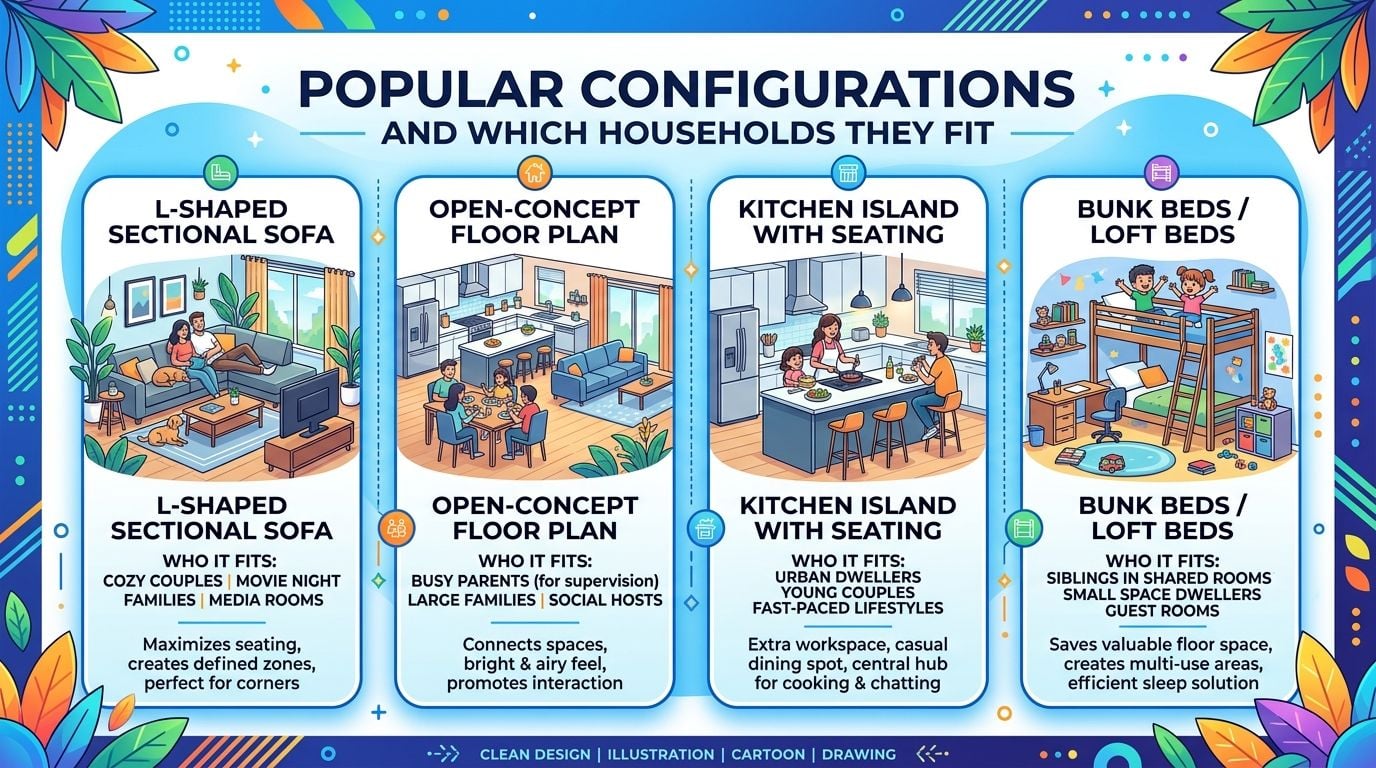
A standard sofa with a left-facing or right-facing chaise is the most common starting point. It gives a Norwich family a normal seating area with one end pulled out for lounging, which works well when the room needs to support both guests and daily downtime. The orientation matters because the chaise must extend from the correct side when facing the piece, or the layout can block a walkway or hit a window.
A standalone chaise lounge fits a different kind of household. It's a strong choice for a reading corner, a bedroom nook, or a quiet spot in a smaller apartment where the main need is solo comfort rather than group seating. A chaise sectional is better for families that gather around a screen, since the larger footprint gives more people room to settle in without squeezing together.
A sleeper chaise serves homes that need backup sleeping space. That can be useful in a smaller Norwich apartment, a guest room that has to double as a den, or a downsizing home where each piece needs to work harder. In tighter rooms, the key question is whether the chaise will still leave enough circulation room for daily movement, especially around the front edge.
For shoppers trying to coordinate furniture with window treatments, the right upholstery scale matters too. A room with tall drapery panels often feels calmer when the seating has clean lines and a clear lounging side, which is why layout and vertical design should be considered together. A useful visual reference is Tampa Bay custom window treatments, especially for homes where the sofa has to sit under substantial windows.
The arrangement details also affect how the room feels from the moment someone walks in. For a related layout guide, the page on different ways to arrange a sectional couch gives another angle on how larger seating shapes anchor a room.
Measurements That Decide Whether It Fits
The first sizing question is the piece itself. A standard sofa commonly measures about 72 to 96 inches wide, 30 to 40 inches deep, and 30 to 36 inches high. A chaise lounge or chaise sofa usually measures 30 to 36 inches wide and 60 to 72 inches deep, so it reaches farther into the room than it spreads across it.
That forward reach is the part many shoppers miss. A chaise does not just sit in the room, it extends into the open area, so the floor plan has to make room for that extra depth. In many Eastern Connecticut living rooms, where every bit of open space affects how people move between the sofa, the doorway, and the rest of the house, the longest dimension matters as much as the width.
A simple way to picture it is a dining table with one long leaf side. The room may still feel open, but only if that longer side has space to extend without blocking the path.
Delivery path matters as much as room size
A sofa can fit the floor plan and still fail at the front door. The measurement that matters is the longest shipping dimension and diagonal clearance, not just the wall where the piece will eventually sit. Delivery planning should include doorways and turns, because a piece that looks manageable on paper may still struggle with a tight opening.
One practical measuring guide for furniture explains that common sofa lengths fall in the 70 to 96 inch range, while chaise or sectional shapes can include a chaise length of 60 to 75 inches or a fully reclined length of 60 to 72 inches. It also notes that doorway clearance can shrink once trim, hinges, and stops are part of the equation, which is why the delivery path deserves a full tape-measure check before purchase.
For a step-by-step walkthrough before you visit the Norwich showroom, use Gorins' how to measure furniture guide. Measure the room width, room depth, doorway width, hall turns, and the open space needed in front of the chaise. That sequence keeps the focus on what matters in a real home, not just on the showroom floor.
A rug should anchor the seating rather than float under it. The safest visual rule is that the front legs sit on the rug, which helps the room feel intentional and keeps the chaise from looking like it drifted away from the rest of the arrangement. For wood floors, that placement also helps the seating group feel grounded rather than skittish, which is a useful perspective from expert advice from Buff & Coat.
A few styling choices help the room feel finished:
- Float the piece when possible: Pulling the seating slightly away from the wall can make a small room feel less boxed in.
- Keep the chaise on the quiet side: Put the lounging end where foot traffic is lightest.
- Match side tables to posture: A taller table works better beside an upright sofa seat, while a lower table feels more natural near a reclined end.
- Use lighting by task: A reading lamp near the chaise, and softer ambient light near the sofa, support the way people sit.
The right arrangement usually looks calm because it respects movement first and decorating second. For more floor-plan ideas, the living room furniture placement guide helps translate these habits into a usable room plan.
Materials, Cushion Firmness, and Custom Options at Gorins
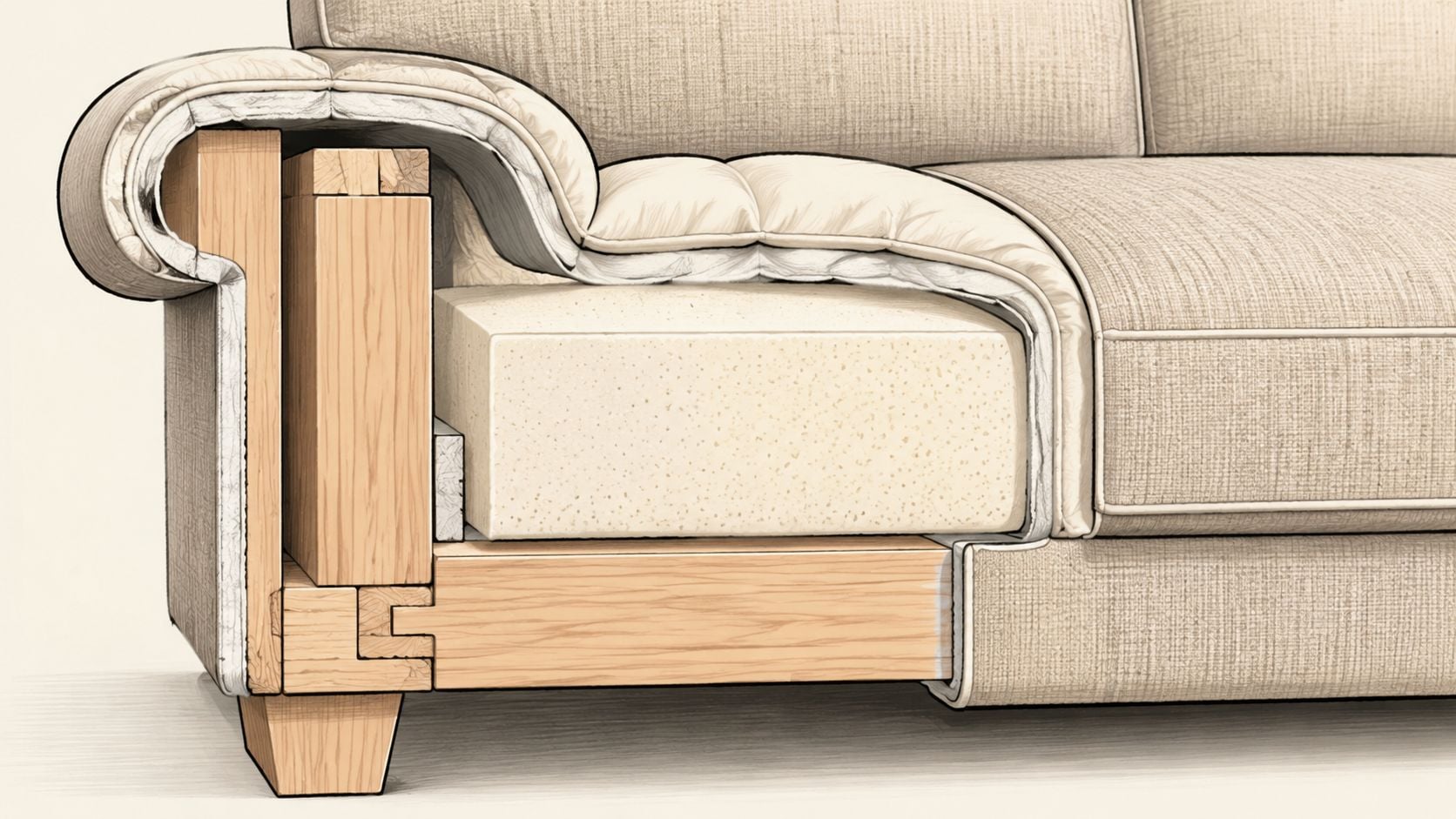
A sofa or chaise is a long-term purchase, not a weekend accent. One published estimate puts the average sofa life at 2,958 days, or roughly 8 years, and it also estimates that an average sofa gets used 13 times per month for eating a meal, adding up to about 1,261 meals over its lifetime (historical furniture facts). That kind of use explains why frame strength, upholstery choice, and cushion resilience matter so much.
Comfort also changes with cushion feel. Some people want a firmer seat that's easy to get out of, while others prefer a softer landing for evening lounging. The best choice usually depends on body type, posture habits, and how long the family expects to sit in the room at one stretch.
What custom order programs actually change
Gorins' custom living room programs make those decisions more precise. The F9 Custom Sofa series lets shoppers choose details such as arm styles, back types, welt details, and cushion firmness, so the finished piece can fit both the body and the room. That matters because a chaise and sofa arrangement often needs one side to support conversation and the other to support full reclining.
The showroom also carries brand partnerships that support that custom approach, including Flexsteel, Best Home Furnishings, and Craftmaster. Those names matter less as labels and more as signals that the shopper has options when balancing comfort, structure, and finish. Gorins' custom dining partnership with Canadel follows the same logic in another part of the home, where thousands of combinations can be used to shape the final look.
For upholstery basics, the guide to upholstery materials is a practical companion when the shopper is deciding between texture, durability, and cleanability. Gorins has been helping Norwich families since 1936, and that long history still shows up in the way custom choices are discussed on the floor, one practical decision at a time.
Your Next Step, From Browsing to the Norwich Showroom
A chaise and sofa decision gets easier when it stops feeling abstract. Once the household knows who needs to sit, where the chaise can extend, and how the delivery path works, the remaining choice becomes a matter of comfort and finish rather than uncertainty. That's why a local showroom visit often saves time, because the body can answer questions a screen never can.
Gorins also makes the practical side less stressful with 5-Star Delivery service and flexible financing options, including equal monthly payments through promotional programs tied to the Nest Credit Card and TD Bank, subject to credit approval. That gives families a way to move forward without turning a thoughtful purchase into a strain on the budget. For many Norwich homeowners, that combination of guidance and payment flexibility is what turns a nice idea into a workable plan.
A few next steps make sense for most shoppers:
- Use the Style Quiz to narrow the look before visiting.
- Browse the Clearance section if value is part of the plan.
- Visit the Norwich showroom to sit, measure, and compare layouts in person.

Since 1936, Gorins Furniture & Mattress has helped Norwich and Eastern CT families create homes they love, and this is a good time to see how a chaise and sofa can work in a real room. Visit Gorins Furniture & Mattress to explore seating, compare custom options, and take the next step toward a living room that fits the way the home works.