Custom Dining Bench Design and Ordering Guide


The table is set, the roast is ready, and then two more relatives arrive with nowhere comfortable to sit. In many Norwich and Eastern Connecticut homes, the dining room has to handle family meals, homework, celebrations, and everyday clutter without becoming a traffic obstacle. A custom dining bench can solve that problem, but only when its proportions, construction, and purpose are chosen carefully.
The right bench isn't just a longer seat or a way to squeeze in another guest. It should fit the table, preserve knee clearance, support comfortable sitting, and contribute something useful to the room. For households that need storage, flexible seating, or a more personal alternative to a matching dining set, custom design offers a practical route to investment-grade quality.
Rethinking the Dining Room Layout
A holiday dinner can reveal a layout problem quickly. Chairs need space to pull out, arms may collide with table legs, and each seat fixes the room in one position. A custom dining bench gives the layout more flexibility. It can run along a wall, tuck beneath the tabletop when unused, or define one side of the dining area without blocking the main path.
The better question is how the bench will serve daily life. A household may need comfortable seating for long meals, a clear passage during busy mornings, or a place where children can sit together. Build the bench around those routines, then choose its appearance. A bench should make the room work better, not merely coordinate the table.
Communal seating has a long history, and its practical value remains clear. Custom benches commonly use ergonomic proportions of about 17 to 18 inches tall, 12 to 14 inches deep, and 48 to 72 inches long, with larger dimensions available for substantial tables and built-in banquettes (custom dining bench dimensions and pricing guidance). Treat those figures as a starting point, not a fixed formula. The table, users, cushions, and available clearance determine the final design.
In a Norwich breakfast nook, placing the table against a wall can make three separate chairs feel crowded. A fitted bench keeps that side visually open and gives the nook a stronger sense of purpose. If the project includes construction work, review the breakfast nook cost and timeline before ordering furniture, so the bench dimensions align with the finished space.
The same approach suits open-plan homes in New London, Waterford, Plainfield, and nearby Eastern CT and Rhode Island communities. Let the wood tone, upholstery, or silhouette relate to the room, while allowing contrasting chairs to soften the arrangement. A bench can anchor the dining zone without making every piece look identical.
For decisions about table shape, seating, and traffic flow, use this guide to maximize dining space with table shapes and seating arrangements. Prioritize comfortable movement and useful seating over filling every inch.
Measuring for Comfort and Clearance
A family choosing a custom dining bench for daily meals needs more than a good-looking fit. Measure the table, the sitter's posture, and the routes around the furniture before placing an order. That process protects long-term comfort and keeps the bench useful when the dining area also handles homework, conversations, or extra seating.
Start with the table
Measure the finished height from the floor to the tabletop, then measure the underside of the apron and any frame below it. A standard dining table generally pairs with a finished bench seat height of 17 to 19 inches. Counter-height tables call for approximately 24 inches, while bar-height tables call for approximately 30 inches. These figures provide a useful starting point for height guidance for custom dining benches, but the table's actual construction should determine the final specification.
For a conventional table, leave roughly 10 to 12 inches between the seat and the table underside. This gives the knees room to move and lets diners sit upright instead of sliding forward. If the bench has a cushion, measure from its compressed surface, not from the wooden platform. That small adjustment matters in a bench intended for long meals or repeated daily use.
Set the depth
A backless bench generally works best at 14 to 16 inches deep. Shallower seating can press against the thighs. Excessive depth can encourage slouching or force diners to reach too far toward the centre of the table. Banquette cushions can often use 18 to 20 inches of depth, but they should not fall below 16 inches.
The goal is supported posture, not the largest possible seat. Test the sitting position with the table in front of you. A bench that looks generous in a showroom may feel awkward if every diner must lean forward for each plate.
Check knee and movement clearance
Measure approximately 18 to 20 inches from the table edge to the front of the seat. This supports leg movement and makes sitting down or standing up easier. If the bench slides beneath the table, allow at least 2 inches beneath the apron, then check the legs, corner blocks, and cross-supports.
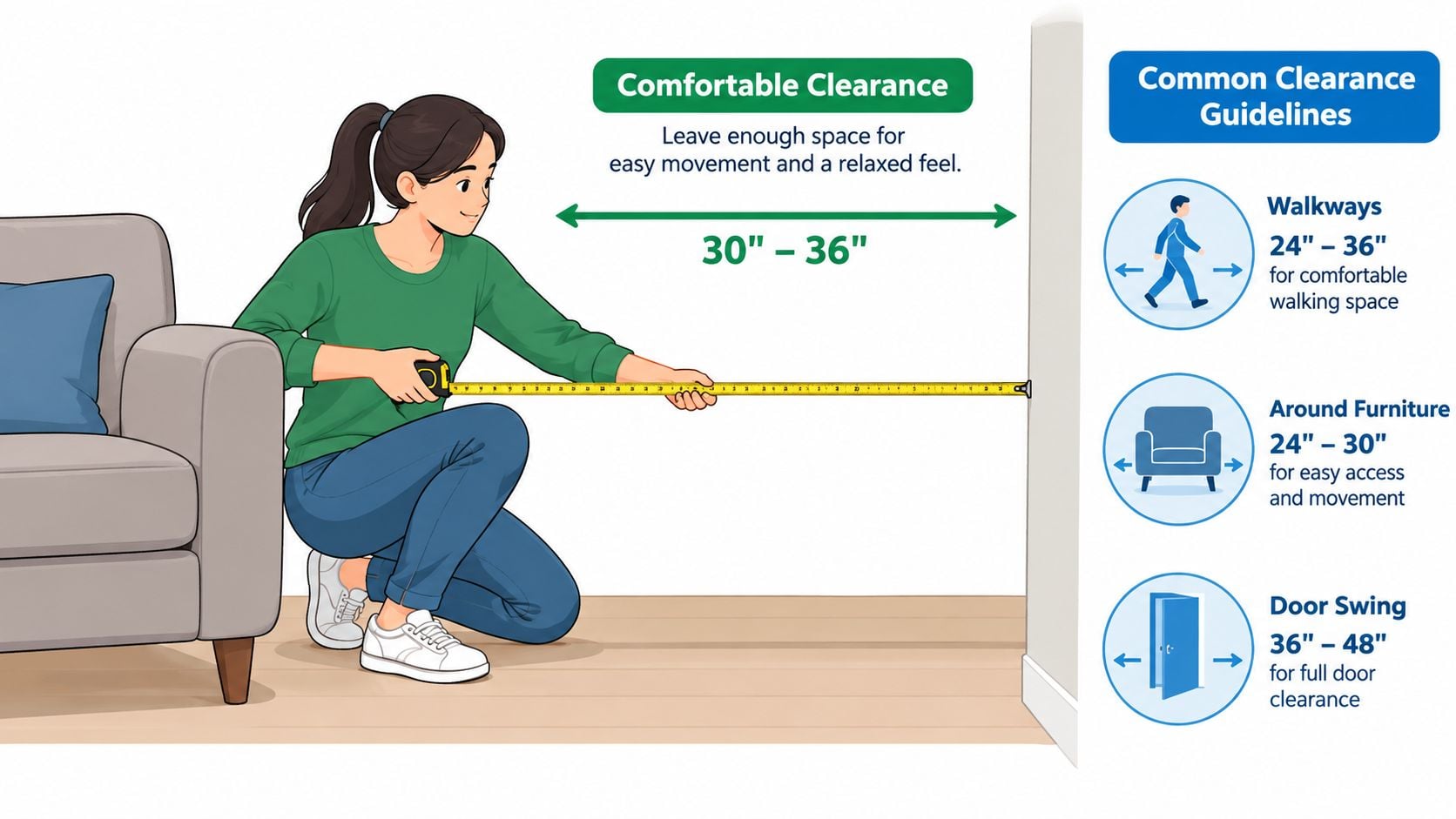
Table geometry can undermine an otherwise accurate measurement. Allow 2 to 3 inches of setback from table corners to reduce pinched fingers and collisions as people sit down. Measure the baseboards, outlets, radiator covers, door swing, and doorway route before ordering.
Use this guide to measure a room before purchasing furniture. Draw the table, walls, doors, and walking path on a simple sketch, then confirm that the finished bench supports comfortable movement as well as everyday use.
Selecting Materials and Performance Finishes
Once the measurements are settled, material choice determines how the bench will age. The decision should follow household habits, not just a colour board.
Wood for visual warmth
A solid wood bench brings texture and permanence to the dining room. White oak has a pronounced grain and a durable, welcoming appearance, while walnut creates a deeper, more formal tone. A custom wood bench may range from $600 to $2,800, depending on species, length, and design (custom bench pricing guidance).
For a 60-inch white oak bench, published guidance indicates approximately 7 to 10 labour hours and a selling price of $900 to $1,600. The same source places a matching walnut dining table at $3,500 to $7,000, with the bench representing roughly 30 to 45 percent of the table price. Those figures frame the bench as a meaningful furnishing investment, not an incidental accessory.
A wood bench works especially well when its finish coordinates with the table without copying every detail. Matching the undertone, such as warm, neutral, or deep brown, usually creates a more settled room than forcing an identical grain pattern.
Upholstery for daily comfort
Upholstery is the better choice when the dining table doubles as a homework desk or work surface. A properly supported cushion reduces pressure points and makes longer meals more pleasant. Households with children or pets should prioritise performance fabrics that are easier to clean and less vulnerable to everyday spills.
The tradeoff is maintenance. Textured fabrics can disguise minor wear, while very pale or highly nubby surfaces may demand more attention. A removable or serviceable cover can be valuable, but the construction must still keep the cushion firmly positioned.
For a closer look at fibres, cleaning needs, and selection criteria, Gorins' guide to upholstery materials gives shoppers a useful foundation before they compare swatches.
Cushion construction matters
The visible fabric gets most of the attention, but the cushion core controls daily comfort. A high-resilience cushion should recover its shape instead of flattening quickly under repeated use. The front edge should also be rounded rather than sharply squared, since a hard edge can press into the thighs during a long meal.
A mixed arrangement often gives the strongest result. Upholster the bench for comfort, then use individual chairs on the opposite side for back support and easy access. That combination feels more collected than a fully matched set and accommodates different sitting preferences.
Evaluating Ergonomics and Multifunctional Storage
A bench that feels comfortable for five minutes may become tiring during a long dinner, homework session, or workday. Test the seat after sustained use, then judge how easily people can enter, leave, and shift position. A backless design keeps the room visually light and tucks neatly beneath the table, but it offers no lumbar support. Choose it for shorter meals, flexible placement, or a household that values an open profile over extended sitting comfort.
A low-back bench provides support without the bulk of a full chair. It suits families who linger at the table and need the dining area to handle homework or remote work. Fully upholstered seating gives the most forgiving feel, but its larger silhouette makes fabric performance and cleaning requirements more important.
Match support to the household
Use the bench style to solve a daily need:
- Backless: Choose it for a clean profile, easy tucking, and flexible placement.
- Low-back: Choose it for longer meals and regular table work.
- Fully upholstered: Choose it when comfort leads the decision and the room can accommodate a deeper visual presence.
- Mixed bench and chairs: Choose it when household members need different support levels or independent access.
A 60-inch bench is often used as a practical reference for seating about three adults, yet the table and household determine the final fit. Allow 18 to 24 inches of seating width per person for comfortable personal space and easier movement (bench proportion and seating guidance). Once a bench reaches roughly 48 to 60 inches, people may have more difficulty getting in and out without disturbing others. Measure the table legs, nearby walls, and walking route before choosing a longer seat.
Decide whether storage earns its footprint
A storage bench can keep seasonal linens, placemats, and dining accessories close at hand without adding another cabinet. A movable design may later serve in an entryway or mudroom, giving the custom piece value beyond the dining room.
Inspect the lid mechanism before ordering. A heavy top can be awkward and unsafe for children, while a weakly supported hinge makes everyday access frustrating. Storage also adds weight, so confirm delivery access, lifting requirements, and floor protection before finalising the design.
Use this guide to select a dining storage piece to assess capacity, access, placement, and appearance. Storage should support a clear routine, such as keeping table linens nearby. If the compartment becomes a difficult catch-all, choose a simpler upholstered bench instead.
Navigating the Custom Order Process
A family may use its dining bench for quick breakfasts, long dinners, homework, and extra seating during holidays. Custom ordering works best when those daily demands shape the design before fabric or colour enters the discussion.
Establish the required specifications
Bring a clear functional brief to the showroom:
- Record the table measurements. Include table height, apron depth, leg placement, and the bench's available footprint.
- Define the seating pattern. Identify whether adults, children, guests, or a mixed household will use it most.
- Choose the support level. Compare backless, low-back, upholstered, or mixed seating according to typical sitting time.
- Set the material direction. Narrow the wood species, stain family, cushion type, and performance-fabric requirements.
- Confirm the room's visual language. Coordinate the bench with nearby flooring, cabinetry, lighting, and furniture.
Start with comfort and maintenance, then refine the appearance. A bench that looks polished but has the wrong height, depth, or support will frustrate the household every day. Specify durable finishes and upholstery that suit meals, children, pets, and the cleaning routine.
Canadel Custom Dining gives shoppers access to thousands of combinations across sizes, shapes, finishes, and fabrics, according to Gorins' Canadel custom dining options. That range is useful when it helps coordinate a bench with the table and room. It becomes distracting when shoppers browse every option without deciding how the piece must function.
A local designer can narrow unsuitable depths, finishes that compete with the room, and fabrics that exceed the household's maintenance tolerance. In the Norwich showroom, compare samples in person to judge colour, texture, and comfort under real lighting.
Use this custom-order starting guide to prepare questions before the appointment. Gorins Furniture & Mattress offers Canadel Custom Dining for coordinating tables, benches, finishes, and fabrics, while its F9 Custom Sofa series applies the same made-to-order approach in the living room.
Financing and Bringing Your Vision Home
A custom dining bench earns its place when it supports daily routines for years. Set the budget around construction, upholstery or finish, delivery access, and installation conditions. Paying for accurate measurements and suitable materials can prevent the household from replacing a piece after a layout change.
Promotional Financing may help spread the cost, provided the terms match the household budget. Review Gorins' Nest Credit Card terms, including the payment schedule, interest conditions, approval requirements, and any promotional period, before placing a custom order. Choose a payment plan that leaves room for ordinary household expenses and future care.
Delivery deserves the same attention as the bench itself. Confirm the narrowest doorway, stairway, and turning point before the order is final. Gorins' 5-Star Delivery service is intended to support careful handling and placement for Norwich-area homeowners, helping the finished piece reach its planned position without avoidable damage.
A home being prepared for visitors needs clear walkways and an orderly dining area. Use this practical guide to prepare for a showing, then apply the same principles when positioning the bench. Remove items that crowd the room, keep access to the table comfortable, and make the bench look purposeful rather than oversized.
Since 1936, Gorins Furniture & Mattress has served families in Norwich and Eastern CT. Its showroom includes custom-designed dining options and sleep products, with personalised local care and 5-Star Delivery service.
Gorins Furniture & Mattress can help households in Norwich, New London, Plainfield, Waterford, and nearby Eastern CT and Rhode Island communities configure a custom dining bench around comfort, clearance, finish, and daily use. Visit Gorins Furniture & Mattress to arrange a showroom visit, take the online Style Quiz, or browse the Clearance section for value-driven savings.