Best Recliners for Tall People: A Norwich Buyer’s Guide


A lot of tall shoppers walk into a showroom already irritated. They've sat in enough recliners to know the pattern. The chair looks generous from across the room, but the minute they sit down, their knees ride high, their shoulders stick up above the back, and the footrest quits before their legs do.
That frustration usually has nothing to do with taste. It's a fit problem. For neighbors in Norwich, New London, Plainfield, Waterford, and surrounding Eastern CT and Rhode Island communities, the best recliners for tall people aren't the biggest chairs on the floor. They're the chairs that match three separate body needs: seat depth, back height, and footrest extension.
That's the filter worth using. Not “big and tall” on a tag. Not extra padding. Not a wide arm. Fit first, mechanism second, upholstery last.
Why Standard Recliners Fail Tall Shoppers
A tall shopper sits in a standard recliner at a chain store. Upright, it feels passable for about thirty seconds. Then the problems show up. The front edge stops too soon under the thighs. The back cushion hits below the shoulders. Once the footrest comes up, the calves are supported but the heels still hang.
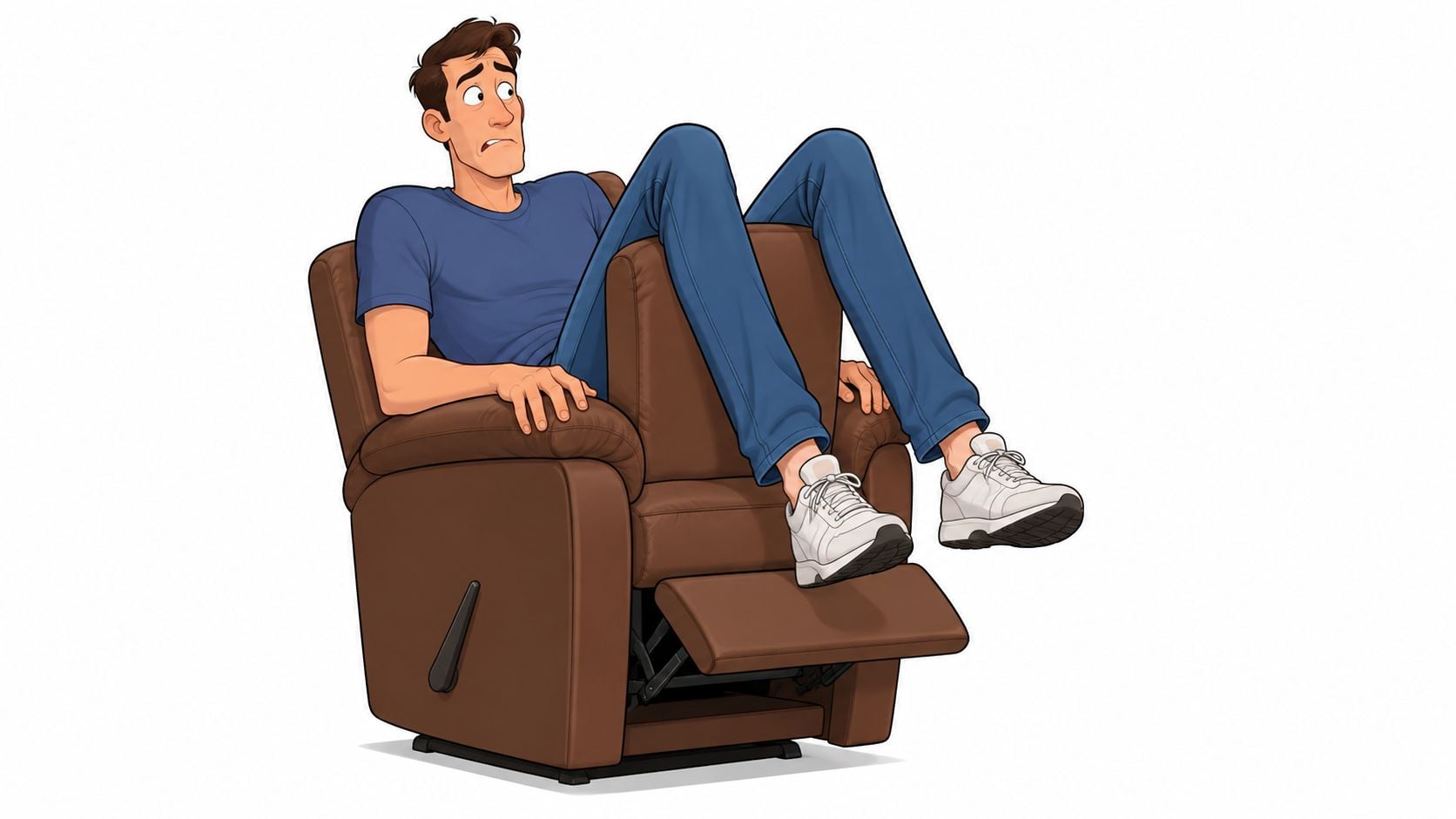
That's why so many standard recliners disappoint taller adults. The category still includes plenty of frames with seat depth around 18 to 20 inches, while one tall-user guide says a person who is 6-foot-2 typically needs at least 22 inches, with 24 inches or more for people 6-foot-6 and taller (tall-user seat depth guidance). If the seat is shallow, the body slides forward to make room, and that wrecks the lumbar position.
Three failure points show up again and again
The first is shallow seat depth. Tall users need thigh support. When the cushion ends too early, the knees lift, the pelvis rotates, and the lower back takes the hit.
The second is short back height. Anthropometric data show the 95th percentile sitting height is about 38.46 inches, compared with 33.86 inches at the 5th percentile, which helps explain why standard recliner proportions often miss taller torsos (recliner sizing and sitting-height ranges). A chair can look wide and still be too short where it matters.
The third is footrest extension. That gets skipped in far too many buying guides. Independent guidance points out that very tall users may need up to 30 inches of footrest extension so the lower legs aren't left hanging (footrest extension guidance for tall users).
Practical rule: A recliner that fits a tall shopper in two places and misses in one still won't feel right at home.
Why one-size-fits-all doesn't work
Seating research backs this up. A major ergonomic reference tied seat height to popliteal height, with recommended seat-height ranges of 15.0" to 19.9" and 15.0" to 22.25" when shoe allowance is included. The same body-measurement discussion notes 95th percentile male popliteal height at 19.2 inches versus 14 inches for 5th percentile females, which is a spread of more than 5 inches (ergonomic sizing guide for tall recliner fit). That's exactly why a standard lounge chair logic fails tall shoppers.
A recliner for a tall body has to do more than look roomy. It has to support the body in the right places.
Measure Yourself Before You Measure the Chair
Height by itself is a lousy buying tool. Two people can both be over six feet tall and need completely different recliners because one has longer legs and the other has a longer torso. That's why a smart tall shopper measures the body first.
A wall, a hardcover book, and a tape measure are enough. Then the showroom visit becomes simpler, faster, and a lot less random.
The three measurements that matter
Start with inseam while seated. Sit against a wall with knees bent at a right angle. Measure from the wall to the back of the knee. That number tells more about seat depth than overall height ever will.
Next, take sitting height. Sit upright against the wall and measure from the floor to the top of the head. Tall-torso shoppers usually discover the issue here. The chair back isn't too small overall. It's too short in the wrong place.
Then measure torso length to shoulder top. Measure from the seat surface up to the top of the shoulder. This catches the shoulder-blade problem that makes many recliners feel cramped even before the user leans back.
| Measurement | How to Take It | Red-Flag Number |
|---|---|---|
| Inseam | Sit against a wall, knees at 90 degrees, measure from wall to back of knee | Over 20 inches |
| Sitting height | Sit upright against a wall, measure floor to top of head | Over 36 inches |
| Torso length | Measure from seat surface to top of shoulder | A longer torso than most standard chair backs comfortably clear |
For help with room-scale and furniture dimensions before a store visit, Gorins has a practical guide on how to measure furniture before buying.
What those numbers usually mean
If seated inseam is over 20 inches, a shallow off-the-rack recliner is likely to fail. That lines up with tall-user buying guidance that says 22 to 24 inches of seat depth provides proper thigh support, with at least 22 inches as the baseline to prioritize (tall recliner buying dimensions).
If sitting height is over 36 inches, don't assume a taller overall chair solves it. What matters is where the headrest and upper back support land once the body is seated.
Write those three numbers down and bring them into the showroom. A tall shopper with measurements shops better than a tall shopper with guesses.
Manual Power and Lift Recliners Compared for Tall Users
Mechanism matters more than most shoppers expect. Two recliners can share similar outside dimensions and feel completely different once they move. For tall users, the mechanism affects whether the body stays supported or gets pulled out of position.
Manual recliners
Manual recliners often appeal to tall shoppers because they can sit on generous frames and usually avoid some of the bulk that powered hardware adds. They're straightforward, familiar, and often a good value.
The trade-off is movement control. The footrest and back usually work together, so the chair may pull the body forward as it opens. That's where tall users lose alignment. The legs come up, but the hips and lower back don't stay where they should.
Power recliners
Power recliners are usually the better answer for a tall frame. The back and footrest can be adjusted with more precision, which means the user can chase proper support instead of settling for one preset motion. That matters for long torsos and long legs that rarely line up with a standard manual action.
Recent guidance also pushes shoppers to think beyond total height. It highlights back height roughly 42 to 46 inches, seat depth around 22 to 26 inches, and open arm designs as more useful fit indicators than height alone. The same guidance flags whether the chair pivots at the hips instead of pushing the lower back forward (nuanced tall-user recliner fit factors).
Power does ask for more floor planning. A living room in Norwich with tighter traffic paths can make rear clearance and reclined footprint a real issue. That's not a reason to avoid power. It's a reason to measure the room.
Lift recliners
Lift recliners solve a different problem. They help a user stand with less strain, which is a real benefit for shoppers dealing with knees, hips, or lower-back fatigue.
But tall buyers should be blunt about the compromise. Lift hardware can eat into the clean, spacious feel that a tall user wants from the seat. Some fit better than others, but the priority shifts from pure lounging comfort to easier entry and exit. For shoppers focused on mobility support, lift chairs designed for taller men are worth reviewing before stepping onto the floor.
| Mechanism | Seat Depth | Footrest Extension | Back Height | Best For |
|---|---|---|---|---|
| Manual | Often decent on larger frames, but fixed motion can hurt fit | Usually less adjustable | Depends on frame | Value-focused shoppers who fit the frame well upright |
| Power | Better chance to preserve body position through recline | More controllable in use | Often better paired with taller profiles | Tall users who need precise comfort |
| Lift | Can be calibrated to user height in some models | Depends on model and lift design | Often supportive, but mobility comes first | Tall shoppers who need standing assistance |
One lift-chair guide describes a model with 21.5-inch seat depth and 19.5-inch seat-to-floor height as fitting users between 5-foot-10 and 6-foot-4, and notes that many lift chairs for tall users accommodate people from 5-foot-7 to 6-foot-6. That's useful because it shows mobility chairs can fit tall bodies, but only when the dimensions are spelled out.
Specs That Actually Matter for a Tall Person Recliner
A lot of product cards throw around “oversized,” “big,” or “tall-friendly” as if those words settle the issue. They don't. A tall shopper should scan four separate specs and ignore the marketing fluff until those numbers check out.
The short list worth chasing
| Spec | Minimum for 6'+ | What It Controls |
|---|---|---|
| Seat Depth | At least 22 inches | Thigh support and whether the body slides forward |
| Back Height | About 42 inches or more | Shoulder, neck, and head support |
| Footrest Extension | At least 18 inches | Calf and lower-leg support in recline |
| Weight Capacity | 350 pounds or more | Daily-use durability and frame confidence |
Those minimums aren't interchangeable. A recliner can have enough weight capacity and still fail because the footrest is short. It can have a tall back and still fail because the seat is too shallow.
One guide says tall users should look for 22 to 24 inches of seat depth, a backrest height of 25 inches or more, footrest extension of at least 18 inches, and weight capacity of 350 pounds or more (tall recliner spec benchmarks). Another sizing discussion notes that standard recliners are often around 33 to 36 inches wide, 35 to 39 inches deep, and 40 to 42 inches high, while larger models are commonly described as 36 to 40+ inches wide, 38 to 42+ inches deep, and 41 to 44+ inches high (standard vs oversized recliner dimensions).
The buried details shoppers miss
The most useful specs often aren't the bold ones on the tag.
- Arm geometry matters: Open arms can make a chair feel less confining for broad shoulders and long forearms.
- Lumbar shape matters: A badly placed lumbar swell can push a tall sitter forward even when seat depth looks right.
- Reclined body support matters: Long legs expose a short footrest fast.
- Seat-to-floor height matters: If the seat is too low, a tall shopper may still hate the chair despite liking the back and depth.
For a broader framework on reading recliner dimensions and features, this ultimate recliner buying guide is a useful companion before a showroom visit.
A tall-person recliner isn't one measurement. It's a clean pass on four separate checks.
The Five Minute Showroom Fit Check
A recliner shouldn't be judged from the aisle. It should be tested in sequence. Five minutes is enough to weed out most bad fits before a shopper falls for the leather or the sale tag.
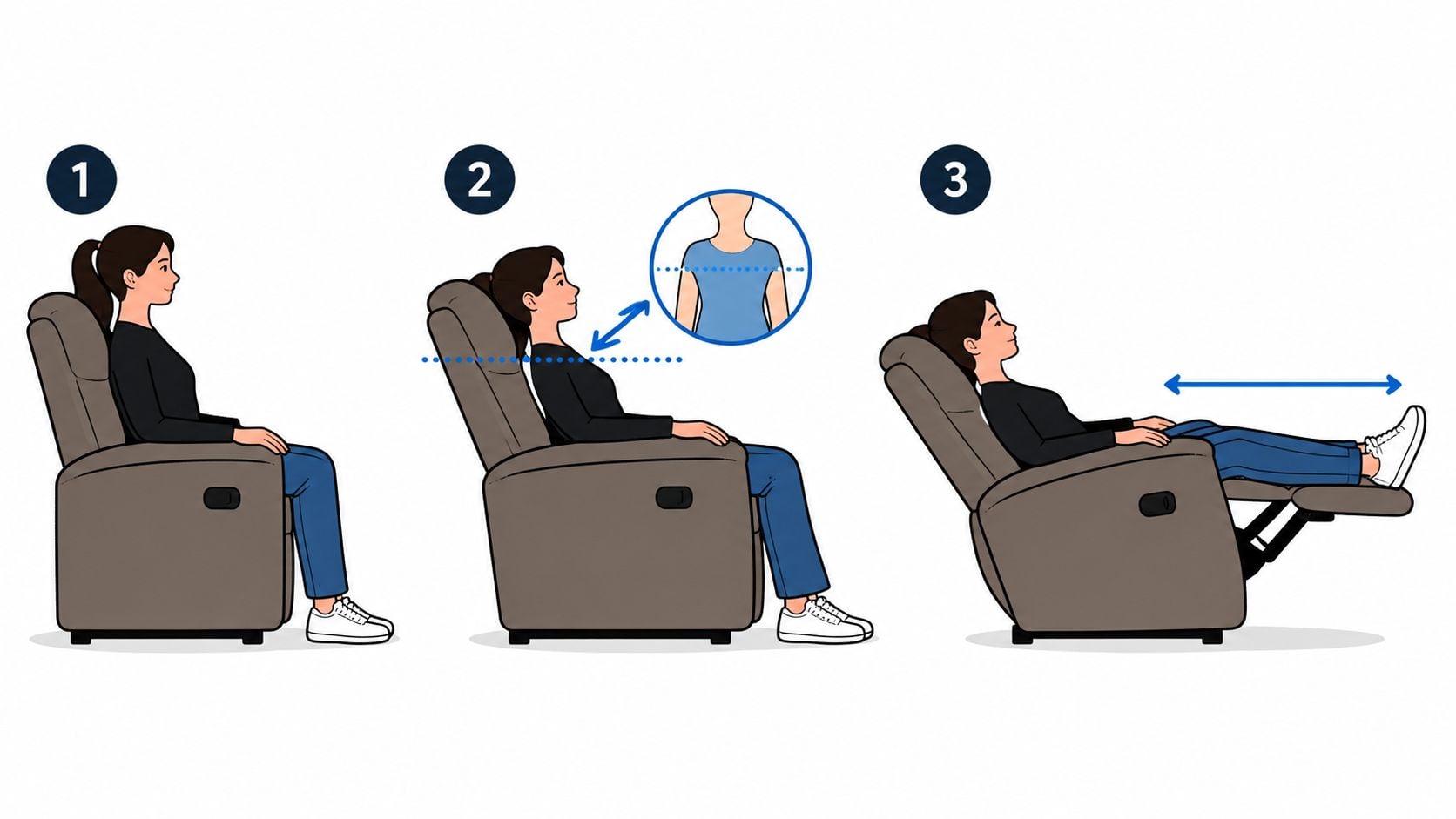
Step one, sit upright with feet flat
The user should sit all the way back. Feet flat. Knees relaxed. In a good fit, the thighs are supported and the knees don't pitch upward because the seat is too short.
Warning sign: the body instantly wants to scoot forward.
Step two, check the upper back
Shoulder blades should land comfortably against the back cushion. The upper back shouldn't float above the support zone, and the headrest shouldn't start by pushing into the shoulders.
Warning sign: the back cushion stops below the shoulder line.
Step three, raise the footrest
A lot of “pretty good” recliners fail here. Once the footrest is up, the lower legs should feel supported instead of stranded at the ankle. Very tall users may need more than a generic tall label here, especially since some guidance notes that lower-leg support may require up to 30 inches of footrest extension in certain cases, as noted earlier in the article.
If the shins press into a seam or the heels hang, the chair isn't finished supporting the body.
Step four, recline fully
The head should stay supported without the chin being shoved down. The lower back should feel cradled, not pushed forward. A recliner can pass upright and still fail once fully open.
Warning sign: the user loses neck support at full recline or feels the lumbar bulge shift into the wrong place.
Step five, stand up and sit down three times
This catches the chairs that feel fine once you're in them but are annoying every single time you get out. Tall users with long femurs notice bad seat height quickly here.
Use this sequence every time:
- Sit back fully: Check whether the thighs are carried by the cushion.
- Lean into the back: Confirm support reaches the shoulders.
- Open the footrest: Watch for heel hang and calf pressure.
- Recline all the way: Test head support where naps and TV time happen.
- Exit the chair: Make sure standing doesn't feel like climbing out of a hole.
That quick routine saves buyers from choosing a chair that only looked right.
Custom Order Options When the Floor Model Is Close but Not Right
Tall shoppers rarely strike out completely. More often, they find a recliner that gets two measurements right and misses the third. The seat depth works, but the back is short. The back is good, but the footrest quits early. The upholstery is right, but the mechanism isn't.
That's where custom ordering earns its keep. Not for fantasy-level redesigns. For fixing the last part of the fit problem that an in-stock floor model couldn't solve.
What custom ordering can fix
A practical custom workflow starts by identifying the exact miss. Not “it feels off.” Something specific.
- Seat issue: The shopper needs a bit more depth or a firmer cushion that keeps the body from drifting forward.
- Back issue: The chair needs a taller profile or a head-support adjustment that lands in the right place.
- Mechanism issue: The shopper needs power movement instead of a fixed manual action.
At this stage, getting started with a custom furniture order helps frame the conversation clearly before any deposit is placed.
What custom ordering usually won't fix
Custom ordering doesn't turn every frame into a made-to-measure medical device. If the basic geometry is wrong, it's wrong. A chair with the wrong sit, the wrong arm placement, or the wrong pitch usually won't become the right chair through wishful thinking.
What it can often change is the finish around the fit. Cushion feel. Upholstery. Sometimes mechanism upgrades. Sometimes a better tall-body configuration from the same vendor family.
That's where Gorins Furniture & Mattress becomes useful in a factual, practical way. The Norwich showroom works with custom-order programs across categories, including Canadel Custom Dining and the F9 Custom Sofa series, where shoppers can choose from thousands of combinations. That custom-order culture matters because it trains the showroom process around fit rather than one-size-fits-all selling. The same low-pressure approach helps when a recliner is close, but not right.
The smartest custom order is a small correction to a fundamentally good chair, not an attempt to rescue a bad one.
For tall shoppers, that distinction saves time and disappointment.
When Bigger Is Not Better Sizing Mistakes Tall Buyers Make
Tall shoppers often overcorrect. After years of cramped recliners, they walk straight to the biggest frame on the floor and assume larger has to mean better. That mistake is common, and it produces a different kind of discomfort.
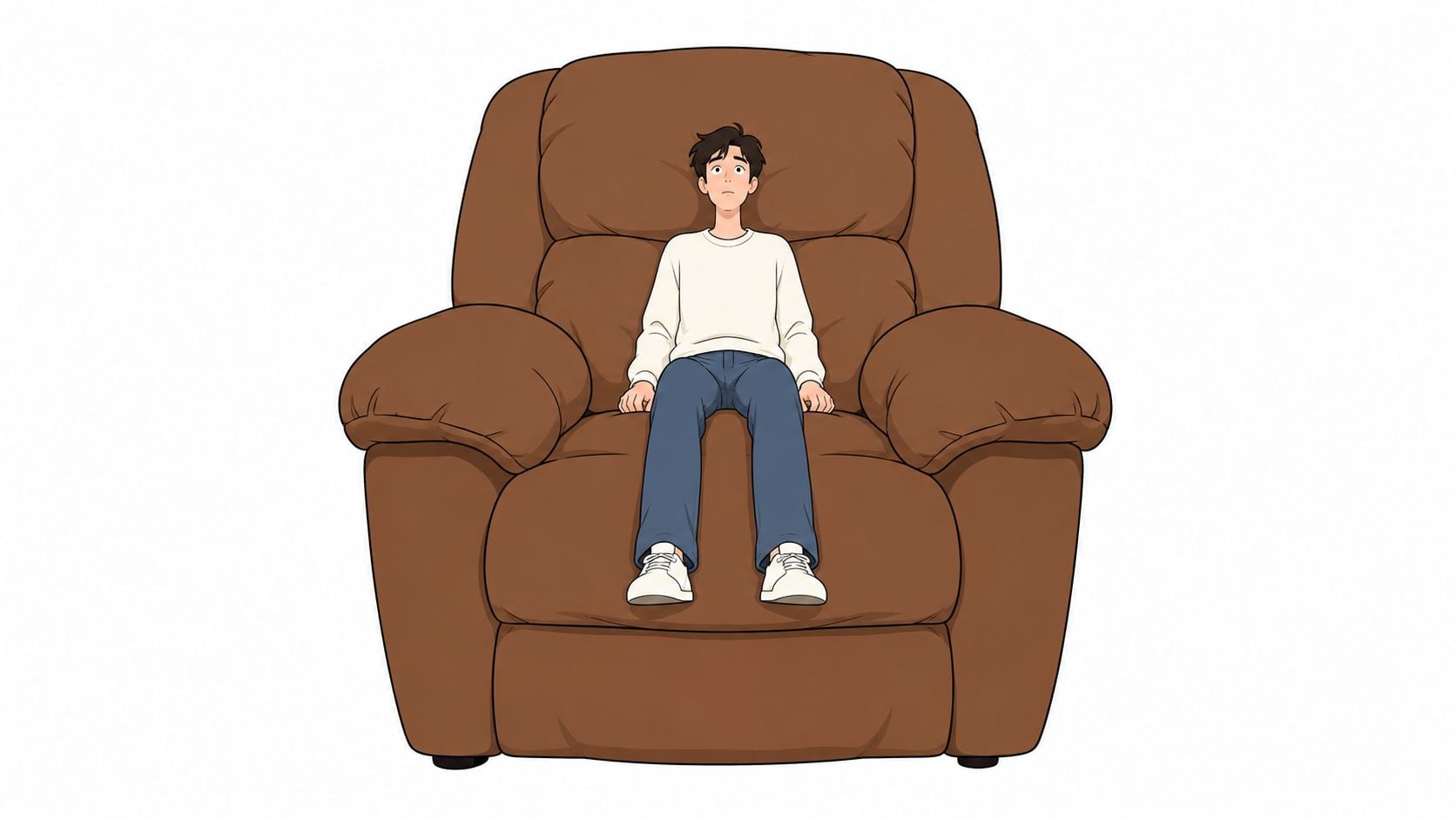
A massive chair can swallow a tall but not especially broad user. The seat gets so deep that the lower back loses contact. The pillow-top back pushes the head forward. The arms sit too wide apart to rest naturally.
The better question to ask
The question isn't “What's the biggest recliner here?”
It's “Which dimension is failing?”
Industry sizing guidance often translates tall-user recliners into seat depths around 22 to 24 inches and backrest heights of 45 inches or more, while newer fit advice suggests seat depth around 22 to 26 inches and back height roughly 42 to 46 inches can be better indicators than a generic tall label (tall recliner sizing guidance, fit indicators beyond overall height).
That matters because some tall buyers need more length, not more bulk.
Better proportions beat bigger proportions
A better answer may be:
- A standard-width frame with a deeper seat
- A taller back without oversized side pillows
- An extended footrest instead of a wider chair
- Cleaner arms that don't trap long forearms
Bigger can help. But bigger without proportion usually just creates a new problem.
Visiting Gorins in Norwich Your Next Step
A productive showroom visit starts before the shopper leaves the house. Bring the three measurements already covered: seated inseam, sitting height, and torso-to-shoulder length. Bring a short list of requirements too. That may be deeper seat support, better head placement, easier exit, or a power mechanism.
The Norwich showroom should be treated like a fit lab, not a browsing stop. A shopper should try at least three chairs, run the five-minute fit check each time, and compare what changes from frame to frame. In-person buying still wins here. A spec sheet can suggest promise. A seated body confirms it.
What to ask on the floor
Ask direct questions.
- Which chair has the deepest usable seat?
- Which model keeps head support in full recline?
- Which mechanism gives the most lower-leg support without forcing the hips forward?
- Which in-stock frame is closest if a custom order becomes necessary?
For planning a visit, directions, and showroom details, shoppers can review the Norwich furniture and mattress showroom page.
Why the showroom visit matters beyond recliners
Gorins has been family-owned and locally operated since 1936, and that still matters for shoppers who want straightforward help rather than pressure. The store serves Norwich and surrounding Eastern CT communities with a broad living room selection, custom programs, and Promotional Financing with equal monthly payment options that can make an investment-grade recliner easier to bring home. For value-focused shoppers, the Clearance section is also worth checking when fit matters more than fabric choice.
There's also a bigger reason to make the trip. The same showroom that helps with recliner fit also gives shoppers access to living room planning, Canadel custom dining with thousands of combinations, and a Sleep Gallery with Tempur-Pedic, Serta, and Beautyrest for people thinking about comfort by feel and healthier sleep across the whole home.
Since 1936, Gorins Furniture & Mattress has helped Norwich and Eastern CT families create homes they love. From custom-designed Canadel dining sets to the latest in Tempur-Pedic sleep technology, they combine a massive selection with the personalized care only a local, family-owned business can provide. Visit them to experience quality, value, and 5-Star Delivery service.
Tall shoppers don't need another oversized chair that only looks right from across the room. They need a recliner that fits in three places at once, and that's exactly the kind of decision a showroom visit can sort out. Visit Gorins Furniture & Mattress in Norwich to test seat depth, back height, and footrest support in person, then use Promotional Financing, the Style Quiz, or the Clearance section to move forward in the way that fits the home and the budget.