Lift Chairs for Tall Men: A Complete Buying Guide


A tall man usually knows the feeling before he even sits down. The chair looks fine from across the room. Then he settles in, and the problems show up fast. Knees sit too high, shoulders rise above the back, and the footrest quits before the legs do.
That isn't a small comfort issue. It's a fit issue. For anyone shopping for lift chairs for tall men, the wrong size can make resting awkward and standing up harder than it should be. A lift chair is supposed to support the body and assist movement, not force the body to adapt to a chair built for someone else.
Families across Norwich and Eastern Connecticut run into this all the time. Since 1936, Gorins Furniture & Mattress has served local households as a family-owned business focused on quality, value, and helpful service. That kind of longevity matters with a purchase like this because lift chairs aren't impulse buys. They're long-term comfort pieces, and the fit has to be right.
Table of Contents
- Finding Comfort When You're Tall Is A Challenge
- Why Standard Chairs Fail A Taller Frame
- How To Measure Yourself for the Perfect Fit
- Decoding Key Lift Chair Specifications
- Customization And Advanced Comfort Features
- The Gorins Advantage Your In-Store Fitting Experience
- Frequently Asked Questions About Lift Chairs
Finding Comfort When You're Tall Is A Challenge
A standard recliner can make a tall man feel folded up. The headrest hits the wrong spot. The seat ends too soon under the thighs. The footrest leaves part of the lower legs hanging. After half an hour, what should feel relaxing starts to feel like work.
That's usually when people start searching for lift chairs for tall men. Not because they want a specialty product for the sake of it, but because a regular chair has already proved it doesn't fit. The body tells the truth quickly.
The frustration often gets worse when leg fatigue joins the picture. Poor seating posture, unsupported calves, and too much pressure under the hips can make sitting feel heavier than it should. For anyone dealing with that, these tips for sitting-related leg pain are a useful companion read because they explain why support and positioning matter so much over time.
A tall user doesn't need a “bigger” chair in the abstract. He needs the right relationship between seat height, seat depth, back height, and leg support.
That's where the buying process changes. The smart move isn't picking the first oversized recliner on a screen. The smart move is treating fit like a real measurement problem. A proper lift chair should support the full body during sitting, reclining, and standing. If any one of those stages feels off, the chair isn't doing its job.
Why Standard Chairs Fail A Taller Frame
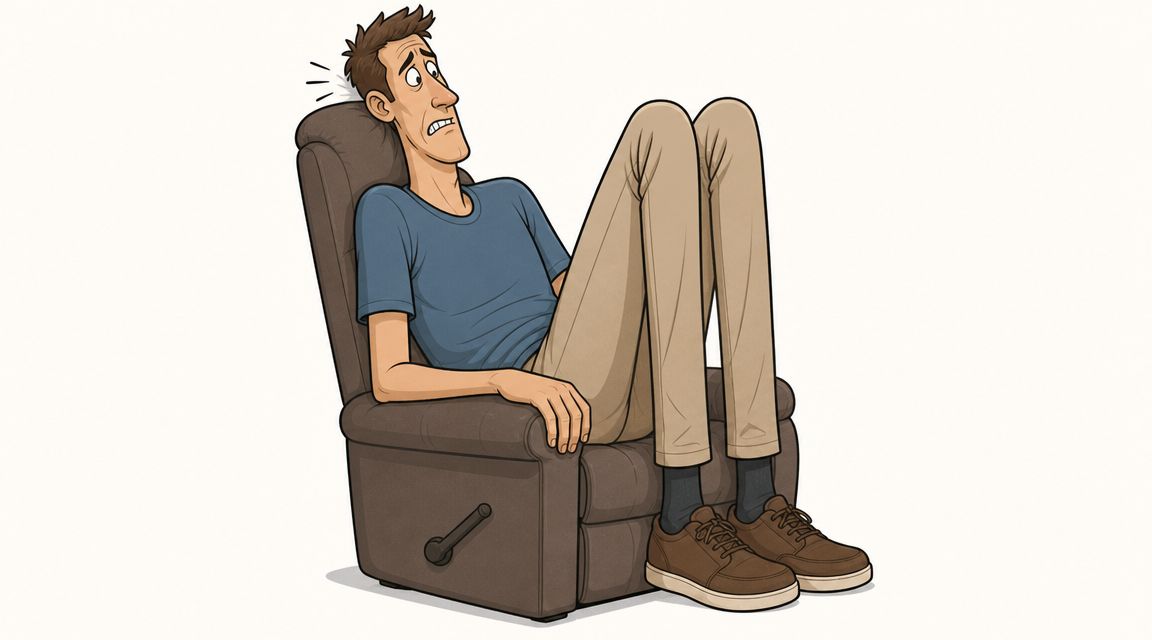
Tall shoppers often get told to focus on weight capacity. That's incomplete advice. Capacity matters, but fit matters first. A chair can hold the body and still support it badly.
A tall-user lift chair category is real and published by manufacturers. Pride Mobility states that its Radiance model is designed for users 6 feet and taller and carries a 400-pound weight capacity, while its broader lineup spans users from under 5 feet 3 inches to 6 feet 1 inch and above. That matters because it confirms tall-fit chairs aren't marketing fluff. They're a separate sizing category.
Where the fit usually breaks down
- Seat depth is too short: The thighs lose support, and more pressure shifts under the pelvis. That can make the lower body feel tired fast.
- Back height is too low: The shoulders sit above the support zone, and the headrest misses the neck and head.
- Seat height is too low: Knees bend too sharply, and standing takes more effort than it should.
- Footrest is too short: The calves and heels don't stay supported through recline.
- Arm height feels wrong: Shoulders tense up because the arms can't rest naturally.
A lot of posture issues start there. If the chair forces awkward alignment, the body compensates. For readers who want a simple refresher on seated alignment, PosturaZen's sitting posture tips do a good job of showing what proper seated support should feel like.
What taller users usually notice first
The first complaint isn't always pain. Often it's restlessness. A tall man shifts, slides forward, repositions his feet, and never quite settles. That's a classic sign that the chair dimensions are fighting the body.
Practical rule: If a user has to scoot forward to make the footrest usable, the chair is too small somewhere.
Lift chairs for tall men need to support the body at full contact points. Head, back, thighs, calves, and feet should all have a place to land. If one zone is left hanging, the chair stops feeling like support and starts feeling like compromise.
How To Measure Yourself for the Perfect Fit
Measurements beat guesswork every time. A tall shopper doesn't need to become an engineer, but he does need a few body dimensions before testing chairs. That one step cuts through a lot of confusion.
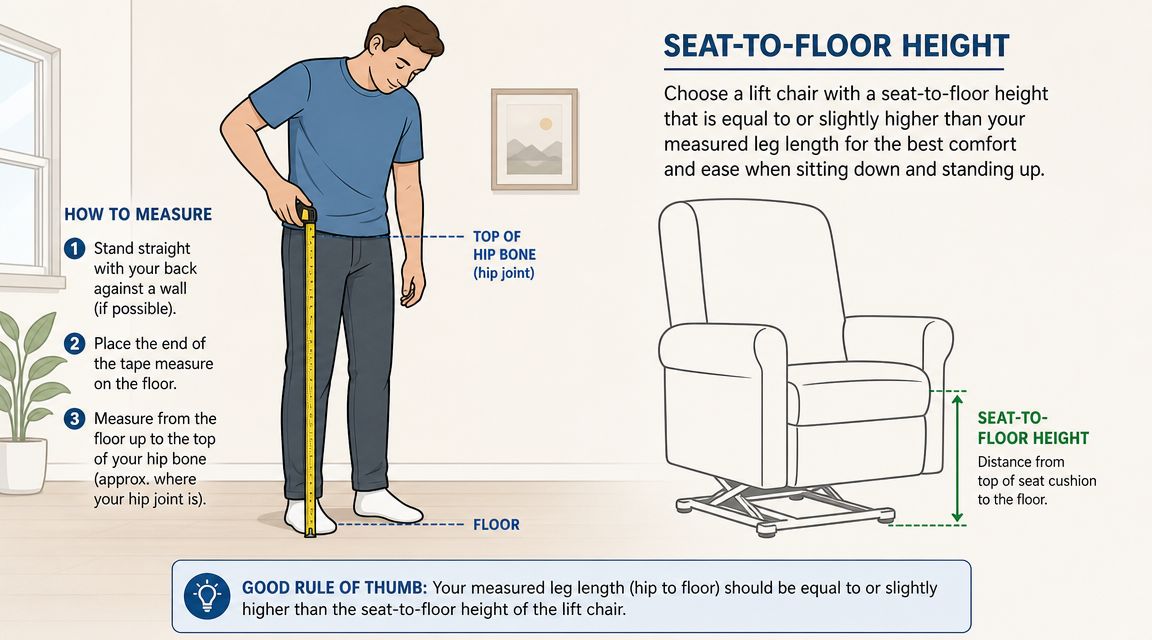
A good starting point is this practical guide on how to measure furniture for the right fit at home. It helps shoppers think through body size, room size, and access before they ever visit a showroom.
Measure seat-to-floor height
Sit in a straight-backed chair with feet flat on the floor and knees bent comfortably. Measure from the floor to the back of the knee.
That number helps determine whether a lift chair seat is too low or too high. If the seat is too low, the knees ride upward and standing gets harder. If it's too high, the feet may not rest flat in the seated position.
Measure seat depth need
Sit back fully so the lower back touches the chair. Measure from the back of the body to the back of the knee.
Tall users often face disappointment with typical sizing. UltraComfort's sizing guidelines place its Large category at roughly 5'10" to 6'2" with about 20 to 22 inch seat depth and up to 400 lb capacity. That's useful because it shows why taller men often need a deeper seat to support the thighs and keep a more neutral hip angle.
Measure back height need
Stay seated upright and measure from the seat surface to the top of the head. Then compare that to the chair's listed back height.
If the chair back stops short, the upper body won't relax properly. The head and shoulders need support in the upright position and during recline.
Check lower-leg support too
Tall users should also pay attention to calf length and foot placement. A chair can look large and still come up short in the leg section. The same logic shows up in mobility seating. This overview of walker seat sizing and safety is useful because it reinforces a simple point. Seat dimensions have to match the user, or comfort and safe use both suffer.
Bring these numbers when shopping
A notepad or phone note should include:
- Seat-to-floor target: Helps judge whether standing assistance will feel natural
- Seat depth need: Helps confirm thigh support
- Back height need: Helps avoid the headrest-miss problem
- Calf and lower-leg support observations: Helps assess whether the footrest is long enough
The most common mistake is buying by overall chair size instead of seated body fit.
That's why a quick sit test in a showroom matters so much. A chair can look generous in photos and still feel wrong when the knees, hips, and shoulders meet it.
Decoding Key Lift Chair Specifications
Specs matter, but only if they're translated into body feel. Product pages throw around terms like heavy-duty, tall-size, and power recline. A smart buyer looks past labels and checks the dimensions that affect daily use.
A helpful companion read is this overview of how lift chairs work in everyday use. It gives context for what the mechanism is doing during sit, recline, and stand assist.
Weight Capacity And Frame Strength
Weight capacity tells part of the story. It reflects structural support, but it doesn't automatically guarantee proper fit for a taller body. A chair can have a strong frame and still have a shallow seat or short footrest.
For bigger and taller users, reinforced construction is a plus because lift chairs handle repeated motion, not just static seated weight. A stronger frame generally means better confidence during the full movement cycle.
Lift Range And Stand Assist Geometry
This is one spec too many shoppers ignore. The chair doesn't just need to rise. It needs to rise into a position that lets the legs and hips work naturally.
Consumer Reports found that some tested lift chairs rose to 29.5 inches while others topped out at 25 inches, a 4.5-inch difference in lift height. For a tall man, that gap can be the difference between a clean assisted stand and a strained push-off.
| Spec area | Why it matters for tall users |
|---|---|
| Lift height | Affects knee and hip angle during standing |
| Seat height | Determines whether feet plant comfortably while seated |
| Travel path | Influences whether the stand-up motion feels smooth or awkward |
If a chair lifts but still leaves the user feeling stuck low, the mechanism isn't solving the real problem.
Back Height Seat Dimensions And Leg Support
Achieving a personal fit requires a chair with enough back height to support the upper body, enough seat depth to carry the thighs, and enough footrest extension to support the lower legs through recline.
A tall man should check three things in person:
- Head support in the upright position: The top of the chair should support the head, not stop at the shoulders.
- Full thigh contact without knee pressure: The seat should support the legs without cutting into the back of the knees.
- Calf support in recline: The leg section should carry the lower legs rather than leaving them suspended.
What to prioritize first
Many buyers start with fabric, color, or remote design. That's backwards. The right order is simpler.
- Fit dimensions first
- Lift motion second
- Construction quality third
- Comfort extras after that
That order saves people from buying a chair that looks right but sits wrong. For lift chairs for tall men, the chair's geometry decides whether the chair helps or disappoints.
Customization And Advanced Comfort Features
Once the fit is right, customization starts to matter, elevating a chair from acceptable to dialed in. Tall users often need more than a standard one-size setup, especially if they'll spend long stretches sitting, reclining, or using the lift function every day.
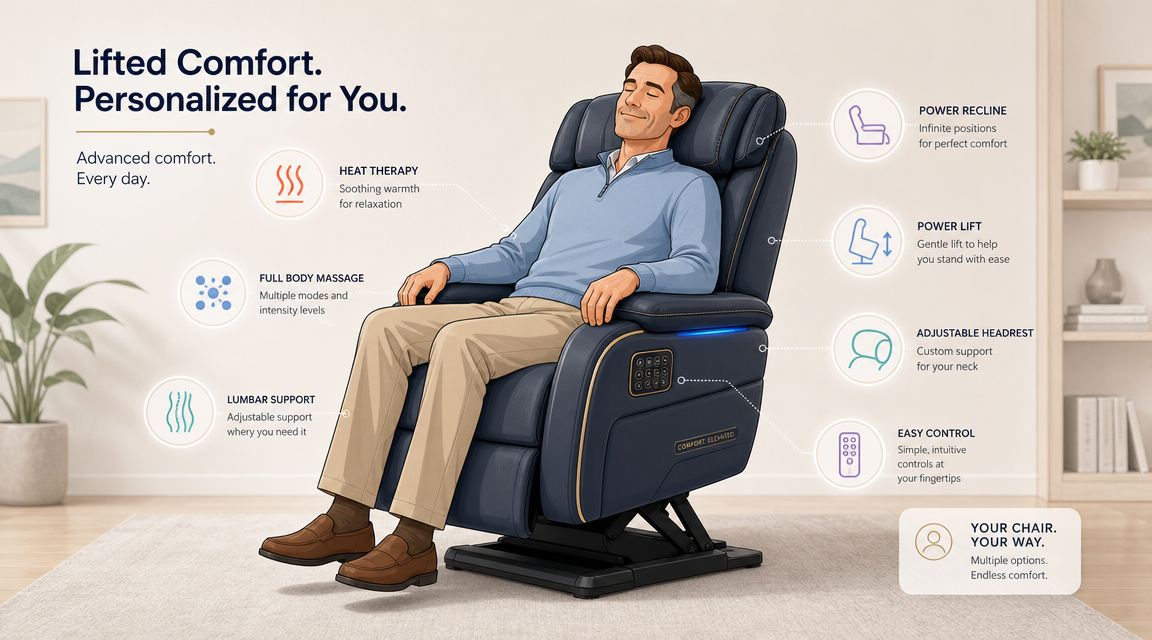
Shoppers looking at feature options can compare common comfort upgrades with this roundup of best-rated power lift recliners. It's useful for sorting the basic must-haves from the nice-to-haves.
Why Motor Configuration Matters
A simpler lift chair can work fine for some users. Tall users often benefit from more adjustability because longer bodies need more precise support through different positions.
Heavy-duty models aimed at tall or big-and-tall users often combine a reinforced frame and a three-motor system. That matters because the design separates lift, footrest, and positioning control. In plain terms, the chair can adapt more precisely instead of moving everything in one bundled motion.
That extra control helps in a few real-world situations:
- Legs need more extension: Independent footrest movement can improve lower-leg support.
- Back angle needs fine tuning: The user can relax without sacrificing posture.
- Standing assistance needs to feel smoother: Separate motion control can produce a better transition.
Upholstery And Wellness Options
After the mechanics, the material and comfort package matter. A lift chair should fit the body, but it also has to fit the room and the daily routine.
Some buyers want a surface that feels cooler and wipes clean easily. Others prefer a softer fabric feel for long sitting sessions. The right answer depends on how the chair will be used and who else shares the space. Homes with pets, frequent use, or mobility concerns usually benefit from practical upholstery choices over delicate ones.
Features like heat, massage, and adjustable headrest or lumbar options can also be worthwhile, especially if the user wants the chair to handle more than simple standing assistance. They aren't mandatory. Proper fit still matters more. But once the sizing is solved, those additions can make daily use far more satisfying.
A custom order makes sense when a shopper already knows what feels wrong in standard chairs and wants those pain points fixed instead of tolerated.
This is also where Best Home Furnishings and UltraComfort become relevant in a showroom setting. The point isn't endless features for their own sake. The point is tailoring the chair to the user's body, habits, and room. That same made-to-order mindset is part of the broader Gorins approach, from Canadel Custom Dining with thousands of combinations to the F9 Custom Sofa series. Customization works best when it solves a clear fit or lifestyle need.
The Gorins Advantage Your In-Store Fitting Experience
Online research can narrow the field. It can't tell a shopper how a chair feels under his legs, back, and shoulders. That last part has to happen in person.
A lift chair for a tall man needs a test drive. He should sit fully back, place his feet naturally, recline, and run the lift motion. If the head loses support or the calves hang in the air, the chair is wrong. No spec sheet can soften that reality.
This is why a family-owned showroom still matters. Since 1936, Gorins has built its reputation around helpful service and confidence-building guidance. A shopper can walk in with body measurements, compare models side by side, and get practical feedback rather than guessing from photos. This page on why some shoppers prefer a family-owned furniture store explains that value clearly.
There's also the money side of the decision. Lift chairs are investment-grade comfort pieces, not throwaway purchases. Promotional Financing with equal monthly payments can make the purchase more manageable, and 5-Star Delivery helps make sure the chair arrives and is set up with care. For many households in Norwich, New London, Plainfield, Waterford, and nearby Eastern CT communities, that combination matters just as much as the chair itself.
Frequently Asked Questions About Lift Chairs
Does insurance or Medicare help pay for a lift chair
Coverage questions depend on the plan and the medical circumstances. Some shoppers find that a portion related to the lift mechanism may be treated differently from the chair itself, but they should verify details directly with their provider and physician. The safest approach is to ask for current written guidance before buying.
What's the difference between position types
The simplest models offer fewer stopping points and less flexibility. More advanced models allow more precise adjustment between the back and leg sections. Tall users usually benefit from more control because they often need finer changes to find proper support across the whole body.
How long should a lift chair last
Longevity depends on build quality, frequency of use, body fit, and how well the mechanism is maintained. A well-chosen chair should be viewed as a long-term furniture purchase. Better fit often helps durability too, because the user isn't constantly shifting, scooting, or stressing the mechanism in awkward ways.
Can a lift chair match existing furniture
Yes, especially when upholstery and finish choices are available. A lift chair doesn't have to look clinical or out of place. In a well-planned room, it can blend with the rest of the seating. Shoppers who want more style direction can also browse practical guidance on lift chairs for seniors and home comfort planning.
A final point matters most. Shoppers should never buy lift chairs for tall men by label alone. “Big” isn't enough. “Heavy-duty” isn't enough. The chair has to match the body in seated posture, recline support, and standing assistance. That's the standard worth holding.
For neighbors in Norwich and across Eastern CT who are ready to stop guessing, Gorins Furniture & Mattress offers the chance to test lift chairs in person, compare fit, and explore customized options with helpful guidance. Since 1936, the family-owned showroom has helped local households buy with confidence. Visit the Norwich showroom, take the online Style Quiz, or browse the Clearance section for value-driven savings.