Norwich’s Top Dining Room Sets Light Wood 2026


A lot of homes around Norwich and New London have the same dining-room problem. The table is still usable, the chairs still stand up straight, but the whole space feels heavier than it should. Dark finishes can start to absorb light, make a smaller room feel tighter, and leave the eating area looking more dated than welcoming.
That's where light wood often changes the mood of the room faster than people expect. A well-chosen dining set can brighten the space, soften the visual weight of the furniture, and still feel like a serious long-term purchase instead of a short-lived trend. For households in Eastern CT, that matters. A dining table isn't just a decorative accent. It's where school papers land, holiday meals happen, and everyday life shows up in full view.
Since 1936, Gorins has been part of that decision-making process for local families, and that kind of heritage matters when the purchase is meant to last. Dining furniture is one of those categories where style and practical durability have to work together. A light finish may create the airy look people want, but the underlying wood, construction, and scale still determine whether the set feels investment-grade years later.
Table of Contents
- Brighten Your Home with a Light Wood Dining Set
- The Benefits of Light Wood Furniture
- Not All Light Woods Are Created Equal
- Sizing Your Dining Set for Your Lifestyle
- Coordinating Chairs Finishes and Decor
- Design Your Dream Set at Gorins
- Maintaining Your Light Wood Furniture and FAQs
Brighten Your Home with a Light Wood Dining Set
A common local scenario goes like this. The walls are neutral, the room gets decent daylight, and yet the dining area still feels dim because the furniture carries most of the visual weight. Once a light wood table replaces a bulky dark set, the room often feels calmer and more open without changing the footprint at all.
That's one reason dining room sets light wood remain such a practical category. They don't ask a homeowner to commit to one narrow decorating style. They provide the room a brighter base to build on, whether the home leans coastal, farmhouse, traditional, or pared-back contemporary.
For households that want the room to feel personal rather than staged, there's also value in thinking about atmosphere before accessories. A helpful outside perspective on creating an authentic dining space shows how material, simplicity, and daily use shape a room's character more than trend pieces do. That idea lines up well with what many Eastern CT homeowners want. They're usually looking for something warm, useful, and lasting.
A dining set earns its keep when it looks good on an ordinary Tuesday, not just on a holiday.
Light wood works especially well in that everyday role. It reflects natural light more gently, keeps the room from feeling closed in, and gives busy households a neutral foundation that can evolve over time. For readers trying to sort out layout, finish, and function before shopping, this guide on designing a dining room where to start can help organize the process.
The Benefits of Light Wood Furniture
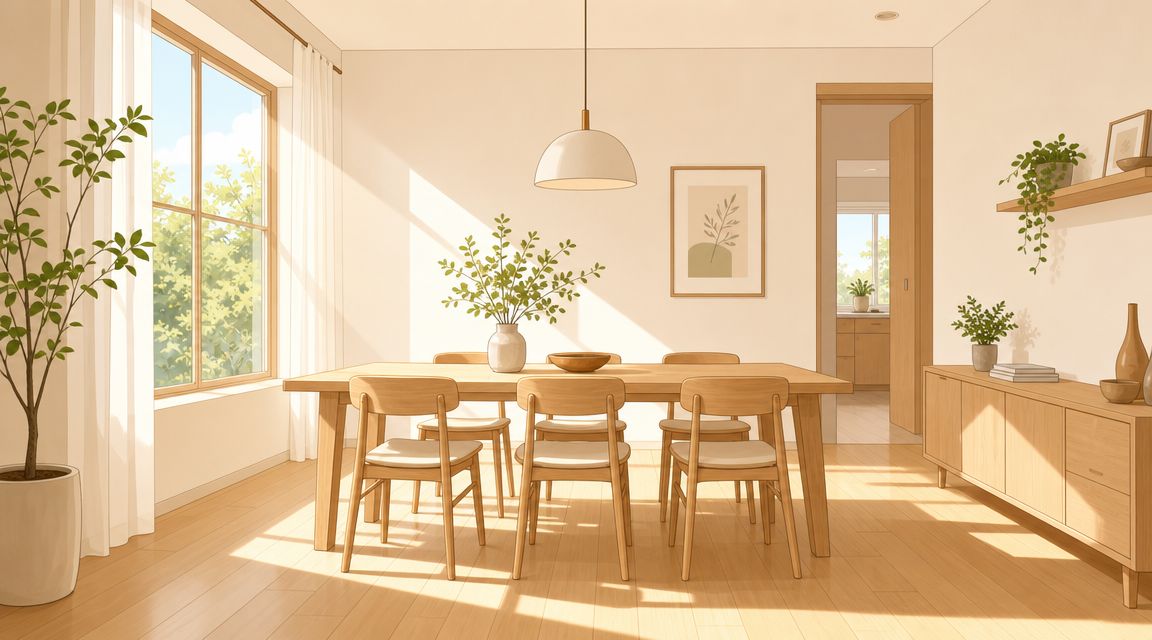
The first benefit is visual. A light wood dining set usually makes a room feel less crowded because the finish doesn't dominate the space the way a deeper stain can. In many Norwich-area homes, especially where dining rooms connect to kitchens or sit in a smaller open-plan footprint, that lighter visual presence matters.
The second benefit is flexibility. Light wood sits comfortably beside painted cabinetry, woven textures, darker accent pieces, and a range of wall colors. That gives homeowners more room to change rugs, lighting, or art later without feeling locked into one exact look.
Aesthetic payoff in everyday rooms
A pale oak or maple table can soften a room with darker floors. It can also keep a dining nook from feeling too dense when the area shares space with a kitchen island, hutch, or pantry wall. These characteristics contribute to light wood's reputation for making interiors feel more open, even when the room dimensions don't change at all.
A light finish also tends to read as more timeless than overly orange, gray-washed, or heavily distressed treatments. That's important for a piece expected to stay in the home through several style changes.
Practical tradeoffs worth understanding
The confusing part for many buyers is wear. Some assume a lighter finish automatically hides every scratch and crumb better than a dark one. It's not that simple. Broader furniture guidance points out that shoppers should choose a table based on scale, material, and lifestyle rather than color alone, and it also notes that retail content often skips the essential questions around scratch visibility, cleanup, and long-term maintenance in busy homes, as discussed in this furniture guidance on table choice and daily use.
That's the balanced perspective:
- Dust visibility: Light wood often looks less dramatic between cleanings than a very dark finish.
- Minor wear: A textured grain can make everyday signs of use feel less glaring.
- Deep scratches: These still depend more on species, finish, and topcoat than on color alone.
- Family use: Kids, pets, and homework routines call for durable material choices first, attractive color second.
Practical rule: When a household wants less stress, the best question isn't “Will this color hide everything?” It's “Will this material still look good after real life happens?”
Not All Light Woods Are Created Equal
Color is only the starting point. Two dining tables can both look light and still perform very differently over time because the wood species underneath the finish changes the feel, grain, durability, and repair potential.
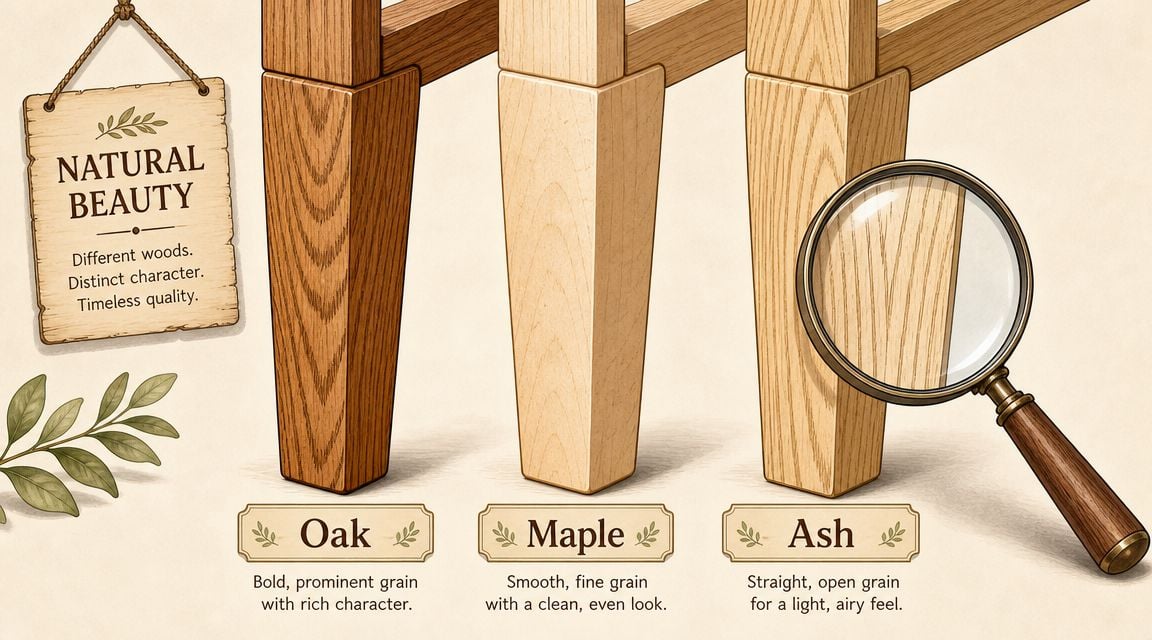
A key fact behind the popularity of light wood dining furniture is the long use of hardwood species such as maple, birch, oak, and cherry in North American dining collections. Oak is repeatedly identified as a top choice for durability, brown maple is presented as a close second, and a quality dining table is expected to last 10–15 years, with higher-end solid wood pieces lasting 20 years or more with care, according to this overview of hardwood dining furniture and expected lifespan.
Why wood species matters
Here's a simple way to think about common light-wood choices.
| Wood | What buyers usually notice | Best fit |
|---|---|---|
| Oak | More visible grain, sturdy feel, durability-focused look | Busy family homes, everyday dining |
| Maple | Smoother grain, lighter and cleaner appearance | Transitional rooms, softer visual style |
| Ash | Clear, attractive grain with a bright finish look | Homes wanting texture without heaviness |
Oak tends to appeal to households that care most about toughness. Maple often suits buyers who want a smoother, more understated surface. Ash lands somewhere in the middle visually, with enough grain to feel warm but still bright enough to keep the room open.
That means the “best” wood isn't universal. It depends on whether the room needs scratch resistance, a quieter grain pattern, or a certain look under natural light.
How to spot stronger construction
Species is one part of the decision. Construction is the other. A light finish can make very different materials look similar from across the room, so it helps to inspect a table the way a careful buyer would inspect a staircase or cabinet door.
A few checkpoints matter:
- Lift gently: Solid, durable furniture usually feels substantial.
- Check the underside: The bottom often reveals more than the showroom angle does.
- Look at the edges: Consistent material at the edge can say a lot about build quality.
- Inspect joints: Tight, clean joinery usually signals better craftsmanship.
Shoppers who want a more grounded explanation of solid wood types and how they behave over time may find this guide to choosing the right hardwood for longevity and style useful before stepping into a showroom.
Dense hardwood doesn't just feel different in hand. It usually ages differently in daily use.
Sizing Your Dining Set for Your Lifestyle
The biggest sizing mistake isn't usually buying a table that's too small. It's buying one that fits the room on paper but doesn't fit the way the household lives. A dining table needs space for chairs to move, people to pass behind them, and the room to breathe.
That's why the room should be measured before anyone falls in love with a shape or finish.
Start with the room, not the product tag
A practical measuring routine keeps the process simple:
- Measure the full room footprint. Include windows, door swings, vents, and any nearby island or sideboard.
- Mark the usable table zone. This is the area where chairs can be pulled out without creating a traffic jam.
- Think through real movement. If the room is a pass-through to the kitchen or patio, that pathway matters as much as the table itself.
- Account for chair depth. Many people measure only the tabletop and forget what happens once chairs are occupied.
For homes that need flexibility, light-wood dining-room sets with hardwood tops are more resilient in daily use than softwood alternatives, and extendable rectangular tables are a standard format for maximizing seating capacity in compact rooms, as shown in this light wood dining set assortment with extendable formats.
A useful next step for room planning is this dining table size guide, which helps connect room dimensions to a workable table footprint.
Choose a shape that fits daily life
Different shapes solve different problems.
- Round tables: Good for conversation and softer traffic flow.
- Rectangular tables: Often the easiest match for longer rooms and larger gatherings.
- Square tables: Best when the room itself is close to square and seating needs are modest.
- Oval tables: A nice middle ground when a household wants the length of a rectangle with softer corners.
A simple rule of thumb helps. If the household hosts occasionally but lives small most of the year, an extendable rectangle often makes more sense than an oversized fixed table. If dinner is usually a quieter, everyday event and the room is tighter, a round table can make the whole area feel less rigid.
Coordinating Chairs Finishes and Decor
One of the most common worries with light wood is that the room will end up looking too pale, too coordinated, or too cautious. That fear is valid. A light wood dining set can brighten a room, but without contrast it can also flatten it.
Retail content often filters by finish and room type but rarely explains how to use light wood in mixed-finish, smaller-space interiors without making the room feel washed out or overly matched, which is exactly the content gap highlighted in this discussion of mixed-finish and small-space pairing challenges.
Why matching everything can fall flat
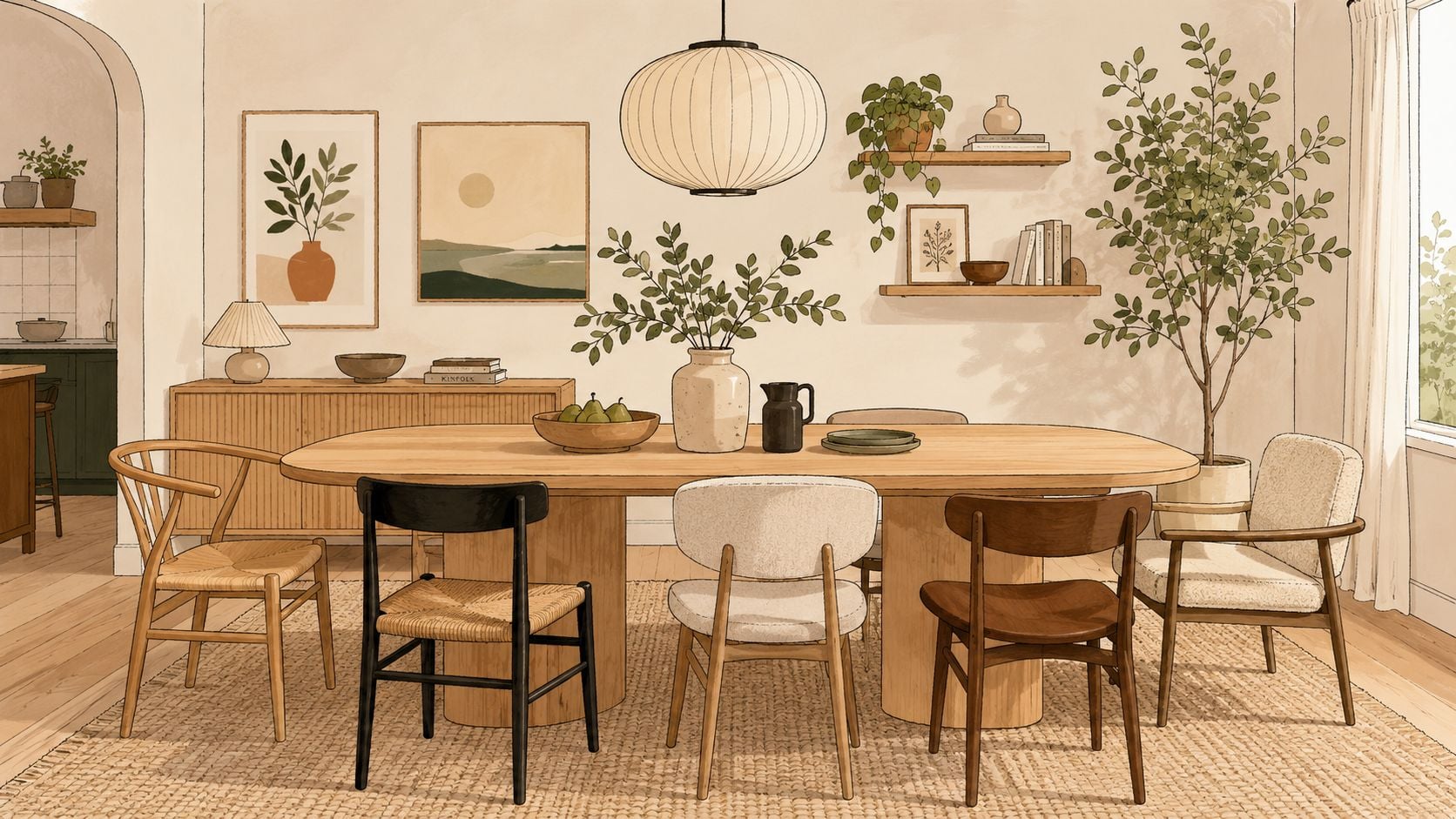
A table, six chairs, a buffet, and a hutch in the exact same finish can make the room feel one-note. The eye has nowhere to rest because everything blends into one block of color and material. A better room usually has one clear anchor, then supporting pieces that relate without copying.
That doesn't mean the room should feel random. It means it should feel layered.
A dining room looks more intentional when the finishes coordinate, not when every surface repeats itself.
Three reliable pairing ideas
Recipe one: light wood table with darker chairs
A pale oak or maple table pairs well with charcoal, black, or deep brown chair frames. The table keeps the room open. The chairs add definition.
Recipe two: all light wood, but mixed texture
If the household wants a softer look, an upholstered host chair at each end can break up a full set of wood chairs. Linen-like fabric, woven seats, or cane details keep the space from feeling flat.
Recipe three: light set with strong accents
A bolder rug, darker sideboard, or larger-scale pendant can give the room enough contrast to keep the dining set from fading into the background. The wood stays bright, but the room still has shape and depth.
For homeowners refining those finishing touches, this guide to accessories every dining room needs can help tie the room together without overfilling it.
Design Your Dream Set at Gorins
Once a buyer understands wood species, room sizing, and finish balance, the next issue is fit. Many ready-made sets are close, but not quite right. The table may be the correct width but the wrong leg style. The wood tone may suit the room but the chair fabric may not. That's where customization becomes more than a luxury. It becomes the cleanest way to avoid compromise.
Light-wood dining sets are commonly chosen in maple, oak, and ash because those species stay visually bright under natural or clear finishes. Maple is described as a very light wood that finishes to a subtle light brown, while ash and oak are also favored for showing color clearly and taking transparent finishes well, as explained in this woodworking guidance on light-finish wood species.

Why customization matters with light wood
Undertone is where many dining purchases go wrong. One “light wood” may lean creamy and soft, another may lean golden, and another may feel cooler and more neutral. When a household is trying to work with existing floors, nearby cabinetry, or a favorite rug, those distinctions matter.
That's where Canadel Custom Dining becomes useful. At Gorins Furniture & Mattress, shoppers can work through thousands of combinations in size, shape, wood type, finish, and chair style rather than trying to force a close-enough set into the room. That custom process is especially helpful for Eastern CT homes with specific room dimensions or mixed finishes that need a more precise fit.
A practical way to buy for the long term
A custom dining set is still a major purchase, so affordability matters alongside quality. Promotional Financing with equal monthly payments can make an investment-grade decision easier to plan without defaulting to the least durable option in the room.
For shoppers who want to preview the custom approach before visiting the showroom, the Canadel dining page offers a helpful starting point.
Maintaining Your Light Wood Furniture and FAQs
A light wood table doesn't need complicated care. It needs steady care. The households that keep dining furniture looking good for years usually follow a few simple habits consistently instead of trying to rescue the finish after damage has built up.
Industry guidance notes that solid wood should feel noticeably dense, while pieces that feel overly light or hollow may indicate weaker construction. That same guidance also points to a durability hierarchy where oak stands out for scratch resistance in busy households, while maple is widely used for its balance of strength, according to this furniture quality guide focused on density and durability.
Simple care habits that help
A practical care routine looks like this:
- Daily wipe-downs: Use a soft cloth after meals so residue doesn't linger.
- Fast spill response: Water rings and sticky buildup are easier to prevent than to reverse.
- Surface protection: Placemats and trivets reduce wear where a family uses the table hardest.
- Gentle cleaning choices: Harsh products can create new problems while trying to solve old ones.
For a fuller maintenance routine, this guide on how to care for wood furniture gives a useful overview of ongoing protection and cleaning habits.
If nearby cabinetry is also due for an update, some homeowners compare table care with cabinet refinishing decisions. This breakdown of pros, cons, and costs of cabinet refinishing is a helpful companion read when the dining room update extends into the kitchen.
Common questions from busy households
Are light wood tables a good choice for families with young children?
Yes, especially when the table is built from a durable hardwood. Oak is a strong option for households that expect frequent use and want better scratch resistance.
How can a minor scratch be handled?
The safest first step is gentle cleaning and a close look at whether the mark is in the finish or deeper in the wood. Light surface issues are often less alarming on a natural-looking grain than on a glossy dark finish.
Can any wood cleaner be used?
No. Wood furniture responds best to products and methods suited to its finish. Stronger isn't better. Consistent, gentle care usually preserves the look longer.
Since 1936, Gorins Furniture & Mattress has helped Norwich and Eastern CT families create homes they love. From custom-designed Canadel dining sets to the latest in Tempur-Pedic sleep technology, the showroom combines a broad selection with the personalized care only a local, family-owned business can provide. Visit the Norwich showroom, take the online Style Quiz, or browse the Clearance section to find quality, value, and 5-Star Delivery service suited for the way local households really live.