Comforter vs Duvet: Which Is Right for Your Bedroom?

Standing in a bedding aisle can feel more confusing than it should. One bed looks plush, another looks polished, and the labels promise comfort across the board. Most shoppers don't need more fluff. They need a straight answer about what will feel better, stay cleaner, and hold up over time.
That's where the comforter vs duvet decision gets practical. This isn't just about style. It affects laundry habits, bedroom flexibility, and how clean the bed stays week after week. For households across Norwich, New London, Plainfield, Waterford, and the surrounding Eastern CT and Rhode Island communities, the better choice usually comes down to how the bed is used in real life, not how it looks on day one.
Your Guide to a Better Night's Sleep
A common scene plays out in showrooms and bedding departments all the time. A shopper picks up a comforter because it seems simple. Then they spot a duvet and start wondering why one option has a cover, whether that extra step is annoying, and which one will make the bed easier to live with six months from now.
That question matters more than often realized. Bedding is part of a complete sleep environment, right alongside the mattress, pillows, room temperature, and cleaning routine. A beautiful bed that's hard to maintain usually stops feeling luxurious pretty fast. A practical bed that stays fresh tends to support healthier sleep every night.
For Norwich households trying to build a cleaner, calmer bedroom, routine care matters just as much as softness. Helpful habits like regular sheet care and breathable layers make a real difference, and Gorins has covered more of those basics in these sleep hygiene tips.
That perspective comes from a long local history. Gorins Furniture & Mattress was established in 1936, originally named Colonial Upholstery and Bedding Company, and has operated as a family-owned business in Norwich, CT for nearly 90 years. That kind of heritage matters because bedding advice gets better when it's grounded in long-term ownership, not quick trends.
A bed should look good on delivery day and still make sense on laundry day.
Defining the Bedding Basics Comforter and Duvet
The simplest way to understand comforter vs duvet is to look at construction first. Everything else follows from that.

A comforter is a single-piece bedding unit. The outer fabric and the fill are stitched together into one finished layer. It's ready to go right out of the package, which is exactly why many people choose it first.
A duvet system has two parts. There's an insert on the inside, and a removable cover on the outside. The cover works much like a pillowcase. It comes off for washing, while the insert stays protected inside.
According to Sleep Foundation's breakdown of quilt, comforter, and duvet differences, the primary structural distinction is that a comforter is a single-piece unit, while a duvet is a two-piece system (insert and cover). That same design difference affects maintenance because the comforter has to be washed as one bulky piece, while the duvet cover can be cleaned separately, which helps extend the insert's lifespan.
Why construction changes ownership
Shoppers often miss a critical aspect: the one-piece design of a comforter feels convenient at first, but that convenience has limits. Once it needs washing, the entire bed's top layer goes into the laundry.
The two-piece design of a duvet asks for one extra setup step. In exchange, it gives the household more control over cleaning, style changes, and long-term wear.
A helpful way to understand this:
- Comforter: Easier to buy, easier to throw on the bed, harder to maintain
- Duvet: Slightly more involved to set up, much easier to live with over time
- Best fit: Depends less on taste and more on habits
Readers comparing bedding layers can also get more context from this complete guide to bedding, mattress protectors, and comforters, especially when building a healthier sleep setup from the mattress up.
The plain-English definition
If the goal is the shortest honest answer, it's this:
A comforter is one finished blanket. A duvet is an insert plus a washable shell.
That one difference drives almost every other trade-off in the comforter vs duvet debate.
A Side-by-Side Comparison of Key Differences
Some bedding choices are mostly aesthetic. This one isn't. Comforter vs duvet affects warmth, upkeep, appearance, and how often the bed gets cleaned.
Here's the quick-glance version.
Comforter vs. Duvet At a Glance
| Feature | Comforter | Duvet System |
|---|---|---|
| Construction | One-piece unit with fill stitched inside | Two-piece system with insert and removable cover |
| First-time setup | Simple, ready to use | Requires putting insert into cover |
| Everyday look | Finished, often decorative, traditional | Clean, tailored, often plusher |
| Style flexibility | Limited, design is fixed | High, cover can be changed easily |
| Laundry routine | Whole item must be washed | Cover can be washed separately |
| Long-term wear | More wear from full washing | Insert is protected by the cover |
| Feel | Often thicker and heavier | Often fluffy and lightweight |
| Upfront cost | Usually more budget-friendly | Often higher because it includes two components |
| Best for | Shoppers who want grab-and-go simplicity | Shoppers who want hygiene, flexibility, and investment-grade quality |
What each option does best
A comforter wins on immediacy. It's straightforward. It usually comes in a finished color or pattern, and it gives the bed a complete look without extra pieces. For renters, guest rooms, or anyone who wants an all-in-one solution, that simplicity has real value.
A duvet does more over time. The insert and cover system makes it easier to refresh the room without replacing the whole top layer. It also tends to create that fuller, hotel-like appearance many homeowners want.
Sleep Foundation notes that duvets often cost more upfront because they involve two separate components rather than one, while comforters are usually the more budget-friendly choice for immediate use. The same source also explains that duvets allow quick style changes by swapping covers instead of replacing the insert.
The visual difference matters
The comforter vs duvet choice also affects how a bedroom feels visually.
- Comforters suit: traditional rooms, layered beds, shoppers who want one finished pattern
- Duvets suit: cleaner lines, seasonal updates, households that like to change color and texture
- Either can work: if the mattress, pillows, and supporting furniture are coordinated well
For shoppers still comparing basic bedding terms, this guide to choosing bedding essentials is useful because it helps sort out the terminology before making a final choice.
Those dealing with heat at night should also think beyond the top layer alone. Cooling sheets, breathable protectors, and moisture-managing fabrics matter too, and this resource on cooling bedding for hot sleepers is a smart next step.
The better-looking bed isn't always the better-owned bed. The right choice is the one that still works when life gets busy.
The Reality of Long-Term Cleaning and Hygiene
The comforter vs duvet conversation takes on practical importance, rather than just being decorative. A lot of shoppers assume a comforter is easier because it's only one piece. In real homes, that usually isn't true.
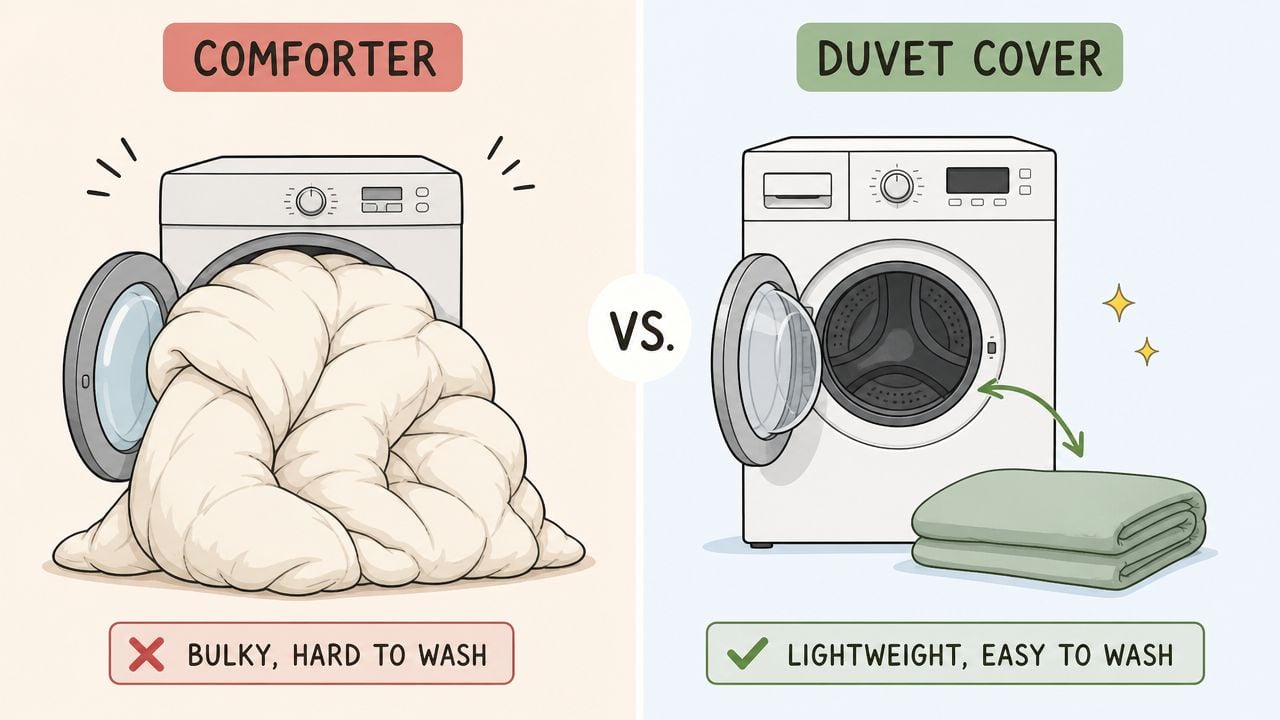
The problem is bulk. Comforters are large, heavy, and awkward to wash. Once they no longer fit comfortably in a standard laundry routine, people wash them less often. That's the maintenance reality many buying guides gloss over.
Orezon identifies this as the “Hygiene Reality Gap” in its duvet vs comforter hygiene comparison. The key point is direct and useful: comforters are rarely washed due to bulk, while duvet covers can be washed weekly at high temperatures. Orezon also states that duvets are “far more hygienic” because the cover acts as a washable barrier, removing the need for a top sheet that comforters require for hygiene.
Why this matters in an actual bedroom
A bed collects body oils, skin cells, dust, and everyday residue. That's normal. The question is whether the top layer gets cleaned often enough to keep up with it.
With a duvet system, the washable cover does the heavy lifting. It can go in with the sheets and be handled like the rest of the weekly bed linen routine. The insert stays protected, which reduces wear and keeps the expensive part out of constant wash cycles.
With a comforter, owners often have two choices. They either wash the full piece less often, or they rely heavily on a top sheet as the barrier. That's workable, but it requires more discipline and more layering.
The best choice for allergy-conscious homes
Households sensitive to dust and allergens usually benefit from bedding that gets cleaned more easily and more often. That doesn't make every comforter a bad option. It does mean a duvet system is usually the smarter recommendation for long-term hygiene.
For broader household cleaning strategies, this Purified Air Duct Cleaning dust mite guide adds useful room-by-room context beyond bedding alone.
Practical bedroom care also includes protectors, washable textiles, and fewer dust-trapping surfaces. This article on maintaining a dust- and allergen-free bedroom is worth reviewing for anyone building a healthier sleep space.
Practical rule: If a bedding layer is hard to wash, most households won't wash it often enough.
Creating Your Perfect Bedroom Style
Style matters because the bed is usually the largest visual feature in the room. It sets the tone before anyone notices the nightstands, lamps, or bench at the footboard.
A comforter gives the room an immediate identity. It comes with a finished surface, often patterned or textured, and it works well for anyone who wants a ready-made look without extra styling decisions. That makes sense in guest rooms, traditional spaces, or homes that prefer consistency over frequent updates.
A duvet gives the homeowner more design freedom. The insert stays the same while the cover changes the entire mood of the bedroom. That's a much smarter system for anyone who likes rotating between crisp white in summer, a richer tone in fall, and a softer textured fabric during winter.
Why duvets are the better design tool
This is the strongest style argument in the comforter vs duvet conversation. A comforter locks the household into one visual choice. If the color gets tired or the room changes, the whole piece usually has to go.
A duvet cover is easier to store, easier to swap, and easier to coordinate with other furniture. That flexibility fits well in homes where the bedroom evolves over time instead of staying frozen in one look.
That same thinking applies across the room. Gorins' custom programs like Canadel Custom Dining and the F9 Custom Sofa series are built around the idea that homes should be created to suit a lifestyle, with thousands of combinations available for shoppers who want a more personal fit. Bedding works the same way. A duvet cover system gives the bedroom more room to adapt.
When a comforter still makes sense
A duvet isn't automatically the better style choice for everyone. A comforter is still a strong pick for people who:
- Prefer one-and-done decorating: They want a finished pattern and don't plan to change it.
- Like a softer overhang: Comforters often drape more generously at the sides.
- Want less decision-making: One item, one look, no matching covers.
Shoppers planning a more coordinated retreat can also explore bedroom styles for every personality for ideas on tying bedding, bed frames, upholstery, and storage pieces together.
A duvet behaves like a wardrobe for the bed. The insert stays. The outer look changes whenever the room needs a refresh.
Making the Right Choice for Your Sleep Style and Budget
The right bedding choice should fit the sleeper, the mattress, and the household routine. Looking at the top layer by itself is a mistake. Good sleep comes from a complete system.
A lighter, fluffier duvet often pairs well with sleepers who don't want a heavy feeling on the body but still want insulation. A comforter can work better for people who prefer a familiar, slightly weightier top layer and a more traditional bed presentation.
The mattress underneath matters just as much. Gorins' Sleep Gallery features top-tier mattress brands including TEMPUR-Pedic, Sealy, Serta, Beautyrest, Stearns & Foster, and King Koil, focusing on helping customers find comfort by feel. That idea of comfort by feel is exactly right, because bedding shouldn't fight the mattress. It should complete it.
Best picks by sleeper type
For practical decision-making, these are the clearest recommendations.
- Choose a comforter if the shopper wants a simple, ready-to-use solution and doesn't plan to restyle the room often.
- Choose a duvet if the household cares about easy cleaning, better hygiene habits, and the option to change the bedroom look without replacing the whole top layer.
- Choose based on feel if the sleeper already knows they dislike either extra setup or extra laundry bulk.
A good sleep system also looks at heat retention, body temperature, and mattress response. A sleeper on a contouring mattress may prefer a less bulky top layer. A sleeper who likes a plush, classic setup may want a fuller comforter feel. There isn't one universal answer. There is usually one answer that fits the room and routine better than the other.
Budget should mean long-term value
Comforters generally make the easier entry purchase. They're often more budget-friendly at the start, and that matters for first apartments, guest spaces, and homes furnishing multiple bedrooms at once.
Duvets deserve the “investment-grade quality” label because the system is modular. The insert stays protected and the cover takes the wash wear. Over time, that makes the higher upfront spend easier to justify for many households.
Financial flexibility helps with the broader sleep setup too. Gorins offers Promotional Financing, including equal monthly payment options and qualified No Interest if Paid in Full terms, which makes it easier to build out a better mattress-and-bedding combination without compromising on comfort.
The direct recommendation
For most primary bedrooms, a duvet is the better recommendation. It's cleaner, more adaptable, and better suited to long-term ownership.
For guest rooms, college setups, or shoppers who value immediacy over maintenance, a comforter remains a solid choice.
Your Bedding Questions Answered
The comforter vs duvet debate usually comes down to a few practical questions. These are the ones shoppers ask most often, and the answers should be direct.
Can a duvet cover go over a comforter
Yes. It can.
That's a useful move for anyone who already owns a comforter and wants extra protection or a different look without replacing the whole thing. The fit may not be as neat as it would be with a proper duvet insert, but it can still work well enough in everyday use.
Is putting a duvet into the cover actually annoying
Sometimes, yes. That complaint is real, and shoppers are right to ask about it.
The challenge is one of setup, not daily use. Once the duvet is inside the cover, the system becomes easier to maintain than a bulky comforter. Some bedding shoppers still dislike the insertion step, especially at wash time.
A bedding discussion on Reddit noted that putting the duvet back into its cover can feel “more challenging than reassembling a comforter on the bed” in real household use. That frustration is why corner ties, zipper closures, and better cover design matter.
What makes duvet setup easier
A few small choices solve most of the hassle.
- Look for corner ties: They help keep the insert from shifting inside the cover.
- Choose zipper or secure closures: They make the finish neater and the setup less fussy.
- Use the burrito method: Rolling the insert and cover together usually makes it manageable for one person.
Buy the duvet cover with the closure system in mind, not just the color. Good hardware saves frustration.
Which one is better for busy households
A duvet is usually the better answer. The removable cover fits more naturally into a routine cleaning cycle, and that matters for homes with kids, pets, allergies, or a packed schedule.
A comforter still works if the household is committed to using a top sheet and handling the larger wash process consistently. Many individuals are less consistent than they might believe.
Is financing available for a better bed setup
Yes. To help customers afford big-ticket items, Gorins offers several promotional financing options, including equal monthly payment programs and “No Interest if Paid in Full” plans for qualified buyers. That matters because bedding choices often happen alongside mattress upgrades, protectors, and bedroom furniture purchases.
The strongest advice is simple. Choose a comforter for convenience at purchase. Choose a duvet for convenience in ownership.
Since 1936, Gorins Furniture & Mattress has helped Norwich and Eastern CT families create homes they love. From custom-designed Canadel dining sets to the latest in Tempur-Pedic sleep technology, they combine a massive selection with the personalized care only a local, family-owned business can provide. Visit the Norwich showroom, take the online Style Quiz, or browse the Clearance section for value-driven savings and a sleep setup suited to your lifestyle.