Mattress Thickness Comparison: Find Your Perfect Height

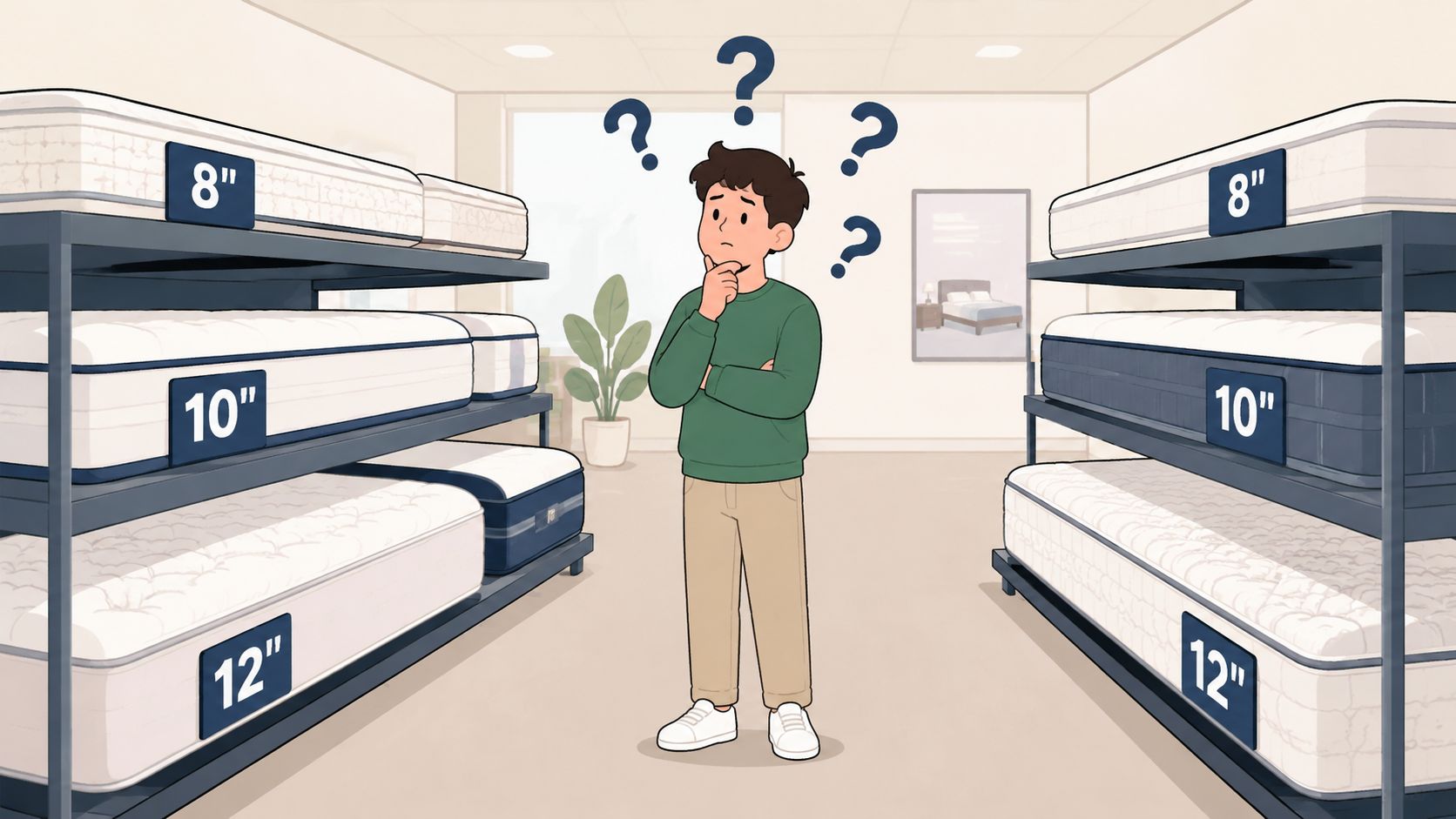
A lot of mattress shoppers start in the same place. They stand in a showroom or scroll through product pages, see 8-inch, 10-inch, 12-inch, and 14-inch options, and assume thicker must mean better.
That's usually where the confusion begins.
A real mattress thickness comparison isn't just about height. It's about how the mattress is built, how a sleeper's body interacts with that build, and whether the bed will work with the frame, sheets, and bedroom setup already at home. For many families in Norwich and across Eastern CT, that's the point where online advice starts to feel incomplete.
Since 1936, local families have turned to trusted showroom guidance because sleep products are easier to understand when someone translates the specs into everyday comfort. Thickness is one of the clearest examples. A mattress can look similar from the side and still feel completely different at bedtime.
Table of Contents
- Why Mattress Thickness Is More Than Just a Number
- Decoding the Common Mattress Thickness Ranges
- Matching Thickness to Your Weight and Sleep Position
- How Thickness Affects Durability and Edge Support
- The Practical Guide to Bed Frames Sheets and Room Aesthetics
- Experience the Difference at Gorins Sleep Gallery
- Your Final Checklist for Choosing the Right Mattress
Why Mattress Thickness Is More Than Just a Number
A Norwich couple walks into the showroom certain they only need to compare firmness labels. Then they lie down on two mattresses that feel similar at first touch, yet one lets the shoulders settle more naturally, feels steadier at the edge, and is easier to get out of in the morning. The difference is often thickness, but not for the reason many shoppers assume.
Thickness affects how a mattress is built and how it works in daily life. More depth can create room for comfort layers, transition materials, and a support system that work together instead of fighting each other. So a mattress thickness comparison is really a closer look at pressure relief, support, ease of movement, and how the bed fits the rest of your setup at home.
That last part gets missed online all the time.
Shoppers often treat mattress height like a shoe size. Bigger must be better, or smaller must be firmer. Real mattresses do not work that way. Height is more like the amount of space a builder has to work with. What matters is how that space is used, and whether the result suits your body, your bed frame, your sheets, and the way you get in and out of bed every day.
A taller mattress can still feel supportive and controlled. A thinner one can still feel cushioned. The materials inside decide that. Thickness provides clues about how much room there is to balance comfort and support.
That is why this choice often connects to broader sleep quality questions, especially for families thinking about back comfort, recovery, and years of nightly use. If that is part of your decision, our guide on why investing in a high-quality mattress supports long-term health adds helpful context.
Mattresses have also changed over time. Many newer designs use more layered construction than older beds did, which means thickness now affects more than looks. It can influence how high the bed sits on your frame, whether deep-pocket sheets are needed, and whether the mattress feels stable when you sit near the edge to tie shoes or help a child into bed.
So the number on the spec card matters. Just not by itself. In the showroom, thickness becomes meaningful when you connect it to what your body feels and what your bedroom needs.
Decoding the Common Mattress Thickness Ranges
A mattress height label works a lot like shoe sizing. It gives you a useful starting point, but it does not tell you how the whole thing will feel once you live with it. In the showroom, the range helps narrow the field. At home, it affects bed height, sheet fit, and how easy it is to sit on the edge each morning.
A quick mattress thickness comparison table
| Mattress profile | Thickness range | What it usually means in plain language | Often suited for |
|---|---|---|---|
| Low-profile | 4 to 8 inches | A shorter build with less overall depth | Simpler setups, guest use, some lighter-use spaces |
| Slim | 8 to 10 inches | A step up in depth, but still relatively compact | Sleepers who want a lower bed height |
| Standard | 10 to 12 inches | The most common range and a balanced starting point | Many average-sized adults |
| Thick | 12 to 14 inches | More room for comfort and support systems | Sleepers needing more cushioning or support depth |
| Extra-thick | 14+ inches | A taller profile with a more substantial build | Sleepers who want a higher bed and deeper construction |
Sleep Foundation classifies mattresses as low-profile (4 to 8 inches), slim (8 to 10 inches), standard (10 to 12 inches), thick (12 to 14 inches), and extra-thick (14+ inches), and notes that 10 to 12 inches is the most common standard range for average-sized adults in its mattress thickness guide.
Those labels are helpful, but families shopping in Norwich usually need one more layer of explanation. What changes from one range to the next is not just height. It is how much room the mattress maker has for different materials and how that finished bed will sit on your frame.
What those extra inches usually contain
A mattress is built in layers, and each layer has a job.
A typical design includes:
- Comfort layers near the top for cushioning and pressure relief
- Transition layers in the middle to help your body settle without dropping too fast
- Support layers underneath for alignment, stability, and structure
That is why two beds can both feel comfortable for the first minute, yet perform very differently after a full night. A 10-inch model may have a simpler build with enough support for many sleepers. A 12-inch model may have extra room for deeper cushioning, a sturdier support core, or stronger edge construction.
For example, a 10-inch queen memory foam mattress can make excellent sense for a guest room, a lower bed setup, or a sleeper who does not want too much height. In a primary bedroom, many shoppers prefer the added design flexibility that often comes with standard or thicker profiles.
One easy way to picture it is to compare a one-story home and a two-story home built on the same footprint. More height does not automatically make one better. It gives the builder more options for how to arrange the space. Mattresses work the same way.
That is also where online guides often stop too soon. In the store, thickness affects practical details you notice right away. A lower-profile mattress may keep a tall bed frame from feeling too high. A thicker mattress may look better on a platform bed with a low headboard, or it may mean you need deeper-pocket sheets than the set already in your linen closet.
A practical example helps. A child's room, guest room, or trundle setup may work well with a lower, lighter mattress profile. A couple shopping for nightly use may feel more comfortable starting in the standard or thick range, especially if they want a bed that feels more substantial when sitting, turning, and getting in and out.
Matching Thickness to Your Weight and Sleep Position
A mattress meets your body differently depending on two things. How much weight presses into the surface, and where that weight lands while you sleep.
That is why two people can lie on the same bed in the showroom and come away with opposite opinions. One feels cushioned and supported. The other feels pressure at the shoulder or too much sink through the hips.
Recommended Mattress Thickness by Sleeper Profile
| Sleeper Weight | Side Sleeper | Back Sleeper | Stomach Sleeper |
|---|---|---|---|
| Under 130 pounds | Often prefers a comfort-focused build with enough depth to cushion shoulders and hips | Usually feels comfortable on a supportive mattress that does not feel overly stiff | Usually benefits from a flatter, supportive feel that limits midsection sink |
| 130 to 230 pounds | Often does well in the 10 to 12 inch range, depending on contouring preference | Often does well in the 10 to 12 inch range | Often does well in the 10 to 12 inch range if the top feels controlled rather than too plush |
| Over 230 pounds | Often benefits from a 12 to 14 inch mattress for deeper support and pressure relief | Often benefits from a 12 to 14 inch mattress for steadier support | Often benefits from a 12 to 14 inch mattress that helps keep the torso level |
Those ranges are starting points, not rules.
A lighter side sleeper, for example, may still prefer a taller mattress if the extra depth creates gentler cushioning at the shoulder and hip. A heavier back sleeper may care less about the total number on the tag and more about whether the mattress keeps the midsection from dipping too far.
Why sleep position changes the feel
Sleep position changes which parts of the body ask the most from the mattress.
Side sleepers usually notice pressure first. The shoulders and hips carry more of the load, so they often like enough depth in the comfort layers to avoid that jammed, push-back feeling.
Back sleepers tend to judge a mattress by balance. They usually want some give under the curves of the body, but not so much that the hips sink lower than the chest.
Stomach sleepers often need the most control through the center of the bed. If the surface is too soft or the build is too shallow for their body type, the midsection can drop and pull the spine out of a more neutral line.
A mattress works a lot like a pair of work boots. The right one depends on who is wearing it and how the weight hits it all day.
Where shoppers often get mixed up
One common misunderstanding shows up in the store all the time. People hear that lighter sleepers can use a thinner mattress, then assume thinner is the smarter choice.
Sometimes it is. Sometimes it is not.
If a lighter sleeper is a side sleeper with sharper pressure points, a mattress with more comfort depth may feel noticeably better even though that person does not press as far into the bed as a heavier sleeper would. The thickness number only helps if it supports the way that body rests.
Couples add another layer. The mattress has to respond to shared weight, different sleep positions, and two opinions about comfort. That is why a spec sheet alone rarely settles the decision.
For shoppers comparing builds before visiting the store, our guide on which mattress is right for your body type can help narrow the field.
Then the showroom fills in what online charts miss. You can feel whether your shoulder settles in comfortably, whether your lower back stays supported, and whether the height still makes sense with your bed frame, your usual sheets, and the way you get in and out of bed each night.
That full-picture approach matters more than the number alone.
How Thickness Affects Durability and Edge Support
A mattress can feel comfortable for five minutes and still struggle after a year of real use. Durability shows up later, in the spots where you sleep, sit, and push off every day.
Thickness matters here because it often gives the mattress enough room to do more than one job at once. The upper layers cushion pressure points. The deeper layers carry weight and help the bed keep its shape. If the mattress is too shallow for the person using it, those jobs start competing with each other, and the bed can feel tired sooner.
A simple way to picture it is a sofa cushion versus a dining chair pad. Both can feel soft at first touch. Only one has enough depth and structure to stay supportive through years of regular use.
How deeper builds can hold up better
The thickness number by itself does not guarantee a longer life. Material quality, coil design, foam density, and how the layers work together still matter. But a mattress with more usable depth often has more room for a proper support core under the comfort layers, and that usually helps with shape retention under nightly compression.
That support core does quiet work. It carries the heaviest part of the body, helps limit sagging through the center, and keeps the surface from feeling uneven as the mattress ages. If you want a clearer sense of what to expect over time, our guide on how long a mattress should last gives helpful context.
Edge support is part of everyday comfort
Edge support sounds technical until you live without it.
You notice it when you sit down to put on socks. You notice it when a partner drifts toward your side and the usable sleep surface starts feeling smaller. You notice it when getting out of bed feels less steady than it should.
Thicker mattresses often have more room for reinforced perimeter construction or a stronger overall build, which can make the edge feel more dependable. That matters for couples, older adults, and anyone who uses the side of the bed as a sitting spot before standing. In the showroom, this is one of the easiest differences to feel. Sit on the edge for a moment. Then lie near the perimeter. A mattress with decent edge support should feel secure, not like it is folding away under you.
A few signs that thickness is helping the bed perform well include:
- A steadier edge when sitting: The side compresses, but it does not collapse.
- More usable sleep space: You can rest closer to the perimeter without feeling like you might slide off.
- Better long-term shape: The center and sides stay more consistent with regular use.
- Less motion strain on the build: Two sleepers using the bed night after night put more stress on the full surface.
This is also where online shopping guides often stop too soon. They compare inches on a chart but skip the lived-in details. At Gorins Sleep Gallery in Norwich, shoppers can test whether the edge feels stable, whether the center stays level, and whether the mattress height will still work with the frame and bedding at home. That full setup matters just as much as the spec sheet.
For the room itself, comfort is not only physical. Visual calm helps too, and Printano's art for relaxing bedrooms offers useful ideas for creating a quieter sleep space.
The Practical Guide to Bed Frames Sheets and Room Aesthetics
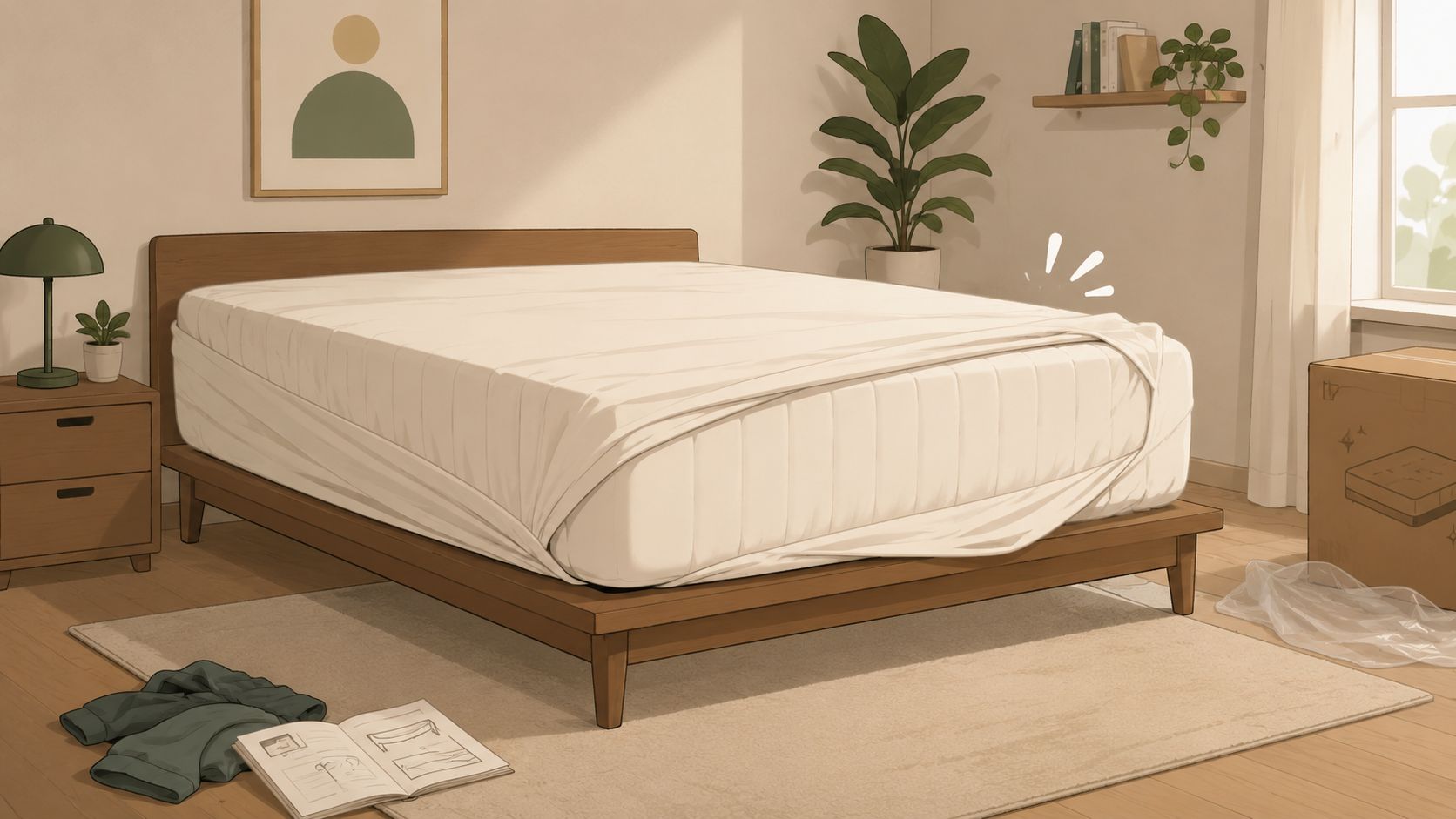
A mattress can feel wonderful in the showroom, then create small headaches the first night at home. The bed sits higher than expected. The fitted sheet keeps slipping off. The headboard suddenly looks too short. Those are not comfort problems. They are setup problems, and mattress thickness plays a big part in them.
Frame fit is the overlooked part of mattress shopping
A mattress is only one part of the sleep setup. The frame, foundation, and height of the rails all affect how that mattress will work in everyday use.
Platform beds, storage beds, and adjustable bases can all change the final feel of the bed because they hold the mattress differently. Some frames let the mattress sit down inside a recessed opening. Others place it flat on top. A thicker mattress in a shallow frame may look balanced, while that same mattress in a deeper frame can sit lower than expected and change how easy it is to get in and out of bed.
A simple home check helps prevent surprises:
- Measure the inside width and length of the frame. Older frames do not always match modern mattress dimensions perfectly.
- Check whether the mattress sits inside the frame or on top of it. Recessed designs reduce the visible height of the mattress.
- Look at the height of the side rails and headboard. A much thicker mattress can cover more of the headboard and change the room's proportions.
- Confirm the support underneath. Some beds need a foundation, while others are designed for slats or a platform. If you are unsure, our guide on whether a box spring is needed for your bed can help.
That last point causes a lot of confusion. Shoppers often focus on mattress size and forget to ask what is supporting it. A mattress that is the right thickness can still perform poorly if the base under it is not the right match.
Sheets bed height and the look of the room
Sheets have to match the mattress profile, not just the mattress size. A queen is still a queen, but a low-profile queen and a tall pillow-top queen may need very different fitted sheet pockets.
If the pocket is too shallow, the corners pull loose. If it is too deep, extra fabric bunches along the sides and leaves the sleep surface looking rumpled. It is a little like putting the wrong size lid on a container. It may go on, but it will not stay put the way it should.
Thickness also changes how the whole room reads at a glance. A lower bed can make a compact bedroom feel lighter and more open. A taller mattress creates more visual weight, which can look inviting in a larger room or with a substantial headboard. Families shopping in person often notice this right away in the showroom. The same mattress can feel very different depending on the frame under it and the scale of the room around it.
For households trying to create a calmer sleep space from top to bottom, wall décor can help support that mood too. Some readers may find useful ideas in Printano's art for relaxing bedrooms, especially if the goal is to make the bedroom feel restful as a whole.
A mattress does not live by itself. It lives on a frame, under fitted sheets, beside a headboard, and inside a room you see every morning and every night.
That wider view is what many online thickness guides miss. They compare inches on a chart. Real life adds bed frames, sheet pockets, room scale, and daily routines. At Gorins, that full setup is part of the conversation because the right mattress should fit your body and your home.
Experience the Difference at Gorins Sleep Gallery
A Norwich family can do plenty of homework at the kitchen table, compare mattress heights online, and still feel unsure the moment they walk into a store. That makes sense. Thickness is one of those details that looks simple on a product page and becomes much more real when you sit on the edge, lie on your side, and notice whether the bed feels easy to get into.
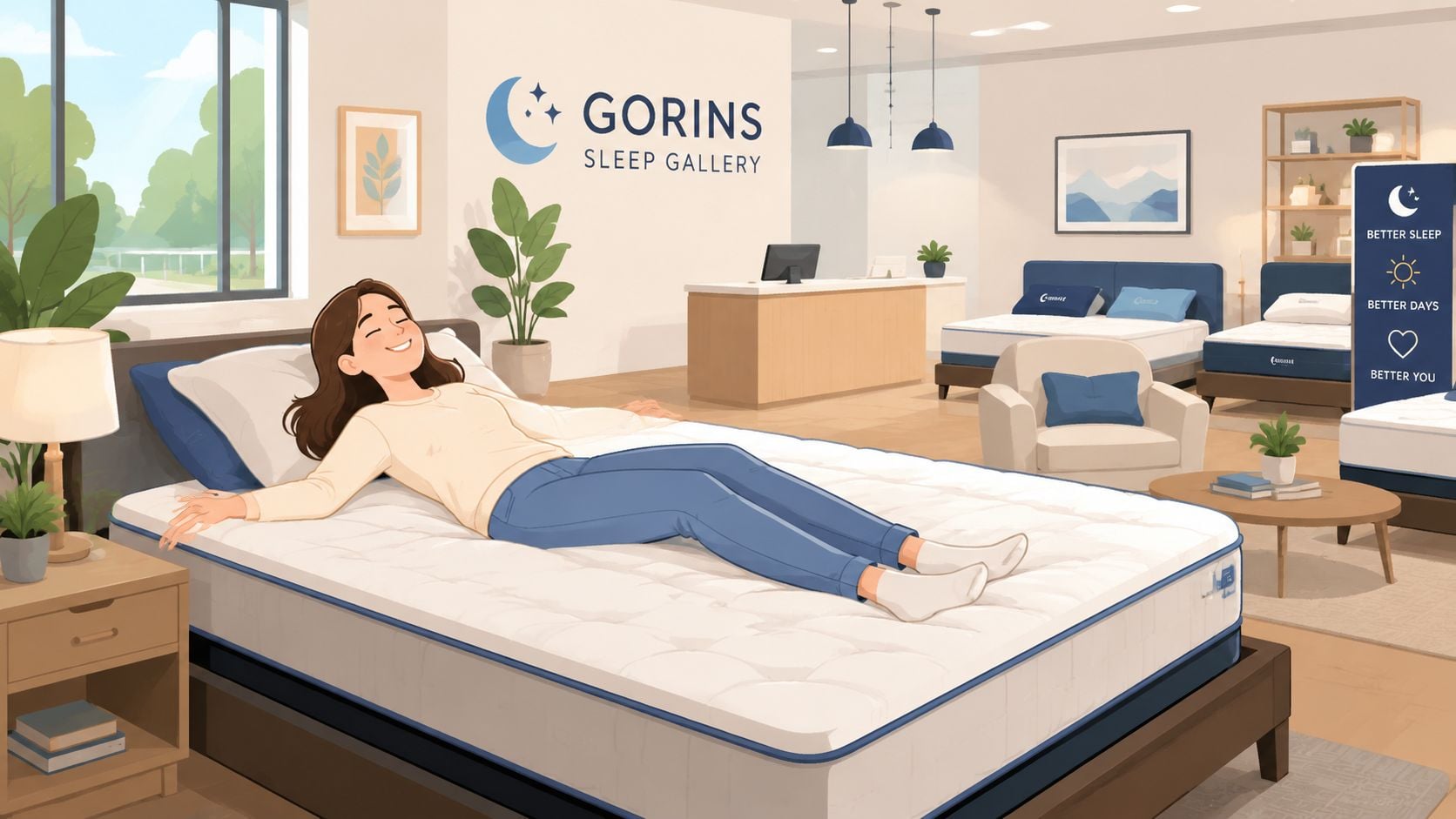
A showroom helps turn a measurement into a lived experience. Two mattresses can share the same height on a tag and still feel very different because the layers inside them respond differently to weight, movement, and pressure. One may let the shoulders settle more naturally. Another may feel firmer at the surface or steadier along the edge.
Comfort by feel matters
Modern mattresses are often thicker than older models because many now include multiple comfort and support layers. That sounds technical, but the practical takeaway is simple. A taller profile does not automatically mean a better fit, and a slimmer one does not automatically mean less support. The key question is how that build feels under your body for more than a quick sit.
That is why in-person testing helps so much. Reading narrows the field. Lying down answers the question.
Why showroom testing solves what spec sheets cannot
At Gorins Sleep Gallery, shoppers can compare mattresses in a way that mirrors real life instead of a spec chart. You can check:
- whether your shoulder sinks in enough on your side without throwing the spine out of line
- whether your lower back feels supported when you rest flat
- whether the edge feels steady when you sit down to put on socks or stand up in the morning
- whether the full bed height feels comfortable with your frame and easy to climb into each night
Those last two points often get missed online. A mattress does not exist by itself. It has to work with the bed frame already in your home, the sheets in your linen closet, and the bedroom setup you use every day. Seeing mattresses in person helps shoppers notice whether a thicker model may leave the bed feeling too high, or whether a lower profile may suit the frame and room proportions better.
Gorins Furniture & Mattress gives Norwich-area families a place to compare those differences side by side instead of guessing from dimensions alone. That is especially helpful for couples. One person may want more cushioning at the shoulder, while the other cares more about easier movement and a steadier edge.
The conversation also gets more practical in the showroom. Shoppers can ask about total bed height, sheet fit, how a mattress will sit on a specific frame, and whether the finished setup will look balanced with the furniture already at home. Online guides often stop at the inch count. In the store, the goal is to solve the whole sleep setup.
Since 1936, that hands-on guidance has been part of how Gorins helps customers shop with more confidence. Sleep is personal, and thickness makes more sense when you can feel it, see it on a real frame, and judge whether it fits your body and your room.
Your Final Checklist for Choosing the Right Mattress
A mattress thickness comparison gets much easier when the decision is narrowed to a short list of practical questions.
A simple decision list
- Know the sleeper profile: Weight, sleep position, and whether one or two people share the bed should shape the starting range.
- Look inside the build: Thickness matters because of the comfort, transition, and support layers inside it.
- Test edge feel and movement: Daily use shows up in how a mattress handles sitting, turning, and shared sleep.
- Measure the frame carefully: Inside dimensions, rail height, and recess depth can change the fit.
- Think about total bed height: A mattress should feel easy to get into, not awkwardly high or too low.
- Check the sheet setup: Thicker mattresses often need deeper pockets, while slimmer profiles may not.
- Use the room as part of the decision: The right mattress should fit the space visually as well as physically.
One final reminder helps many shoppers. The right thickness isn't the tallest mattress in the building. It's the one that supports the sleeper, fits the frame, works with the room, and still feels comfortable after more than a quick sit on the edge.
For anyone still deciding what comes next, there are a few easy paths forward. Some shoppers want to lie down and compare in person. Others want help narrowing style and comfort preferences first. Some are looking for strong value on a good fit.
Since 1936, Gorins Furniture & Mattress has helped Norwich and Eastern CT families create homes they love. Readers can visit the Norwich showroom to test mattress thickness and comfort by feel, take the online Style Quiz for more personalized guidance, or browse the Clearance section for value-focused savings backed by local, family-owned service and 5-Star Delivery.