Full Size Mattress Measurements: Find Your Perfect Fit


A full size mattress is 54 inches wide by 75 inches long, which is about 137 x 191 cm. That simple answer often gets messy fast when a bedroom is tight, a bed frame has already been picked out, or a Norwich homeowner is working around older walls, narrow doorways, and limited walking space.
A lot of shoppers reach the same point. The room feels big enough on paper, but the tape measure says otherwise. A bed that sounds “standard” still raises questions about whether it will crowd a dresser, squeeze past a doorway, or leave enough room to move comfortably.
Since 1936, this family-operated Norwich business has helped local families sort through those exact questions with clear, practical guidance. Full size mattress measurements look straightforward at first glance, but the details matter. Width can vary by an inch, length can feel short for taller sleepers, and the right choice depends on how the room functions day to day.
Table of Contents
- Your Guide to Choosing the Right Mattress Size
- Mattress Size Comparison Chart
- The Official Full Size Mattress Measurements
- How Deep Is a Full Size Mattress
- Full vs Queen A Detailed Comparison
- Who Should Choose a Full Size Mattress
- Will a Full Size Bed Fit in Your Room
- Choosing the Right Sheets and Bed Frame
- Find Your Perfect Fit at The Gorins Sleep Gallery
Your Guide to Choosing the Right Mattress Size
A common Norwich scenario starts the same way. A guest room is becoming a teenager's room, a first apartment needs a bed that won't overwhelm the space, or a couple wants to make a smaller bedroom feel finished without sacrificing comfort. The question usually isn't just “What size is a full?” It's “Will this work in real life?”
That's where a little measurement clarity saves a lot of frustration. A full size mattress sits in the middle ground. It gives a solo sleeper more room than a twin and usually fits spaces where a larger mattress may feel crowded.
Why this size gets so much attention
For many households, a full is the practical compromise.
- More room for one sleeper: It offers a noticeable step up from a twin without taking over the room.
- Useful in flexible spaces: Guest rooms, smaller primary bedrooms, and growing kids' rooms often benefit from that balance.
- Easier room planning: It can leave space for a dresser, side table, or reading chair when the layout is tight.
Practical rule: Mattress shopping works better when the room is measured first and the mattress second.
The local reality matters too. Our neighbors in Norwich, New London, Plainfield, and Waterford often live with room layouts that weren't designed around modern furniture proportions. Alcoves, older trim, tight stair turns, and off-center windows change what “fits” means.
That's why this guide stays focused on the details that affect comfort and layout. It covers the full size mattress measurements themselves, the confusing width difference shoppers keep running into, and how to tell whether this size is suited to your lifestyle.
Mattress Size Comparison Chart
A full makes more sense when it's placed alongside the other common mattress sizes. This quick chart gives a broad view of where it fits in the standard lineup. For a separate visual reference, Gorins also offers a helpful bed sizes chart.
US Mattress Size Dimensions
| Size | Dimensions (Inches) | Dimensions (Centimeters) |
|---|---|---|
| Crib | Standard crib dimensions vary by manufacturer | Metric dimensions vary by manufacturer |
| Twin | 38 x 75 | 97 x 191 |
| Twin XL | Standard twin XL dimensions vary by manufacturer | Metric dimensions vary by manufacturer |
| Full | 53 to 54 x 75 | about 135 to 137 x 191 |
| Queen | 60 x 80 | 152 x 203 |
| King | 76 x 80 | 193 x 203 |
| Cal King | Standard California king dimensions vary by manufacturer | Metric dimensions vary by manufacturer |
Where the full stands out
The full sits in a useful middle lane. It's wider than a twin, shorter and narrower than the larger couple-focused options, and often chosen by shoppers who want to preserve floor space.
That middle position is exactly why it causes so much hesitation. It sounds roomy enough for almost anything, but the experience changes depending on whether one person or two people will use it, and whether the room has generous clearance or almost none.
The Official Full Size Mattress Measurements
A full size mattress is generally 53 to 54 inches wide and 75 inches long. On paper, that sounds straightforward. In real Norwich bedrooms, especially in older terraces and period homes where every inch has a job to do, that 1-inch spread is often the detail that decides whether the bed feels neatly placed or slightly squeezed.
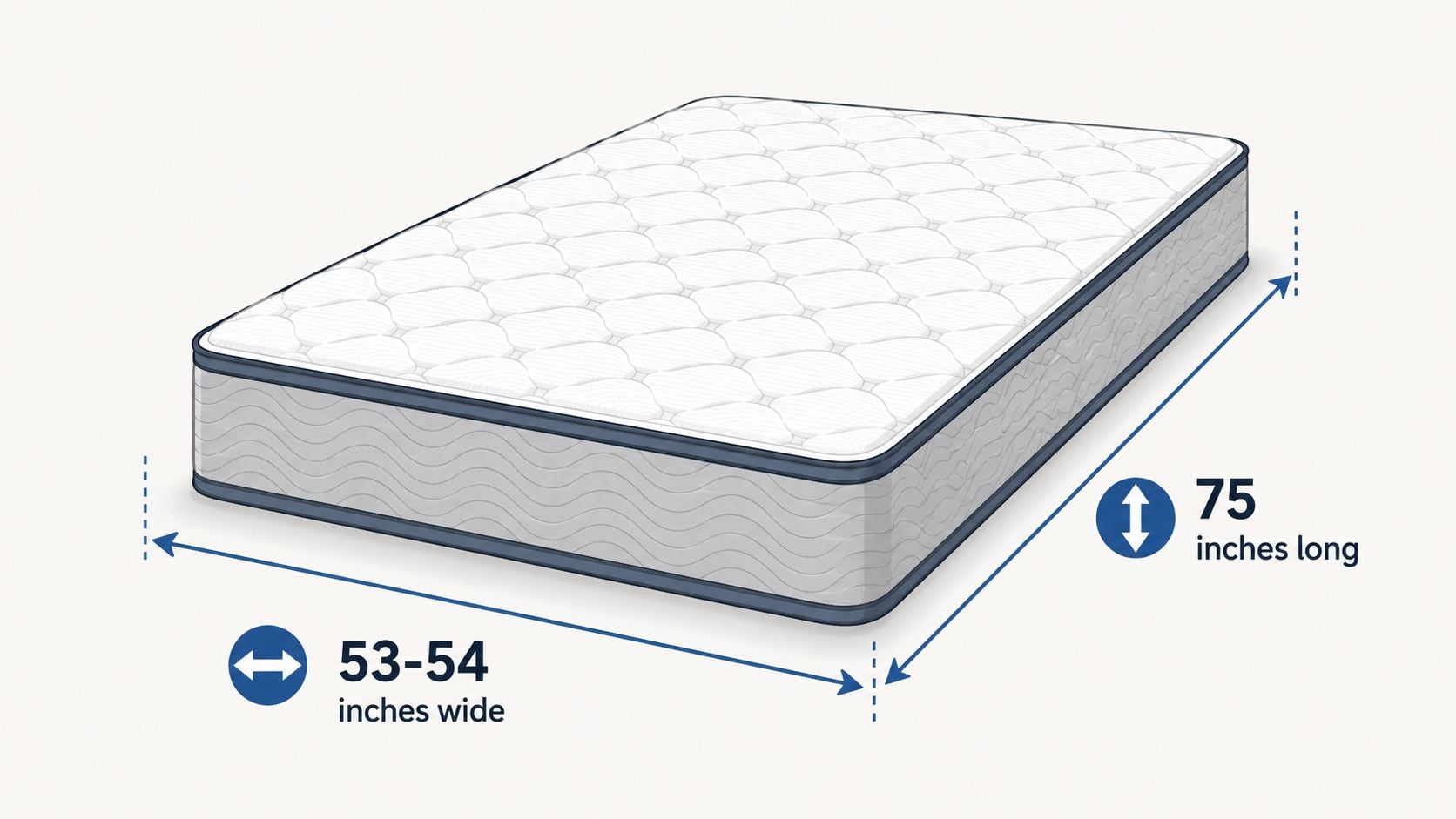
In metric terms, a full is about 135 to 137 cm wide and 191 cm long. Those numbers describe the mattress itself, before you add a frame, headboard, quilted sides, or deeper comfort layers. If you are mapping out a room, start with the mattress footprint, then build outward. A mattress thickness comparison helps with that next step because height changes how bulky the whole bed feels once it is in place.
Why some full mattresses are listed as 53 inches and others as 54
This confuses shoppers more than it should.
A full is often treated as a standard size, but manufacturers and retailers may list it at 53 inches or 54 inches wide. That does not usually mean the bed is a different category. It means the actual finished measurement can vary slightly by brand, cover design, and production tolerance.
That single inch sounds tiny until you place the bed in a room with limited clearance. In a compact Norwich bedroom, 1 inch can affect how easily a drawer opens, how much space is left beside a wardrobe, or whether the bed feels centered rather than pressed toward one wall.
What that width means for one sleeper and for two
For one person, a full often feels comfortably generous. For two adults, the numbers get tight quickly.
If the mattress is 54 inches wide, each adult gets about 27 inches of personal width if they split the bed evenly. If the mattress is 53 inches wide, that drops to 26.5 inches each. That is less personal space than many couples expect, and it helps explain why a full can feel cosy for occasional sharing but cramped for nightly use.
A simple way to picture it is this. Two adults on a full are each working with a width that is noticeably narrower than many people use comfortably on their own. For a guest room or a smaller home, that tradeoff may be acceptable. For a primary bedroom, it deserves honest measuring before you commit.
Length matters too
The 75-inch length is the other fixed part of the equation. It works well for many children, teens, and average-height solo sleepers. Taller adults may notice the limit fast, especially if they sleep stretched out or use a thick pillow that reduces usable space near the head of the bed.
That is why full mattresses often succeed in the homes I see around Norwich where the goal is to save floor space for one sleeper, not to create a roomy sleep surface for two adults every night. The size can be a smart fit. It just needs precise measuring and realistic expectations about how much room the bed will give you.
How Deep Is a Full Size Mattress
Width and length are standardized more closely than thickness. Mattress depth can vary a lot, and that's where many sheet and frame problems start. A full mattress can look “right” in floor dimensions but still sit much higher or lower than expected once it's placed on its foundation.
For shoppers comparing profiles, a visual mattress thickness comparison can make that third dimension easier to picture.
Why thickness changes the feel of the whole bed
Depth affects more than appearance.
- Sheet fit: A fitted sheet has to wrap the mattress corners securely. If the mattress is tall and the pocket depth is shallow, the sheet slips off.
- Bed height: Mattress thickness combines with the frame and foundation to determine how high the bed feels when sitting down or getting up.
- Room style: A lower profile can make a compact bedroom feel less bulky, while a taller profile can create a more substantial, layered look.
A child's room, guest room, and primary bedroom often call for different depth preferences even when the mattress width and length are the same.
What Norwich shoppers should check
A clean way to avoid mistakes is to measure from the bottom of the mattress to the top sleeping surface once the model has been chosen. Then compare that measurement to the fitted sheet pocket depth and to the height of the chosen frame.
In a showroom setting, “comfort by feel” matters here. A mattress that feels supportive in Tempur-Pedic, Serta, or Beautyrest collections may also have a noticeably different profile than a simpler model. Healthier sleep isn't just about softness or firmness. The finished bed height has to work for the person using it every day.
A mattress can fit the room and still feel wrong if the final bed height doesn't match the sleeper's routine.
Full vs Queen A Detailed Comparison
A common Norwich bedroom problem goes like this. The room looks large enough on paper, but once you account for an older home's narrower doorway, a radiator, or a chest of drawers that has nowhere else to go, every inch starts to matter. That is why the choice between a full and a queen deserves a closer look than the labels suggest.
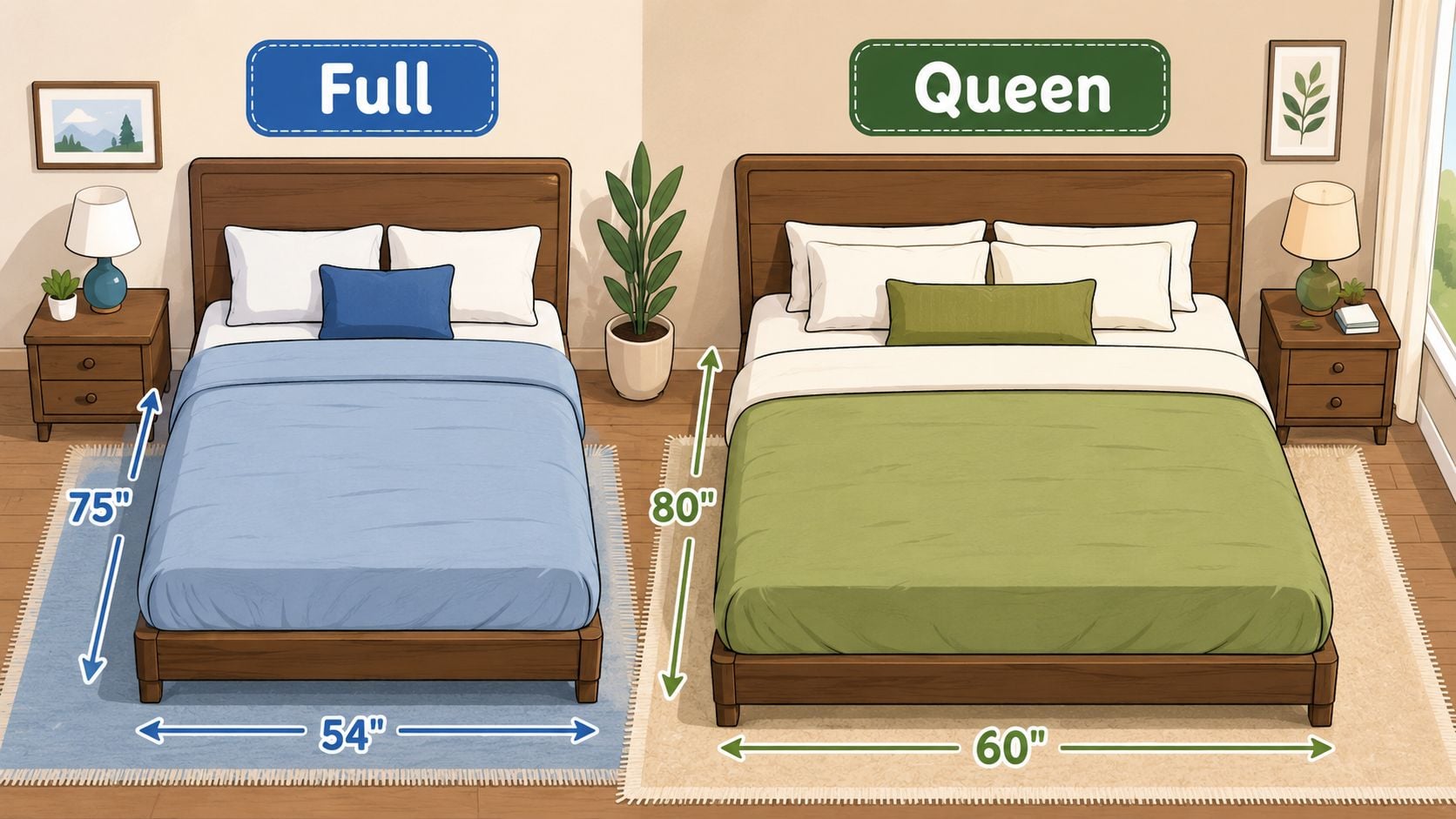
A full and a queen are both 80 inches long. Their main distinction is width. A queen is typically 60 inches wide, while a full is usually listed at 54 inches wide. Some manufacturers and retailers list a full at 53 inches instead, and that 1-inch variance is one reason mattress shopping can feel more confusing than it should.
The clearest difference for couples
For two adults, the easiest way to judge these sizes is to divide the width in half.
- A 53-inch full gives each person 26.5 inches of sleeping space
- A 54-inch full gives each person 27 inches
- A 60-inch queen gives each person 30 inches
That means a queen gives each sleeper 3 to 3.5 inches more width than a full. It does not sound dramatic at first. In real life, it is the difference between shoulders brushing all night and having a little room to settle in.
A simple way to picture it is this. Two adults on a full often have less personal space than many people expect from a bed once called a "double." For occasional guests, that can be fine. For nightly sleep, especially if one person shifts position often, the bed can start to feel narrow very quickly.
Where the extra queen width shows up in the room
A queen adds 6 or 7 inches of total width over a full, depending on whether the full model measures 53 or 54 inches. In a newer home, that may feel minor. In many Norwich-area bedrooms, especially older homes with tighter layouts, those inches can affect whether you can open drawers comfortably, walk around the bed without turning sideways, or fit a pair of bedside tables without crowding the wall.
That is why floor plan fit and sleep fit need to be judged together.
When a full makes more sense
A full often works well for one sleeper who wants a bed that feels generous without giving up too much floor area. It also suits guest rooms, spare bedrooms, and multi-use spaces where the room still needs to function as an office, sewing room, or reading space.
For shoppers comparing dimensions, comfort, and room planning as one decision, this guide to choosing the right mattress size and feel can help connect the measurements to everyday use.
For bedding projects, size changes matter there too. Someone planning a quilt for a larger mattress may find this queen size quilt backing guide helpful when comparing how bedding needs shift from full to queen.
When a queen earns its footprint
A queen usually makes better sense for two adults sharing a bed every night. It is also the stronger option for sleepers who like to spread out, read in bed, or share the mattress with a child or pet who climbs in regularly.
In plain terms, a full protects floor space. A queen protects personal sleep space. The right answer depends on which one your room, and your routine, can spare.
Who Should Choose a Full Size Mattress
A full size mattress isn't the universal answer. It's a very good answer for the right household.
The strongest fit is usually a single sleeper who wants more room than a twin offers. That could be a teenager, a college-age shopper furnishing a first apartment, or an adult who sleeps alone and wants a bed that feels more substantial without taking over the room.
Best matches for a full
Several lifestyles line up especially well with this size.
- Growing teens: A full often feels like a meaningful upgrade from a childhood bed and can carry a room through several stages of life.
- Guest rooms: It gives visitors more comfort than a twin while keeping the room flexible for other uses.
- Single adults in smaller homes: It offers spread-out sleeping space without requiring the footprint of a larger mattress.
For more general sizing and comfort guidance, the ultimate guide for choosing a mattress can help narrow down whether the room, sleeping style, and support preference line up.
Situations where a full may feel limiting
A full becomes less ideal when the sleeper is taller and needs more legroom, or when two adults plan to use it every night. It can still function, but the compromise becomes more noticeable over time.
A good mattress size should support the way the room lives, not just the way the floor plan looks.
This is also where suited to your lifestyle becomes more than a slogan. A bed should match the household's rhythm. A room used by one sleeper all week and occasional guests on weekends has different needs than a bedroom shared every night.
The same thinking appears across the home. In dining spaces, Canadel custom programs offer thousands of combinations because families don't all live the same way. In seating, the F9 Custom Sofa series works the same way. Mattress sizing deserves that same intentional approach, even when the question seems as simple as “Will a full fit?”
Will a Full Size Bed Fit in Your Room
You close the bedroom door in a classic Norwich home, look at the walls, and the question sounds simple. Will a full bed fit without making the room feel pinched?
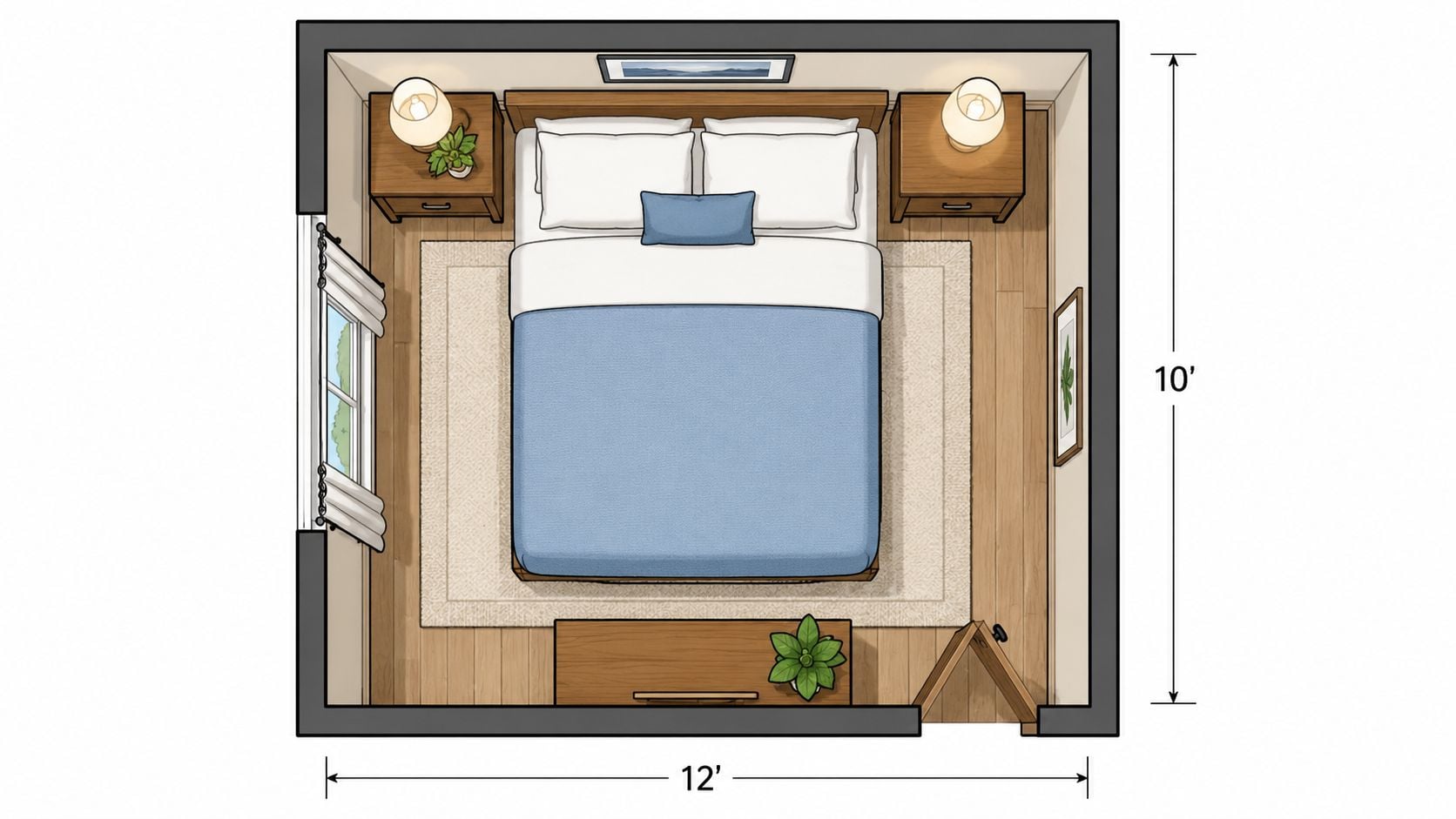
Usually, yes. But the better question is whether the room will still work well once the bed, frame, nightstands, and walking paths are all accounted for. A full mattress has a modest footprint compared with larger sizes, yet older homes in Eastern Connecticut often have tighter corners, shorter wall runs, and door swings that make planning more exact.
Why the 53-inch versus 54-inch width matters
This is one of the most confusing parts of full size mattress shopping. Some full mattresses are listed at 54 inches wide, while others are listed at 53 inches. That single inch sounds minor until the room is tight.
In practical terms, one inch can affect whether a bed clears a doorway trim cleanly, whether a nightstand fits beside the frame, or whether the walkway at the foot of the bed feels usable instead of awkward. In many older Norwich-area homes, that is real, everyday floor space, not a technical detail on a spec sheet.
It also helps to translate width into sleeping room. If two adults share a full mattress, each person gets about 27 inches of width on a 54-inch full, or about 26.5 inches on a 53-inch version. That is close to the width of a crib mattress per person. For occasional use, some households can make it work. For nightly sleep, it often feels tighter than expected.
A practical way to test the room
Room planning works like laying out a small kitchen. The floor area matters, but the usable space matters more.
Before you commit, use a tape measure and map the bed where it would sit. This step-by-step guide on how to measure furniture can help you check the room the same way we do in the showroom.
A simple routine works well:
- Measure the usable wall space: Start with the shortest practical dimensions, especially if baseboards, radiators, window trim, or sloped walls cut into the room.
- Mark the bed footprint on the floor: Painter's tape gives you a quick visual outline of the mattress and frame.
- Test the working clearances: Open the bedroom door fully, picture dresser drawers pulled out, and walk the path you would use every day.
- Account for the full setup: Headboards, thicker side rails, and storage beds can take up more space than the mattress alone.
That last point trips people up often. A full mattress may fit on paper, while the complete bed setup feels crowded once the frame is in place.
If the mattress is coming from another home, the move itself deserves a little planning too. Households comparing transport costs may find these one-way truck rental rates useful while sorting out the larger move.
A full bed fits best when the room still feels easy to live in after the bed is installed, not just when the mattress can physically squeeze inside.
Choosing the Right Sheets and Bed Frame
Once the mattress size is settled, the accessories need to match the exact dimensions rather than the general label. That's especially important with fitted sheets and frames.
A standard full bed frame is generally designed around a 54 x 75 inch mattress footprint. If the actual mattress runs a touch narrower, it will usually still work, but the shopper should know that the mattress label and the true finished size might not be identical.
What to check on sheet packaging
Flat sheets can feel forgiving. Fitted sheets are not. The corners and pocket depth have to line up with the mattress profile.
- Check the size name first: Full and queen fitted sheets aren't interchangeable in the same dependable way flat sheets sometimes can be.
- Read pocket depth carefully: A thicker mattress needs deeper pockets to stay secure.
- Match protector and sheets together: If one has generous depth and the other doesn't, the bed can bunch or pull.
A practical reference for layering the bed properly is this complete guide to bedding, mattress protectors, and comforters.
Why the frame matters as much as the mattress
The frame shapes how supportive and finished the bed feels. A mattress can be the right size and still perform poorly if the base isn't appropriate for it.
Shoppers should confirm:
- Support compatibility: The frame or foundation should suit the mattress type.
- Interior dimensions: The frame should match a standard full footprint without forcing the mattress.
- Overall height: Frame, foundation, and mattress together should create a bed that's comfortable to enter and exit.
Small planning decisions protect the investment. The right accessories help the mattress feel stable, look polished, and wear more evenly over time.
Find Your Perfect Fit at The Gorins Sleep Gallery
Reading dimensions helps. Lying down on the mattress helps more.
A shopper can understand width, length, and room clearance perfectly and still need to answer a final question: does the bed feel right? That's where a showroom visit becomes useful, especially for anyone comparing profile, support, and overall bed height in person.

What shoppers can compare in person
At Gorins Furniture & Mattress, the Sleep Gallery gives Norwich-area shoppers a place to compare mattresses by comfort by feel across brands such as Tempur-Pedic, Serta, and Beautyrest. That kind of side-by-side testing can help clarify whether a full feels spacious enough, whether a different profile is easier to live with, and whether the support level matches the sleeper's routine.
For households furnishing more than a bedroom, that same practical mindset carries through the store. Dining shoppers can explore Canadel with thousands of combinations, living room shoppers can look at the F9 Custom Sofa series, and larger purchases can be made more manageable through Promotional Financing with equal monthly payments.
Why local guidance still matters
For families in Norwich, New London, Plainfield, Waterford, and surrounding Eastern CT and Rhode Island communities, the biggest benefit is often clarity. A local showroom can help connect measurements on paper to how a room will function at home.
Since 1936, this locally owned, family-operated business has focused on helping shoppers make decisions that support comfort, value, and everyday livability. That matters whether someone is furnishing a guest room, upgrading to healthier sleep, or trying to make a smaller bedroom work harder without feeling cramped.
Since 1936, Gorins Furniture & Mattress has helped Norwich and Eastern CT families create homes they love. From custom-designed Canadel dining sets to the latest in Tempur-Pedic sleep technology, they combine a massive selection with the personalized care only a local, family-owned business can provide. Visit the Norwich showroom, take the online Style Quiz, or browse the Clearance section for value-driven savings and 5-Star Delivery service.