Standard Loveseat Length: Find Your Perfect Fit

A standard loveseat length is typically between 52 and 66 inches wide, designed to comfortably seat two people. That sounds simple until someone is standing in a living room in Norwich with a tape measure, a doorway to think about, and a spot that looks bigger on paper than it does in real life.
That moment is familiar. A wall seems perfect for a new seat, but then questions start stacking up. Does loveseat length mean width or depth? Will it block the walkway? Will it fit better than a sofa, or feel too small once it arrives? Those are the details that turn a straightforward purchase into a stressful one.
The good news is that the standard loveseat length is easy to understand once the terms are clear. A loveseat is meant to give two adults comfortable seating without taking over the room, which is why it remains such a practical choice for apartments, older homes, reading corners, guest rooms, and smaller living rooms across Eastern CT.
Table of Contents
- Finding the Perfect Loveseat for Your Norwich Home
- What Standard Loveseat Length Actually Means
- Common Loveseat Sizes From Compact to Oversized
- How to Measure Your Space for a Perfect Fit
- Go Beyond Standard With Custom Order Loveseats
- Is a Loveseat Your Best Seating Solution
Finding the Perfect Loveseat for Your Norwich Home
A common local scenario starts with a single empty wall. The room already has a coffee table, a lamp, and maybe one chair that needs a companion. The goal isn't to fill the whole room. The goal is to make the room feel finished without making it feel crowded.
That's where a loveseat often makes sense. It gives seating for two, keeps the floor plan flexible, and usually leaves more breathing room than a full sofa. For many homes in Norwich, New London, Plainfield, and nearby communities, that balance matters more than buying the biggest piece that can possibly fit.
Since 1936, families have relied on local, family-operated guidance to make furniture decisions feel less complicated. That kind of heritage still matters because buying upholstered furniture isn't only about style. It's also about planning, layout, delivery, and daily comfort.
A strong first step is studying the room before studying the fabric. Helpful living room layout ideas for better furniture placement can make the difference between a loveseat that settles in naturally and one that always feels slightly off.
Practical rule: If the space needs seating but still has to feel open, a loveseat is often the best middle ground.
Shoppers also tend to feel better once they stop chasing a perfect universal number. There isn't one loveseat measurement that fits every home. There is a practical range, and there is a right fit for the way a room is used.
What Standard Loveseat Length Actually Means
The phrase standard loveseat length trips people up because it sounds like a front-to-back measurement. In furniture shopping, that isn't usually what “length” means.
Length and depth are not the same
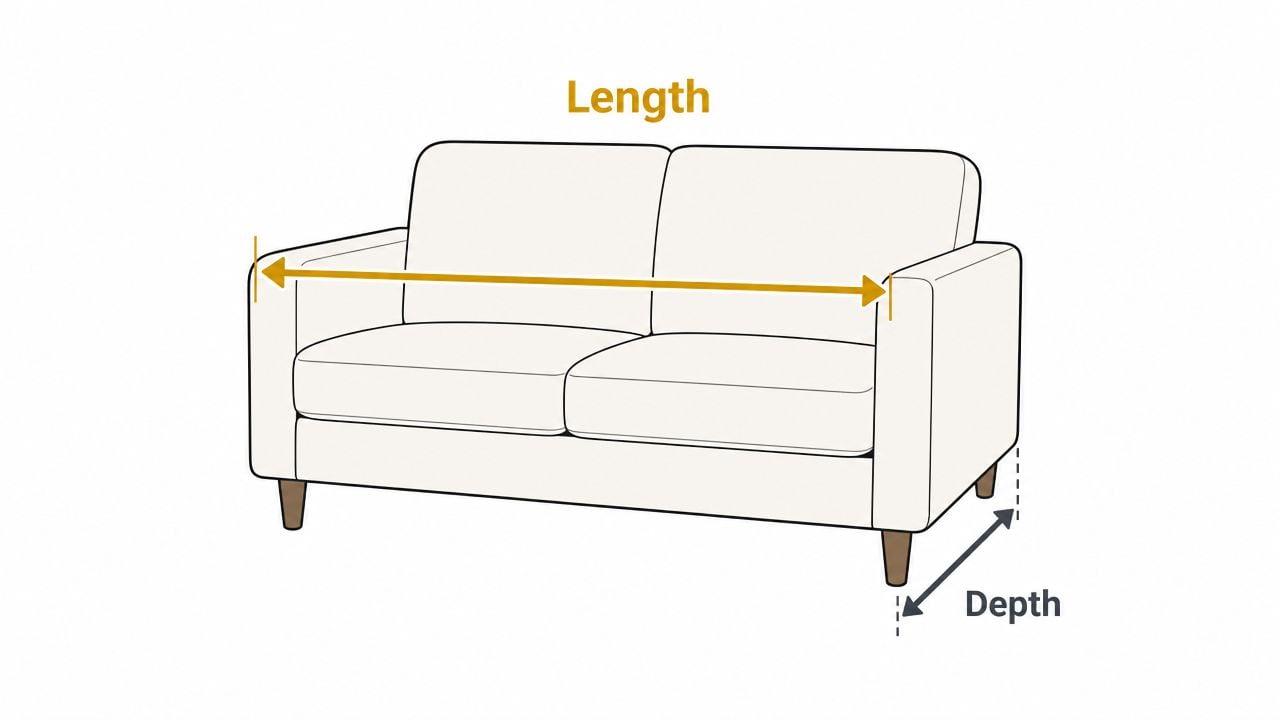
Furniture terminology measures length arm-to-arm, while depth is the front-to-back distance. According to Dimensions.com's loveseat measurement guide, loveseat length is typically 52 to 72 inches, while depth is usually 30 to 40 inches.
That clears up one of the most common shopping mistakes. Someone sees “length,” thinks it means how far the piece sticks out into the room, and orders the wrong scale for the space.
A quick way to remember it:
- Length: the side-to-side span from one arm to the other
- Depth: how far the loveseat extends from front to back
- Height: how tall it stands from floor to top
For anyone comparing pieces online, that distinction matters just as much as color or fabric.
Why that distinction matters in real rooms
A loveseat can technically fit a wall and still feel wrong in the room. If the arm-to-arm width works but the depth is too generous, walkways tighten up. If the depth is fine but the width is too small, the piece may look undersized against the rest of the furniture.
That's why room planning works best when shoppers look beyond one number. The standard loveseat length matters because it tells them whether the piece belongs in the seating zone they've mapped out. The depth matters because it affects traffic flow and how open the room still feels after delivery.
A careful buyer usually checks both, then compares them against the room plan. A helpful next step is a broader sofa buying guide for living room seating decisions, especially when the loveseat will anchor the main sitting area rather than a secondary corner.
Getting the measurement language right at the start prevents a lot of expensive frustration later.
Common Loveseat Sizes From Compact to Oversized
Once the terminology is clear, the next question is scale. “Standard” doesn't mean every loveseat looks the same. There's a noticeable spread between compact and oversized options.
How the size categories work
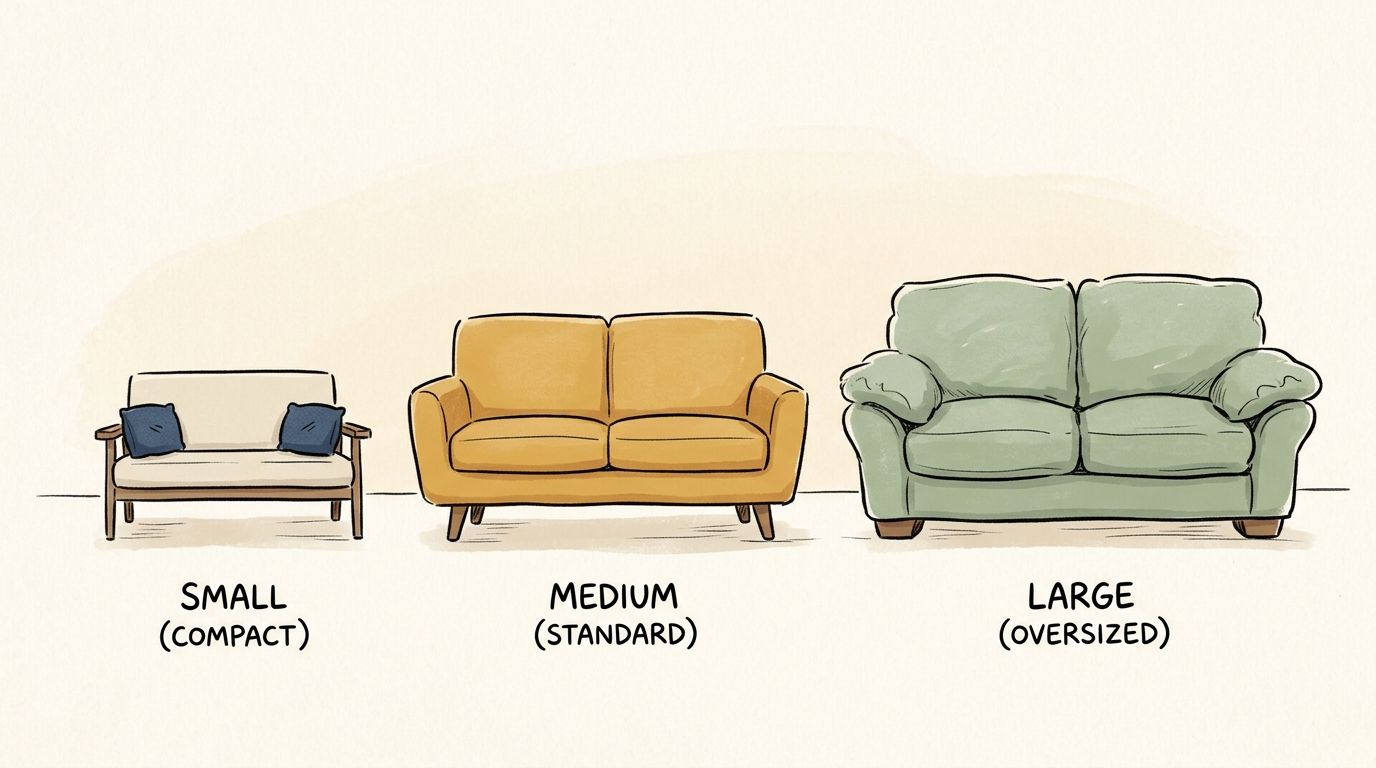
According to Bassett's loveseat size overview, common loveseat categories break down like this:
| Loveseat category | Width |
|---|---|
| Small standard | 52 inches |
| Medium | 58 inches |
| Full | 64 inches |
| Loveseat sofa | 71 inches |
Those numbers show how loveseat sizing progresses with intended capacity and visual presence. A piece at the smaller end feels compact and efficient. A wider loveseat starts to behave more like a scaled-down sofa.
Matching size to room use
Different sizes solve different room problems.
- Small standard: Works well in a home office, bedroom sitting area, or a narrow wall where every inch counts.
- Medium: A smart balance for many apartments and smaller living rooms. It seats two without feeling bulky.
- Full: Better when the loveseat will handle daily use in a main living area.
- Loveseat sofa: Best for shoppers who want the feel of a larger seat but still prefer a two-person format.
This is also where style changes the perception of size. A loveseat with slim arms may feel lighter in a room than one with thick rolled arms, even if the outside measurement is close. The same width can read differently depending on leg style, back height, and cushion shape.
A loveseat's footprint is more than its width. Arms, back shape, and visual bulk all affect how large it feels once it's in place.
This range is why shoppers often benefit from seeing multiple silhouettes side by side. Brands such as Flexsteel and Best Home Furnishings are often appreciated because they show how much variety can exist inside the loveseat category without forcing someone straight into full-sofa territory.
How to Measure Your Space for a Perfect Fit
A loveseat can be the right style and still be the wrong choice if the measuring process is rushed. Good planning starts with the room, then moves outward to every point the furniture has to pass through.
Start with the room, then the route
According to Wayfair's loveseat sizing guide, the standard loveseat length usually falls between 52 and 66 inches, a range designed to work in typical living room layouts while keeping a smaller footprint than full three-seater sofas, which usually start around 84 inches.
That's useful as a planning benchmark, but the actual buying process needs more than a benchmark. A loveseat has to fit the room visually, functionally, and physically on delivery day.
Shoppers who want a stronger measurement routine can borrow a mindset used in other parts of the home. The same care that helps homeowners avoid common blind measuring mistakes also helps with upholstery. Small measuring errors tend to create big installation problems.
A simple measuring checklist
A careful measuring process usually includes these steps:
- Mark the wall space: Measure the width available where the loveseat will sit. Then subtract room for side tables, floor lamps, or open visual space.
- Check the depth zone: Measure how far the loveseat can project into the room without pinching walkways.
- Map traffic paths: Make sure people can move around the piece comfortably, especially near entry points and between seating.
- Measure the entry route: Doorways, hallways, stairwells, turns, and elevator openings can be tighter than the final destination.
- Note fixed obstacles: Radiators, trim, window ledges, and low railings can affect final placement.
A simple tape outline on the floor helps many shoppers judge scale better than numbers alone. Painter's tape can show whether the loveseat will float naturally in the room or crowd another piece.
For anyone wanting a room-by-room method, a dedicated furniture measuring guide for delivery and placement can make the process easier to follow.
Professional delivery matters most when the route is tricky. Tight stairs and sharp turns are often the real challenge, not the room itself.
That's one reason 5-Star Delivery service has real value. Experienced teams don't just drop furniture at the door. They help make sure the plan works all the way from the truck to the final placement.
Go Beyond Standard With Custom Order Loveseats
Some rooms don't cooperate with standard sizing. A wall niche may be awkward. A traffic lane may require a narrower arm. A homeowner may want a deeper sit without increasing the overall width. That's where custom ordering starts to matter.
When standard works and when custom works better
Standard sizes are useful because they simplify shopping. They give shoppers a familiar target. But some households don't need “standard.” They need seating that's suited to your lifestyle.
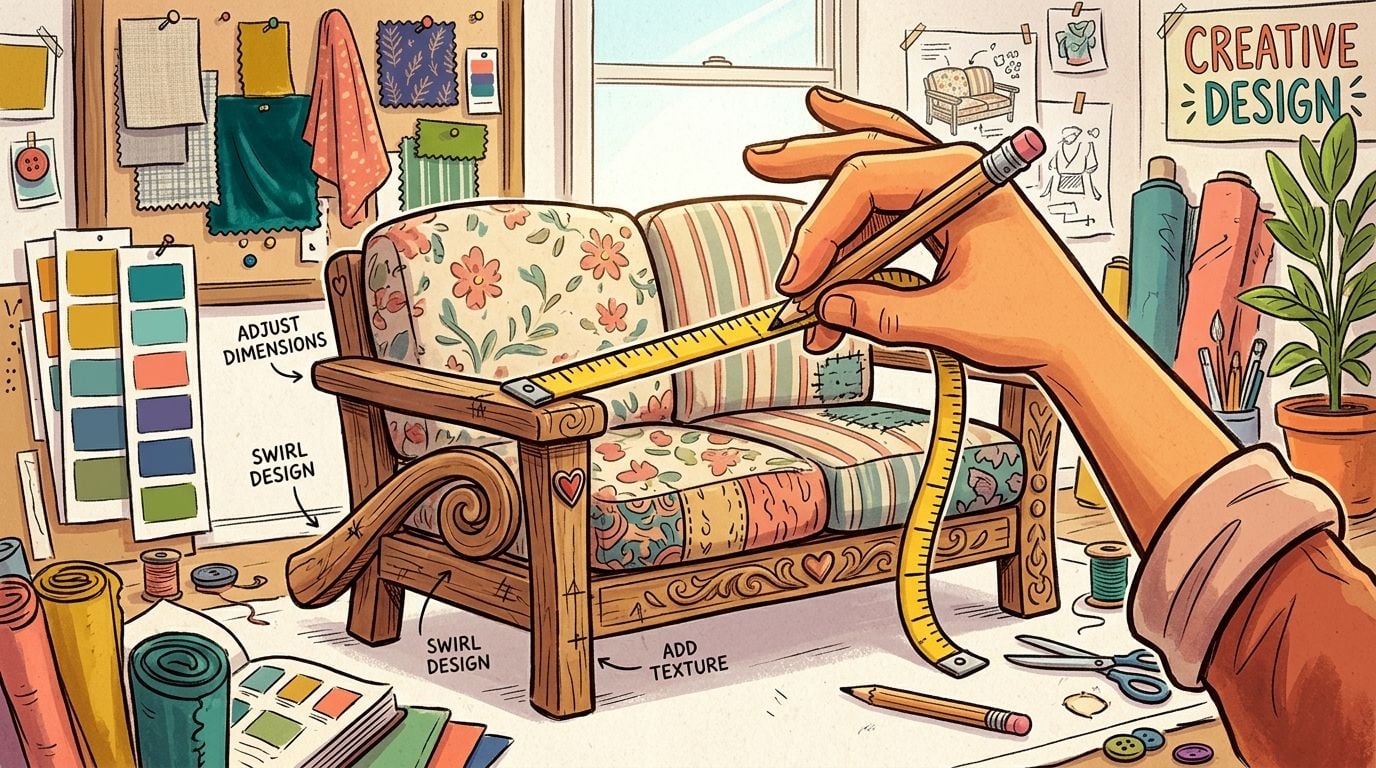
That might mean a cleaner track arm for a smaller room. It might mean a more supportive cushion feel for everyday lounging. It might mean choosing a fabric that works better for pets, kids, or a busy family room. A custom loveseat shifts the decision from “Which one fits well enough?” to “Which one fits the room and the household best?”
The strongest example in living room seating is the F9 Custom Sofa series, which allows shoppers to shape the piece around their actual needs rather than settling for a preset combination. Programs like this are appealing because they open the door to thousands of combinations in silhouette, upholstery, cushion feel, and finishing details.
What can be tailored
Custom ordering usually gives a shopper control over several layers at once:
- Overall size: Helpful when the room needs a loveseat that lands between standard categories.
- Arm style: Slim arms can save space. fuller arms can create a softer, more traditional look.
- Back style: Tight backs feel tidier. looser cushions can feel more casual.
- Fabric or leather choice: Important for maintenance, texture, and color balance.
- Cushion comfort: Firmer or softer seating changes how the piece lives day to day.
A custom process also makes it easier to coordinate the loveseat with the rest of the home. A household that's planning a full dining update may appreciate that Canadel Custom Dining also offers thousands of combinations, giving the same personalized mindset to another major room.
For shoppers who feel overwhelmed by options, a guided first step helps. A practical place to start is getting started with custom order furniture choices, especially when a room needs more than an off-the-floor answer.
There's also a psychological benefit to custom ordering. It slows down impulse decisions. Instead of focusing only on what's in stock that day, shoppers think through how they live, sit, clean, entertain, and relax. That usually leads to a piece that feels more intentional and more investment-grade over time.
Is a Loveseat Your Best Seating Solution
A loveseat is useful, but it isn't automatically the right answer. Some rooms need a larger anchor. Others need a single standout chair and more open floor space.
Loveseat versus sofa versus chair
According to My Patio Life's loveseat dimension guide, there's no single universal standard, but the median width for a standard loveseat is about 60 inches, which aligns with the comfortable two-person seating many designers plan around.
That makes the loveseat a strong middle option.
| Seating choice | Best for | Tradeoff |
|---|---|---|
| Loveseat | Two-person seating in smaller or flexible rooms | Less seating capacity than a full sofa |
| Sofa | Primary living rooms that need more shared seating | Takes more wall space and visual space |
| Statement chair | Reading corners, bedrooms, or open-plan rooms needing one seat | Doesn't offer paired seating |
A loveseat often wins when the room needs function without visual heaviness. A sofa wins when the household gathers in one main room every evening. A chair wins when the room already has enough seating and only needs one more useful place to land.
How shoppers usually decide
The best test is still in person. Seat depth, back angle, arm height, and cushion support don't translate perfectly through a screen. That's why showroom shopping still matters. People can compare upright versus loungey seating, compact versus fuller silhouettes, and classic versus modern arms in real time.
That same hands-on logic applies across categories. Some households come in looking for a loveseat and discover they'd rather pair a chair with a sofa. Others decide a sectional is the smarter long-term solution, especially after reviewing what to know before buying a sectional.
For comfort-focused shoppers, reclined seating can also shift the decision. BarcaLounger and UltraComfort styles appeal to buyers who care more about supportive lounging than formal symmetry. And when rest enters the conversation, The Sleep Gallery adds another dimension with Tempur-Pedic, Serta, and Beautyrest, where comfort by feel becomes just as important for healthier sleep as it is for living room seating.
A thoughtful purchase also has to fit the budget. Promotional Financing with equal monthly payments can make investment-grade furniture more accessible, especially when a room update includes more than one piece.
Since 1936, Gorins Furniture & Mattress has helped Norwich and Eastern CT families create homes they love. From custom-designed Canadel dining sets to the F9 Custom Sofa series and The Sleep Gallery's comfort-by-feel experience, the Norwich showroom brings together quality, value, and personalized guidance for neighbors in Norwich, New London, Plainfield, Waterford, and nearby Eastern CT and Rhode Island communities. Visit the showroom, take the online Style Quiz, or browse the Clearance section for value-driven savings, and ask about Promotional Financing with equal monthly payments and 5-Star Delivery service.