Royal Blue Accent Chair: How to Choose, Style, and Place It


A royal blue accent chair solves one problem fast, it adds color without forcing a full-room redesign. The catch is that a lot of people buy on style alone, then discover the chair crowds a hallway, clashes with the sofa, or feels too deep for everyday use. In Norwich and across Eastern CT, that mistake shows up all the time in smaller living rooms, bedroom corners, and open-plan spaces that need one strong piece to work hard.
The smart move is to treat the chair like a measured furnishing, not a decoration. That means checking footprint, seat height, fabric, and placement before anyone gets attached to the color. Royal blue can absolutely look polished in a Connecticut home, but only if the scale fits the room and the finish suits the light you live with.
Getting the Size and Scale Right Before You Shop
A royal blue chair can look right online and still fail in the room. That usually happens when the color gets all the attention and the measuring tape stays in the drawer. Start with the space itself. Measure the spot, mark the traffic path, and decide whether the chair has room to live there without forcing people to squeeze around it.
Most accent chairs in this category sit around 28-35 inches wide, 29-37 inches deep, and 31-36 inches high. That compact-to-mid-size range works in plenty of Norwich homes, but only if the chair does not choke circulation. Leave 2-4 inches of clearance per side, and check that nearby doors can open cleanly before the chair comes home.
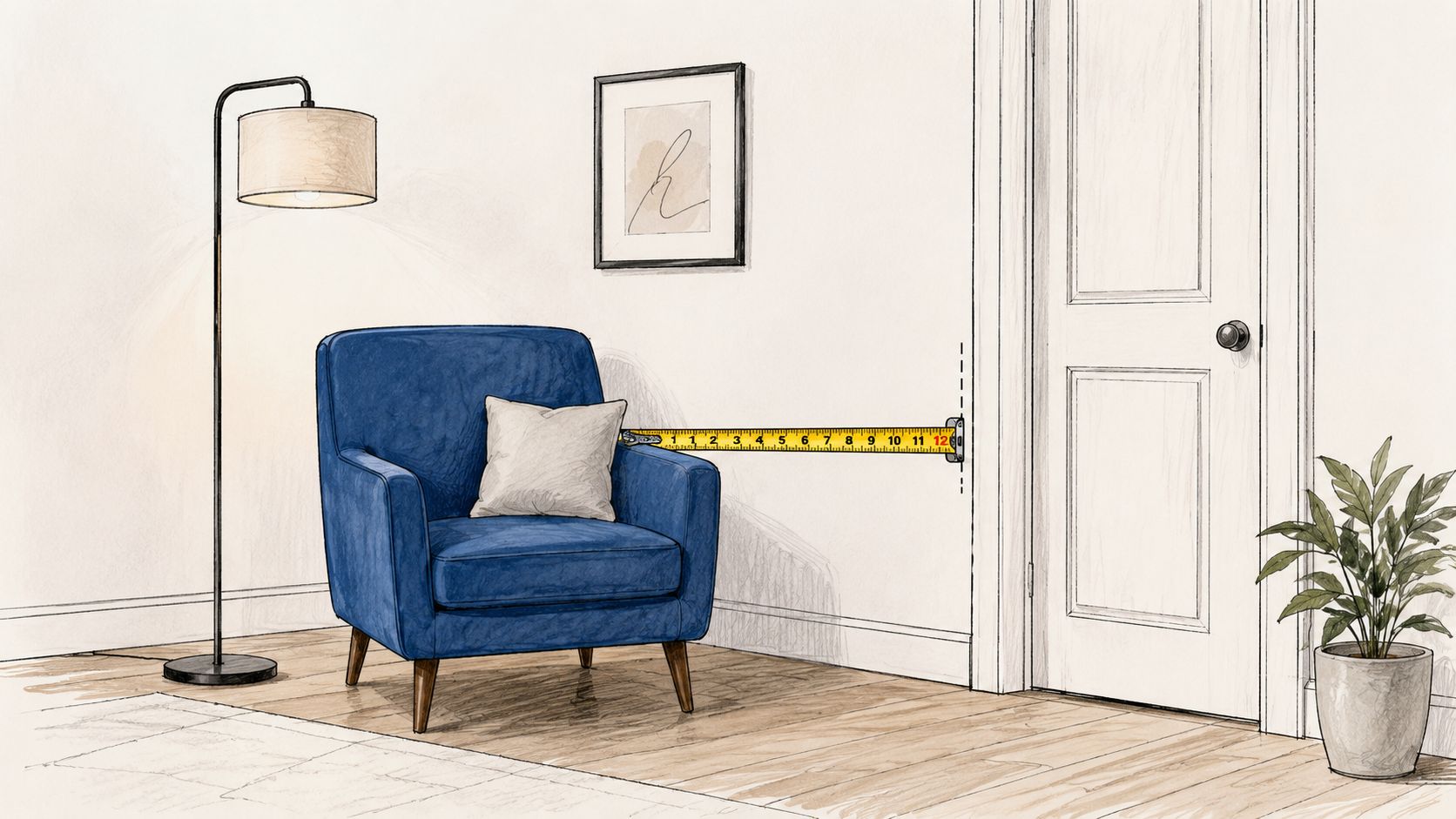
Measure the chair the way it will live in the room
Use the tape measure on the actual route, not just the empty corner. If the chair sits beside a hallway, a closet door, or the path of a bedroom glider, that route matters as much as the open floor around it. The furniture measuring guide lays out a simple way to turn rough space into a real footprint, and that is the right way to shop.
Practical rule: if the chair blocks the path to a window, lamp, or outlet, it is too big for that spot.
Seat height and seat depth matter just as much as width. Good retail chairs often land around 19-20 inches for seat height and 20-21 inches for seat depth. For everyday comfort, the seat should sit within about 1-2 inches of the sofa seat height, and the depth should support the thighs without pressing behind the knees.
Ignore arm height and the problem shows up fast. Side tables may sit too low, ottomans may crowd the front edge, and transfer space for mobility can disappear. A chair that looks elegant but fights the rest of the furniture is a bad buy, no matter how strong the color looks. Following those measurements before shopping keeps you from bringing home a chair that crowds the room.
Understanding Fabric, Frame, and Construction Quality
Royal blue shows its best side when the chair has enough structure to support the color. Velvet is the usual choice because it gives the shade depth, and that depth shifts with the light in the room. In a warm room with lower light, it reads rich. Under harsher light, it can look flatter if the pile is thin or the backing feels cheap.
What's inside the chair matters more than the color card
Construction tells you what you are really buying. A chair built with a sinuous spring seat system and an engineered wood frame will feel different from one built with a steel frame, high-density foam, and CARB-certified materials. Those differences change how the chair holds up, how steady it feels after regular use, and whether it belongs in a room that gets daily traffic.
Weight ratings matter too. Strong retail builds often list capacities around 400 to 500 pounds. That range explains why buyers should check the frame and load rating instead of assuming all upholstered chairs are built the same way. If a listing leaves those details out, treat that as a warning sign.
A good chair starts with the frame, not the fabric.
Fabric swatching matters just as much. Royal blue does not look identical across velvet, chenille, and microsuede, and the undertone can shift enough to clash with a rug or sofa that looked close online. Gorins' upholstery materials guide is worth using before you decide.
A few checks separate a solid purchase from one you will regret:
- Frame substrate: solid wood, engineered wood, or steel each tells a different durability story.
- Suspension system: sinuous spring and foam or spring seats feel and wear differently.
- Cushion fill: foam density affects how quickly the seat loses shape.
- Care protocol: spot-clean-only is common, so read that line before you buy.
- Fabric sample: compare the swatch next to your sofa, rug, and wall paint in daylight.
The chair should feel sturdy, look intentional, and handle real use. If it only wins on color, it is not ready for a lived-in house.
Styling Royal Blue in Different Rooms and Color Palettes
A royal blue accent chair solves the room fastest when the rest of the space is already doing its job. If the chair is too large, too dark, or too close to the wrong wall color, it stops looking intentional and starts reading like extra furniture. That fit-and-scale problem shows up all the time in Eastern CT homes, especially in rooms with tighter traffic paths and mixed natural light.
Royal blue has a long decorative history, and that history is part of why it keeps showing up in serious interiors. Adobe traces the named color back to the late 1700s in England, with a modern web code of #4169E1 (Adobe Royal Blue). That heritage is why the shade can feel formal and current at the same time, which is rare in accent seating.
Where it works best in real rooms
In a living room, royal blue looks sharp beside white, gray, brass, and natural wood. Those pairings give the chair definition without making the room feel noisy. In a bedroom, it can anchor a reading corner if the bedding stays quieter and the lamp finish brings in a little warmth. The chair should be the strongest color note in the corner, not one more competing object.
In a home office, the chair should read crisp, not heavy. Put it with lighter walls and a clean-lined desk so the room stays open. For a reading nook, a textured throw and a small lamp are enough. Anything more starts to crowd the point of the chair.
Dark saturated velvet needs careful placement because it can visually shrink a room. Put it against a lighter wall or near a reflective surface so the color keeps its depth without swallowing the space. That same principle shows up in luxury listing presentation problem, where strong pieces work best when the surrounding field stays controlled.
The showroom rule is simple. If the chair is the bold move, the rest of the room should frame it, not compete with it. A royal blue chair usually looks best with one patterned pillow, one textured rug, and simple artwork, not a crowded stack of accessories. Gorins' color palette guide is a smart starting point if the room still feels unsettled.
One more thing to watch is scale against the rest of the palette. In a compact Norwich or New London living room, royal blue carries more visual weight than a pale neutral, so keep nearby upholstery and drapery light enough to let the chair breathe. Warm oak, cream, soft gray, and brushed brass work well because they hold the color without flattening it.
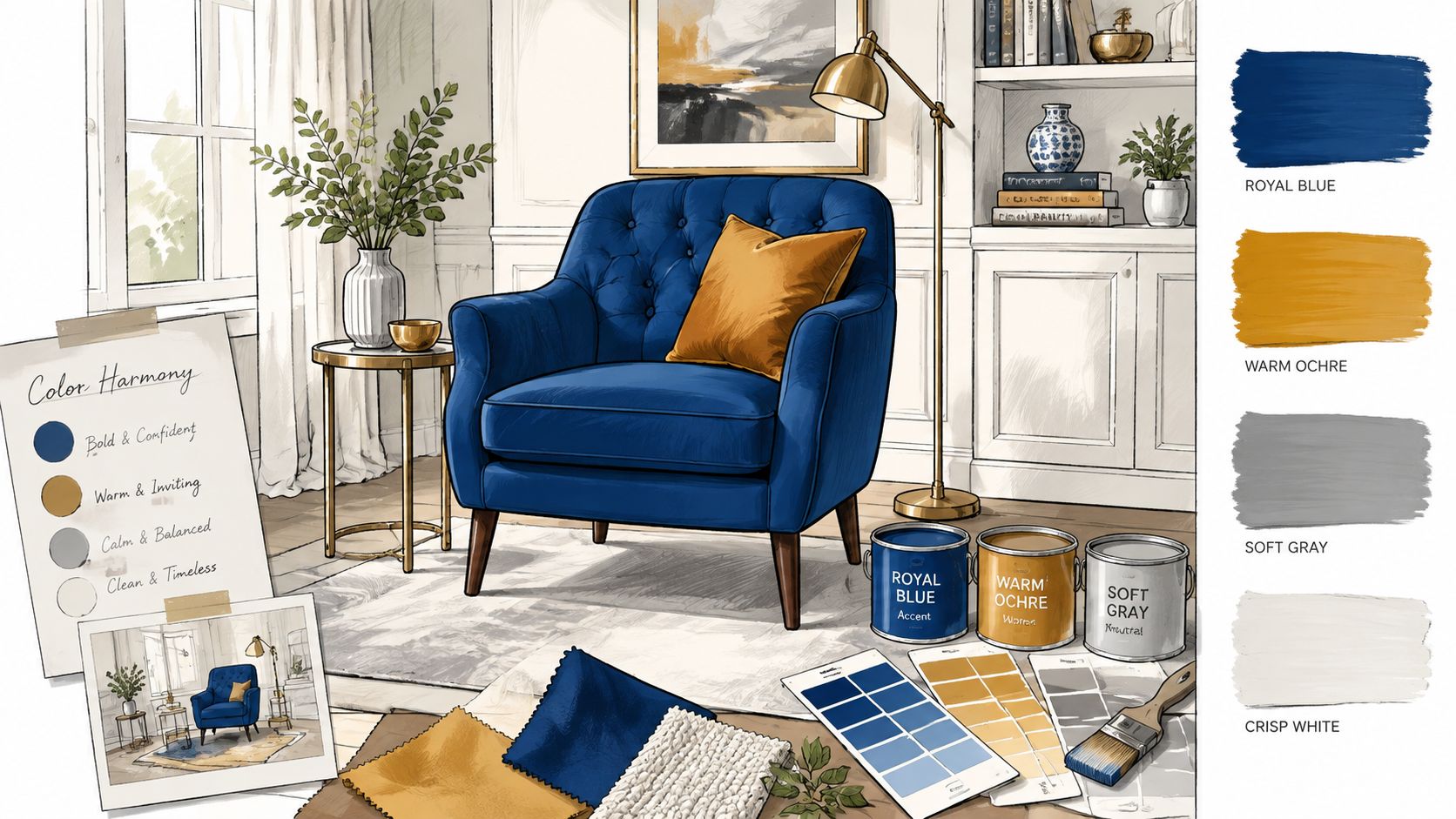
A royal blue chair does not need a dozen supporting pieces. It needs clean contrast, a deliberate surface nearby, and enough breathing room to look expensive instead of crowded.
Strategic Placement for Traffic Flow and Visual Balance
The wrong placement turns a good chair into an obstacle. That's the part that gets missed, especially in narrow living rooms and open-concept spaces where every inch of movement matters. A royal blue accent chair should guide the eye and leave the path clear at the same time.
Put function ahead of symmetry
Corner placement works when the corner has a purpose, like a reading nook or a quiet bedroom seat. It fails when the chair is shoved there just to get it out of the way. In that case, it becomes dead space with a bold color attached to it.
A conversation area works better when the chair faces the sofa at a slight angle instead of sitting rigidly parallel. That keeps the room relaxed and makes the seating feel intentional. If the chair sits near a side table, leave enough room for a drink, a lamp, and a hand to move comfortably, not just enough room to squeak by.
Good placement solves two problems at once, circulation and balance.
In a small living room, the chair should help define the seating zone, not split it. In a bedroom corner, it should support a routine, like reading or putting on shoes, without blocking the closet or dresser. In an open plan, it can act as a visual anchor that ties a sofa, rug, and lamp together.
Gorins' living room furniture placement guide is useful here because the same placement logic applies whether the chair is part of a full seating group or a single statement piece. The rule stays the same. If people have to sidestep it constantly, it's in the wrong spot.
A side table usually makes more sense than an ottoman in tight rooms, because it preserves legroom and gives the chair a cleaner outline. An ottoman works when the room has enough depth to handle the extra footprint. The chair should look placed, not parked.
Care and Maintenance for Long-Lasting Beauty
Royal blue looks rich for a long time when the fabric gets basic respect. Velvet and similar upholstery don't need fuss, but they do need consistency. Let spills sit too long, and the color starts looking tired even if the frame is still fine.
Daily care is simple. Vacuum gently with an upholstery attachment, brush the pile in one direction, and keep the chair out of direct sun whenever possible. Sun-fade risk matters in bright rooms, especially near south-facing windows, because deep color shows wear unevenly once the pile dries out or the finish dulls.
Match the cleaning method to the fabric label
Some chairs are spot-clean-only, and that's not a suggestion, it's a boundary. Others can handle professional cleaning, which is safer when the fabric has a delicate nap or the chair gets used hard. Before anyone buys, the care tag should be read with the same attention given to the dimensions.
Pet hair and odors need prompt handling. A lint roller, a soft brush, and regular vacuuming usually stop the buildup before it settles into the weave. If the chair is in a high-traffic family room, cushion rotation helps the fabric age more evenly.
Keep liquids off velvet fast, blot first, scrub never.
For homeowners who need easier upkeep, performance fabric alternatives can deliver a similar visual hit with less anxiety. That matters in homes with kids, pets, or heavy everyday use. The safest approach is to check the cleaning protocol first, then choose the color second.
A useful reminder on when upholstery needs attention is covered in signs your sofa needs cleaning, and the same logic applies to an accent chair. Gorins' stain removal guide is a practical backup for the day a coffee cup tips over. The goal is simple, protect the fabric before the color starts looking flat.
Shopping Local, Custom Orders, and Financing
A royal blue accent chair deserves to be seen in person before anyone commits. Photos don't show the exact undertone, the hand of the fabric, or how deep the seat feels when someone sits down. That matters even more in Eastern CT homes, where the same chair can look different in a sunlit condo, a shaded colonial, or a room with warm wood trim.
Why the showroom beats the thumbnail
Gorins Furniture & Mattress has been part of Norwich since 1936, and that local, family-operated history still shapes the way people are helped on the floor. The store's chair selection includes 226 living-room chair results, which shows how broad the category is when someone wants to compare styles, colors, and scale in one place. The online shop also uses filters, which helps narrow the search before a visit, and the home-decor assortment explicitly includes an accent chair option.
Custom ordering matters when the chair needs to match a real room instead of a generic one. Gorins' Canadel Custom Dining and F9 Custom Sofa programs show how many combinations are possible in the store's broader furniture approach, and that same mindset helps buyers think more carefully about finishes, fabrics, and fit. For shoppers who need more flexibility, promotional financing with equal monthly payments can lower the barrier to bringing home an investment piece without forcing a rushed decision.
For anyone comparing payment plans, a clear look at Henson's Designs payment solutions can help frame the conversation. The point is to choose a plan that keeps the purchase sensible, not stressful.
Local service matters after the sale too. Gorins serves Norwich, New London, Plainfield, Waterford, and nearby Eastern CT and Rhode Island communities, and its 5-Star Delivery service keeps the process from ending at the checkout counter. That's the practical advantage of buying local. The chair gets chosen with real guidance, delivered with care, and matched to the room without guesswork.
If a royal blue accent chair needs to fit a small room, match a sofa, or work with an existing layout, Gorins Furniture & Mattress can help narrow the options in a way online shopping usually can't. Visit Gorins Furniture & Mattress to browse chairs, check custom options, and see what fits your Norwich home before you buy.