Custom Made Sectional Sofa How to Design Your Perfect Fit


A standard sofa can look right in the showroom and still fail at home. The chaise may crowd the doorway, the arms may steal valuable walkway space, or the seat depth may leave shorter family members perched instead of comfortable. In Norwich and across Eastern Connecticut, those problems often appear in compact living rooms, open-plan spaces, and homes where one room has to support television, conversation, reading, and everyday traffic.
A custom made sectional sofa treats the room as part of the design. Width, orientation, seat feel, upholstery, and modular pieces work together instead of forcing the household to accept the closest available size. The process takes more planning than an in-stock purchase, but it can deliver a more useful result when the room, the family, or the comfort preference is particular.
Why a Custom Sectional Solves Real Living Room Problems
A family in a narrow Norwich living room may need seating for several people without placing furniture across the main path to the kitchen. A standard sofa and chair can leave an awkward gap in one corner, while a sectional that's too deep can make the room feel pinched. A made-to-order configuration can use the long wall for seating, turn the corner deliberately, and preserve a clear route through the room.
That room-fitting quality helps explain why sectionals have become a central upholstered category. One industry report valued the global sofa market at USD 236.39 billion in 2025, with sectional sofas holding the largest product share at 27.3%. A separate U.S. outlook identified sectionals as the largest revenue-generating sofa type in 2025, with a 31.36% share of the U.S. sofa market. These figures are reported in the sectional sofa market analysis.
Custom, modular, and ready-made are different choices
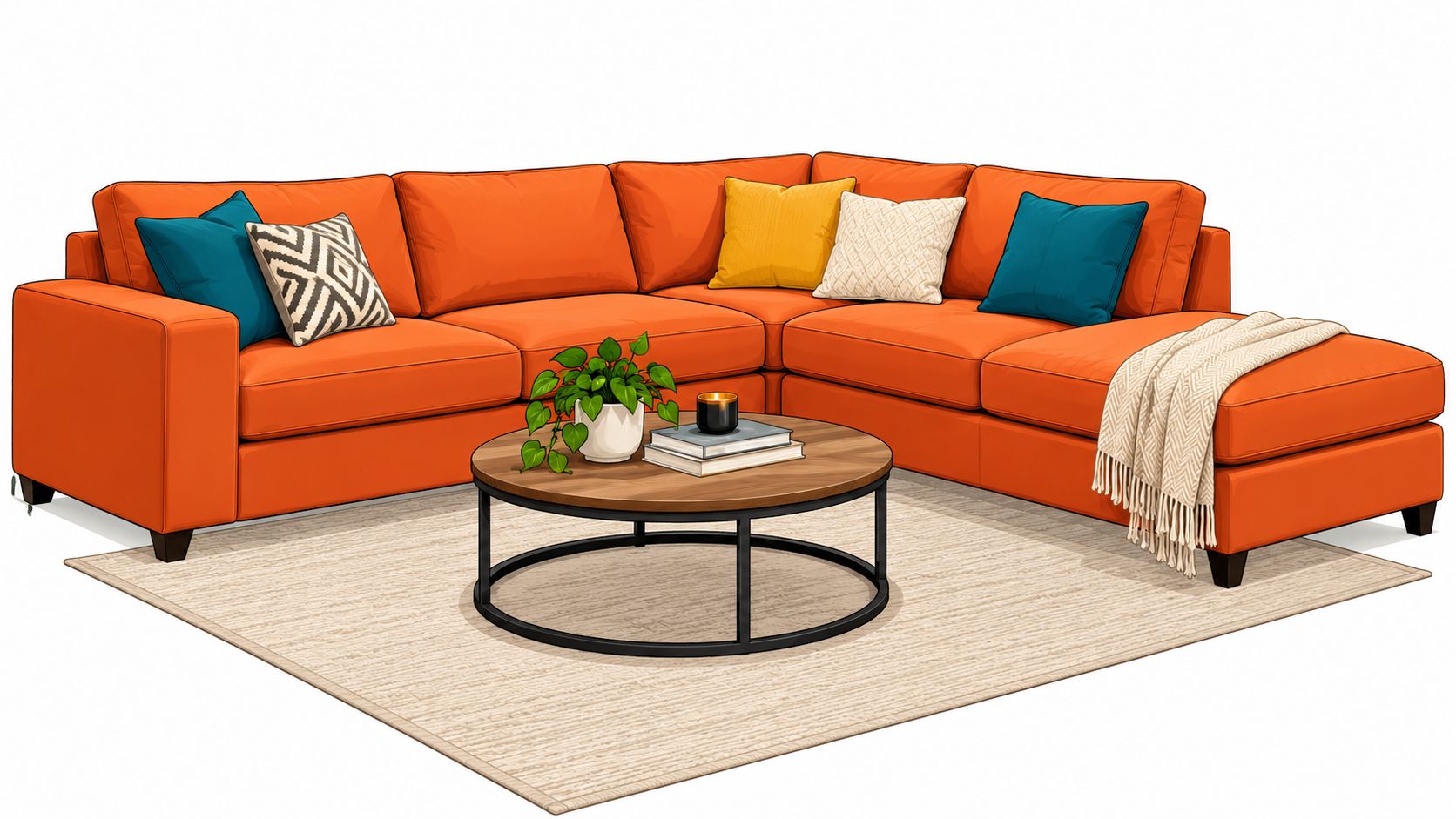
A ready-made sofa is usually the simplest path when speed and basic fit matter most. A modular sofa adds flexibility because pieces can be rearranged, removed, or expanded. A custom sectional goes further by giving the buyer control over the starting dimensions, orientation, comfort specifications, upholstery, and selected components.
Customization makes the most sense when:
- The room has constraints: Narrow doors, unusual wall lengths, windows, radiators, or a challenging traffic path can make standard dimensions unsuitable.
- The household has specific comfort needs: Seat depth, cushion firmness, arm height, and back support affect how different people use the sofa.
- The piece will serve several purposes: A sectional may need to support movie nights, guests, children, pets, reading, and quiet conversation without dominating the room.
- The buyer expects long use: Made-to-order furniture rewards careful decisions and patience. It's less suitable for a temporary home or an urgent move-in deadline.
The category has also evolved beyond the fixed corner sofa. Trade coverage describes configurations with left- or right-facing chaises, ottomans, extra chaise pieces, motion features, and seating arrangements in different sizes. One global market study reported sectional sofas at 28.76% of sofa market share in 2025, while another identified L-shaped sectionals at 42.3% of the sectional sofa market. The global sofa market report provides that market context.
Gorins Furniture & Mattress has served local households since 1936 as a locally owned, family-operated business. Its local designer approach is useful here because a successful order depends on more than choosing a fashionable fabric. The practical question is whether the finished seating system will fit the room, suit the people using it, and remain comfortable as daily life changes.
How to Measure and Plan Your Sectional Layout With Confidence
A sectional should be measured as a complete route through the home, not only as a rectangle on the living room floor. Before selecting a configuration, the household should record the room dimensions and the path the furniture will take from the delivery vehicle to its final position.
Start with the room, then map the furniture
Use a tape measure and write down the following:
- Wall lengths: Measure every wall that could hold a sectional. Record architectural breaks, corners, fireplaces, built-ins, and trim that reduce usable space.
- Openings: Measure the width and height of entry doors, interior doors, stair turns, hallways, and elevator doors if applicable. Note the direction each door swings.
- Fixed features: Mark windows, vents, radiators, outlets, light switches, and floor registers. A sectional shouldn't cover heat or ventilation points.
- Traffic paths: Identify the route to the kitchen, stairs, exterior doors, and other frequently used areas. Leave a comfortable passage rather than treating every open inch as seating space.
- Viewing position: Mark the television and the primary sitting zone. The correct distance depends on the screen and the household, so the showroom team should evaluate the viewing relationship with the actual room plan.
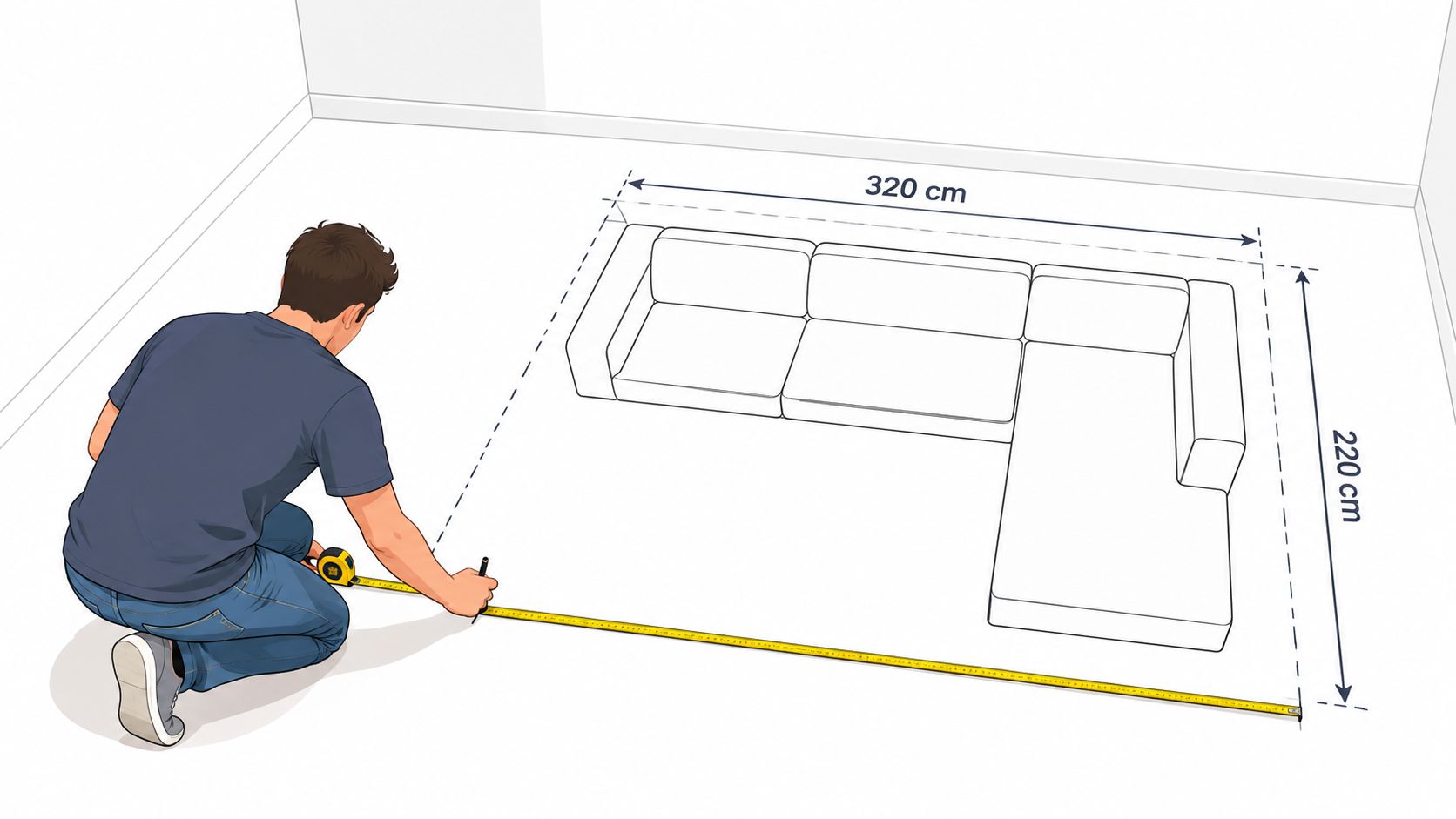
A useful next step is to draw the room on graph paper or make a simple digital sketch. Include the wall measurements, then add the sectional footprint at full scale if possible. A household can also use painter's tape directly on the floor to mark an L-shape, U-shape, straight configuration, or chaise projection.
Test the layout before ordering
Walk around the taped outline with a laundry basket, pet bed, or serving tray. That simple test reveals whether the chaise blocks movement or whether an arm lands where someone needs to pass. In a smaller Eastern CT home, reducing seat depth or selecting fewer modular pieces may improve circulation more than squeezing in another seat.
The most common planning errors are predictable:
- Measuring only the destination room: A sectional that fits the room can still fail at the front door or a tight stair landing.
- Ignoring diagonal clearance: Movers may need to tilt or rotate pieces, so doorway width alone doesn't tell the entire story.
- Forgetting the chaise projection: The chaise often becomes the point that interrupts traffic.
- Placing pieces over vents: Blocked airflow can affect comfort and the room's function.
- Skipping the lived-in test: A plan can look balanced on paper and feel crowded once people, tables, lamps, and pets occupy it.
The room measurement guide can help organize the information before a Norwich showroom consultation or online planning conversation. A clear sketch gives the designer something concrete to review, which makes orientation and piece selection far more reliable than guessing from a photograph.
Choosing Frames Fabrics and Comfort Details That Last
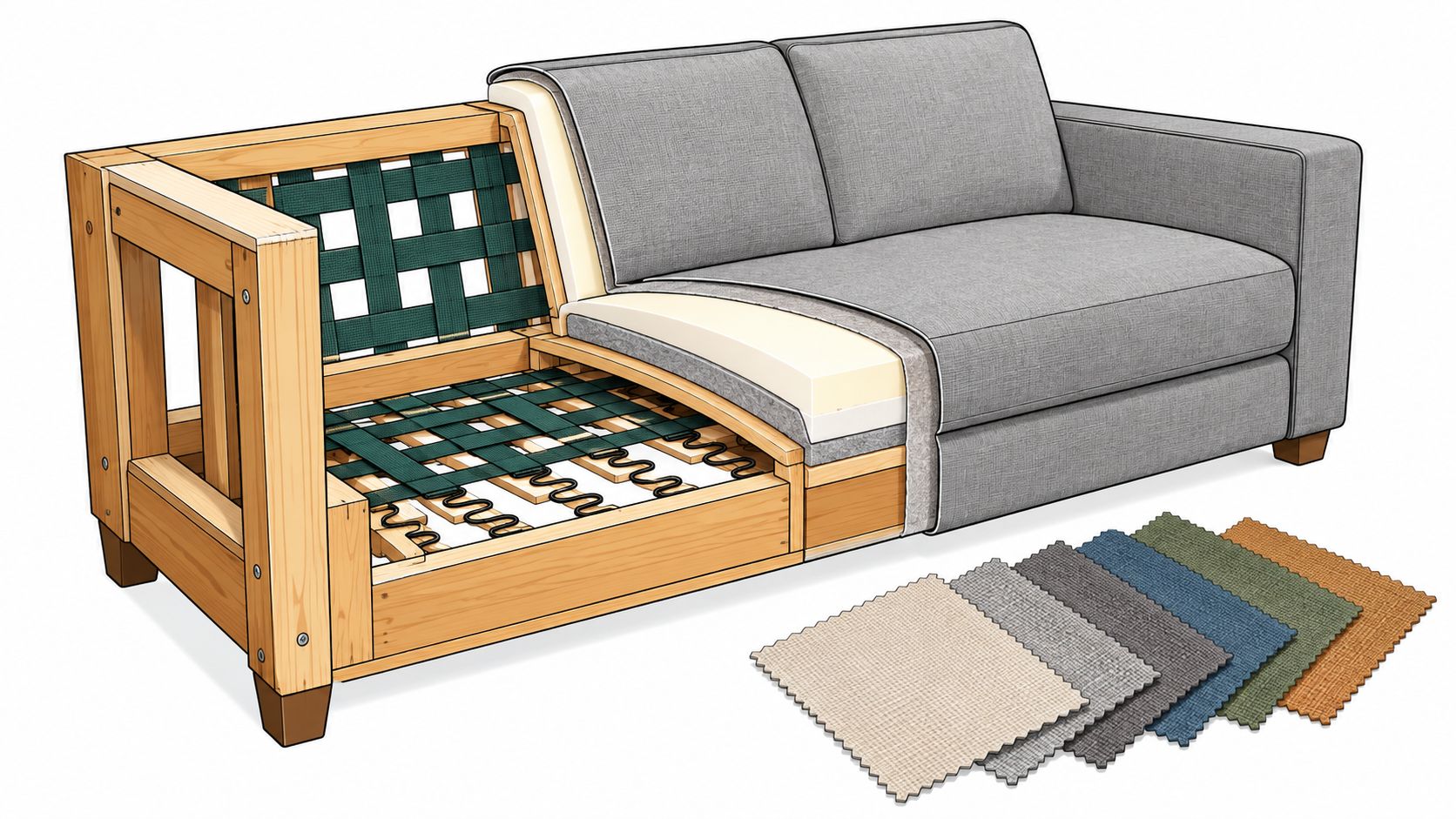
A custom program can offer thousands of combinations, but more choices don't automatically create a better sofa. The strongest order begins by ranking the features that affect daily use. A household with children, pets, or frequent guests should usually prioritize construction, cleanability, seam performance, and cushion recovery before decorative details.
Compare the internal choices first
The frame provides the foundation. Buyers should ask what materials support the rails, how joints are reinforced, and how the suspension distributes weight. A strong frame won't compensate for poor cushions, but a weak frame can undermine every other upgrade.
The cushion core deserves equal attention. Residential seat cushions are commonly recommended at 1.8 to 2.2 PCF for casual use and 2.2 to 2.5 PCF for heavy residential use, while high-density foam is generally categorized at 2.1 to 3.0+ PCF, according to industry guidance on foam density. Higher-density seat foam around 2.4 PCF is widely associated with 10+ years of regular use, while lower-density retail foam can fall into a 2 to 7 year range depending on load and construction, as the same source explains.
Density isn't the same as firmness. A dense cushion can feel soft, medium, or firm depending on its ILD and the surrounding layers. The practical selection sequence is:
- Define use: Occasional seating calls for a different specification than a family sofa used every evening.
- Set a density target: Daily-use seats generally deserve more attention than decorative back cushions.
- Verify the feel: Test firmness, compression, and recovery rather than choosing from a label alone.
- Review the construction: Ask how foam, fiber, springs, and fabric work together.
Treat upholstery and seams as performance decisions
Fabric changes the sofa's maintenance routine and visual character. Tightly woven upholstery may suit high-traffic homes, while softer textures can create a relaxed look but demand more careful evaluation. Samples should be viewed in the actual room's daylight and evening lighting, especially when walls, flooring, and rugs have strong undertones. More guidance on these decisions appears in the upholstery materials guide.
Seam construction also deserves a direct question. Dynamic Seam Fatigue testing cycles a standard 7-stitch-per-inch seam 7,000 times, with passing performance requiring no seam failure after the full cycle, as described by VarTest's upholstery testing reference. Custom specifications should identify stitch density, seam direction, and reinforcement points, then account for the fact that cover strength depends on the fabric and stitching combination.
Programs such as F9 Custom Sofa can help shoppers choose arm styles, back types, welt details, cushion firmness, and upholstery in a controlled way. Flexsteel and Best Home Furnishings also fit naturally into a showroom conversation about construction and comfort categories. The point isn't to select every available feature. It's to create investment-grade quality that feels custom-fitted to the household's lifestyle.
Understanding Cost Value and Financing for Your Custom Order
The price of a custom sectional reflects several decisions rather than one mysterious markup. Larger dimensions require more material. More pieces increase labor and upholstery requirements. Fabric grade, cushion construction, motion features, leg finishes, and frame or suspension upgrades can all change the final quote.
A useful way to review an estimate is to separate the cost into four questions:
| Cost area | What changes the price | What the buyer should ask |
|---|---|---|
| Overall size | Longer runs, deeper seats, and larger chaise sections require more material | Does the extra size improve seating, or only fill space? |
| Configuration | Additional seats, corners, ottomans, and modular connections add complexity | Will every piece serve a real purpose? |
| Upholstery | Fabric, leather, pattern matching, and performance characteristics affect labor and material | Does the cover suit cleaning needs and daily wear? |
| Construction | Cushion density, suspension, frame details, and motion components influence the build | Which upgrades protect comfort retention over time? |
This value approach works better than comparing only ticket prices. A cheaper sofa can become poor value if the household replaces it quickly, dislikes the seat feel, or can't make it work after a move. A custom order can also be poor value if the buyer selects unnecessary dimensions or chooses a delicate cover for a high-use room. Affordable luxury means paying for the features that solve the household's actual problems, not paying for every option.
Use financing as a planning tool
Promotional financing commonly includes equal monthly payment plans and No Interest if Paid in Full structures, subject to credit approval. Gorins offers promotional financing through the Nest Credit Card and options associated with TD Bank, so qualified shoppers can review payment structures while planning a major furniture purchase. The Gorins financing information outlines the general mechanics referenced for these offers.
Before choosing a plan, the household should confirm the promotional period, required payment, payoff terms, and what happens if the balance isn't paid according to the agreement. Financing should support a realistic budget, not justify a configuration that the room doesn't need. The zero-gravity seating information can also help households considering specialized comfort features alongside a sectional purchase.
For families in Norwich, New London, Plainfield, Waterford, and nearby Eastern CT or Rhode Island communities, a written quote makes the decision easier. It should show the selected layout, dimensions, upholstery, comfort package, delivery charges, and financing terms separately.
Ordering Delivery and Installation Made Simple With Gorins
A custom order becomes less stressful when each stage has a clear purpose. The process usually starts with a room sketch, lifestyle discussion, comfort testing, and fabric review. A showroom consultation or online Style Quiz can narrow the choices before the household commits to dimensions and upholstery.
Follow the order from design to confirmation
The practical sequence looks like this:
- Prepare the room information: Bring measurements, photos, a floor plan, and notes about doorways, stairs, pets, children, and daily seating habits.
- Review configurations: Test the seat depth and cushion feel, then confirm chaise orientation, modular count, arms, backs, and accent pieces.
- Approve materials: Examine fabric samples in useful lighting and ask how the chosen cover should be cleaned and maintained.
- Read the order confirmation: Check every dimension, orientation, finish, cushion specification, and delivery detail before production begins.
- Plan for production: Made-to-order furniture requires patience, and material availability or production scheduling can affect the expected window. The showroom should explain the current estimate and any update process.
Gorins' experience with Canadel Custom Dining is relevant because the same design discipline applies to living room furniture. Canadel orders can involve thousands of combinations, and the F9 Custom Sofa series applies that guided-choice approach to arms, backs, welt details, cushions, fabrics, and configurations.
Prepare the route before delivery day
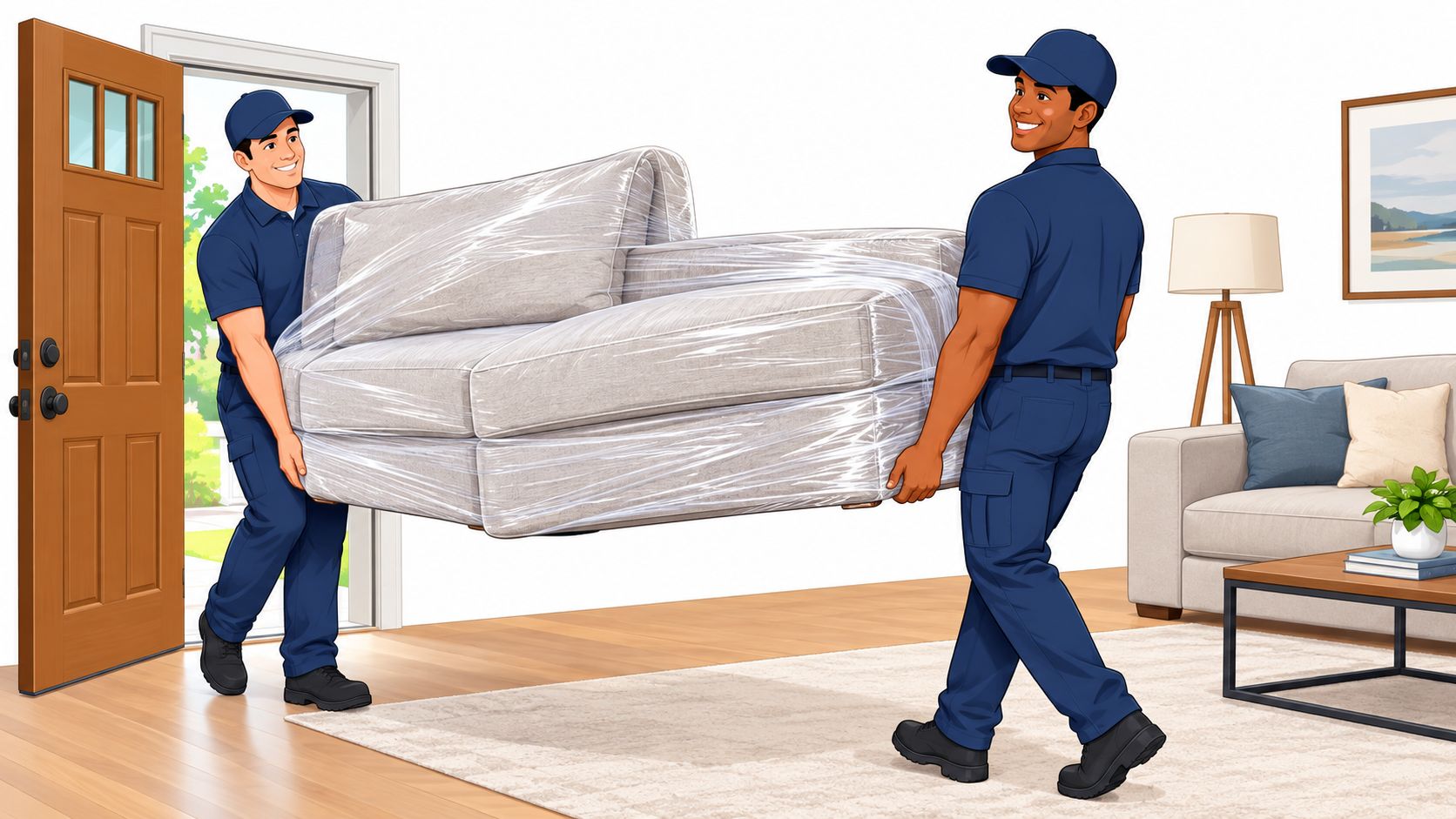
Remove small furniture, rugs, plants, and wall décor from the path. Protect fragile items, open doors, secure pets, and measure the tightest turns again. Modular pieces make challenging access easier, but each component still needs a clear route through hallways and around stair corners.
Households that want a broader preparation checklist can review these expert furniture delivery tips, particularly the guidance about access, pathways, and protecting the home during movement.
Gorins' 5-Star Delivery service is designed to carry the process through placement, while its white-glove delivery service provides a more hands-off approach for customers who want careful in-home handling. A locally owned, family-operated business can also remain available after delivery for questions about care, adjustments, or service needs. That continuing relationship matters when the purchase is an investment rather than a quick replacement.
Bring Your Custom Sectional Vision to Life in Norwich
A successful custom sectional order begins with a room plan and ends with a piece that supports the way the household lives. The essential decisions are connected: measurements determine the layout, the layout determines the piece count, daily use guides the cushion and upholstery choices, and the delivery route confirms that the design can reach its destination.
The buyer doesn't need to solve every decision alone. A useful showroom appointment should turn a broad wish list into a manageable set of choices, such as:
- Room fit: Confirm the walls, traffic paths, doorways, vents, and chaise direction.
- Comfort fit: Test seat depth, firmness, back support, and cushion recovery.
- Material fit: Compare upholstery samples and select construction details for the home's activity level.
- Budget fit: Review the full quote and any promotional financing terms before placing the order.
- Service fit: Confirm production expectations, delivery preparation, placement, and post-purchase support.
For shoppers searching for a Furniture store Norwich CT, Living Room Furniture Eastern CT, or a trusted source for Canadel Furniture Connecticut, the value of local guidance is practical. The Norwich showroom lets households evaluate comfort in person, discuss unusual room dimensions, and organize a made-to-order plan without reducing the decision to an online photograph.
The custom sofa design service gives shoppers another way to begin. The F9 Custom Sofa series and related custom programs can support a design built to personal dimensions, upholstery preferences, finishes, and configuration needs. Other showroom categories can support the rest of the home, including Tempur-Pedic, Serta, and Beautyrest in the Sleep Gallery, where comfort by feel and healthier sleep guide mattress selection.
Since 1936, Gorins Furniture & Mattress has helped Norwich and Eastern CT families create homes they love. From custom-designed Canadel dining sets to the latest in Tempur-Pedic sleep technology, we combine a massive selection with the personalized care only a local, family-owned business can provide. Visit us today to experience quality, value, and our 5-Star Delivery service.
Visit Gorins Furniture & Mattress in the Norwich showroom to test sectional comfort, review custom configurations, and plan delivery with local guidance. Shoppers can also take the online Style Quiz or browse the Clearance section for value-driven savings before choosing the right fit for home.