Statement Accent Chair Guide for Eastern CT Homes


A living room can feel almost finished, yet still lack the one piece that gives it personality. The sofa may be comfortable, the rug may be in place, and the lighting may be pleasant, but a well-chosen statement accent chair can bring the room into focus. In Eastern Connecticut homes, the challenge is making that chair memorable without making a smaller room, apartment, bedroom corner, or open layout feel crowded.
The right choice balances visual character, comfort, scale, circulation, and durability. It should look distinctive from across the room, feel natural when someone sits down, and relate to the furniture already in place. The following guide approaches the decision as a local designer might in a showroom, starting with the chair's role and ending with practical steps for choosing one with confidence.
What Makes an Accent Chair a Statement Piece
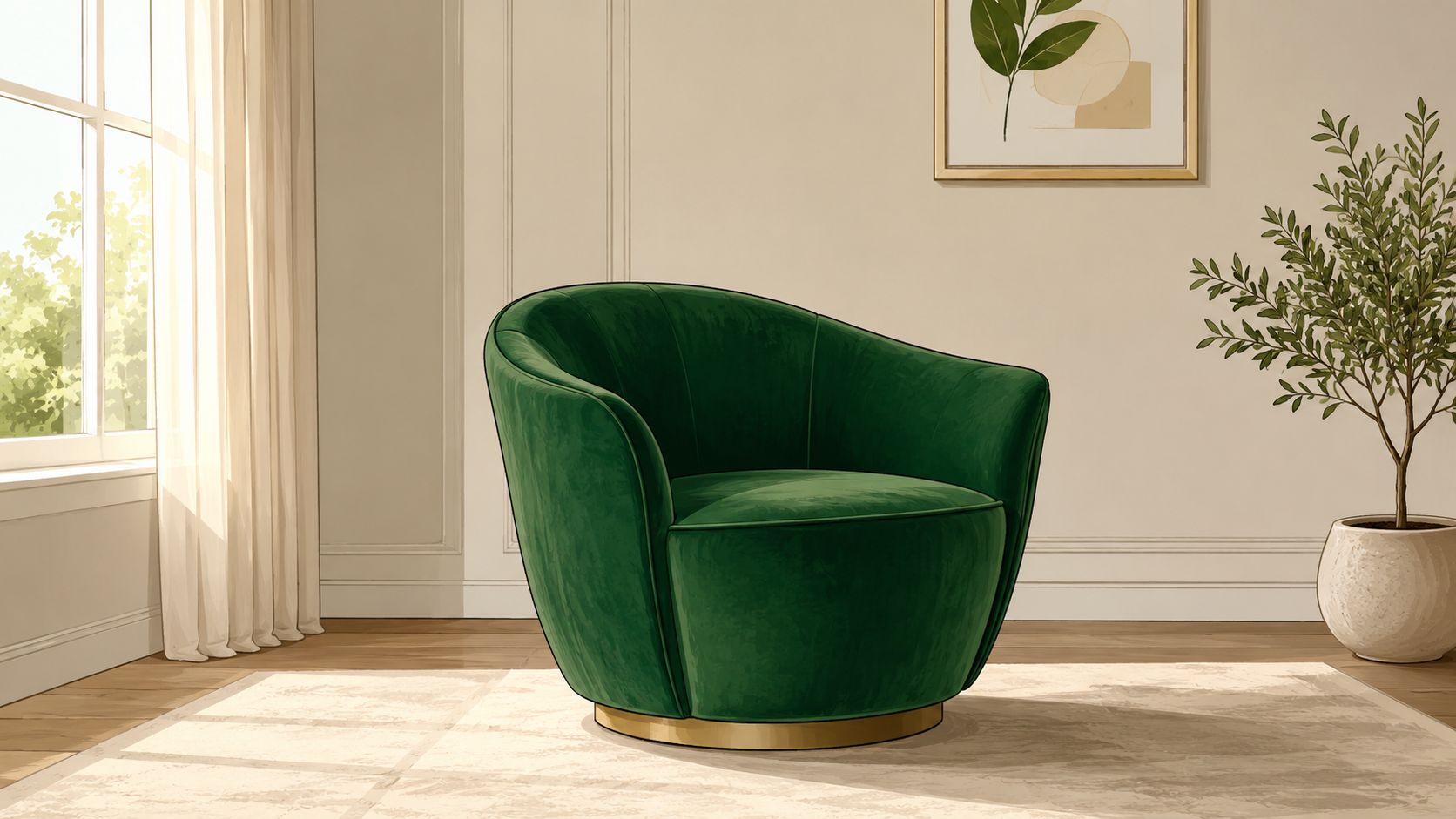
A visitor enters a living room and notices the chair before the sofa. Perhaps it has a deep green velvet cover, a rounded back, or a polished metal base that catches the daylight. It isn't an extra seat. Its shape and placement tell the visitor where the room's visual energy is concentrated.
That's the difference between an ordinary armchair and a statement accent chair. A standard armchair may be selected primarily for comfortable seating. A statement piece still needs to support the body, but it also contributes a clear design idea through silhouette, color, material, or proportion. Its placement is intentional, whether it frames a fireplace, completes a conversation group, or gives an unused corner a purpose.
From occasional seating to design focus
Accent chairs began as occasional seating used largely in affluent homes, but they developed into a recognizable design category during the twentieth century. New materials and design philosophies helped make distinctive seating more accessible to ordinary households by the 1950s, shifting furniture choices toward visual impact as well as function. The 1956 debut of the Charles and Ray Eames lounge chair and ottoman became a lasting milestone, and the design has remained in continuous production ever since, as described in this history of the occasional chair.
That history explains why a chair can feel like both furniture and sculpture. A curved shell, an exposed wood frame, or a carefully shaped back can make a compact seat visually important without requiring a large footprint.
The three tests for a memorable chair
A chair usually rises to statement status when it passes three simple tests:
- It has a distinctive outline: Curves, wings, barrel backs, tapered legs, and architectural frames create a recognizable profile.
- It introduces a deliberate contrast: The contrast may come from color, texture, pattern, or finish, not just brightness.
- It has a clear relationship to the room: The chair should anchor a reading corner, face the sofa, define a zone, or balance another strong element.
Design rule: A statement chair should attract attention first, then reward the person who sits in it.
A bold chair doesn't need to match every piece nearby. It needs a thread of connection, such as a repeated wood tone, a color echoed in artwork, or a texture that softens harder surfaces. Shoppers exploring statement furniture pieces can use that principle to judge whether a chair feels expressive yet integrated.
Popular Styles and Design Elements That Create Impact
Visual impact usually comes from four decisions: silhouette, color, texture, and material. Looking at those decisions separately makes the showroom experience less confusing, especially when several attractive chairs compete for attention.
Start with the silhouette
The outline is visible before the upholstery details. A chair with organic curves feels softer and more enveloping, while a chair with crisp arms and tapered legs communicates a cleaner mid-century character. A barrel chair wraps around the sitter and can make a conversation area feel intimate. A wingback chair adds height and traditional structure.
A slipper chair keeps the profile low and often has a slimmer footprint, making it useful where a heavier armchair would crowd circulation. A sculptural chair can work beautifully in an open-plan room, but its unusual shape deserves breathing room so surrounding furniture doesn't hide it.
Use color with a plan
A saturated color can establish the focal point, but it shouldn't be chosen in isolation. The most successful bold chairs usually repeat one quiet detail elsewhere in the room. A rust-colored chair might relate to artwork or a rug, while a blue patterned chair could pick up a tone in curtains or cushions.
Neutral rooms can support stronger upholstery, but a colorful space may need a more restrained chair with an interesting shape. The choice depends on whether the room already has a visual anchor.
Let texture carry the drama
Velvet and bouclé create impact through touch and light. Velvet reads polished and rich, while bouclé adds a nubby, relaxed surface. Textured upholstery can make a neutral chair feel special without relying on a loud pattern.
Pattern deserves the same restraint. A large botanical or geometric motif can make one chair memorable, but the surrounding room should offer quieter surfaces. Repeating a small color detail through a pillow, artwork, or accessory helps the pattern feel intentional rather than random.
Match the design language
| Style direction | Typical visual cues | Useful room relationship |
|---|---|---|
| Mid-century modern | Clean lines, tapered legs, restrained profile | Complements streamlined sofas and wood accents |
| Traditional wingback | Taller back, defined arms, classic proportions | Adds structure near a fireplace or formal seating area |
| Contemporary barrel | Rounded back, enveloping curves, compact presence | Softens angular furniture in a modern room |
| Minimalist slipper | Low profile, limited visual bulk, simple upholstery | Preserves openness in a smaller living area |
The best statement accent chair doesn't compete with the entire room. It adds one strong design voice while allowing the sofa, rug, lighting, and architecture to remain part of the composition.
Getting the Scale and Proportion Right for Your Space
A chair can look perfect in a showroom and feel oversized at home. Scale is the practical issue many style guides underplay, particularly in smaller Eastern CT homes, apartments, and rooms that must serve more than one purpose.
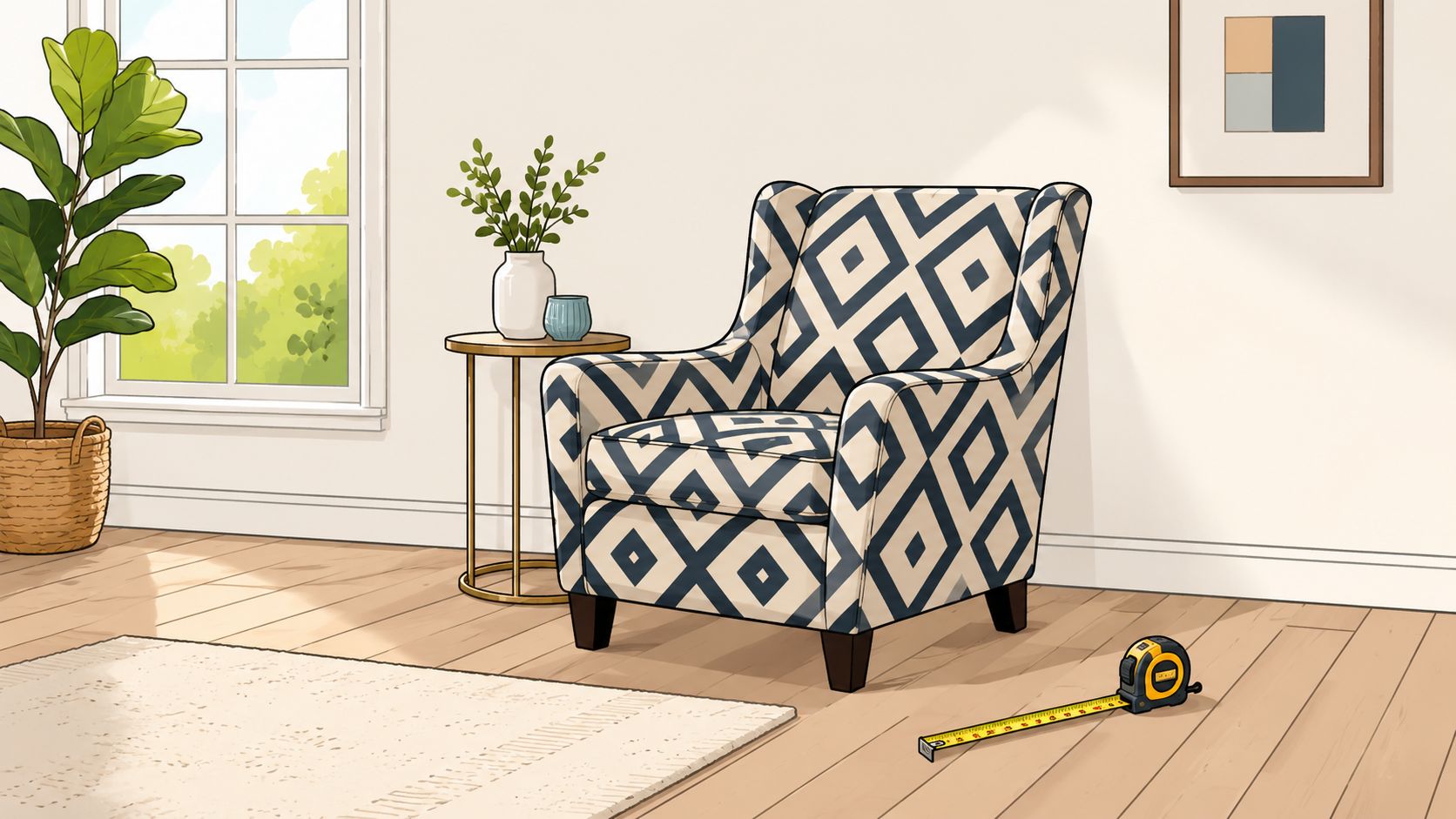
A well-proportioned statement accent chair typically measures 26 to 32 inches wide, 28 to 34 inches deep, and has a 17 to 19 inch seat height, according to this accent chair dimensions guide. Those figures are useful starting points, not substitutes for measuring the room, doorway, stairway, and intended placement.
Read the measurements by function
Width determines both the chair's floor footprint and its visual authority. A chair in the 32 to 38 inch range is generally selected when the goal is to create a more dominant visual anchor, rather than a compact conversational seat, as the same guide explains. That broader form may be appropriate beside a large sofa, but it can overwhelm a narrow room.
Depth affects circulation as much as comfort. A deep chair can project into a walkway even when its width seems reasonable. Seat height affects how easily people sit down and stand up, which matters for older adults and anyone with mobility sensitivities. Keeping the chair's seat within about four inches of the adjacent sofa helps maintain a coherent seated sightline and makes conversation feel more natural.
Test the footprint before ordering
Painter's tape offers a simple reality check. Mark the chair's full width and depth on the floor, then add the space needed for a person to approach, sit, and leave. Walk through the room carrying a laundry basket or similar everyday object. If the taped outline interrupts the route between the entry, sofa, kitchen, or hallway, the chair needs a different position or a lighter profile.
A swivel base can help in an open layout because the sitter can turn toward the sofa, television, window, or nearby activity without dragging the chair. A slimmer silhouette may be the better answer in a compact apartment where every passage matters. For broader guidance on visual breathing room, this resource on how to decorate a small room offers helpful space-planning context.
Before visiting a showroom, households can also review this guide to measuring furniture. Accurate notes make it easier to compare chairs by actual footprint rather than by impression alone.
Styling Your Statement Chair in Different Room Contexts
The same chair can perform very different jobs depending on where it sits. A sculptural barrel chair may become a social seat in the living room, a quiet retreat near a bedroom window, or a visual divider in an open-plan space. Styling should follow the room's purpose rather than forcing every chair into the same formula.
Living rooms need a conversation relationship
In a living room, the chair should usually relate to the sofa and the people using the seating group. Angling it toward the sofa can support conversation, while placing it beside a side table and floor lamp creates a practical reading corner. A cushion that echoes a color from the rug or artwork can connect the chair without making the upholstery look overly matched.
The common mistake is placing the chair in the room's most visible spot while leaving it disconnected from the seating arrangement. A chair that faces a wall or blocks the main route may look attractive in a photograph but frustrate daily use. The five ways to use an accent chair provides additional placement ideas for adapting one piece to different household needs.
Bedrooms benefit from softer purpose
Near a bedroom window, a statement chair can serve as a dressing seat, a place to put on shoes, or a quiet spot for reading. The surrounding accessories should stay lighter than a living room vignette. A small table, a soft throw, and focused lighting may be enough.
A chair in a bedroom doesn't need to compete with the bed. Its contribution can come from texture, a curved back, or a color that supports the room's restful palette. That distinction keeps the space personal without turning a calm retreat into another busy gathering area.
Open plans need visual boundaries
In an open-plan home, the chair can help define the living zone without adding a physical wall. Place it at the edge of the seating area, orient its front toward the conversation group, and allow its back to contribute to the room's composition. A swivel design can be especially useful when one area serves multiple activities.
Moving furniture into a new arrangement also requires practical planning. Households coordinating a larger room refresh may find general Get n Go Removals Melbourne transport information useful for thinking about safe furniture movement and access, even though the local delivery arrangements will differ.
Understanding Materials and Durability for Daily Use
A statement chair has to do more than photograph well. The frame, cushion construction, upholstery, and maintenance needs should match the way the household will use it. A chair reserved for occasional guests can tolerate a different performance profile from the seat used every evening for reading, television, or feeding a child.
Foam specifications offer one way to ask better questions. Guidance for accent-chair cushions places occasional-use foam around 1 to 2 inches thick, with higher-density or reflex foam preferred when longer-lasting support matters. For balanced residential use, 1.5 to 1.8 pound density can be suitable, while 1.8 lb/ft³ foam paired with roughly 35 ILD is a common seat-support benchmark, according to this seat cushion foam guide.
Read fabric ratings in context
Martindale rub ratings indicate abrasion resistance, but the right benchmark depends on use. A rating of 15,000 to 20,000 Martindale rubs is often treated as adequate for a light-use accent chair, while 25,000 or more provides a stronger benchmark for everyday residential seating, as the upholstery guidance explains.
| Upholstery choice | Strength | Trade-off |
|---|---|---|
| Velvet | Luxurious hand and strong visual depth | Shows touch and may need more attentive care |
| Leather | Develops character over time and wipes clean easily | Usually requires a larger initial investment |
| Performance fabric | Practical for children, pets, and frequent use | Some options may feel less plush or have a more technical finish |
These are broad tendencies, not guarantees. The specific weave, finish, cushion construction, and household routine matter. A showroom sample can reveal how a fabric feels, reflects light, and responds to handling in a way an online photograph can't.
For care, households should follow the manufacturer's cleaning instructions, address spills promptly, keep sharp objects away from loose upholstery, and position the chair thoughtfully near strong sunlight or heat sources. A deeper overview of upholstery materials can help shoppers compare appearance with maintenance before choosing a fabric.
Why Custom Options and Local Expertise Matter
Online dimensions can tell a shopper how wide a chair is, but they can't fully communicate how the seat supports the body, how high the arms feel, or how visually heavy the frame appears beside an existing sofa. Those details become easier to judge when a shopper can sit in the chair, view it from several angles, and compare upholstery samples under showroom lighting.
Custom-order programs add another layer of control. A shopper may be able to choose among thousands of combinations of fabrics, finishes, and configurations, creating a piece that responds to the room instead of forcing the room to accommodate a fixed design. The same principle appears in Canadel's structured custom dining workflow, which lets shoppers select variables such as shape, size, finish, and upholstery through a guided configuration system, as shown by the Canadel custom design platform.
Local guidance reduces guesswork
A knowledgeable associate can ask questions that product filters often miss:
- Will the chair support daily reading or occasional guests?
- Does the room need a visual anchor or a lighter supporting piece?
- Should the upholstery coordinate with a sofa, rug, or window treatment?
- Would a swivel or slimmer frame improve circulation?
Gorins Furniture & Mattress states that it has served Eastern Connecticut and Southern Rhode Island since 1936, and a Norwich Bulletin profile describes the business as a Norwich fixture since that year. The company originally operated as Colonial Upholstery and Bedding Company before moving to its current New London Turnpike location in 1972, according to the company's referenced history. Its family-operated history also identifies Samuel and Martha Gorin as the founders, as described on the Gorins history page.
For shoppers in Norwich, New London, Plainfield, Waterford, and surrounding Eastern CT and Rhode Island communities, local delivery and service support add practical reassurance after the purchase. Custom possibilities and in-person testing are especially useful when the chair is an investment piece rather than a temporary decorative change. Shoppers can also review custom furniture made simple before visiting with room measurements and upholstery preferences ready.
Your Next Steps to Finding the Perfect Statement Chair
A practical shopping plan keeps style decisions from getting ahead of space planning. Start with the room, then evaluate the chair.
- Measure the route and footprint. Record the available width and depth, doorway access, nearby walkways, and the seat height of the sofa or furniture beside the chair.
- Choose the room's design direction. Decide whether the space needs curves, pattern, color, texture, traditional structure, or a quieter silhouette.
- Match construction to use. Occasional seating and daily seating call for different upholstery and cushion priorities. Consider children, pets, sunlight, and cleaning habits before falling in love with a fabric.
- Test the chair in person. Sit for several minutes, check arm height, notice how easily standing feels, and view the chair beside related furniture.
- Ask about personalization. Custom options can help align fabric, finish, configuration, and comfort with the household's lifestyle. A Canadel custom dining partnership and the F9 Custom Sofa series also support broader room planning when the chair is part of a larger furnishing project.
- Review the budget carefully. Promotional Financing may use equal monthly payments, subject to approval and the terms of the offer. That structure can make an investment piece easier to plan for without reducing the importance of reading the complete financing terms.
The Norwich showroom gives local shoppers a place to compare scale, comfort, upholstery, and design character before making a decision. The Sleep Gallery also offers Tempur-Pedic, Serta, and Beautyrest, with a focus on comfort by feel and healthier sleep for households furnishing more than one room.
A statement accent chair should make a room feel more considered, not more crowded. Visit the showroom, take the online Style Quiz, or browse the Clearance section for value-driven options while keeping the room's measurements and daily routines at the center of the choice.
Since 1936, Gorins Furniture & Mattress has helped Norwich and Eastern CT families create homes they love. From custom-designed Canadel dining sets to the latest in Tempur-Pedic sleep technology, the family-owned business combines a broad selection with personalized local care, quality, value, and 5-Star Delivery service. Visit Gorins Furniture & Mattress to test statement chairs in person and find a piece for the room.