Custom Sofa Design: A Norwich Local’s Guide to Perfection


A lot of Norwich families start in the same place. The room is fine, the old sofa is serviceable, and the photos saved on a phone look great, but the piece in the house never quite works. It may be too deep for everyday conversation, too shallow for movie night, too bulky for the doorway, or upholstered in a fabric that looked warmer online than it does under Connecticut daylight.
That gap between inspiration and real life is where custom sofa design earns its keep. A well-made custom sofa isn't about adding complexity. It's about removing the compromises that come with settling for “close enough.”
Your Guide to Investment-Grade Custom Furniture
A custom sofa should solve three problems at once. It should fit the room, support the way a household relaxes, and hold up over time. When one of those pieces is off, the sofa becomes a daily irritation instead of the anchor of the living room.
That's one reason personalized furniture keeps gaining ground. 71% of customers want personalized furniture, and 38% of that demand is aimed at living room items like sofas, according to reporting on online customization in the sofa industry. Buyers aren't chasing novelty. They're moving away from mass-produced pieces that force them to adapt their homes and routines around fixed dimensions and limited comfort options.
A practical custom process starts before fabric books and finish samples. It starts with use. Who naps here, who hosts here, who spills here, who reads in the corner seat, and who wants a sofa that keeps its shape through years of regular traffic.
Why custom feels different in daily life
A strong custom plan usually improves the details people notice most after delivery:
- Scale that looks intentional instead of oversized or undersized.
- Comfort that matches posture habits rather than a generic showroom sit.
- Materials chosen for real wear such as pets, kids, or frequent guests.
- Long-term value because the piece was built around the room instead of squeezed into it.
Practical rule: A sofa becomes investment-grade when comfort, construction, and fit all line up. If one is wrong, the whole piece feels wrong.
For households exploring made-to-order options, a helpful starting point is this custom furniture overview. It gives a clear sense of how personalized programs turn broad inspiration into choices that are manageable, not overwhelming.
There's also reassurance in working with a local, family-operated business founded in 1936. For neighbors in Norwich and across Eastern CT, that history matters because custom ordering works best when guidance is steady, patient, and suited to your lifestyle.
Planning for Your Lifestyle Not Just Your Living Room

The most useful custom sofa decision usually isn't color. It's posture.
Some households sit on a sofa. They sit upright, feet forward, and use it for conversation, reading, or quick evening downtime. Other households sit in a sofa. They curl up, tuck in, sprawl sideways, and settle in for longer stretches. Those are two different use cases, and they call for different dimensions.
Seat depth is the detail most buyers underestimate. Standard guides suggest 24 to 26 inches, but households that prefer to “sit in” a sofa often need 28+ inches to feel comfortable, as discussed in this seat-depth design discussion. A sofa can look perfectly proportioned in a room and still feel wrong every night if the seat depth doesn't match the household's habits.
Start with the way the sofa will be used
A useful consultation begins with questions like these:
- Who uses it most often. Two adults, a growing family, frequent guests, or a mix?
- How people relax. Upright conversation, deep lounging, afternoon naps, or all three?
- What happens in the room. Quiet reading, weekend entertaining, game nights, or TV marathons?
- How much wear the upholstery sees. Pets on cushions, kids with snacks, or mostly adult use?
- What frustrates the current sofa. Seat too deep, back too low, arms too wide, cushions too soft?
Those answers do more than narrow style. They shape seat depth, back height, arm shape, cushion firmness, and fabric performance.
A room plan should include human habits
Many shoppers begin with wall length and a saved photo. That's understandable, but it misses the core question. A beautiful frame won't fix a sofa that asks a household to use it the wrong way every day.
The best-looking sofa in the room is still a bad choice if people perch on the edge, pile up throw pillows for back support, or avoid the seat they thought would be their favorite.
That's why a style discovery step helps. An online tool such as the Gorins Style Quiz can help clarify preferences before a showroom visit, especially for families trying to sort out whether they want structured seating, casual lounging, or something in between.
A quick lifestyle checklist
Before choosing an arm, fabric, or layout, write down these three answers:
Primary posture
Upright, relaxed, or deep lounge.Daily traffic
Light use, steady family use, or heavy all-day use.Comfort priority
Supportive seat, sink-in softness, or a balanced feel.
That simple exercise saves time because it turns custom sofa design into a response to real living, not just room decorating.
Measuring for a Flawless Fit
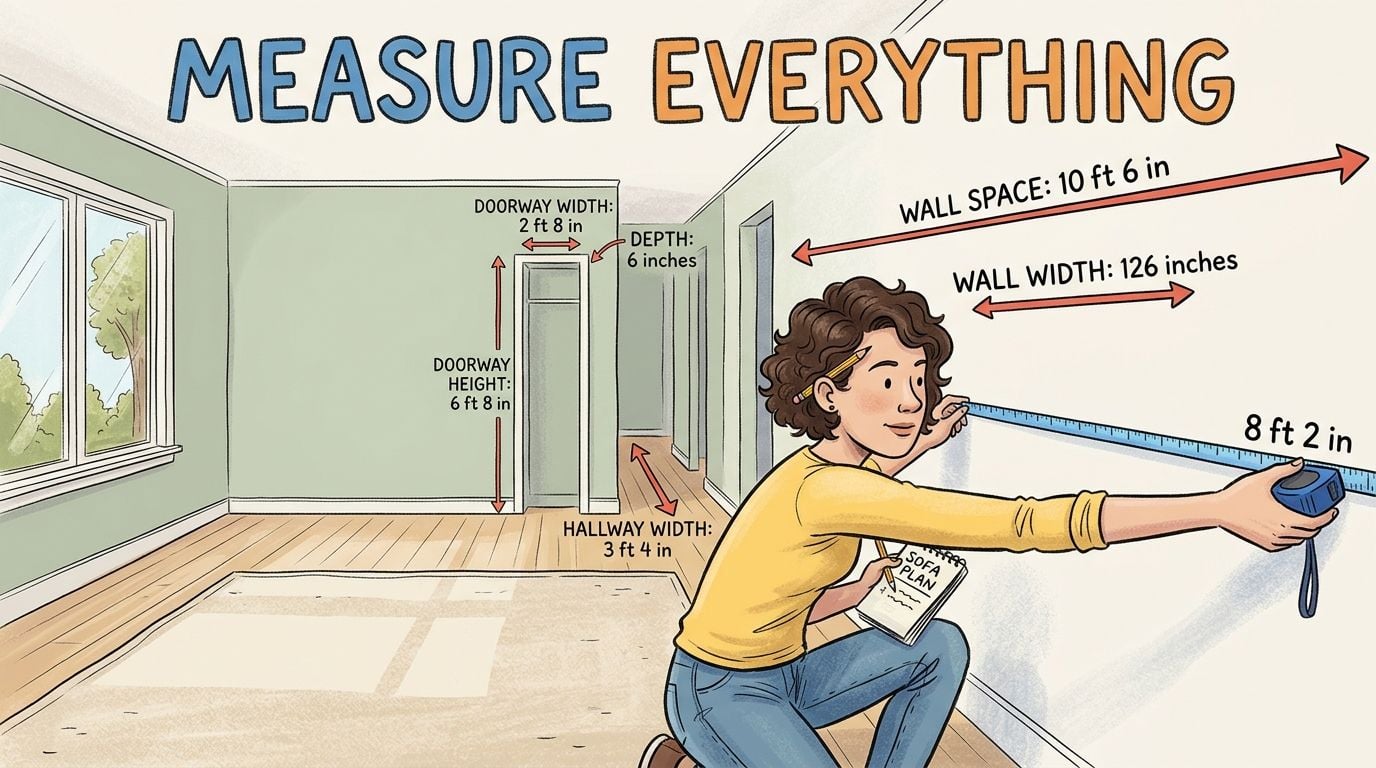
A custom sofa can be built beautifully and still fail on delivery day if the path into the home wasn't measured. Most disappointment happens before the sofa reaches its final wall. It gets stuck at the front step, wedges at a stair turn, or can't clear a hallway corner.
That's why measuring needs two parts. The first is the destination. The second is the travel path from outside the home to the exact spot where the sofa will sit.
What to measure before ordering
Use a tape measure and write everything down in one place. Include:
- Room width and sofa wall so the finished piece has breathing space.
- Distance to nearby tables, fireplaces, and radiators so traffic flow stays comfortable.
- Doorway height and width at every entry point the piece may need to pass through.
- Hallway width including any tight turns.
- Stair width and head clearance for upper-level rooms or split-level homes.
- Elevator dimensions if the building has shared access.
- Corner turns and banisters where long frames often run into trouble.
A practical measuring guide such as how to find your perfect fit shows why fit planning works best when people look beyond the label and focus on actual dimensions. The principle carries over to furniture. Standard sizes don't help much when architecture is specific.
The measurements that prevent delivery headaches
Most households remember to measure the room. Fewer measure the front storm door when it's fully open, the inside turn at the stairs, or the tight point where a hallway narrows by an inch or two. Those are the details that matter.
Delivery note: The most important number often isn't the wall length. It's the smallest clearance point between the truck and the final room.
For a more complete checklist, this furniture measuring resource walks through the dimensions that matter before a piece is ordered.
Professional 5-Star Delivery makes the process smoother, especially for households in Norwich, New London, Plainfield, and surrounding communities. Still, the homeowner's measurements are part of the job. Good delivery teams handle the furniture with care. Good measuring prevents the avoidable surprises that no delivery crew can fix on the spot.
A simple measuring routine
Measure once for placement, then again for access.
After that, compare the planned sofa dimensions to the smallest point on the route. If the room is generous but the stair turn is not, the stair turn decides the size. That one habit prevents a lot of heartbreak.
Understanding Frame Construction and Cushion Comfort
A sofa's value lives under the fabric. Shape and color draw attention first, but construction decides whether the piece still feels solid years later.
That's where many online shopping experiences fall short. Photos show silhouette. They rarely explain what's happening inside the frame, under the deck, or inside the seat cushions. Custom sofa design works best when those hidden choices are discussed plainly.
Start with the frame
For long-term stability, the frame matters more than almost any visible feature. A well-built frame helps the sofa keep its shape, support the seat evenly, and resist the wobble that often shows up first in lower-quality seating.
One of the most practical questions a buyer can ask is whether the frame uses kiln-dried hardwood. That choice matters because quality construction reduces the risk of movement and warping over time, especially in homes that go through seasonal humidity shifts.
Construction details also affect what can be corrected later. According to this seven-step custom sofa workflow, the process includes a mandatory First Feel sit-test after the frame is built but before final upholstery. That checkpoint is critical because changing seat depth or cushion firmness later is nearly impossible, and it's where 90% of design corrections can be made.
A showroom sit tells part of the story. A true pre-upholstery sit-test tells whether the dimensions and comfort are actually right for the household.
Programs such as the F9 Custom Sofa series make these decisions more practical because they allow buyers to work through arm style, back profile, welt details, and cushion feel in a structured way instead of guessing from a product photo.
Cushion comfort isn't one-size-fits-all
The right cushion depends on the room's job. Some households want a cleaner, more structured seat that's easier to maintain. Others want a softer, more relaxed feel that invites longer lounging.
Here's a working comparison that helps narrow the choice.
| Cushion Type | Feel & Firmness | Best For | Maintenance |
|---|---|---|---|
| High-resiliency foam | Supportive, more structured, holds shape well | Everyday family rooms, upright sitting, cleaner profile | Lower fuss, usually needs less frequent reshaping |
| Foam with soft wrap | Balanced comfort, supportive core with a gentler surface feel | Mixed-use rooms, households wanting comfort without too much sink | Occasional fluffing helps keep the look even |
| Down-blend style cushion | Softer, more relaxed, casual sit | Deep lounging, cozy rooms, buyers who like a broken-in feel | Needs regular fluffing to maintain appearance |
| Firmer bench-style seat | Stable and uniform across the span | Formal rooms, streamlined silhouettes, consistent support | Rotate if construction allows, keep an eye on wear patterns |
Matching comfort to household use
A living room designed for conversation often benefits from a more supportive seat and a moderate depth. A den built around movie nights may feel better with a softer cushion package and a deeper sit. Neither is more correct. The useful question is which one fits the routine.
A close look at upholstery craftsmanship can help buyers appreciate why seam quality, fabric handling, and pattern control matter. For anyone curious about the production side, this guide to Juki industrial sewing offers a helpful window into the kind of precision sewing that supports clean upholstery work.
What works and what usually doesn't
What works:
- A sturdy hardwood frame matched to the room's level of use.
- Cushion firmness chosen for posture, not just first-touch softness.
- A sit-test before upholstery when the custom program allows it.
- Clear discussion of arms and backs because those affect usable seat space.
What usually doesn't:
- Picking the softest cushion in the showroom without thinking about support.
- Choosing a slim arm for looks if the household lounges against the sides.
- Ignoring how back height affects neck and shoulder comfort.
- Treating frame construction as a hidden technicality instead of a buying priority.
For shoppers comparing build quality, this sofa and chair buying checklist is a useful place to sharpen the right questions before ordering.
Selecting Your Signature Fabric and Finishes
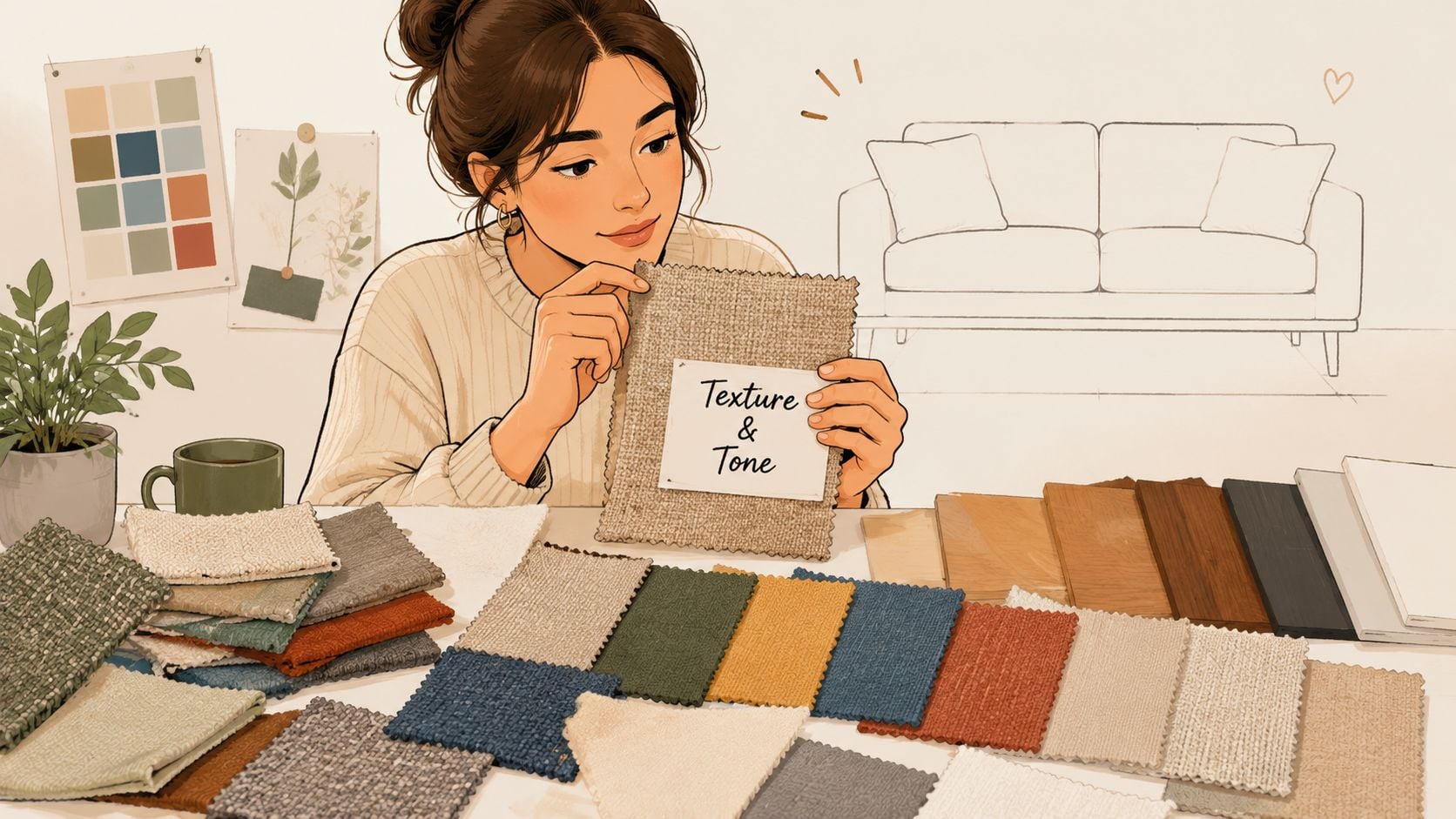
Fabric is where a custom sofa stops being a specification sheet and starts feeling personal. It's also where buyers can make expensive mistakes if they choose with their eyes only.
A family with a dog that claims the corner cushion needs a different material than a couple furnishing a quieter formal sitting room. A household with big south-facing windows has to think about how color shifts through the day. The same neutral can read warm at noon and flat by evening.
Choose fabric for the room you actually live in
Performance fabrics have become a strong choice for busy homes because they balance softness with easier day-to-day care. They often suit family rooms, open-concept living areas, and homes where guests gather often.
Natural fibers can offer beautiful texture and depth, but they need to be matched carefully to use. Leather also changes the equation. Top-grain leather can develop character over time and works especially well for buyers who want a refined, durable look with less visual fuss.
Trusted manufacturers such as Flexsteel and Best Home Furnishings give shoppers a wide range of upholstery directions, from easygoing casual textures to more polished refined looks.
Don't choose fabric under showroom lighting alone
This is the part many shoppers skip. They narrow to a favorite swatch, hold it under bright showroom light, and assume the decision is finished. It isn't.
Take swatches home. Set them near the window, against the wall color, beside the rug, and under the lamp used at night. A fabric that looks crisp in the store can turn cool, greenish, or dull at home depending on the room's light.
Some of the best fabric decisions are made in the evening, with the room lamps on and the samples resting against the exact wall where the sofa will live.
Texture matters too. Flat woven solids can look clean and modern, while heathered fabrics, subtle chenilles, and tonal patterns tend to hide daily wear more gracefully.
Finishes that complete the look
Once fabric is settled, the smaller details bring the piece together:
- Leg finish can tie the sofa into existing woods in the room.
- Welt detail can sharpen the silhouette or keep it softer and cleaner.
- Back style changes both comfort and visual weight.
- Arm profile affects style, usable seat width, and the way the sofa sits in the room.
A good upholstery primer helps buyers decode those categories without getting buried in jargon. This guide to upholstery materials is useful for sorting through the practical differences before finalizing an order.
The goal isn't to create the most dramatic sofa in the showroom. It's to choose a combination that still feels right after the novelty wears off and real life takes over.
Navigating Pricing and Placing Your Order
Custom upholstery sits in an interesting category. It isn't bargain furniture, but it doesn't have to feel out of reach either. For many households, it lands in the sweet spot of affordable luxury when the piece is planned carefully and paid for in a way that fits the household budget.
That's why transparent ordering matters. Buyers should know what they're paying for, what can change, and which details need to be confirmed before the order is released.
Ask the pricing question many buyers miss
One of the least discussed issues in custom ordering is fabric volatility. According to this custom sofa FAQ on pricing risk, fabric pricing can shift during the 6 to 12 week lead time and add 10 to 15% to the final cost. The practical question is simple. Is fabric pricing locked at the time of order, or later in the production cycle?
That question matters because the sofa budget usually includes more than the sofa. It may also include rugs, tables, lamps, or a room refresh happening at the same time.
What a confident order should include
A well-handled custom order usually covers these points clearly:
- Final dimensions approved after room and access measurements.
- Fabric or leather selection confirmed with the exact grade noted.
- Cushion choice documented so comfort expectations are clear.
- Design details written down such as legs, welt, and arm style.
- Pricing terms reviewed including what is fixed and what is not.
Pattern can also affect both cost and confidence. Buyers considering stripes, florals, or other active textiles often benefit from reviewing examples of scale and coordination first. This guide to styling patterned fabric gives a helpful visual sense of how pattern direction changes the feel of a room.
Financing can make custom more practical
Promotional Financing with equal monthly payments can make a substantial difference for families who want the right piece now without forcing a rushed compromise. That flexibility lowers the barrier to entry on custom seating and lets buyers focus on long-term value instead of settling for a short-term fix.
For households preparing to move from ideas to a real order, this custom order starting guide is a smart planning resource.
A good ordering experience should feel calm. No pressure, no mystery, and no vague paperwork. Just clear decisions, written details, and a timeline the household understands.
Bringing Your Custom Sofa Vision Home
A custom sofa usually becomes real the moment a family stops saving screenshots and starts asking better questions. Will the seat still feel good through a full movie night? Can the piece clear a tight stair turn in an older Norwich home? Will the fabric still look right after daily use, pets, or grandkids?
Those are showroom questions, not Pinterest questions.
The strongest custom results come from matching inspiration to real life. Online photos can help you settle on a silhouette, but comfort, scale, cushion feel, fabric durability, and delivery access have to be tested in person. That is where showroom guidance earns its keep, especially with made-to-order programs like the F9 Series, where small decisions change how the sofa lives in your home for years.
For families across Norwich, Waterford, New London, Plainfield, and the rest of Eastern CT, the final stretch matters as much as the design itself. Clear delivery planning, realistic lead times, and financing that fits the household budget all affect whether the purchase feels smart six months later. I have seen well-chosen custom pieces work beautifully in the room because the buyer slowed down at the right moments and confirmed the practical details before signing.
Custom should feel personal, but it should also feel settled. By the time the order is placed, the household should know what is being built, how it should sit, what it will cost, and what happens next.
Gorins has helped local families make those calls for generations. The showroom approach goes beyond picking a fabric off a wall. It helps buyers compare custom programs across the home, from the F9 Custom Sofa line to Canadel dining, with the same focus on fit, finish, and long-term value. For shoppers who also need budget flexibility, Promotional Financing can make the right piece more realistic without forcing a quick compromise.