Average Sofa Seat Height: A Practical Guide for Every Home

The average sofa seat height sits around 17 to 18 inches off the floor, and most adults are comfortable within a broader 15 to 20 inch range. That band exists because people's lower-leg lengths vary, cushions compress under weight, and sofas are built for different sitting styles, from upright conversation to deep lounging.
A lot of Norwich households reach this question at the same moment. The old loveseat has gone soft, standing up takes more effort than it used to, and every new sofa on the showroom floor somehow feels either a little too low or a little too perched. Seat height looks like a small detail, but it changes how a sofa feels every single day.
For neighbors in Norwich, New London, Plainfield, Waterford, and surrounding Eastern CT and Rhode Island communities, shopping gets more practical. A sofa isn't just about fabric or arm style. It has to fit the people using it, the room around it, and the way the household sits. That's especially true when shoppers are balancing style, posture, accessibility, and long-term value.
Since 1936, Gorins has approached furniture the same way a good local designer would. Start with how the piece needs to live in the room, then work backward into dimensions, comfort, and finish details. That matters with custom programs like Canadel Custom Dining and the F9 Custom Sofa series, where thousands of combinations can suit a lifestyle instead of forcing a one-size-fits-all answer.
What the Average Sofa Seat Height Actually Is
A sofa can look perfect in the showroom and still feel off the first night at home. One person in the house drops into it and feels stuck too low. Another sits on the same cushion and feels perched. The reason is usually not style. It is seat height, plus how much that seat gives once someone sits down.
What the measurement means
Seat height is the distance from the floor to the top of the seat cushion at the front edge, where the body first makes contact. That front edge matters because it affects how your feet meet the floor and where your knees settle.
For everyday shopping, the number many households use as a starting point is about 18 inches. In real rooms, though, the useful range is broader because the listed height on a tag is only part of the story.
A sofa sits a bit like a pair of shoes. Two pairs can both be marked the same size and still feel different once you put weight on them. Sofas work the same way. The frame may start at one height, but the cushion changes the lived-in height the moment someone sits down.
Why there is no single “perfect” average
The average exists because manufacturers need a middle ground, not because every body fits the same target.
The key body measurement is lower-leg length, the distance from the floor to the underside of the knee when someone is standing or sitting upright. If a sofa is too high for that person, the feet may not rest comfortably and the front edge can press into the thighs. If it is too low, knees rise, hips drop, and standing up takes more effort.
Cushion compression adds the second half of the equation. A firmer cushion may stay close to its listed height. A softer cushion can settle lower under the same person in a matter of seconds. That is why two sofas with matching tags can feel completely different in use.
Why the same number can feel different from sofa to sofa
Seat height never works alone. It works with cushion fill, seat depth, and the way the frame supports the body.
A higher, firmer seat often feels easier for conversation, reading, or getting up and down. A lower or softer seat can feel more lounge-like, especially in deeper styles where the body reclines a bit more. Neither is automatically better. The better choice is the one that matches the people using it.
That is also where Gorins becomes more useful than a one-size-fits-all benchmark. Stock sofas give shoppers a clear starting point and let them test how different heights feel in person. Custom options make finer tuning possible for a household that already knows, for example, that one partner needs a slightly easier sit-to-stand height while the other wants a softer cushion feel. The goal is not to chase an average. The goal is to get the average close, then tune the details to the people who will use the sofa every day.
Easy number to remember: Start with 18 inches as a reference point, then judge whether your household needs that seat to feel firmer, softer, slightly higher, or slightly more settled under weight.
How to Measure Sofa Seat Height the Right Way
A Norwich family can sit on two sofas marked at the same height and still get two different results. One feels easy to stand up from. The other feels like it sinks after a minute. The difference usually comes from where the measurement was taken, how much the cushion gives under weight, and whether that settled height matches the lower leg of the person using it.
Start by measuring the sofa where your body rests.
A simple at-home method
Place the sofa on a level floor and remove any throws or extra pads that change the sitting surface. Sit in your usual posture for a minute or two, feet flat, rather than perching on the edge. Then measure straight from the floor to the top of the front edge of the seat cushion.
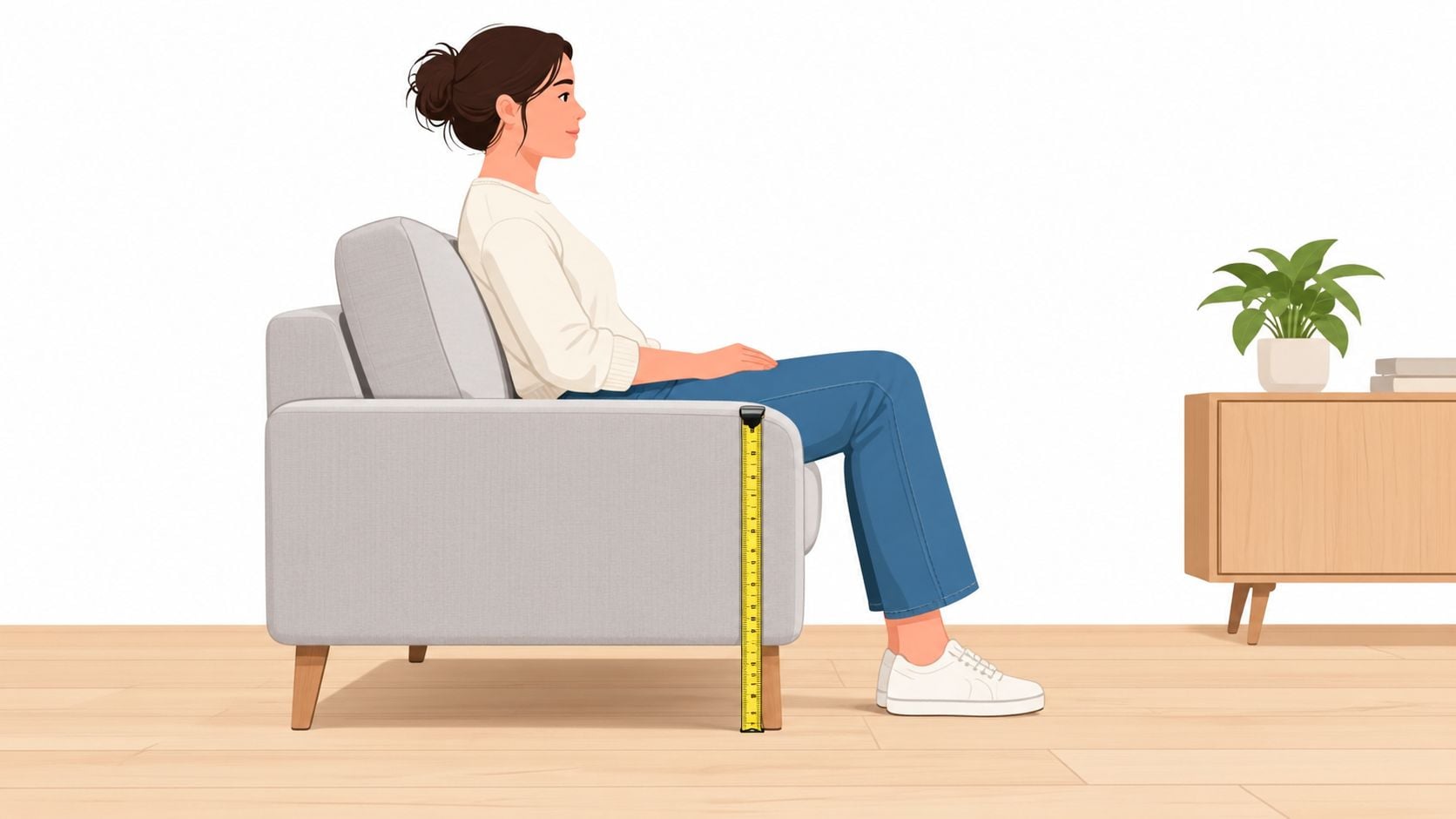
If you want a clear visual on measuring sofas, sectionals, and room access points, the Gorins guide to measuring furniture helps shoppers avoid common mistakes before they buy.
Measure it twice if you can. First with the seat empty. Then with someone sitting in their normal spot. The second number often explains comfort better than the tag does, because sofa cushions work a bit like trainers with soft soles. The listed size tells you the build. Your body feels the compressed version.
The mistake that throws people off
Shoppers often measure to the top of the back cushion or the highest point of the frame. That gives overall sofa height, not seat height.
For comfort, the useful line is the one from the floor to the place where the thighs and hips settle. That is the height your knees react to when you sit down and stand up. It is also the number that should be compared with lower-leg length, especially in homes where one person is tall, another is petite, or someone needs an easier sit-to-stand position.
Three versions of seat height help clear up the confusion:
- Unloaded height is the seat measured with no one on it.
- Loaded height is the height after the cushion compresses under a sitter.
- Worn height is the settled height after months or years of regular use.
Soft seats can lose a noticeable amount of height once occupied. In plain terms, a sofa listed at a middle-of-the-road height may behave like a lower sofa the moment someone sits down. That is why two stock models in a showroom can look nearly identical on paper yet suit different households in practice.
A detail that matters on deeper sofas
Deep seats change posture as well as measurement. If the seat slopes slightly back, or the cushion lets the body settle into a pocket, the sofa can feel lower than the tape measure suggests. A deeper lounge style often creates that effect. A more structured living-room sofa usually keeps the sitter higher and more upright.
Check each seat cushion separately too. The center spot often compresses more than the ends, and a sectional corner can feel different again. That matters if one seat is used every evening or if a household is trying to tune comfort for a specific person.
At Gorins, that is where stock and custom options become useful in a practical way. A stock sofa gives you a real starting point to test. A custom order can then fine-tune the seated result, whether your household needs a slightly taller build, a firmer cushion that holds more of its height, or a softer seat that still starts high enough to settle into the right range once someone sits down.
Seat Height by Sofa Style and Category
A sofa's style sets the starting posture before anyone tests the cushions. A low, long frame invites lounging. A neater, more precise frame usually keeps the body higher, with knees and hips in a more everyday sitting position. That is why the average seat-height number only helps once you attach it to a sofa category.
For standard sofas and loveseats, dimension references place seat height in a band of 17 to 19 inches. 18 inches is the number many shoppers picture as “normal” because it tends to feel balanced for mixed use, from coffee chats to a film night.
Style shifts that baseline in practical ways. A mid-century frame often sits lower to keep its light, airy look. A recliner-style seat often sits taller because easier entry and easier standing are part of the design. Sectionals vary the most because one layout can include upright seats, deeper corner spots, and a chaise that changes how the legs rest.
The easiest way to read the chart below is to treat it like clothing sizes. It narrows the rack. It does not guarantee the fit, because cushion firmness and compression can still change how high the seat feels once someone settles in.
Typical Seat Height Ranges by Sofa Style
| Sofa Style | Typical Seat Height (inches) | Why It Sits There |
|---|---|---|
| Standard three-seat sofa | 17 to 19 | Balanced for everyday sitting, conversation, and routine use |
| Loveseat | 17 to 19 | Similar sitting posture to a standard sofa, often with a slightly tidier footprint |
| Sectional | 16 to 19 | Changes by module, seat depth, corner design, and chaise layout |
| Mid-century style sofa | 14 to 17 | Lower profile supports a relaxed, cleaner-lined look |
| Low-profile lounge sofa | 15 to 16 | Built for a more casual, sunk-back posture |
| Recliner or lift-style seat | 19 to 20 | Higher entry point helps with standing up and sitting down |
One inch can change a lot.
On paper, two sofas might both fall inside the “average” band, but they can serve very different households. A 17-inch lounge sofa with soft cushions may settle lower once occupied. A firmer 18-inch sofa may hold a higher seated position. That matters if someone in the home has longer lower legs, wants feet planted comfortably, or dislikes the squatty feeling of a low seat.
Sectionals need an extra look because the height may be consistent while the experience is not. A chaise encourages stretch-out lounging. A corner seat can sit differently because the body meets the cushions at a different angle. The practical questions in this sectional buying guide from Gorins help when you are comparing those seat zones rather than judging the whole sectional by one measurement.
At Gorins, stock and custom become useful rather than abstract. A stock sofa may already land in the right category, such as a standard-height conversation sofa or a lower lounge sectional. If your household needs finer tuning, the seat can often be adjusted through frame choice, cushion build, and firmness so the final seated height works better for the people who use it, not just for an average benchmark on a spec sheet.
Matching Seat Height to Your Body and How You Use the Sofa
You sit on one sofa and your feet settle flat, your knees relax, and standing back up feels easy. You sit on another with a similar tag measurement and suddenly your legs float a bit or you drop lower than expected. That difference usually comes from two things working together. Your lower-leg length and how much the cushion compresses under your weight.
Start with your lower-leg length
Average seat height is only a starting point. Body fit is more personal.
Ergonomics guidance ties sofa fit closely to popliteal height, which is the distance from the floor to the underside of the knee when you are seated. In plain terms, it is your lower-leg length. When that measurement and the sofa work together, your feet can rest flat and your knees stay at a comfortable angle. When they do not, the sofa can feel too perch-like or too squatty even if the spec sheet says it falls in the normal range.
A good showroom test is simple. Sit all the way back. Check whether your feet reach the floor without pressure building under your thighs. Then stand up without rocking forward too much. That tells you more than the average number by itself.
Recommended Sofa Seat Height by User and Use Case
| User or Use Case | Recommended Seat Height | Why It Works |
|---|---|---|
| Petite adults and many teens | 15 to 17 inches | Helps feet rest flat without pressure under the thighs |
| Average adults | 17 to 19 inches | Balances comfort, posture, and easy everyday use |
| Taller adults | 19 to 20 inches | Gives more natural leg support and reduces the crouched feeling |
| Mobility-sensitive sitters | 19 to 20 inches | Makes sit-to-stand movement easier |
| Deep lounging | 15 to 16 inches | Supports a relaxed, casual posture |
| Upright conversation seating | 17 to 18 inches | Keeps the body more engaged and easier to reposition |
| Kids' rooms or flexible casual spaces | Lower end of the range | Fits shorter sitters and relaxed use patterns |
| Gaming or TV rooms | Depends on posture goal | Lower feels loungey, higher feels easier for frequent repositioning |
How you use the room changes what “right” feels like
A sofa for a formal sitting room often works better when it holds you a bit higher and more upright. A family TV room usually forgives a lower, deeper sit because people stay there longer, slouch more, and shift positions often. If someone in the home has sore knees, hip stiffness, or hates climbing out of a soft seat, a firmer cushion and a slightly higher perch usually feels friendlier day to day.
That is why room planning matters as much as the raw dimension. The guidance in this living room furniture planning guide from Gorins helps connect seat feel to the way the room gets used.
Cushion compression changes the real seated height
Listed seat height is like measuring a mattress before anyone lies on it. It tells you the build, but not the full experience.
Two sofas can both be marked at 18 inches and feel completely different once you sit. A soft down-blend cushion may let you settle lower, which can suit long lounging but may make standing up slower. A firmer foam build can keep you closer to the stated height, which often feels neater, more supportive, and easier to exit.
This is the part many shoppers miss. The body does not experience the showroom tag. It experiences the loaded height after the cushion compresses.
Gorins can tune the fit to your household
At Gorins, stock sofas already cover different seat-height personalities. Some sit more upright. Others sit lower and more relaxed. If your household lands somewhere in between, custom options can fine-tune the result through frame choice, cushion build, and firmness.
That matters in real homes. A taller partner, a shorter partner, a teen who sprawls, and a parent who wants an easier stand-up can all pull the decision in different directions. Instead of chasing one average benchmark, you can choose a stock model that is close or adjust a custom build so the seated height fits the people who will use it every day.
The best test is still physical. Sit down, let the cushion settle, plant your feet, and stand up twice. The right seat height usually makes sense fast.
How Seat Height Works With Coffee Tables, Ottomans, and Accessibility
A sofa never works alone. The nearby table, ottoman, and walking space can make a good seat height feel better, or make it feel awkward.
Pairing the sofa with nearby surfaces
The easiest way to judge coffee-table fit is by reach. A table that sits a little below the seat often feels the most natural for drinks, remotes, or a laptop. If the table is too low, users hunch forward more than they want to. If it's too high, knees and shins start to compete with the tabletop.
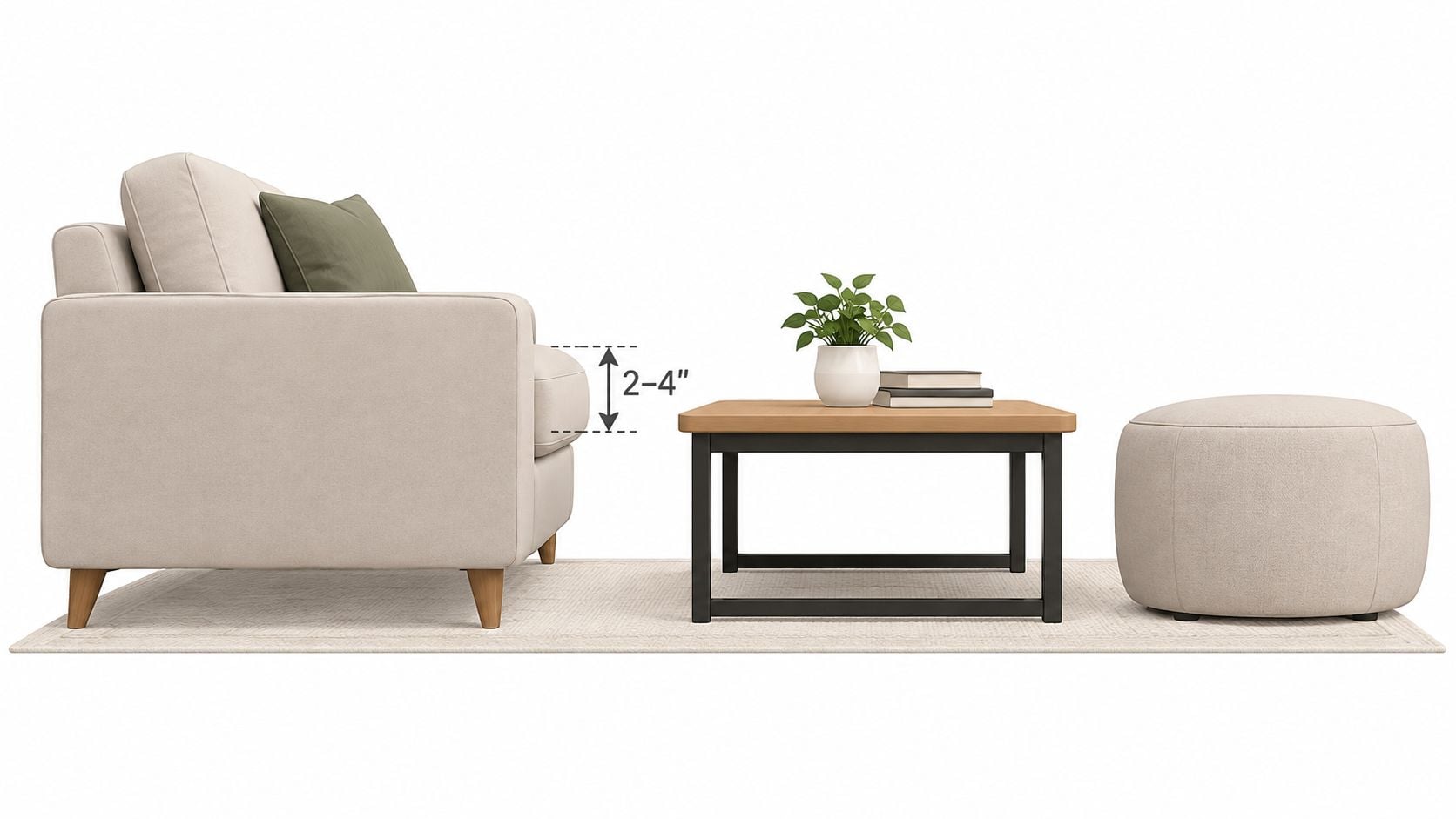
Shoppers sorting through those pairings can use the Gorins coffee table size guide to compare table proportions with seating height and room scale.
Ottomans and chaise sections need alignment
An ottoman used as a footrest should feel supportive, not like a step down into empty space or a platform that lifts the knees too high. A close height relationship between the ottoman top and the seat pan usually keeps the legs more relaxed.
Chaise extensions need the same kind of consistency. If the chaise portion sits lower than the main seat, the body can slide toward the join. If it sits higher, the transition feels abrupt. Good sectionals handle that alignment, which is why they feel comfortable without calling attention to the engineering.
- Coffee tables should support easy forward reach without crowding the knees.
- Ottomans should keep the lower legs relaxed rather than sharply angled.
- Chaise joins should let the body move across cushions without a noticeable drop.
Accessibility changes the priorities
For accessibility, the conversation shifts from style to function. A firmer edge cushion usually helps more than a soft, sink-in front rail because the sitter has something stable to push from. Clear floor space in front of the sofa also matters. If feet can't plant well, even a good seat height won't feel easy to exit.
A sofa that looks comfortable across the room can still be tiring if it asks the user to climb out of it every time.
Taller seating and supportive reclining or lift-style designs become more useful in these contexts. In many homes, accessibility isn't a permanent category. It may reflect a post-surgery season, a stiff back, or a household member who wants less effort built into ordinary movement.
Stock Sofa or Custom Order at Gorins
Once a shopper knows the target feel, the next question is whether an in-stock sofa already lands there or whether the household needs a more customized setup.
When stock makes sense
A stock sofa is often the straightforward answer. Many ready-to-deliver designs sit inside the comfort band that suits a broad range of adults, so the decision becomes simpler when the household has average proportions and no special mobility needs.
This route also works well when timing matters, when the room needs a dependable everyday profile, or when the buyer wants to test several silhouettes quickly on the floor before deciding. In the Norwich showroom, stock choices across sectionals, loveseats, reclining sofas, and everyday seating make it easier to compare posture and cushion feel side by side.
When custom is worth the effort
Custom starts to make more sense when the average benchmark stops feeling average.
That might happen when:
- One user is much taller or shorter than the rest of the household.
- Cushion firmness affects comfort or recovery, and the family needs more support.
- Seat depth and seat height need to work together for reading, napping, or easier transfers.
- A room has fixed table heights or tight dimensions, so the sofa must coordinate closely with the surrounding pieces.
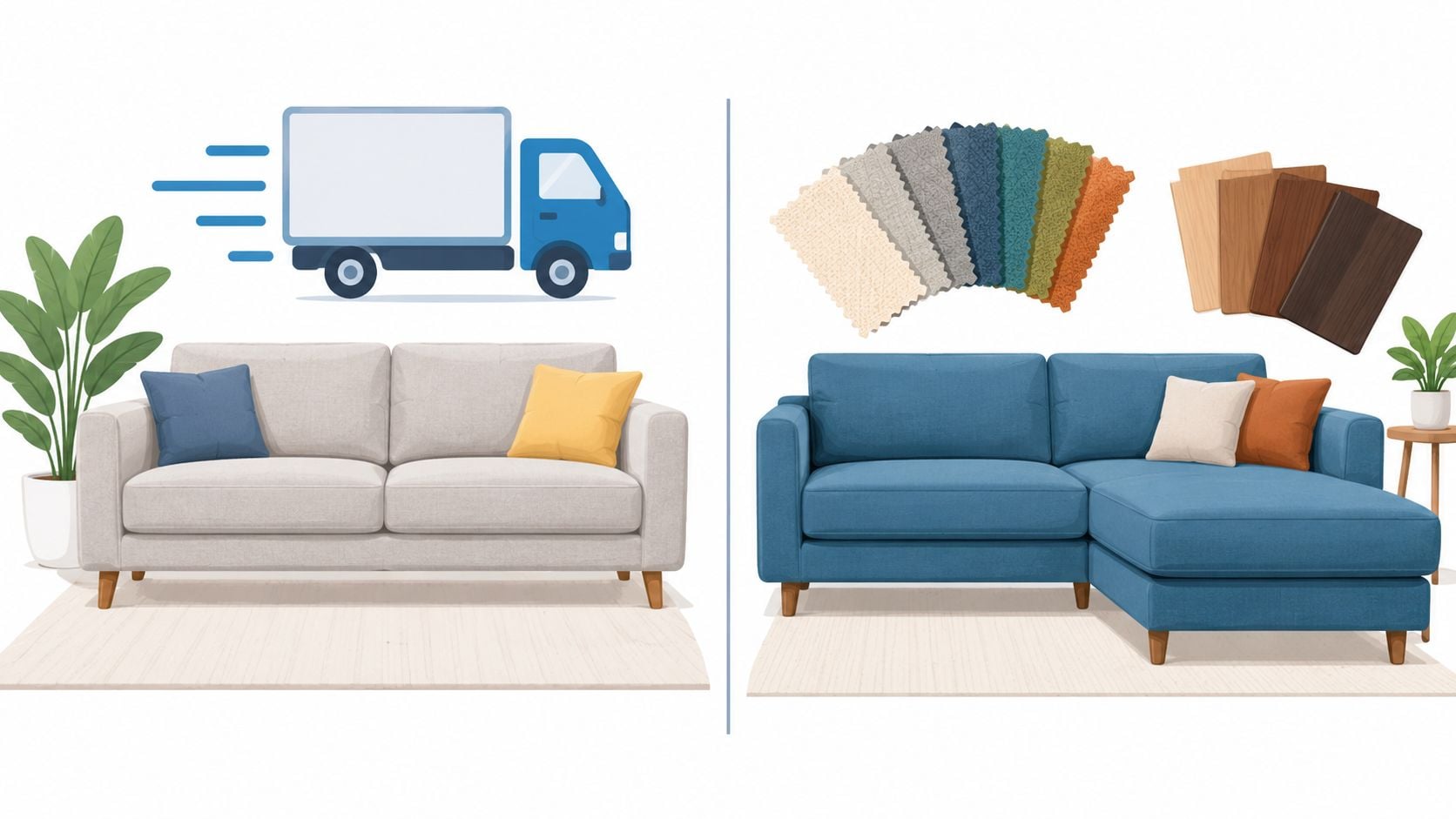
A useful starting point for that route is the Gorins custom order guide, especially for shoppers comparing stock upholstery to made-to-order seating.
One practical option in this category is Gorins Furniture & Mattress, where shoppers can compare ready-floor models with custom living-room programs such as the F9 Custom Sofa series. Those programs let households fine-tune details like cushion feel, leg style, fabric, and other construction choices so the average sofa seat height becomes a starting reference instead of a fixed answer.
The broader Gorins advantage
That same custom mindset shows up across the store. Canadel Custom Dining offers thousands of combinations for dining spaces, and the showroom's broader selection includes Flexsteel and Best Home Furnishings for living room shoppers who want durable, investment-grade quality suited to their lifestyle.
For larger purchases, Promotional Financing with equal monthly payments can also lower the barrier to entry when a household decides that the right fit is worth planning for instead of settling fast.
Putting It All Together for Your Living Room
A good sofa decision gets easier once the process is simplified. Most shoppers don't need more opinions. They need a repeatable checklist.
A practical order for choosing seat height
Start with the sofa already in the home, even if it's worn out. Measure it empty, then measure it with someone sitting normally. That gives a baseline for what the household has been living with, and it often explains why a seat feels harder to get out of or less supportive than it used to.
Then compare that lived-in feel with body fit, room use, and surrounding furniture.
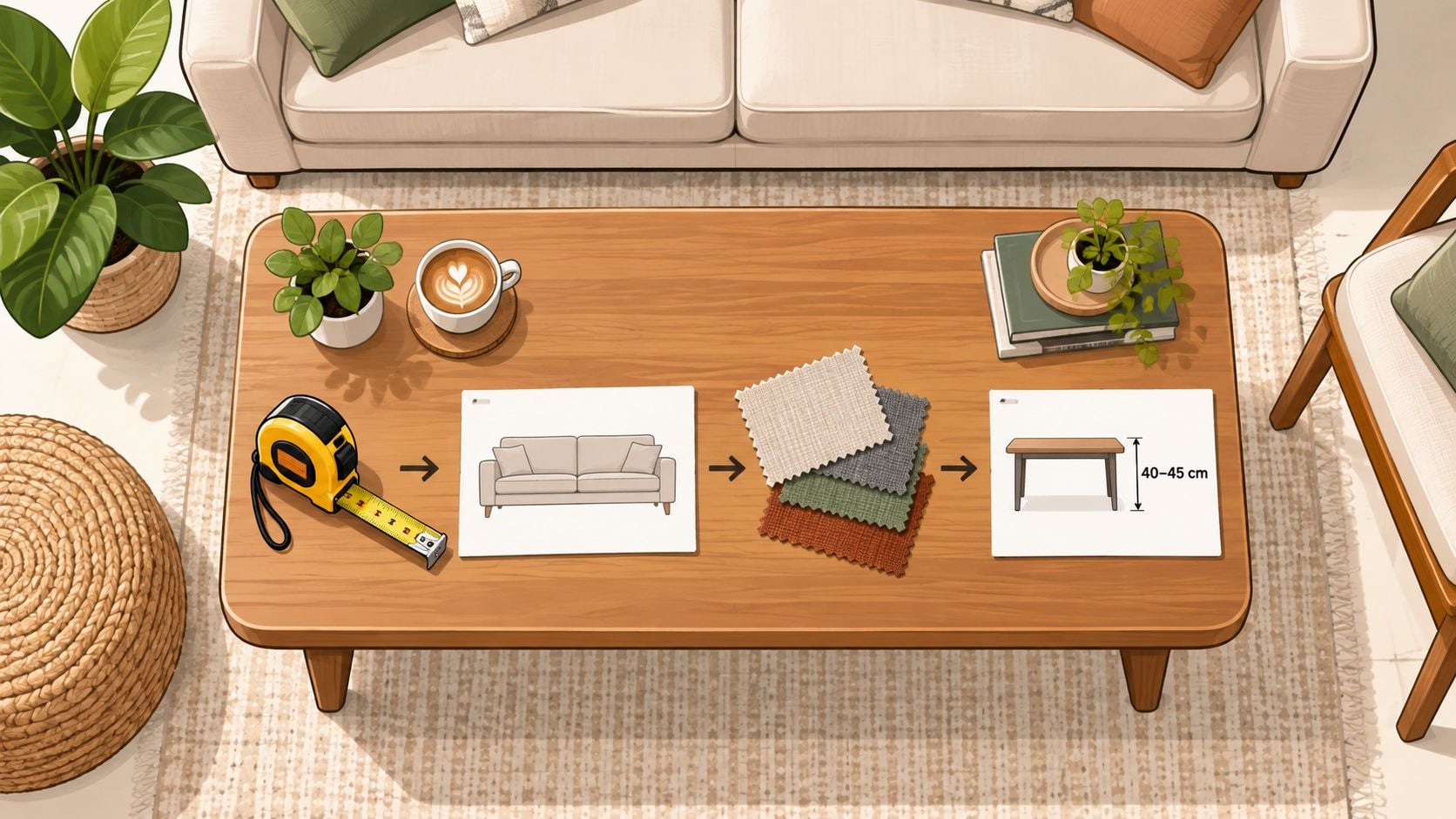
A short decision checklist
- Measure the current seat. Record both the showroom-style height and the compressed sitting height.
- Check lower-leg fit. The right seat lets the feet rest comfortably and doesn't force the knees too high.
- Choose the posture goal. Upright conversation, family lounging, recovery support, and TV-room sprawl don't all want the same seat.
- Match the style to the use. Standard sofas, low-profile frames, recliners, and custom pieces solve different problems.
- Verify nearby furniture. Coffee tables and ottomans should support the body instead of fighting the seating angle.
Why a sit test still matters
Numbers narrow the field. The sit test finishes it.
That's especially true in a local showroom setting, where neighbors can move between styles, compare firmer and softer cushions, and notice how a seat feels during the full sit-down and stand-up motion instead of judging by appearance alone. For households also shopping sleep, the same comfort-by-feel approach carries into The Sleep Gallery with Tempur-Pedic, Serta, and Beautyrest, where healthier sleep starts with how the body responds in person.
Since 1936, Gorins has helped Eastern CT families furnish with that kind of practical guidance. Whether the answer is a ready-floor sofa, a F9 Custom Sofa, or a value-focused clearance find, the most useful way to shop is still the same. Measure first, sit carefully, and choose the height that fits the people using it every day.
Since 1936, Gorins Furniture & Mattress has helped Norwich and Eastern CT families compare living room seating by real comfort, not guesswork. Shoppers can visit the Norwich showroom to test sofa seat heights in person, take the online Style Quiz to narrow the field, or browse the Clearance section for ready-to-deliver value with comfort already built in.