
How to Clean Upholstered Couch Without Soaking It

The coffee has soaked into the seat, a clean towel is already on the floor, and the bottle under the sink looks tempting. That's the moment to pause. A couch can survive a spill and still suffer permanent damage from the cleanup, especially when cleaner reaches the foam beneath the fabric.
Learning how to clean an upholstered couch starts with two decisions: what the cover permits and how the cushion will dry. More cleaning solution doesn't necessarily mean a cleaner sofa. Often, it means a larger ring, a damaged finish, or damp padding that takes far longer to dry than expected.
Find the Care Code Before You Clean
The tag seems to disappear just when it's needed. Common hiding places include beneath a seat cushion, behind the back cover, along the inside of a skirt, or underneath the frame. A phone photograph makes the label easier to read and keeps the instructions available before any product gets purchased.
The cleaning code, not the sofa's color or apparent toughness, determines the permitted method. NBC Select's couch-cleaning guidance explains the distinction between water-based, solvent-based, combination, and dry-only care.
Upholstery care codes and what each allows
| Code | Meaning | Safe approach | Avoid |
|---|---|---|---|
| W | Water-based cleaning only | Mild water-based upholstery cleaner, tested on a hidden spot | Solvent cleaners and heavy saturation |
| S | Solvent-based cleaning only | Upholstery dry-cleaning solvent or professional cleaning, with ventilation | Water, which can leave rings |
| W/S | Either water or solvent | Water-based cleaner first when appropriate to the stain, solvent only if needed | Mixing products |
| X | Vacuum or brush only | Upholstery brush and vacuum, with gentle dry brushing | Any liquid at all |
| None | No code, often older or imported pieces | Consult the maker or a professional, then test the approved method | Improvised household recipes |
When the label doesn't answer the question
An illegible tag isn't permission to experiment. The manufacturer should identify the fabric and approved care method; Gorins Furniture & Mattress customers with questions about a purchased piece can submit a service request or text the business.
Custom-order paperwork may also identify the upholstery selection and care instructions. Keeping those papers with the label photograph saves guesswork later.
A hidden test must check texture as well as color. A cleaner that doesn't transfer dye can still flatten the nap or change the finish. Vintage pieces and unidentified fabrics deserve a qualified upholstery cleaner rather than a trial recipe.
Practical rule: If the code says X, a damp cloth is already the wrong tool.
How to Clean Your Couch Step by Step
Routine cleaning should remove loose soil before anyone considers washing the fabric. The U.S. Environmental Protection Agency's indoor-air guidance recommends vacuuming furniture about once a week, or more often when needed, because upholstery collects dust, dander, and other biological particles.
A HEPA-filtered vacuum is especially useful in households managing allergies or asthma. Sensitive occupants should stay away from the immediate cleaning area because vacuuming can temporarily stir up particles.
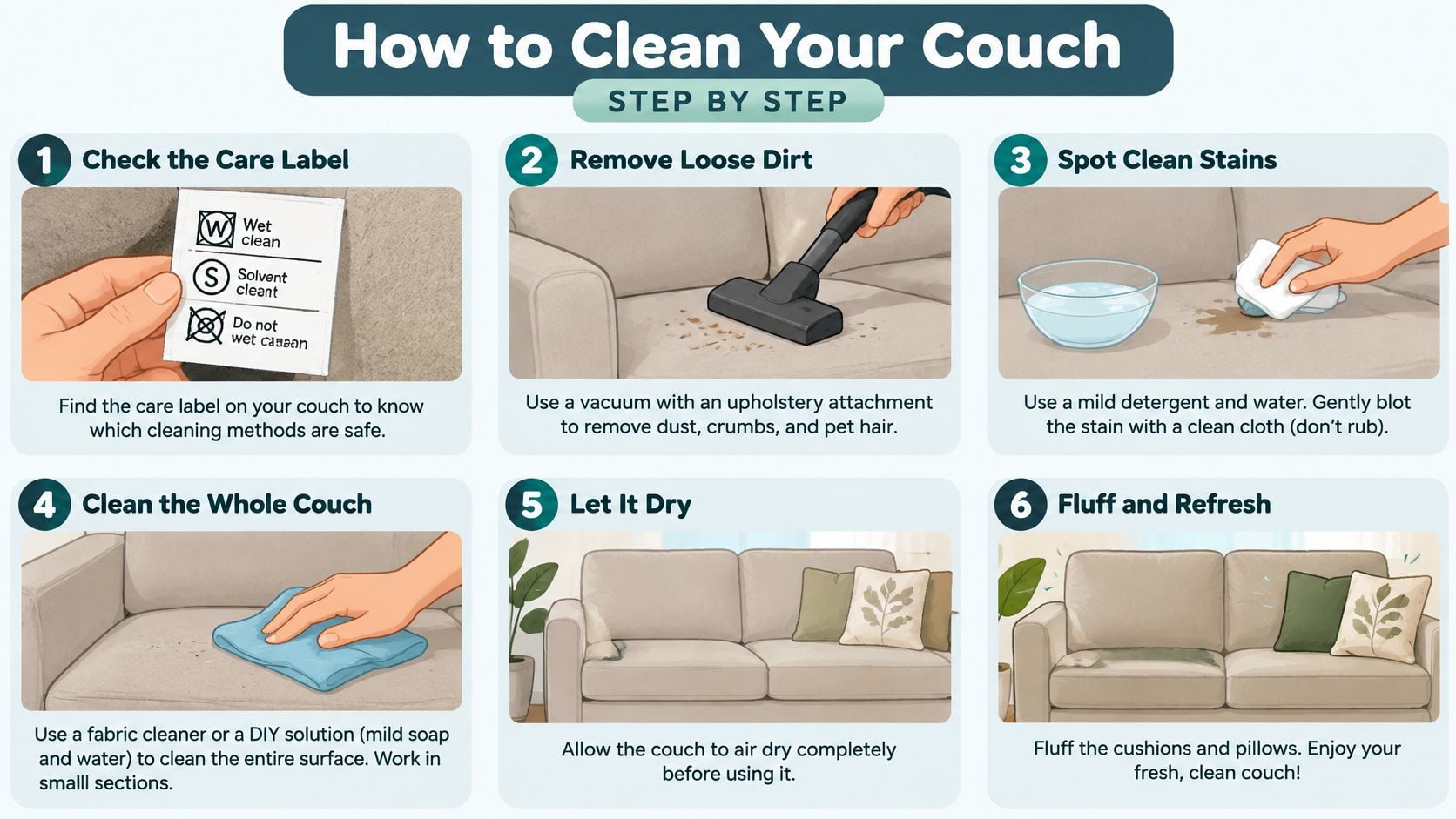
A controlled cleaning routine
The liquid steps below apply only when the care code and manufacturer approve them. An S-coded couch needs its specified solvent procedure, while X-coded upholstery stops after dry cleaning.
Remove cushions and vacuum thoroughly. An upholstery attachment should pass over both cushion faces, seams, piping, and the gap behind the seat deck, removing particles before they become muddy residue. The common miss is cleaning the visible seats while leaving debris beneath them.
Test the selected cleaner out of sight. An inside back-cushion panel can work if it uses the same fabric and finish as the stain area; the test must dry completely before treatment continues. Judging a wet test misses changes that appear only after evaporation.
Dampen a clean white cloth, not the couch. Applying a small amount of approved cleaner to the cloth gives better control and makes dye transfer visible. Spraying directly onto a cushion can send liquid beneath the cover before the surface looks wet.
Blot from the outside edge inward. Gentle pressure lifts the spill without enlarging the treatment area; rubbing belongs only in a manufacturer-approved method that the fabric clearly tolerates. Scrubbing harder when progress slows can abrade the face rather than remove the remaining mark.
Remove residue and recover moisture. For water-compatible fabric, a fresh, barely damp cloth can lift remaining cleaner, followed by firm pressure with dry towels or approved extraction. Leaving detergent behind can produce a stiff or sticky patch, while repeated rinsing can soak the padding.
Let everything dry before judging the finish. Temporary darkening isn't a reliable measure of success, so the final inspection should include the treated edge, seams, and neighboring fabric. Adding more cleaner while the first application remains damp is a common route to over-wetting.
What a finished result looks like
A successful treatment leaves an even tone, no new perimeter ring, and no sticky or stiff feel. Fabric that looks cleaner but feels rougher hasn't necessarily been improved.
The furniture care and maintenance guide offers a useful reference for ongoing care. Vacuuming belongs on a regular schedule; the complete wet-treatment routine belongs only where soil or spills justify it, not automatically across every cushion.
Treating Common Stains on Upholstery
Coffee hits a cream cushion and the instinct is to grab whatever cleaner is under the sink. Resist it. The first minute belongs to a dry white cloth and firm pressing, working inward so the spill stays contained instead of migrating across clean fabric. What you can see is only part of the problem, because liquid pushed deeper settles into padding that takes far longer to dry than the cover.
Care code still governs everything below. Water-based suggestions skip S and X upholstery entirely, and a household ingredient that's harmless on one fabric can strip the finish on another. More solution rarely means more cleaning. It usually means a wetter cushion and a bigger ring.
First response and treatment for common couch stains
| Stain | First step | Cleaner to try after approval and a hidden test | Avoid |
|---|---|---|---|
| Coffee or tea | Blot up excess immediately | Mild water-based upholstery cleaner | Rubbing and excess water |
| Red wine | Blot, then dab with cool water if permitted | Mild detergent solution on a cloth | Hot water, which can set the stain |
| Pet urine | Blot, then use minimal cool water if permitted | Upholstery-compatible enzyme cleaner | Ammonia, which can draw pets back |
| Grease or oil | Absorb with cornstarch or baking soda if approved, then remove thoroughly | Dry solvent for S codes, mild detergent for W codes | Soaking the fabric |
| Ink | Dab gently with a cotton swab | Isopropyl alcohol only when approved and tested | Wide wiping that spreads ink |
| Mold or mildew | Vacuum loose surface spores outdoors with a HEPA-equipped vacuum before any damp treatment | Mild detergent solution applied sparingly on W fabric, then immediate drying | Leaving the cushion damp |
Know when treatment has stopped helping
Coffee and wine call for restraint with the cloth. Pet accidents demand a judgment about depth, since treating the cover does nothing for urine held in the padding underneath. Grease needs absorption before any further cleaning, and ink requires a tightly controlled application over a small area rather than a broad wet patch.
The University of Georgia's textile guidance warns that over-wetting can produce circular discoloration and that excessive solvent can damage upholstery backing and foam. Solvent use requires ventilation, protective gloves, and the product's directions, even on S or W/S fabric.
If the stain spreads or dye appears on the cloth, stop and let the area dry. If a new ring forms or the finish changes under your cloth, set the cleaner down and reassess the care code before touching the fabric again.
Suspected mold inside padding isn't an ordinary stain-removal job. Surface treatment shouldn't be mistaken for clearing contamination beneath the cover.
For another beverage-spill example, the Maid in America stain removal guide addresses grape juice. Any suggested treatment still has to pass the sofa's care restrictions, and the furniture stain-removal guide provides an additional furniture-focused reference.
Choosing a Method by Upholstery Material
A family sofa with microfiber seats and a linen back can force two decisions on one piece of furniture. The seats may tolerate an approved damp-cloth treatment, while the back needs a lighter application to avoid visible edges. Treating both with the same wet pass sacrifices control for convenience.
Fiber content may appear on the upholstery label, fabric specification, or sales paperwork, and it explains why similar-looking sofas react differently. Material names still do not override care codes. One microfiber cover can require a different method from another, and a performance label is not permission to use any detergent or machine. More cleaning solution often means more residue, more dye movement, and more moisture pushed into the cushion interior.
Cleaning approach by upholstery material
| Material | Best method when manufacturer-approved | Main risk | Care note |
|---|---|---|---|
| Cotton or linen blend | Water-based cleaner, light pass | Shrinkage and water rings | Always test a hidden spot first |
| Microfiber or performance polyester | Mild detergent solution on a damp cloth | Matting if rubbed hard | Use light pressure and lift the fabric with a soft brush after drying if the surface stiffens |
| Velvet or chenille | Vacuum and brush with the nap | Crushed pile and water marks | Brush gently in one direction |
| Leather or faux leather | Barely damp cloth with mild soap or a finish-specific cleaner | Drying, cracking, and finish damage | Work on a small area, dry the surface right away, and never use fabric solvents |
| Wool | Approved cold-water spot treatment or professional care | Felting and shrinkage | Blot rather than rub, use minimal moisture, and avoid hot water and unapproved steam |
| Suede | Dry brush and suede eraser when suitable | Permanent water spots | Water is generally avoided |
Mixed upholstery needs separate decisions
Piping, contrast panels, leather accents, and decorative trim may react differently from the seat fabric. Each material needs its own hidden test, especially at a boundary where liquid could carry dye from one fabric into another.
A removable cover is not necessarily machine-washable. The zipper may exist for manufacturing or cushion access rather than laundering. Even when a cover can come off, wetting the cushion beneath it creates a different problem: the surface may look clean while moisture stays inside the padding. That calls for drying, not another round of solution.
When selecting upholstery for a future custom sofa, the guide to upholstery materials helps connect fabric choice with everyday use. Choosing a documented, cleanable upholstery before manufacture is more useful than hoping a difficult fabric will become easy to maintain.
Drying Fast Enough to Prevent Mold
A cushion can feel dry on top while its foam, batting, and underside are still damp. A clean-looking cover proves nothing about the padding underneath.
The EPA's mold-remediation guidance recommends water extraction and accelerated drying with fans and dehumidifiers, and it treats a 24–48-hour drying window as the practical risk guideline since upholstered furniture can be difficult to dry completely within 48 hours. I plan for the early side of that window, because foam and batting hold moisture long after the cover stops feeling wet.
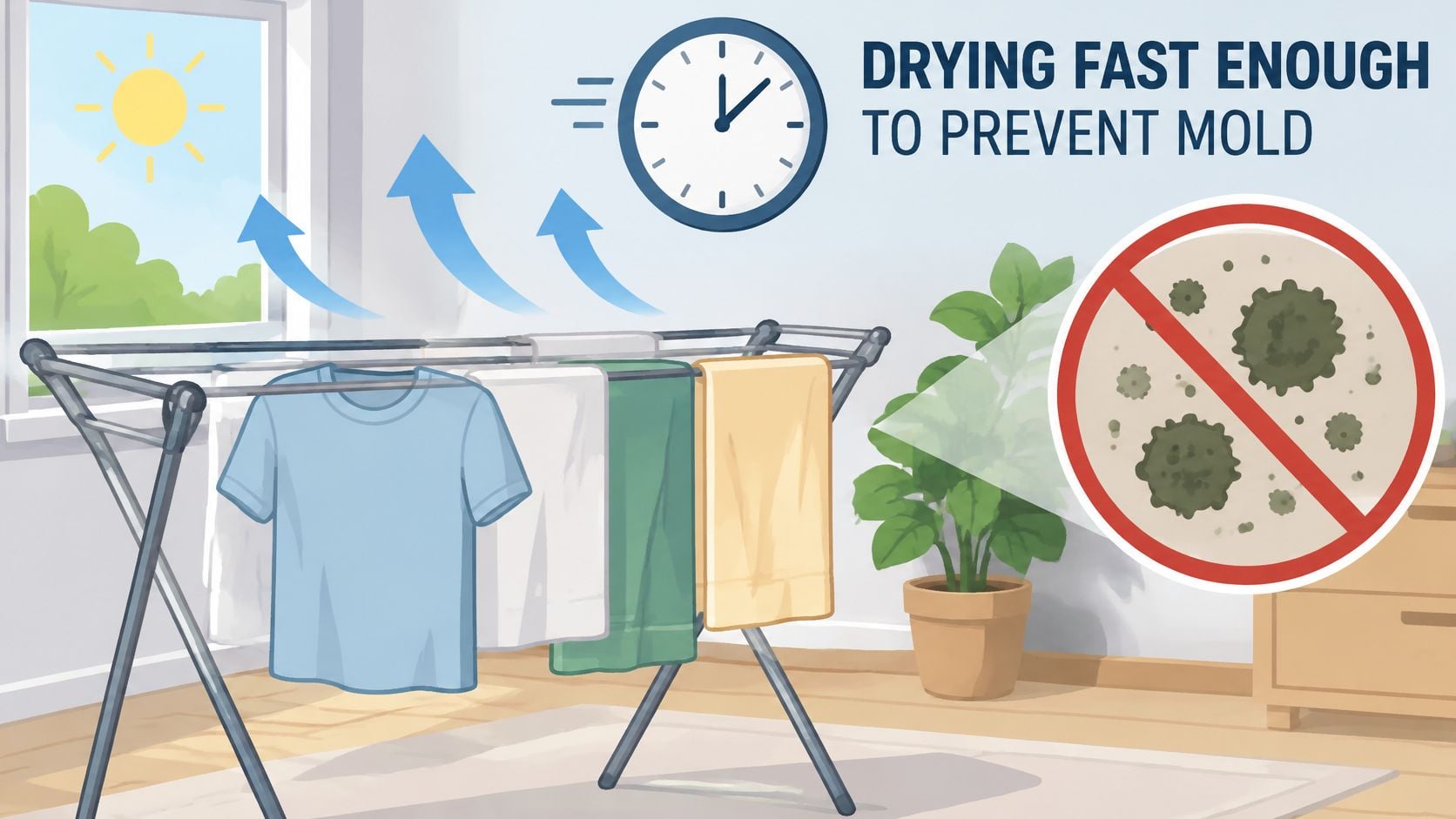
Give moisture a way out
- Recover water first. An upholstery-compatible water-extraction machine can pull absorbed liquid out of the padding; without one, clean dry towels pressed firmly against the area are preferable to more washing.
- Separate removable cushions. Stand them on edge with stable support so both faces get air and no damp side rests against the frame.
- Expose hidden areas. Undersides and seams need airflow too; drying only the cushion face leaves damp pockets that feed odor and mildew later.
- Move air across the furniture. Aim a fan so air crosses the exposed undersides and seams, and run a dehumidifier when the room itself is humid. Still indoor air lets moisture sit inside the foam even when the surface feels fine.
Attached cushions make drying harder because their undersides aren't readily accessible. Without suitable extraction equipment, treating a small surface mark is a different proposition from injecting solution throughout an attached seat.
Check before the couch returns to use
Press the cushion and feel along seams and undersides for cool, clammy spots. A clean dry towel pressed firmly against the cushion can pick up lingering moisture, but no household touch test can certify that a soaked core is dry.
Reuse check: Dry fabric alone isn't enough. Damp seams, moisture beneath the cushion, or a musty odor mean the couch stays out of use.
Floodwater, sewage, visible mold inside padding, or prolonged saturation call for professional assessment instead of another household cleaning attempt. Porous cushions may need replacement, and contaminated furniture is often safer to discard than to salvage.
Habits That Keep Your Couch Clean Longer
A couch stays cleaner when the room around it does part of the work. Most of the wear I see traces back to a handful of cheap habits, and none of them involve a spray bottle.
- Rotate suitable cushions. Swapping positions and flipping reversible cushions spreads body oils and soil across the whole seat instead of letting the favorite spot take every sitting. One-sided cushions can still swap positions, but they stay right side up.
- Keep the sofa off damp walls. A couch pressed against a leaking window or a persistently damp wall wicks moisture into the back fabric and padding, where mold grows unseen. A few inches of clearance lets air move behind the frame.
- Limit direct sunlight. Curtains or a different position in the room reduce uneven fading, which ages fabric faster than dirt does.
- Watch room humidity. The EPA's mold and moisture guidance recommends staying below 60% relative humidity, ideally 30–50% when practical.
- Ask questions before hiring a cleaner. Before any professional work starts, I'd want the cleaner to name the fabric's care code, explain which method they plan to use on it, and say how they'll get the cushion interiors dry. Anyone who answers all three without hesitating has thought about your sofa, not just the job.
Hair that settles on rugs doesn't stay there; foot traffic and pets carry it straight back onto the seating. Carmen Family Cleaning's guide to pet hair removal for carpets covers that neighboring source.
For spill-prone households, the performance-fabric guide is worth reading before the next sofa purchase, since some weaves shrug off spills that would stain others permanently. The soundest habit is also the least glamorous: use less product, and give the fabric time to dry fully.
Decide Whether to Clean or Replace Your Couch
A couch that still smells musty after a careful cleaning is telling you something: the soil was never only in the fabric you could reach. Surface dirt on sound upholstery favors cleaning. W and W/S codes suit controlled home spot treatment, S-coded or vintage pieces merit professional help when a safe test is not possible, and X fabric permits dry maintenance only.
The harder call is the padding. Water that reached the cushion interior and stayed damp, recurring odor, mold inside the cushions, or foam that has lost its resilience all make another round of surface treatment a poor investment. Adding more solution to a contaminated interior usually just traps more moisture against the foam. My rule of thumb: if odor returns within days of a proper drying, the interior is the problem. The guide to signs it is time to replace furniture helps separate cosmetic wear from a sofa that no longer serves the household.
Practical next steps
- Visit the Norwich showroom. Seeing, touching, and comparing furniture, mattresses, and home décor in person is the most reliable way to judge an easier-care replacement, and staff can advise on fabrics and configurations.
- Take the online style quiz. The quizzes help identify your design style across living room, bedroom, dining room, and home office furniture.
- Browse the Clearance section. Advertised savings run up to 70% off, which matters if replacement is the honest answer.
If cleaning has reached its limit, Gorins Furniture & Mattress serves Norwich, Plainfield, New London, and surrounding Connecticut and Rhode Island communities with custom order programs such as the F9 Series sofas and Canadel custom dining, plus promotional financing with "No Interest if Paid in Full" plans, subject to credit approval.