Furniture Care and Maintenance: A Complete Homeowner Guide


Furniture damage rarely begins with a dramatic accident. It starts with a damp room, a neglected spill, a loose joint, or a sofa that never gets vacuumed beneath the cushions. The financial consequences are substantial: a SquareTrade study summarized by Furniture Today's report on furniture repair costs found that 82 million Americans spent an estimated $23.5 billion replacing and repairing damaged furniture, with the average repair costing $287.
For homeowners in Norwich, New London, Plainfield, Waterford, and nearby Eastern Connecticut and Rhode Island communities, furniture care and maintenance is less about polishing everything constantly and more about matching the routine to the material. Wood responds to humidity, upholstery holds dust and moisture, leather needs controlled conditioning, metal needs protection from corrosion, and mattresses perform better when their support surfaces receive regular attention.
The Hidden Cost of Skipping Furniture Maintenance
The cost of neglect often appears after the original problem has spread. A water ring can penetrate a finish, a loose chair joint can strain adjoining hardware, and ground-in soil can leave upholstery looking permanently tired even when the frame remains sound. Furniture can be relatively new and still suffer from poor routines, particularly during its first years of heavy household use.
Sofas deserve particular attention. They accounted for 34% of reported damage incidents in the same Furniture Today summary. That fits the demands of a busy Norwich home, where a living-room sofa may handle meals, pets, children, work, naps, and daily relaxation. A high-use sectional or recliner can deteriorate through neglected dust, uneven cushion compression, direct sunlight, moisture, and spills left untreated, even when its construction is sound.
Maintenance protects more than appearance
Investment-grade furniture reflects several choices at once: comfort, scale, material quality, room function, and long-term value. A Flexsteel sofa, a Canadel dining set, or a solid bedroom collection deserves a routine that protects those choices instead of treating maintenance as an emergency response.
The cost of preservation is also visible in household spending beyond the United States. The FIRA Statistics Digest records UK consumer expenditure on furnishings, household equipment, and maintenance at £79.5 billion in 2022, easing to £76.1 billion in 2024. In the series shown, spending on repair of furniture, furnishings, and floor coverings rose from 14 in 2020 to 122 in 2024. Repair and preservation are established household concerns, not optional extras.
Practical rule: A few minutes spent removing soil, checking hardware, or controlling room conditions is easier to manage than an urgent repair after the material or structure has deteriorated.
Start with the pieces used most often. Living-room seating, dining chairs, kitchen tables, bed frames, and mattresses need more frequent attention than occasional accent furniture. In Eastern Connecticut, seasonal humidity swings make room conditions part of that routine, while daily use determines where inspections and cleaning should begin.
If a piece already feels unstable, uncomfortable, or persistently difficult to clean, compare repair costs with replacement before committing money to work that may not restore comfort or stability. The guide to signs it's time to replace furniture can help clarify that decision.
Wood Furniture Care and Humidity Control
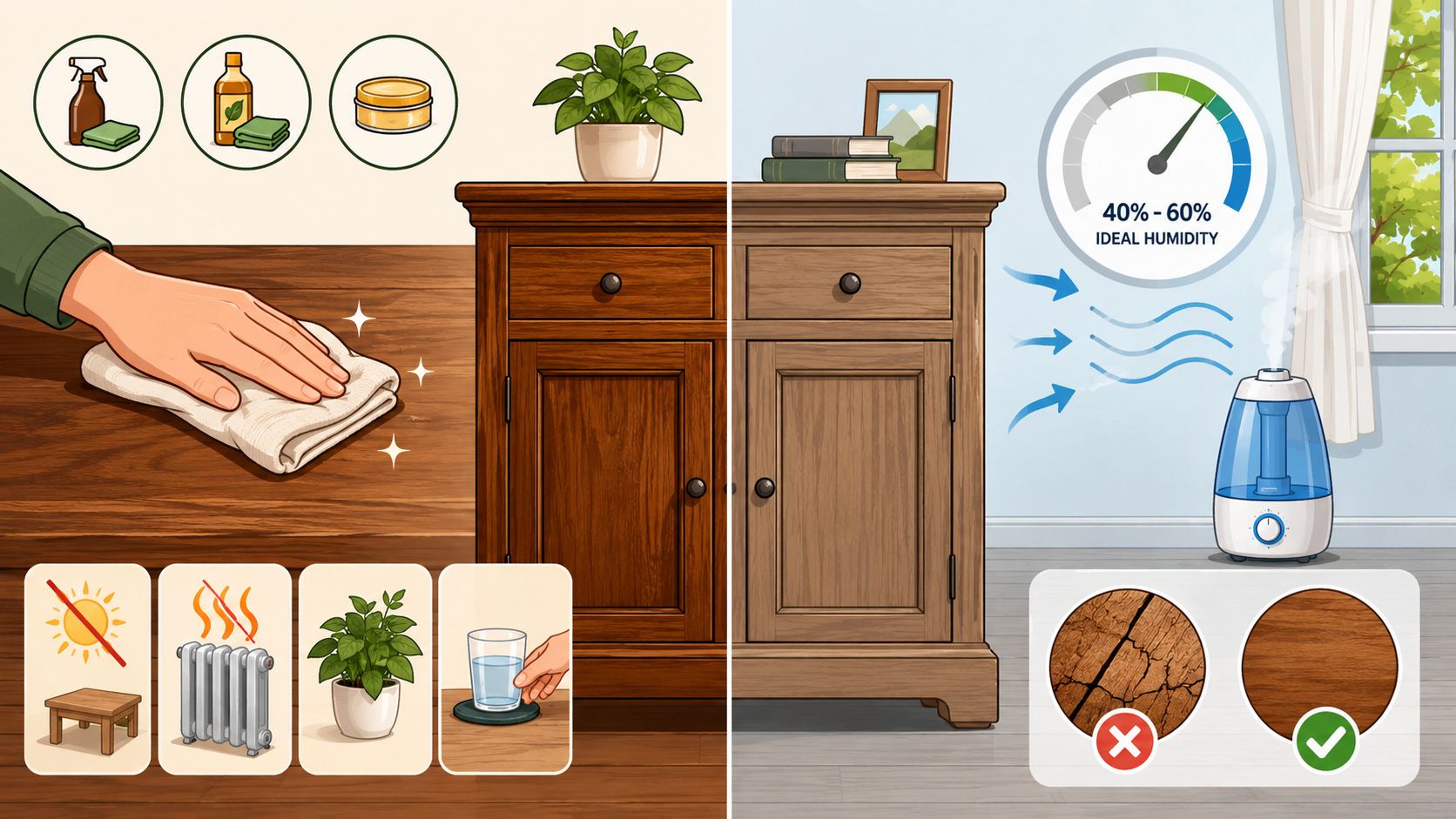
Wood is a responsive material, not a static surface. It swells when indoor air carries more moisture and shrinks when the air becomes dry, so Eastern Connecticut's seasonal changes can affect dining tables, bedroom furniture, occasional tables, and custom dining pieces. The safest approach combines gentle cleaning with stable indoor conditions.
Keep the room stable
Museum guidance for wood objects recommends targeting indoor relative humidity around 45% to 55%, while warning that RH shouldn't exceed 65%. Fluctuations should stay within roughly 5% over 24 hours, and RH above 70% increases the likelihood of mold and insects. Dry-climate conditions may tolerate 35% to 40%, while coastal settings may run at 55% to 60% if mold risk remains controlled, according to the National Park Service guidance on wood objects.
A hygrometer gives the household a useful starting point. Place it in the same room as the furniture, observe the reading across changing weather, and use a humidifier or dehumidifier when necessary. Keeping the room near 50% RH, rather than chasing a perfect number during every weather shift, provides a practical target.
The common mistakes are predictable:
- Large swings: Rapid changes can stress joints, panels, veneers, and finishes.
- Excess moisture: Persistent dampness can encourage mold and attract insects.
- Over-humidifying: Too much moisture can cause expansion, distortion, or finish problems.
- Heat concentration: Radiators, vents, and strong sunlight can dry or heat one area unevenly.
For households comparing climate-control approaches, a resource on how to compare AC systems in Toronto offers broader context about evaluating cooling systems. The furniture-care takeaway is local and simple: whatever equipment a home uses, it should help maintain a reasonably steady indoor environment rather than create sharp temperature or moisture changes.
Dust lightly and clean deliberately
Real wood furniture benefits from weekly dusting with a microfiber cloth, which removes grit before it can act like a fine abrasive. For deeper cleaning, use a slightly damp microfiber cloth, then dry the surface immediately. The cloth shouldn't be wet enough to leave standing moisture or seep into joints.
Excessive polishing and waxing often create a dull, oily surface instead of a cleaner one. Finish chemistry varies, so a manufacturer-approved product is safer than a generic spray. Coasters, placemats, table pads, and felt protectors also prevent damage before cleaning becomes necessary.
Early warning signs include joint separation, new movement in a table, cloudy finish areas, lifted veneer, and rough or unusually dry patches. The guide to protecting wood furniture from scratches and stains can help households build protection into everyday use, particularly around dining areas and work surfaces.
Upholstery and Leather Maintenance Routines
Upholstery usually deteriorates through accumulation rather than one dramatic event. Dust, crumbs, pet hair, body oils, and small spills settle into the fabric, while repeated sitting compresses cushions and concentrates wear in the same places. A gentle routine works better than occasional aggressive cleaning.
The IICRC S300 professional standard identifies monthly routine cleaning as a baseline for upholstered furniture, including vacuuming particulate soil and treating spills promptly. The IICRC S300 standard draft supports a material-specific approach rather than a single chemical solution for every sofa.
Use the fabric code as the starting point
Check the manufacturer's care information before applying water, detergent, solvent, or heat. Weekly vacuuming is a sensible household habit for high-use seating, followed by cushion rotation or fluffing where the design allows it. These actions remove loose soil and distribute compression before it becomes a visible flat spot.
When a spill occurs, blot it immediately with a clean cloth. Rubbing pushes the liquid outward and deeper into the fibers, while delay allows the mark to set. If the fabric instructions permit it, a slightly damp cloth and mild soap or water may be appropriate, but the surface shouldn't be saturated.
Avoid bleach, ammonia, hard-surface cleaners, abrasive products, and unapproved steam treatments. Harsh chemistry can weaken or discolor fibers, and excessive moisture can distort fabric, set stains, or leave residue that attracts more soil.
Treat leather as a finish, not a waterproof shell
Leather benefits from dust removal with a soft cloth and cautious spot cleaning with a lightly damp cloth. It shouldn't be soaked, scrubbed, or treated with an all-purpose household cleaner. Conditioning should follow the leather manufacturer's guidance, with enough product to maintain suppleness but not so much that the surface becomes sticky.
Seating position matters too. Rotating use between cushions and protecting leather from direct heat and strong sunlight can reduce uneven drying and wear. Households with children, pets, or frequent visitors may also find practical ideas in this guide to protecting a leather sofa with covers, provided any cover is breathable and doesn't trap moisture.
Material knowledge prevents many avoidable mistakes. The guide to upholstery materials helps buyers connect fabric choice with lifestyle, which is often more effective than trying to rescue an unsuitable material after years of heavy use.
Metal Furniture and Mattress Care Essentials
Metal furniture can look maintenance-free, yet dust and moisture collect around joints, fasteners, welds, and feet. Dining chairs, bed frames, and occasional tables all need occasional checks. Outdoor pieces face greater exposure, so corrosion can develop before the surface looks seriously damaged. Catching small faults early prevents loose frames, stained flooring, and expensive finish repairs.
Keep metal dry and secure
Wipe metal surfaces with a soft, damp cloth when needed, then dry them thoroughly. During routine cleaning, inspect joints, welds, feet, and visible fasteners. If a frame rocks, a screw loosens, or a connection creaks under ordinary use, tighten the hardware with the correct tool before the weakened joint carries more weight.
Address rust as soon as it appears. Remove loose corrosion using a method suitable for the finish, dry the area fully, and apply a protective coating only when the manufacturer allows it. Outdoor furniture should be covered during severe weather and stored appropriately when its design permits.
Use gentle materials on decorative finishes. Abrasive pads can strip protective coatings and leave scratches that retain moisture. The practical aim is simple, preserve the barrier between the metal and its environment.
Give mattresses a schedule
Mattress care affects comfort, cleanliness, and service life. Follow the instructions supplied with the mattress, particularly before rotating or flipping it. Many mattresses are designed for rotation only, while one-sided models should not be flipped. Adjustable bases may also require clearance checks before the mattress is moved.
A protector helps shield the sleep surface from moisture and soil, but it does not replace inspection. Vacuum the surface periodically to remove dust and dirt that settle beneath bedding. For spills, use minimal moisture and a mild cleaning solution permitted by the manufacturer, then allow the mattress to air-dry completely before replacing the sheets.
A practical routine is outlined in these mattress maintenance and cleaning tips. Check the mattress after cleaning for lingering dampness, stains, sagging, or damaged seams. Rotating on the schedule stated in the care documentation can help distribute wear, but forcing movement on a non-rotating model can damage its construction or create a safety issue.
For households choosing new sleep products, the Gorins Sleep Gallery includes Tempur-Pedic, Serta, and Beautyrest, with guidance focused on comfort by feel and healthier sleep rather than relying on labels alone.
Your Seasonal Furniture Maintenance Calendar
A workable calendar shouldn't turn furniture care into a second job. Norwich households can tie a few checks to seasonal changes, especially when heating, cooling, sunlight, and outdoor moisture alter the indoor environment.
| Season | Wood Furniture Tasks | Upholstery Tasks | Time Required |
|---|---|---|---|
| Spring | Check hygrometer readings, dust thoroughly, inspect joints and protective pads | Vacuum cushions and crevices, treat lingering winter odors, inspect high-wear areas | A short room-by-room session |
| Summer | Reduce direct sunlight, use coasters and mats, watch for excessive indoor moisture | Keep seating away from strong sun, rotate cushions, condition leather according to its care guidance | Brief checks during routine cleaning |
| Fall | Monitor humidity as heating returns, tighten hardware, replace worn felt pads | Vacuum before windows close for the season, check cushion compression, review fabric-care labels | One focused maintenance session |
| Winter | Keep furniture away from concentrated heat, maintain stable RH, dry spills promptly | Limit heat exposure, clean gently, inspect leather for dryness and upholstery for settled soil | Small checks throughout the season |
Spring and summer priorities
Spring is a useful time for a deeper vacuum, dusting behind furniture, and checking whether the indoor environment has changed as heating systems shut off. A hygrometer helps identify whether a room is trending too damp or too dry before wood movement becomes visible.
Summer care is mostly defensive. Close blinds or reposition pieces exposed to strong direct sun, keep drinks on coasters, and avoid placing damp items on wood. Leather should be conditioned only with a compatible product and according to its care instructions, not on an automatic schedule that ignores the finish.
Fall and winter priorities
Fall is the important transition point in Eastern Connecticut. As heating returns, monitor RH, check felt pads beneath lamps and decorative objects, and inspect dining chairs for loosened joints before holiday gatherings. The fall furniture maintenance checklist provides a useful prompt for this seasonal reset.
Winter calls for stable conditions rather than excessive intervention. Keep wood and leather away from direct heat, dry any spills quickly, and avoid placing furniture where vents blow continuously across one surface. These habits apply to Best Home Furnishings, Vaughan-Bassett, Tempur-Pedic, and other investment pieces alike. Materials respond to their environment regardless of the label.
When to DIY and When to Call a Professional
DIY maintenance is sensible when the task is reversible, visible, and limited in scope. Dusting, vacuuming, rotating cushions, checking humidity, tightening accessible hardware, replacing felt pads, and treating a fresh spill according to the care label generally fit that category. The right tools are modest: microfiber cloths, a soft brush, a hygrometer, a suitable screwdriver, coasters, felt pads, and manufacturer-approved cleaning products.
A homeowner should stop before attempting structural or finish work. A split frame, unstable recliner mechanism, separated veneer, major water damage, broken spring system, extensive staining, or failed finish requires assessment because the wrong repair can reduce the piece's value and complicate professional restoration.
A simple decision test
Ask three questions before starting:
- Can the material be identified? If the finish, fabric code, leather type, or coating is unknown, avoid experimenting.
- Is the problem cosmetic or structural? A surface mark may be manageable, but movement, cracking, sagging, or instability calls for trained attention.
- Would a failed attempt be expensive? Refinishing, reupholstery, and mechanism repairs are difficult to reverse once the original surface has been altered.
Professional help makes sense for reupholstery, leather restoration, wood refinishing, deep upholstery cleaning, and warranty-related issues. A service department can also clarify whether a problem results from manufacturing, normal wear, environmental conditions, or an unsuitable cleaning method.
Gorins Furniture & Mattress, a locally owned, family-operated Norwich business founded in 1936, can help customers identify appropriate care options through its showroom and service support. The business also offers Canadel Custom Dining and the F9 Custom Sofa series, with thousands of combinations available for homeowners seeking furniture customized for their lifestyle. Promotional Financing with equal monthly payments, subject to approval and program terms, can help lower the barrier to investment-grade pieces without reducing care standards.
Since 1936, Gorins Furniture & Mattress has helped Norwich and Eastern CT families create homes they love. From custom-designed Canadel dining sets to the latest in Tempur-Pedic sleep technology, they combine a massive selection with the personalized care only a local, family-owned business can provide. Visit them today to experience quality, value, and their 5-Star Delivery service.
For material-specific guidance, custom Canadel dining and F9 seating options, and sleep support from Tempur-Pedic, Serta, and Beautyrest, visit Gorins Furniture & Mattress in Norwich. The showroom team can help match furniture to household use, explain care requirements, review Promotional Financing with equal monthly payments, and point shoppers toward the online Style Quiz or Clearance section when value-driven options fit the project.