How to Break In a New Mattress: Gorins’ Expert Guide


A new mattress often creates the same reaction in a bedroom that a new appliance creates in a kitchen. It looks great, it smells new, and the expectations are high. Then the first night happens, and the most common thought is simple: why does this feel firmer than it did in the showroom?
That reaction is normal. A mattress fresh from the factory hasn't had time to loosen, contour, and settle under your body. Your body also needs a little time to adjust, especially if you've been sleeping on an older bed that had already developed its own broken-in feel.
Families in Norwich have been dealing with this same moment for generations. The good news is that breaking in a mattress isn't guesswork. There's a right way to do it, a few shortcuts that help, and a few mistakes that can make the process slower or create uneven wear.
The Unboxing Excitement and the Firm Reality
The first few days with a new mattress can feel confusing. You finally replace the old bed, the delivery is done, the sheets go on, and instead of instant relief, the surface feels tighter and less forgiving than expected. That doesn't usually mean you chose wrong. It usually means the materials are still fresh.
A mattress break-in period works a lot like a good pair of leather shoes. At first, the materials hold their factory feel. After regular use, they start responding to pressure, body heat, and movement. Dense foams relax. Quilting settles. Comfort layers begin to match the way you sleep.
Why the showroom feel is different
A showroom mattress has usually been tested over and over. The floor model has already had some of the initial stiffness worked out of it. Your new bed hasn't. That's why the same model can feel firmer on night one at home.
If you're still trying to sort out whether what you're feeling is normal break-in or a true firmness mismatch, this guide on how to pick mattress firmness can help frame the difference.
Practical rule: Don't judge a brand-new mattress by the first night. Judge it by how it responds after consistent use and proper setup.
What's actually changing
Several things happen at once during break-in:
- Foam starts relaxing as it responds to body weight and heat.
- Comfort layers settle and become less “factory tight.”
- Your body adjusts to a new support pattern, especially through the shoulders, hips, and lower back.
That last point is often underestimated. A supportive new mattress can feel unfamiliar because your body got used to sleeping on something worn out. The goal isn't instant softness. The goal is proper comfort over time.
Your Mattress Break-In Timeline by Type
Not every mattress breaks in at the same pace. Construction matters. A dense all-foam bed behaves differently from a responsive innerspring, and a hybrid sits somewhere between those two.
The broad industry range is 30 to 60 nights across major mattress types, with memory foam sometimes taking longer and latex adapting more quickly, according to Slone Brothers on mattress break-in periods. That's the right starting point for realistic expectations.
Mattress Break-In Timelines at a Glance
| Mattress Type | Typical Break-In Period | What's Happening |
|---|---|---|
| Memory foam | Up to 60 days | Dense foam gradually softens and conforms to body heat and pressure |
| Innerspring | A few weeks to 30 days | Coils need minimal adjustment, but the top comfort layers settle |
| Hybrid | 30 to 60 nights | Foam layers adapt while the coil system and comfort materials settle together |
| Latex | As little as two weeks | Resilient latex responds faster and tends to feel consistent sooner |
How the feel changes by category
A Tempur-Pedic style memory foam mattress usually takes the most patience. These foams are designed to respond slowly and contour closely, so early firmness isn't unusual. The initial feel can be noticeably tighter than what you remember from a tested floor model.
A Serta or Beautyrest innerspring often feels more ready right away because coils don't need the same kind of adaptation that dense foam does. Even then, the pillow top or quilt layer above the springs still needs some settling.
Hybrids create the most confusion for shoppers because they combine both experiences. The coil support feels familiar, but the foam comfort layers often need more time than people expect. If the top is substantial, the break-in can feel closer to a foam bed than a traditional spring mattress.
A mattress isn't “late” to comfort just because it still feels firm after a handful of nights. Different materials have different learning curves.
Why identifying your mattress type matters
The best break-in strategy depends on what's inside the mattress. Foam responds well to even pressure across the whole surface. Innersprings need regular use and proper rotation. Latex tends to adapt quickly, so if it still feels off after the early adjustment window, the issue may be more about support or firmness preference than break-in.
If you're not fully sure which category your bed falls into, this ultimate guide for choosing a mattress helps clarify the differences in feel, structure, and support.
A Practical Routine for Activating Your New Mattress
If you want to know how to break in a new mattress without abusing it, the answer is simple. Apply gentle, even pressure consistently, and rotate it on schedule. Don't jump on it. Don't ignore it and hope it magically changes. Treat it like a piece of investment-grade furniture that responds best to smart use.
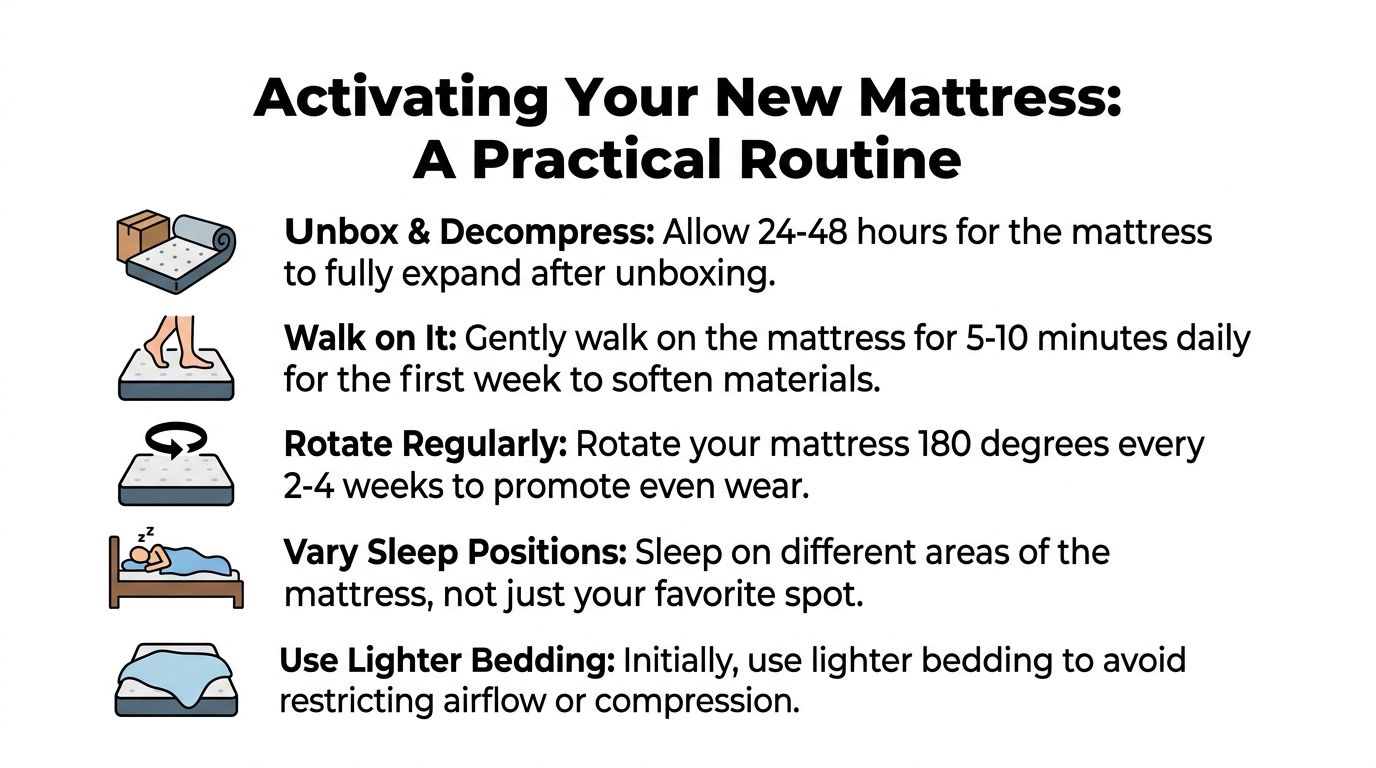
For hybrid and memory foam mattresses, a daily 5-minute quadrant rolling routine can produce 20 to 30% faster cell expansion than passive sleeping, according to Mattress Firm's break-in guidance. That's one of the few methods that gives people a practical way to help the process along.
The first-week routine
Start with setup. If your mattress arrived compressed, let it expand fully before you judge the feel. Give it time to open up in a ventilated room, then begin using it normally.
From there, use this routine:
Sleep on it every night
Consistency matters more than occasional “testing.” The mattress needs regular body weight and body heat across repeated nights.Use the full surface
Don't stay glued to one small spot. Sit near the edge at times, lie across different areas briefly, and avoid creating one early compression zone.Try gentle walking or crawling
Barefoot pressure can help foam loosen more evenly. Keep it gentle and controlled. This is not a trampoline test.
The quadrant rolling method
This is especially useful for memory foam and hybrids.
- Divide the mattress into four zones
- Spend about five minutes total
- Roll your body weight across each section
- Move side to side and head to toe
The point isn't force. The point is distribution. You're helping the foam open and respond across the entire sleep surface instead of only where you happen to lie for the night.
Workshop insight: Even pressure beats aggressive pressure every time. A mattress softens better when you work the whole surface, not when you punish one area.
The rotation schedule that actually helps
Rotation is where many people get lazy, and it shows up later as uneven feel. Head-to-toe rotation changes where the heaviest parts of your body land and gives the comfort layers a more balanced break-in pattern.
A good working routine looks like this:
- During the early break-in phase rotate head to toe every couple of weeks.
- After that move to a less frequent maintenance schedule based on the manufacturer's care instructions.
- Don't flip unless your mattress is specifically built as a double-sided model.
If you use an adjustable bed base, keep the mattress centered and check that the base is compatible with the mattress construction. A proper fit helps the bed flex as designed instead of fighting the support system underneath.
What doesn't work
A few methods sound helpful but usually backfire:
- Jumping on the mattress can damage internal components.
- Wearing shoes on the bed adds dirt and harsh point pressure.
- Skipping regular use slows the process.
- Leaving it on a bad foundation can make a new mattress feel wrong even when the mattress itself is fine.
Break-in works best when your actions are boring, steady, and repeatable.
Tips to Accelerate Comfort and Adjust Firmness
A break-in period doesn't mean you have to suffer through every night. There are ways to make a new mattress feel more livable while the comfort layers catch up.
One of the most useful facts for foam owners is this: practical techniques during the break-in period can reduce perceived firmness up to 50% faster for foam mattresses, and that same guidance points to gentle walking, consistent nightly use, and rotation every three weeks as the safest ways to speed up the process, according to NapLab's guide on breaking in a mattress.
Make the room work with the mattress
Foam is sensitive to temperature. A cold bedroom can make a memory foam mattress feel firmer and less responsive. A slightly warmer room often helps the surface feel more adaptable.
That doesn't mean turning your bedroom into a sauna. It means recognizing that if the room is chilly, the foam may feel slower and stiffer. People often blame the mattress when the environment is part of the story.
Check the foundation before blaming the bed
A mattress can only feel as good as the support underneath it. An aging box spring, bowed platform, or uneven frame can make a brand-new bed feel harder in one area and softer in another. It can also interfere with proper settling.
Use a foundation that matches the mattress type and manufacturer guidance. If your bed feels off from the first night and stays inconsistent across different areas, inspect the base before assuming the comfort layers are the problem.
Small comfort changes that help right away
You don't need dramatic fixes. A few modest changes often improve the first month:
- Use breathable bedding so the surface can respond naturally instead of being compressed under heavy layers.
- Lie on the bed outside sleep hours while reading or watching TV. Extra normal pressure helps.
- Consider a temporary topper if the feel is just a bit too firm. Keep it light enough that the mattress underneath can still continue breaking in.
If your sleep position is part of the problem, this guide on choosing the right mattress for your sleeping style is worth reviewing. Side sleepers, back sleepers, and combination sleepers often interpret “too firm” differently.
Comfort usually improves fastest when people make small, consistent adjustments instead of chasing a miracle fix after one rough night.
Troubleshooting Off-Gassing, Sagging, and Other Concerns
Some concerns are part of normal break-in. Others point to maintenance issues or, less often, a product problem. Knowing the difference saves a lot of unnecessary stress.
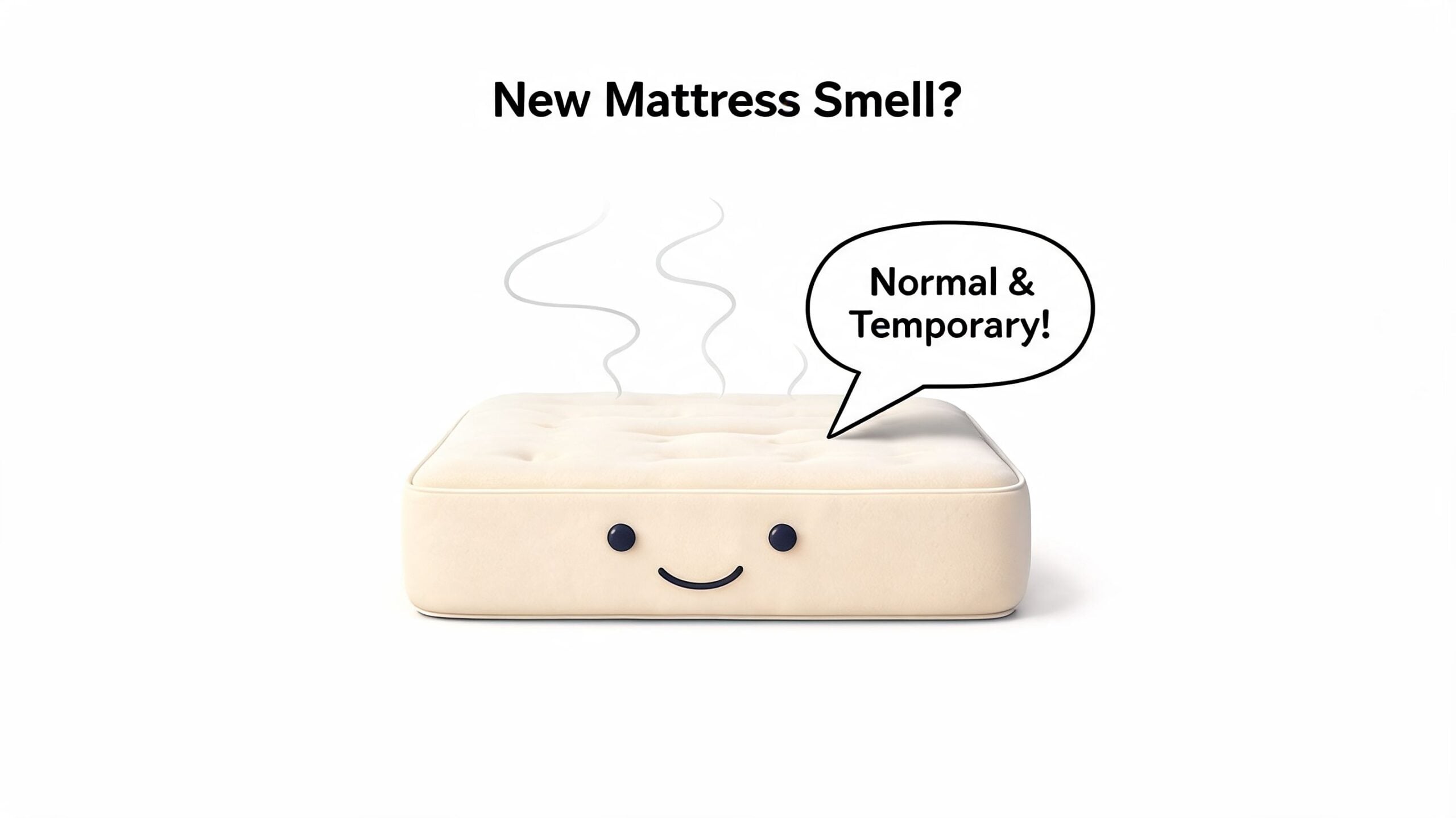
The new mattress smell
That fresh-from-the-factory smell is commonly called off-gassing. In most cases, it's temporary and fades with ventilation and time. Open windows when possible, let air circulate, and avoid sealing the mattress under heavy layers right away.
If you're trying to make the bed feel comfortable while still allowing airflow, this expert guide to layering bed linens offers practical ideas for balancing softness, breathability, and comfort.
Firmness versus a real problem
A new mattress that feels firmer than expected is normal. A mattress that develops a strange lean, obvious surface inconsistency, or unsupported area may be dealing with something else, often the frame or foundation.
One useful benchmark comes from a Mattress Firm study cited by Biltrite. 92% of customers were satisfied after 60 nights with proper rotation, compared with 70% without, and skipping rotation caused up to 35% more uneven wear in the first year, according to Biltrite Furniture's review of new mattress break-in. That tells you something important. Early uneven feel is often a care issue, not a defect.
What normal break-in can look like
These are usually normal during the adjustment period:
- Slight body impressions that are shallow and even
- A firmer-than-showroom feel
- Minor smell that fades with ventilation
- A different support sensation if you moved from an old sagging mattress
These deserve closer attention:
- Noticeable dipping in one zone only
- A ridge, lump, or misshapen area
- Support problems that match a weak frame
- No improvement at all after proper use and rotation
If the surface feels uneven, inspect the support system, rotate the mattress, and reassess before assuming the mattress failed.
Keep records and care for the mattress
Use a mattress protector, follow the care instructions, and keep notes on when you rotated the bed and when the feel changed. That makes troubleshooting much easier. It also helps if you need service support later.
For long-term care beyond the break-in period, these mattress maintenance and cleaning tips to extend its lifespan are worth keeping handy.
Frequently Asked Questions About New Mattresses
The questions below come up often because the first month with a new bed can feel a little inconsistent. Most of the time, the answer is patience plus proper care.
Quick Answers to Common Questions
| Question | Answer |
|---|---|
| Can I use a mattress topper during break-in? | Yes, if you need some temporary softness. A lighter topper is usually the better choice because it lets the mattress underneath continue adapting. |
| Is off-gassing dangerous? | The new smell is commonly temporary. Ventilation helps. If the odor is fading and the mattress is otherwise performing normally, that's usually part of the standard new-mattress experience. |
| How do I tell if it's just break-in or the wrong firmness? | Look for progress, not perfection. If the feel is gradually improving and the support is even, it's probably still adjusting. If the support feels fundamentally wrong across multiple nights and positions, the firmness choice may not fit your needs. |
| Should I rotate my mattress even if it's no-flip? | Yes. Most modern mattresses shouldn't be flipped, but many still benefit from head-to-toe rotation during early use and regular maintenance. |
| Will heavier bedding slow the process? | It can change the feel of the surface and reduce some airflow, especially on foam. During the first stretch, breathable and simpler bedding usually gives you a more accurate read on the mattress itself. |
A simple self-check
If you're unsure what you're feeling, ask yourself three things:
- Does the mattress feel more comfortable than it did the first few nights?
- Is the support even from side to side and head to toe?
- Does your discomfort feel like adjustment, or does it feel like pressure in the same spot every night?
If comfort is trending better, stay the course. If one issue keeps repeating with no change, it may be time to revisit the fit, your sleep position, or the support system underneath.
Your Norwich Partner in Perfect Sleep Since 1936
A new mattress rarely feels its best on night one. It usually gets there through regular use, proper rotation, a solid foundation, and a little patience. That's the practical truth behind how to break in a new mattress the right way.
Since 1936, Norwich families have relied on local, family-operated guidance when making important home purchases, and a mattress is one of the most personal investments in the house. Better sleep isn't about chasing gimmicks. It's about choosing quality, setting it up correctly, and giving the materials time to do their job.
The right mattress should support healthier sleep for years, not just impress for five minutes in a showroom. And when budget matters, Promotional Financing with equal monthly payments can make investment-grade comfort more manageable for growing households and value-conscious shoppers.
Since 1936, Gorins Furniture & Mattress has helped Norwich and Eastern CT families create homes they love. If you'd like help finding the right feel in Tempur-Pedic, Serta, Beautyrest, or other Sleep Gallery brands, visit the Norwich showroom for comfort by feel and helpful guidance. You can also take the online Style Quiz for personalized recommendations, or browse the Clearance section for value-driven savings. From custom dining with Canadel and thousands of combinations to the personalized care of a local, family-owned team, Gorins combines selection, quality, Promotional Financing, and 5-Star Delivery service for neighbors across Norwich, New London, Plainfield, Waterford, and surrounding Eastern CT and Rhode Island communities.