Brilliant Ideas for Small Kitchen Table Spaces


A small kitchen table can solve a room, or make it harder to use every single day. Around Norwich, I see the same problem again and again. The kitchen has just enough room to tempt you into adding a table, but not enough room to forgive the wrong one.
The desire is rarely for a showroom-perfect setup; instead, a practical space is sought for coffee, homework, takeout, bills, and a quick meal that doesn’t block the fridge or force everyone to turn sideways. Good ideas for small kitchen table layouts start with that reality. The right table should earn its footprint.
Since 1936, Gorins has helped Eastern CT families sort through these everyday furniture decisions without the pressure and guesswork. Small kitchens are a perfect example of where careful sizing, durable materials, and smart customization matter more than trend-chasing. And while style always matters, function decides whether you’ll still love the table a year from now.
From Cramped Corner to Cozy Hub
A cramped kitchen usually has two trouble spots. The first is the walkway that gets pinched the moment chairs come out. The second is the awkward corner that never quite works as prep space, dining space, or storage. That’s why the best ideas for small kitchen table setups begin with flow, not decoration.
Design trends have moved in that direction too. Small round kitchen tables have emerged as the dominant design trend in 2025, reflecting how many people are prioritizing space efficiency and multifunctional design, according to FabDivine’s 2025 dining table trend review. That tracks with what works in real homes. A compact table that softens traffic patterns and handles more than one job usually outperforms a larger, fussier piece.
Small kitchens don’t need a “space saver” that feels temporary. They need a table sized so well that the room starts working better around it.
Our neighbors in Norwich, New London, and Waterford often come in thinking they need the smallest table they can find. Usually, they need the right shape, the right base, and a finish that can live with daily wear. That’s a different decision entirely.
A few practical resets help before you shop:
- Think daily use first: If the table will handle breakfast and laptop time, don’t choose a delicate piece that only looks good in photos.
- Treat the nook as a work zone: Kitchens need circulation. Your table has to cooperate with cabinets, appliances, and cleanup.
- Look at the whole room: Color, light, and furniture scale matter. If you’re also trying to visually open up the room, Gorins’ guide on how to make a small room feel big is a helpful companion read.
If you’re planning a broader refresh, SouthRay's small kitchen design tips offer useful ideas for layout and storage thinking before the table ever arrives.
Measure Twice Choose Once
People rarely regret measuring carefully. They often regret assuming a table will “probably fit.”
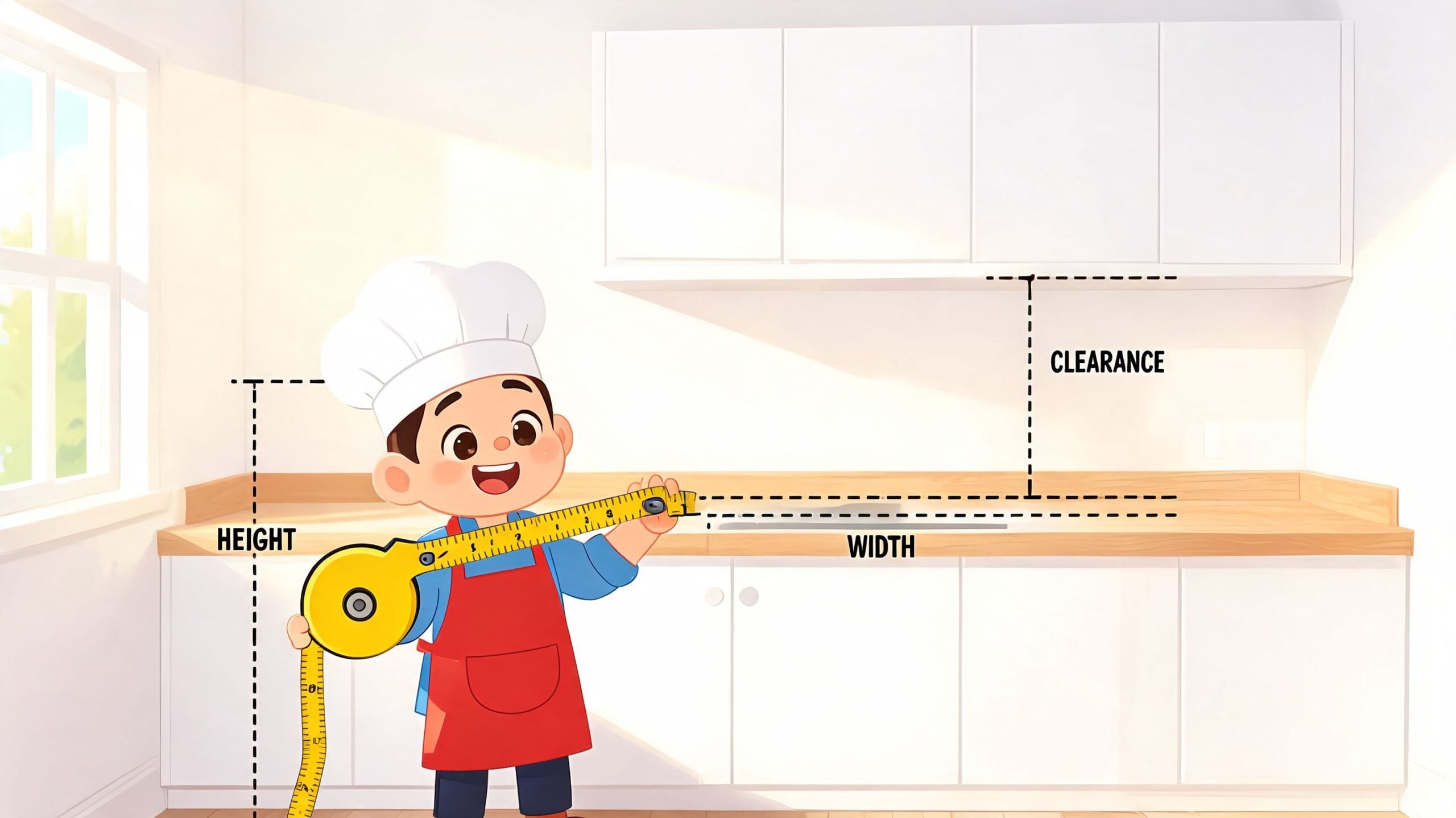
The most important rule is simple. Industry guidance specifies at least 36 inches of clearance between the table edge and adjacent surfaces so people can move safely and use the space comfortably, as noted by Plus Rooms’ small kitchen table guide.
Start with the room, not the table
Measure the full area where the table will sit. Then mark out nearby cabinets, islands, radiators, and appliance doors. A kitchen table doesn’t live by itself. It lives inside a set of moving parts.
I usually tell people to map the footprint with painter’s tape on the floor. That reveals the problem fast. A table that sounds compact on paper can feel oversized once you see where chairs pull out.
For a cleaner measuring process, Gorins also has a practical guide on how to measure furniture.
Use a simple measuring checklist
Work through these points before you browse styles:
- Measure wall to wall in the nook or open floor area.
- Subtract clearance space around the future table footprint.
- Check swing zones for the refrigerator, oven, and nearby doors.
- Test chair pull-back by standing where a seated person would need room.
- Note pinch points where traffic naturally crosses the kitchen.
Practical rule: If the chairs have to stay tucked in for the kitchen to function, the table is too large for the room.
A small kitchen should still feel easy to move through when someone is seated and someone else is cooking. That’s the standard. Not whether the tabletop technically fits inside the room.
Common measuring mistakes
A few mistakes show up often:
- Forgetting chair depth: People measure the top, not the seated footprint.
- Ignoring cabinet use: A table can fit and still block drawers and doors.
- Shopping by photo only: Online room scenes often hide the true scale.
- Measuring once: Recheck after noting trim, vents, and baseboards.
Good measurements narrow your choices fast. That’s a benefit, not a limitation.
Find the Perfect Shape and Size
Shape changes how a kitchen feels. In a small room, that matters as much as raw dimensions.
For seating four in a compact kitchen, expert guidelines recommend a square table around 36 to 40 inches per side or a round table 36 to 44 inches in diameter, with round tables often preferred because soft edges reduce bumps and pedestal bases can allow more chairs, according to Transformer Table’s sizing guide.

Round tables
Round tables are often the easiest win in compact kitchens. They soften the room, improve movement, and usually feel less bulky than a boxy top in the same area. In square-ish kitchens, they also calm down the visual hardness that comes from cabinets, counters, and appliance lines.
A pedestal base matters here. With fewer legs to dodge, seating is more flexible and the table feels less cramped underneath.
Square tables
Square tables work well when the room itself is square and the seating need is modest. They look balanced, and for two to four people they can feel neat and intentional. In a breakfast nook or corner setup, a square top can be very efficient.
The trade-off is rigidity. Seating positions feel fixed, and once you try to push past four people, the setup gets tight quickly.
Rectangular tables
Rectangular tables make the most sense in narrow kitchens and galley-style layouts. They can sit along a wall or align with the room’s long dimension without wasting space at the ends. If your kitchen is more long than wide, this shape usually deserves a serious look.
The downside is circulation. Corners project into walkways, and the room can feel more crowded if the proportions aren’t exactly right.
Here’s a simple side-by-side view.
| Shape | Best For | Pros | Cons |
|---|---|---|---|
| Round | Tight walkways, square kitchens, conversation-heavy use | No sharp corners, softer look, flexible seating | Less surface area, not ideal against a wall |
| Square | Small square rooms, breakfast corners, two to four users | Symmetrical, tidy footprint, balanced look | Seating feels fixed, can feel tight with guests |
| Rectangular | Galley kitchens, narrow rooms, wall placement | Efficient in long spaces, easy to align with layout | Corners interrupt flow, can look heavier |
Match the shape to the room
The best ideas for small kitchen table planning usually follow the room, not personal habit. A homeowner may prefer a rectangle because it feels more formal, but if the kitchen is compact and traffic cuts diagonally through it, a round table often performs better. Another person may love round tables, but in a long galley kitchen a slim rectangle can preserve valuable work space.
If you want a second opinion while comparing footprints, Room Sketch 3D furniture sizing is useful for visualizing table dimensions in proportion to the room.
For more guidance on fit, flow, and seating arrangements, Gorins’ article on maximizing your dining space with the right table shape is worth reading before you commit.
Choose Materials for Lasting Value
Small spaces get used hard. That’s the part many buying guides skip.
In a compact kitchen, the table doesn’t just host meals. It catches grocery bags, school papers, elbows, hot mugs, and the occasional rushed dinner prep. If the piece is flimsy, every wobble and scratch shows up faster because the table is doing more jobs in less space.
Why trendy materials can disappoint
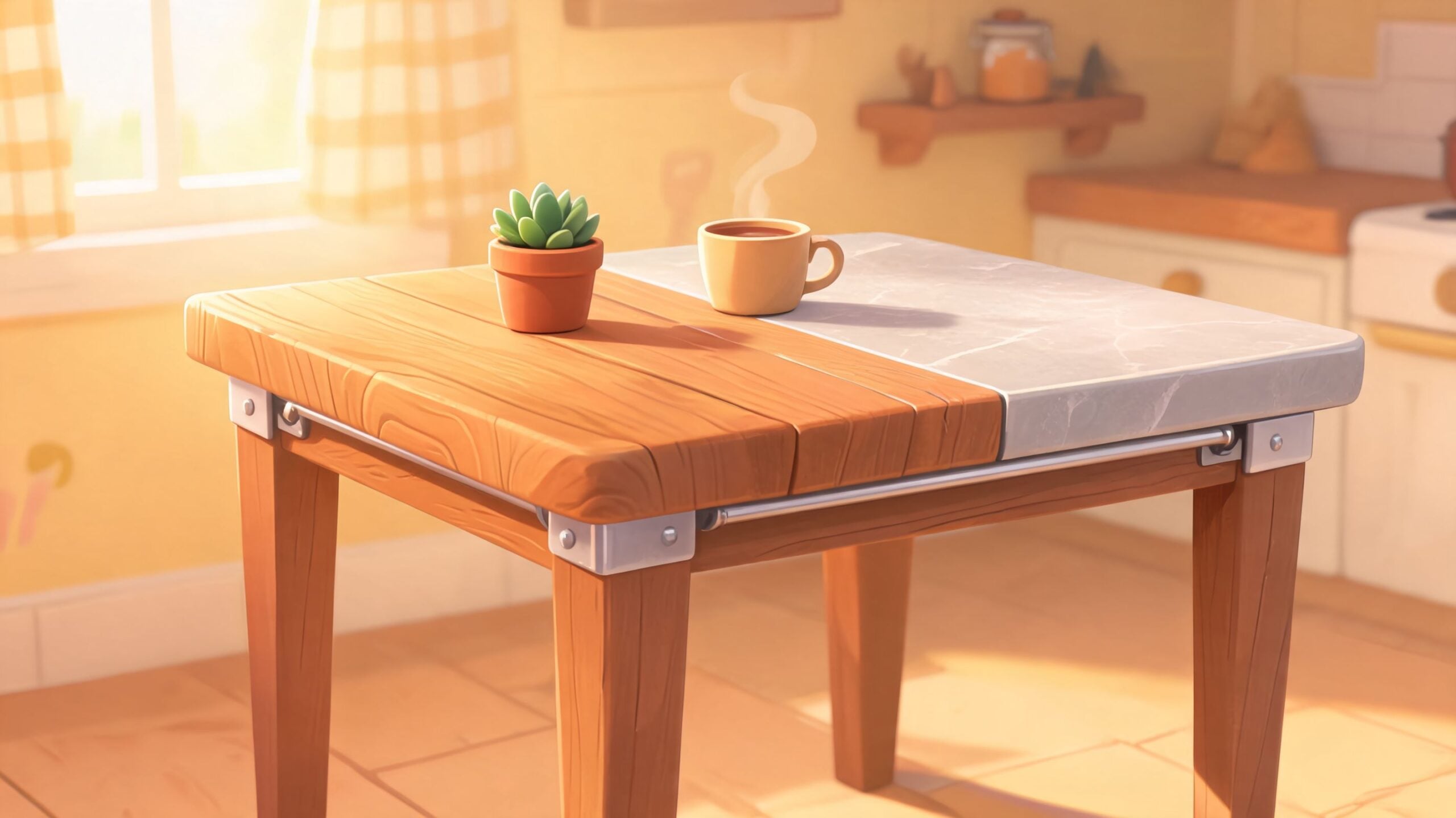
A lot of small-space advice pushes glass or metal because those materials can look visually light. That’s understandable, but it’s not always the right long-term call. While many guides suggest glass or metal tables for small spaces, durability is a major concern; some tests show high failure rates. For high-traffic family homes, opting for a custom solid wood table from a program like Canadel ensures longevity and can be built to withstand daily use without wear, as discussed in this Reddit HomeImprovement thread.
That doesn’t mean every metal or glass table fails. It means you should weigh the trade-off. A table that looks airy but chips, wobbles, or constantly shows fingerprints can become annoying very quickly in a busy kitchen.
If a kitchen table has to function like a daily workhorse, choose a material that gets better with use, not one that asks the household to be careful around it.
What holds up best
For long-term value, solid wood remains the material I’d steer most families toward. It has warmth, visual substance, and a forgiving quality that suits everyday life. It also tends to age in a way people accept more easily. A mark on wood often reads as use. A mark on glass often reads as damage.
Canadel Custom Dining excels. The line offers thousands of combinations of sizes, shapes, finishes, and fabrics, which is exactly what a small kitchen often needs. Not a generic “small table,” but a table designed for your lifestyle, your floor plan, and your tolerance for wear.
A better long-term mindset
Cheap fixes often cost more in frustration than they save upfront. Better to choose an investment-grade table once, especially if it’s going to live at the center of the kitchen for years.
That’s why a lot of shoppers in Eastern CT end up looking at customization instead of settling for whatever is boxed and available. Gorins Furniture & Mattress offers access to custom dining options like Canadel, which makes it easier to dial in dimensions, base style, finish, and seating without defaulting to a one-size-fits-all solution.
Incorporate Smart Seating and Storage
A small kitchen table works better when the seating strategy is just as intentional as the tabletop.
Many compact kitchens fail because the chairs are the problem. They jut into walkways, collect clutter, and make the table feel larger than it is. That’s why some of the strongest ideas for small kitchen table layouts involve rethinking what sits around the table and what sits beneath it.
Seating that disappears when you need floor space
Stools are useful in tight kitchens because they can tuck fully under the top. That one detail can make the room feel calmer between meals. Benches do something similar along a wall, especially in a breakfast nook.
A corner banquette can be even better if the layout allows it. It uses perimeter space efficiently and often makes a small kitchen feel more settled, almost like the room was designed around the table instead of squeezed in afterward.
Storage built into the dining zone
Small kitchen tables have evolved beyond a flat surface and four legs. Current design guidance favors pieces with integrated storage or dual-purpose utility, such as shelves underneath or tops that can also support prep work. That extra function matters in apartments and smaller homes where every inch has to work.
Look for features like these:
- Open lower shelving: Good for baskets, cookbooks, or daily-use items.
- Bench storage: Useful for linens, placemats, and overflow kitchen tools.
- Wall-hugging profiles: Narrow rectangular or bar-style tables preserve open work zones.
- Drop-leaf flexibility: Helpful when you need a compact footprint most days and more surface occasionally.
A small dining area feels larger when fewer pieces have to do more jobs.
If you’re pairing your table with hutches, sideboards, or compact storage pieces, Gorins’ guide to dining room storage furniture can help you think through the full setup instead of treating the table as an isolated purchase.
What usually works best together
The strongest combinations tend to be practical, not fancy. A pedestal table with tuck-under stools. A slim rectangular top with a bench on the wall side. A round table with a compact cabinet nearby so the dining zone also absorbs storage pressure from the rest of the kitchen.
Those combinations feel intentional because each piece solves more than one problem.
Create Your Perfect Kitchen Nook at Gorins
A good small kitchen table does four things well. It fits the room, supports daily use, holds up over time, and looks like it belongs there. Miss one of those, and the kitchen usually reminds you every day.
That’s why I’d always start with the practical side first. Measure the room carefully. Respect circulation. Match the shape to the layout. Then choose a material and seating plan that can keep up with real life. The style part gets easier once those decisions are right.
Where customization matters most
Small kitchens are rarely standard. One home has a tight square nook. Another has a narrow galley opening into the main room. Another needs a table that can double as a prep surface on weekdays and seat family on weekends.
That’s exactly where custom dining earns its place. With Canadel Custom Dining, you can sort through size, shape, finish, and chair or bench options in a way that makes the final piece feel permanent, not improvised. For many households, that’s the difference between a temporary fix and a beloved part of the home.
If you want to see how custom ordering works without making it feel complicated, Gorins breaks it down clearly in custom furniture made simple.
A practical next step for Norwich-area shoppers
Seeing scale, finish, and construction in person helps. So does sitting at the table and checking whether the base gives you enough legroom. That’s hard to judge from a product photo alone.
Since 1936, Gorins has helped Norwich, Plainfield, New London, Waterford, and surrounding Eastern CT and Rhode Island communities make those decisions with a local, low-pressure approach. If you’re balancing budget with long-term value, Promotional Financing with equal monthly payments can also make an investment-grade table more manageable.
Visit the Norwich showroom. Take the online Style Quiz. Compare custom options side by side. A small kitchen doesn’t need a compromise piece. It needs one that fits so well you stop thinking about the lack of space and start enjoying the room.
Visit Gorins Furniture & Mattress to explore custom dining options, take the Style Quiz, or stop by the Norwich showroom for help finding a kitchen table suited to your lifestyle. Since 1936, Gorins Furniture & Mattress has helped Norwich and Eastern CT families create homes they love. From custom-designed Canadel dining sets to the latest in Tempur-Pedic sleep technology, they combine a massive selection with the personalized care only a local, family-owned business can provide. Visit today to experience quality, value, and their 5-Star Delivery service.