Find Quality Bedroom Furniture For Sale Used in Norwich, CT


You've probably done it already. Sat on the couch at night, opened Facebook Marketplace or OfferUp, typed “bedroom set,” and started scrolling through a blur of mismatched dressers, dark photos, vague descriptions, and listings that say “good condition” without telling you a thing. One bed frame looks promising, one dresser is overpriced, and one nightstand might be great if it isn't falling apart in the back where nobody took a picture.
That is the experience of shopping for bedroom furniture for sale used around Norwich. There are deals out there. I've seen plenty of them. I've also seen swollen drawer bottoms, hidden veneer damage, and mattresses that should've gone straight to the curb.
Our neighbors in Norwich and across Eastern CT want the same thing. Real value, not junk dressed up as a bargain. Since 1936, family-owned showrooms in this area have earned trust by helping people separate solid pieces from expensive mistakes. If you're trying to furnish a bedroom without overspending, the smart move is to shop with a plan, not with wishful thinking. If you want a little extra guidance before you start, this advice on how to select the perfect bedroom furniture is a useful place to begin.
Your Guide to Finding Value in Used Bedroom Furniture
Used bedroom shopping usually starts with optimism and ends with compromise. A renter in Norwich wants a dresser under budget. A couple in Plainfield needs a guest room bed fast. A young family in New London wants decent storage without spending new-furniture money on every piece. Those are normal situations, and buying used can absolutely make sense.
The trick is knowing where used furniture works well, and where it doesn't.
A used wood dresser with strong joinery can be a smart buy. A solid nightstand with a few scratches can be cleaned up in an afternoon. A vintage chest can add character that newer case goods sometimes lack. But foundational pieces need a stricter standard. If the frame, drawers, hardware, or sanitation are questionable, walk away.
Practical rule: Buy used for character. Buy new for hygiene, comfort, and long-term support.
That's the hybrid approach I recommend every time. Hunt for the treasure where the risk is manageable. Be much pickier with sleep-related furniture and anything that takes daily abuse. That's how you stay on budget without filling your home with short-term fixes.
In Norwich, that matters more than people think. We have old homes, tight stairways, mixed room sizes, and plenty of shoppers trying to make inherited pieces, marketplace finds, and a few investment-grade purchases all work together. You don't need a matching set. You need pieces with good bones, sensible scale, and a job to do.
Where to Find Used Bedroom Furniture in Norwich and Eastern CT
The used furniture business isn't some fringe category anymore. In North America, the second-hand furniture market is projected to grow from US$ 13.81 billion in 2024 to US$ 25.62 billion by 2033, and wooden second-hand furniture holds a 39.33% revenue share, which tells you buyers still trust durable wood pieces when they shop resale (North America second-hand furniture market projections).
That lines up with what I see locally. People want solid wood dressers, practical bed frames, and nightstands that don't wobble.

Start with the online marketplaces
If you want speed and selection, online listings are the first stop.
- Facebook Marketplace gives you the widest local mix. Search by town names like Norwich, New London, Plainfield, Waterford, Groton, Westerly, and Mystic.
- OfferUp is useful when sellers include better photos and dimensions.
- Craigslist still turns up estate leftovers and older solid wood pieces, especially if you don't mind digging.
Your search terms matter. Don't just type “bedroom furniture for sale used.” Search specific items:
- “Solid wood dresser”
- “Vaughan-Bassett chest”
- “nightstand set”
- “queen bed frame wood”
- “vintage tall dresser”
Use local timing to your advantage
In Southeastern CT, the best used pieces often appear around moves, downsizing, and estate cleanouts. Watch listings at the end of the month and early in the week. Serious sellers often post then because they want the item gone before the weekend shuffle starts.
Bad photos don't always mean bad furniture. But bad descriptions usually mean extra work, and sometimes extra problems.
If a seller can't tell you wood type, dimensions, age, or whether drawers glide properly, assume you'll need to inspect carefully in person.
Don't skip physical stores and estate sales
Online shopping is convenient, but brick-and-mortar resale still has advantages. You can touch the piece, smell the piece, and check the back, underside, and drawer interiors before money changes hands.
Look for these options in and around Norwich and Eastern CT:
| Source | What you'll likely find | Local pro tip |
|---|---|---|
| Consignment shops | Better-curated dressers, mirrors, nightstands | Visit midweek. Fresh intake often hits the floor before weekend traffic |
| Thrift stores | Lower prices, mixed quality | Focus on small case goods, not upholstered pieces |
| Estate sales | Older wood furniture, full bedroom suites, vintage storage | Go early for selection, late for negotiation |
| Antique shops and vintage dealers | Character pieces, better wood construction | Bring measurements. Antique scale can fool you |
If you want a baseline for what well-built bedroom furniture should feel like before you shop used, spend a little time browsing a real showroom first. Looking through a local Norwich furniture and mattress showroom gives you a much better eye for drawer action, finish quality, and bed construction than scrolling listings ever will.
Know what to target first
My short list for used buys is simple:
- Dressers and chests if the drawer boxes are solid and the case is square
- Nightstands if the scale works and the top isn't water-damaged
- Wood bed frames only if all rails, slats, and hardware are present
- Benches or accent storage if they're sturdy and easy to clean
My avoid list is just as simple:
- Mattresses
- Anything with a mystery smell
- Upholstered headboards with questionable history
- Particleboard pieces with swelling at the base
An Inspector's Checklist for Quality and Condition
Professional inspection methods reject nearly 15% of used items for visual defects such as warpage and another 5% for structural failures. One of the biggest misses is moisture damage, which affects about 20% of furniture in the resale market (used furniture inspection methodology and common defects). That should tell you something. The first thing you see isn't always the true problem.
Check the case before the finish
A scratched finish is cosmetic. A twisted case is not.
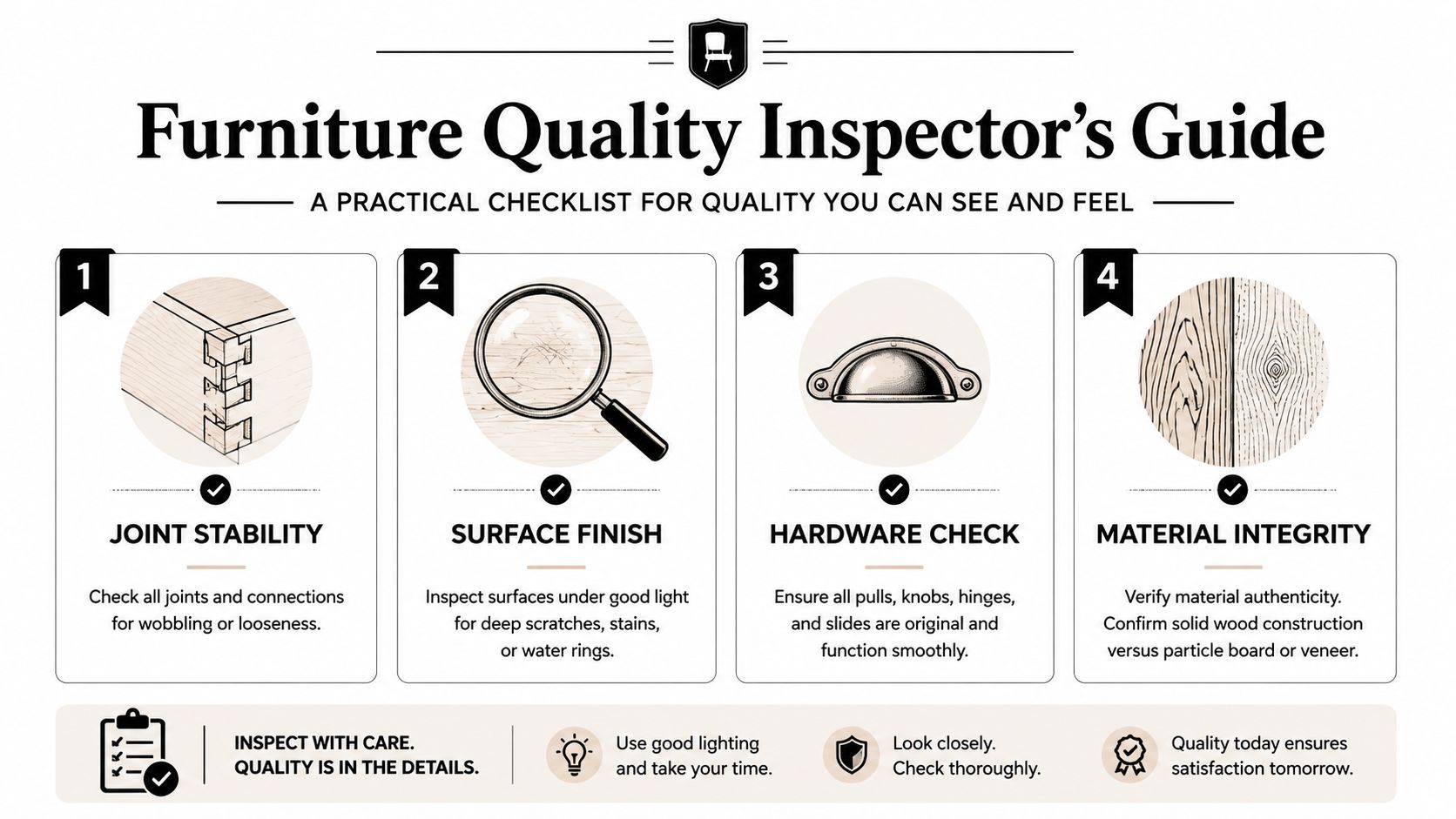
Stand in front of the dresser or chest and look at the lines. Does it sit level? Are the gaps around drawers even? Does one corner lift when you press the opposite side? If yes, move on.
Then check the back panel and underside. You want signs of stability, not sagging, crumbling fiberboard, or water staining.
What to inspect on wood pieces
- Top surface. Look for white rings, black stains, lifting veneer, or bubbling.
- Side panels. Run your hand across them. Swelling often hides under paint or tinted finish.
- Bottom edges. These tell the truth. Water damage often shows here first.
- Drawer boxes. Pull them out fully. Thin stapled drawers are a weak point.
If you're comparing construction, use strong brands as your benchmark. A well-made dresser from a line like Vaughan-Bassett or a sturdier bedroom piece from Aspen Home usually feels square, heavy, and consistent. That's the standard, even if the used piece in front of you carries a different name.
Open every drawer and test every joint
Don't buy bedroom storage without working it like you own it.
Here's the phone-friendly checklist I'd use in person:
- Open the drawers all the way. They should move without grinding, dropping, or racking.
- Lift gently at the front corners. Excess play can mean loose joinery or damaged glides.
- Check the drawer bottoms. Bowing or soft spots often point to moisture.
- Look for dovetail joints or solid joinery. Better drawers usually show better craftsmanship.
- Test the pulls and knobs. Replacing hardware is easy. Repairing stripped holes is annoying.
- Push on the sides and back. If the case shifts, it's not ready for daily use.
If a seller says, “It just needs a little tightening,” assume you haven't found the last problem yet.
For deeper buying standards on storage pieces, this guide on what to look for when buying chests, dressers, and cabinets is worth saving before you go out shopping.
Bed frames need a harder look
A used bed frame can be a bargain, but only if it's complete and structurally sound. Missing center supports, stripped bolts, cracked side rails, and homemade repairs are common.
Check these points before you hand over cash:
| Area | What good looks like | What should stop the sale |
|---|---|---|
| Headboard and footboard | No wobble, no cracks near fasteners | Splits, repaired breaks, loose posts |
| Side rails | Straight, hardware present | Bowing, missing brackets, stripped connections |
| Slats and center support | Complete and sturdy | Missing supports or substitute lumber |
| Finish and corners | Normal wear | Water damage, soft wood, active flaking |
Be blunt about upholstered pieces
I'm cautious with used upholstery in bedrooms. Benches and accent chairs are one thing. Upholstered headboards and mattresses are another. If you can't verify cleaning history and condition with confidence, skip it.
Look for:
- Odor that doesn't disappear after a quick sniff test
- Dust accumulation deep in seams
- Fabric wear around edges and corners
- Signs of pests or debris under welting and beneath the piece
A piece doesn't need to be perfect. It does need to be sound, cleanable, and worth the effort.
Ensuring a Perfect Fit in Your Bedroom
Most used marketplaces do a poor job helping people figure out whether a piece will work in a room. They usually give you dimensions and leave the rest to chance. That's a real gap, and it's one reason so many buyers end up with a dresser that blocks a walkway or a bed that overwhelms the room. The problem is well described in this discussion of the used market's lack of space-planning guidance for homeowners.
Measure the path before the room
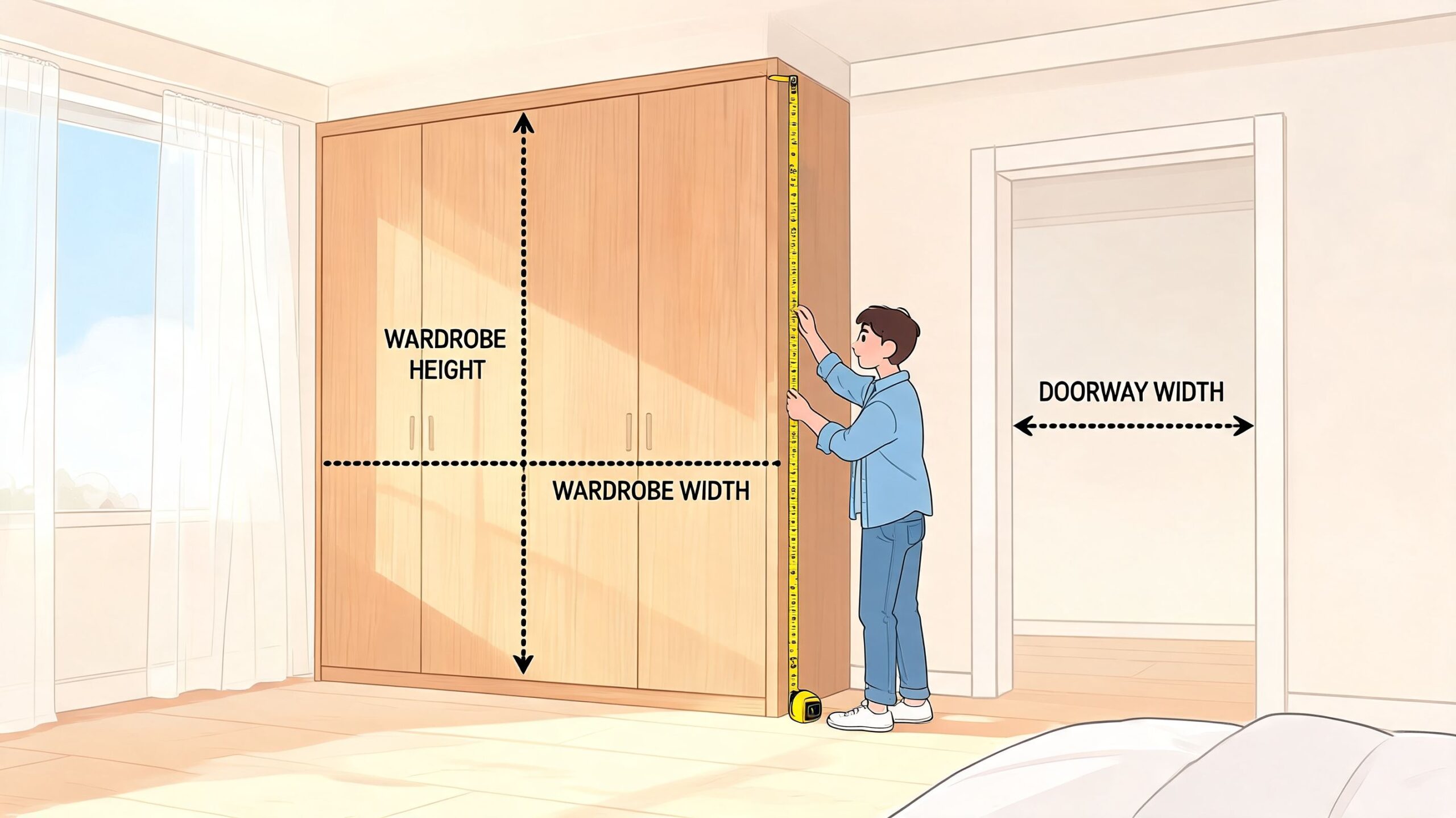
People measure the wall and forget the front door. Then they wonder why the chest is sitting in the garage.
Take these measurements before you shop:
- Doorway width and height
- Hallway width
- Stair turns and ceiling clearance
- Bedroom wall lengths
- Window placement
- Radiator, vent, and outlet locations
If you want a practical refresher, this guide on measuring furniture for a perfect fit is useful because it covers the kind of real-world clearance issues buyers often miss.
The room has to work, not just hold furniture
A bedroom should feel calm and usable. You need walking space, drawer clearance, and enough visual balance that the room doesn't feel like a storage unit.
That's why I like mixing used and new instead of trying to force an entire second-hand suite. A vintage dresser might bring warmth and character. A new bed, especially from a proper Sleep Gallery where you can test comfort by feel, gives you the foundation. Add one pair of nightstands that fit the scale, and the room starts to make sense.
A good room isn't built from matching pieces. It's built from pieces that belong together.
Use scale to create a blended look
If you're blending eras or brands, keep these relationships in mind:
- Bed first. It's the anchor.
- Nightstands second. Match height more closely than style.
- Tall storage last. A chest can balance the room, but only if it doesn't crowd the bed wall.
One practical way to avoid mistakes is to map the room on paper first, then compare that to the furniture dimensions. If you need a straightforward local reference, this step-by-step advice on how to measure furniture is the kind of planning that saves delivery headaches and return regrets.
Pricing, Negotiation, and Affordable Alternatives
A used piece is only a bargain if the total cost stays low after pickup, repairs, and your time.
Plenty of bedroom furniture listings look cheap at first glance. Then you notice the swollen drawer bottom, the missing pulls, the stair carry, and the fact that you need to borrow a truck. That is how a £75 dresser turns into a nuisance.
Used sellers also move fast when a listing is clean, well photographed, and priced properly. Poor listings can still be worth a look, but only if you know how to price the risk.

How to decide what a used piece is worth
Start with replacement value, then subtract for every headache.
A solid wood dresser with smooth drawers, no odor, and complete hardware deserves a fair offer. A particleboard chest with loose joints and water rings does not. Sellers often price by memory. You should price by condition, build quality, and what it will cost to make the piece usable in your home.
| Factor | Worth paying more for | Reason to offer less |
|---|---|---|
| Construction | Solid wood, dovetail drawers, stable frame | Particleboard, loose case, poor repairs |
| Condition | Light wear, clean interior, complete hardware | Water marks, odor, warped parts |
| Style | Timeless profile, versatile finish | Odd scale, dated proportions |
| Convenience | Easy pickup, first-floor access, complete set | Disassembly needed, missing parts |
My rule is simple. If the fixes are cosmetic, the piece may still be a smart buy. If the fixes involve structure, smell, or missing parts, the price needs to drop sharply or you walk away.
Negotiate like an adult
Good negotiation is boring. That is why it works.
Ask clear questions first. Has it been in a smoke-free home? Do all drawers open smoothly? Has anything been repaired? Then point to the actual issues you can see, such as scuffs, loose rails, finish damage, or replacement hardware you will need to buy.
A fair line sounds like this: “I do like it, but I'll need to sort the drawer and replace the pulls. Would you take this amount if I collect today?”
That works because it is specific. It respects the seller and protects your budget.
Cheap used is not always the cheapest option
This is the part buyers in Norwich often miss. Second-hand shopping works best for accent pieces, guest room furniture, vintage storage, or that one character piece that gives the room some life. It is far less reliable for foundational items you use every single day.
Beds and mattresses are the obvious example. If the used market gives you a tired frame, questionable slats, or anything sleep-related that makes you pause, stop there. Buy the foundation new. Then use second-hand for the layers around it.
That hybrid approach usually gives you the best room for the money. A used dresser with real character. New nightstands if you cannot find the right height. A properly made bed or mattress from a family-owned showroom when comfort, hygiene, and long-term support matter more than saving a little upfront.
Shoppers who want to stretch a budget should also compare resale prices with floor samples, clearance pieces, and discontinued styles. Timing helps too. This guide on the best time to buy furniture is useful if you want better value without gambling on a worn-out used piece.
Gorins Furniture & Mattress fits well into that plan. Use the second-hand market for treasure hunting. Use a trusted local showroom for the pieces that have to perform, last, and come with some peace of mind. That is how you avoid paying twice.
Bringing Your Found Treasure Back to Life
Some used furniture needs repair. Some just needs a little respect.
I've seen old nightstands come back beautifully with nothing more than a deep cleaning, better hardware, and the right lamp on top. I've seen a plain dresser become the best piece in the room after the owner toned down an orange finish and swapped the knobs. Good bones matter more than a flashy first impression.
The bigger issue in used furniture is trust. Buyers worry about hidden damage and hygiene, especially with sleep-related pieces, and that concern gets worse when sellers don't offer clear inspection or sanitization standards. That trust gap is one reason I'm strict about what's worth restoring and what should be replaced altogether.
Three refreshes that are worth doing
Hardware swaps
The easiest win in the room.
Replace dated knobs, cheap pulls, or mismatched hardware with something simple and solid. A basic wood dresser can look cleaner and more current in an hour. Just check screw spacing before you buy replacements.
Surface cleanup and touch-up
Use the right cleaner for the material. Don't soak wood. Don't guess with harsh products. A careful cleaning, light polish, and wax stick for small finish nicks can do a lot without turning the job into a full restoration.
A fresh finish with restraint
Not every piece should be painted, but some should. If the finish is tired or ugly and the construction is good, paint can save the piece. Low-VOC products are the sensible route indoors, and if you want a less permanent decorative update, this tutorial on how to upcycle furniture using vinyl wraps is a handy option for dressers, drawer fronts, or nightstands.
Keep the makeover smaller than the furniture's value. If the fix costs more than the piece is worth, you picked the wrong piece.
Know when to stop
I'd restore a solid wood chest. I'd clean up a vintage nightstand. I would not sink money into a weak frame, a questionable mattress, or anything with ongoing odor or hidden moisture damage.
That's the heart of smart used shopping. Save the pieces that deserve saving. Pair them with stronger foundation pieces when needed. If your bedroom needs one dependable anchor, whether that's a bed, mattress, or storage piece built for daily life, that's where a family-owned showroom still earns its keep.
Since 1936, Gorins Furniture & Mattress has helped Norwich and Eastern CT families create homes they love. If you're comparing used finds, clearance values, and longer-term investment pieces, visit the Norwich showroom to see quality up close, take the online Style Quiz, or browse the Clearance section for practical savings with local service behind them.