Upholstered Velvet Bench: A Buyer’s Guide to Style & Quality


You’re probably looking at one of three spots right now. The foot of the bed that feels unfinished. An entryway that needs a landing place for bags, shoes, and the daily shuffle in and out. Or a living room corner that wants extra seating but doesn’t have room for another chair.
That’s where an upholstered velvet bench earns its place.
In our Norwich showroom, this is one of those pieces people often underestimate at first. Then they sit on one, run a hand across the fabric, and start seeing how much work it can do in a room. A good velvet bench adds softness where a space feels flat, structure where a room feels empty, and comfort where a hard surface would look cold. It can read formal or relaxed depending on the frame, the color, and whether you choose details like tufting or storage.
The key is buying one that looks good and holds up. That means paying attention to what’s under the velvet, how the bench will be used, and whether the style fits the way you live.
The Enduring Allure of the Velvet Bench
A velvet bench feels current, but its roots are much older than commonly understood.
The story starts well before modern showrooms. The foundation of upholstered velvet furniture emerged during the Elizabethan era, and by the reign of James VI & I from 1603 to 1625, stitched edging let artisans shape upholstered seating in more structured ways. Italian craftsmen established the first velvet industry and remained Europe’s premier suppliers for nearly 600 years, which helps explain why velvet still carries an association with refinement and craftsmanship today, as noted in this history of upholstery foundations.
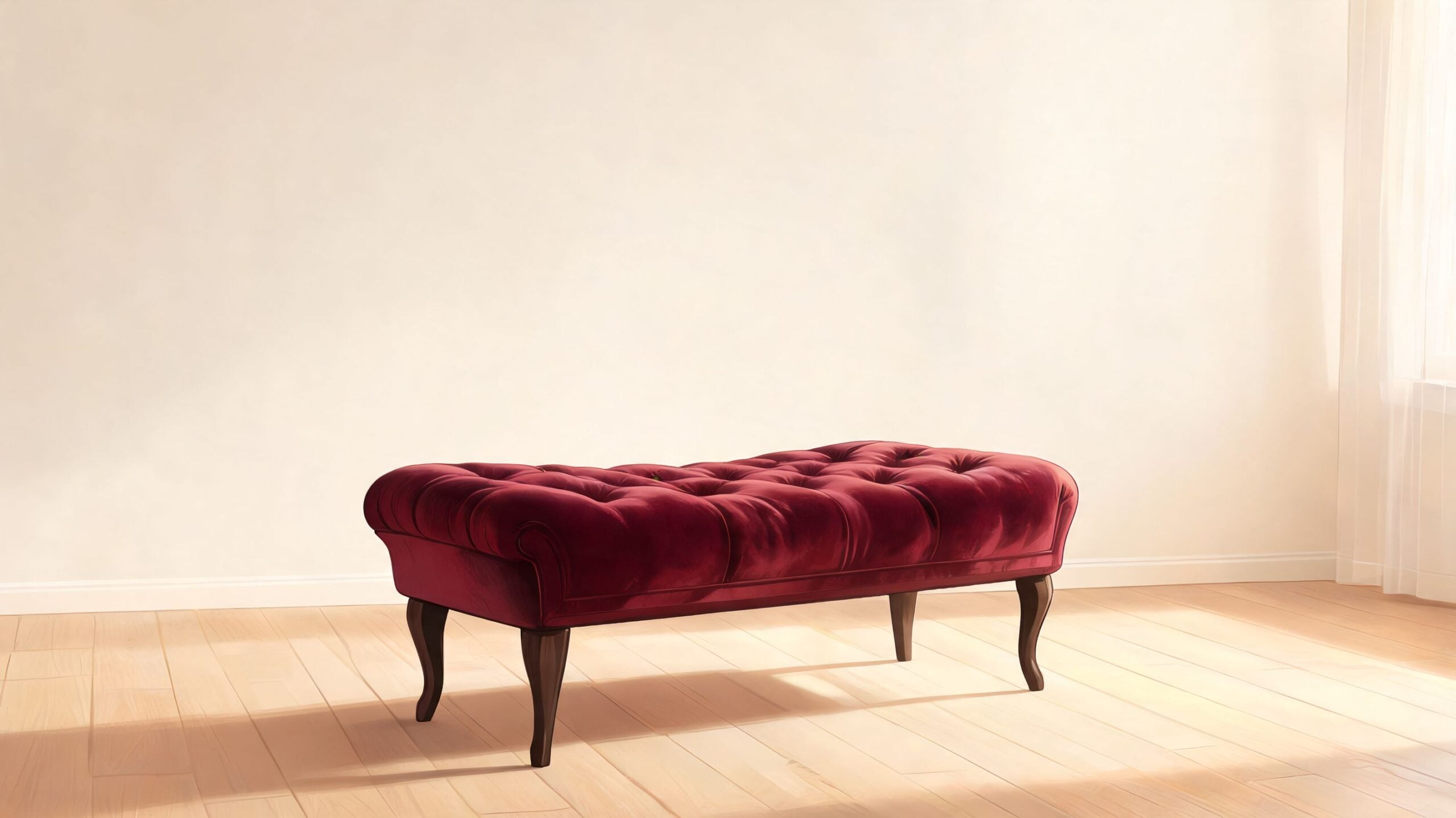
Why that history still matters
That heritage shows up in the way a velvet bench changes a room. Even a simple rectangular bench introduces a richer surface than most flat woven fabrics. Light hits the pile differently throughout the day, so the piece doesn’t feel static. It has movement without needing a busy pattern.
That’s why velvet often works as an anchor. In a bedroom, it can make the bed wall feel more complete. In an entryway, it can turn a pass-through zone into a finished space. In a living room, it gives you extra seating without the visual weight of a full accent chair.
A velvet bench doesn’t have to be ornate to feel special. The fabric itself does much of the design work.
From aristocratic luxury to modern practicality
Velvet used to be reserved for a very narrow slice of society. Today, it’s available in a far more livable range of constructions, colors, and performance levels. That’s part of why it remains appealing. You get some of that old-world richness without having to build an entire formal room around it.
For many homes in Eastern Connecticut, that balance matters. People want a room to feel polished, but they still need it to function on a Tuesday morning. A well-chosen upholstered velvet bench does both. It softens hard lines, adds a finished layer, and still serves a practical purpose every day.
If you’re exploring looks beyond velvet alone, our home style trends guide can help you see how textured pieces fit into a full-room plan.
Decoding Quality What to Look for Under the Velvet
A bench can look polished on a product page and still disappoint within a year. In our Norwich showroom, that gap usually comes down to what sits under the fabric. The pieces that hold up well have sound construction, supportive cushioning, and velvet suited to the way the bench will be used.
When I assess an upholstered velvet bench, I start with three things. The frame, the seat core, and the upholstery.
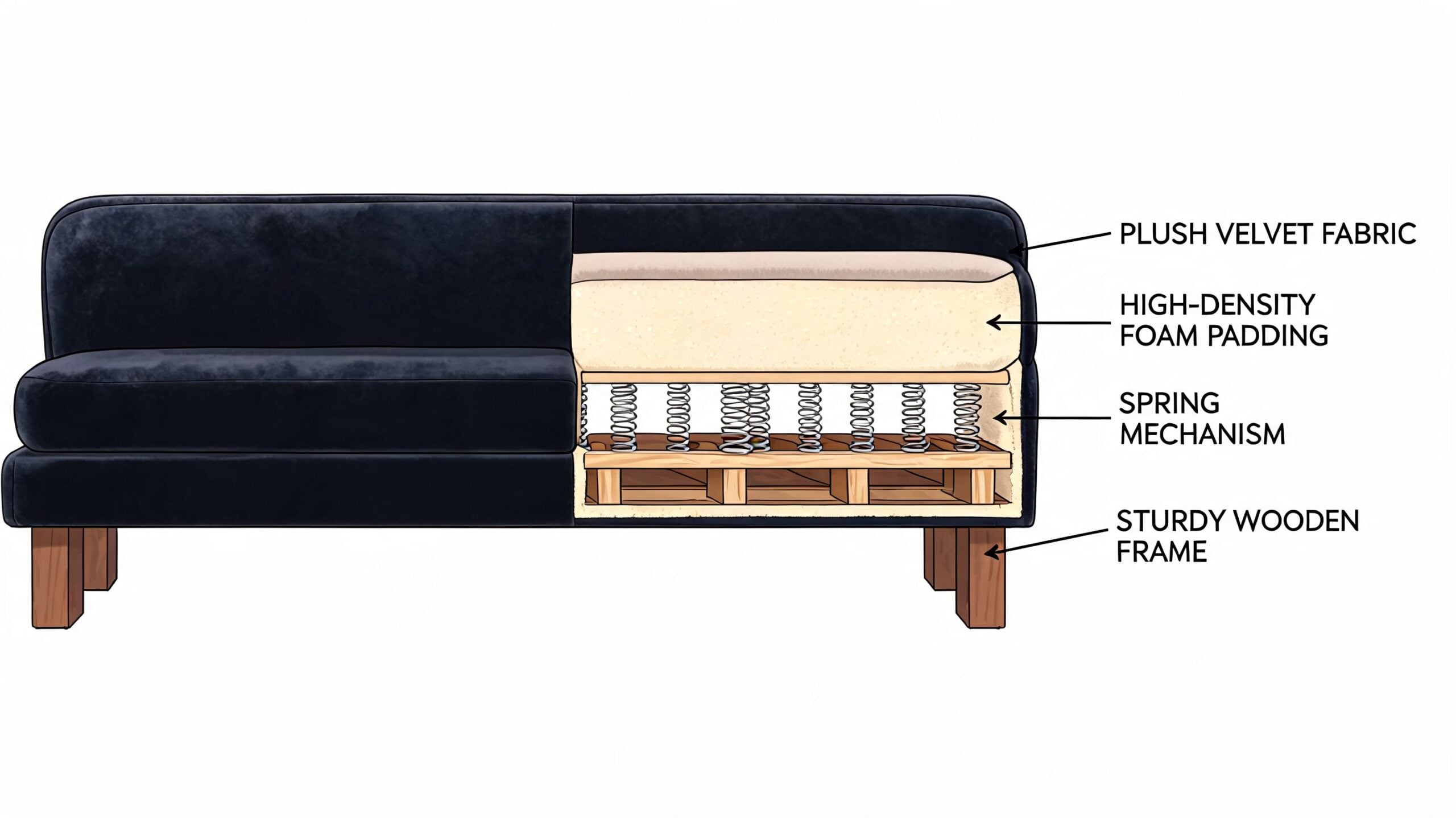
Start with the frame
Frame quality decides whether a bench feels steady on day one and whether it still feels that way after regular use. A well-built upholstered bench often uses solid wood or engineered hardwood construction, as shown in this bench construction reference. In practical terms, that means less wobble, better weight distribution, and fewer problems with joints loosening over time.
That matters in local homes. Seasonal humidity shifts around Norwich can expose weak construction faster than shoppers expect. Light frames and poor joinery tend to show movement first, especially in entryways and bedrooms where benches get pushed, dragged, and sat on from the edge.
Look for these signs in person:
- Solid wood or engineered hardwood framing that feels rigid when the bench is lifted slightly or nudged side to side
- Secure leg attachment with no twist or flex at the corners
- Balanced weight that suggests real structure rather than hollow bulk
- Clean underside finishing because makers who cut corners underneath often cut them elsewhere too
A few warning signs show up quickly. Thin legs under a wide seat can strain over time. Stapled-looking bottoms, shifting corners, and a hollow sound when you tap the base usually point to a bench built to hit a price, not to last.
Seat feel comes from the fill
The seat core determines whether the bench stays supportive or starts looking tired. Shoppers often sit for five seconds, decide a bench feels soft, and assume that means quality. Long-term comfort works differently.
Better benches use foam that rebounds cleanly and keeps a consistent shape. Poorer ones feel cozy at first, then compress too easily and leave a dip where people sit most. That is especially common on bedroom benches and entry benches that get daily use in the same spot.
Practical test: Sit normally for a full minute, then stand up and check how quickly the cushion recovers. Good support should feel stable without turning hard.
At Gorins, this is one reason we like walking customers through custom options in person. A bench that looks similar across two brands can feel very different once you compare foam firmness, crown, and how the upholstery is wrapped over the seat. Online photos rarely show that.
Velvet quality shows in the hand and in the tailoring
Velvet quality is partly durability and partly workmanship. Dense, well-woven velvet tends to feel richer and wear more evenly than a thinner fabric with a loose or flat pile. Seams should look straight. Welting, if used, should be smooth and consistent. Tufting should sit evenly without pulling the fabric off balance.
Performance velvet is often the smarter choice for active homes because it handles repeated contact better than delicate decorative velvet. That does not mean every buyer needs the highest-spec fabric available. A bench at the foot of the bed can tolerate a more refined velvet than one in a busy front hall.
This is also where local shopping helps. In store, you can compare pile direction, sheen, and hand feel under real lighting instead of guessing from edited photos. If you need help judging color online before coming in, FurnitureConnect's guide to Photoshop color editing explains why digital images can shift the way upholstery tones appear.
A quick evaluation checklist helps separate a good bench from a good photo:
| What to check | Why it matters |
|---|---|
| Frame stays steady when pressure is applied | Better long-term stability |
| Seat rebounds after sitting | Better shape retention |
| Velvet feels substantial in the hand | Better resistance to wear |
| Seams and corners look tight and even | Fewer weak points |
| Legs sit level on the floor | Better build consistency |
If you want a broader material comparison before choosing, our guide to upholstery materials for everyday furniture shopping helps clarify how velvet compares with other common fabrics in real homes.
Finding Your Perfect Match by Size Shape and Feature
A beautiful bench can still be the wrong bench if it’s scaled poorly or missing one feature your room needs. The best choice depends less on trends and more on where the bench will live and how often it will be used.
Entryway, bedroom, or living space
In an entryway, the bench usually has to work harder. People sit to take shoes on and off, drop a bag, or pause on the way in. That means I lean toward firmer seats, durable upholstery, and shapes that don’t crowd the path of travel.
At the foot of the bed, the job changes. This bench is often more visual than heavy-duty. It still needs to feel solid, but proportion matters most. Too short and it looks incidental. Too deep and it pinches the walking space.
In a living room, the bench acts more like a flexible extra seat or accent piece. Here, curved silhouettes, open leg bases, and softer detailing can shine because the piece is part seating and part styling layer.
Shape changes the way the room works
Rectangular benches are the easiest fit. They’re straightforward, versatile, and usually the safest choice for tight spaces. Curved or rounded-edge benches soften a room nicely, but they need breathing room around them or they can feel awkward.
Backed benches create more visual presence and can read almost like a compact loveseat. Backless benches stay lighter and are easier to place under windows, at bed ends, or in narrower hall zones.
Use these filters when narrowing the field:
- Choose backless if you need flexibility and easier placement
- Choose a backed shape if the bench will be a more permanent seating destination
- Choose slimmer legs or an open base when the room already has bulky furniture
- Choose a fuller upholstered base when the room needs more visual weight
If you’re unsure on scale, measure before you fall in love with a silhouette. This furniture measuring guide can save you from the most common sizing mistakes.
Tufting isn’t just decorative
Button-tufting is one of those details people often treat as purely stylistic. It isn’t. According to this storage bench construction reference, tufting helps anchor the fabric and foam and can reduce point-load stress by up to 40%, which helps prevent foam fatigue.
That makes tufting a practical choice when the bench will see regular use, especially in busy family spaces.
If the bench is going to be sat on often, tufting can be a smart structural feature, not just a formal look.
Storage can solve a real problem
Storage benches make a lot of sense in smaller homes and multipurpose spaces. They’re especially useful for entryways, guest rooms, and bedrooms where you want hidden space for throws, shoes, or seasonal items.
The trade-off is that storage benches are usually heavier and have more moving parts. Hinges, lid alignment, and interior depth matter. A storage bench that looks sleek but feels awkward to open won’t be used as often as you expect.
One helpful planning trick is digital color testing before you commit to a bold velvet. If you’re trying to picture how navy, rust, olive, or blush will sit against your walls and flooring, FurnitureConnect's guide to Photoshop color editing offers a useful way to preview color changes in room photos.
For shoppers who want more control over dimensions, leg finishes, and fabric direction, custom programs similar to the F9 Custom Sofa series or bench options from makers like Best Home Furnishings can open up more customized solutions than a fixed online assortment.
Styling Your Velvet Bench Room by Room
A velvet bench works best when it solves a room problem and improves the look at the same time. That combination is what makes it such a useful piece.
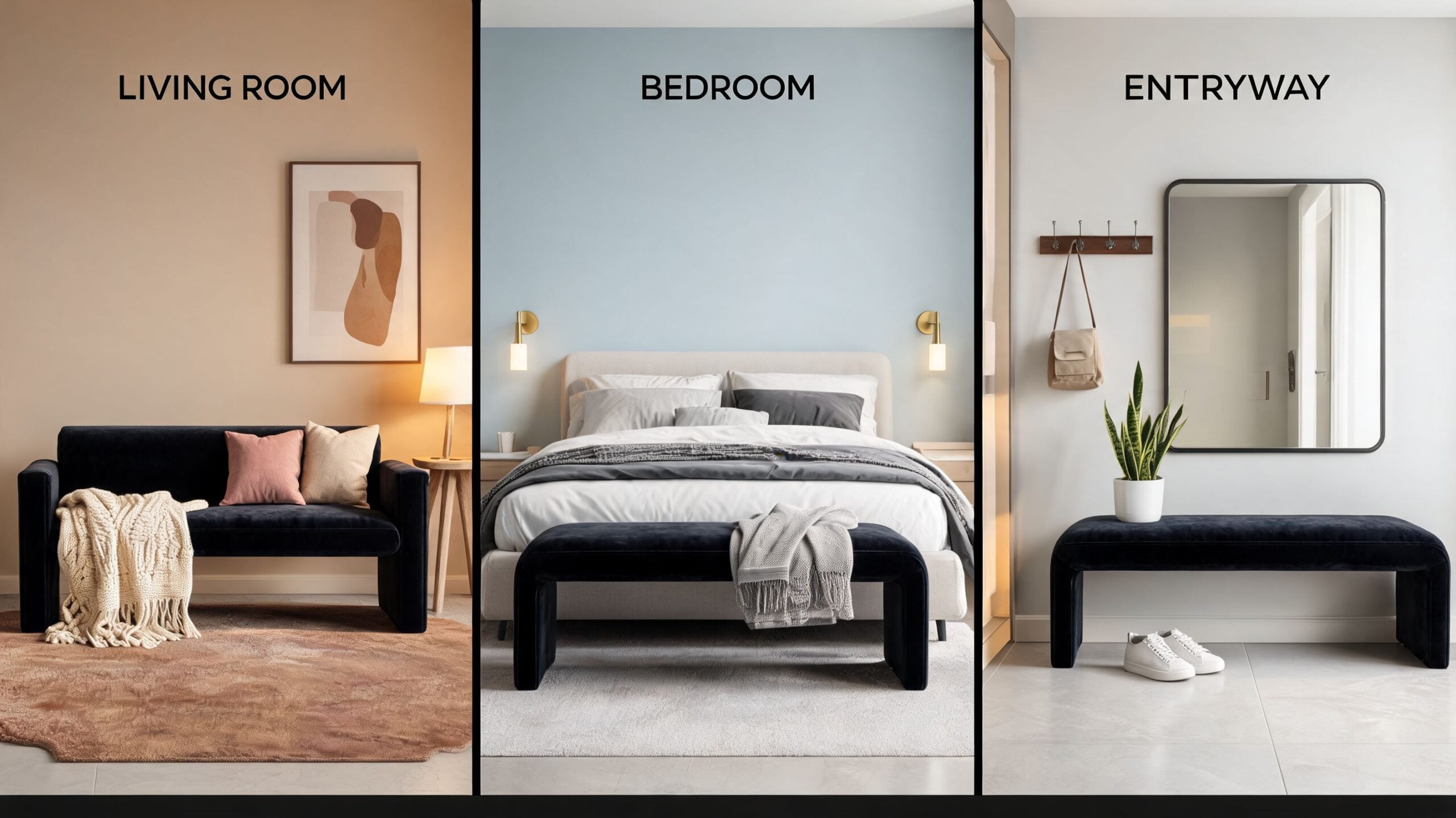
In the entryway
An entryway bench should feel welcoming, not crowded. Velvet works especially well here when the surrounding materials are hard, such as tile, wood floors, mirrors, and painted trim. The fabric adds softness right where the room needs it.
I often like deeper tones in this spot. Charcoal, navy, moss, or a rich neutral can ground the entrance and hide daily wear better than a very pale shade. Pair the bench with a tray or nearby console so it doesn’t become a catch-all by default.
At the foot of the bed
This is probably the most natural home for an upholstered velvet bench. It fills the visual gap between the bed and the rest of the room without adding bulk. In a bedroom, velvet reads quieter and warmer than many woven fabrics.
A bench here should echo something already in the room. That might be the headboard shape, the wood tone of nearby case pieces, or an accent color from bedding. If the room feels plain, a velvet bench can be the one piece that brings depth without making the space busy.
In bedrooms, the most successful benches usually connect to the room’s palette rather than compete with it.
In the living room
A living room bench can do several jobs at once. It can sit opposite a sofa, tuck under a window, or stand in for two occasional chairs in a smaller layout. This is one of my favorite ways to keep a room flexible.
If your space already has a lot of texture, choose a cleaner-lined bench. If the room feels flat, tufting or a richer color can help. Placement matters too. A bench should support movement, not interrupt it.
For layout ideas beyond the bench itself, our living room arrangement guide offers practical ways to place seating so the room feels finished and easy to use.
Velvet Versus Other Bench Fabrics A Practical Comparison
Velvet isn’t the right answer for every home, and that’s fine. The better question is which fabric fits your routine, your maintenance tolerance, and the feel you want in the room.
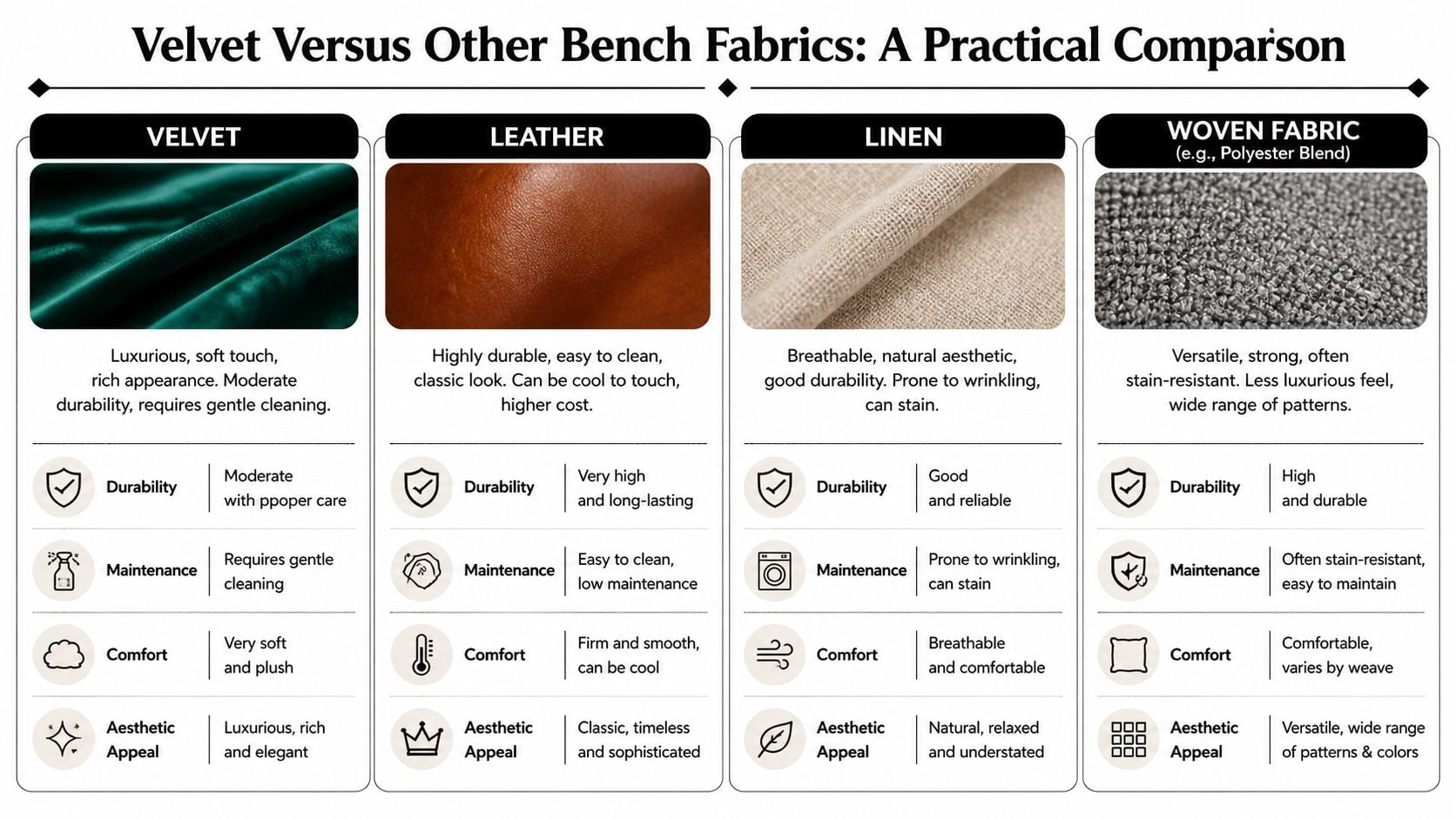
Bench Upholstery Fabric Comparison
| Fabric | Durability | Feel | Maintenance | Best For |
|---|---|---|---|---|
| Velvet | Strong in the right performance construction | Soft, rich, textured | Needs regular light care and prompt spill attention | Bedrooms, entryways, accent seating |
| Leather | Durable surface with a tailored look | Smooth, cooler to the touch | Wipes clean easily but shows wear differently over time | High-use seating, classic interiors |
| Linen | Pleasant, breathable hand | Casual and airy | Can wrinkle and may need more care with spills | Relaxed rooms, lighter visual schemes |
| Woven fabric | Broad range depending on weave | Varies from crisp to soft | Often straightforward to maintain | Family spaces, everyday flexibility |
Where velvet wins
Velvet brings the most depth visually. If your room feels flat or one-note, velvet can fix that faster than many other upholstery choices. It also tends to make a bench feel more intentional, especially in bedrooms and formal-adjacent spaces.
It’s also one of the better choices when you want softness without a bulky shape. A slim bench upholstered in velvet can still feel substantial.
Where another fabric may be smarter
Leather is often easier for buyers who want the simplest wipeable surface. Linen suits rooms with a casual, airy look, but it doesn’t offer the same richness. Woven performance fabrics are usually the safest broad-use category when practicality is your top priority.
That’s why fabric selection should follow lifestyle first:
- Choose velvet if you want texture, softness, and a more elevated look
- Choose leather if quick wipe-downs matter most
- Choose linen if your room leans relaxed and natural
- Choose woven performance fabric if you want broad everyday versatility
If your household deals with spills, shedding, or heavy daily use, this performance fabric guide for busy homes can help you compare practical upholstery choices with more confidence.
Caring for Your Velvet Bench Simple Tips for Lasting Beauty
Velvet has a reputation for being fussy. In practice, most problems come from neglect, not from the fabric itself.
Many homeowners hesitate to buy velvet because they’re concerned about cleaning and long-term wear, and major online retailers often leave those care questions unanswered, as noted in this retail care gap overview. Good care advice closes that confidence gap quickly.
Start with prevention
The easiest maintenance is the maintenance you don’t have to do later. Place the bench where it won’t be scraped constantly by rough bags, sharp hardware, or shoes. In bright rooms, rotate accessories around it so one area doesn’t carry all the contact.
If the bench will serve as daily seating, use it intentionally. Don’t let it become the universal drop zone for everything that comes through the door.
Keep routine cleaning light
Velvet usually responds best to gentle, regular attention. A soft brush attachment on a vacuum can lift dust and debris before they settle into the pile. Light grooming also helps the nap stay even.
Small habits matter more than aggressive cleaning. Frequent, gentle care preserves the finish better than waiting until the bench looks tired and then scrubbing at it.
Consistency beats intensity with velvet care. Light upkeep keeps the fabric looking calm and even.
Handle spots quickly and calmly
When something spills, speed matters more than force. Blot. Don’t grind the spill deeper by rubbing hard. Follow the fabric care code from the manufacturer and test any cleaner in an inconspicuous area first.
Three habits usually make the biggest difference:
- Blot first instead of scrubbing
- Use the approved cleaning method for that specific fabric code
- Restore the pile gently after the area dries
That’s one reason local showroom guidance matters. Buyers often get pages of dimensions online and almost no practical care help.
The Gorins Advantage Why Buying Local in Norwich is Better
A velvet bench is one of those purchases that benefits from seeing, touching, and testing in person. Fabric direction, seat feel, and scale are hard to judge from a screen. That’s where local buying still has a clear advantage.
Since 1936, Gorins has served Norwich as a family-owned, locally operated furniture store. That history matters because furniture isn’t just a transaction. It’s a purchase you live with for years, and the details that shape satisfaction often show up after delivery.
What local shopping solves
In the showroom, you can compare velvet textures side by side. You can sit on benches with different seat feels. You can see whether a leg finish works with your wood tones instead of guessing from edited photos.
That’s also where customization becomes more useful. Programs such as Canadel Custom Dining and the F9 Custom Sofa series show what’s possible when you’re not boxed into one stock configuration. The same mindset helps when selecting occasional pieces and upholstery choices that need to fit an existing room.
A local store can also answer the practical questions online listings often skip:
- How will this fabric wear in a busy room
- Does this bench feel firm or soft in person
- Will this size crowd the walkway
- What care routine makes sense for this household
For homeowners who like having outside care references to compare against in-store advice, this Kennesaw homeowner's upholstery care guide is a useful supplemental read on basic upholstery upkeep.
Confidence matters as much as style
Buying local also gives you a clearer service path. Delivery, post-purchase questions, and problem-solving are easier when you’re working with a nearby team instead of an anonymous order channel. That peace of mind matters on upholstered pieces.
There’s also the budget side. Promotional Financing with equal monthly payments can make it easier to choose the right piece now instead of settling for a bench that misses the mark because it was the quickest online option. For many households in Norwich, New London, Plainfield, Waterford, and nearby Eastern CT and Rhode Island communities, that flexibility is what turns a “maybe later” purchase into a well-planned room upgrade.
Your Upholstered Velvet Bench Questions Answered
Is an upholstered velvet bench a good choice for homes with kids or pets
It can be, especially if you choose a high-performance velvet and a sturdy build. The bigger issue is matching the fabric and construction to the way the bench will be used. For high-traffic homes, I’d focus on durable upholstery, a stable frame, and a color that won’t show every touch.
Will velvet pill or wear out quickly
Not all velvet performs the same. Better constructions hold up much better than decorative-grade fabrics. In real use, the frame quality, foam support, and the specific velvet matter more than the word “velvet” alone.
Is tufting worth it
Yes, if you like the look and expect regular use. Tufting does more than add character. It helps keep the upholstery layer better anchored.
Should I choose storage or a standard bench
Choose storage if the room needs hidden utility. Choose a standard bench if comfort, simplicity, and lighter visual weight matter more.
How do I know if the bench is too big for my room
Measure the footprint and, just as important, the walking space around it. A bench should add function without tightening circulation.
How long does a custom order take
That depends on the manufacturer, material selection, and current production schedule. In the showroom, it’s much easier to get realistic timing than by relying on broad online estimates.
Since 1936, Gorins Furniture & Mattress has helped Norwich and Eastern CT families create homes they love. If you’re shopping for an upholstered velvet bench and want help comparing styles, fabrics, and custom options in person, visit the Norwich showroom, take the online Style Quiz, or browse the Clearance section for value-driven savings.