Armless Living Room Chairs: A Norwich Buyer’s Guide

A lot of living rooms in Norwich and Eastern CT have the same quiet problem. The room isn’t tiny, but it feels crowded. A sofa fits. A coffee table fits. Then you try to add one more comfortable chair, and suddenly the walkway feels tight, the window looks blocked, and the whole room seems heavier than it did before.
That’s usually when people start looking at armless living room chairs.
I’ve seen this happen in older homes with narrower layouts, in condos where every inch matters, and in family rooms that need to handle everything from movie night to holiday visitors. An armless chair can solve a space problem without making the room feel stripped down. It gives you seating, style, and flexibility, but with a lighter footprint.
Since 1936, Gorins has helped local families sort through choices like this with a practical, low-pressure approach. If you’re trying to decide whether an armless chair belongs in your living room, the essential question isn’t “Are they trendy?” It’s “Will this shape work for the way my family lives?”
Your Guide to Armless Living Room Chairs
One of our neighbors came in recently with photos of a classic New England living room. Beautiful wood floors, nice natural light, and one challenge. Every chair she tried looked too bulky next to her sofa. She wanted extra seating for company, but she didn’t want the room to feel packed.
An armless chair was the answer.
What changed wasn’t just the square footage on paper. The room felt easier to move through. The sightlines opened up. The chair still looked finished and inviting, but it stopped competing with everything around it.
That’s why armless chairs are worth a closer look. They’re not a compromise piece. In many rooms, they’re the smarter piece.
You’ll see them in several forms:
- Slipper-style chairs for compact corners
- Accent chairs that soften a room without adding visual weight
- Modular armless pieces that work with sectionals
- Occasional chairs that can shift around when guests arrive
For Norwich families, that flexibility matters. Some homes have formal front rooms that need light seating. Others have family spaces that need to adapt quickly. Renters may need pieces that can move easily from one layout to another.
A good chair should solve at least one real room problem. With armless seating, that problem is often flow.
You don’t need to know furniture jargon to shop well. You just need to know what to look for, what tradeoffs to expect, and how to match the chair to your room, your habits, and your home’s layout.
What Makes an Armless Chair a Smart Choice
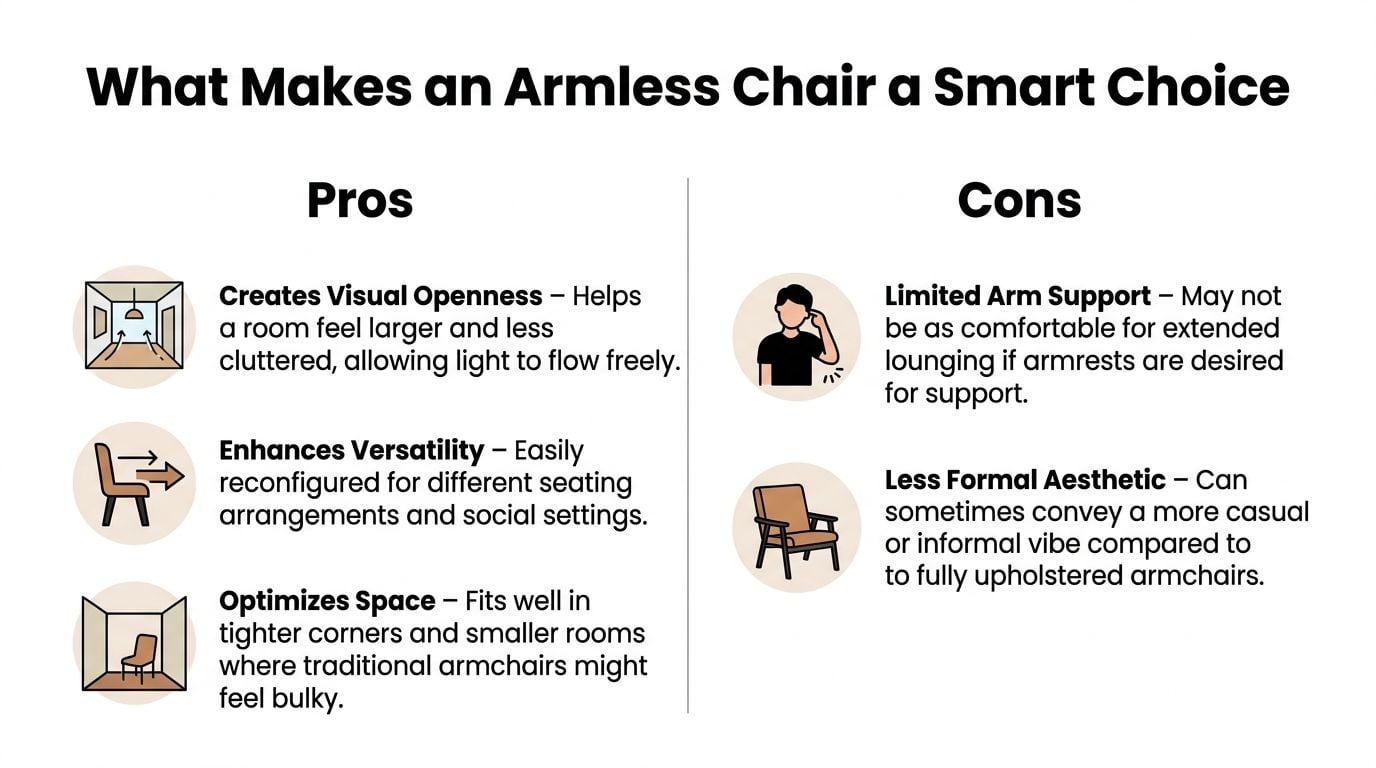
Some furniture choices are mostly about style. This one is also about function. Armless chairs work well when you need seating that doesn’t visually crowd the room or physically interrupt traffic flow.
Why they help smaller rooms
Armless accent chairs typically measure 20 to 24 inches in seat width, while traditional wingback chairs often need 26 to 32 inches, which creates 25 to 35% more flexible placement options in many layouts according to this armless chair size comparison.
That matters in older Norwich homes where the room might have a fireplace on one wall, a window on another, and only a few realistic furniture arrangements.
The open profile also helps the room feel less blocked. Without arms, light moves more freely through the layout, and the room can look larger than it would with heavier seating. In open-concept rooms, that same source notes armless chairs can yield approximately 15 to 20% more functional seating per square foot.
The biggest pros
Here, armless living room chairs usually shine:
- They open up sightlines. You can still see across the room, toward the windows, or to a focal point like a fireplace or TV.
- They improve flow. Fewer bulky edges means people can move around more naturally during gatherings.
- They’re easier to reposition. If you like changing your layout seasonally, or need extra seating only sometimes, that lighter form helps.
- They pair well with larger furniture. A substantial sofa or sectional often looks better when it’s balanced by a chair with a cleaner outline.
If you’re comparing options, this guide on comfy chairs for small spaces gives a helpful outside perspective on how compact seating can still feel welcoming.
The tradeoffs to think about
Armless doesn’t mean perfect for every person or every room.
A few common concerns come up in the showroom:
| Question | What it really means |
|---|---|
| Will it be comfortable? | Usually yes, but comfort depends more on seat depth, cushion support, and back angle than on whether arms are present. |
| Is it good for long lounging? | Sometimes not. If you like leaning sideways while reading or watching TV, you may miss the arm support. |
| Will it look too casual? | It can, depending on the silhouette. An upholstered frame with refined lines can still look polished and formal. |
Practical rule: If the chair is for daily lounging, sit in it before you buy. If it’s for flexible seating, focus first on size and shape.
When they make the most sense
Armless chairs are often the right call when:
- Your room feels crowded already
- You need one extra seat, not a bulky statement piece
- You’re furnishing around a sectional
- Your layout has narrow walkways or tight corners
- You want the room to feel lighter without losing function
For a few more quality checkpoints that apply to both sofas and chairs, Gorins has a practical read on 5 things to look for in your new sofa or chair.
The short version is simple. If your living room needs breathing room, an armless chair often gives you more than just another place to sit.
A Look Through History at Armless Design
Armless chairs may feel modern, but they’ve been around much longer than is commonly realized.
They appeared in the 16th century and are often referred to retrospectively as farthingale chairs, a name that came later. They were designed to accommodate the wide hoop skirts women wore at the time. Those skirts, popularized from the 1550s onward, could measure up to 3 feet (91 cm) in diameter, so traditional chairs with arms weren’t practical for many women, according to this history of farthingale chairs and armless seating.
That origin tells you something useful. The design started as a practical solution to a space problem.
A chair shape built around movement
These early chairs were typically low-backed, lightweight, and easier to get in and out of while wearing voluminous clothing. In a way, the original purpose isn’t so different from what buyers want today. People still choose armless seating because it allows easier movement and takes up less visual room.
The term farthingale chair itself is a 19th-century label, even though the chair type appeared much earlier. Over time, that practical shape evolved rather than disappearing.
The path to the slipper chair
By the Victorian era (1837-1901), the related slipper chair had become a familiar form. It was petite, upholstered, and low to the ground, making it useful for everyday dressing and easy sitting.
That’s why slipper chairs still feel so natural in living rooms, bedrooms, and dressing areas. The proportions were always meant to support comfort without bulk.
Good furniture lasts because the idea behind it keeps making sense.
There’s something reassuring about that. At a family-owned store that’s been part of this area since 1936, we appreciate furniture that earns its place over time. Armless chairs have done exactly that. They’ve stayed relevant because they solve a common problem gracefully.
Exploring Common Styles and Materials
Once you decide the armless silhouette makes sense, the next question is which version fits your home. Many shoppers get stuck when making this decision. Two chairs can look similar online and perform very differently in real life.
The details matter. So does the room you’re buying for.
Common armless chair styles
Some shapes are made for occasional use. Others are built for everyday living.
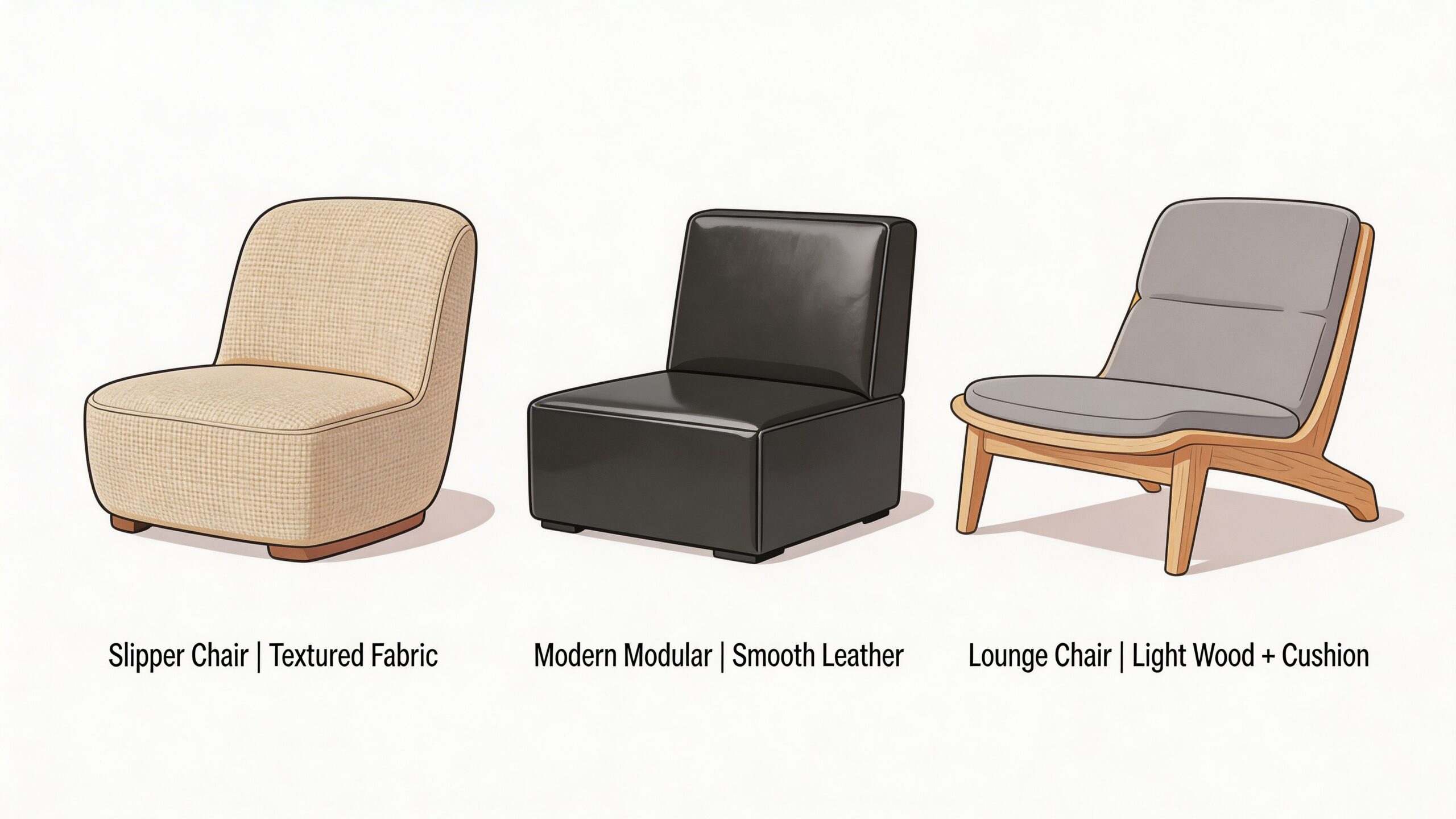
Slipper chairs
These are the classic low-profile armless chairs many people picture first. They usually have a compact footprint, an upholstered seat and back, and a neat, finished look.
They work well for:
- Reading corners where you want a soft seat without visual bulk
- Bedroom corners that need a finishing touch
- Living rooms with formal lines where a big club chair would feel too heavy
Accent chairs
This is the broadest category. An armless accent chair can lean traditional, transitional, modern, or very clean-lined.
What changes most is the shape of the back, the seat depth, and the leg style. Some are tight-back and upright. Others feel softer and more lounge-like.
Modular armless chairs
These are often part of a sectional system. They can stand alone or connect with other pieces.
For households that like to rearrange furniture, modular armless seating gives you more freedom than a fixed sofa shape. It’s especially useful in family rooms, finished basements, or multipurpose spaces.
What quality feels like in the frame and seat
Here, “investment-grade quality” stops being a phrase and starts becoming something you can test.
High-performance armless chairs often use pocket coil systems and high-density foam over kiln-dried hardwood frames, and some models support up to 400 lbs while extending lifespan by 40 to 60% according to this overview of armless chair construction and upholstery considerations.
That combination matters because armless chairs don’t have side supports doing part of the work. The seat and back have to carry the comfort.
Here’s a simple comparison:
| Construction detail | Why you should care |
|---|---|
| Kiln-dried hardwood frame | Helps the chair stay stable over time |
| Pocket coil support | Spreads weight through the seat more evenly |
| High-density foam | Helps the cushion keep its shape |
| Tight upholstery work | Keeps the chair looking neater with regular use |
A chair can look attractive on day one and still disappoint if the cushion goes flat too quickly. Sit on the edge. Sit in the center. Lean back. If it already feels weak in the showroom, it won’t improve at home.
Fabric choices for real family life
This is one of the biggest practical decisions, especially for homes with pets or children.
The same source notes that 41% of pet owners report furniture damage yearly, which is one reason tight-weave performance fabrics matter so much in active households. Options like 100% olefin or Crypton can be a practical choice when you want an upholstered chair that still fits daily life.
If you’ve ever fallen in love with a velvet chair while owning a dog that jumps up with muddy paws, you already understand the tension here.
For everyday use, it helps to think in layers:
- Texture first. Tight weaves usually handle wear better than delicate pile fabrics.
- Color second. Mid-tones and heathered patterns often hide day-to-day life better than very pale solids.
- Cleaning habits third. A beautiful fabric that makes you anxious isn’t the right fabric.
For shoppers comparing material types, everything you need to know about upholstery materials is a useful starting point.
Leather, fabric, and mixed-material looks
Each finish changes the feel of the room.
Upholstered fabric chairs
These are usually the easiest way to add softness and color. They fit most living rooms and can range from formal to casual depending on the silhouette.
Leather armless chairs
Leather can make an armless profile feel sharper and more architectural. It’s often a strong match for transitional and modern rooms, especially if you want contrast against softer sofas or rugs.
Wood-accent styles
Some armless chairs show more of the frame. That creates a lighter, airier look and can be a nice fit in coastal, mid-century, or Scandinavian-inspired spaces.
Brands and customization options in the showroom
Different manufacturers approach armless seating differently. Flexsteel often appeals to shoppers who care a lot about support and long-term comfort. Best Home Furnishings can be a good fit for buyers who want specific upholstery choices and a broad style range.
This is also where custom options become helpful. Some people need a compact chair in a kid-friendly fabric. Others want a cleaner formal look for a front living room. One isn’t better than the other. It depends on the life happening around the chair.
The right armless chair should feel intentional, not like the thing you settled for because the bigger chair wouldn’t fit.
How to Style Armless Chairs in Your Living Room
A well-chosen armless chair can disappear into the room in the best possible way. It doesn’t fight with the sofa. It doesn’t block the view. It just makes the layout work better.
The trick is placement.
Start with the path people walk
Before you think about color or fabric, look at movement. Where do people enter the room? Where do they pass through? Which path gets used every day?
If a chair interrupts the natural route from sofa to doorway, it will always feel wrong, even if it looks lovely.
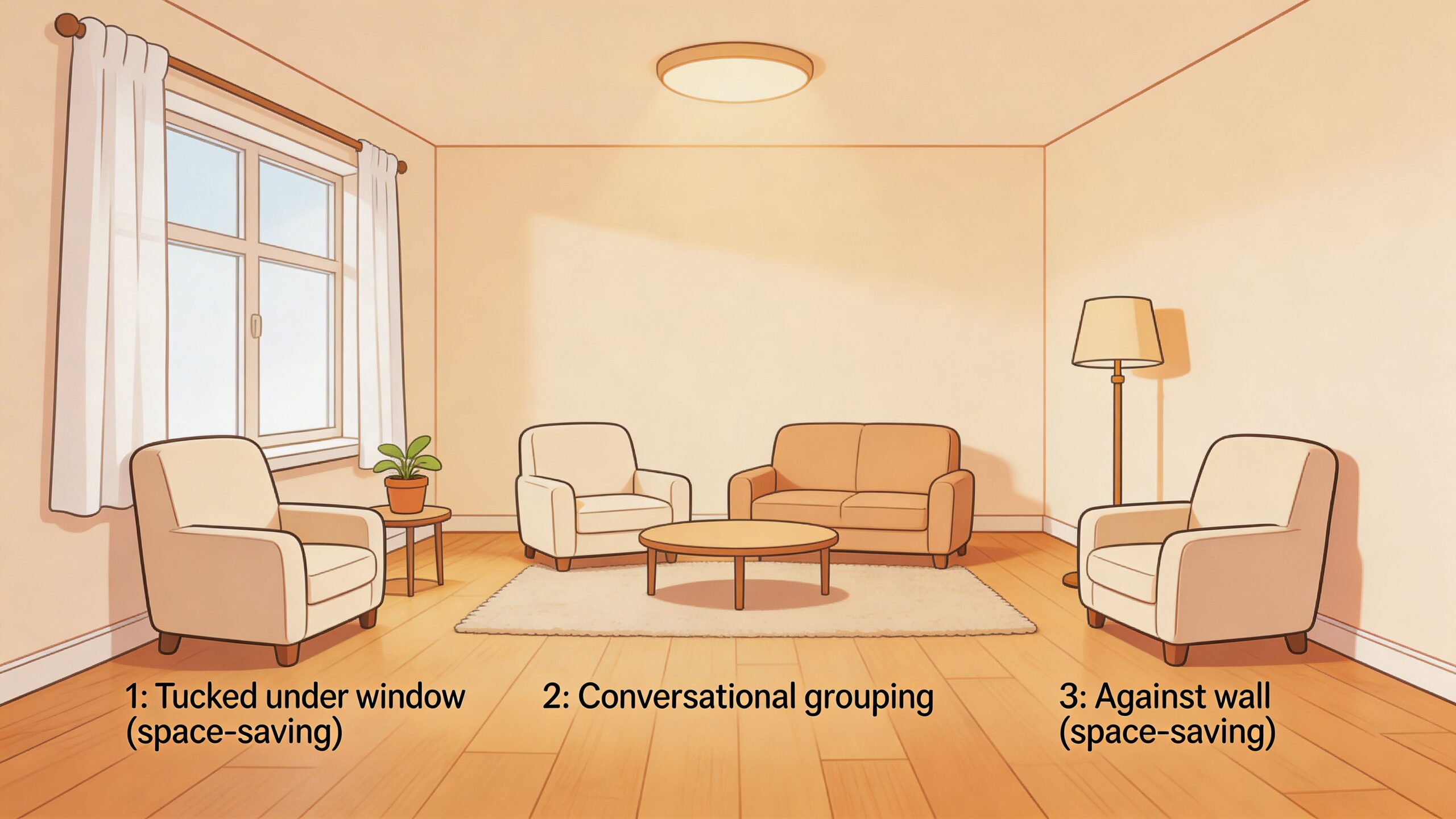
A few placement ideas usually work well:
- Across from a sofa to create conversation seating
- Angled near a fireplace for a softer focal arrangement
- Tucked into a corner with a floor lamp to form a reading spot
- Flanking a coffee table with a second matching chair when the room needs balance
Match shape before you match color
This is a common point of confusion. People often try to match the exact fabric of their sofa. Usually, that’s not the first thing to match.
Look first at line and scale.
If your sofa has clean straight arms and exposed legs, a very overstuffed rounded chair may feel unrelated. If your sofa is traditional and skirted, a stark minimalist chair may look dropped in from another room.
A few easy checks:
| Element to compare | What to notice |
|---|---|
| Leg finish | Warm wood, dark wood, metal, or hidden base |
| Back height | Similar visual weight, not exact sameness |
| Cushion style | Tight, defined, boxed, or plush |
| Overall mood | Formal, relaxed, modern, classic |
If the shapes feel like they belong in the same conversation, the room will usually look cohesive even when fabrics differ.
Use pairs carefully
A pair of armless chairs can look beautiful, but only if the room has enough breathing room around them.
In a tighter living room, one armless chair may be the stronger move. A single chair can soften a corner, complete the seating group, and still keep the room open.
In a larger room, a pair can help balance:
- A fireplace wall
- A long sofa
- A large area rug
- A windowed wall that needs visual structure
For more arrangement ideas, five ways to use an accent chair gives practical examples you can adapt to your own layout.
Small styling touches that help
You don’t need to overload an armless chair to make it feel finished.
Try:
- A small lumbar pillow if the seat is deeper
- A nearby drink table if you’re replacing the function of an armrest
- A throw draped lightly nearby, not necessarily on the chair, if you want a softer look
- A rug that anchors the chair with the sofa, so it feels connected rather than floating
One more tip from the showroom. If you’re worried an armless chair will feel less substantial, choose one with a slightly taller back or a richer fabric texture. That usually solves the problem without adding physical bulk.
Designing Your Perfect Chair at Gorins
Sometimes the right chair exists in stock. Sometimes it almost exists.
That “almost” is where customization becomes valuable. Not because everyone needs a fully bespoke piece, but because small decisions can make a big difference in how a chair fits your home.

A family may want a compact armless chair in a performance fabric that handles pets. A condo owner may want a cleaner silhouette with a lighter leg finish. Another shopper may love the chair but want a firmer seat cushion because that’s what feels good for daily reading.
That’s where custom programs help turn a close option into the right option.
What you can usually personalize
With custom living room programs, shoppers can often choose from thousands of combinations across details like fabric, finish, and cushion feel. The F9 Custom Sofa series is a good example of how this works in living rooms, because it allows buyers to select details like arm styles, back types, welt details, and cushion firmness.
Even when you’re focused on armless seating, that same custom mindset matters. You’re not just choosing a chair shape. You’re choosing how the chair will live in your room.
You may be able to adjust:
- Fabric type for pets, kids, or formal rooms
- Color and pattern to coordinate with existing pieces
- Leg finish to tie into wood floors or tables
- Seat feel based on how upright or cushioned you prefer your chair
Why custom doesn’t have to feel overwhelming
Many people hear “custom” and assume it means complicated. Usually it’s easier than expected once you narrow the decisions.
Start with three questions:
- Where will the chair sit most of the time
- Who will use it most often
- What problem should it solve
Those answers often guide the rest.
If the chair is for a bright front room, you may prioritize shape and color. If it’s for a family room with kids and pets, fabric performance may become the top issue. If it’s filling a narrow spot beside a sectional, dimensions come first.
Custom furniture works best when you focus on function before finishes.
For shoppers who want a clearer picture of the process, custom furniture made simple breaks down how made-to-order decisions can stay manageable.
A good custom chair doesn’t feel “custom” because it’s flashy. It feels custom because it fits your life without asking you to work around it.
Making Your Dream Room a Reality
Choosing furniture is one part of the process. Getting it home in a way that feels manageable is the other part.
That matters when you’re buying a chair that you expect to live with for years. Many shoppers want quality, but they also want financial flexibility. That’s where Promotional Financing can make an investment-grade purchase feel more approachable, especially with equal monthly payment options for qualified buyers.
Delivery matters too. A good showroom experience can lose its shine fast if the final step is stressful. Professional setup helps when you’re working with historic homes, narrow entries, or carefully planned room layouts in Norwich, New London, Waterford, Plainfield, and nearby Rhode Island communities.
Keep the room plan practical
Before the chair arrives, it helps to think about the larger room around it. If you’re refreshing more than one piece, a broader checklist can help. This article on living room essentials is a useful outside resource for thinking through the room as a whole, not just a single seat.
You should also look at the arrangement before delivery day. Even a beautiful armless chair won’t help if the final layout feels off. For that, living room layout ideas can help you think through spacing, balance, and conversation areas.
The local advantage
Since 1936, Gorins Furniture & Mattress has helped Norwich and Eastern CT families create homes they love. From custom-designed Canadel dining sets to the latest in Tempur-Pedic, Serta, and Beautyrest sleep technology, the focus has been on quality, value, and helpful service from a local, family-owned team.
That same approach applies in the living room. You don’t need pressure. You need clear answers, good options, and a delivery experience that respects your home.
Frequently Asked Questions About Armless Chairs
Are armless chairs comfortable for long periods
They can be, especially if the seat depth, cushion support, and back angle suit the way you sit. If you like curling up sideways or resting your elbows often, you may prefer an armchair for long lounging. If you usually sit upright to read, talk, or watch TV, an armless chair can be very comfortable.
Can I use an armless chair at a dining table
Sometimes, yes. It depends on seat height, back height, and whether the chair tucks properly under the table. For a living room chair, the proportions are often lower and deeper than a dining chair, so not every armless model will work well in that role.
What’s the best fabric for homes with pets or kids
A tight-weave performance fabric is usually the safest place to start. Many families prefer practical choices such as olefin or Crypton because they fit daily life more easily than delicate fabrics.
How do I clean an upholstered armless chair
Follow the manufacturer’s cleaning code first. In general, regular vacuuming with a soft brush attachment helps prevent dust and grit from settling into the fabric. Quick attention to spills matters more than aggressive scrubbing.
Do armless chairs look too small next to a sofa
Not if the scale is chosen well. The key is to match visual weight, not duplicate size. A taller back, a richer fabric, or a stronger leg finish can help an armless chair hold its own beside a larger sofa.
If you’re comparing armless living room chairs and want help finding the right fit for your room, visit Gorins Furniture & Mattress. Our neighbors in Norwich and across Eastern CT can stop by the showroom, take the online Style Quiz, or browse the Clearance section for value-driven savings.