Your Guide to Independent Furniture Retailers


A lot of shoppers in Norwich arrive at the same point the same way. They scroll through page after page of sofas that look nearly identical, visit a large store with rows of products but little guidance, and still leave unsure whether the piece they liked will hold up, fit the room, or arrive without a headache.
That confusion makes sense. Furniture is a high-consideration purchase. It has to work with real life, not just look good in a staged photo. A dining set has to handle holidays, homework, and weeknight dinners. A mattress has to feel right after more than five rushed showroom minutes. A sofa has to support the way a household sits, stretches out, and lives.
For many Eastern Connecticut households, the better path is often simpler than it seems. Independent furniture retailers can offer a more grounded shopping experience because the focus is less on volume and more on fit, service, and follow-through. That matters when a purchase needs to feel right on delivery day and still feel right years later.
Table of Contents
- Beyond the Big Box Why Your Next Sofa Should Come from a Local Expert
- What Makes a Furniture Retailer Truly Independent
- The Tangible Benefits of Shopping Independent
- How to Choose the Right Independent Furniture Store
- Understanding Financing Delivery and Warranty Options
- Your Next Steps to a Beautiful Home in Norwich
Beyond the Big Box Why Your Next Sofa Should Come from a Local Expert
A common shopping story goes like this. A family finds a sofa online that looks ideal. The color seems close enough, the dimensions sound fine, and the delivery estimate feels manageable. Then the sofa arrives firmer than expected, the fabric looks different in the home's lighting, and getting help after the sale turns into a string of emails and hold music.
The in-store version isn't always much better. A shopper walks into a huge showroom, sees hundreds of pieces, and gets broad answers to specific questions. What will wear best with pets? Which sectional depth works in a smaller living room? What happens if the delivery path includes a tight stair turn? Those are practical questions, and they need practical answers.
That's where independent furniture retailers stand apart. A strong local showroom doesn't just display furniture. It helps a household make fewer mistakes. It narrows choices, explains construction, and translates style into something that works in a real Norwich home.
The broader industry has felt pressure too. Sales among Top 100 retailers fell 8% year over year in 2024, a sign that stores need a stronger value proposition than a local presence alone, with trust-building details like delivery promises and post-sale support carrying more weight for shoppers (Furniture Today's market analysis).
A good furniture purchase starts before the receipt. It starts when a shopper understands what they're buying, why it fits, and what happens after it leaves the showroom.
That's why many local households look beyond size alone. Big selection can help, but guidance matters more. A curated store with experienced staff often saves more time than a giant floor filled with maybes.
Since 1936, Norwich shoppers have also had a long-standing example of what that local model can look like. The values behind reasons local shoppers still choose a family furniture store are familiar across the best independents: helpful service, better accountability, and a showroom experience built around people rather than transactions.
What Makes a Furniture Retailer Truly Independent
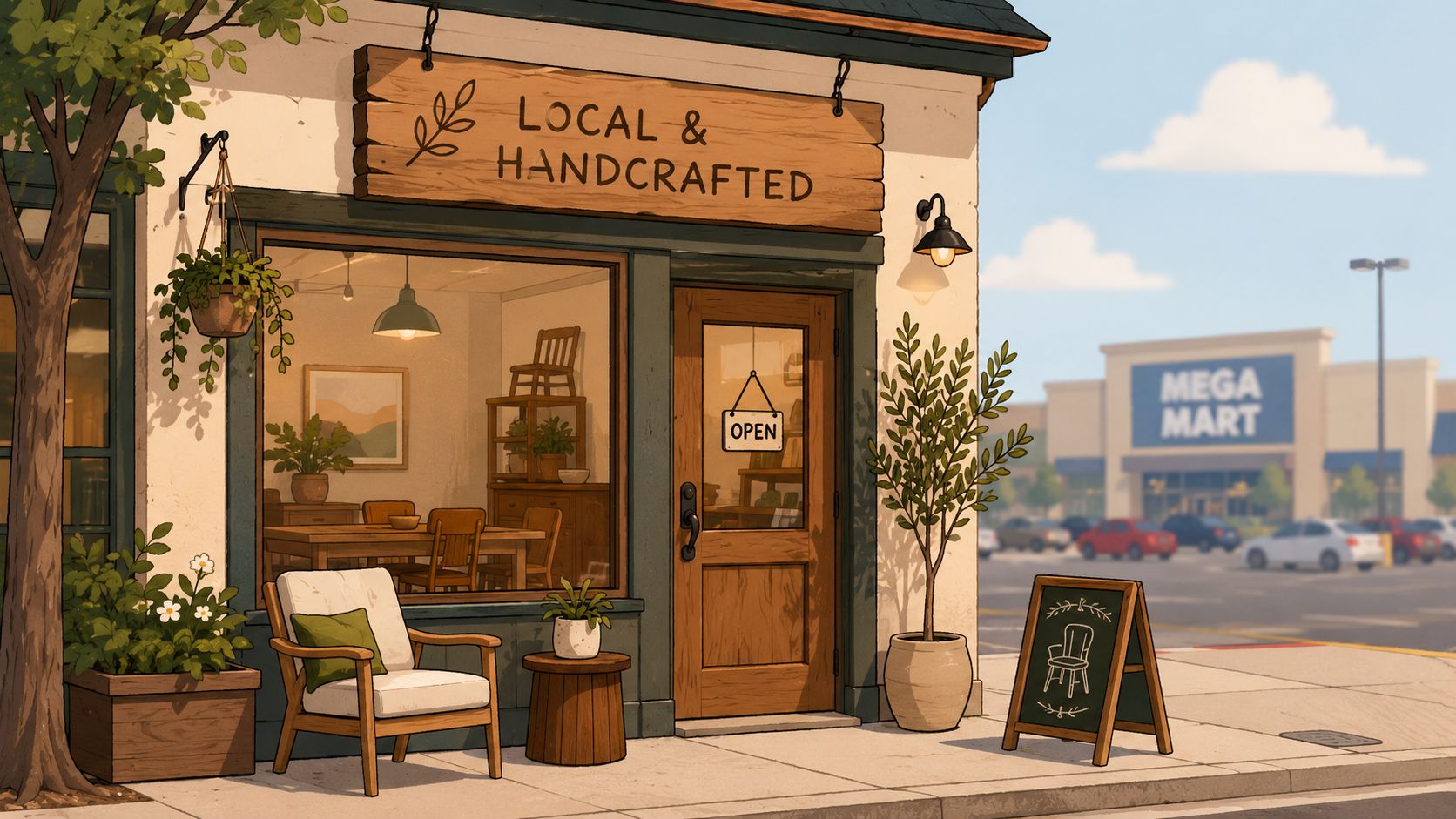
An independent furniture retailer is usually locally owned, locally operated, and free to choose what goes on the floor based on customer needs rather than a distant corporate plan. That freedom changes almost everything a shopper experiences, from the product mix to the level of service after the sale.
A simple comparison helps. Think of a neighborhood bakery versus a bakery counter inside a giant chain store. Both sell bread. But one is curated by people who know what nearby customers ask for, what sells in the season, and what quality standards they want tied to their name. Furniture retail works much the same way.
Ownership shapes the experience
Independent stores tend to make decisions closer to the customer. That often shows up in ways shoppers can feel right away:
- Curated assortments: Fewer filler pieces and more intentional choices.
- Specialization: Stronger focus in categories such as dining, upholstery, mattresses, or reclining furniture.
- Accountability: Problems don't disappear into a national system. A local team owns the outcome.
- Community fit: Styles, finishes, and service expectations often reflect the region's homes and lifestyles.
The retail structure matters too. The Bureau of Labor Statistics describes this subsector as one built around fixed locations that usually function as showrooms with substantial presentation space and often include interior decorating services (BLS industry overview of furniture and home furnishings stores). In plain language, the showroom isn't just where the sale happens. It's where comparison, education, and assisted decision-making happen.
Why independents still matter
Independent furniture retailers are not a small side corner of the market. They operate inside a large category with room for local specialists to thrive. In the United States, IBISWorld estimates there were 55,045 furniture stores in 2025 and projects 56,620 in 2026, while U.S. furniture and home furnishings stores generated more than $135 billion in sales in 2025 (IBISWorld furniture store market figures).
Those numbers explain something shoppers in Eastern Connecticut already know by instinct. Local stores haven't disappeared because they solve problems that mass retail often doesn't solve well. They help people compare comfort, scale, finish, and service in one place.
Local rule of thumb: If a store can explain why a piece fits a room, not just what it costs, that store is usually operating like a real independent specialist.
That's one reason many shoppers value what a family-owned furniture store brings to the experience. The point isn't nostalgia. It's better decision-making.
The Tangible Benefits of Shopping Independent
The advantages of independent furniture retailers become clear when the shopping trip moves from browsing to actual decision-making. At that point, four things matter most: construction, customization, service, and confidence that the purchase will work in daily life.
Quality that holds up in daily life
The best local stores tend to build their reputation on fewer, better choices. That doesn't mean every item has to be formal or expensive. It means the assortment is usually chosen with durability in mind.
A sofa is a good example. A shopper in a national chain might see dozens of silhouettes that look similar from ten feet away. An independent retailer is more likely to walk through what separates them: seat support, cushion feel, fabric performance, frame sturdiness, and whether the sofa is designed for occasional use or daily family life.
That's where trusted names like Flexsteel and Best Home Furnishings become meaningful. The brand itself matters less than the fact that a knowledgeable showroom team can explain why one construction method suits a busy household better than another.
Customization that solves real room problems
Customization sounds glamorous, but its real value is practical. It helps a household stop compromising.
A dining room may need a narrower table because of traffic flow. A breakfast nook may need a different chair profile. A living room may need a sectional with a specific orientation so the room still feels open. Strong independent retailers often shine here because they can guide shoppers through made-to-order choices without making the process feel overwhelming.
Programs such as Canadel Custom Dining and the F9 Custom Sofa series are good examples of how local showrooms can offer thousands of combinations while still guiding the customer toward sensible decisions. Instead of asking a shopper to sort through endless options alone, the showroom can narrow choices by room size, lifestyle, finish preference, and comfort needs.
Service that lowers stress
Service is easy to describe vaguely and harder to define well. In furniture, it usually comes down to reducing uncertainty.
That includes things like:
- Clear product explanations: A shopper understands the difference between in-stock and custom order.
- Honest timeline conversations: No guessing about what “soon” means.
- Design guidance: Help matching scale, finish, and layout to the room.
- Professional delivery coordination: The home entry, setup, and placement are treated as part of the purchase.
- Post-sale help: There's a real team to call if something needs attention.
For mattress shoppers, this same service model matters in a different way. A dedicated Sleep Gallery with brands like Tempur-Pedic, Serta, and Beautyrest lets a shopper compare comfort by feel instead of guessing from specifications alone. That's especially important when better sleep, pressure relief, and support are part of the goal.
The most useful showroom doesn't push the fastest sale. It helps the shopper avoid the wrong purchase.
Independent Retailer vs National Chain A Quick Comparison
| Feature | Independent Retailer (e.g., Gorins) | National Big-Box Chain |
|---|---|---|
| Product selection | Curated assortment chosen for local tastes and practical use | Broad assortment designed for scale |
| Guidance | High-touch help with room fit, materials, and customization | Often more generalized assistance |
| Custom options | Stronger support for made-to-order dining and upholstery | May offer options but with less guided decision-making |
| Delivery experience | Often positioned as a white-glove, in-home service | Can feel more standardized or limited |
| Accountability | Local team usually handles service follow-up | Service may move through larger centralized systems |
| Mattress shopping | Easier comfort testing by feel in a dedicated setting | More variable by location |
The final benefit is less visible but just as real. Independent stores often strengthen the local economy by staying rooted in it. They employ local teams, serve local households, and build repeat relationships instead of one-time transactions.
How to Choose the Right Independent Furniture Store
Not every local store is the right fit for every shopper. The strongest independent furniture retailers tend to show their value before anyone sits on a sofa or opens a dresser drawer. A careful shopper can spot that early.
Start before the showroom visit
The first step is simple research. A store's website should make the shopping process clearer, not murkier. Product categories should be easy to browse. Service details should be visible. Financing, delivery, and contact information shouldn't be hidden in tiny footer text.
A style quiz can also help shoppers arrive with better focus. It won't make the decision for them, but it can narrow the field and make the visit more productive. Many shoppers also benefit from reading through a clear explanation of the furniture buying journey from first research to final decision before stepping onto the floor.
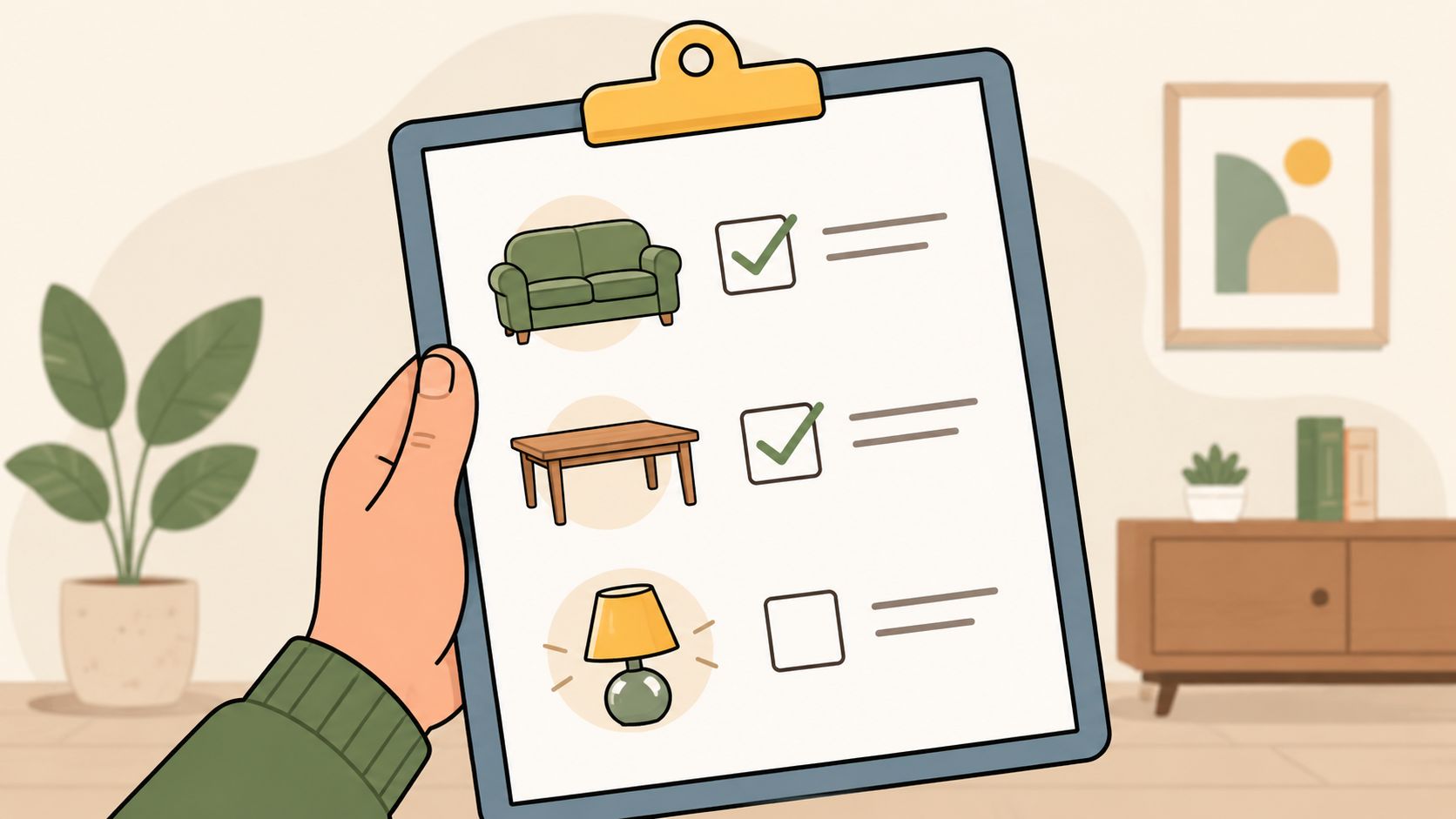
A useful pre-visit checklist looks like this:
- Check the category depth: Does the store show strength in the room being furnished, or does everything look broad but shallow?
- Look for service transparency: Delivery, financing, and care details should be easy to find.
- Notice the tone: Helpful guidance is a good sign. Pressure-heavy language is not.
- Bring room details: Measurements, photos, and a rough floor plan save time.
For shoppers also planning window updates, some of the same vetting habits apply. Practical guidance such as The Drapery Company recommendations is useful because it stresses communication, measurement accuracy, and installation clarity. Those are the same habits that separate a smooth furnishing project from a frustrating one.
What to check on the floor
Once in the showroom, the focus should shift from appearance alone to how the furniture performs.
A sofa should be sat in the way it will be used. Upright. Lounging. Feet tucked under. With two people if that's how it will be used at home. A dining chair should be tested with attention to seat comfort and table height. A mattress should be tried long enough to feel pressure points, support, and motion response.
Shoppers should also look beyond the visible surface:
- Open drawers fully: Do they glide smoothly and feel stable?
- Check table edges and finishes: Does the piece feel carefully made?
- Ask about cushion options: Softer isn't always better for long-term support.
- Inspect fabric choices: Ask which ones are better for pets, children, or frequent use.
Questions worth asking before saying yes
A strong independent retailer should welcome specific questions. In fact, the willingness to answer clearly is part of the value.
Some of the best questions are practical:
- What is in stock and what is custom ordered?
- How is delivery handled inside the home?
- What should the shopper know about care and maintenance?
- Who handles service if an issue comes up after delivery?
- What options exist if the room has tight access or unusual dimensions?
Some of the best buying decisions happen when a shopper slows down enough to ask one more practical question.
Red flags are usually easy to recognize once a shopper knows what to watch for. Vague delivery answers, rushed comfort testing, and pressure to decide before understanding the options are all signs to pause.
A well-run local showroom should leave a shopper feeling more informed after ten minutes, not more confused.
Understanding Financing Delivery and Warranty Options
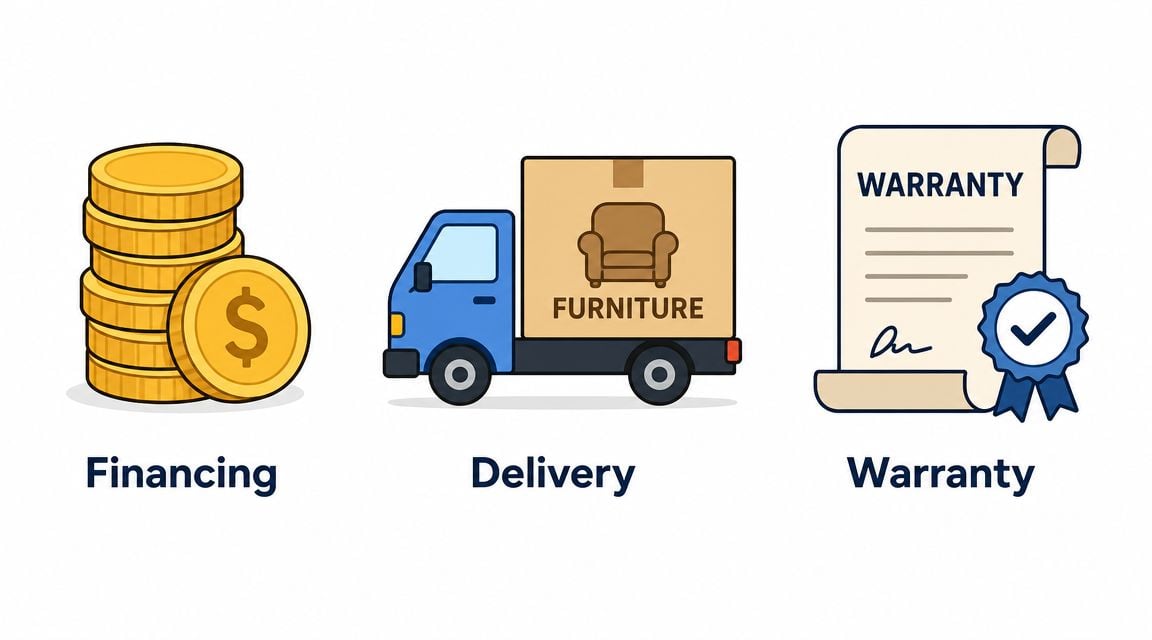
Furniture shoppers often focus on style first and logistics second. That's understandable, but the logistics often determine whether the whole purchase feels smooth or stressful. Financing, delivery, and warranty support are not side details. They are part of the product experience.
That point matters even more because online behavior now tends to happen close to purchase. 62.3% of furniture-sector searches are transactional, which suggests many shoppers are already near a decision when they begin comparing options. For independent stores, that makes accurate product information, clear financing details, and showroom tools especially important in turning intent into a finished order (Business of Home on changing furniture retail behavior).
Financing should reduce pressure not add confusion
Financing works best when it makes quality more accessible without making the terms hard to understand. A shopper should know whether a plan involves equal monthly payments, what approval depends on, and what the timeline looks like.
Promotional Financing can be especially helpful for households furnishing more than one room at once, replacing a mattress unexpectedly, or choosing a better-quality piece that they expect to keep for years. Its primary value is flexibility. It gives shoppers room to buy for long-term use instead of settling for the quickest short-term answer.
Local stores that explain financing clearly tend to build more trust than stores that treat it as a closing tactic. For Norwich-area shoppers, financing options for furniture and mattresses should be easy to review before the final decision.
Delivery is part of the product experience
Delivery separates furniture from many other retail categories. The piece has to leave the showroom, travel safely, fit through the home, reach the right room, and be placed correctly. That process can either reinforce confidence or undo it.
A thoughtful delivery service often includes scheduling clarity, room placement, setup, and communication about what the household should do before arrival. That's why many shoppers prefer a 5-Star Delivery style of service over a basic drop-off approach.
For people trying to understand shipping logistics more generally, tools that help find furniture shipping rates can offer useful context. Even when a local showroom provides its own delivery service, seeing how furniture transport is typically considered can help shoppers ask smarter questions.
Warranty support matters more when it is local
Warranties often sound straightforward until a problem appears. The useful question is not only what is covered. It is also who helps the shopper manage the process.
A local service team can make a meaningful difference because there is a known point of contact. If a mechanism needs inspection or a manufacturing issue needs to be documented, the customer isn't left trying to solve everything alone from a generic confirmation email.
Three things are worth clarifying before purchase:
- Coverage scope: What does the manufacturer cover, and for how long?
- Service path: Who should the customer contact first if something goes wrong?
- Care expectations: Are there maintenance steps required to keep coverage valid?
Clear financing, careful delivery, and reachable service support don't just remove friction. They make shoppers more comfortable choosing better furniture in the first place.
Your Next Steps to a Beautiful Home in Norwich

For households across Norwich, New London, Plainfield, Waterford, and nearby Eastern Connecticut communities, the strongest case for independent furniture retailers comes down to something simple. They make it easier to buy well.
They do that by combining product knowledge, local accountability, guided customization, and services that reduce uncertainty. A shopper doesn't just leave with a sofa, table, or mattress. They leave with a clearer understanding of why that piece fits the home and what support exists after the sale.
Customization is a good final example. Many articles praise custom furniture in broad terms, but its true value appears when retailers use it carefully in categories where it solves real problems, especially dining and upholstery. That's the difference between customization as a gimmick and customization as a smart way to improve fit, function, and value, a distinction discussed in Your Source News on the challenge and opportunity of custom programs.
A practical local plan
A shopper in Norwich can keep the next steps straightforward:
- Define the room first. Bring measurements, photos, and a short list of what the room needs to do every day.
- Narrow the style direction. A style quiz can help sort out whether the room leans classic, casual, modern, or mixed.
- Focus on the categories where guidance matters most. Upholstery, dining, mattresses, and recliners often benefit most from in-person testing and explanation.
- Ask about custom programs where fit matters. Dining and upholstery are often the smartest places to personalize.
- Review delivery and financing before the final yes. Confidence usually comes from knowing what happens next, not just liking the piece on the floor.
Even readers outside Connecticut may recognize the same principle in adjacent home decisions. Advice on how to stage house for sale in Bournemouth highlights how furniture, layout, and visual balance influence the way a space feels. The setting is different, but the lesson is familiar. Good furnishings don't just fill a room. They improve how the room lives.
For local shoppers ready to move from research to action, a Norwich showroom visit is still one of the best next steps. It gives the household a chance to test comfort by feel, compare finishes in person, and see whether custom dining, custom upholstery, or a better mattress is the right answer for the home. The easiest place to begin is the Norwich furniture and mattress showroom details.
Since 1936, Gorins Furniture & Mattress has helped Norwich and Eastern CT families create homes they love. From custom-designed dining and custom upholstery to a dedicated Sleep Gallery featuring Tempur-Pedic, Serta, and Beautyrest, Gorins combines quality, value, and helpful local service in one family-owned showroom. Visit the Norwich showroom, take the online Style Quiz, or browse the Clearance section to find the right fit for a home and a budget.