Sectional with 3 Recliners: Your Norwich Buying Guide


The search usually starts the same way. Someone in Norwich or nearby has had enough of the living room shuffle. One person gets the corner of the sofa, someone else claims the recliner, and everybody trades seats once the movie starts. A sectional with 3 recliners solves that specific problem. It gives multiple people real reclining comfort without scattering separate chairs across the room.
That sounds simple until the practical questions show up. Will it fit through the doorway? Will all three seats recline without blocking the walkway? Is power worth it? Which upholstery will still look good after daily use, pets, snacks, and holiday gatherings?
Those are the questions worth asking before a major furniture purchase. A reclining sectional isn't just another seat. It's usually the anchor piece in the room, and buyers tend to live with that decision for years.
Table of Contents
- Your Guide to Family Comfort
- Is a 3-Recliner Sectional Right for Your Home?
- Measure Twice Buy Once for a Perfect Fit
- Decoding Recliner Mechanisms and Comfort Features
- Choosing Upholstery for Style and Durability
- Customizing and Financing Your Perfect Sectional
Your Guide to Family Comfort
A sectional with 3 recliners works best for households that use the living room every day. Not the formal room that stays perfect. The lived-in room. The one used for streaming, game day, naps, visiting family, and the quiet half-hour at the end of the night when everybody wants a comfortable seat at the same time.
That's one reason sectional seating has become such a mainstream category. The global sectional sofa market was estimated at USD 38.4 billion in 2024, which shows this isn't a niche format anymore but a major furniture category shaped around comfort-focused living spaces, according to sectional sofa market research. A sectional with 3 recliners sits right in that comfort-first lane. It combines the wraparound seating people like in a sectional with the personal comfort people expect from a recliner.
For families in Eastern Connecticut, that combination makes sense in larger family rooms, open-plan homes, and media spaces where one central piece has to do a lot of work.
Why this format feels different
A standard sofa asks everyone to share the same seat experience. A three-recliner sectional doesn't. One person can sit upright, another can partially recline, and someone else can kick back fully. That flexibility changes how the room gets used.
Practical rule: If the living room is the room everyone competes for, a sectional with multiple recliners usually functions better than mixing unmatched seating pieces.
There's also a visual benefit when the room is large enough. One sectional can create a cleaner furniture plan than a sofa plus separate recliners, side tables, and the awkward gaps that form between them.
Since 1936, Gorins Furniture & Mattress has served Norwich as a family-owned business, and that kind of long local history matters with a purchase like this. Buyers usually aren't looking for a temporary piece. They're looking for a long-term anchor that fits the house, the household, and the way the room gets used on an ordinary Tuesday.
Is a 3-Recliner Sectional Right for Your Home?
A sectional with 3 recliners is a strong choice when comfort has to be shared, not rationed. It's often the right answer for households where several people want motion seating but don't want the room to feel like a row of theater chairs.
The biggest advantage is efficiency. A sectional organizes the room in one footprint. Separate recliners can work, but they often eat up more visual space, create dead zones between pieces, and make conversation layouts harder. A well-planned sectional usually feels more intentional.
Signs it's a good fit
Some homes are naturally suited to this style:
- The TV room is the main gathering zone. If that room handles movie night, weekend sports, and daily downtime, multiple recliners won't go to waste.
- The room needs lots of seating without looking pieced together. A sectional can seat several people while keeping the layout unified.
- Comfort matters more than formal styling. Buyers who want lounge-first living usually prefer the support and adjustability of reclining seats.
- The household uses the room for long stretches. A quick-sit room doesn't need this level of function. An everyday room often does.
For buyers still sorting out the broader sectional questions, Gorins' guide on what to know before buying a sectional is a useful starting point.
When it's probably the wrong choice
This style isn't universal. It can be too much piece for the wrong room.
A large reclining sectional adds physical bulk and visual weight. In a compact room, that can make the whole space feel furniture-heavy even before coffee tables, lamps, and storage are added. It also sets the room's traffic pattern. Once it's in place, there's less flexibility than buyers sometimes expect.
A reclining sectional has to fit the room in use, not just on paper.
That distinction matters. Plenty of buyers measure the wall and stop there. The better question is whether the room still works once people walk through it, open nearby doors, and recline the seats.
Compare it to the common alternative
A sofa plus individual recliners can still be the better answer when:
- The room has an awkward shape. Separate pieces are easier to float or reposition.
- Only one person really wants motion seating. In that case, a sectional with 3 recliners may solve a problem the household doesn't have.
- The style goal is lighter and more refined. Some rooms call for less mass and cleaner sightlines.
For the right home, though, this format is hard to beat. It gives shared comfort, keeps everyone in the same seating zone, and makes family rooms feel built for actual living instead of occasional use.
Measure Twice Buy Once for a Perfect Fit
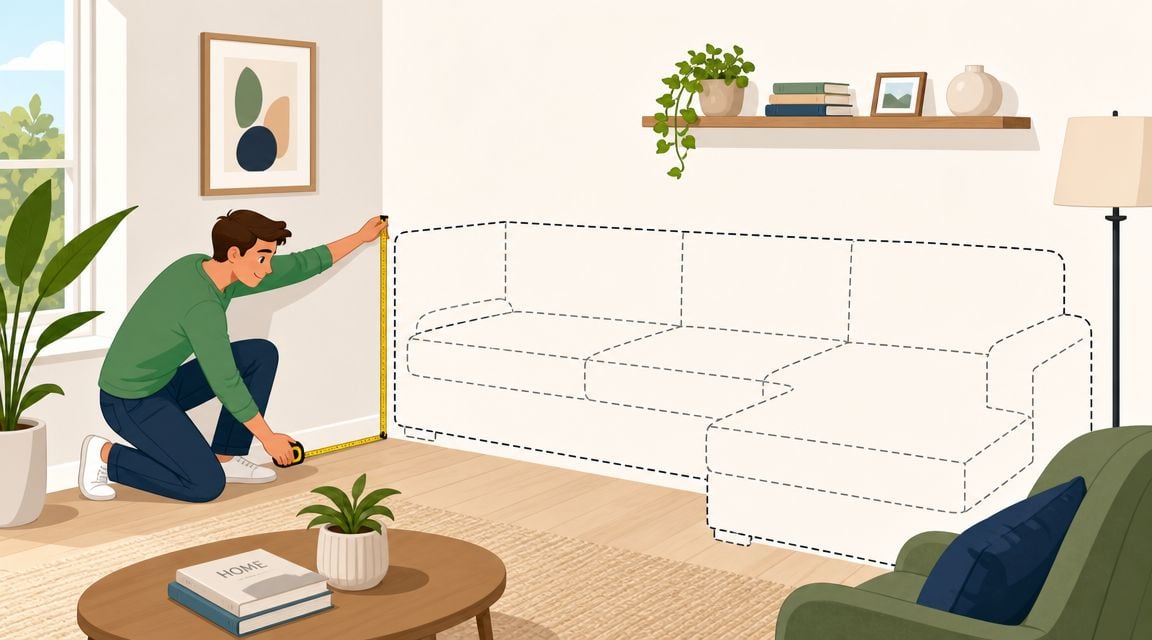
The most expensive sectional mistake isn't choosing the wrong color. It's buying a piece that technically fits the room dimensions but fails in the doorway, jams at a hallway turn, or blocks the room once the recliners open.
That risk is real with this category. One large 3-piece power reclining sectional is listed at 144" × 151" × 39.5" with an assembled weight of 708 lb, according to published dimensions for a large power reclining sectional. That scale changes delivery planning and room planning at the same time.
Start with the room, not the product tag
Wall length matters, but usable floor space matters more. The room has to handle the sectional in three conditions: closed, partially reclined, and fully in use with people moving around it.
A simple process works well:
- Measure the full wall span and the room depth. Write down both.
- Mark windows, radiators, floor vents, and nearby door swings. Those often limit placement more than the wall itself.
- Identify the main walkway. Don't guess. Mark the route people take from entry points to the rest of the room.
- Leave breathing room around the sectional. A room shouldn't feel trapped by the furniture.
For homeowners who want a more complete measuring checklist, Gorins has a practical resource on how to measure furniture before delivery.
Measure the delivery path too
The room can be perfect and delivery can still fail. Buyers should measure every transition point from the truck-access entry to the final placement area.
Check these carefully:
- Entry doors: Include door width, height, and any trim or storm-door interference.
- Hallways: Narrow hallways create trouble when sectional pieces need to pivot.
- Staircases: Ceiling height above stairs can matter as much as tread width.
- Turns and landings: A piece may clear one opening and still fail at the next angle.
When a customer is trying to visualize how bulky furniture moves through a home, Emmanuel Transport's removal insights give a helpful plain-English reminder that access planning saves time, stress, and avoidable damage.
Delivery check: Measure the path in sequence. Front door, foyer, hallway, turn, stair, landing, room entry. One tight point can stop the entire move.
Use the tape-on-the-floor method
Painter's tape is one of the most useful tools in the buying process. Tape out the sectional footprint directly on the floor before ordering. Then tape out the reclined position if the model information provides enough depth guidance.
Walk the space as if the sectional were already there. Open nearby doors. Pass through the walkway. Stand up from the seat area and move toward the kitchen, hallway, or stairs. That quick exercise reveals problems a dimension sheet won't.
This matters even more with a sectional with 3 recliners because each reclining zone changes the room's usable depth. Product pages often list the pieces and overall dimensions, but many still don't answer the practical fit question of how much space the room needs once all three seats are operating.
A good fit should do four things at once:
- Allow full use of the reclining seats
- Preserve a comfortable traffic path
- Keep sightlines open enough for the room to feel balanced
- Let delivery happen without forcing the crew into impossible angles
In Eastern Connecticut homes, especially older homes with tighter entries, this step makes the difference between a smooth install and a frustrating one.
Decoding Recliner Mechanisms and Comfort Features
The next decision is mechanical, not decorative. Buyers usually choose between manual reclining and power reclining, and that choice affects daily convenience, room setup, and long-term ownership.
A lot of shoppers focus on the button or handle. The better way to think about it is routine. How often will the seats be used, who's using them, and how much control does the household want over head, foot, and body position?
Manual or power comes down to daily use
Manual recliners appeal to buyers who want straightforward function. There's less dependence on electricity, and some people prefer the simplicity. That can make sense in a secondary living area or a home where the reclining feature gets used occasionally rather than constantly.
Power recliners are easier to adjust with more precision. That's especially helpful when different people use the same seat and want different positions. Modern power reclining sectionals also raise practical ownership questions, because they depend on outlets, cords, and motors. Buyers should think through outlet access, possible battery-pack options for cleaner cord management, and how serviceable the mechanism will be after the warranty period, as noted in published guidance on modern power reclining sectionals.
For buyers weighing those options in more detail, Gorins offers a useful overview of types of power reclining seating.
Manual vs. Power Recliner Comparison
| Feature | Manual Recliner | Power Recliner |
|---|---|---|
| Operation | Uses a pull mechanism or body pressure | Uses buttons for controlled adjustment |
| Electrical needs | No outlet required | Needs outlet access, and buyers may want cord-management options |
| Ease of adjustment | Simple, but less precise | More precise and easier for repeated daily use |
| Feature potential | Usually more basic | More likely to include added comfort functions such as adjustable head positioning |
| Long-term considerations | Fewer electrical components | More convenience, but more dependence on motors and serviceability |
Serviceability matters more than the showroom test sit
A sectional can feel excellent for five minutes in a showroom and still be a poor long-term fit if buyers ignore the maintenance side.
That doesn't mean power is the wrong choice. It means buyers should ask better questions:
- Where will the plugs go? The cleanest room layout can get messy fast if cords are an afterthought.
- What happens in a power outage? The answer can vary by model and accessories.
- Can the mechanism be serviced sensibly later on? That matters more with heavily used seating.
- Which features are useful? Power headrests and similar upgrades can be excellent, but only when they solve a comfort problem instead of just adding complexity.
One useful habit is looking beyond the surface upholstery and checking what supports the seat over time. For readers who want a general primer on what seat sag can involve in upholstered furniture, Meliusly's spring repair advice offers a practical maintenance perspective.
Buyers rarely regret asking too many ownership questions before ordering power furniture. They do regret discovering those answers after delivery.
Choosing Upholstery for Style and Durability
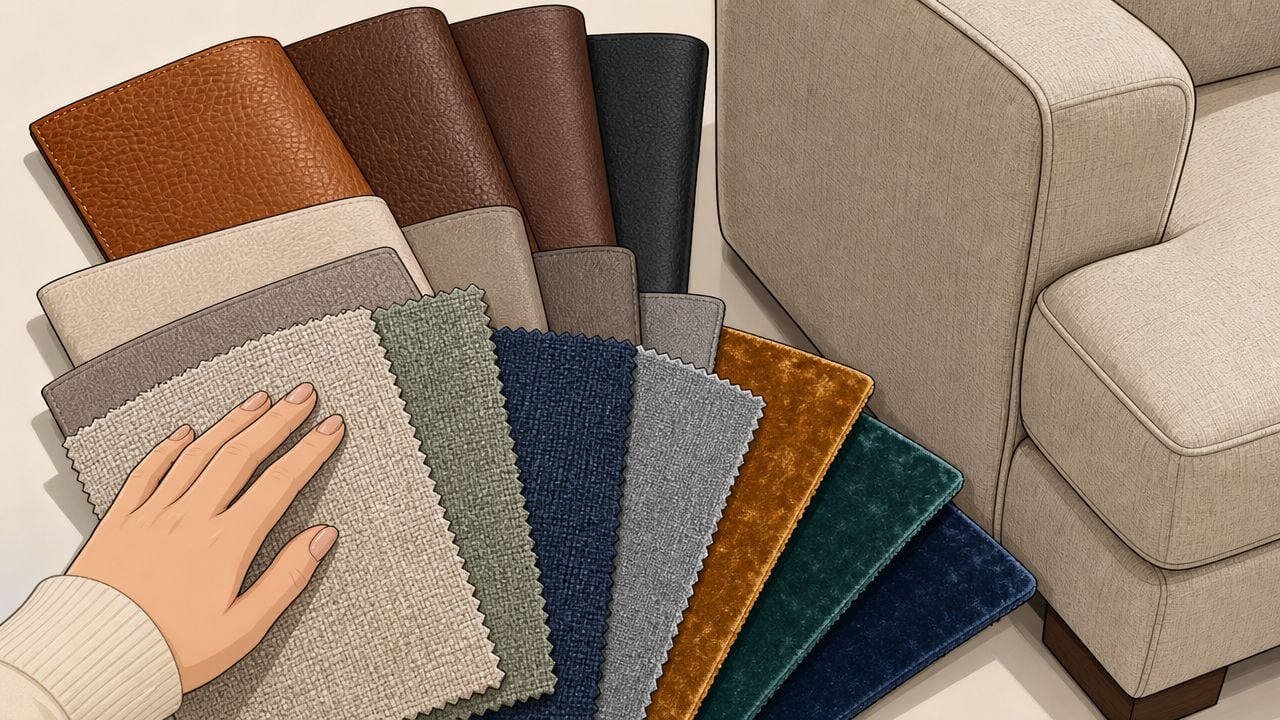
With a sectional with 3 recliners, upholstery isn't just about color. It affects wear patterns, cleaning routine, how warm or cool the seat feels, and whether the piece still looks composed after years of use.
The right material depends on the household. A home with kids, pets, and frequent company usually needs a different upholstery strategy than a quieter household furnishing a dedicated media room.
Fabric works differently from leather in a busy home
Fabric usually gives buyers more freedom with color, texture, and softness. It can feel relaxed and approachable, which works well in family rooms. Performance-minded fabrics are often the practical choice when the sectional will see daily traffic and the occasional spill.
Leather offers a different experience. It tends to look more refined and can be easier to wipe down in everyday use. It also develops a lived-in character that many buyers like. But leather shows its own wear patterns, and not everyone wants that look.
The better choice usually comes down to behavior, not preference alone.
- Choose fabric when comfort, texture variety, and a softer visual feel matter most.
- Choose leather when easier wipe-down care and a more refined look matter more.
- Choose based on routine if the sectional will be used hard every evening. Material should match lifestyle first.
Buyers comparing materials can also review Gorins' overview of upholstery materials and how they perform.
What investment-grade quality looks like underneath
Upholstery gets attention because it's visible. Construction matters more because it determines how the sectional ages.
Published specifications on a triple-power example show 300 lb per-seat capacity, 2.2-inch-density foam cushions, and a 3-inch footrest extension, according to construction details for a triple-power reclining sectional. Those details matter because support and cushion density affect whether seats hold their shape and whether the recliner mechanism continues to move smoothly over time.
When buyers talk about investment-grade quality, this is usually what they mean:
- Stronger support: A seat built to handle regular use places less stress on the frame and moving parts.
- Denser cushioning: Better foam generally resists the fast sink-and-sag feel that makes sectionals age poorly.
- Stable seat geometry: Reclining furniture performs better when the cushion keeps its intended shape.
Quality cue: The best-looking sectional on day one isn't always the best-built sectional for year five.
Maintenance matters too. Even durable upholstery benefits from the right cleaning method, and buyers who want a general care refresher can look at residential upholstery cleaning advice for practical housekeeping basics.
For shoppers in Norwich who want recognizable construction-focused brands, Flexsteel and Best Home Furnishings are often part of the conversation because buyers are usually balancing style, seat feel, and long-term support rather than shopping on appearance alone.
Customizing and Financing Your Perfect Sectional
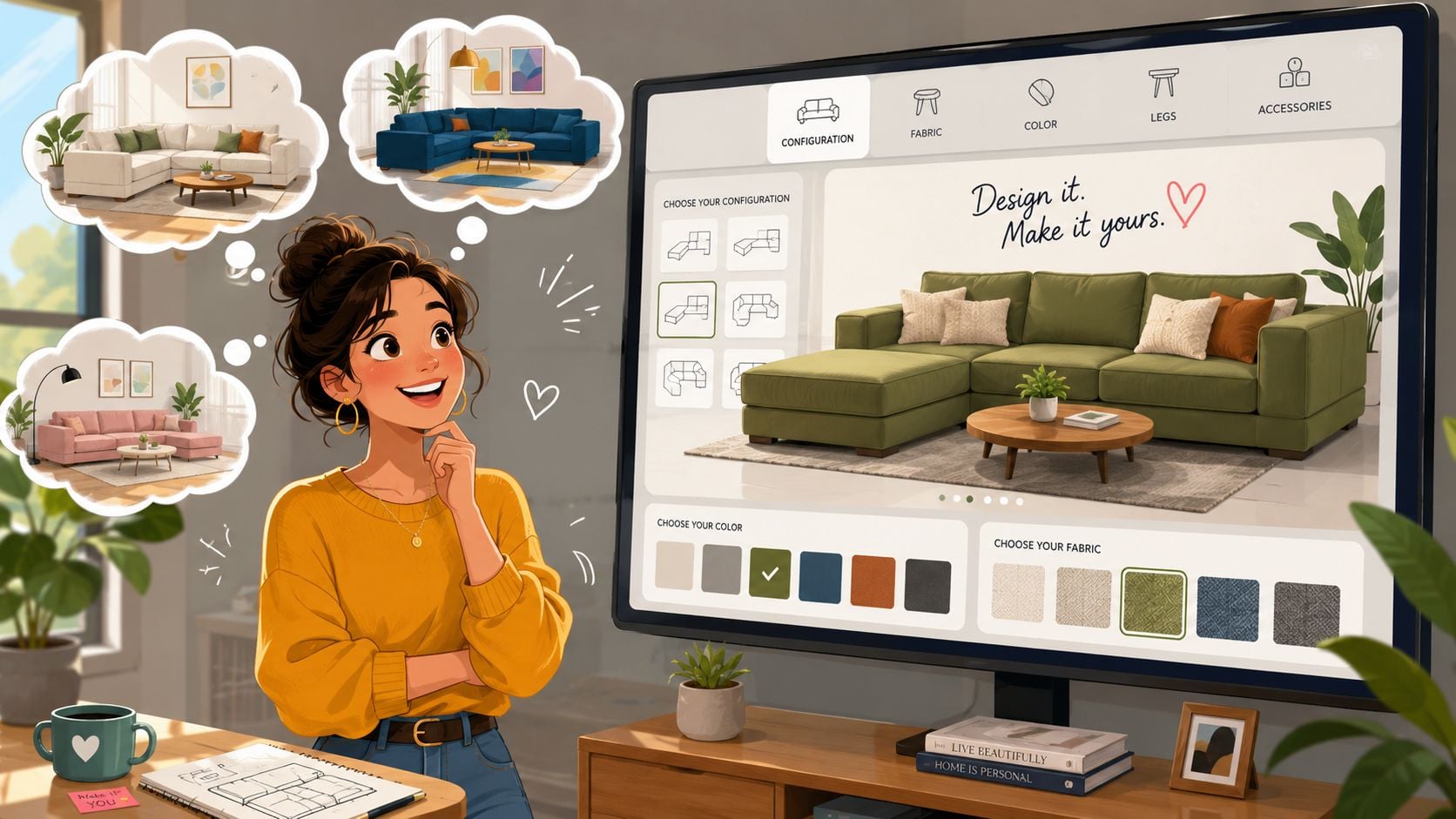
A sectional with 3 recliners is a major piece, but it doesn't have to be a take-it-or-leave-it purchase. The best results usually come when buyers treat the process like room planning, not simple product picking.
Customization should solve room problems, not create them
Customization helps when it answers practical questions. Which side should the return go on? Does the room need a console or would that make the piece too bulky? Is a certain arm style going to make the sectional feel heavier than the space can handle?
That's where custom order programs can make sense. Buyers can explore layout, fabric, seat feel, and style details through resources like Gorins' guide to getting started with custom order furniture. Gorins Furniture & Mattress also offers custom living room options including the F9 Custom Sofa series, where buyers can tailor details such as silhouettes and upholstery choices, much like the store's Canadel Custom Dining program offers thousands of combinations for dining spaces.
The key is restraint. More options don't automatically create a better room. The right custom sectional is the one that fits the home, supports daily habits, and doesn't overload the space.
Financing can make a long-term purchase easier to plan
A larger reclining sectional often sits in the premium comfort category, so budgeting matters. Promotional Financing with equal monthly payments can make that purchase easier to plan, especially for households furnishing a main living space all at once.
That matters for local families who want to buy for the long term without forcing the entire cost into one month's budget. It also gives buyers room to choose the upholstery, configuration, or comfort features that fit their lifestyle instead of settling for the quickest short-term answer.
Since 1936, the Norwich showroom has served families across Eastern Connecticut and nearby Rhode Island communities with a low-pressure, service-first approach. That local part of the experience still matters with a sectional this large. Buyers often need help comparing configurations, fabrics, delivery access, and financing side by side.
For neighbors shopping for a sectional with 3 recliners, Gorins Furniture & Mattress is a practical next stop for seeing configurations in person, checking comfort by feel, and talking through custom options, Promotional Financing, and delivery planning. Visit the Norwich showroom, take the online Style Quiz, or browse the Clearance section for value-focused finds backed by local service.