Best Upholstery Fabrics: A Norwich Buyer’s Guide

A lot of shoppers reach the same point. They've found the sofa shape they like, the seat feels comfortable, the scale works in the room, and then a designer hands over a fan deck of fabric swatches. Suddenly the simple part is over.
That's where most confusion starts for families in Norwich. One swatch feels soft, another looks refined, another claims to be “performance,” and a fourth has a texture that seems perfect until someone mentions pets, spills, or sunlight. The names can sound fancy, but the core question is practical. Which fabric will still look and feel good after ordinary life happens?
Since 1936, local families have leaned on clear guidance from a family-operated furniture store rather than designer jargon. The smartest upholstery choice usually isn't about picking the most expensive fabric or the trendiest one. It's about matching the material to how a household lives, from movie nights and muddy paws to formal rooms that stay mostly tidy.
Some readers also like to see how upholstery fabric works beyond sofas and chairs. Accessories can be a useful way to notice texture, pattern, and construction up close, such as these Pandemonium Millinery bags, which show how upholstery fabrics can bring structure and character to everyday items.
Table of Contents
- Choosing Your Sofa Is Easy Choosing the Fabric Is Hard
- Decoding Durability What Double Rubs Really Mean
- Natural vs Synthetic Fibers A Practical Comparison
- The Rise of Performance Fabrics For Real Family Life
- Choosing Your Fabric Style Texture and Weave
- Customization and Making Your Choice at Gorins
- Caring For Your Investment Cleaning and Maintenance
Choosing Your Sofa Is Easy Choosing the Fabric Is Hard
The frame, arm style, and cushion comfort usually feel straightforward. Fabric is harder because it asks several questions at once. Does the room get heavy daily use. Will the dog be allowed up. Is this a quiet sitting room or the family landing spot after school, sports, and dinner?
A couple in Eastern CT might love the airy look of a light woven fabric in the showroom. Then they remember their child likes to eat snacks on the sectional and the family dog circles twice before lying down. Another shopper may start with stain worries and choose something ultra-practical, only to realize later that the room feels colder or flatter than expected. Both situations are common.
That's why the best upholstery fabrics aren't one-size-fits-all. The right answer depends on use, texture, maintenance, and how the fabric feels when someone sits on it.
What trips people up most
Three things tend to confuse shoppers more than anything else:
- Too many labels: Terms like chenille, tweed, performance, basket weave, and polyester blend can blur together quickly.
- Looks versus longevity: A fabric can look beautiful in a small swatch and behave very differently on a full-size sofa.
- Touch matters: Some fabrics sound ideal on paper but don't feel right for lounging, napping, or everyday family use.
A smart fabric choice should feel good on a Tuesday night, not just look good under showroom lights.
That practical mindset helps narrow the field fast. Once a household knows whether comfort, stain resistance, softness, texture, or durability comes first, the decision gets much easier.
Decoding Durability What Double Rubs Really Mean
Durability should come before color and before fiber names. Many shoppers do the opposite. They fall in love with a texture, then ask later whether it will hold up. That order can lead to disappointment.
The number that matters first
For everyday seating, many upholstery guides treat 15,000 double rubs as the minimum for residential use, according to this upholstery durability guide. A double rub is a standard abrasion test used to estimate how well a fabric resists wear from repeated sitting and sliding, so it's one of the clearest ways to judge whether a fabric belongs on a real family sofa.
A simple way to think about it is friction. Every time someone sits down, shifts, leans on an arm, or gets back up, the fabric experiences wear. Double rubs are meant to simulate that kind of repeated contact.
How Norwich households can use the rating
A lower-use accent chair in a formal room doesn't face the same stress as the main sectional in a busy family room. That's why the number matters in context.
A practical shopping checklist looks like this:
- Main sofa or sectional: Start by asking whether the fabric clears the residential durability floor.
- Daily family use: Look more carefully at abrasion resistance if the sofa is where everyone lands after work or school.
- Pets in the home: Consider a fabric that combines durability with a tighter construction, especially for claws and repeated jumping.
- Easy comparison: When shoppers want a simple starting point for pet-friendly options, this guide to pet-safe couches helps connect fabric choices to everyday use.
People sometimes assume cotton means soft, polyester means durable, and that's enough to decide. It isn't. Fiber content tells part of the story. The wear rating tells another part. Construction, finish, and intended use complete the picture.
Practical rule: If a sofa will be the most-used seat in the house, durability specs deserve attention before pattern and color.
That approach saves a lot of regret later. A fabric that feels slightly less exciting in the swatch book can turn out to be the better long-term choice when it still looks tidy after years of daily use.
Natural vs Synthetic Fibers A Practical Comparison
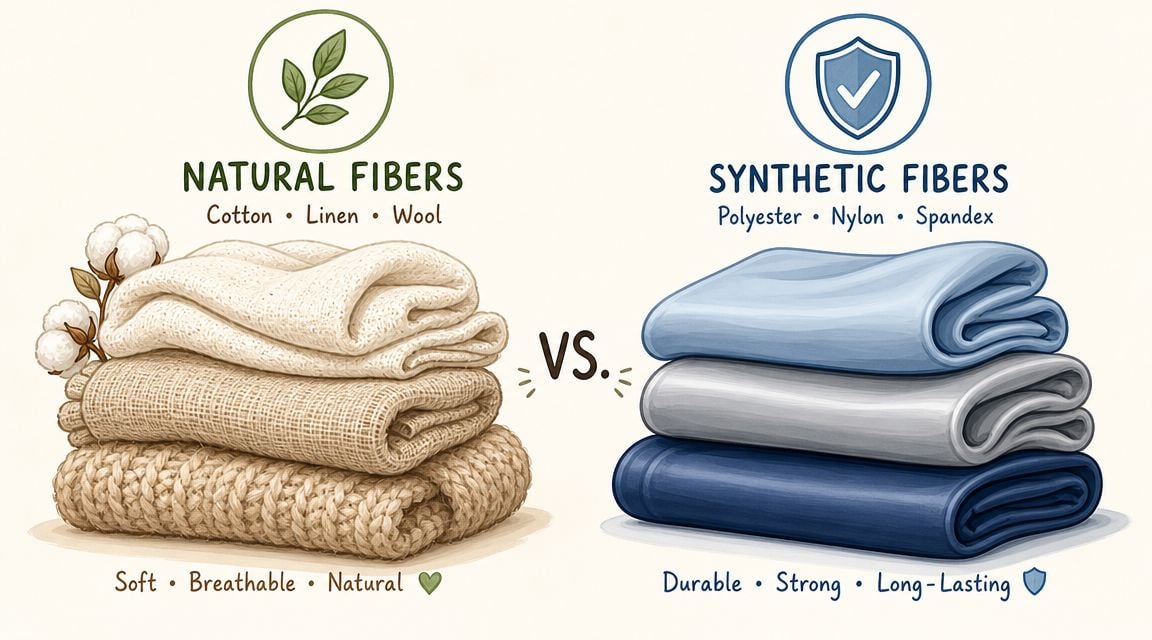
Some upholstery conversations get framed as natural equals good and synthetic equals lesser. Real homes are more complicated than that. Natural fibers can feel beautiful and look refined, while synthetic fibers often solve the daily problems that make people replace furniture sooner than they planned.
Why synthetic fabrics became so common
A major shift in upholstery happened as performance synthetics became widely preferred for high-use furniture, with some industry guidance naming 100% polyester as the best long-term choice for many everyday couches because of gains in abrasion resistance, cleanability, and color stability, as noted in this upholstery fabric overview.
That doesn't mean natural fibers have no place. It means shoppers should judge them by where they'll live and how they'll be used.
Natural fibers often appeal to buyers who want:
- Breathability: Many natural fabrics feel comfortable and relaxed.
- Organic texture: Linen, cotton, and wool often bring visible character.
- Classic style: They can look especially good in traditional, coastal, or structured rooms.
Synthetic fibers often appeal to buyers who need:
- Easier maintenance: Many are simpler to clean and more forgiving of spills.
- Better wear resistance: They're often chosen for active rooms.
- Color stability: They can hold their appearance well in daily-use spaces.
A helpful deeper read for shoppers comparing material categories is this guide to upholstery materials, especially when fabric names start to overlap.
Fabric Type Comparison Chart
| Fiber Type | Durability | Stain Resistance | Feel & Texture | Best For |
|---|---|---|---|---|
| Natural fibers | Often better for lighter or more controlled use, depending on weave | Often less forgiving around spills | Breathable, textured, sometimes relaxed or refined | Formal rooms, accent seating, style-led spaces |
| Synthetic fibers | Often stronger for repeated daily use | Often easier to maintain | Wide range from soft and plush to smooth and tailored | Family rooms, sectionals, homes with kids or pets |
| Blends | Often balanced | Often balanced | Can combine softness with practicality | Shoppers who want comfort and resilience |
The best upholstery fabrics often come down to trade-offs, not labels. A natural fabric may win on charm and softness. A synthetic may win on resilience and cleanability. A blend may be the quiet middle ground that suits most homes in Norwich.
The Rise of Performance Fabrics For Real Family Life
Performance fabric is one of the most useful terms in furniture shopping, and also one of the most misunderstood. Some people hear it and think it means stiff, plastic-looking, or meant only for playrooms. In reality, many performance fabrics feel soft, inviting, and stylish enough for a formal living space.
What makes a fabric performance fabric
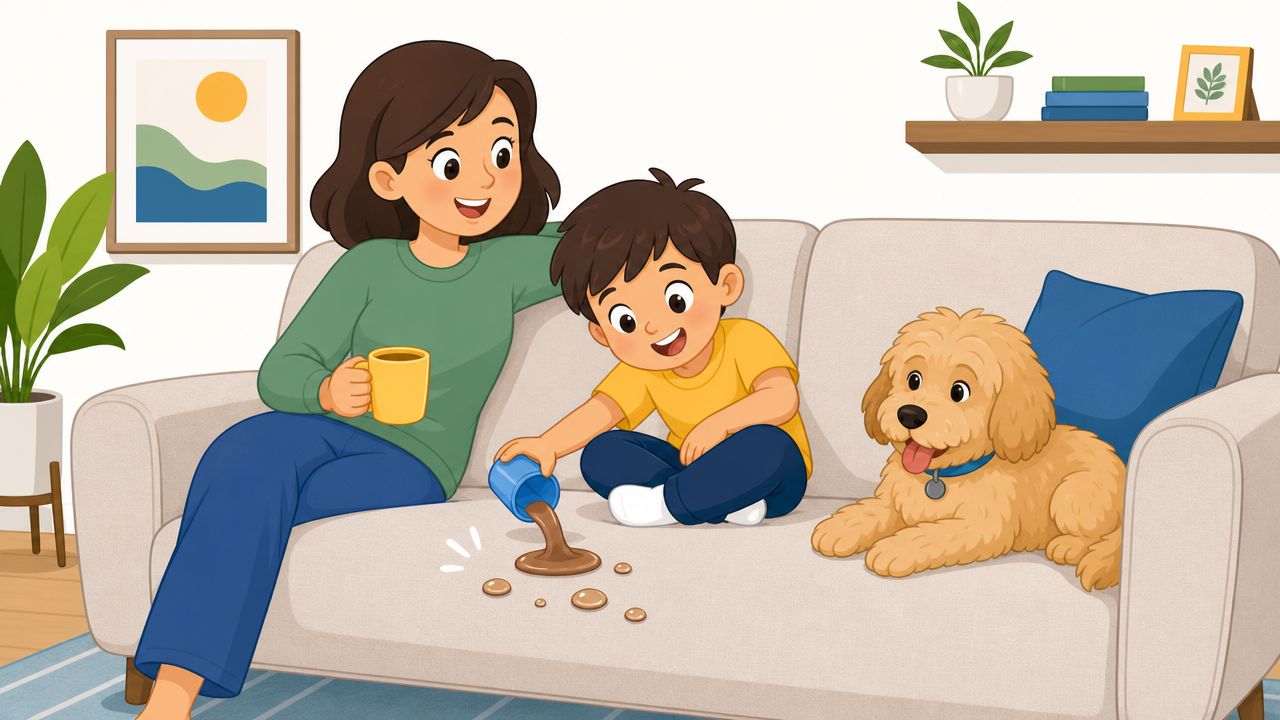
The basic idea is simple. A performance fabric is built to stand up better to spills, moisture, wear, and regular cleaning than a standard decorative fabric.
For homes with children, pets, or heavy daily use, a practical technical threshold is 25,000 to 30,000 double-rub equivalents, while fabrics below 10,000 are generally better suited to decorative pillows than main seating surfaces, according to this upholstery introduction.
That matters because many families don't need a precious fabric. They need a fabric that can handle life. Juice boxes. Wet paws. A guest setting a mug down where a coaster should've been.
When performance fabric makes the most sense
Performance upholstery is often a strong fit in these situations:
- Busy family rooms: The sofa gets used every day, often for meals, homework, and lounging.
- Pet households: Tighter, tougher fabrics can be more manageable around shedding and repeated wear.
- Light-colored seating: Cream, beige, and soft gray are easier to live with when the fabric is built for easier cleanup.
- Multi-use homes: One room may need to serve as a reading space, TV room, and guest hangout all in the same week.
Some households also research room-specific fabrics before buying, especially for baby rooms or spaces where softness and cleanability both matter. This article on choosing the best nursery fabrics is a useful example of how people weigh comfort against practicality in family spaces.
For shoppers comparing furniture built for active homes, this overview of performance fabrics for spills, splashing, and shedding connects the idea directly to ordinary household messes.
The best upholstery fabric for a busy home usually solves two problems at once. Wear and cleanup.
That's why performance fabrics keep gaining attention. They let people choose lighter colors, softer hands, and more refined looks without feeling like one spill will ruin the room.
Choosing Your Fabric Style Texture and Weave
Once durability and maintenance are settled, style becomes easier to enjoy. This is the stage where a room starts to feel personal. Texture and weave decide whether a sofa feels cozy, crisp, casual, polished, or subtly refined.
Texture changes the mood of the room
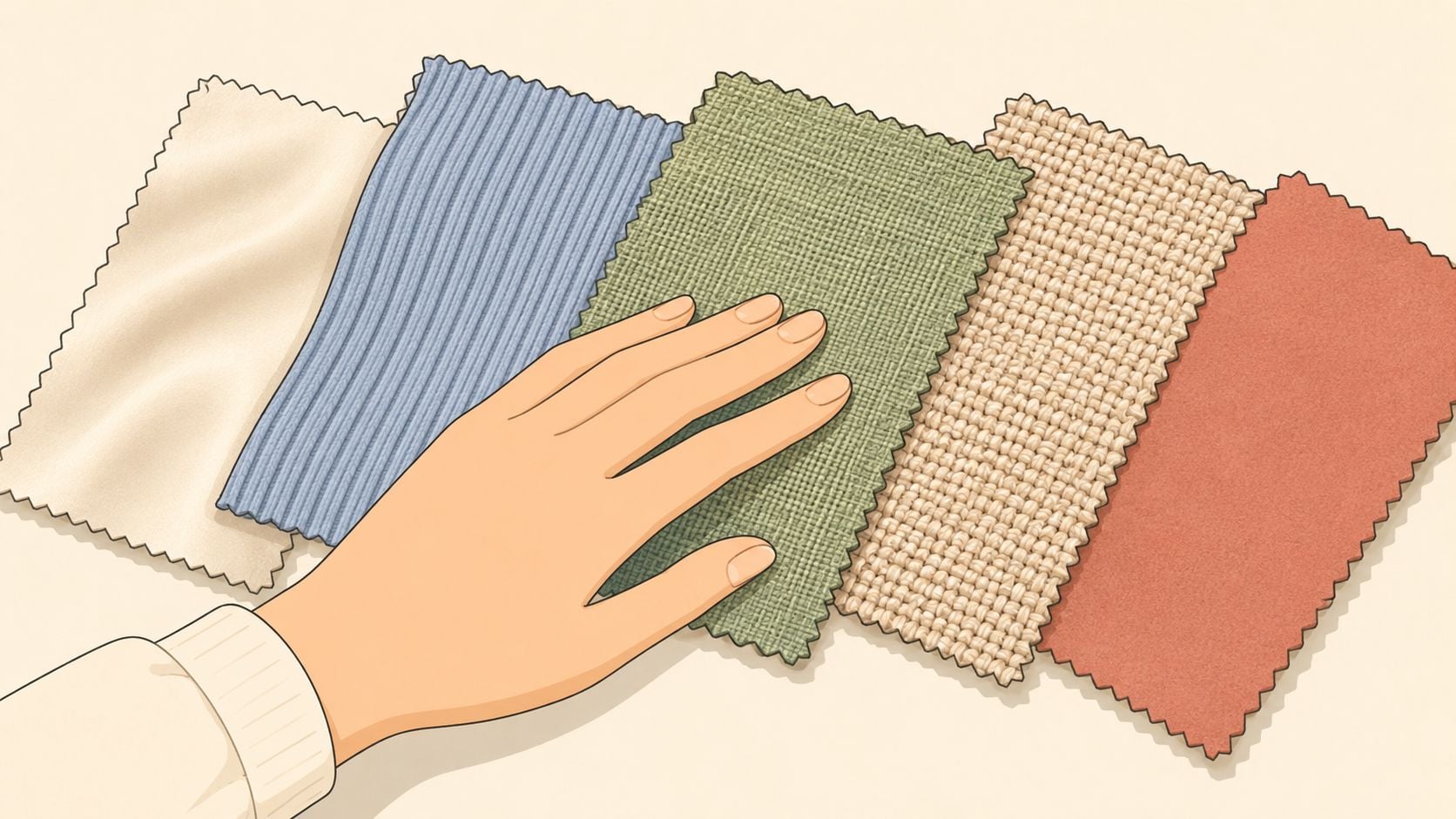
A chenille fabric usually reads softer and more relaxed. Velvet can feel dressier or moodier, depending on color. Tweed and other nubby fabrics bring visual depth and a grounded look. Flat weaves often feel cleaner and more understated.
Texture changes more than appearance. It changes how people use the furniture.
- Plush textures: Often invite lounging and can make a room feel warmer.
- Smoother surfaces: Often look sharper and a little more formal.
- Visible weave patterns: Add dimension, which can help solids feel less plain.
For readers comparing soft, cozy upholstery options, this look at the chenille fabric couch gives a useful example of how one texture can shape the whole feel of a room.
Weave affects wear as much as looks
Construction matters as much as surface feel. Tightly woven fabrics generally hold up better to repeated use and are often less prone to snagging than loose, open weaves. That makes them especially practical in homes with pets or active children.
A few easy rules help:
- Loose weave: Beautiful texture, but often a riskier choice for claw snags and heavy friction.
- Tight weave: Usually a safer bet for family seating.
- Heavy texture: Good at hiding minor visual wear, crumbs, or lint, depending on color.
- Smooth plain weave: Easier to read from across the room, so wrinkles or marks may show more clearly.
A fabric's surface tells the eye one story. Its weave tells the furniture how to age.
That's why touching the swatch matters. Two beige fabrics can look nearly identical from a few feet away, yet one may feel substantial and durable while the other feels airy and better suited to a quieter room.
Customization and Making Your Choice at Gorins
Swatches on a screen can only do so much. Upholstery is tactile. It needs to be seen in person, touched by hand, and considered under real light. A fabric that appears creamy online may lean cooler in daylight. A weave that looks subtle in a photo may feel much more textured in person.
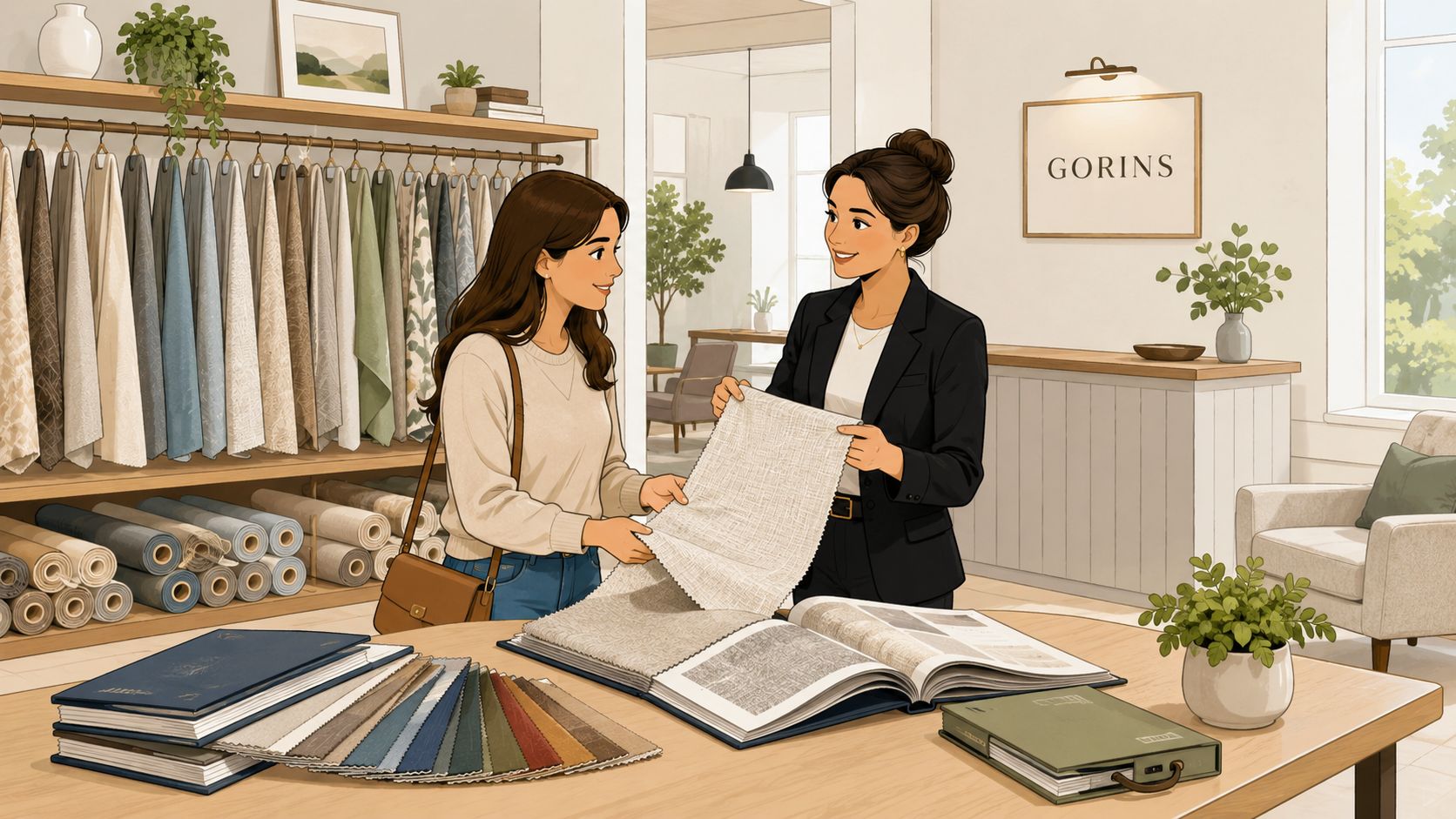
Why swatches look different in real life
A practical fabric decision often comes down to side-by-side comparison. A shopper might hold two similar neutrals together and notice one has a green undertone. Another might discover the “soft” fabric is sticky against bare skin, while the one that looked plain in photos feels far more comfortable.
That in-person process becomes even more useful when custom ordering enters the picture. Programs such as the F9 Custom Sofa series give shoppers room to adjust style details and upholstery choices together. The same goes for Canadel Custom Dining, where thousands of combinations let families coordinate fabric, finish, and scale to fit how they live.
For high-traffic areas, a material rated above 30,000 Wyzenbeek double rubs is commonly considered heavy-duty, and some residential custom selections target 100,000+ double rubs, according to this guide to hard-wearing upholstery fabrics. That kind of range is why custom shopping works best when someone can compare feel, look, and durability at the same time.
How custom ordering helps families buy once and buy well
A showroom visit helps households answer practical questions quickly:
- Will this fabric work with the dog and the kids?
- Does this texture feel inviting enough for a TV room?
- Will this color fight with the flooring or wall paint?
- Is the fabric appropriate for the amount of use this piece will get?
One useful reference point for shoppers considering a lighter, more clean-lined look is this white linen sofa example, which shows how fabric choice affects the overall mood of a room.
Gorins Furniture & Mattress gives shoppers in Norwich a place to test those decisions in person, compare custom options, and ask practical questions without guessing from a thumbnail image. Since 1936, that local, family-operated approach has helped turn “thousands of combinations” into a manageable decision. Promotional Financing with equal monthly payment options can also make a larger upholstery investment easier to plan around, especially when a household wants the right fabric the first time instead of a compromise that won't age well.
Caring For Your Investment Cleaning and Maintenance
The right fabric still needs the right care. Many upholstery issues don't start with a major accident. They start with everyday dust, body oils, crumbs in seams, and small spills that sit too long.
Cleaning codes made simple
Most upholstered pieces include a cleaning code on the tag. These codes help prevent well-meant mistakes.
- W: Usually means water-based cleaners are appropriate.
- S: Usually means solvent-based cleaning products are called for.
- W/S: Usually means either water-based or solvent-based methods may be acceptable.
- X: Usually means vacuuming or brushing only, with no liquid cleaner.
If a spill happens, blotting is usually safer than rubbing. Rubbing can push the mess deeper into the fibers or rough up the surface. For readers dealing with a stubborn mark, this guide offers practical advice for tough upholstery stains and helps explain why different stains need different approaches.
Everyday habits that help upholstery last
Maintenance doesn't need to be complicated:
- Vacuum regularly: Dust and grit can wear fabric over time, especially on arms and seat cushions.
- Rotate cushions: Even wear helps seating keep its shape and appearance.
- Treat spills quickly: Fast attention usually leads to easier cleanup.
- Follow the tag: The cleaning code matters more than guesswork.
- Test first: Any cleaner should be tried on a hidden area before it touches the visible surface.
Good upholstery is an investment-grade part of the home. Regular care protects both comfort and appearance, which is exactly what families want from furniture they use every day.
Since 1936, Gorins Furniture & Mattress has helped Norwich and Eastern CT families create homes they love with personalized guidance, custom options, and helpful service. Visit the Norwich showroom to touch and compare fabrics in person, take the online Style Quiz for direction, or browse the Clearance section for value-driven savings.