Best Bedroom Furniture Brands: Top Picks & Guide for 2026


A lot of bedroom furniture shopping starts the same way. A family in Norwich realizes the current set is tired, the drawers stick, the bed creaks, and every online search turns into an endless parade of polished photos that all look better than they're built. The problem isn't finding options. The problem is figuring out which brands are worth bringing into a home for the next decade.
That's where a local, practical filter matters more than another generic ranking list. Since 1936, Gorins has helped Eastern CT families sort through style, construction, room size, delivery realities, and budget without turning the process into a guessing game. The strongest advice doesn't come from thumbnail images. It comes from seeing drawer fit in person, checking finish consistency under real light, and matching a brand to the way a household lives.
The category itself is big enough that brand strategy matters. Statista's U.S. bedroom furniture market outlook tracks both revenue and average revenue per capita, which reinforces a simple truth: bedroom furniture is a measurable, scale-driven market where the winning brands usually combine broad distribution with coverage across more than one price tier. That's a useful lens for shoppers in Eastern Connecticut. Good brands don't just make attractive furniture. They build repeatable quality, clear value, and enough assortment to fit real homes.
Table of Contents
- Finding Your Forever Furniture in a Fast-Fashion World
- How to Judge Furniture Quality Like an Expert
- A Guide to Top Brands in Our Norwich Showroom
- Investment-Grade Brands for a Lifetime Home
- The Sleep Gallery A Foundation for Your Bedroom
- Making It Yours Customization Financing and Small Spaces
- Your Questions Answered by a Norwich Furniture Pro
Finding Your Forever Furniture in a Fast-Fashion World
A bedroom set shouldn't feel obsolete in a few years. Yet that's exactly what happens when buyers choose based on photos, trend language, or a low opening price instead of construction, scale, and support after delivery. For neighbors across Norwich, New London, and Plainfield, that mistake usually shows up fast. Drawers drift out of alignment, finishes start to look tired, and the piece that looked generous online feels oversized once it's squeezed into a real room.

The better path is slower and smarter. It starts with buying furniture that fits the household's timeline, not the season's trend cycle. A first apartment, a long-term family home, a downsizing move, and a guest room all need different answers. The best bedroom furniture brands aren't the ones with the loudest marketing. They're the ones that still make sense after the room changes around them.
Good bedroom furniture should survive daily use, seasonal humidity, and at least one room refresh without looking like a compromise.
That's also why in-person evaluation still matters. A bedroom set might look impressive online and still feel flimsy when the drawer opens, the side rail flexes, or the finish reveals uneven application in daylight. Buyers who want the long view can learn a lot from the sovereignty of quality, especially when the goal is to separate disposable furniture from pieces built to stay put.
What online lists usually miss
Most “best bedroom furniture brands” roundups focus on popularity, broad style labels, or price signals. That misses the details that decide whether furniture works in Eastern CT homes:
- Room reality: Older homes, tighter stairways, and mixed room dimensions change what's practical.
- Delivery logistics: A massive dresser is only a smart purchase if it can reach the room safely.
- Lifestyle fit: Kids, pets, apartment moves, and storage needs matter more than trend names.
- Service after the sale: Support matters when furniture is expected to last.
A forever purchase doesn't need to be formal or expensive-looking. It needs to be durable, repairable, usable, and still appropriate five or ten years from now.
How to Judge Furniture Quality Like an Expert
Brand name comes second. Construction comes first. When buyers walk a showroom floor with the right checklist, weak furniture reveals itself quickly.

One of the clearest markers in better bedroom furniture is how the piece is put together. Material architecture and joinery are key indicators. In coverage of high-end bedroom brands, Bernhardt is described as using hand-selected veneers, traditional mortise-and-tenon joints, and engineered multi-hardwood plywood frames, details that support dimensional stability and long-term durability in changing conditions, especially in climates with seasonal swings like New England's as described here.
Start with the frame and joinery
A buyer doesn't need woodworking training to spot quality. A few simple checks go a long way:
- Check for rigidity: Gently test for wobble at the headboard, dresser corners, and nightstands.
- Look at joint quality: Mortise-and-tenon joinery is a strong sign the maker cared about structure, not just appearance.
- Inspect interior parts: Back panels, drawer bottoms, and interior framing show whether corners were cut.
- Open every drawer: Smooth travel and proper alignment matter just as much as the outer finish.
Practical rule: If the hidden parts look cheap, the visible beauty won't last.
Know what veneers and engineered components actually mean
Some buyers hear “veneer” and assume it means lower quality. That's too simplistic. Hand-selected veneers can be part of very good furniture when they're used over stable, well-made cores. The issue isn't the word. The issue is how carefully the whole piece is built.
The same is true for engineered multi-hardwood construction. Better engineered components can help furniture resist seasonal movement better than poorly built solid pieces. What matters is whether the brand used these materials to improve stability or to cut cost.
For buyers comparing wood surfaces across rooms, cabinet resources can also sharpen the eye. A practical read on best wood for kitchen cabinets can help shoppers understand why grain pattern, hardness, and finish behavior matter beyond the kitchen.
The showroom test that catches weak furniture fast
Use this short inspection routine on any dresser, chest, or nightstand:
- Run a hand across the finish: It should feel even, not rough, gummy, or inconsistent.
- Look at the drawer gaps: Uneven spacing often signals weaker build precision.
- Check the back and underside: Clean construction in hidden spots usually means better standards overall.
- Ask about maintenance and wear: Good sales guidance should include care expectations, not just style language.
A more focused checklist for storage pieces is built into these tips for buying chests, dressers, and cabinets. That kind of inspection is where many flashy online favorites start to fall apart.
A Guide to Top Brands in Our Norwich Showroom
The strongest local recommendation isn't a universal ranking. It's a match. Some buyers need solid wood and classic lines. Others need function first, especially in family homes where charging, storage, and flexibility matter. Some want broad style variety and controlled spending without dropping into disposable quality.
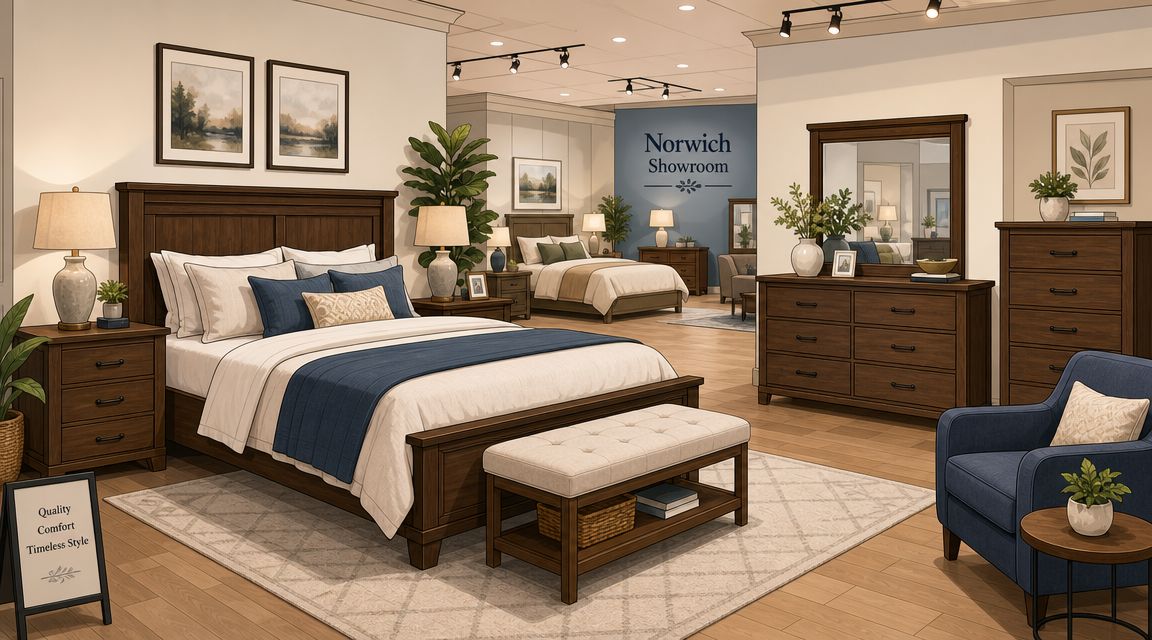
Quick brand comparison
| Brand | Best for | Strength | Watch for |
|---|---|---|---|
| Vaughan-Bassett | Buyers who want dependable wood bedroom furniture | Traditional durability and familiar, timeless styling | Best fit for shoppers who prefer furniture with substance over trend-chasing |
| Aspen Home | Families and practical planners | Smart storage, useful features, everyday functionality | Best when the room needs purpose as much as style |
| Ashley Furniture | Buyers who want range and value | Broad selection across looks and budgets | Worth judging collection by collection, not by logo alone |
One more practical note belongs here. Assortment depth matters more than many shoppers realize. In the mid-market category, one useful benchmark is the SKU-to-fabric/finish matrix. A brand roundup notes that Best Home Furnishings offers over 1,000 cover selections, while other brands also compete through extensive options rather than a narrow fixed lineup. That's why customization depth is a real value signal, not just a marketing extra as discussed here.
Vaughan-Bassett
Vaughan-Bassett is the recommendation for buyers who want a bedroom that feels grounded. Not flashy. Not disposable. Just solid, familiar, and built with the kind of presence many homeowners still want in a primary bedroom.
This brand tends to fit three kinds of shoppers especially well:
- Long-term homeowners: They want furniture that still looks appropriate after paint changes and bedding updates.
- Traditional and transitional buyers: They don't want the room to feel trendy for one season and dated the next.
- Wood-focused shoppers: They care about grain, finish depth, and furniture that feels substantial in the room.
Vaughan-Bassett makes sense in Eastern CT because a lot of local homes benefit from furniture with visual weight. In older colonials, capes, and ranches, lighter trend-driven pieces can look temporary. Vaughan-Bassett usually doesn't.
Aspen Home
Aspen Home is for households that expect furniture to work hard. This is where practical design earns its keep. Storage, layout efficiency, and modern convenience features matter more than decorative flourish.
A good bedroom brand should solve daily friction. Aspen Home often does that well through thoughtful design choices that support real routines:
- Bedside function: A place to charge devices and keep essentials close.
- Storage planning: Better use of vertical space and drawer organization.
- Versatility: Styles that can move from a child's room to a guest room or from one house to the next.
Buyers who move often, live in mixed-use spaces, or need every piece to earn its footprint should start here before looking at more formal brands.
This is also where delivery and setup logic matters. A beautiful storage bed is only a good decision when access, room turning radius, and assembly plan are thought through. For homeowners doing broader room updates, a quick read on ensuring quality home installations is useful because the installation mindset matters just as much indoors as it does in remodeling work.
Ashley Furniture
Ashley Furniture wins on range. That's the appeal. Buyers can walk in with a farmhouse, transitional, casual modern, or soft contemporary idea and usually find a direction quickly. For guest rooms, first homes, and style resets, that flexibility matters.
The key is not to shop Ashley by reputation alone. Shop it by collection. Some collections are all about look. Others balance look and durability better. That's where a showroom visit pays off because buyers can compare drawer action, finish consistency, hardware feel, and scale in real time instead of assuming every line performs the same way.
For shoppers trying to coordinate a whole bedroom around sleep setup as well, a useful next step is this mattress brand comparison guide. A bed doesn't live on an island. The frame, mattress, room size, and storage plan all need to cooperate.
Investment-Grade Brands for a Lifetime Home
Some buyers are finished replacing furniture. They've already lived through the cheap dresser, the unstable bed, and the nightstand that looks tired before the room does. For them, the right move is investment-grade furniture.
What investment-grade really means
Investment-grade doesn't mean ornate. It means the furniture has enough craftsmanship, stability, and design staying power to justify a longer ownership cycle. It also means the brand has a track record that suggests it will still stand behind its work over time.
That history matters. A guide to high-end bedroom furniture identifies names such as Century Furniture, Bernhardt, Stickley, Baker Furniture, Theodore Alexander, Durham Furniture, and TH Solid Wood as leading high-end options, and the point isn't trend appeal. These are long-established manufacturers, which is a practical signal that reputation in this category is usually earned over decades, not built overnight as outlined here.
A long operating history doesn't guarantee a perfect piece. But it does suggest something buyers should take seriously: durable product lines, continuity in craftsmanship, and a stronger chance of meaningful support later.
Who should buy this level of furniture
This level makes sense for buyers in a few specific situations:
- Primary bedrooms in a long-term home: The room gets daily use. Quality pays back.
- Buyers who prefer timeless interiors: They'd rather update textiles than replace furniture.
- Families thinking generationally: They want pieces that can move to a guest room, a child's first home, or a vacation property later.
Flexsteel belongs in this conversation because the brand is associated with long-term value and durable construction thinking, even though many shoppers first know it from seating. The same mindset matters in bedroom buying. Construction discipline tends to travel across categories.
A bedroom set becomes a smarter purchase when it can change roles over time without feeling second-rate.
Families with young children often think about durability and safety at the same time. That's smart. For a broader look at wood choices and child-friendly considerations, this guide can help buyers understand safe materials for kids' furniture. Buyers also benefit from learning more about material selection in this overview of hardwood choices for longevity and style.
The Sleep Gallery A Foundation for Your Bedroom
A beautiful bed frame doesn't fix bad sleep. That's why mattress selection belongs in the same conversation as furniture, not as an afterthought tacked on at the end.
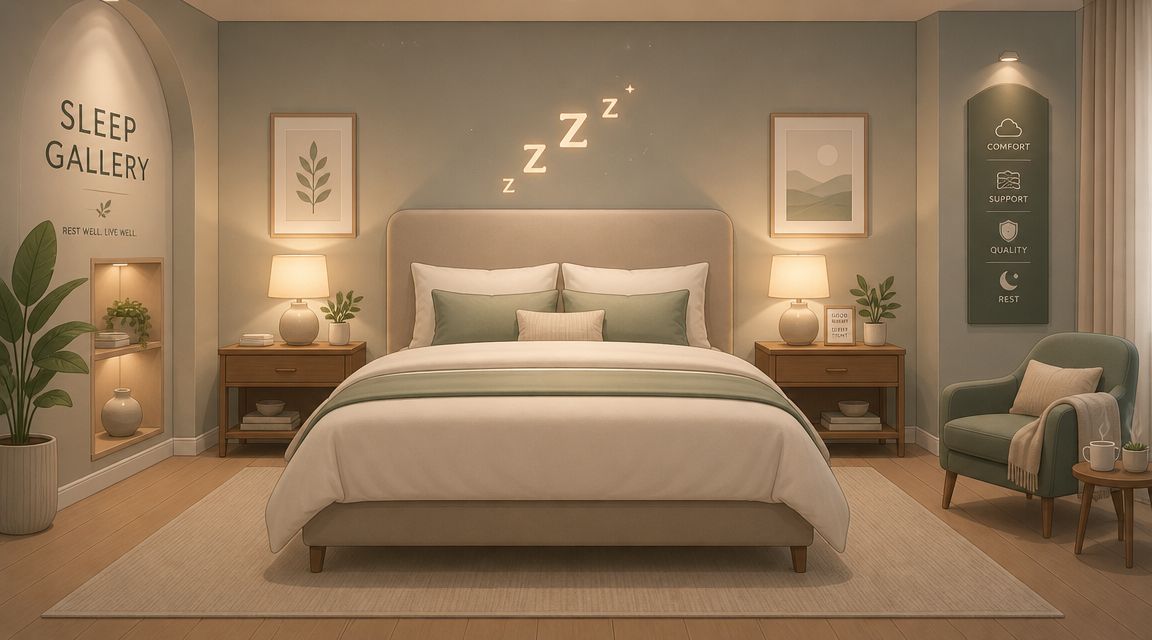
Comfort by feel beats guessing
Mattress buying goes wrong when shoppers try to solve it from specs alone. A bedroom can look polished and still fail where it matters most if the sleeper wakes up unsupported, hot, or restless. That's why comfort by feel is the right approach.
Different brands solve sleep differently. Tempur-Pedic is often the right choice for buyers who want close-conforming support and pressure relief. Serta and Beautyrest appeal to shoppers who want recognizable comfort options and varied support feels. Stearns & Foster speaks to buyers who want a more refined, luxury-leaning finish in the sleep experience.
None of those brands should be picked by reputation alone. The definitive test is how the body responds after enough time on the mattress, in a realistic position, with attention paid to shoulder pressure, hip alignment, and ease of movement.
How the mattress and bed should work together
The frame and mattress need to cooperate. A heavy mattress on a visually delicate bed can feel mismatched. A bulky headboard in a compact room can crowd the space and make the room sleep worse, not better. Good bedroom design supports both movement and rest.
A smart pairing checklist looks like this:
- Scale match: The bed should fit the room and still allow functional walking space.
- Height match: Mattress and foundation height should support easy entry and exit.
- Support match: The base should properly support the mattress type.
- Lifestyle match: Reading in bed, adjustable base needs, and shared sleep habits all matter.
The best bedroom furniture brands don't just sell a bed. They help create a room where sleep actually improves.
For buyers replacing both the mattress and the furniture, this mattress selection guide offers a practical starting point for how to choose the right mattress.
Making It Yours Customization Financing and Small Spaces
A bedroom should fit the person using it, not a catalog shot. That's where customization and practical planning matter most.
Customization should solve a problem
Customization is useful when it changes function, scale, or fit. It's not just about picking a pretty finish. The strongest custom programs let buyers correct the mismatch between what standard inventory offers and what the room needs.
That thinking already shows up clearly in whole-home shopping. Canadel Custom Dining and the F9 Custom Sofa approach prove the value of choosing details intentionally, with thousands of combinations available in those programs. The same mindset helps in bedroom shopping even when the options are more focused. Finish choice, hardware feel, bed style, dresser scale, and storage function all affect how the room performs.
A custom order is usually worth it when:
- The room has awkward dimensions
- Existing wood tones in the home need coordination
- The buyer wants a longer-lasting style choice
- The furniture needs to work across future moves or room changes
Small-space buyers need a different checklist
Many “best brand” lists still overvalue big matching suites and undervalue practical living. That misses a growing need. Industry coverage points to increasing demand for multifunctional bedroom pieces, especially for buyers dealing with smaller spaces, apartment moves, and changing housing situations in this Ethan Allen overview.
Small-space buyers should focus less on collecting every matching piece and more on selecting the right functions:
- Storage beds: Good when closet space is limited.
- Modular casegoods: Helpful when rooms may change or furniture may move again.
- Compact nightstands: Better than oversized pieces that choke circulation.
- Lighter visual profiles: Important in tighter rooms where heavy furniture can feel crowded.
The best bedroom furniture brands for renters and apartment dwellers are often the brands that think through portability, reconfiguration, and usefulness. That rarely gets enough attention online.
Financing can support better decisions
Good financing shouldn't push a buyer into more furniture. It should allow a better-quality decision when the right purchase costs more upfront than the disposable one.
That's where Promotional Financing with equal monthly payment options can help remove the pressure to settle fast. A family doesn't have to choose between replacing a failing bed immediately and buying the cheapest piece in the room. Better planning can preserve quality.
For many households in Eastern CT, that changes the conversation from “What can fit today's price ceiling?” to “What will still be working a few years from now?”
Your Questions Answered by a Norwich Furniture Pro
What is 5-Star Delivery service
It's a full-service delivery approach, not a box left at the door. The team brings the furniture into the room, handles assembly as needed, and removes packaging so the home isn't left with a pile of cardboard and hardware. That matters even more with bedroom furniture because beds, mirrors, and large storage pieces are awkward to move and easy to damage in tight hallways.
How should new wood furniture be cared for
Keep it simple and consistent. Dust with a soft cloth, wipe spills promptly, and keep the furniture away from direct heat and prolonged sunlight when possible. Coasters, felt pads, and basic surface protection do more for long-term appearance than complicated cleaning products.
What's the difference between value and cheap
Cheap focuses on the opening price. Value looks at the full life of the purchase. Bedroom furniture that costs less but wears out fast usually becomes the more expensive choice once replacement, frustration, and poor performance are counted.
Should shoppers buy a full matching set
Not automatically. Matching can look polished, but too much of it can make a room feel stiff or oversized. A better result often comes from anchoring the room with a strong bed and then choosing storage pieces that fit the room's dimensions and the household's routine.
What should a buyer bring to the showroom
Photos, room measurements, wall lengths, and any tricky delivery details. Ceiling slopes, stair turns, radiator placement, and window height all affect what will work. Good furniture selection starts with honest room information.
Since 1936, Gorins Furniture & Mattress has helped Norwich and Eastern CT families create homes they love. Buyers who want better guidance on the best bedroom furniture brands can visit the Norwich showroom, take the online Style Quiz, or browse the Clearance section for value-focused finds that still respect quality, fit, and long-term use.