Lift Chairs for Seniors: A Norwich Buyer’s Guide


A lot of families start this search the same way. A parent has a favorite chair in the living room, but getting out of it has become the hardest part of the day. The struggle may last only a few seconds, yet those seconds affect confidence, safety, and whether someone feels comfortable staying independent at home.
That's why lift chairs for seniors deserve more thought than a quick online order. The right chair can make daily routines smoother. The wrong one can feel awkward, unstable, or completely unused. In Norwich and across Eastern CT, this is one of those purchases where comfort, fit, and real-life function matter far more than a pretty photo.
Why Choosing the Right Lift Chair Matters
A lift chair isn't just about reclining. Its real job is helping someone sit down and stand up with less strain and less risk. For many seniors, that changes the entire feel of the day. It can mean getting up for dinner without calling for help, answering the door with more confidence, or moving from one room to another without that moment of hesitation.
That practical need is only becoming more common. The global lift chair market was valued at USD 3,954.2 million in 2024, and one forecast expects 8.00% CAGR from 2024 to 2031. The same report notes a major reason why: the World Health Organization projects that by 2030, 1 in every 6 people worldwide will be over 60. You can see those figures in this global lift chair market report.
Independence starts with everyday movement
Families often focus on large home changes first. Ramps, bathrooms, and flooring usually come to mind. But the simple act of rising from a seated position can be one of the first daily barriers people feel.
A well-chosen lift chair supports three things at once:
- Safer transfers: It helps reduce the effort needed to move from sitting to standing.
- Better confidence: A senior who can get up more easily often feels less dependent on others.
- More consistent comfort: Proper support encourages someone to use the chair throughout the day, not avoid it.
Practical rule: If a person dreads standing up from their current chair, the issue isn't minor comfort. It's a mobility problem worth solving directly.
For households thinking more broadly about staying at home comfortably, this guide to designing homes for all ages is a useful companion resource. It helps families look at the chair as one part of a larger aging-in-place plan.
Why local guidance still matters
Since 1936, Gorins has served Norwich as a family-operated furniture store, and that long view matters with mobility seating. A lift chair is part furniture, part assistive tool. People don't just need a color they like. They need a chair that meets their body correctly, lifts smoothly, and fits the room where they'll use it every day.
That's where many online searches fall short. They make lift chairs for seniors sound interchangeable. They aren't. The seat height, recline style, motor design, and transfer angle all affect how safe and useful the chair will feel in real life.
What a Lift Chair Does and How It Differs from a Recliner
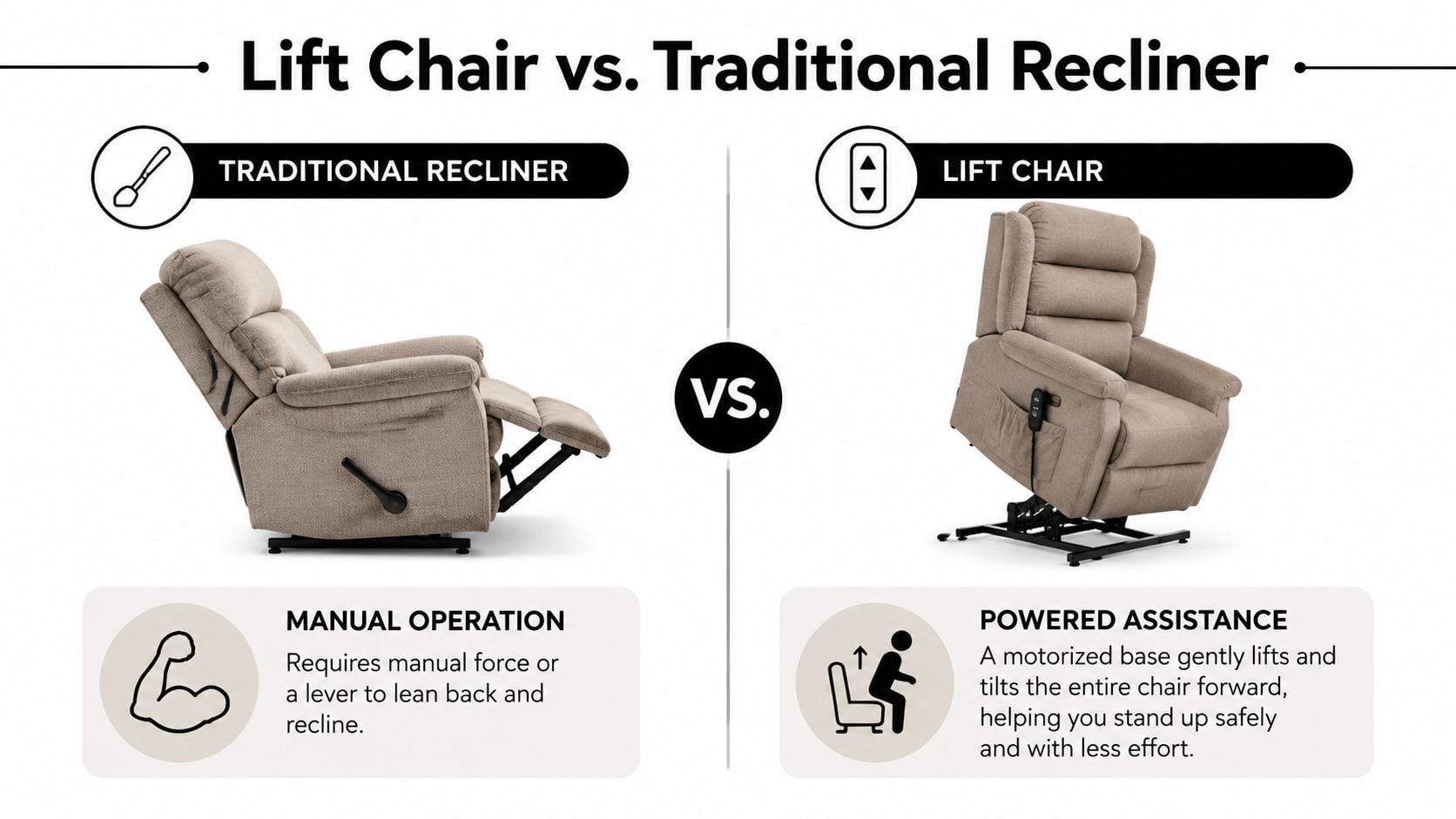
A standard recliner is built for lounging. A lift chair is built to assist movement.
That difference sounds simple, but it changes everything about who should buy one. A lift chair uses a powered base to raise and tilt the whole chair forward, helping guide the user toward a near-standing position. A regular recliner may feel comfortable once you're seated, but it usually doesn't solve the hardest moment, which is getting up.
When a recliner is enough
Some shoppers come in thinking any powered chair will do. Sometimes that's true. If the main goal is stretching out, napping, or finding a more comfortable TV chair, a power recliner may be the better fit.
A standard power recliner can make relaxation easier because the user doesn't need to push back with their legs or pull a manual lever. For someone with mild stiffness but good standing strength, that may be all they need.
When a lift chair is the better tool
A lift chair becomes the stronger choice when the main difficulty is the sit-to-stand motion. That's especially true for seniors dealing with surgery recovery, arthritis, muscle weakness, balance concerns, or chronic mobility limits.
The key distinction is well put in this overview of how lift chairs work. It's also consistent with a broader decision framework on seating types. Some power recliners can lie flat for sleeping, but a lift chair's primary benefit is reducing fall risk and strain during standing, making it the more appropriate assistive device for users with mobility challenges, as explained in this guide to types of lift chairs for elderly and low mobility users.
| Chair type | Main purpose | Best fit |
|---|---|---|
| Traditional recliner | Comfort and relaxation | Users who can still stand up safely on their own |
| Power recliner | Easier reclining with motorized control | Users who want convenience and nap-friendly positioning |
| Lift chair | Standing assistance plus reclining comfort | Users who need help reducing strain and lowering fall risk |
If standing up is the daily obstacle, don't shop by appearance first. Shop by transfer support.
That single point saves families from a common mistake. They buy a handsome recliner that feels fine in the showroom, then realize at home it doesn't solve the one problem they were trying to fix.
Exploring Lift Chair Types and Power Options
Not all lift chairs for seniors behave the same way. Some offer a simple sit, recline, and lift routine. Others allow much more precise positioning for users who spend long periods in the chair or need better leg elevation and posture control.
The easiest way to narrow the field is to look at two things together. First, how far the chair reclines. Second, how the motors control that movement.
Position types at a glance
Many shoppers hear terms like two-position, three-position, and infinite-position and assume they're marketing labels. They're not. They describe how the chair moves and how many posture options it gives the user.
| Position Type | Recline Capability | Best For |
|---|---|---|
| Two-position | Slight recline with lift assistance | Reading, watching TV, and users who want a simpler chair |
| Three-position | Deeper recline suitable for longer lounging | Seniors who want lift help plus a better nap position |
| Infinite-position | Wide range of adjustable recline with more tailored leg and back positioning | Users who need frequent changes in posture or more precise support |
A chair with more positioning flexibility isn't automatically the right answer. If the user wants straightforward operation and mostly sits upright, too many controls can become frustrating. On the other hand, a user with swelling, pressure concerns, or a need to raise legs without flattening the whole body may quickly outgrow a basic chair.
Single motor versus dual motor
This is one of the most important trade-offs in the entire purchase.
Consumer guidance notes that single-motor chairs move the backrest and leg rest together, while dual-motor designs allow independent adjustment. That matters because independent movement gives the user finer posture control, which is especially useful for frequent position changes or specific leg elevation needs. Consumer Reports outlines that distinction in its guide to lift chair motor and feature choices.
A simple way to think about it is this:
- Single motor: One command moves multiple sections together. It's simpler, often easier to learn, and often suits users who want basic comfort and lift assistance.
- Dual motor: The back and footrest can move separately. That gives the user more control over pressure relief, leg position, and upright stability.
A single-motor chair is like a lamp with one brightness setting. A dual-motor chair lets you adjust the room exactly the way you want it.
For some households, that extra control makes a meaningful difference. A senior may want feet up without reclining too far back. Another may need a semi-reclined posture that supports resting without losing a comfortable head and torso angle.
Matching features to real life
When people try chairs in person, brands start to feel different in a useful way. UltraComfort often appeals to shoppers who want more specific positioning and comfort features. BarcaLounger can be a strong fit for buyers who care about familiar recliner styling but still need assistive function.
This broader look at types of power reclining seating can also help families compare lift-specific options with other powered seating styles before making a final choice.
The best approach is to ask one practical question. Will this chair still feel right after several hours, not just several minutes? That answer usually points buyers toward the right motor system faster than any spec sheet.
The Critical Importance of a Perfect Fit
Most mistakes happen here, not with fabric color or remote design.
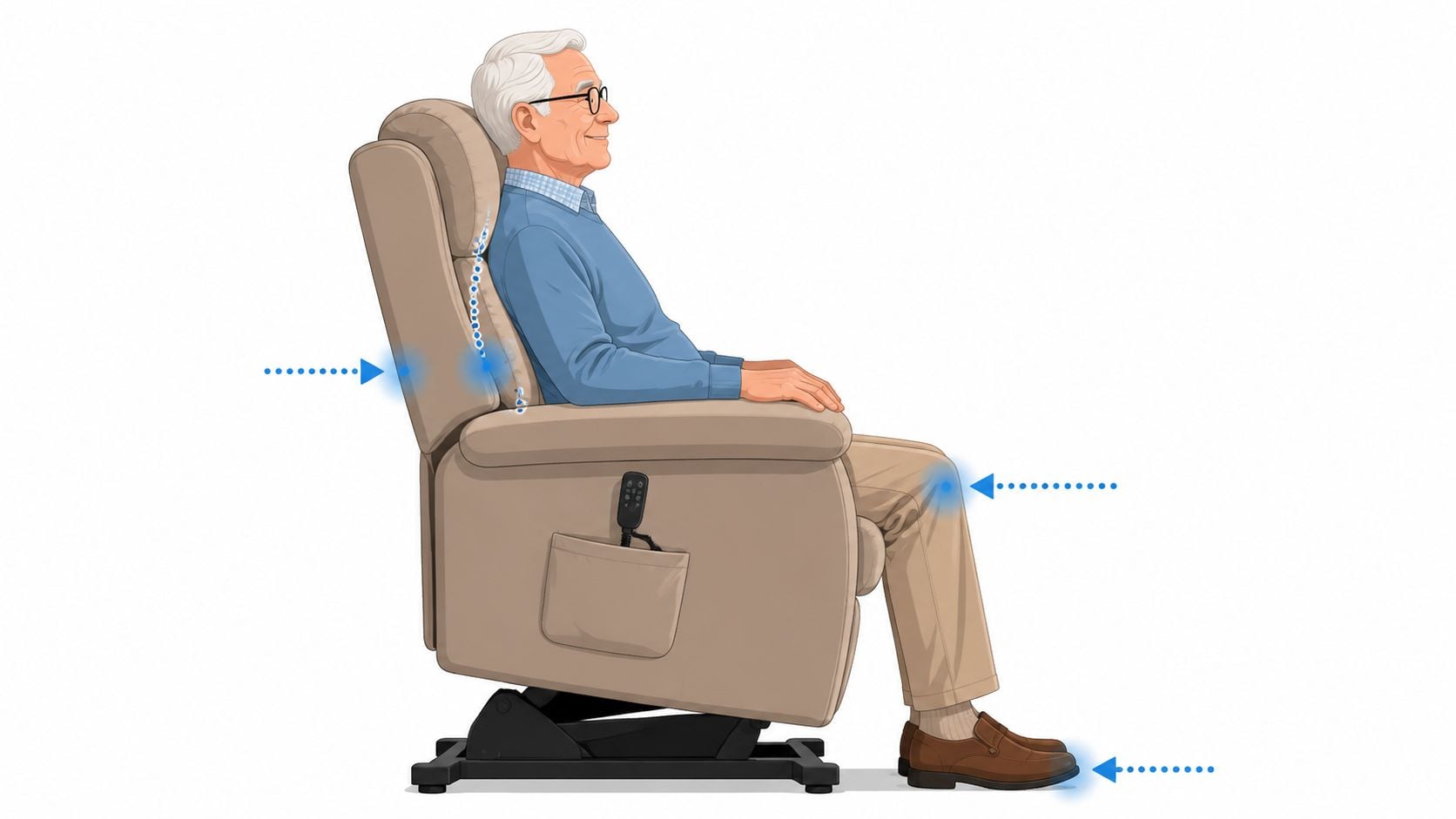
A lift chair can have the right motor, the right look, and the right features, yet still fail if it doesn't fit the user's body. This is why buying solely from online dimensions can be risky. A lift chair isn't like choosing an accent chair. Its measurements affect the lift path, seated posture, and how naturally the user's feet and knees line up.
The measurements that matter most
Proper sizing is a safety issue, not just a comfort preference. Guidance from Kohll's Rx notes that an incorrectly sized chair can compromise lift angle, knee alignment, and stability, which reduces the effectiveness of the lift mechanism and increases fall risk. It also notes that typical weight capacities range from 300 to 500 lbs, but they must be matched to the user. You can review those points in this guide to power lift chair sizing and selection.
The measurements I tell families to focus on are:
- Seat height: If it's too high, feet may not rest securely. If it's too low, standing becomes harder.
- Seat depth: Too deep, and the user can't sit back comfortably while keeping knees in a natural position.
- Seat width: Too narrow creates pressure. Too wide can reduce side support and make transfers awkward.
What works and what doesn't
What works is a chair that lets the user sit all the way back, place feet flat, and reach the armrests naturally before the lift even starts. What doesn't work is “close enough.”
Our neighbors in Norwich and New London visit us to get this part right because body fit can't be judged by a product photo. A petite user in an oversized chair often slides forward. A taller user in a shallow seat never gets full thigh support. Neither one gets the full benefit of the lift mechanism.
A practical measuring resource like this guide on how to measure furniture helps families prepare before they come in, but nothing replaces sitting in the chair.
The safest lift chair is the one that fits the person before it fits the room.
Weight capacity and structure
This is another area where buyers shouldn't guess. Weight capacity is part of the chair's engineering, not a line-item extra. It affects frame strength, lift performance, and long-term durability. If the user is near the upper end of a chair's range, it makes sense to look at a more heavy-duty model rather than hoping a standard one will be fine.
Measure twice, buy once applies here perfectly. A proper fit protects comfort, dignity, and stability every single day.
Health, Safety, and Customization Features
The features people call “extras” are often the things that make a chair livable day after day.
I've seen shoppers come in focused only on lift function, then realize their loved one spends many waking hours in the chair. Once that becomes clear, details like head support, lumbar adjustment, upholstery feel, and heat stop sounding optional. They become part of the care plan at home.
Comfort features that often earn their keep
Some of the most useful upgrades are the ones that support posture and routine use:
- Power headrest: Helpful when a user wants to read or watch television without straining the neck.
- Lumbar support: Useful for users who need more lower-back support during long sitting periods.
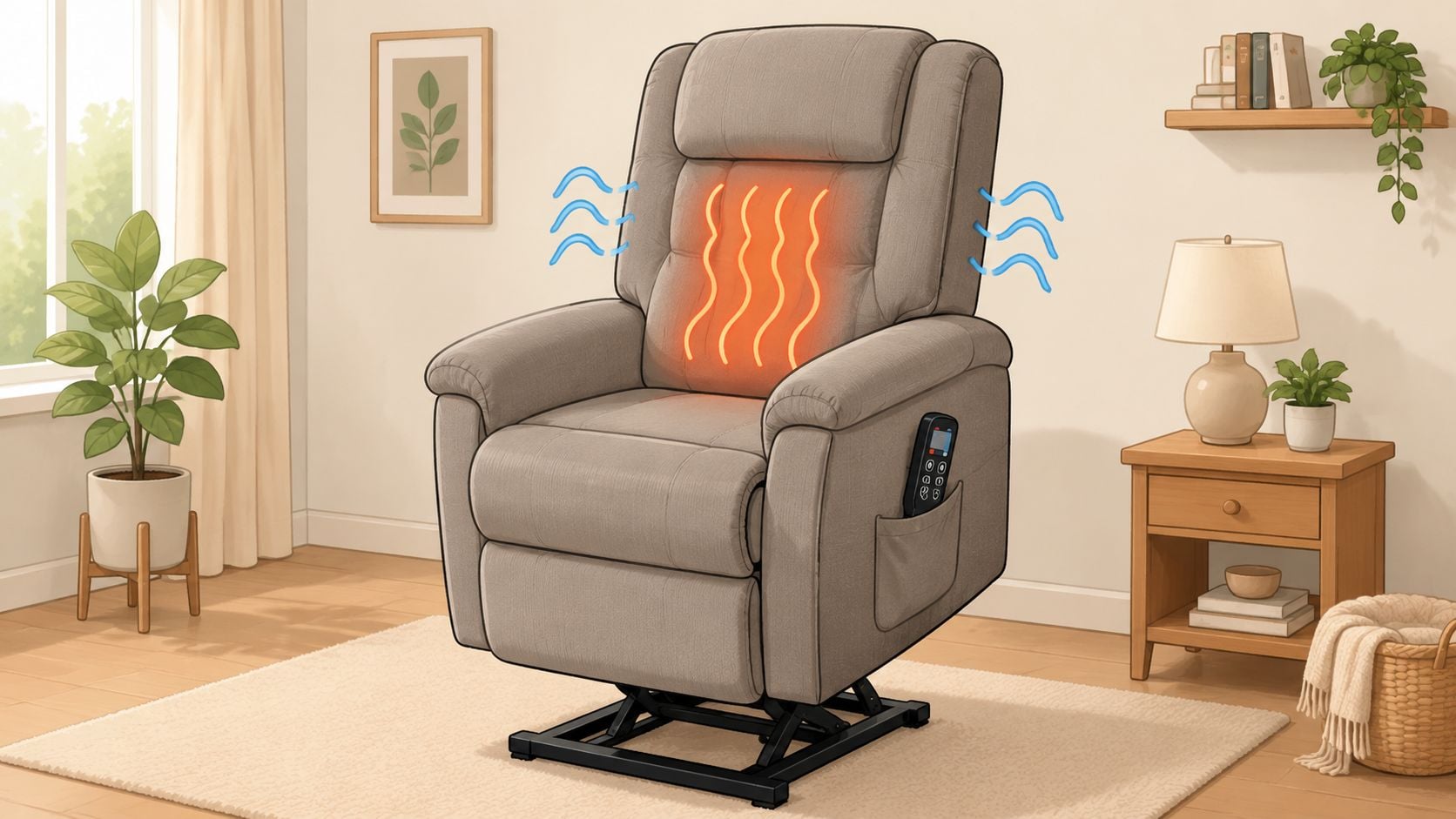
- Heat and massage: These can make a chair more soothing and easier to use consistently, especially for stiffness and everyday discomfort.
- Easy-clean upholstery: A practical choice for households where spills, pet hair, or frequent cleaning are part of daily life.
For many families, fabric choice ends up being more important than expected. Soft upholstery may feel inviting, but if it's difficult to clean, it can become frustrating quickly. Performance-minded fabrics usually make more sense in a mobility chair because daily use is often heavy and practical.
Customization should serve the person
Furniture expertise directly overlaps with mobility planning in this aspect. The same thinking that helps someone customize a Canadel dining set from thousands of combinations or tailor an F9 Custom Sofa applies here too. The goal is simple. Match the piece to the life being lived around it.
That may mean a wipeable cover in one home, a softer fabric in another, or extra lumbar support for a user who sits for extended stretches. It may mean choosing simpler controls because the user dislikes complicated remotes.
For families evaluating the whole house, these room-by-room checklists for independent living can help identify what else may need attention beyond the chair itself.
A lift chair should reduce friction in daily life. If a feature adds confusion or inconvenience, it isn't the right feature for that user.
A closer look at best-rated power lift recliners can help shoppers compare how these comfort and support options show up across different models.
Safety is also about ease of use
A good remote matters. So does smooth motion. So does whether the user can operate the chair without second-guessing what button does what. A feature-rich chair that feels intimidating is often less successful than a simpler chair the user trusts from day one.
The right customization never feels flashy. It feels natural.
Your Local Purchase and Service Advantage at Gorins
Buying lift chairs for seniors locally gives families something online listings usually don't. Context.
A chair may look right on a screen, but the true questions are physical. Is the seat height correct for this person? Does the lift motion feel steady to them? Is the arm height helpful when pushing to stand? Does the chair fit the room without crowding walkways? Those answers are easier to sort out when the shopper, family member, and product are all in the same place.
Why showroom testing changes the outcome
A showroom visit turns abstract features into practical decisions. Families can compare the feel of UltraComfort and Best Home Furnishings side by side. They can see whether a simpler remote is better than a more advanced one. They can also evaluate how a chair looks in the home, which matters more than people admit. If someone dislikes how medical or bulky a chair feels, they may resist using it.
That local, hands-on approach is one reason family-owned stores still matter for this category. There's a big difference between receiving a box and receiving guidance. This article on why families choose a family-owned furniture store touches on that difference well.
Help with budgeting and healthcare questions
Cost matters, and so does understanding what kind of help may be available. When medically necessary, Medicare Part B may cover 80% of the cost of the lift mechanism itself, which can reduce out-of-pocket expense by around $300. In some cases, the remaining amount may fall to around $100 if the chair price is near $700 and the buyer works with a Medicare-participating supplier. That policy detail is outlined in this article about Medicare lift chair coverage.
That matters because it confirms something families often suspect but aren't sure about. A lift chair isn't merely a comfort purchase. It has a recognized role as an assistive device when a user qualifies medically.
At the same time, many households want a straightforward path that doesn't depend entirely on reimbursement. That's where Promotional Financing with equal monthly payments can make a meaningful difference for a large purchase. It gives families room to choose the right fit instead of settling too quickly for the cheapest available model.
Delivery and setup aren't minor details
For mobility furniture, proper placement matters. The chair needs enough operating space, a safe path around it, and a setup that makes remote use easy from the start. A 5-Star Delivery service helps with the final step many buyers underestimate, which is making sure the chair is ready to use correctly in the home.
That part is easy to overlook until it goes wrong. A poorly placed chair can block traffic flow. A remote tucked awkwardly into the side can frustrate the user. Even a good product benefits from careful setup.
The local advantage comes down to this:
- You can test fit before buying
- You can compare trusted brands in person
- You can ask practical questions about coverage and financing
- You can have the chair delivered and positioned for real use
Since 1936, Gorins Furniture & Mattress has helped Norwich and Eastern CT families make those decisions with less pressure and more clarity. That kind of service is hard to replicate from a product page.
If you're shopping for a lift chair for yourself or someone you love, visit Gorins Furniture & Mattress in Norwich to try options in person, compare comfort by feel, and get guidance suited to your lifestyle. You can also take the online Style Quiz or browse the Clearance section for value-driven savings. Since 1936, Gorins Furniture & Mattress has helped Norwich and Eastern CT families create homes they love. From custom-designed Canadel dining sets to the latest in Tempur-Pedic sleep technology, we combine a massive selection with the personalized care only a local, family-owned business can provide. Visit us today to experience quality, value, and our 5-Star Delivery service.