Best Time to Buy Furniture: A Norwich CT Insider’s Guide


You find a dining set you love. The size works, the finish fits your home, and you can already see it set for birthdays, weeknight dinners, and the random Tuesday takeout that somehow tastes better at a real table. Then the question hits. Buy it now, or wait?
That’s one of the most common furniture questions we hear from families around Norwich, New London, Plainfield, and Waterford. And it’s a fair one. Furniture isn’t an impulse buy for most households. It’s an investment in comfort, function, and how your home feels every day.
The good news is that pricing in this business usually follows patterns. Once you understand those patterns, the best time to buy furniture gets a lot less mysterious. You stop guessing. You start shopping with a plan.
We’ve been helping local families furnish their homes since 1936, and one thing hasn’t changed. The people who feel best about their purchase usually aren’t the ones chasing every flashy promotion. They’re the ones who match the right piece to the right timing, the right room, and the way they live.

A lot of shoppers start with price, but the smarter place to start is lifestyle. If you’re furnishing an apartment, downsizing, or trying to make one room work harder, these space-saving furniture ideas for small spaces can help you narrow your options before you ever look at a sales tag.
If you want a practical foundation before you shop, our advice in the dos and don'ts of furniture shopping is a solid place to begin.
Your Guide to Smart Furniture Shopping in Norwich
The best furniture shoppers usually do three things well. They know which category they’re shopping for. They know whether they need something in stock or want something customized. And they know whether timing matters more than immediate delivery.
That last part changes everything.
A family replacing a worn-out sofa before the holidays should shop differently than a homeowner planning a custom dining room for winter delivery. A first apartment setup has different priorities than a household looking for an investment-grade Flexsteel sectional that will anchor the room for years.
What smart timing actually looks like
Some purchases reward patience. Others reward decisiveness.
If you’re shopping because your current piece has failed, waiting for a perfect calendar window might not help much. But if your furniture still works and you’re upgrading on your own schedule, timing can improve value, selection, or both.
Here’s a practical approach to it:
- Need it fast: Focus on in-stock options, floor models, and clearance opportunities.
- Need exact details: Lean toward custom programs and plan around production lead times.
- Need better sleep: Watch mattress sale rhythms, which don’t always follow the same pattern as living room furniture.
- Need to stretch the budget: Use the sales calendar, but also pay attention to financing and delivery timing.
Buy for the room you live in now, not the room you hope to photograph once a year.
What doesn’t work
Waiting endlessly for a mythical “lowest price ever” usually backfires. The best piece may sell. The finish you wanted may disappear. The room may stay half-finished for months while you second-guess yourself.
On the other hand, rushing into a purchase because a sign says “sale” can be just as costly. A discount on the wrong scale, wrong seat depth, or wrong table size isn’t real value.
The sweet spot is simple. Know the retail cycle. Know your must-haves. Then act when those two line up.
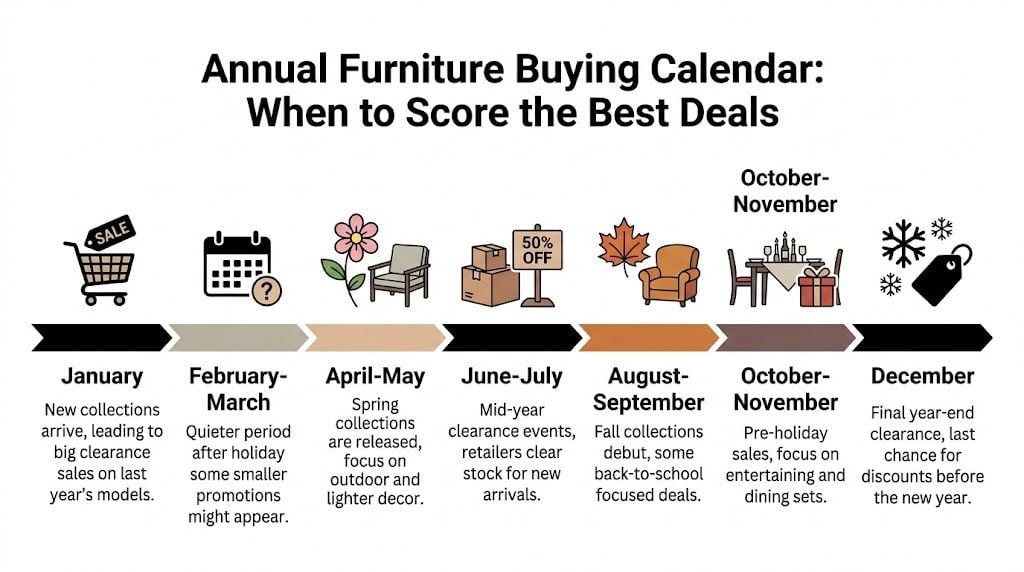
Understanding The Annual Furniture Buying Calendar
Furniture follows a retail calendar much like fashion. New looks arrive on a predictable schedule, and stores make room for them by moving older inventory first. That’s why timing matters so much in this category.
The key rhythm is a biannual inventory cycle. New indoor furniture collections typically launch around February and August, which makes the months just before those launches the most attractive for deal-seeking shoppers. According to NerdWallet’s guide to the best time to buy furniture, January and July are the best months to shop for indoor furniture because retailers are clearing existing stock, often at 30% to 70% discounts.
How the calendar usually plays out
The broad pattern is easy to remember once you see it laid out:
| Period | What’s happening | What shoppers usually find |
|---|---|---|
| January | Post-holiday clearing before spring lines | Strong indoor furniture markdowns |
| February to March | New collections start arriving | Fresh selection, fewer clearance opportunities |
| Spring | New introductions are shown at regular retail pricing | Best for shoppers prioritizing newest styles |
| July | Mid-year reset before late summer arrivals | Another strong indoor clearance window |
| August to September | Fall collections enter showrooms | New looks, less room for negotiation on fresh arrivals |
That doesn’t mean every item goes on sale at the same moment. It means the store’s priorities shift. During reset periods, merchants want floor space, warehouse space, and cleaner inventory positions. That pressure benefits shoppers.
Why this matters more than holiday hype
A lot of people assume major holidays alone determine the best time to buy furniture. Holidays matter, but the deeper force is inventory turnover. When stores need room for new sofas, bedroom sets, and dining collections, pricing gets more flexible.
That’s why a well-timed January or July visit can beat a random “special event” weekend.
Practical rule: If you want the newest style, shop right after new collections arrive. If you want the strongest value on in-stock indoor furniture, shop before those launches.
If you enjoy hunting for pieces with year-round appeal, this roundup of end-of-season furniture finds you'll love year-round adds another useful lens.
Best Months to Buy Living Room and Dining Furniture
Living room and dining purchases reward timing because they sit right in the middle of that indoor furniture cycle. These are also the categories where people most often overspend by shopping at the wrong moment.
A sofa, sectional, or dining set usually isn’t just decorative. It’s where the family lands every evening, where guests gather, and where wear shows up fast if quality isn’t there. That’s why the goal isn’t finding the cheapest option. The goal is getting long-term comfort and construction at the right moment.
Living room timing that tends to work
If you’re shopping for a sofa, loveseat, recliner, or sectional, the best timing often lines up with showroom resets. That’s when floor groups change, older covers rotate out, and stores want to open visual space for incoming styles.
At such times, better-made upholstery can become more approachable. A well-built Flexsteel piece bought during a transition window often makes more sense than a lower-grade option bought at full price because it was available that day.
Shoppers who do well in this category usually focus on three things:
- Seat comfort first: Sit longer than you think you need to. A quick test doesn’t reveal much.
- Frame and cushion quality: A good silhouette matters, but daily support matters more.
- Room fit: Sectionals fail most often on scale, not color.
If you’re narrowing down styles before you shop, our ultimate sofa buying guide for your living room helps sort through shape, depth, and function.
Dining furniture has a slightly different trade-off
Dining shoppers often care about finish, dimensions, and chair count more than speed. That changes the decision. If you need a table right away for a move or hosting season, in-stock timing matters. If you want a specific look, patience matters more.
For in-stock dining, clearance periods can be excellent because retailers often need to free up footprint-heavy display space. Dining sets take room. When a floor changes, those pieces are expensive to keep parked.
For custom dining, chasing clearance signs isn’t the right strategy. Finish selection, size options, and chair mix matter more than whether one exact floor sample is marked down.
A quick way to decide
Use this lens when you shop:
- Choose in-stock sale timing if your priority is value and faster delivery.
- Choose custom planning if your priority is exact size, finish, and layout.
- Pause the purchase if you still don’t know your room measurements or traffic flow.
Bedroom shoppers can apply similar thinking, especially with case goods from makers like Vaughan-Bassett where lasting construction matters more than temporary trend appeal.
Decoding Sales for The Sleep Gallery and Mattresses
Mattresses follow their own rhythm. They still benefit from seasonal timing, but the buying pattern feels different from sofas and dining sets because shoppers often anchor their search around holiday weekends and comfort testing.
That matters because a mattress purchase is more personal than most furniture purchases. You’re not buying something to glance at across the room. You’re buying support, temperature comfort, pressure relief, and better rest night after night.

Why mattress promotions feel different
Shoppers tend to associate mattress deals with major retail weekends, and that habit has been around for years. Presidents’ Day, in particular, has a long history as a strong mattress and bedroom shopping moment. In practice, that means many shoppers start looking then even if they’ve delayed the decision for months.
For households in the Northeast, there’s another useful pattern. According to Castlery’s overview of furniture buying timing, mattress shopping often peaks in the off-season from October through March, and some Tempur-Pedic and Sealy promotions tied to “rest resets” can mean 30% to 40% savings for health and wellness sleepers in that window.
How to shop mattresses without getting distracted
The biggest mistake people make in mattress shopping is comparing tags before comparing feel.
A mattress can look like a strong promotion and still be wrong for your sleep position, body type, or comfort preference. That’s why the smartest shoppers treat the promotional window as a bonus, not the main decision-maker.
Use this sequence instead:
Start with feel
Try the comfort categories that suit your body, whether that’s adaptive pressure relief from Tempur-Pedic, a classic supportive profile from Serta, or a balanced feel from Beautyrest.Check support, not just softness
Plush doesn’t always mean supportive, and firm doesn’t always mean better alignment.Time the purchase around likely promotion windows
If your current mattress can hold on a bit longer, off-season shopping can improve value.
A mattress is one of the few home purchases you feel for hours at a time. Comfort by feel beats comfort by label.
If you’re sorting through firmness, sleep position, and materials, our guide on how to choose a mattress is a practical next step.
Bedroom sets and mattresses aren’t always the same purchase
Some households buy both together, but many shouldn’t. If your bed frame is fine and your sleep isn’t, prioritize the mattress. If the room function is off but the mattress still supports you well, split the project and shop in phases.
That approach keeps the decision cleaner and usually leads to a better result.
The Insider Strategy for Custom Order Furniture
Custom furniture changes the whole timing conversation. If you’re ordering a made-to-your-spec dining set or a sofa with a specific arm, cushion, fabric, and scale, you’re not really shopping the same calendar as someone hunting floor samples.
That’s why a lot of generic advice misses the mark. It treats every furniture purchase like a clearance event. Custom doesn’t work that way.
Why custom buyers should think backward from delivery
A custom piece starts with your finish, fabric, dimensions, and comfort choices. After that, the manufacturer builds around those selections. That process takes planning.
According to Furniture Academy’s guidance on buying living room furniture, custom orders typically involve 8 to 12 weeks lead times and can see up to 20% savings during manufacturer closeout fabric events in Q4, from October through December.
That timing matters if you’re considering a Canadel dining set or an F9 Custom Sofa. If you want the piece in your home for winter entertaining, family gatherings, or a room refresh before the new year, waiting until the last minute won’t help.
What works for custom orders
The strongest custom buyers usually do this:
Start with the room’s real limits
Measure walls, note window placement, and think about traffic flow before falling in love with a style.Choose the details that affect daily use
On dining, that might be shape, finish tone, and chair comfort. On upholstery, it could be seat depth, arm style, and cushion feel.Watch manufacturer timing, not just retail timing
Q4 can be especially useful because fabric closeouts and annual resets create opportunities that don’t exist in the regular in-stock cycle.Leave time for decision-making
Thousands of combinations sound exciting until you’re trying to choose among them. Better to decide calmly than rush the final selections.
What doesn’t work for custom orders
Custom buyers get in trouble when they shop like bargain hunters instead of planners.
If the piece has to be exact, don’t wait for a random floor model markdown and hope it happens to match your room. That usually leads to compromise on color, scale, or function. You may save money up front and still end up with a piece that never feels right.
Custom value comes from getting exactly what fits your lifestyle, not from trying to force a one-off clearance piece into a long-term role.
If you’re beginning that process, getting started with custom order furniture will help you organize the decisions before they pile up.
Local Buying Tips for Norwich and Eastern CT
National advice helps, but local shopping has its own rhythm. The best time to buy furniture in Eastern Connecticut doesn’t always feel identical to what a broad national guide suggests.
People shop differently here. Weather affects foot traffic. Moving patterns shift. Winter changes how homes are used. A room that feels fine in July can feel cramped, dark, or unfinished by January, and that changes what people prioritize.
How local seasons shape shopping
In our region, indoor comfort matters more once late fall settles in. People spend more time inside, notice worn upholstery more quickly, and start paying closer attention to dining and living spaces they ignored during busier summer months.
That’s why local shoppers often make their most considered indoor purchases in the colder stretch of the year. They’re not casually browsing. They’re actively solving a comfort problem.
This also affects delivery expectations. If you can schedule outside peak moving pressure, the process often feels calmer and more flexible. Households that plan ahead in the cooler months usually face less chaos than the spring rush crowd.
Mattress and mobility categories matter locally
Some categories deserve a more regional lens.
For sleep shoppers, the Northeast off-season can be especially practical. As noted earlier from the cited regional guidance, October through March is a strong mattress-buying window for health and wellness sleepers, particularly if spring allergies tend to disrupt rest.
Mobility seating follows another pattern. The same source notes that reclining and lift chair purchases tend to line up well with post-holiday January and pre-summer April through May timing. That’s useful if you’re shopping for supportive seating from lines such as BarcaLounger or UltraComfort and want to avoid waiting until the need feels urgent.
A local checklist before you buy
This is the kind of preparation that pays off in Norwich-area shopping:
Bring real room measurements
Older homes, tighter stairways, and tricky entries are common around Eastern CT. Scale matters more than shoppers think.Think through delivery access
Corners, porches, narrow halls, and multi-level layouts can all affect what works.Shop for how the room is used in winter
The family room that feels spacious in summer can become the most heavily used room in the house once the weather turns.Separate urgent needs from ideal timing
If you need a lift chair now, solve the need now. If you’re planning an upgrade, timing can work more in your favor.
Local buying advice works best when it accounts for the house, the season, and the way your family actually moves through the room.
Year-Round Tactics to Maximize Your Furniture Value
Timing matters, but it isn’t the only tool. Good shoppers know how to create value even when they’re buying outside the “ideal” month.
That’s especially important if you’ve just moved, your old furniture gave out, or you need one specific piece now rather than a whole-room refresh later. In those situations, strategy beats waiting.
Watch floor models and showroom resets
One of the most overlooked ways to save is asking about floor models during showroom transitions. According to Lugg’s guide to the best time to buy furniture, floor models during store resets can bring 10% to 20% additional savings beyond advertised promotions because managers may want same-day removal to speed up turnover.
That’s not the right move for every shopper. You need to be comfortable with the exact fabric, finish, and dimensions in front of you. But if the piece fits your room and you can move quickly, floor samples can offer strong value.
Use a simple value test
Before you say yes to any promotion, run it through this quick filter:
- Would you still like this piece if it weren’t discounted
- Does it fit your room correctly
- Can you take it as shown, if it’s a floor model
- Is the construction worth living with for years, not months
If the answer is shaky on any of those, keep shopping.
Don’t ignore financing as part of the timing decision
Promotional financing changes the math for many households. Equal monthly payment options can make a higher-quality piece accessible now, rather than forcing a rushed compromise on a lower-grade replacement.
That doesn’t mean financing every purchase automatically makes sense. It means you should evaluate total value, durability, and immediate need together. For a heavily used sofa, a mattress that improves sleep, or a dining set that becomes a long-term centerpiece, financing can help line up the purchase with your household cash flow rather than an arbitrary calendar date.
Protect the purchase after you bring it home
Value doesn’t end at checkout. It continues in how well the piece holds up in your home.
For pet households, simple protective habits can stretch the life of upholstery and cushions. If that’s part of your reality, these animal covers for furniture are a useful example of how families protect their investment without giving up a lived-in home.
A well-timed purchase helps. A well-maintained purchase helps even more.
Create a Home You Love with Confidence
The best time to buy furniture depends on what you’re buying and how you want to buy it. In-stock indoor furniture often rewards shoppers who pay attention to the annual clearance rhythm. Mattresses follow a different cadence and are worth shopping with comfort as the first filter. Custom furniture belongs on a planning calendar, not a bargain calendar.
That’s the difference between shopping reactively and shopping well.
For Norwich and Eastern CT households, the smartest approach is usually the simplest one. Buy when the piece fits your room, your routine, and your timeline. Use the sales calendar where it helps. Ignore it where it pushes you toward the wrong choice.
A home comes together better when you don’t force every purchase into the same formula. Some rooms need speed. Some need patience. Some need customization. The win is knowing which is which.
Since 1936, Gorins Furniture & Mattress has helped Norwich and Eastern CT families create homes they love. If you're ready for the next step, visit the Norwich showroom to compare comfort and quality in person, take the online Style Quiz to discover a look suited for your lifestyle, or browse the Clearance section for value-driven savings on pieces ready to go.