Normal Coffee Table Dimensions: Find Your Perfect Fit


A normal coffee table is usually 16 to 18 inches high, about two-thirds the length of your sofa, and should sit 14 to 18 inches away from the seat edge so you have comfortable legroom. If your sofa seat is higher or lower than average, the best rule is simple: choose a table that sits 1 to 2 inches below the top of the seat cushion.
A lot of living rooms look good on paper and still feel awkward once you start using them. The sofa fits. The rug works. The lamps are right. But the coffee table feels too low, too far, too bulky, or oddly small. That “something’s off” feeling usually comes down to proportions, not style.
Around Norwich, we see this all the time in homes that mix older room dimensions with newer furniture. A table that looked perfect in a showroom can feel completely wrong once it lands between your sofa and TV. The good news is that normal coffee table dimensions aren’t mysterious. They follow a few dependable rules that designers have used for decades.
Since 1936, the simplest advice has stayed the most useful. Start with height. Check the sofa length. Leave enough clearance for knees and movement. Once those basics are right, shape and style become much easier to choose with confidence.
Finding the Perfect Centerpiece for Your Living Room
One of the most common decorating mistakes isn’t picking the wrong finish or the wrong color. It’s choosing a coffee table that doesn’t match the scale of the seating around it. A table can be beautiful and still be wrong for the room.
The most common coffee table height range is 16 to 18 inches, and that range appears in 80 to 90% of models in showroom and online inventories, according to this coffee table height guide. That’s why so many “normal coffee table dimensions” you see in stores feel familiar. They’re built around the average sofa people already own.
The three rules that solve most sizing problems
When a room feels off, these three checks usually reveal why:
- Height matters first. Your coffee table should be the same height as your sofa seat or slightly lower.
- Length creates balance. Most tables look right when they span about two-thirds of the sofa.
- Clearance protects comfort. Leave enough space between the table and seating so people can sit down, stand up, and stretch their legs without bumping into corners.
These rules work in formal living rooms, family rooms, apartments, and open-plan homes because they’re based on use, not trends.
Practical rule: If you can reach your drink comfortably, walk around the table easily, and the piece doesn’t look dwarfed by the sofa, you’re probably very close to the right size.
A lot of readers start by asking, “What’s standard?” That’s useful, but the better question is, “What’s standard for my sofa?” A standard-size table works beautifully only when it matches the scale of the seat beside it.
If you also want the top surface to feel styled once the size is right, this guide on how to decorate a coffee table like a pro is a helpful next step.
The First Rule of Thumb Height Harmony
Height is where comfort begins. If the table is too low, you feel like you’re reaching down to the floor every time you grab a mug or remote. If it’s too high, it interrupts the line of sight and starts to feel like a bench parked in front of the sofa.
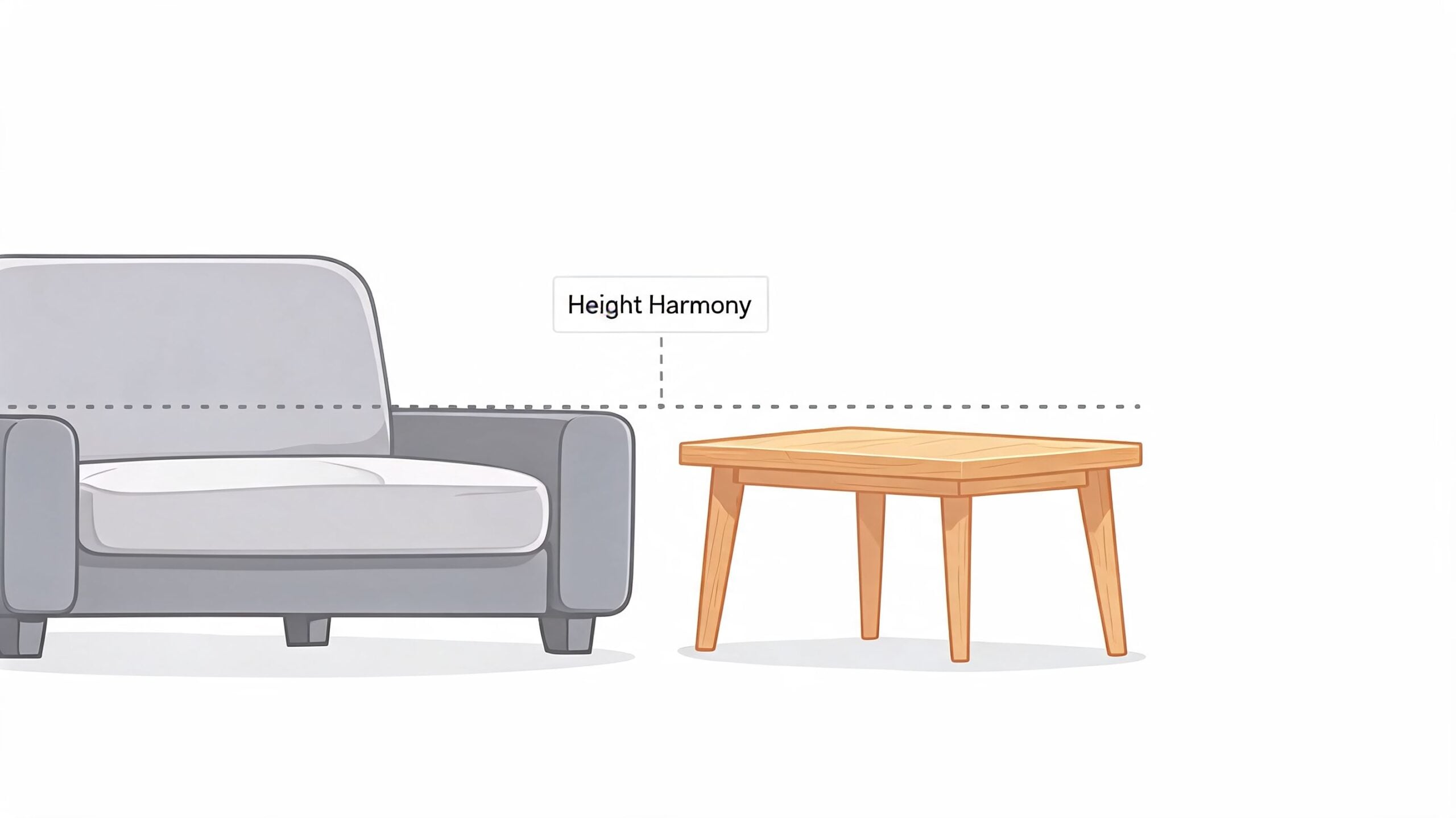
Professional furniture design sets a clear target: the table height should align within 0 to 2 inches of the sofa seat cushion, based on ergonomic comfort and accessibility standards explained in this coffee table dimensions guide. That same source notes that average seated elbow height falls 7 to 9 inches above seat cushions, which helps explain why a table just below seat height feels easiest to use.
How to measure it at home
You don’t need special tools. A tape measure is enough.
- Sit on your sofa the way you normally do.
- Measure from the floor to the top of the seat cushion.
- Choose a coffee table that is level with that height or slightly lower.
If your sofa seat measures 18 inches, a table around 16 to 17 inches usually feels right. If you have a lower modern sofa around 15 inches, a shorter table can look and feel more natural. If you have a more upright seat, a taller table may make sense.
Why people get confused here
Many shoppers measure the sofa arm instead of the seat cushion. That leads to a table that looks too short. Cushion height is the reference point because it reflects how your body meets the furniture.
Consider a car armrest. When the support is close to where your arm naturally rests, everything feels easy. When it’s too high or too low, you notice it every single time.
A coffee table should serve the way you sit, not just the way the room photographs.
This matters across sofa styles, whether you prefer Flexsteel support or the softer, crafted comfort often found in Craftmaster seating. If you’re comparing sofa profiles before choosing a table, this sofa buying guide for your living room can help you understand seat proportions more clearly.
The Second Rule of Thumb Proportional Length
Once height is right, length does the visual heavy lifting. A coffee table that’s too short can look like an afterthought. One that’s too long makes the room feel crowded before anyone even sits down.
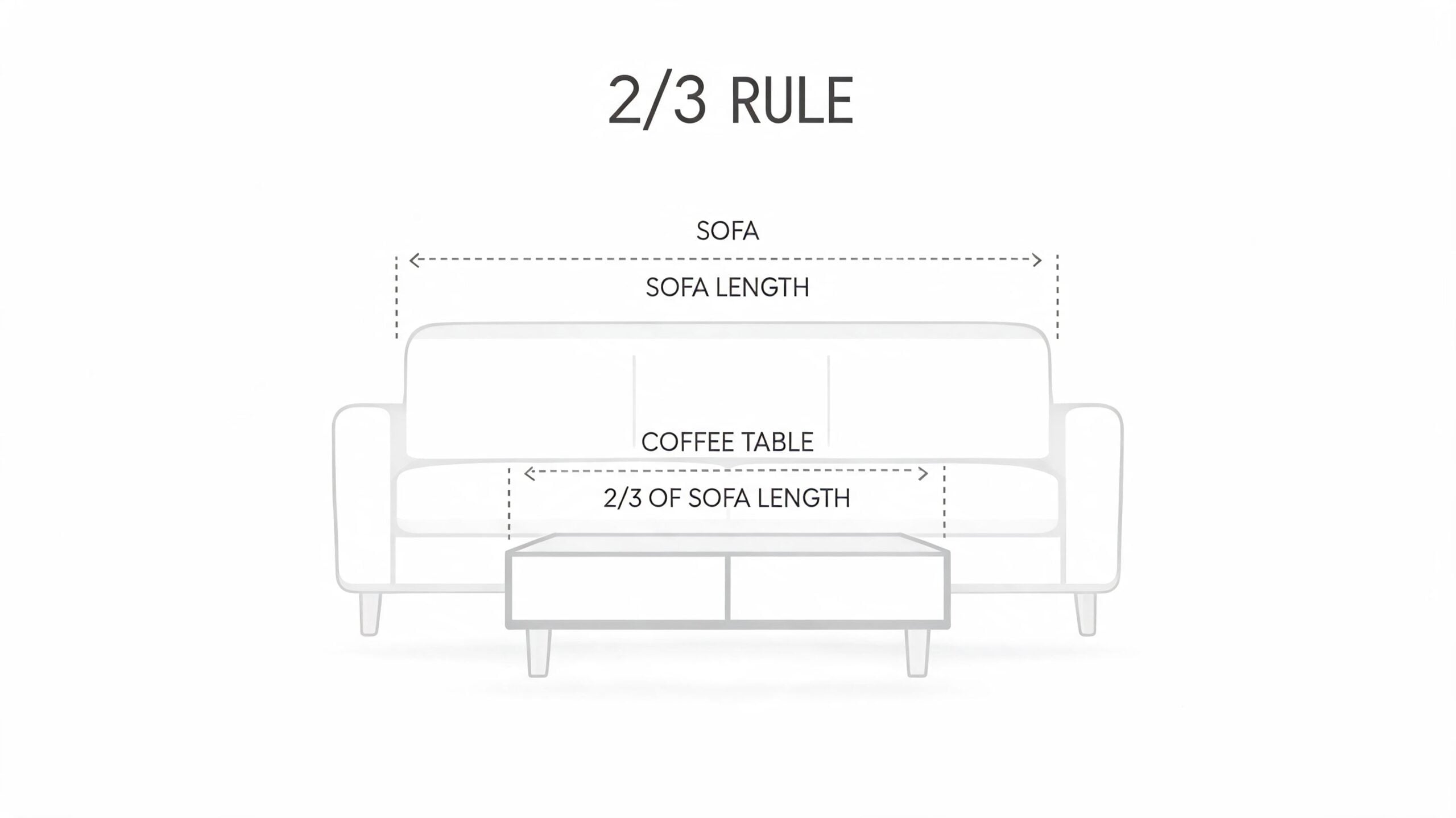
The most dependable guideline is the two-thirds rule. A coffee table should measure about two-thirds the length of the sofa. In this furniture dimension reference, an 84-inch sofa pairs well with a 56-inch table. The reason is practical as much as visual. That proportion keeps the surface within reach and preserves spatial flow around the seating.
Easy examples you can use
Here’s how the math looks in real rooms:
- Loveseat around 72 to 78 inches: Look for a table in the low-to-mid 40-inch range.
- Standard sofa around 84 inches: A table around 56 inches is a strong fit.
- Large sofa or sectional: Move toward the longer standard sizes so the table doesn’t look undersized.
You don’t have to be exact to the inch. The goal is proportion, not perfection.
What this changes in the room
Length affects more than appearance. It changes how many people can comfortably use the table and how connected the seating area feels. If the table is far shorter than the sofa, people on the ends often have nowhere convenient to set anything down.
A good proportional fit usually does three things at once:
- Balances the sofa visually
- Keeps the tabletop useful across the seating area
- Prevents the room from feeling blocked
If you’re working with a tricky floor plan, this guide to choosing furniture for your home layout can help you judge scale more confidently.
Choosing the Right Shape and Depth for Your Lifestyle
You sit down after dinner, set a mug on the table, and realize the piece in front of you looks fine but does not live very well. Maybe the corners catch shins. Maybe it feels too wide to reach across. Maybe it leaves an awkward gap in the middle of the room. That is usually not a style problem. It is a shape and depth problem.
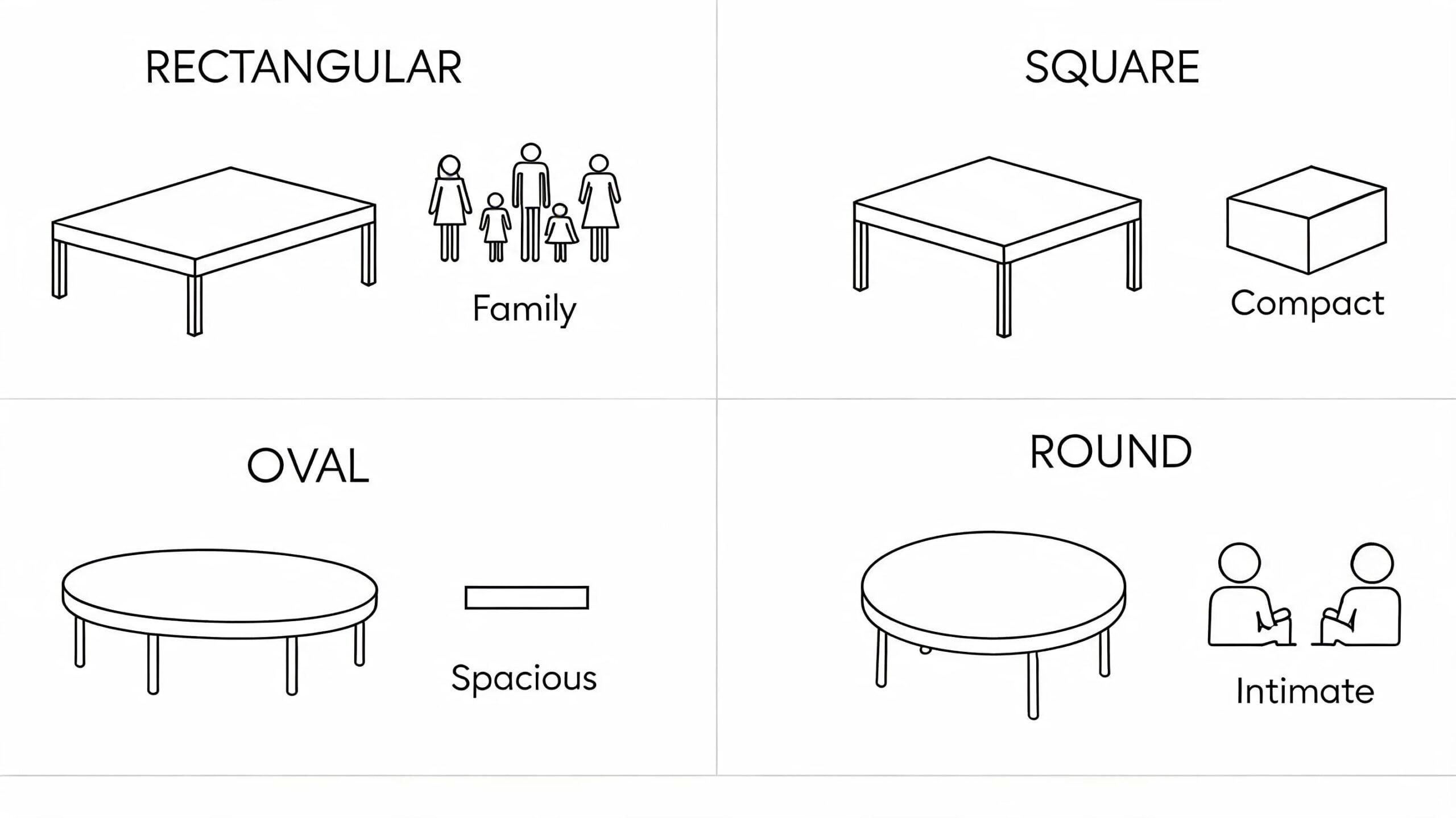
Shape changes how a room behaves. A rectangular table gives you more landing space across a standard sofa. A round or oval table softens the path around it, which helps in rooms where people are constantly passing through. Square tables tend to suit balanced seating plans, such as four chairs or a compact sectional where every seat faces the center.
Depth is the quieter measurement, but it often decides whether a table feels comfortable or frustrating. Depth is the front-to-back size. If length runs parallel with the sofa, depth runs from the sofa toward the TV or fireplace. The right depth should let you reach a drink or book without leaning like you are stretching across a dining table.
A simple way to judge it is to look at your real habits, not just the floor plan. Homes with kids often do better with round corners. Households that eat casual meals in the living room usually want a bit more surface area. Rooms that double as laptop space may benefit from a slightly taller table, as noted in this coffee table size guide focused on daily use.
Here is the plain-language version we use in the Gorins showroom in Norwich:
- Round works well when safety and easier movement matter most.
- Oval gives you length without the hard corners of a rectangle.
- Rectangular fits longer sofas and everyday use with trays, remotes, and drinks.
- Square suits compact, centered seating where every side gets used.
If you are unsure about depth, use painter's tape on the floor before you buy. That little outline works like a dress rehearsal for the room. You can walk around it, sit down, and see whether the table would feel helpful or intrusive. We do this with shoppers in the showroom all the time, especially when they are comparing standard sizes with custom possibilities.
That local part matters. Some Norwich homes have narrow passages, radiators in awkward spots, or seating grouped around an older fireplace. In those rooms, the best answer is not always a standard rectangle off the floor. A custom order, including options like the F9 Series, can solve a depth or shape issue that off-the-shelf tables cannot. If you want ideas before you visit, these living room arrangement ideas can help you sketch the room more clearly.
Good spacing always feels calm. The same principle shows up in smaller fixtures too. This toilet paper holder placement guide is a useful reminder that a few inches can change comfort more than people expect.
Measurement Examples for Common Connecticut Homes
A coffee table that looks perfectly normal in the showroom can feel completely different once it lands in your living room. We see that every week in Norwich. An older home with tighter walkways asks for a different size than a newer open-plan room, even if both families start with the same sofa length on paper.
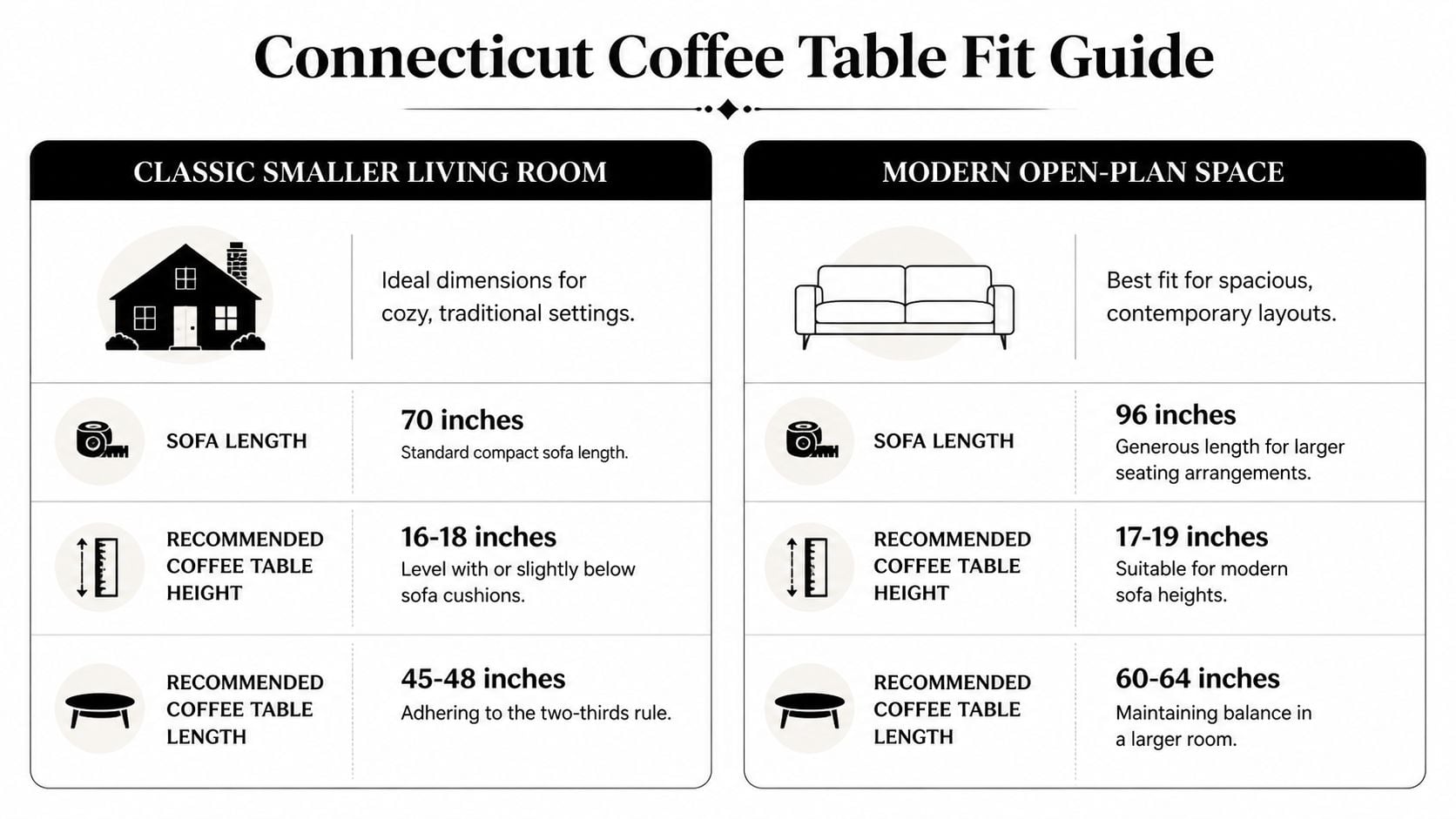
The easiest way to read the room is to start with the sofa, then test the space around it. In our Gorins showroom, we often show shoppers a standard table first, then compare it to a narrower, longer, or custom option so they can feel the difference in real time. That matters in Eastern Connecticut, where room shapes are often less predictable than the floor plans in national furniture guides.
A smaller historic Norwich living room
Many older Norwich homes have a front room that is charming but compact. You may have a sofa around 70 inches long, a fireplace claiming one wall, and a walkway that cannot be blocked without the room feeling cramped.
In that setting, a coffee table around 45 to 48 inches long usually keeps the center of the room useful without making it feel crowded. A lower-profile piece in the usual coffee table height range often pairs well with a traditional sofa. Narrower rectangles and ovals tend to work especially well because they preserve a little more breathing room at the sides.
This is also the kind of room where custom sizing earns its keep. If a standard piece feels just a few inches too deep, that small mismatch can affect every path through the room. A custom order, including options like the F9 Series, can solve the problem neatly.
A modern Plainfield family room
A larger family room gives you more visual space, but it still needs proportion. If your main sofa is about 96 inches long, a coffee table in the 60 to 64 inch range usually looks balanced and gives everyone a usable surface. If the sofa seat sits a bit taller than average, a slightly taller table can feel more comfortable day to day.
Families often notice this most on busy evenings. Board games spread out, drinks collect, and someone puts their feet up. In those rooms, a generously sized rectangle or large oval often works better than a small table that seems to disappear in the middle of the seating area.
Bigger rooms still follow the same rules. They just give you more freedom inside them.
Quick reference for common pairings
| Sofa Type / Length | Ideal Coffee Table Length (2/3 Rule) | Suggested Shapes |
|---|---|---|
| Loveseat, 72 to 78 inches | Around the low-to-mid 40 inch range | Rectangle, oval |
| Standard sofa, 84 to 90 inches | Around the mid-to-upper 50 inch range | Rectangle, oval, round |
| Large sofa, 96 inches | Around 60 to 64 inches | Rectangle, large oval |
| Sectional | Use the main seating span as your reference | Rectangle, square, round |
If your room has an unusual traffic path, a radiator, or a diagonal fireplace wall, sketching the layout first can save a lot of second-guessing. These living room layout ideas for arranging furniture in real homes can help you test placement before you commit.
The same measuring habit helps in other rooms too. If you are planning your bathroom vanity remodel, clearance and scale matter there for the same reason they matter here. A few inches can change how a room works every day.
Your Perfect Fit Awaits at Gorins
Normal coffee table dimensions aren’t complicated once you know what to measure. Start with the sofa seat height. Keep the table slightly lower. Aim for about two-thirds of the sofa length. Leave enough space between the seat and the table for comfortable movement.
That simple process takes the guesswork out of shopping. It also helps you spot right away when a table is attractive but wrong for your room. Good furniture sizing should feel calm and usable every day, not just “close enough.”
For our neighbors in Norwich, New London, Plainfield, Waterford, and nearby Eastern CT and Rhode Island communities, that’s where a local showroom experience still matters. Since 1936, Gorins Furniture & Mattress has helped families match scale, comfort, and style with confidence. In the showroom, you can compare pieces from Best Home Furnishings and Aspen Home, explore the F9 Custom Sofa series, and see how thousands of custom possibilities extend into programs like Canadel Custom Dining. If you’re investing in a full room, Promotional Financing with equal monthly payment options can also make the process easier.
Bring your sofa measurements, room photos, or even a rough floor sketch to Gorins Furniture & Mattress. Since 1936, Gorins Furniture & Mattress has helped Norwich and Eastern CT families create homes they love. From custom-designed Canadel dining sets to trusted comfort brands and personalized living room guidance, the team combines quality, value, and 5-Star Delivery service with the neighborly help that makes choosing furniture feel simple. Visit the Norwich showroom, take the online Style Quiz, or browse the Clearance section for value-driven savings.