Cooling Bedding for Hot Sleepers: A Norwich Guide

You climb into bed tired, ready to shut the day off. Then the heat starts building. One foot slips out from under the comforter. You flip the pillow. You kick the covers down. An hour later, you're still awake, and the bed feels like it's working against you.
A lot of our neighbors in Norwich and across Eastern CT describe the same pattern. They aren't just “warm sleepers.” They're dealing with broken sleep, damp sheets, and that foggy next morning feeling that comes from waking up over and over again.
That's why cooling bedding for hot sleepers matters. This isn't only about comfort. It's about giving your body a better chance to settle down and stay asleep.
Your Guide to Cooler Nights and Healthier Sleep
Hot sleep can feel strangely personal. One person in the house is comfortable, and the other is throwing blankets onto the floor at 2 a.m. Many families come in convinced they need a whole new mattress when the problem is really a combination of layers, fabric, and how heat gets trapped around the body.
Since 1936, Gorins has helped Norwich families sort through those details in a practical way. Healthy sleep usually comes from several small fixes working together, not one flashy label on a package.
A useful place to start is the bedding closest to your skin. A 2024 pilot study on cooling bed sheets found that hot sleepers using cooling sheets reported an average increase of 26 minutes of sleep per night, and complaints of sleep difficulty from night sweats were cut in half. That doesn't mean every sheet with the word “cooling” will do the job. It does show that the right bedding can make a measurable difference.
What people usually get wrong
Most shoppers focus on one question. “What's the coldest sheet?”
That question makes sense, but it often leads people in the wrong direction. Bedding that feels chilly when you first touch it isn't always the bedding that stays comfortable through the night. What matters more is whether it can keep air moving and handle moisture without turning clammy.
Good cooling bedding should help you forget about temperature, not make you think about it all night.
If you're also rethinking heavier top layers, resources on breathable comforters for busy professionals can be helpful because they frame bedding around real-life sleep routines, not just fabric buzzwords. We've also written about how building a sleep sanctuary with lighting, temperature, mattress, and bedding changes the whole room, not only the bed.
A cooler bed can support healthier habits
When sleep runs hot, people often start making short-term fixes. They lower the thermostat too far, sleep without enough cover, or swap comfort for anything that promises a cool touch. Those workarounds can backfire if the bed ends up feeling drafty at one point and stuffy later.
A better approach is to think of your bed as a small climate system. Once you understand how that system works, shopping gets much easier.
The Science of Sleeping Cool Explained
Cooling bedding works in three main ways. It lets heat escape, it moves sweat away from your skin, and sometimes it creates a cooler first-touch sensation that feels pleasant when you get into bed.
That may sound technical, but the idea is simple. Your body gives off warmth all night. If the layers around you trap that warmth and hold moisture, you wake up hot.
Breathability lets heat leave
Think of breathability like opening a window in a stuffy room. Air needs pathways. In bedding, that means a fabric or fill that doesn't block airflow with a dense structure.
A breathable sheet won't hold every bit of body heat right against your skin. It gives that heat somewhere to go. That's one reason some lightweight weaves feel easier to sleep in, even if they don't feel icy when you first touch them.
Moisture-wicking keeps sweat from lingering
The second part is moisture management. Some fabrics don't just soak up perspiration. They spread it out so it can evaporate more easily.
Advanced fabrics like Tencel or lyocell and bamboo viscose are made to wick moisture away from the skin. Unlike cotton, which can absorb and hold moisture, these fabrics disperse it across the surface to speed evaporation and reduce that sticky, clammy feeling.
Here's the easiest way to picture it:
- Cotton can act like a towel: It absorbs moisture, but it may stay damp longer.
- Lyocell and bamboo viscose act more like a spreader: They move moisture outward so it can dry faster.
- Your skin notices the difference: Dry usually feels cooler than damp.
Practical rule: If you wake up feeling sticky instead of simply warm, moisture control is probably the bigger issue.
Cool-to-the-touch isn't the whole story
Some bedding has what people describe as a “cool hand” feel. That's the quick sensation you notice when your arm hits the sheet or pillowcase. It can be pleasant, especially if you overheat right after getting into bed.
But first-touch coolness and all-night comfort aren't identical. A fabric can feel cool at bedtime and still trap heat later if the weave is too tight or the layers above it are too heavy.
If room conditions contribute to your discomfort, this guide to the ideal sleep climate for restorative rest helps connect bedding choices with the bedroom environment itself. Achieving balance is the priority. You want a bed that releases heat steadily, handles moisture well, and still feels comfortable by morning.
Choosing Your Cooling Material and Technology
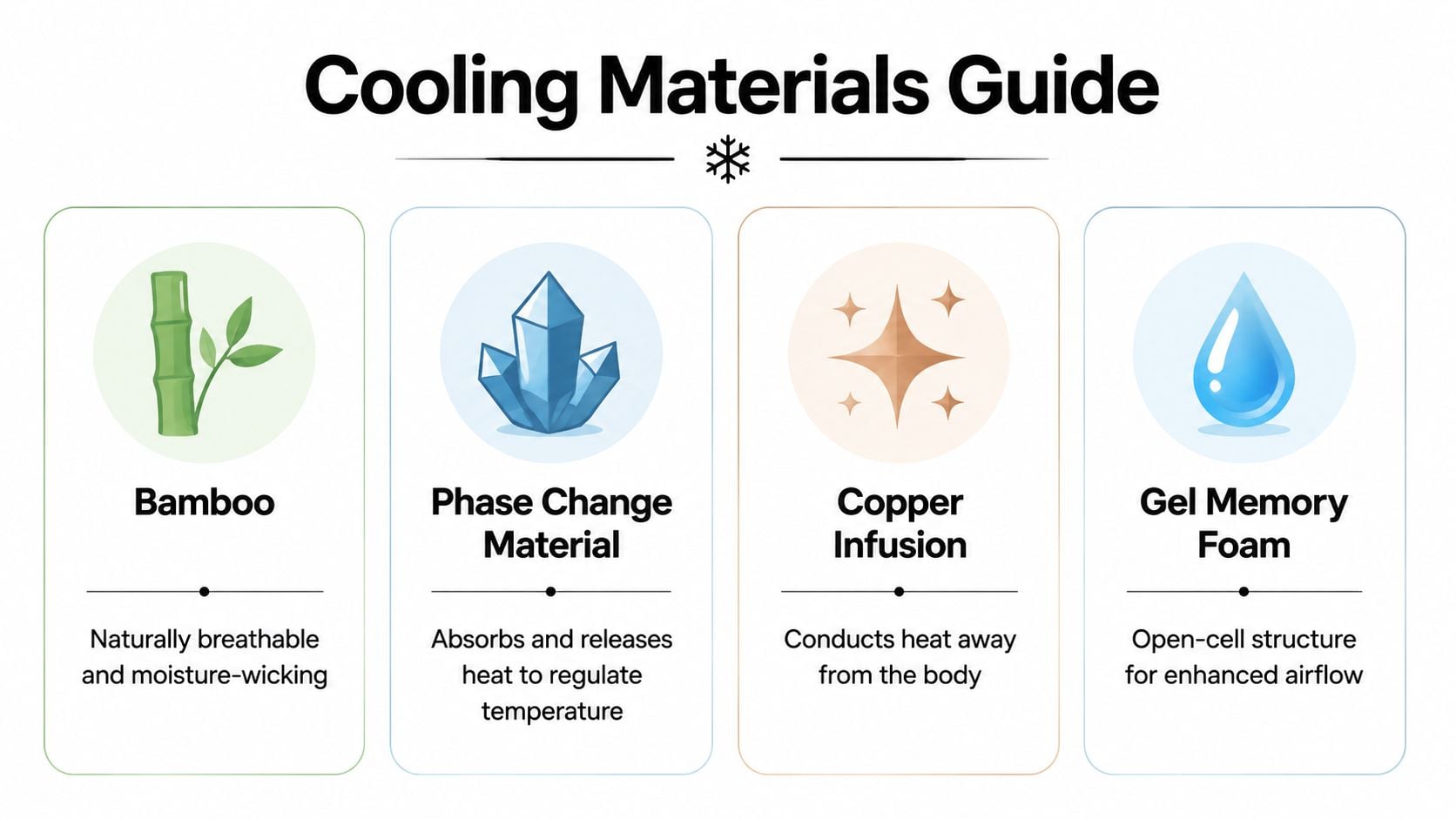
Shoppers usually meet the same few terms over and over. Cotton percale. Bamboo. Tencel or lyocell. Gel memory foam. Phase change materials. Copper infusion. Some of those labels describe fabric. Others describe how a mattress or topper handles heat.
The useful question isn't which term sounds the most advanced. It's which one fits the way you sleep.
Natural-feeling fabrics
Percale cotton is often a strong pick for people who like a crisp, familiar sheet feel. The weave matters here. For hot sleepers, the recommended thread count is between 200 and 400, and percale is especially effective because its looser construction helps air move more freely. Higher thread counts can trap more heat instead of improving comfort.
Bamboo tends to feel smooth and light. Many shoppers assume bamboo is only a summer fabric, but the more useful way to think about it is temperature regulation. It often appeals to people who want softness without a heavy, dense feel.
Tencel or lyocell usually suits sleepers who complain more about dampness than dry heat. It has a slicker hand-feel than many cotton sheets, and that change in texture matters. Some people love it right away. Others prefer to touch it first before deciding.
Mattress and topper technologies
On the mattress side, you'll see different approaches.
Gel memory foam aims to soften the warmer feel that traditional foams sometimes create. It can be a good fit for shoppers who want pressure relief but don't want a mattress that feels closed in.
Phase change material is designed to absorb and release heat as temperature changes. If you've ever felt a mattress cover that seems cool the moment you lie down, this may be part of what you're noticing.
Copper infusion is often discussed in terms of heat transfer. In plain language, it's used to help pull warmth away from the body surface more efficiently.
None of these technologies works in isolation. The cover, comfort layers, support core, protector, sheets, and comforter all affect the final result.
Cooling Material Comparison
| Material | Breathability | Moisture-Wicking | Feel |
|---|---|---|---|
| Bamboo | High | High | Smooth, soft |
| Tencel or lyocell | High | High | Silky, sleek |
| Cotton percale | High | Moderate | Crisp, light |
| Gel memory foam | Moderate | Low | Cushioned, contouring |
| Phase change material | Varies by product | Varies by product | Often cool to the touch |
| Copper infusion | Varies by product | Low | Depends on surrounding material |
The thread count myth
A lot of people still walk in asking for the highest thread count they can find. For hot sleepers, that usually misses the point.
- Higher isn't always cooler: Dense fabric can block airflow.
- Open construction matters: Air needs room to move.
- Feel still matters: Some people prefer crisp sheets, while others want a smoother drape.
If you're also comparing mattress surfaces, our guide to the best cooling mattress for hot sleepers can help connect sheet choices with what's happening underneath them.
Building Your Cool Sleep System Layer by Layer
People often shop for cooling bedding as if one purchase will solve everything. In real bedrooms, heat problems usually come from layers working against each other. A breathable sheet won't do much if a heavy protector blocks airflow. A cool-feeling mattress cover won't help much if the comforter on top traps warmth.
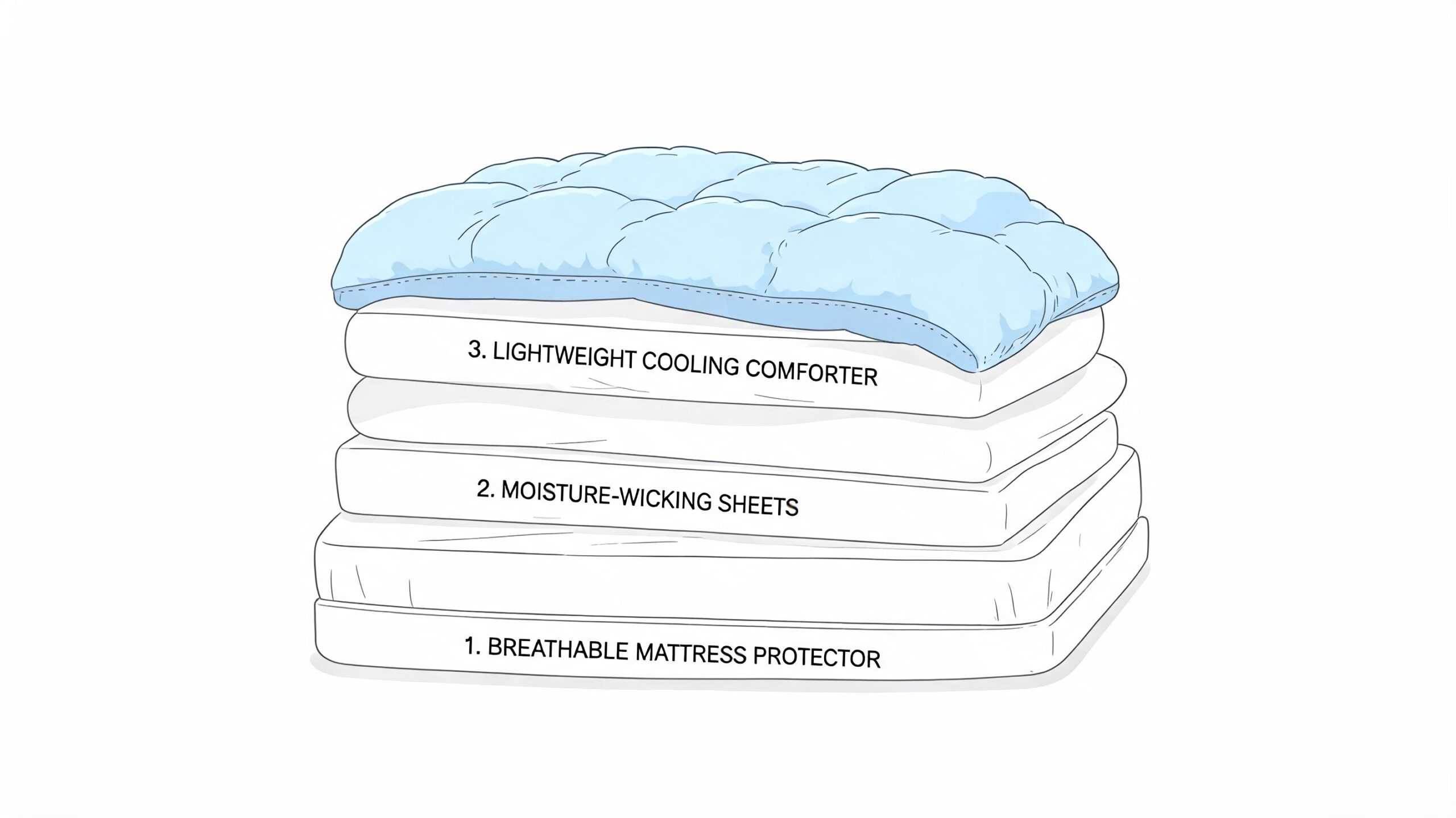
The better plan is to build a system from the mattress up.
Start with the mattress surface
If your mattress sleeps hot, every layer above it must work harder. Materials, cover design, and support construction all matter in this situation.
Many shoppers in Norwich start by trying mattresses from Tempur-Pedic, Serta, and Beautyrest because those lines offer different approaches to cooling and pressure relief. Some focus on cool-touch covers. Others rely on airflow through the support system or on foams designed to feel less heat-retentive.
At Gorins Furniture & Mattress, shoppers can compare those feels in person instead of guessing from online descriptions. That matters because one person's “cool and supportive” can feel too firm or too slick to someone else.
Add a protector that doesn't smother the bed
A mattress protector should guard the mattress without turning it into a sealed surface.
Look for a protector that feels light and flexible, not plasticky or overly padded. If you're a hot sleeper, a bulky protector can undo the benefit of a cooler mattress cover underneath.
A protector should be quiet, breathable, and easy to forget. If you notice it every time you move, it may be too heavy for your sleep style.
Choose sheets for your main problem
Here the decision gets more personal.
If your biggest complaint is trapped heat, a crisp percale sheet often makes sense. If your biggest complaint is night sweat or dampness, bamboo or Tencel-based sheets may feel more comfortable because they manage moisture differently.
A simple way to understand it:
- Warm but dry sleeper: Prioritize breathability.
- Hot and sweaty sleeper: Prioritize moisture-wicking.
- Heat-sensitive at bedtime: You may care most about cool-to-the-touch feel.
Finish with lighter top layers and the right pillow
The comforter or blanket changes the whole experience. Hot sleepers often do better with lighter, more breathable fills than with lofty, heat-trapping top layers.
Pillows matter too. Your head and neck release heat. If the pillow feels dense and stuffy, the whole bed can feel warmer. Many shoppers fixate on sheets and forget that the pillow is right against the face for hours.
A complete sleep setup often includes:
- A cooler mattress surface: One that doesn't trap body heat quickly.
- A breathable protector: Protection without a sealed feel.
- Moisture-managing sheets: Based on whether you run warm, sweaty, or both.
- A lighter top layer: Enough comfort without extra heat buildup.
- A breathable pillow: So your head isn't the hottest part of the bed.
Care and Maintenance for Lasting Comfort
Cooling bedding only works well if the fabric keeps the qualities you bought it for. Heat, harsh washing, and product buildup can change how a sheet feels over time. The bedding might still look clean while losing some of that airy, dry feel.
That's why care matters. Good bedding is an investment in comfort, and a few habits can help protect it.
Wash for performance, not just for appearance
Always check the care tag first. Cooling fabrics can respond differently than heavier traditional bedding.
A smart routine usually looks like this:
- Use mild detergent: Heavy residue can coat fibers and change the hand-feel.
- Skip high heat when possible: Excess heat can be rough on performance fabrics and elastic components.
- Wash separately from rough items: Zippers, heavy towels, and bulky garments can wear down smoother sheet surfaces.
- Don't overload the washer: Sheets need room to rinse well.
Dry gently and store smart
If your bedding comes out of the dryer feeling baked, stiff, or overly wrinkled, the heat may be too high. Lower heat and prompt removal usually help cooling fabrics keep a softer drape.
Storage matters more than people think. Fold sheets only when they're completely dry, and keep them in a breathable linen closet instead of a sealed plastic bin whenever possible.
Bedding that manages moisture well during sleep can still lose comfort if it's stored damp or overheated in the laundry cycle.
For specialty fabric care outside the home, some readers may find services like expert garment care in Gold Coast useful as a reminder that fabric longevity often comes down to handling and cleaning method, not just brand name.
For seasonal upkeep, our article on mattress care tips to keep cool and clean all summer long offers practical guidance for the whole sleep setup.
Find Your Perfect Fit at the Gorins Sleep Gallery
Online shopping is convenient, but cooling comfort is one of the hardest things to judge from a product page. Fabric words can help. Customer reviews can help. Neither can tell you how a sheet feels against your skin or whether a mattress surface feels airy, dense, slick, or insulating to you.
That's where comfort by feel matters.
Why in-person testing changes the decision
A shopper might read that bamboo feels soft, then discover they prefer the crispness of percale. Another person may think they want a cool-touch mattress cover and then realize they care more about pressure relief across the shoulders and hips.
That difference is why trying products in person still matters for cooling bedding for hot sleepers. You can lie down, move around, compare surfaces, and notice the details that product descriptions flatten out.
What to pay attention to in the showroom
When you test sleep products, don't just ask, “Is it cool?”
Ask better questions:
- How does the surface feel after a few minutes?
- Do the sheets feel slick, crisp, or clingy?
- Does the protector change the mattress feel?
- Does the pillow feel breathable around your face?
- Would you want this setup in every season, or only in summer?
Those are the kinds of questions that turn a guess into a good match.
The right sleep setup should fit your sleep style, not just a category label like “hot sleeper.”
For shoppers comparing mattresses, this guide on how to choose a mattress is a useful companion because support and temperature comfort often need to be solved together. Our neighbors from Norwich, New London, Plainfield, Waterford, and nearby Rhode Island communities often find that once they try a few options side by side, the right combination becomes much clearer.
Since 1936, the value of a local showroom has been simple. You get real guidance, real materials to touch, and a chance to make an informed choice. If you're planning a bigger bedroom upgrade, Promotional Financing with equal monthly payments can also make investment-grade sleep products easier to bring home without rushing the decision.
Frequently Asked Questions About Cooling Bedding
Is cooling bedding only useful in summer
No. Many cooling fabrics are really about temperature regulation, not making you feel cold. They can help hot sleepers stay more comfortable year-round by allowing better airflow and handling moisture more effectively.
Can I use a mattress protector with a cooling mattress
Yes, but choose carefully. A thick or less breathable protector can reduce the benefit of a cooler mattress surface. If you already sleep hot, look for something light and flexible that doesn't add a sealed or padded feel.
Are cooling sheets always slippery
Not at all. Some are smooth and sleek, especially lyocell-style fabrics. Others feel crisp and airy, like percale. This is one reason showroom testing matters. “Cooling” describes function, but the feel can vary a lot.
Do I need to replace every layer of my bed
Usually not. Many people improve sleep by changing the sheet set, top layer, or pillow first. If those don't solve the problem, then it makes sense to look at the protector or mattress surface.
Will cooling bedding feel too cold in winter
Most hot sleepers don't experience it that way. Good cooling bedding tends to feel balanced rather than icy. If you tend to run warm all year, that balance can make winter sleep more comfortable too.
How long do cooling properties last
That depends on the material and how you care for it. Breathable weave and fiber characteristics are built into the product, while some special finishes may change over time. Gentle washing and lower heat usually help bedding maintain its original feel longer.
What matters more, the mattress or the sheets
Both matter, but in different ways. The mattress influences how much heat builds beneath you. Sheets affect the feel right at skin level. If either layer works against the other, you'll notice it.
Since 1936, Gorins Furniture & Mattress has helped Norwich and Eastern CT families create homes they love. If you're ready to compare cooling bedding by touch, test mattress surfaces in person, and get practical guidance suited to your sleep style, visit the Norwich showroom, take the online Style Quiz, or browse the Clearance section for value-driven savings.