Dining Table Dimensions for 8: A Complete Guide

A lot of Norwich homeowners reach the same point at the same time. The guest list is growing, holidays are getting closer, and the current table suddenly feels too small for a meal that's supposed to feel easy and welcoming. Eight seats sounds straightforward until the questions start. How long should the table be? Which shape works best? Will the room still feel comfortable once the chairs are pulled out?
That's where smart planning matters. A dining table isn't just a surface. It becomes the center of birthdays, weeknight dinners, and those long family gatherings where nobody wants to feel squeezed in at the corner. For neighbors who want a piece that feels like a lasting investment for a Norwich home, the right dimensions make all the difference.
Table of Contents
- Planning the Perfect Gathering for Eight
- The Foundation of Fit Chair Spacing and Comfort
- Rectangular and Oval Dining Table Dimensions
- Round and Square Dining Table Dimensions for Eight
- Planning Your Dining Room Layout and Clearances
- Custom Solutions Benches Extensions and Financing
Planning the Perfect Gathering for Eight
A table for eight has to do more than fit eight place settings. It has to support the way a household lives. Some families need room for holiday hosting. Others want a dining set that handles homework, casual breakfasts, and larger weekend meals without making the room feel overfilled the rest of the week.
That's why the first question shouldn't be style. It should be function. The right choice depends on how often the table serves a full group, how formal the room feels, and whether the space needs to stay open between gatherings. For many homes in Norwich and surrounding Eastern CT communities, the smartest purchase is the one that balances comfort and traffic flow instead of chasing the biggest table that can technically fit.
A helpful starting point is to gather inspiration from materials and finishes that match the home's broader look. Households drawn to cleaner lines or natural finishes often browse collections of sustainable dining tables to narrow down what feels right before measuring exact dimensions.
A good table decision starts with three questions
- How often will all eight seats be used: A household that hosts often may want a permanent eight-seat layout, while occasional hosts may prefer an expandable solution later on.
- What shape suits the room: Long rooms usually handle rectangular or oval tables more naturally, while more symmetrical rooms sometimes open the door to round or square options.
- How much daily circulation is needed: If the dining space doubles as a pass-through, an oversized table can make everyday movement frustrating.
A dining room should feel generous when people are seated and easy to move through when they're not.
For anyone still sorting out the entertaining side of the room, these design tips for effortless entertaining can help connect furniture choices with how gatherings unfold.
The Foundation of Fit Chair Spacing and Comfort
The most useful rule in dining design isn't about style. It's about elbow room.
Why personal space matters at the table
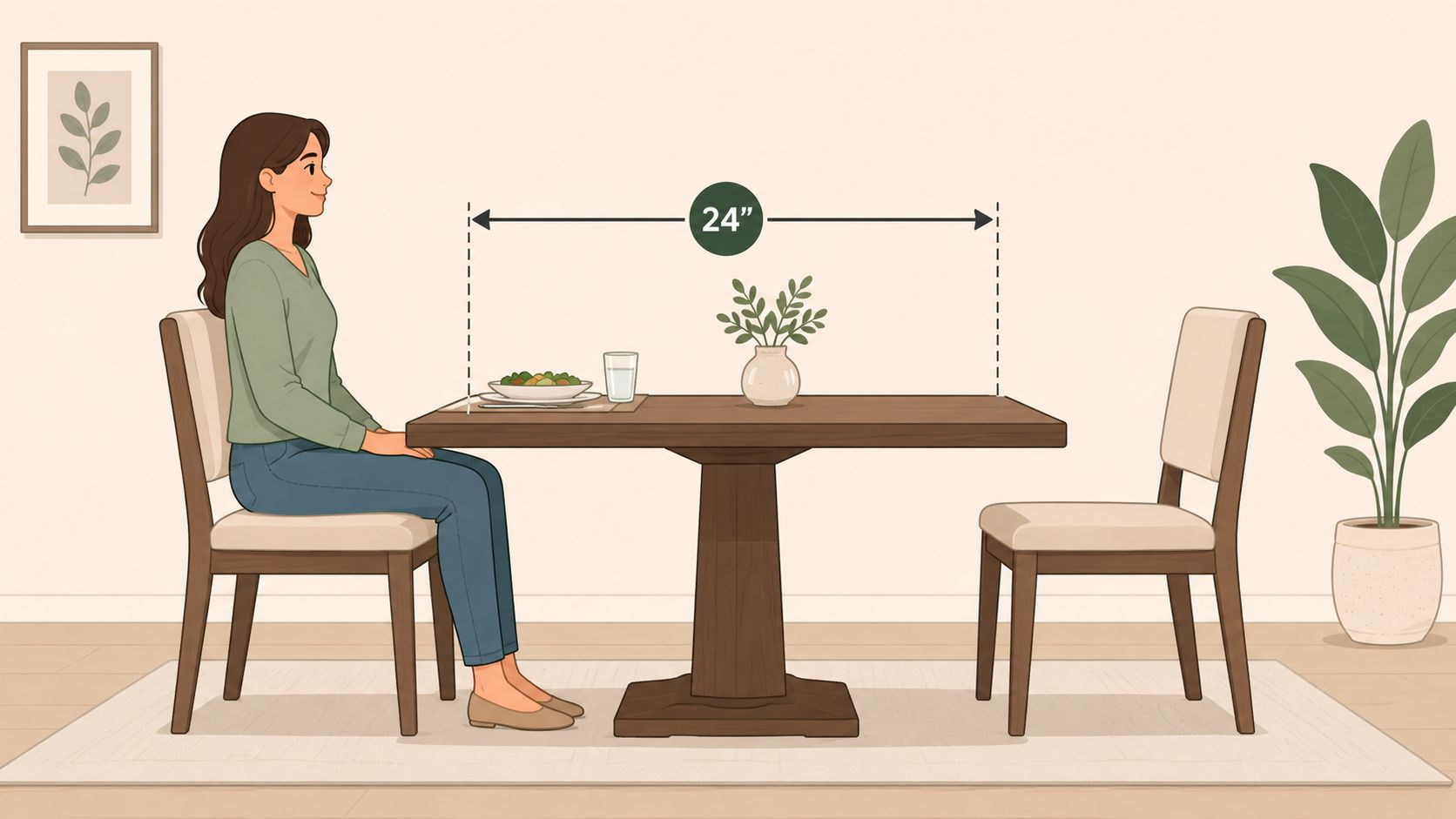
A dining table for eight should give each person enough space to sit, eat, and move naturally without bumping shoulders. Better Homes & Gardens recommends at least 24 inches of table length per person, which brings a typical rectangular table for eight to 84 to 96 inches long according to this dining table size guide.
That guideline matters because the difference between “seats eight” and “comfortably seats eight” is noticeable as soon as dinner starts. A tighter setup may work in a pinch, but regular hosting gets uncomfortable fast. Glasses crowd each other. Serving dishes compete for space. Guests start angling their chairs just to gain breathing room.
A simple analogy helps. Movie theater seats work when each person has a defined zone. Dining chairs need the same logic. Without a clear amount of space per person, the whole setup feels compressed even if the table technically has enough chairs around it.
What this means for real-world shopping
Households shopping for dining table dimensions for 8 should think beyond the label on the product floor. “Seats eight” can mean very different things depending on chair size, table base placement, and whether the end seats are meant for adults or occasional use.
A practical checklist helps:
- Check the side seating first: The long sides do most of the work on an eight-person table.
- Look at the base design: Pedestal and trestle styles often create easier leg placement than heavy corner legs.
- Consider the chairs with the table: A slim side chair and a wide upholstered arm chair change the feel of the same tabletop.
Practical rule: Comfort starts with the seated person, not the tabletop shape.
Before committing to a size, it helps to review room measuring basics with a clear resource like this guide on how to measure furniture. A few careful measurements at the start can prevent a table from feeling too large once it arrives.
Rectangular and Oval Dining Table Dimensions
Rectangular tables usually make the most sense for eight. In many Norwich and Eastern CT homes, the room itself points you in that direction. Long walls, a buffet on one side, and a traffic path to the kitchen all tend to favor a table with a clear, efficient footprint.
For an eight-person setup, rectangular tables are commonly sized at 84 to 96 inches long and 38 to 44 inches wide according to this industry dimensions reference. That range supports the layout many families prefer. Three seats along each side, plus one at each end.
The reason this shape stays popular is simple. It is easier to live with. A rectangular table gives serving pieces more usable room down the center, keeps place settings in a tidy rhythm, and usually fits standard dining rugs and lighting better than wider shapes.
Dining Table Dimensions for 8 People
| Table Shape | Minimum Dimension | Ideal Dimension |
|---|---|---|
| Rectangular | 84 inches long | 84 to 96 inches long and 38 to 44 inches wide |
| Oval | 78 inches long | 78 to 84 inches long and 36 to 40 inches wide |
Oval tables earn their place when a room needs the same seating capacity with a softer outline. Oval eight-seat tables generally run 78 to 84 inches long and 36 to 40 inches wide. In practice, that means you can often keep comfortable seating for family dinners while taking some visual weight out of the room.
That trade-off matters more than shoppers expect. A rectangle feels structured and familiar. An oval feels lighter at the ends, which can help in open-plan spaces or dining rooms where people pass close by the table every day. Those rounded ends also reduce the chance of clipping a corner when kids or guests move around the table.
At Gorins, this is often where the conversation gets more specific. The right answer is not just picking a shape from a chart. It is matching the table to the way your household gathers, the chairs you want to pair with it, and the room dimensions in your actual home. With Canadel custom ordering, a family can often adjust shape, size, finish, and extension options instead of settling for a close-enough fit.
If you are weighing flexibility along with shape, this oval table with leaves collection is a useful example of how an oval can handle everyday meals and still open up for holidays. For many households, that is the smarter long-term buy. It keeps the room comfortable on a Tuesday night and ready for a full table on Sunday.
Round and Square Dining Table Dimensions for Eight
Round and square tables change how eight people share a meal. The conversation feels more balanced, the sightlines stay open, and the table becomes the center of the room in a very literal way. They also ask more from the room than many homeowners expect.
Where round tables shine
A round table suits families who want everyone equally included. No one ends up at the far end of a long run of seats, and that can make weeknight dinners feel more connected.
For a full group of eight, comfort usually starts with a generously sized top. If the diameter is too modest, place settings crowd together and serving dishes take over the middle. In a Norwich home, I usually suggest looking at the room shape first. Round tables tend to feel right in square dining rooms, open kitchen dining areas, or spaces where people circulate around the table from several directions.
They are less forgiving in long, narrow rooms. You can end up with wasted space at the sides while the main walkway still feels tight.
At Gorins, this part of the decision often gets more practical than a size chart can cover. With Canadel custom ordering, homeowners can match the table shape to the room they have, then work through finish, base style, and extension details before placing an order. That matters when you are trying to make one table handle everyday family meals and holiday dinners without overfilling the room the rest of the year.
For readers drawn to that softer, more open look, this round glass dining room table set shows how a circular top can lighten the visual weight of an eight-seat arrangement.
What square tables do well and where they fall short
Square tables for eight can work, but they are a more specific choice. They generally need a broad footprint to seat everyone comfortably, so they make the most sense in rooms that are fairly square and have enough clearance on all four sides.
Their strength is symmetry. A square table can look grounded and architectural, especially in a dedicated dining room where the chandelier, rug, and wall spacing all line up cleanly. The trade-off is reach. As the table gets larger, the center becomes harder to use for shared dishes, decor, or everyday serving.
That is one reason square tables are less common for busy family dining. They look orderly, but they are not always the easiest shape to live with.
If you are reviewing room plans before ordering, a practical guide for homeowners can help you confirm whether a square layout really supports the table size you want. In custom projects, that step saves people from buying for seat count alone and missing how the table will sit in the room.
Planning Your Dining Room Layout and Clearances
The table itself is only half the decision. The space around it determines whether the room feels calm or crowded.
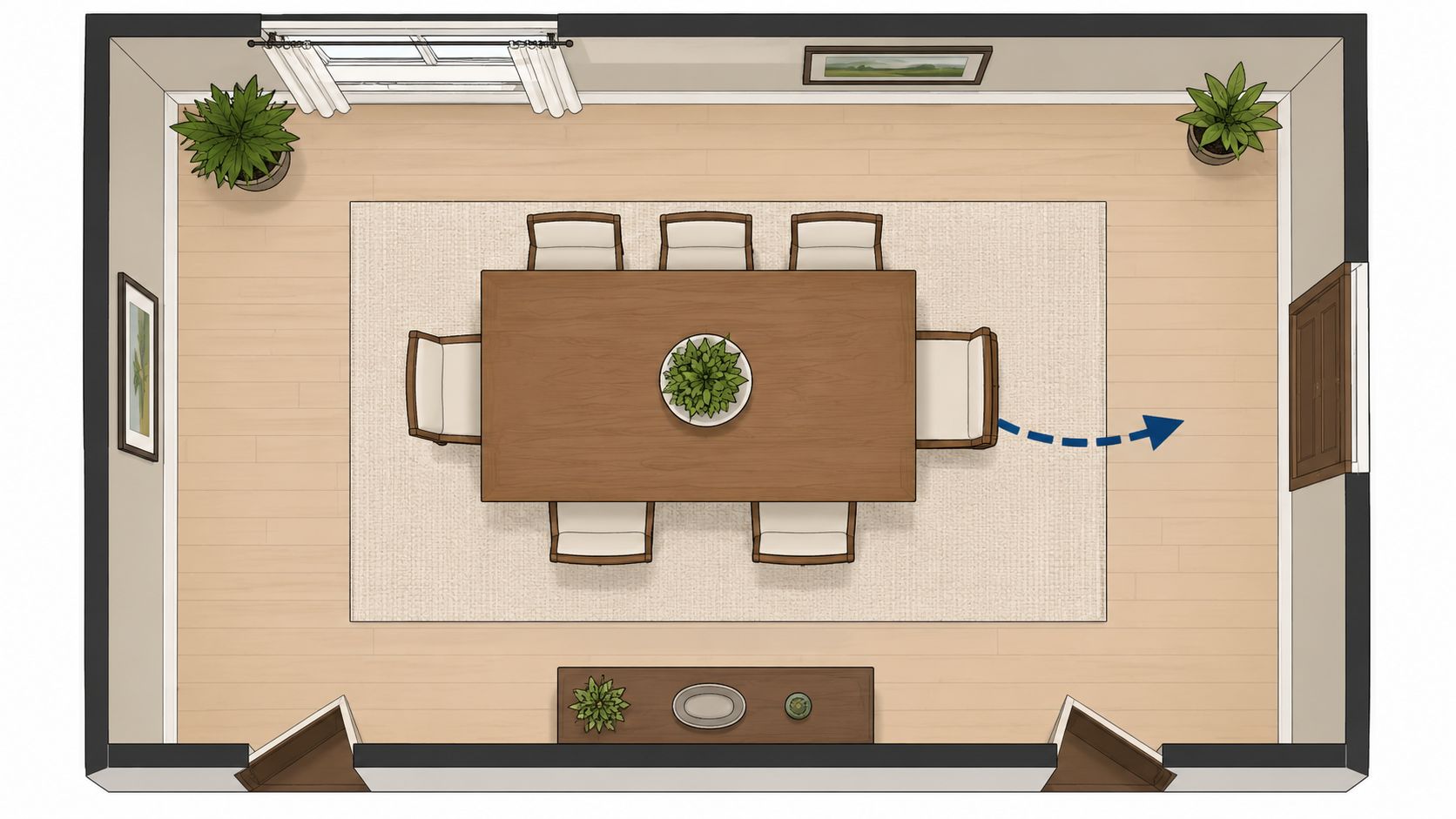
Start with the room, not the product tag
Many dining rooms can physically hold a large table and still function poorly once chairs are occupied. People need room to pull back, sit down, stand up, and pass behind one another without turning every meal into a shuffle.
A practical planning method is to mark the expected table size on the floor with painter's tape, then place dining chairs or similar stand-ins around the outline. That quick mock-up reveals more than a product photo ever can. It shows where a walkway pinches, where a cabinet door might clash, and whether the room still feels balanced.
For homeowners reviewing remodel drawings or builder layouts, a practical guide for homeowners can help make sense of room dimensions before furniture decisions begin.
A simple way to test fit before buying
A measured approach keeps this process manageable:
- Measure the room's usable area: Focus on the space that remains after accounting for vents, door swings, and nearby furniture.
- Outline the table shape: Tape the dimensions directly on the floor. A rectangle and an oval of similar length can feel surprisingly different in use.
- Test movement paths: Walk around the outline as if serving a meal, opening a nearby door, or passing through the room with chairs occupied.
Many households discover that a slightly narrower top or a softened shape improves the room more than just going larger. Good dining design isn't about maximum table mass. It's about preserving easy movement while still giving the gathering a strong center.
A showroom visit helps with this step because scale is easier to judge in person. Seeing an eight-seat arrangement set up with actual chairs often clarifies whether a table looks appropriately sized or starts to dominate the room.
Custom Solutions Benches Extensions and Financing
Not every household needs the same dining setup every day. Some need eight seats on holidays and a smaller footprint the rest of the year. Others want flexible seating for kids, guests, and changing routines.
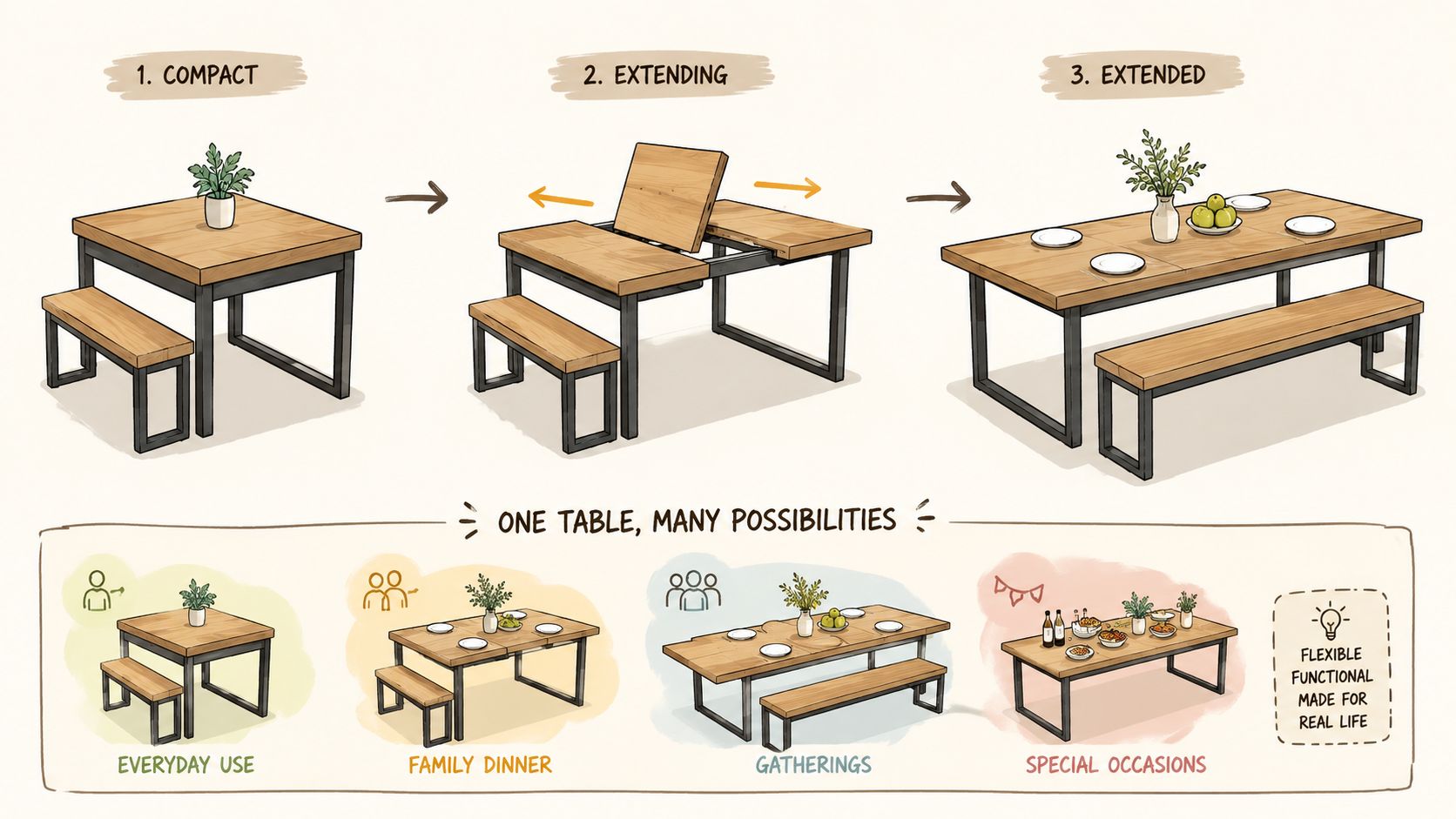
Flexible seating for changing routines
An extension table is often the most practical answer. It keeps the room from feeling overloaded on ordinary days, then opens up when family gathers. A bench can help too, especially in casual dining spaces where flexible seating matters more than a fully matched chair-on-every-side look.
Households that rotate furniture seasonally or store leaves between occasions may also want a simple reference for care and protection. These tips for packing furniture for storage are useful when extension components or extra seating need to be put away safely.
Why customization changes the outcome
The custom-order process matters because dimensions aren't separate from lifestyle. Shape, finish, seating style, and expansion method all affect how useful the table feels over time. Gorins Furniture & Mattress offers a custom dining option through Canadel Custom Dining, where shoppers can work through size, shape, finish, and seating combinations based on the room and how the table will be used. That kind of fit is often more valuable than choosing a standard piece that's only close.
The same logic applies across the home. F9 Custom Sofa options give living rooms a similar made-for-the-household approach, and the Sleep Gallery carries Tempur-Pedic, Serta, and Beautyrest for shoppers who want to compare mattress comfort by feel and focus on healthier sleep. When the purchase is substantial, Promotional Financing with equal monthly payments can make a custom dining set feel more accessible without settling for the wrong size.
For readers exploring a made-to-order route, this custom made dining table page is a useful place to see how custom dining options come together.
Since 1936, Gorins Furniture & Mattress has helped Norwich and Eastern CT families create homes they love. From custom-designed Canadel dining sets to the latest in Tempur-Pedic sleep technology, they combine a massive selection with the personalized care only a local, family-owned business can provide. Visit the Norwich showroom, take the online Style Quiz, or browse the Clearance section to find a dining set designed for your lifestyle, your room, and the way your family gathers.