8 Different Ways to Arrange a Sectional Couch


A sectional usually looks easy to place until real life starts happening around it. In Norwich homes, I see the same pattern all the time. A family buys a sofa that fits the wall on paper, then finds the chaise blocks the main walkway, the rug looks undersized, or the room feels closed in the minute everyone sits down.
Your layout decides whether the room works day after day. The right setup keeps traffic clear, gives people a natural place to gather, and makes the space feel settled instead of crowded. The wrong one wastes square footage and makes a good sofa feel like a bad purchase.
At Gorins Furniture & Mattress, we've helped Eastern CT families furnish homes since 1936, and the trade-offs are usually practical, not stylistic. Corner placement can save space but tighten circulation. A floating arrangement can open the room and define an open plan, but it needs enough depth to earn that footprint. Before choosing a configuration, measure how people move through the room, check the chaise side carefully, and confirm the scale so you are avoiding fitting mistakes for your sofa.
This guide gets straight to the layouts that work, covering several smart arrangements for a sectional couch, where each one performs best, and what to expect in a real family home. That includes practical options for first homes, busy households, and long-term upgrades, especially if you are considering customizable pieces like the F9 Custom Sofa Series or using promotional financing to buy once and buy well. If your best next step is seeing scale, seat depth, and fabric in person, the local showroom experience matters. It is still the fastest way to tell whether a sectional will support your lifestyle or fight it every day.
Table of Contents
- 1. The L-Shaped Sectional Classic Corner Configuration
- 2. The U-Shaped Sectional Ultimate Family Gathering Layout
- 3. The Chaise Sectional Lounging Comfort Meets Seating
- 4. The Modular Sectional Flexible Reconfigurable Living
- 5. The Floating Sectional Space-Defining Modern Layout
- 6. The Curved Sectional Softness and Sophistication
- 7. The Sleeper Sectional Multi-Purpose Guest and Family Solution
- 8. The Pit Sectional Sunken Comfort and Intimate Gathering
- 8 Sectional Layouts Compared
- Find Your Perfect Sectional Layout at Gorins
1. The L-Shaped Sectional Classic Corner Configuration
A lot of Norwich living rooms ask for the same thing. Real seating, clear walkways, and a layout that does not waste the best corner in the room. That is where an L-shaped sectional keeps proving its value.
It fits naturally into many condos, family rooms, and first homes because it uses perimeter space well and leaves the middle of the room usable. In smaller rooms, that open center matters. Kids can move through it, a coffee table fits without crowding the space, and the room still feels settled instead of packed.
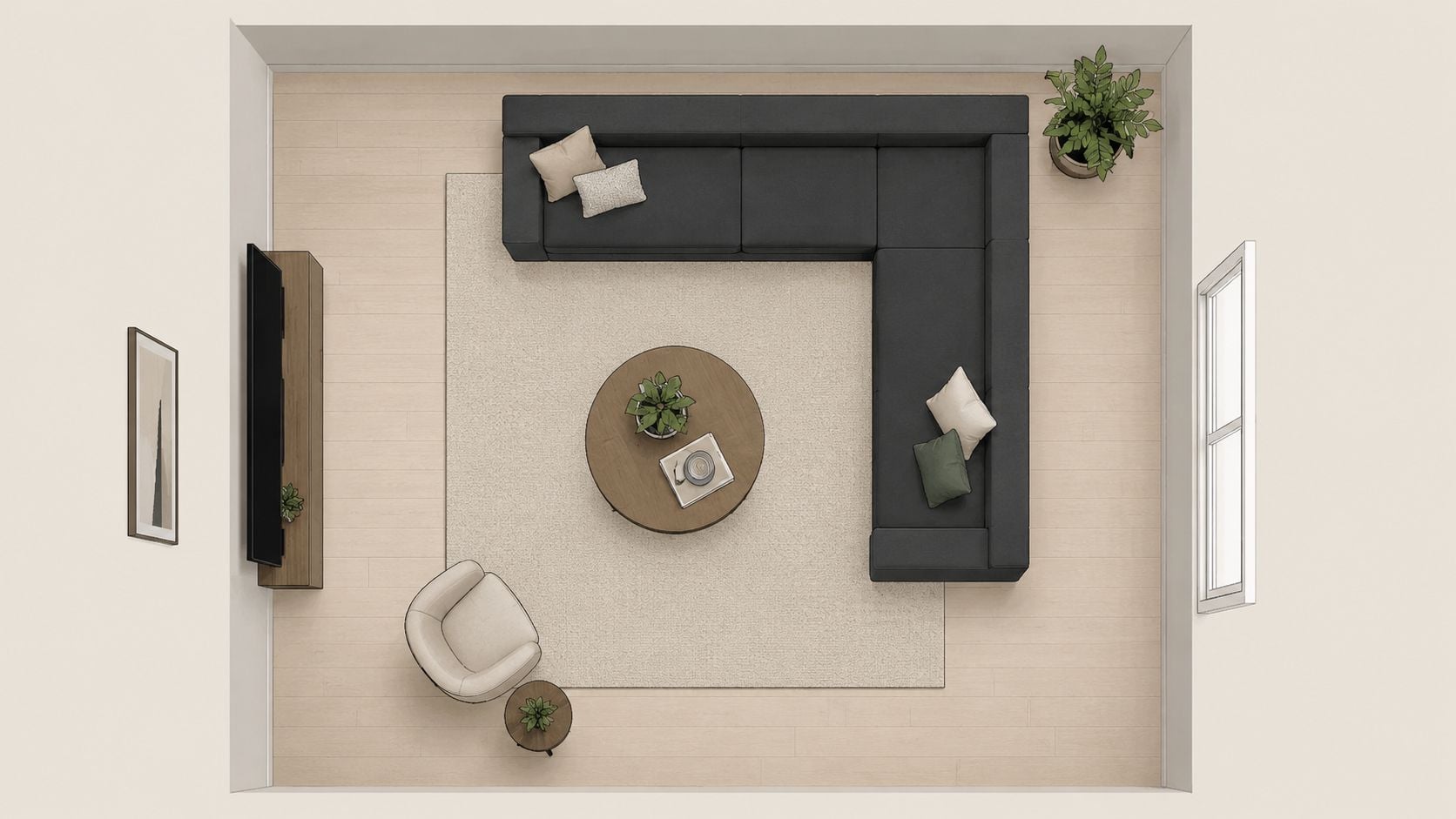
I recommend this layout often for Eastern CT households that want one sofa to do several jobs well. In a Plainfield family room, the long side usually works best facing the main TV wall, with the shorter return defining the corner without blocking the room. In an open-concept Norwich home, the same shape can sit slightly off the walls and still read cleanly, especially if you want to separate the living area from dining or kitchen space. For more room-specific ideas, our sectional layout guide for living rooms shows how these placements work in everyday homes.
Why this layout keeps working
The L-shape gives a room balance. You get generous seating, but you do not have to give the entire floor plan over to one piece of furniture. That makes it a smart investment layout for households that host occasionally, watch TV nightly, and still need the room to function on a busy weekday.
It also gives you more control over comfort than shoppers expect. With the F9 Custom Sofa Series, you can adjust the scale and feel to match how your household lives. Some families want a tighter, firmer sit that is easier to get out of. Others want deeper cushions for stretching out after work. Both can work in the same corner-based plan if the proportions are right.
The trade-off is fit. An L-shape looks simple on paper, but corners are rarely as clean as they seem. Window trim, baseboard heat, floor vents, radiators, and outlet placement can all change what size will sit properly. Before ordering, measure the room and your entry path. This guide on avoiding fitting mistakes for your sofa is a smart planning step.
A few decisions make or break this setup:
- Check circulation first: Leave enough space for people to pass without brushing the chaise or corner seat.
- Place the return on the quieter side: The longer extension should support lounging, not interrupt the main traffic route.
- Use a softer table shape: Round and oval coffee tables usually improve movement around an L-shape better than sharp corners do.
Practical rule: An L-shaped sectional works best when it follows the room's natural traffic pattern and fits the architecture, not just the empty floor area.
2. The U-Shaped Sectional Ultimate Family Gathering Layout
A Norwich family room often has to do three jobs at once. It hosts movie night, gives everyone a place to spread out on Saturday, and still needs enough order to handle everyday traffic. A U-shaped sectional suits that kind of home because it keeps the group together without making guests drag in dining chairs from the next room.
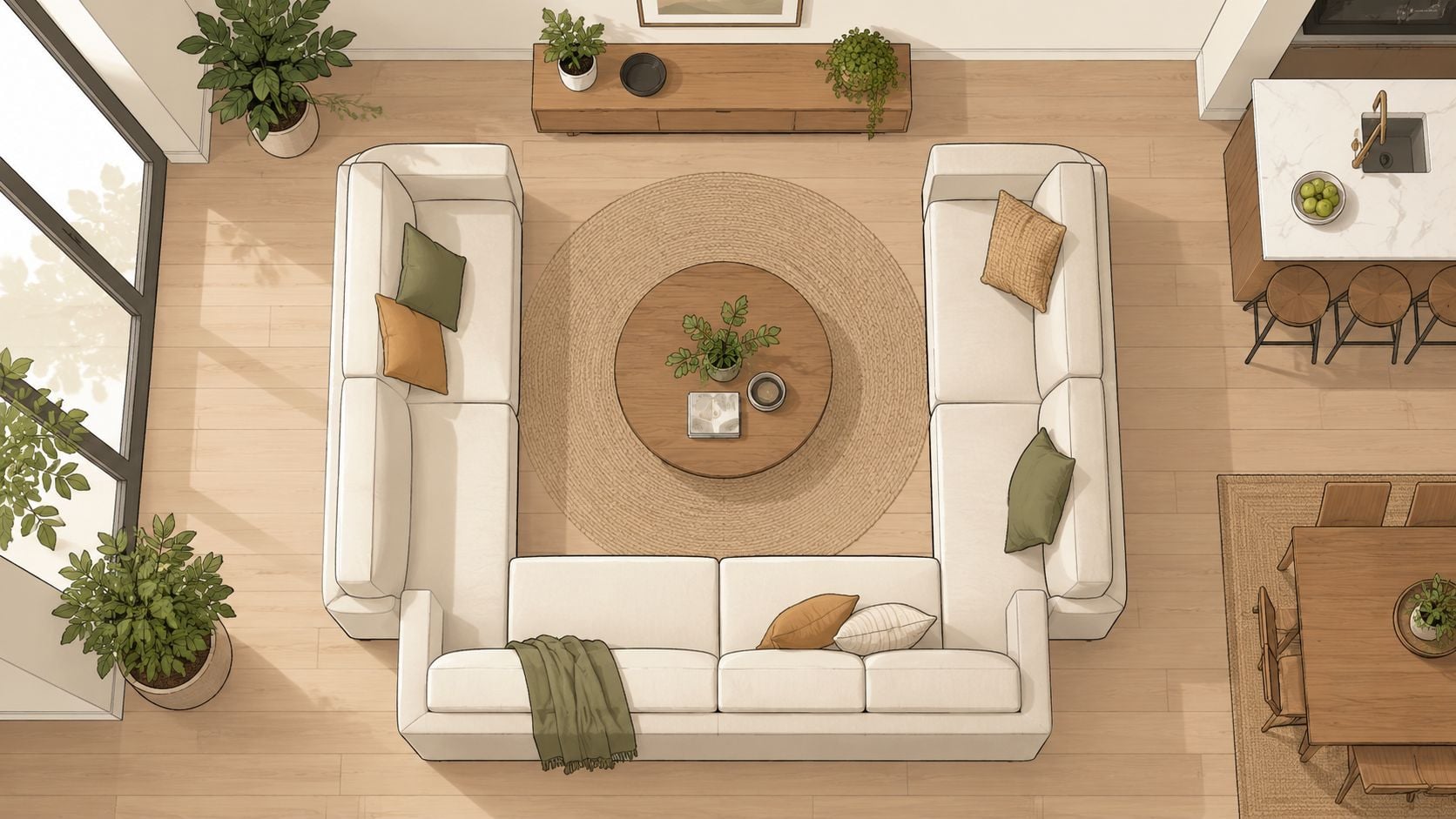
This layout works best in rooms with honest square footage. The open side should usually face the TV, fireplace, or view, while the two returns create a clear gathering zone around the center. If the middle is too small for a real coffee table, the sectional is probably too large for the room.
The strength of a U-shape is capacity with structure. People can talk across the room without shouting, kids have room to pile in for a film, and adults still get proper seats with arm support. For Eastern CT households that entertain often, this is one of the few arrangements that feels generous instead of crowded.
The trade-off is footprint. A U-shaped sectional can eat up floor space fast, especially in a room that also serves as a pass-through to the kitchen, sliders, or front entry. I tell Norwich-area shoppers to measure the walking paths first, then size the sofa. Comfort matters, but circulation decides whether the room feels easy to live in six months from now.
If you are comparing build options, seat depth, and motion features, Gorins has a helpful guide to sectional features worth comparing before you buy. For shoppers comparing proportions and layout ideas, Gorins also offers a useful guide to living room sectional layout options.
The right configuration also depends on how your family uses the room. A fully fixed U works well for homes centered on conversation and movie watching. A custom version from the F9 Custom Sofa Series can be a smarter investment if you need to adjust the overall span, choose a firmer seat for easier everyday use, or add power motion in one section instead of across the whole piece. That flexibility matters when one household wants lounging comfort and another wants cleaner posture and easier upkeep.
A few choices improve this layout quickly:
- Keep the opening clear: The open side should receive traffic, not fight it.
- Use one center table with enough reach: Everyone should be able to set down a drink without leaning across another seat.
- Choose scale carefully: Deep seats feel relaxed, but they can make a medium room feel tight.
- Anchor the whole group: A large rug helps the sectional read as one arrangement instead of three separate pieces.
A U-shape is a strong family layout when the room can support its depth and width. If the space needs wide daily walkways, a different sectional plan usually performs better.
3. The Chaise Sectional Lounging Comfort Meets Seating
A chaise sectional works well in the kind of living room many Eastern CT families ask me about in the Norwich showroom. One person wants a proper place to stretch out after work, but the room still needs enough upright seating for company, movie night, or a Saturday morning with the kids. A chaise solves that mix better than a row of full recliners in many homes because it keeps the layout open and gives one seat a clear lounging role.
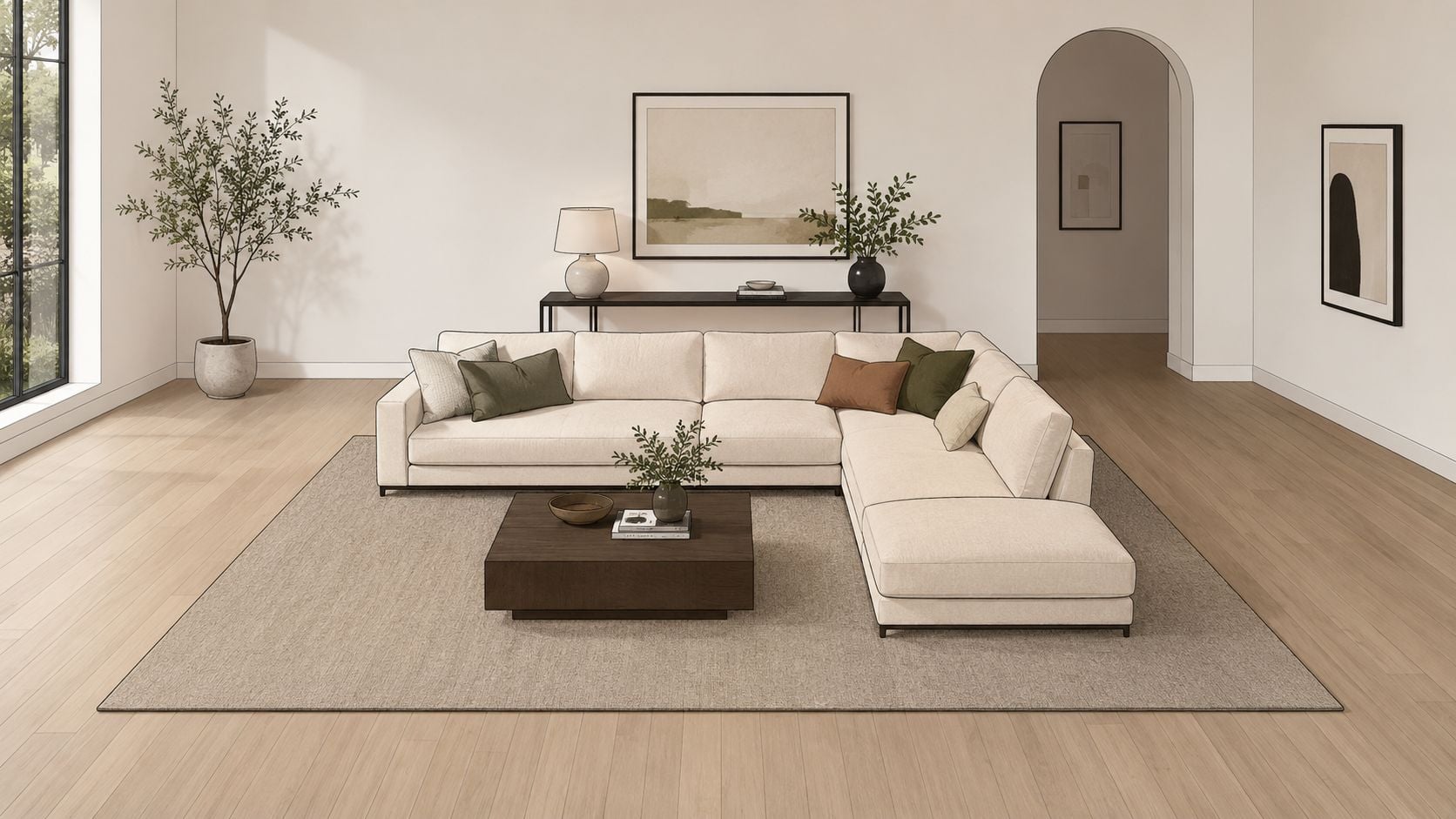
In practice, the chaise side is the decision that makes or breaks this layout.
A right-facing chaise near a window in Plainfield can become the reading seat that gets used every afternoon. In New London, I often suggest a reversible chaise for households that like to refresh the room seasonally or expect a move in the next few years. That flexibility matters because a chaise that lands on the wrong side can crowd a walkway, clip a doorway sightline, or make the room feel narrower than it is.
The chaise side matters more than people expect
The common mistake is choosing the chaise orientation from a product photo instead of from the room plan. The extended seat belongs on the lower-traffic side so people can pass through the room without cutting around it. In family rooms with two entries, that usually means mapping the main walking path first, then placing the chaise where feet are not constantly crossing in front of it.
Size matters just as much. Chaise sectionals often look compact online, but the extra length can create trouble in tighter corners or in rooms where a coffee table already pulls the seating group inward. Measure the wall, the return, and the open floor in front of the chaise. Then check whether someone can still walk past comfortably when the room is in daily use, not just when it is staged empty. Gorins covers those fit questions well in this guide to what you should know before buying a sectional.
For shoppers who want the feel of a chaise without getting boxed into a fixed footprint, the F9 Custom Sofa Series is worth a close look in the showroom. It gives you more control over overall scale, cushion feel, and fabric choice than many floor-ready options. That matters in busy households where the chaise becomes the most-used seat and needs to hold up to daily lounging, pets, or kids climbing in and out.
Shoppers weighing seat depth, reversibility, and performance details can compare practical options in Gorins' overview of sofa and sectional features that matter.
- Use durable upholstery: The chaise usually becomes the highest-use seat, so fabric performance matters.
- Support how you lounge: Add a pillow behind the back if you like to sit upright and read, not just stretch out.
- Choose reversibility with a reason: It helps in rentals, moves, and rooms that may need a future furniture shift.
- Watch the reach to the table: A chaise user still needs an easy place for a drink, book, or remote.
A chaise sectional is a strong investment when you want one clear lounging seat without giving up the social function of the sofa. The layout works best when the room has a natural low-traffic side and the proportions are measured carefully before you buy.
4. The Modular Sectional Flexible Reconfigurable Living
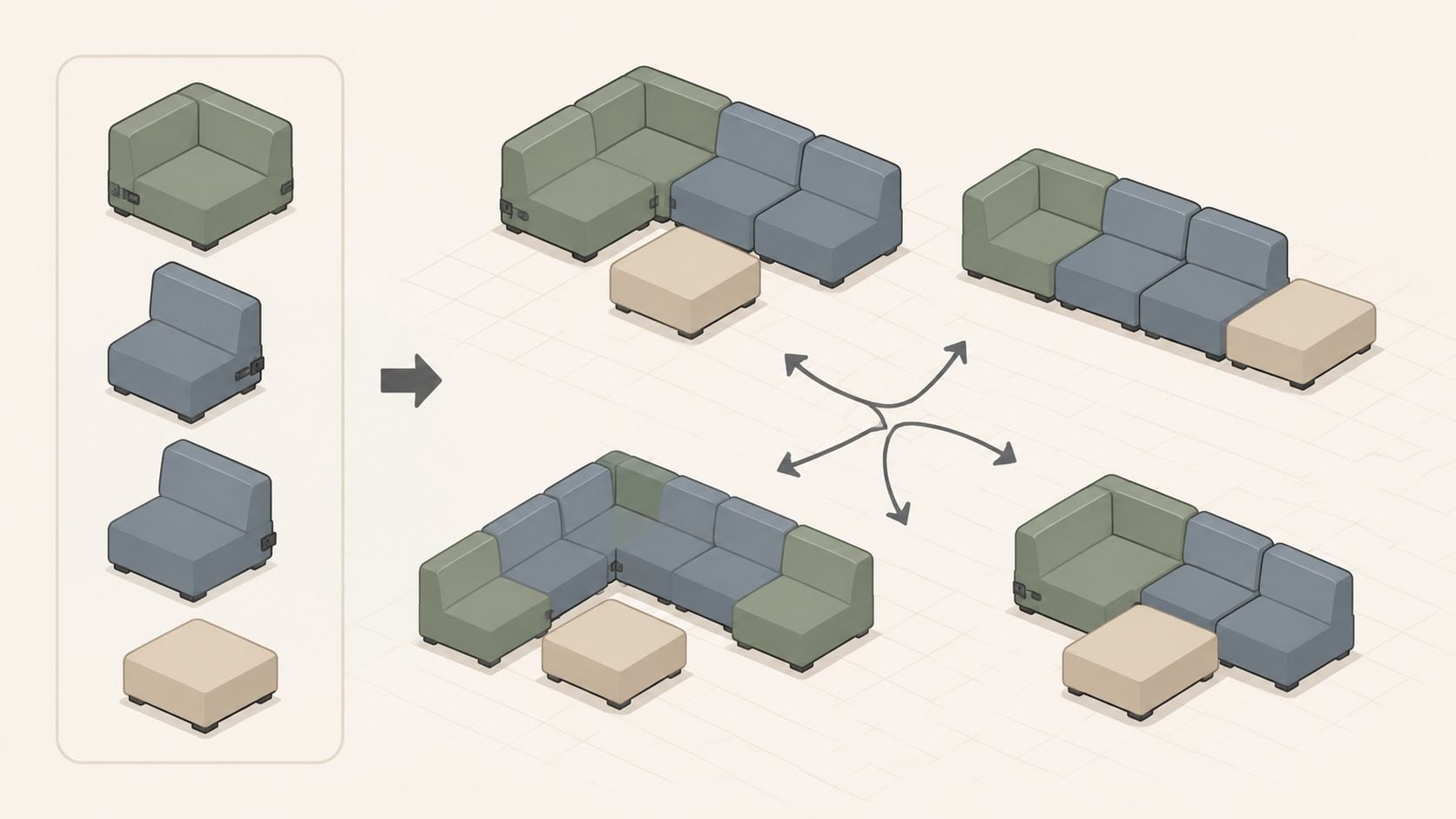
A modular sectional suits homes that don't stay the same for long. The room may pull double duty as a work zone, play zone, TV room, or entertaining space depending on the day. Instead of locking into one fixed arrangement, modular seating lets the household reshape the layout as life changes.
This approach is especially useful for renters in Eastern CT, growing families, and anyone furnishing a room in phases. A couple might begin with a corner piece and two seats, then add ottomans or armless modules later instead of replacing the entire setup.
Best for changing households
Modular designs solve a practical problem that fixed sectionals can't. They're easier to adapt when the room changes. A Waterford household that starts with a basic setup can expand over time, while a Plainfield renter can separate modules to open a floor area for remote work or children's play.
What doesn't work is buying modules without planning at least two future arrangements. If the pieces only look good in one shape, the flexibility is mostly theoretical. Connector quality matters too. If seats drift apart, the arrangement quickly feels sloppy.
For a strong buying framework, Gorins' guide to what to know before buying a sectional helps shoppers think through scale, use, and long-term fit.
- Start with a core setup: A smaller cluster is easier to place well.
- Keep finishes coordinated: Matching fabric across modules preserves a custom look.
- Plan for real use: Write down the two or three arrangements the room will need.
Modular sectionals reward honest planning. They're ideal for households that rearrange with purpose, not for buyers who hope flexibility will solve a room they haven't measured.
5. The Floating Sectional Space-Defining Modern Layout
A floating sectional earns its keep in open homes where the room needs structure but walls are not doing that job. I recommend this layout often for Norwich and Eastern CT families with great rooms, because it creates a clear living area without chopping the space into smaller boxes.
The sectional becomes the boundary.
In an open kitchen and family room, a floating L-shape can separate conversation space from cooking and dining while keeping sightlines open for parents who want to watch kids, guests, or the television from more than one zone. That is the main advantage over pushing every piece to the perimeter. The room feels organized, and it usually functions better day to day.
Use the back of the sectional intentionally
The back of the sofa needs to look finished, because it is now part of the room's architecture. A console table behind the sectional helps, especially near an entry or walkway. It gives the layout a clean stopping point and adds useful surface space for lamps, baskets, or a place to set keys.
Traffic flow decides whether this arrangement succeeds. Set the chaise on the lower-traffic side so people are not cutting through the seating area on their way to the kitchen or hall. If someone has to squeeze behind the sofa or angle around the chaise every day, the layout will feel wrong no matter how good it looks in photos.
This is also where furniture quality shows. A floating sectional is viewed from every side, so the tailoring, back cushions, and proportions matter more than they do in a wall-based setup. For clients who want that custom, finished look, the F9 Custom Sofa Series is a strong fit because it gives more control over scale, fabric, and configuration without forcing a one-size-fits-all footprint. If you want to see a few room examples before committing, Gorins shares helpful inspiration in these sectional sofa design ideas for your home.
- Anchor the layout with a rug: The rug should be large enough to connect the sectional, table, and nearby chairs.
- Treat the sofa back as visible furniture: Add a console or leave enough breathing room so it looks intentional.
- Protect the main path: Keep everyday routes easy from kitchen to seating to hallways.
- Measure before you finance: Promotional financing can make a better sectional more attainable, but only if the size and layout are right the first time.
A floating sectional works best for households that want open space with real definition. Done well, it makes a large room feel planned instead of unfinished.
6. The Curved Sectional Softness and Sophistication
A curved sectional changes the feel of a room immediately. The lines are softer, the seating feels more sculptural, and the layout becomes less about corners and more about flow. In transitional and modern homes in Norwich or Plainfield, a curved profile can lighten a room that feels too boxy.
This is also one of the best choices for rooms with gentle architectural movement, such as a bowed window wall or a broad, open central space. Instead of forcing a rigid angle into a soft room, the sofa echoes the architecture.
What curved sectionals do better than angular ones
Curved shapes encourage conversation because they naturally turn seats inward. They also pair beautifully with round or oval coffee tables, which reinforce the shape instead of fighting it. A neutral linen or textured performance fabric usually lets the form stand out without making the piece feel heavy.
The trade-off is precision. Curved sectionals are less forgiving than standard L-shapes when sizing is off. They need careful measuring at doorways, around nearby furniture, and across the room's usable footprint. They also don't like clutter. Heavy case pieces and bulky recliners nearby can muddy the elegance that makes the curved shape appealing in the first place.
A New London homeowner might place a softly curved sectional opposite a fireplace and leave more open floor around it than usual. A designer-led room in Plainfield may use a semicircular arrangement with a low round table and minimal accent furniture so the sectional remains the focal point.
- Measure the arc carefully: The widest points matter as much as the center.
- Keep companion pieces soft: Round tables and low-profile accents usually fit best.
- Let the sofa lead: Curved sectionals lose impact when surrounded by too many competing shapes.
7. The Sleeper Sectional Multi-Purpose Guest and Family Solution
A sleeper sectional earns its place when a living room has to do more than one job. For Eastern CT families without a dedicated guest room, it gives overnight visitors a proper place to sleep without sacrificing everyday seating. That's a practical investment, especially in downsized homes, multigenerational households, or spaces that host holiday visitors.
A Norwich homeowner who wants adult children to stay comfortably during visits may get more value from a sleeper sectional than from a separate loveseat and occasional air mattress. In Waterford, a family that hosts relatives regularly might use the same room for TV every night and guest sleep on weekends.
Comfort by day, dignity by night
The best sleeper arrangements leave enough floor space for the bed to open fully without forcing a full room reset. That means checking the coffee table, side tables, and traffic path before settling on placement. Neutral upholstery is usually the safest choice because the piece has to look natural as a sofa even when guest use is occasional.
For smaller homes, Gorins has helpful ideas on furniture choices that work well in compact spaces. That's especially useful when the sleeper sectional shares space with storage, a desk, or a main entry route.
A few practical habits make this layout work better over time:
- Test the mechanism repeatedly: The household should be able to open and close it comfortably.
- Store bedding nearby: Hidden base storage or an adjacent cabinet keeps setup simple.
- Add a topper if needed: Even a good sleeper benefits from a more finished sleep surface.
This layout also fits Gorins' broader approach to comfort-led furnishing. In the Sleep Gallery, brands like Tempur-Pedic, Serta, and Beautyrest help shoppers compare comfort by feel and work toward healthier sleep, which is the same practical mindset that makes a well-chosen sleeper sectional worthwhile.
8. The Pit Sectional Sunken Comfort and Intimate Gathering
A pit sectional is the most specialized arrangement on this list, but in the right home it can be unforgettable. When a living room includes a sunken area or a recessed gathering zone, a sectional placed within it creates a cocooned seating experience that feels intimate, calm, and highly intentional.
This isn't a layout for every house in Eastern CT. It depends heavily on architecture. But in a mid-century New London home with an original sunken living room, or in a renovated Waterford home designed around entertaining, a pit sectional can become the room people remember most.
A custom-fit layout, not a casual purchase
What works here is proportional fit. A sectional that's too small leaves the pit feeling underfurnished. One that's too large makes entry and circulation awkward. Custom upholstery, in such cases, becomes more than a nice option. It becomes the difference between a near miss and a polished installation. The F9 Custom Sofa Series is especially relevant here because arm height, seat depth, and overall footprint can be customized from thousands of combinations.
Lower arms and deeper seats usually support the sunken effect best, while a large central ottoman or table helps the seating cluster feel complete. Lighting matters too. Recessed lighting or a statement fixture overhead gives the area definition so it doesn't feel visually lost.
A pit sectional should feel built for the architecture. If it looks like a standard sofa dropped into a recess, the room won't deliver the effect people expect.
Ventilation and comfort shouldn't be overlooked. Sunken areas can feel stale if airflow is poor, and high traffic around the upper perimeter can make access feel awkward if the opening is narrow. This is one layout where showroom planning, in-home measurements, and professional guidance matter most.
8 Sectional Layouts Compared
| Layout | Implementation complexity | Resource requirements | Expected outcomes | Ideal use cases | Key advantages |
|---|---|---|---|---|---|
| The L-Shaped Sectional: Classic Corner Configuration | Low–Moderate (standard build; optional customization) | Moderate floor space; measure doorways; customizable materials | Efficient seating, defined corner conversation area | Families, TV rooms, corners or compact apartments | Versatile, space-efficient, anchors the room |
| The U-Shaped Sectional: Ultimate Family Gathering Layout | High (large footprint; often custom) | High floor area and budget; harder to move | Maximum wraparound seating, inclusive sightlines | Large families, frequent entertainers, home theaters | Seats many, creates intimate group seating |
| The Chaise Sectional: Lounging Comfort Meets Seating | Low–Moderate (orientation choice; optional storage) | Extra length/depth; moderate cost | Enhanced individual lounging within group seating | Reading, naps, homes prioritizing comfort | Superior lounging comfort, storage options |
| The Modular Sectional: Flexible, Reconfigurable Living | Moderate–High (planning modules & connectors) | Higher per-piece cost but easier to move; expandable over time | Highly reconfigurable seating that adapts to change | Renters, growing families, multi-use rooms | Maximum flexibility, expandable, easy to transport |
| The Floating Sectional: Space-Defining Modern Layout | Moderate (requires spatial planning and styling) | Substantial open square footage; atractive back upholstery or console | Defines zones, modern curated aesthetic, improved flow | Open-concept homes, design-forward spaces | Creates designer focal point, enhances traffic flow |
| The Curved Sectional: Softness and Sophistication | High (specialized shapes; precise measurements) | Higher cost; limited availability; careful delivery planning | Elegant, sculptural focal point with fluid conversation flow | Design-conscious, modern or transitional interiors | Sophisticated statement piece, softens architecture |
| The Sleeper Sectional: Multi-Purpose Guest and Family Solution | Moderate (integrated mechanisms add complexity) | Extra depth and weight; maintenance for mechanisms; moderate–high cost | Dual-purpose seating and guest sleeping solution | Homes without guest rooms, frequent overnight visitors | Space-saving guest bed, built-in storage, practical |
| The Pit Sectional: Sunken Comfort and Intimate Gathering | Very High (requires architecture or renovation) | Significant renovation or custom build; tailored sectional | Highly intimate, cocoon-like gathering space and focal point | Homes with sunken areas or major remodels | Distinctive, intimate, strong architectural impact |
Find Your Perfect Sectional Layout at Gorins
The best sectional arrangement isn't the trendiest one. It's the one that fits the way a household lives. Some homes need a compact L-shape that keeps the room open and comfortable for daily routines. Others need a floating sectional that gently defines an open-plan living space, a modular setup that can shift with changing needs, or a sleeper that turns the family room into dignified guest space when relatives visit.
That's where local guidance matters. Since 1936, Gorins Furniture & Mattress has helped Norwich and Eastern CT families sort through real design decisions, not just swatches and silhouettes. A sectional is a major purchase, and the layout has to support traffic flow, viewing angles, conversation, and everyday comfort. When those details are handled well, the room feels easier to live in from the first day.
Customization is a major advantage. Through the F9 Custom Sofa Series, shoppers can customize arm styles, back designs, cushion feel, and other details from thousands of combinations. That makes it easier to solve awkward footprints, support specific comfort preferences, and create a piece that feels perfectly suited to your lifestyle instead of merely close enough. For dining and whole-home coordination, the Canadel Custom Dining program offers the same spirit of personalization with thousands of combinations for size, shape, finish, and fabric.
Comfort across the home matters too. For shoppers also updating rest spaces, Gorins' Sleep Gallery features Tempur-Pedic, Serta, and Beautyrest, with an emphasis on comfort by feel and healthier sleep rather than guesswork. And because big purchases often work better with flexibility, Gorins offers Promotional Financing with equal monthly payments to make investment-grade furniture more approachable.
For neighbors in Norwich, New London, Plainfield, Waterford, and surrounding Eastern CT and Rhode Island communities, the goal is simple. Make furnishing less overwhelming and more practical. Choose layouts that support daily life, invest in quality that lasts, and get help from people who understand local homes and local families.
Ready to get started?
- Visit our Norwich showroom to experience these layouts firsthand.
- Take our online Style Quiz to discover your personal design aesthetic.
- Browse our Clearance section for exceptional value on quality pieces.
Since 1936, Gorins Furniture & Mattress has helped Norwich and Eastern CT families create homes they love. From custom-designed Canadel dining sets to the latest in Tempur-Pedic sleep technology, Gorins combines a massive selection with the personalized care only a local, family-owned business can provide. Visit the Norwich showroom to explore investment-grade furniture, flexible financing, and the 5-Star Delivery service that makes the process feel easy from start to finish.