Living Room Sectional Layout: A Norwich Expert’s Guide

A lot of Norwich homeowners reach the same point at about the same time. The old sofa feels too small, the chairs never sit where they should, and the room still doesn't feel settled. A sectional seems like the obvious answer until the practical questions start piling up. Which side should the chaise go on. Will it block the radiator. Is there still enough room to walk to the hallway or the window.
A good living room sectional layout solves more than seating. It shapes how people move, where they gather, what they look at, and how the room feels on an ordinary Tuesday night. That's why the right layout rarely starts with fabric or color. It starts with the room itself, then the way the household uses it.
Table of Contents
- Finding the Perfect Sectional is a Journey
- Measure and Map Your Space Like a Designer
- Choosing Your Ideal Sectional Configuration
- Orienting for Focal Points and Traffic Flow
- Arrangement Ideas for Common Connecticut Homes
- Accessorizing Your New Living Room Anchor
- Create a Living Room Tailored to Your Lifestyle
Finding the Perfect Sectional is a Journey
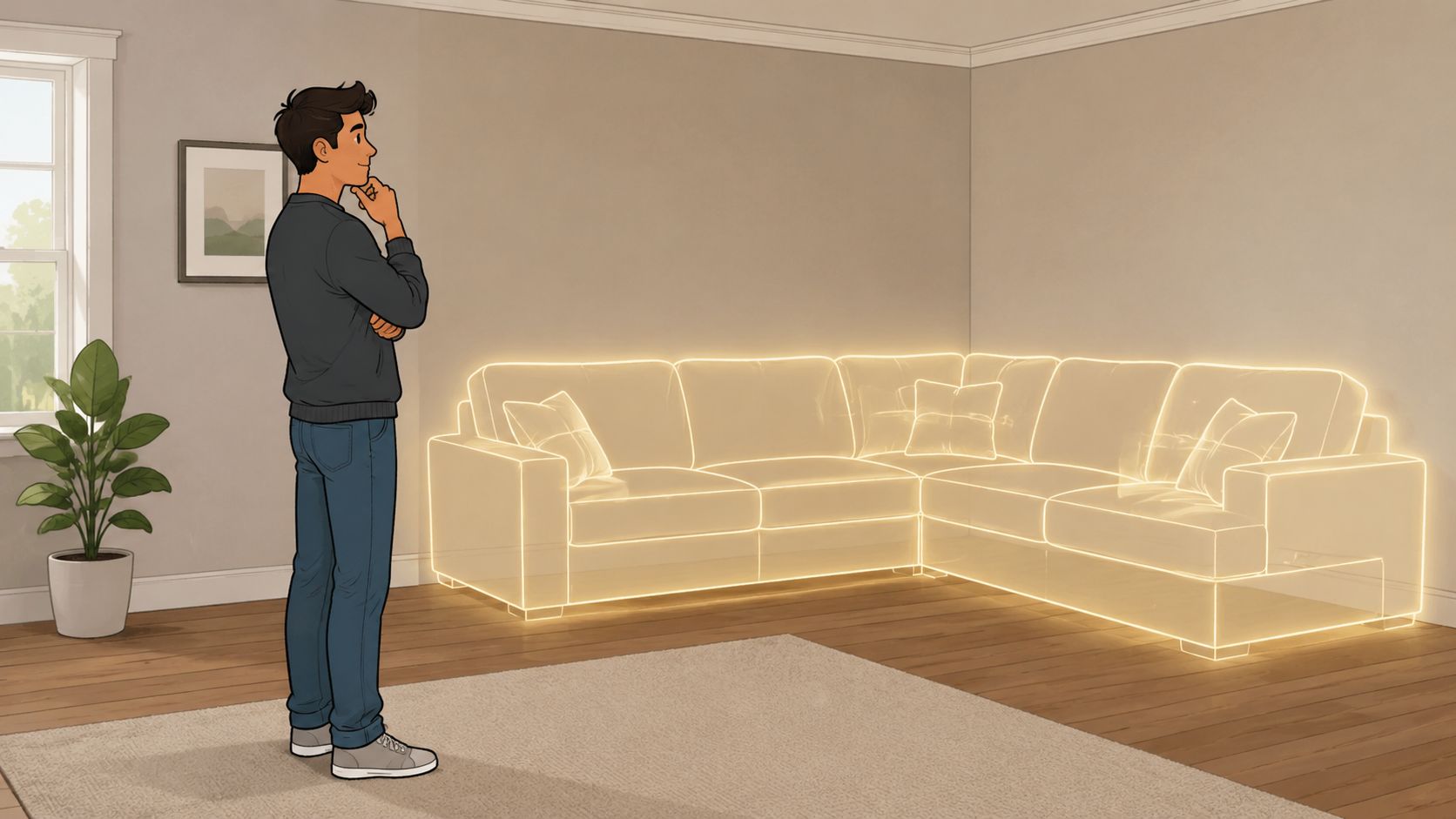
Standing in an empty living room with a tape measure in one hand and a rough idea in the other can make a sectional feel larger than life. That's especially true in Eastern CT homes where one room often has to do several jobs at once. It needs to handle movie nights, casual visits, homework, and the daily traffic between kitchen, stairs, and front door.
Sectionals became so common for a reason. The rise of open-plan homes in the mid-20th century fueled the popularity of modular sectionals. By the 1970s, a survey by the American Home Furnishings Alliance found that modular pieces were used in over 60% of new single-family home living rooms, establishing a lasting trend that prioritizes flexible seating, as noted in this history of sectional and modular living room layouts. That shift still shows up in modern homes where one large seating piece often works better than a sofa-and-chair mix.
Why sectionals still make sense
A sectional can define the room without adding visual clutter. It can hold a conversation area together, give everyone a clear place to sit, and make an open room feel intentional instead of scattered.
That flexibility is what makes the planning process worth doing carefully.
A sectional should make the room easier to use, not force the household to work around it.
Homes have changed since 1936, when Gorins first began serving local families, but the core problem hasn't changed much. People still want a living room that feels welcoming, comfortable, and sensible. A helpful starting point is this guide on what to know before buying a sectional, because the right fit depends as much on layout as it does on the piece itself.
Measure and Map Your Space Like a Designer
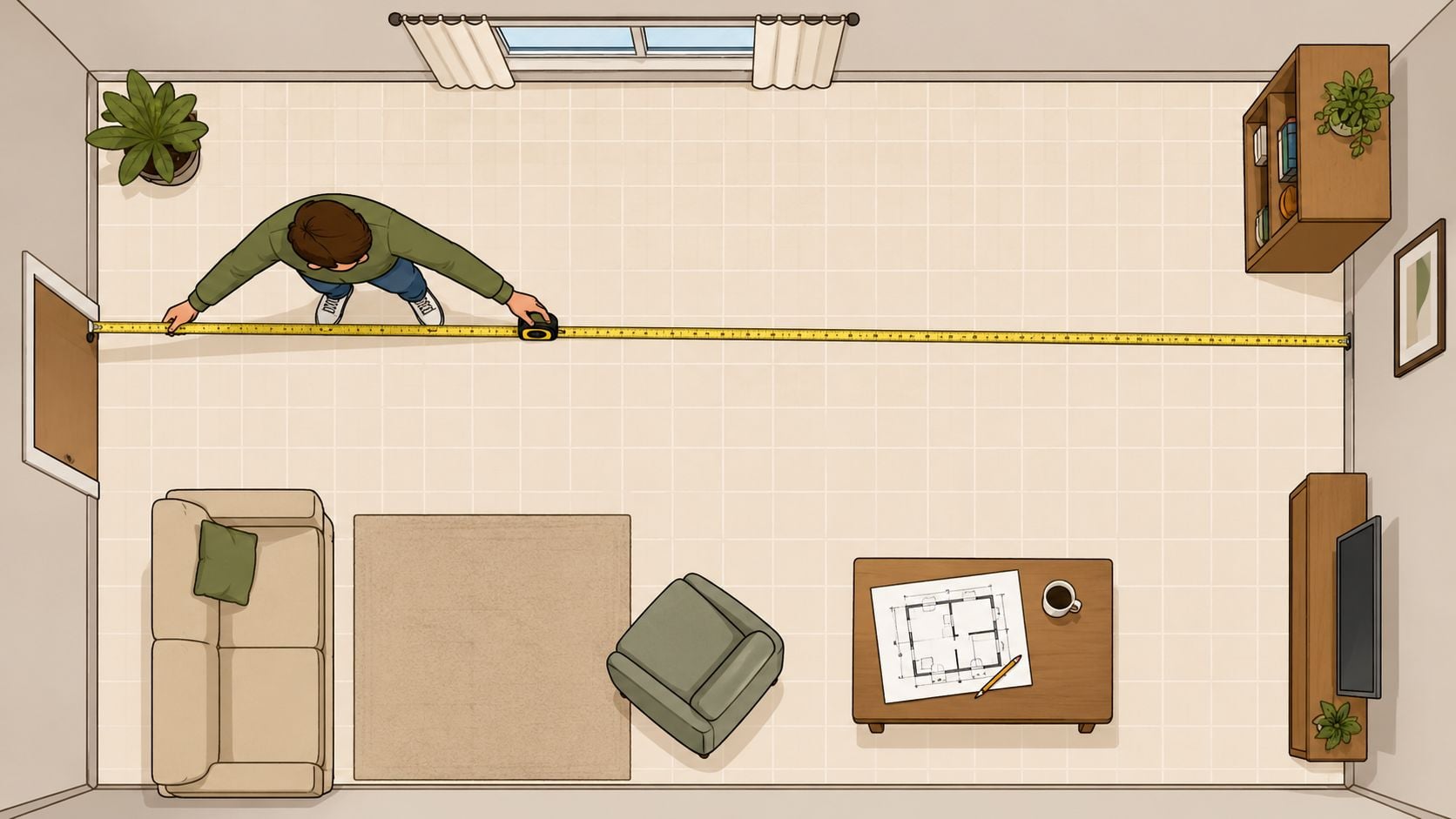
Most layout mistakes happen before the furniture ever arrives. People measure one wall, estimate the rest, and forget the parts of the room that interrupt the footprint. Doors swing open. windows sit low. floor vents matter. Outlets, radiators, and trim depth all affect placement.
What to measure before shopping
Start with the full shell of the room, then add every interruption.
- Wall lengths: Measure each wall separately, even if the room looks symmetrical.
- Openings: Note doorways, archways, and how far doors swing into the room.
- Windows and trim: Record sill height, window casing width, and whether drapery needs space.
- Fixed elements: Include radiators, baseboard heat, registers, outlets, built-ins, and fireplaces.
- Access path: Measure the front door, hallways, stairs, and any tight turn the sectional must pass through.
For readers who want a quick refresher on reading a tape properly and avoiding common measuring mistakes, The Drapery Company's measuring guide is a useful practical reference.
Use the painter's tape method
Once the dimensions are on paper, mark the sectional's footprint on the floor with painter's tape. Include the chaise depth, not just the main seat run. Then walk the room as if the piece were already there.
Check these movement moments:
- Entry path: Can someone come in without stepping into the corner of the chaise?
- Window access: Is there enough room to open blinds, adjust curtains, or reach the sill?
- Daily routes: Can people move from hallway to kitchen without cutting through the seating zone?
Practical rule: A taped layout reveals problems faster than a product photo ever will.
That one step turns a guess into a plan. It also makes showroom conversations much more productive because the homeowner arrives with real dimensions, clear constraints, and a better sense of what size range works.
Choosing Your Ideal Sectional Configuration
A good living room sectional layout depends on shape as much as scale. Two sectionals with the same overall width can behave very differently in a room if one has a deep chaise and the other breaks into more modular pieces. The shape should match the room's pressure points, not just the wish list.
Which shape fits the room
An L-shape is often the easiest place to start. It works well when the room needs to anchor around a corner or when one side of the seating area should stay visually open.
A U-shape suits households that entertain often or want everyone facing inward. It creates a strong conversation zone, but it asks more of the room and can crowd circulation if the footprint is too heavy.
A chaise sectional gives that stretch-out seat many people want without building a full wraparound arrangement. It's often a smart compromise when the room needs softness and comfort but still needs one side open for traffic.
A modular sectional gives the most flexibility because the arrangement can change if the room changes. That matters for households that expect to rearrange over time, add an ottoman, or split pieces apart later.
For homeowners who want visual examples before narrowing the shape, this collection of sectional sofa design ideas helps translate floor-plan thinking into real-room possibilities.
Sectional Configuration Cheat Sheet
| Configuration Type | Best For | Gorins Designer Tip |
|---|---|---|
| L-Shape | Corners, medium rooms, family TV spaces | Keep the longer side on the wall that can carry visual weight without blocking windows |
| U-Shape | Large gathering rooms, frequent entertaining | Use only when the room can still feel open after adding a coffee table and side circulation |
| Chaise Sectional | Relaxed lounging, smaller footprints, open side access | Put the chaise on the quieter side of the room so it doesn't interrupt movement |
| Modular | Multi-use homes, future rearranging, tricky layouts | Choose pieces that can separate cleanly if the room later needs a work zone or reading corner |
Some homeowners don't need to settle for the closest fit. F9 Custom Sofa options allow for thousands of combinations in arm styles, seat layouts, backs, and other details, which makes custom sizing and room-specific planning much more realistic than forcing a standard configuration into an awkward footprint.
Orienting for Focal Points and Traffic Flow
Placement is where a sectional either settles the room or creates daily frustration. The strongest layouts handle two things at once. They point the seating toward what matters, and they leave enough open space for people to move naturally.
What the sectional should face
Every room needs an anchor. Sometimes it's a fireplace. In many homes, it's the television. In others, it's a large window or an architectural feature worth preserving.
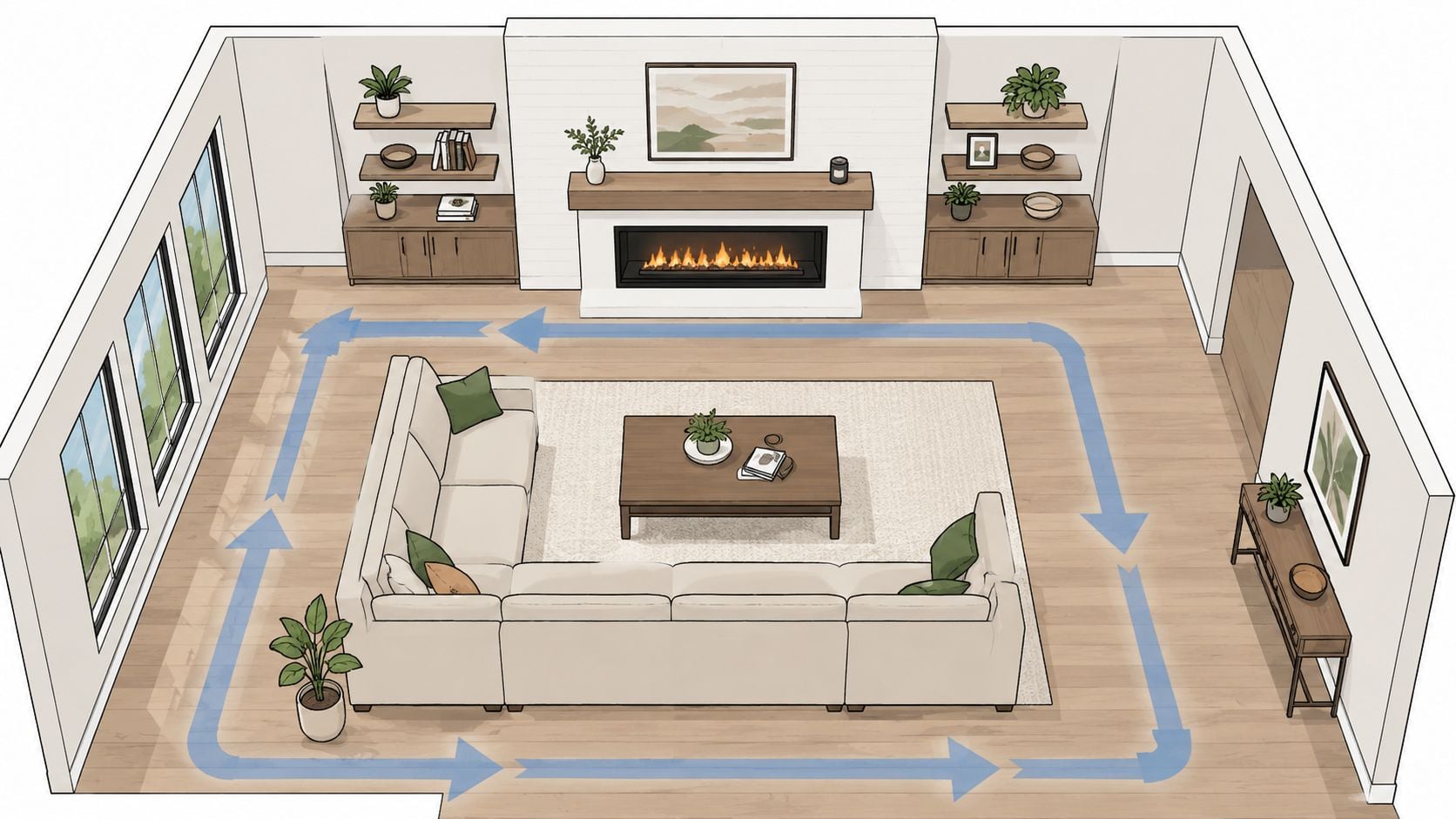
Industry best practice says a primary focal point should receive an unobstructed view from at least 70 to 80% of the main seating area, with the sectional oriented within a 25 to 35 degree deviation angle for comfortable viewing. The same guidance also notes that walkways need at least 30 to 36 inches of clearance, and that following this rule while orienting the sectional toward a focal point can increase a homeowner's perceived comfort and satisfaction with the layout by up to 70%, according to this sectional arrangement guide focused on traffic flow and focal points.
That sounds technical, but the room-level takeaway is simple. Seats should feel connected to the main feature without forcing people to twist, lean, or drag chairs around every evening.
Where people need to move
Primary walkways need breathing room. Secondary paths matter too, especially in rooms where people pass through on the way to another part of the house.
A reliable checklist looks like this:
- Main route: Keep primary circulation paths at 30 to 36 inches.
- Secondary route: Don't let smaller side paths shrink below 24 inches.
- Chaise placement: Put the chaise on the lower-traffic side whenever possible.
- Door zones: Never let the sectional land directly in front of a main door or the natural line from one doorway to another.
Seating should face the room's purpose and respect the way people actually cross it.
For TV-centered rooms, this guide on calculating sofa and television placement helps connect viewing comfort with furniture position. It's one of the most overlooked parts of sectional planning, especially in rooms where the screen competes with a fireplace or a bank of windows.
Arrangement Ideas for Common Connecticut Homes
The same sectional won't sit the same way in every home. Norwich, Plainfield, Waterford, and New London homes often have living rooms with quirks that aren't obvious on a showroom floor. A narrow pass-through, an off-center fireplace, or a room that opens into dining space can change the whole plan.
Small living rooms
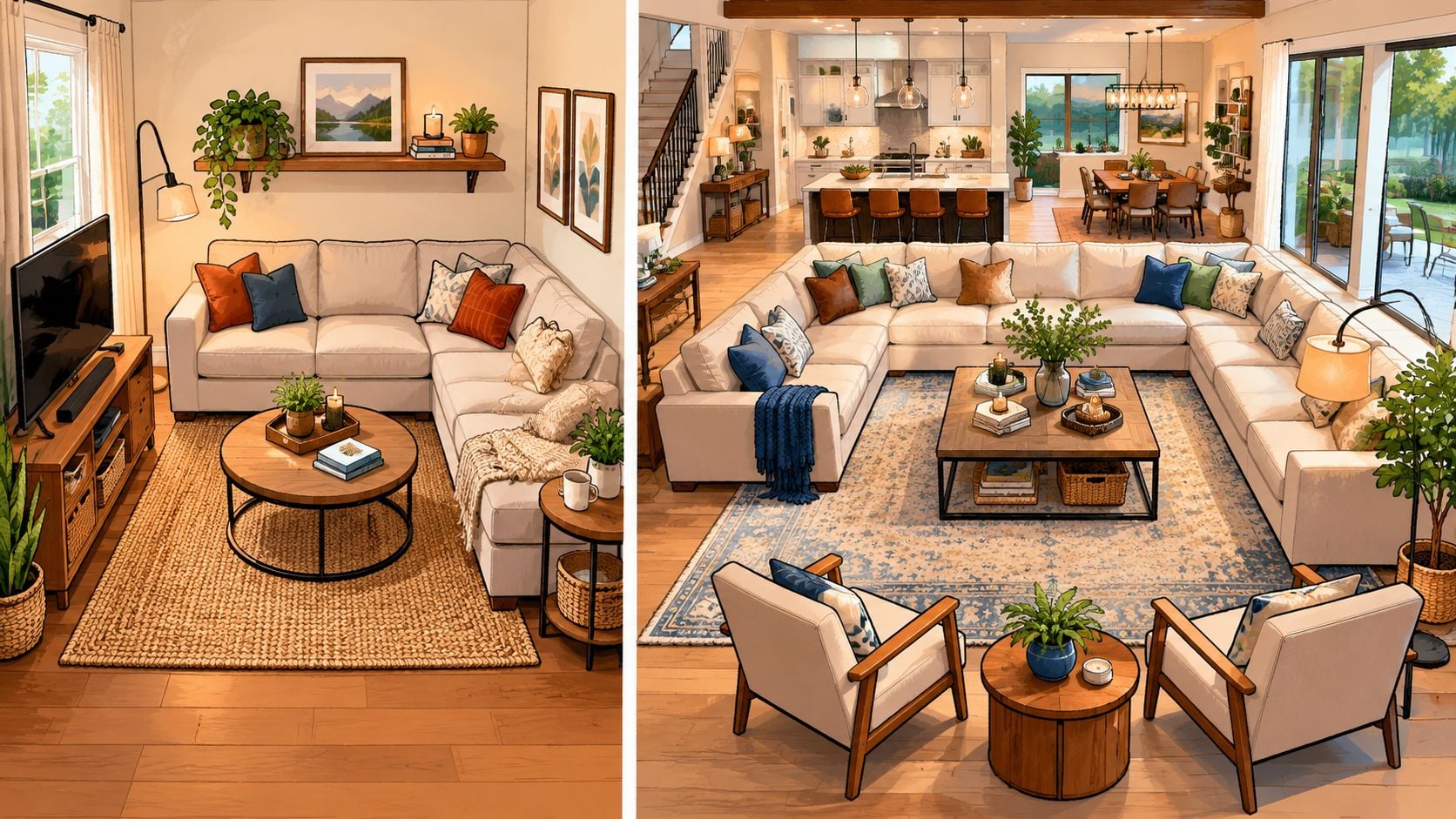
In a compact room, the sectional usually works best when it takes the corner instead of trying to float. Design guides strongly advise placing an L-shaped sectional in a corner but leaving a small air gap behind it. That simple move prevents the room from feeling boxed-in and maintains better sight lines, as shown in this small living room sectional layout reference.
That gap matters more than many people expect. Pressing every edge tight to the wall can make a small room feel heavier, not bigger.
Long narrow rooms
A bowling-alley room needs zoning. Put the sectional at one end to create a clear living area, then leave the long side of the room open for movement. The sectional should work like a boundary, not a barricade.
Useful choices in this room type include:
- Lower-profile arms: They keep the seating from feeling bulky.
- Open-leg tables: They preserve visual lightness.
- One strong anchor: Let the TV or fireplace lead, instead of splitting attention across multiple focal points.
Open concept spaces
In a larger open room, the sectional can float away from the wall and define the living area without any permanent divider. The back of the sectional often becomes part of the room composition, so a console table behind it can make the layout feel finished instead of abrupt.
For more room-by-room examples, this gallery of living room layout ideas is useful for comparing how different footprints behave in open, narrow, and compact plans.
Accessorizing Your New Living Room Anchor
A sectional can solve the layout and still leave the room feeling unfinished. The supporting pieces determine whether the seating area feels balanced, useful, and comfortable day to day.
Support pieces that actually help the layout
Start with the rug. It should visually hold the sectional and table together, not float like a small island in the middle. Then choose a coffee table or ottoman that matches the sectional's scale. A tiny table in front of a substantial sectional looks accidental.
Brands such as Flexsteel and Best Home Furnishings are often part of these finishing decisions because investment-grade quality matters just as much for companion pieces as it does for the main seat.
Finish the room without crowding it
Lighting and textiles do the last bit of work. A floor lamp at the open end of the sectional can soften a hard corner. Pillows help connect the sectional to nearby chairs or drapery. A throw adds warmth without adding furniture.
Wall decor should also match the room's personality, not just fill blank space. For readers trying to tie a casual living room to more expressive artwork, this piece on choosing pop-culture wall art offers a useful lens on scale, tone, and placement.
The room feels complete when every supporting piece helps the sectional do its job.
A styled coffee table is part of that balance too. This guide on decorating a coffee table like a pro is especially helpful for keeping the center of the layout practical instead of cluttered.
Create a Living Room Tailored to Your Lifestyle
The strongest living room sectional layout usually comes down to four decisions. Measure carefully. Choose the right configuration. Orient it toward the room's true anchor. Finish it with pieces that support the way the room functions.
Long-term thinking matters too. A 2025 report from the Home Futures Lab notes that nearly 40% of homeowners now use their living room as a flexible multi-use zone, which is why modular sectionals that can be reconfigured over time are a smarter long-term investment than static furniture, according to this discussion of arranging a sectional for changing home needs. That matters for households balancing work, family time, and quiet downtime in the same room.
A living room should adapt as life changes. Small personal touches help with that, too. For anyone looking to add warmth after the main furniture is in place, this guide on personalizing home decor offers practical inspiration that fits comfortably into an everyday home.
Since 1936, Gorins Furniture & Mattress has helped Norwich and Eastern CT families create homes they love. From custom-designed Canadel dining sets to the latest in Tempur-Pedic sleep technology, we combine a massive selection with the personalized care only a local, family-owned business can provide. Visit us today to experience quality, value, and our 5-Star Delivery service.
Visit Gorins Furniture & Mattress in Norwich to test layouts in person, explore custom options like Canadel Custom Dining and the F9 Custom Sofa series, and get practical guidance suited to your lifestyle. Neighbors in Norwich, New London, Plainfield, Waterford, and surrounding Eastern CT and Rhode Island communities can also take the online Style Quiz or browse the Clearance section for value-driven savings. Promotional Financing with equal monthly payments can make an investment-grade room plan more manageable while keeping the process low-pressure and local.