Amazing Bookshelf Styling Ideas for a Stylish Home


More Than Just Storage: Enhance Your Home with Styled Bookshelves
A bookshelf does far more than hold hardcovers and paperbacks. It shapes how a room feels, adds structure to blank walls, and gives everyday belongings a place to look intentional instead of random. For neighbors in Norwich and across Eastern CT, great bookshelf styling ideas can turn a living room, office, or bedroom from furnished into thoughtfully designed.
Since 1936, Gorins Furniture & Mattress has helped families build homes around quality, comfort, and pieces that last. That same thinking applies to shelves. A well-styled bookcase works best when it relates to the rest of the room, especially the main seating piece, because the sofa or sectional sets the tone for how surrounding furniture, including bookshelves, should be arranged in relation to it, as noted in this living room furniture guide.
Bookshelf styling also works best when it feels personal. Homeowners increasingly want shelves filled with books they've read, mixed with heirlooms, souvenirs, and art that reflect real life, according to this bookshelf wealth overview. That lived-in character pairs beautifully with investment-grade furnishings and custom options suited to how a household lives. For anyone adding greenery to a shelf display, this guide to styling your indoor plants offers simple inspiration.
Table of Contents
- 1. The Curated Collections Approach Styling by Color Palette
- 1. The Curated Collections Approach Styling by Color Palette
- 3. The Minimalist Zen Less Is More Shelving
- 4. The Genre Organized Library Practical Meets Aesthetic
- 5. The Statement Wall Floor to Ceiling Built In Bookshelves
- 5. The Statement Wall Floor to Ceiling Built In Bookshelves
- 6. The Thematic Display Collections Around a Central Concept
- 7. The Functional Beauty The Bookshelf Reading Nook
- 8. The Digital Age Hybrid Balancing Books with Modern Displays
- Bookshelf Styling: 8-Approach Comparison
- Bring Your Vision to Life at Our Norwich Showroom
1. The Curated Collections Approach Styling by Color Palette
You walk into the living room, and the bookshelf is the first thing your eye hits. If the shelves look scattered, the whole room feels unsettled. A color-based arrangement fixes that fast because it gives every book, vase, frame, and box a shared visual job.
This approach works best when you start with the room, not the shelf. Pull tones from your upholstery, rug, curtains, and wood finishes, then repeat those shades across the bookcase. In a Norwich home with warm oak floors, cream, camel, rust, walnut, and aged brass usually look right. In a cooler room, slate, navy, charcoal, and soft white create a cleaner, more polished result.
Keep the palette tight. Three to five colors is plenty.
Group books by spine color, then break up the rows with objects that match or subtly contrast. Matte pottery, smoked glass, woven boxes, and framed artwork help the shelves feel designed instead of packed. One sculptural accent, such as luxury petrified wood decor, gives the display weight and keeps it from reading flat.
The shelf should also relate to the furniture that anchors the room. That is where Gorins gives homeowners in Eastern Connecticut an advantage. If you are building the room around a custom Canadel piece in the dining area or an F9 Custom Sofa configuration in the living space, your finish, fabric, and color choices can guide the bookshelf palette from the start. That kind of coordination is what makes a home feel finished, not pieced together over time.
If you need help choosing those tones, Gorins' expert guide to the perfect color palette gives a strong starting point for matching shelves to the rest of the room.
A few rules make this style look polished:
- Stack some books vertically and a few horizontally to break up repetition.
- Repeat one material, such as ceramic or brass, on multiple shelves.
- Leave open space on every shelf so the eye can rest.
- Use similar undertones, warm with warm, cool with cool.
- Add one or two personal pieces only if they fit the palette.
Color styling is especially effective in open-plan spaces because it ties the bookshelf to nearby seating, tables, and bedroom furniture. If your home includes a Flexsteel sofa, a Canadel dining set, or a Tempur-Pedic bedroom retreat nearby, the shelf can echo those colors and finishes instead of competing with them. That is the difference between decorating a bookcase and designing a room.
1. The Curated Collections Approach Styling by Color Palette
Color-based shelving works because it makes a busy collection read as one composition. Instead of treating every shelf like storage, it turns books, pottery, frames, and boxes into part of the room's palette. That's especially effective in a living room with custom-fit upholstery from Flexsteel or a custom seating layout from the F9 Custom Sofa series.
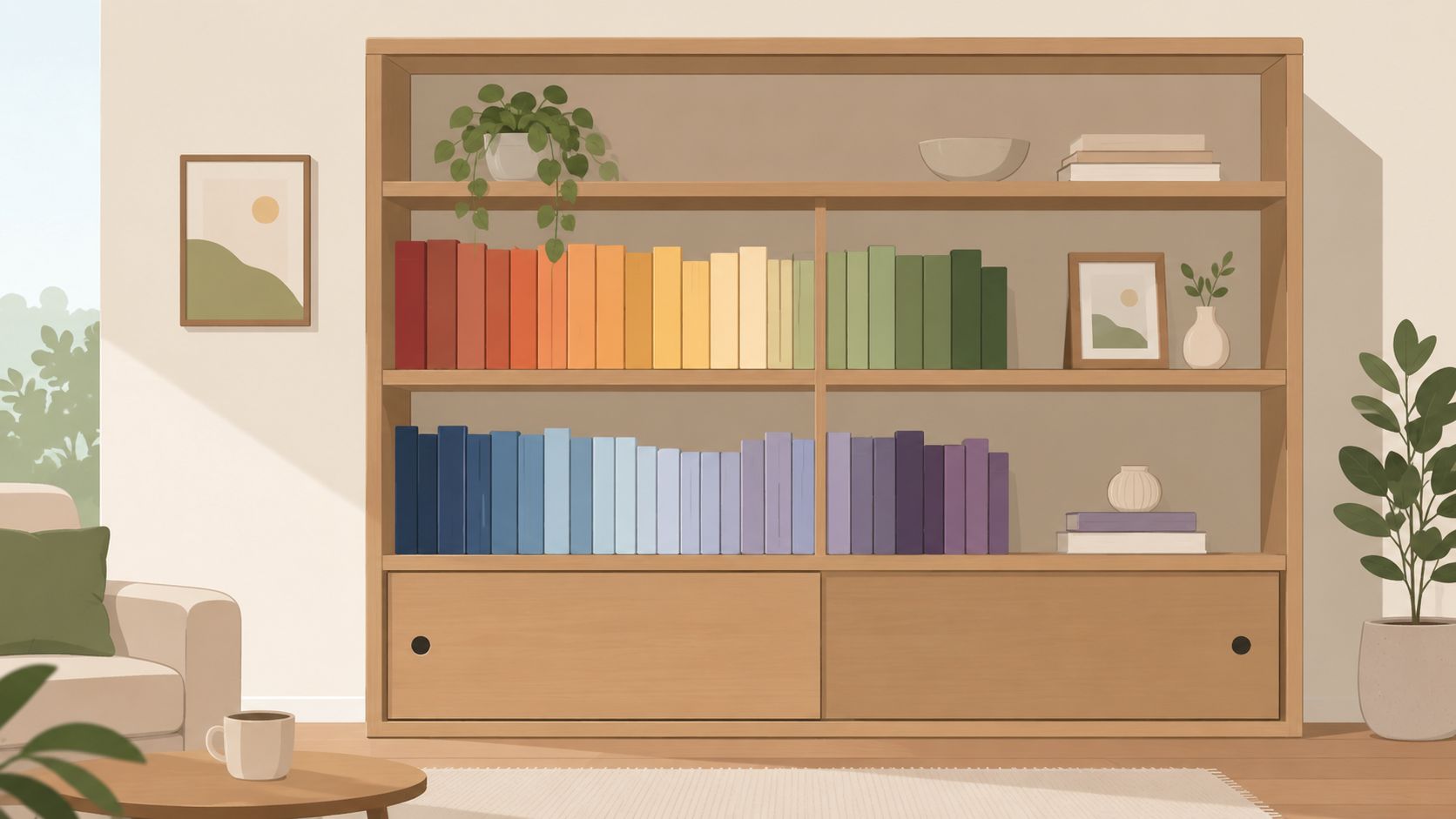
A Norwich home with warm oak floors might group cream, taupe, rust, and brown spines together, then add matte ceramic vessels and vintage brass frames. A cooler room could lean into slate, navy, charcoal, and soft white. The shelf looks settled because the color story repeats nearby in pillows, rugs, and accent pieces.
How to make a color grouped shelf feel finished
Lifestyle design guidance shows that some homeowners prefer rainbow gradients or strict alphabetical order, while others lean toward color grouping and horizontal stacking for a more lived-in look. The same source also highlights seven useful styling moves, including grouping like items, layering objects, adding artwork, mixing vertical and horizontal stacks, and including one unexpected element, with the note that it may take three arrangements and dozens of combinations to land on the right result in these bookshelf styling ideas by personality.
- Start with the dominant tones: Pull out the books that already match the room instead of forcing every spine into the plan.
- Repeat finishes: If the room has black metal, brass, walnut, or linen, echo that finish on the shelf.
- Mix directions: Add a few horizontal stacks among upright books so the arrangement doesn't feel stiff.
- Tie it back to furniture: A room with Canadel Custom Dining nearby benefits from repeating wood tones and finish choices. For help shaping the room-wide scheme, use this guide to the perfect color palette.
Practical rule: Color grouping works best when the shelf connects to the furniture around it, not when it acts like a separate decorating project.
3. The Minimalist Zen Less Is More Shelving
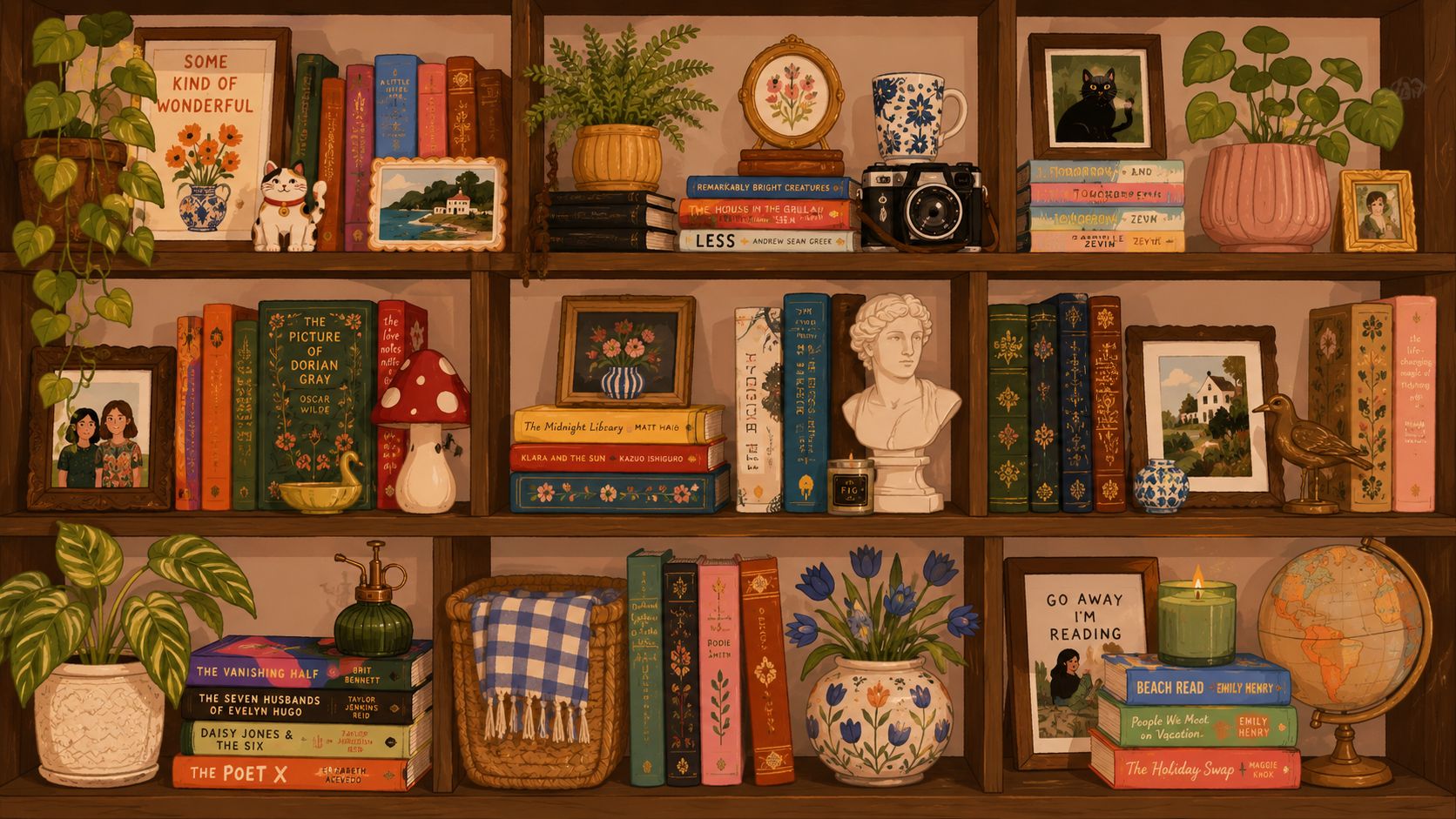
You walk into the bedroom at the end of a long day, and the shelf is either helping the room feel calm or making it feel busy. Minimalist styling should lower the visual noise. If a piece does not add function, shape, or warmth, take it off the shelf.
A good minimalist shelf often needs less than homeowners expect. Start with a small stack of books, one substantial ceramic or wood object, and a single framed piece. Leave open space around them. That breathing room gives the shelf its structure and helps the whole room feel more settled.
This approach works especially well beside clean-lined bedroom furniture and well-appointed seating. It also fits homes built around comfort-first choices from Gorins, including a sleep setup with Tempur-Pedic, where the room should support rest instead of competing for attention.
Use negative space on purpose
Minimal shelving fails when every cubby gets filled. Empty space is part of the design, not a gap you forgot to decorate. Keep each shelf edited so the eye can land on one or two pieces, then move on.
A practical formula works well in Norwich and across Eastern Connecticut homes. Use a short horizontal stack of books, top it with one object that has real presence, then stop. Repeat that restraint across the unit instead of changing the recipe on every shelf. For more room-by-room guidance, Gorins breaks it down well in this guide to personalizing a minimalist space without feeling cluttered.
Custom furniture matters here. A minimalist shelf looks strongest when the proportions match the room. If the bookcase sits near a Canadel dining set, repeat the wood tone or finish so the shelf feels built into the plan. If it anchors a sitting area, pair it with an F9 Custom Sofa in a quiet fabric and keep the shelf decor in the same calm, disciplined range.
- Cut the object count: Fewer pieces always look better than too many small fillers.
- Choose one material lead: Light oak, matte black, ceramic, or glass. Pick one dominant finish and repeat it.
- Use books sparingly: A few meaningful titles beat rows of random spines.
- Protect the sightlines: Leave visible gaps so each item reads clearly.
- Match the mood to the room: Bedrooms should feel softer and quieter than office shelving.
Minimal shelves look expensive when the furniture is well made, the finishes relate to the room, and the editing is strict.
4. The Genre Organized Library Practical Meets Aesthetic
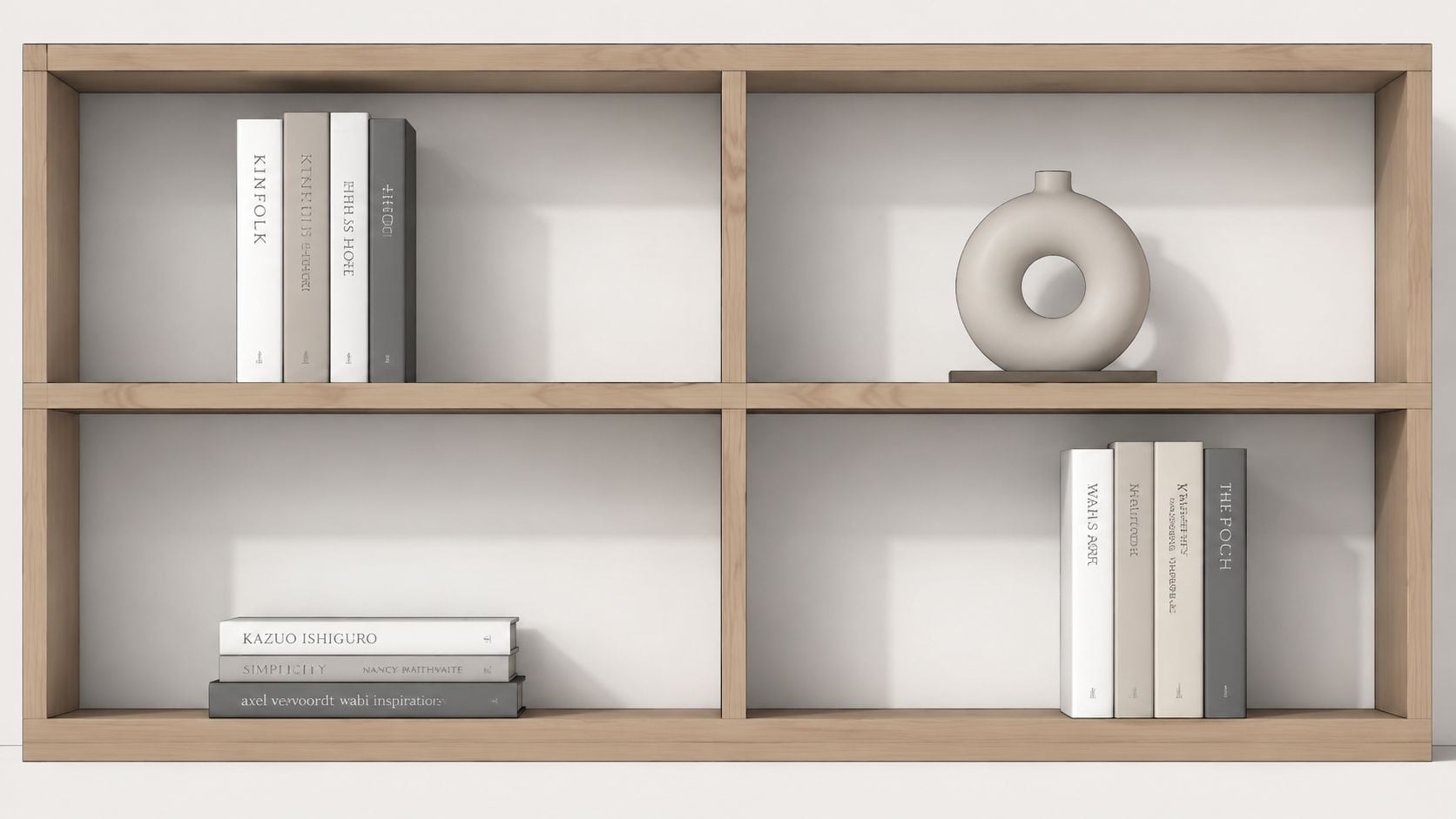
You need a system that works on an ordinary Tuesday night, not just one that looks good in a photo. Genre shelving does that. It keeps novels easy to grab, cookbooks easy to reference, and travel or history titles grouped in a way that feels orderly and intentional.
This approach suits living rooms, studies, and family spaces where the shelves get used often. It also gives a book collection real presence. Instead of reading as clutter, the books become part of the room's architecture.
Start with broad categories that match how your household reads. Fiction, biography, design, cooking, children's books, and reference usually cover the basics. Keep the sections obvious enough that anyone in the house can return a book to the right place without asking.
The arrangement should still look designed. Stand most books upright for a clean library line, then break up heavier sections with a few horizontal stacks for oversized volumes. A pair of bookends, one low ceramic piece, or a framed label can mark the change from one category to the next without turning the shelf into a display of random fillers.
If the bookcase sits on a feature wall, the whole setup needs to relate to the room around it. Gorins shares smart ideas for tying shelving into the larger composition in this guide to creating a balanced accent wall. That matters even more with a full reading collection, because visual order keeps the wall from feeling heavy.
Custom furniture makes this style stronger. A genre-organized library looks best when the shelving proportions, finish, and surrounding pieces belong to the same plan. If your shelves sit near a Canadel dining set or storage piece, match the wood tone so the room feels settled. If the bookcase anchors a lounge area, an F9 Custom Sofa gives you control over scale, fabric, and color, which helps the library side of the room feel connected instead of isolated.
This method also works well in multifunction homes across Eastern Connecticut. Parents can give children one clearly defined section. A home office can keep professional titles separate from leisure reading. A guest room can hold a smaller mix that still feels thoughtful rather than leftover.
- Group by real use: Sort by genre first, then alphabetize within larger sections if needed.
- Give big books their own treatment: Art books, atlases, and large cookbooks look better stacked flat.
- Create clear breaks: Use one consistent type of divider, such as bookends or framed labels.
- Keep decorative objects secondary: One or two pieces per section is enough.
- Coordinate the finishes: Shelving should relate to nearby casegoods, seating, or tables so the library feels built in.
A genre-organized bookshelf has backbone. It respects the reader, keeps the room practical, and shows why well-made, customizable furniture from Gorins earns its place for the long haul.
5. The Statement Wall Floor to Ceiling Built In Bookshelves
You walk into the room, and the shelves set the tone before anyone notices the sofa, the rug, or the art. That is the power of a floor-to-ceiling bookcase. It turns storage into architecture and gives the whole room a stronger point of view.
This approach works best when the wall is planned as part of the room, not treated like an oversized catchall. Use lower sections for concealed storage, keep eye-level shelves for books and display pieces, and reserve the highest shelves for objects you do not need every day. If you want ideas for tying that larger composition into the room, Gorins' guide to building a balanced accent wall is a smart place to start.
Scale matters here. So does restraint. A full-height shelving wall already makes a statement, so the styling should support the structure instead of fighting it. Repeat one or two finishes, keep your colour palette controlled, and give larger objects room to breathe. In homes across Eastern Connecticut, this is often the difference between a shelf wall that feels polished and one that feels busy.
The surrounding furniture has to hold up to that level of presence. A custom piece from the F9 Custom Sofa program lets you match the wall with the right depth, fabric, and profile, especially in open-plan living rooms where the shelving and seating are always seen together. If the bookcase sits near a dining space or multipurpose family room, Canadel helps you carry the same wood tone or finish across tables and storage so the room reads as one considered plan.
A floor-to-ceiling unit also needs a clear function. One section can frame a fireplace. Another can anchor a media wall. A third can hold baskets, files, or closed cabinets for the messier parts of daily life. The best versions do not just show off objects. They make the room easier to live in.
- Divide the wall into zones: Mix books, art, and closed storage with a clear plan for each section.
- Keep the palette tight: Two or three repeat colours are enough in a large built-in composition.
- Use weight wisely: Place heavier stacks and larger objects lower for balance.
- Edit the top shelves hard: High shelves should look intentional, not stuffed.
- Match nearby furnishings: Upholstery, wood tone, and hardware should relate to the shelving so the room feels finished.
A full-wall bookshelf asks for commitment, but it pays you back every day. Done properly, it gives the room structure, storage, and a custom look that lines up perfectly with what Gorins does best. Investment-grade furniture, smart customization, and rooms that feel built for the people who live in them.
5. The Statement Wall Floor to Ceiling Built In Bookshelves
A full wall of shelving changes the architecture of a room. It creates presence, adds vertical drama, and gives books and objects enough space to feel curated rather than crowded. This is one of the strongest bookshelf styling ideas for homeowners who want the storage itself to become part of the design.
The category's growth reflects that shift. The global decorative shelves market is projected to reach USD 8.64 billion in 2026, wall-mounted shelves hold a 32.6% product share, and the broader bookcase market stands at $18.4 billion in 2025, growing at a 5.2% CAGR toward $28.7 billion by 2034, according to this decorative and bookcase market analysis. Those projections match what many Eastern CT homeowners already want. Storage that doubles as an architectural feature.
Balance the wall before styling the details
A floor-to-ceiling composition should be planned in zones. One zone may be book-heavy. Another may include art. Another may hold boxes or cabinets below and open display above. A walnut or oak unit flanking a fireplace creates an especially grounded look in traditional and transitional homes.
For a room like this, a reading chair from Best Home Furnishings or a custom sectional from the F9 Custom Sofa line gives the shelves a purpose beyond display. The wall frames daily life. It isn't just there to be admired.
For homeowners planning a dramatic focal wall, Gorins' guide to a perfectly balanced accent wall is a smart next step.
- Create visual zones: Don't style every shelf the same way from top to bottom.
- Use lighting: Warm shelf lighting gives books and wood tones more depth.
- Leave one quiet section: A little visual rest keeps a full wall from becoming overwhelming.
6. The Thematic Display Collections Around a Central Concept
A thematic shelf tells a more personal story than a purely decorative one. Travel, gardening, local history, music, family heritage, coastal living, or a favorite author can all shape the display. The result feels cohesive because every item points back to the same idea.
This is also where customization matters. Canadel Custom Dining offers thousands of combinations of sizes, shapes, finishes, and fabrics, which makes it a useful reminder that the best rooms aren't built from one-size-fits-all choices. A shelf should follow the same principle and reflect the home's dimensions, priorities, and personality, as seen in Gorins' Canadel custom furniture overview.
Build the shelf around one clear story
A travel-themed shelf can combine guidebooks, maps, framed snapshots, and souvenirs in similar finishes. A family-history version might use old photographs, genealogy books, heirloom objects, and handwritten letters in archival boxes. In a coastal Connecticut home, sailing books, shell-toned pottery, and weathered wood frames can create a strong local feel without looking staged.
The strongest thematic shelves don't try to explain every interest at once. They commit to one story per bookcase or one story per section.
- Choose a real passion: A theme works when the household lives with it.
- Repeat materials: Wood, brass, ceramic, linen, or glass can unify varied objects.
- Let the collection grow: Leave room for future finds so the shelf can evolve naturally.
7. The Functional Beauty The Bookshelf Reading Nook
A bookshelf looks best when it supports a way of living. Pairing shelving with a chair, lamp, side table, and soft textiles creates a reading nook that feels complete. This approach works especially well in corners, under windows, in bedrooms, or at one end of a living room.
A quality seat comes first. The room's main seating establishes the overall arrangement, but a secondary chair makes the shelf usable day to day. A plush reading chair from Best Home Furnishings, placed beside a floor lamp and a low table, turns a plain shelf wall into a destination.
Keep it comfortable and adaptable
One overlooked part of shelf styling is flexibility. Many homeowners feel uneasy when shelves look too styled or too static. In major markets across the US, UK, and Australia, 72% of homeowners reported anxiety when their shelves felt too styled or unmoving, according to this guide on lived-in bookshelves. That's why trays, baskets, and easy-to-shift groupings matter so much in a reading nook.
A practical nook might include upper shelves for favorite novels, lower shelves with baskets for throws, and one tray for glasses, bookmarks, and current reads. The shelf stays attractive, but it also supports ordinary evenings at home. For layout ideas, Gorins offers an ultimate guide to creating the perfect reading nook.
Designer note: A reading nook should invite someone to sit down within seconds. If moving one pillow, three decor objects, and a stack of books is required first, the styling has gone too far.
- Add soft storage: Baskets keep blankets and odds and ends close by without visual mess.
- Layer the light: Use ambient room light plus focused reading light.
- Rotate current reads: Let the shelf reflect what the household is reading now.
8. The Digital Age Hybrid Balancing Books with Modern Displays
Bookshelves no longer need to pretend technology isn't part of the room. A well-styled shelf can hold books, framed photos, a compact speaker, a wireless charger, or a small digital display and still feel warm. The trick is keeping the technology selective and visually quiet.
This style works especially well in contemporary living rooms and bedrooms where people read, stream music, and charge devices in the same space. A slim media-friendly shelf near a Flexsteel sofa, or a bedside bookcase beside a supportive mattress from Tempur-Pedic, reflects how people live.
Blend modern objects into the composition
Choose tech pieces in black, white, soft metallics, or wood-adjacent finishes so they don't shout. Hide cords. Set one speaker beside a horizontal stack of books. Lean framed art behind a charging dock so the useful item feels integrated, not dropped in at the last minute.
The same thinking applies to modular furniture and shelving. Consumers increasingly want floating or modular forms that maximize vertical space and function as design elements, not simple storage, as noted earlier in the market data. That makes the digital-age hybrid one of the most realistic bookshelf styling ideas for modern homes in Norwich, New London, Plainfield, Waterford, and surrounding Eastern CT and Rhode Island communities.
- Limit visible tech: One or two pieces are enough.
- Soften with natural materials: Plants, wood, and woven textures keep the shelf from feeling cold.
- Edit cables first: A beautiful arrangement fails quickly when wires are visible.
Bookshelf Styling: 8-Approach Comparison
| Style | Implementation complexity | Resource requirements | Expected outcomes | Ideal use cases | Key advantages |
|---|---|---|---|---|---|
| The Curated Collections Approach: Styling by Color Palette | Moderate, requires color sorting and periodic recoordination | Low–Medium, book covers, decorative accents, time for reorganization | Gallery-like, cohesive visual focal point; less content-first utility | Living rooms, display-focused areas, staged interiors | Polished designer aesthetic; strong visual harmony |
| The Maximalist Mix: Layering Books, Art, and Collectibles | High, intensive curation and layered composition | Medium–High, diverse objects, plants, display supports; regular upkeep | Rich, eclectic, conversation-starting display; can appear busy | Character-filled homes, collectors, eclectic living spaces | Showcases personality and large collections; highly dynamic |
| The Minimalist Zen: Less Is More Shelving | Low–Medium, restraint and precise spacing required | Low, few quality items, simple bookends, minimal décor | Calm, uncluttered, focused environment that highlights select pieces | Bedrooms, home offices, contemporary wellness spaces | Low maintenance, sophisticated, promotes focus |
| The Genre-Organized Library: Practical Meets Aesthetic | Medium, sorting system and ongoing maintenance | Medium, labels/dividers, consistent shelving strategy | Functional, efficient library with organized visual sections | Home offices, studies, serious readers and collectors | Easy retrieval, scalable order, balances form and function |
| The Statement Wall: Floor-to-Ceiling Built-In Bookshelves | High, architectural planning, custom construction | High, built-ins, lighting, carpentry and styling investment | Dramatic room-defining focal point with maximal storage | Grand living rooms, libraries, luxury homes | Architectural impact, large capacity, gallery-quality styling |
| The Thematic Display: Collections Around a Central Concept | Medium, themed curation and periodic refinement | Medium, thematic objects, photos, artifacts | Cohesive narrative display that expresses personal passions | Niche collectors, themed rooms, sentimental displays | Strong storytelling, emotionally resonant and unique |
| The Functional Beauty: The Bookshelf Reading Nook | High, integrates seating, lighting, and storage | High, seating, lighting, textiles, built-in or modular work | Multi-functional retreat supporting reading, comfort, and storage | Reading corners, bedrooms, dedicated relaxation zones | Combines comfort and utility; encourages regular use |
| The Digital-Age Hybrid: Balancing Books with Modern Displays | Medium, careful tech styling and cable management | Medium, modern devices, sleek accessories, concealment solutions | Contemporary, authentic mix of analog and digital elements | Modern homes, home offices, tech-forward households | Reflects real-life use; integrates useful modern devices |
Bring Your Vision to Life at Our Norwich Showroom
Strong bookshelf styling ideas don't start and end with decor. They work because the shelves relate to the room's seating, storage, lighting, and finishes. That's why the best results come from looking at the whole space together. A color-grouped shelf feels stronger beside a well-designed Flexsteel sofa. A minimalist shelf feels calmer in a bedroom designed around a supportive Tempur-Pedic mattress. A reading nook feels complete when the chair, lamp, and shelving all support the same daily routine.
For homeowners in Norwich and throughout Eastern CT, that broader view matters. A bookshelf may hold books, art, and personal objects, but the furniture around it sets the tone. The right sectional, accent chair, dining set, or bedroom group gives the shelf context. Without that connection, even the prettiest styling can feel separate from the rest of the home.
Gorins makes that process easier because the showroom brings quality, customization, and practical guidance together in one place. Since 1936, this family-owned, locally operated business has helped generations furnish homes with investment-grade quality and a low-pressure approach. That includes custom possibilities through Canadel Custom Dining, with thousands of combinations available in sizes, shapes, finishes, and fabrics, plus the F9 Custom Sofa program for tailoring living room seating to fit the room and the household's habits.
That flexibility matters for shelf styling too. A built-in wall of books looks better when it connects to the wood tone of a dining set. A cozy reading corner feels more intentional when the upholstery, side table, and shelving finish all work together. Even in bedrooms, shelves can support healthier sleep when the room is designed with comfort by feel in mind, using trusted options like Tempur-Pedic, Serta, and Beautyrest from the Sleep Gallery.
Financial flexibility also helps turn a good idea into a finished room. Gorins offers Promotional Financing with equal monthly payments, which lowers the barrier for investing in quality pieces that last. That means homeowners don't have to choose between a room that looks polished now and furniture that holds up for years.
Take the next step:
- Visit the Norwich showroom: See finishes, fabrics, scale, and craftsmanship in person.
- Take the online Style Quiz: Narrow down a look that fits the home and lifestyle.
- Browse the Clearance section: Find value-driven savings on respected brands without sacrificing quality.
Since 1936, Gorins Furniture & Mattress has helped Norwich and Eastern CT families create homes they love. From custom-designed Canadel dining sets to the latest in Tempur-Pedic sleep technology, they combine a massive selection with the personalized care only a local, family-owned business can provide. Visit today to experience quality, value, and their 5-Star Delivery service.
For neighbors across Norwich, New London, Plainfield, Waterford, and surrounding Eastern CT and Rhode Island communities, Gorins Furniture & Mattress offers the kind of expert help that makes bookshelf styling feel simple instead of overwhelming. Visit the Norwich showroom, take the online Style Quiz, or browse the Clearance section to find investment-grade furniture, custom options, and helpful guidance suited to your lifestyle.