Best Mattress for Couples a Practical Buying Guide


A couple can love the same bed and still sleep badly in it. One partner rolls toward the middle, the other wakes at the slightest shift, and what looked comfortable in the showroom suddenly turns into a nightly negotiation.
That's why the best mattress for couples isn't the one with the flashiest label. It's the one that solves the mismatch between two sleepers, whether that's firmness, motion transfer, temperature, or space. At Gorins in Norwich, that's the conversation that matters, because a shared bed has to work for both bodies, both schedules, and both kinds of sleep.
Why Couples Shop for Mattresses Differently
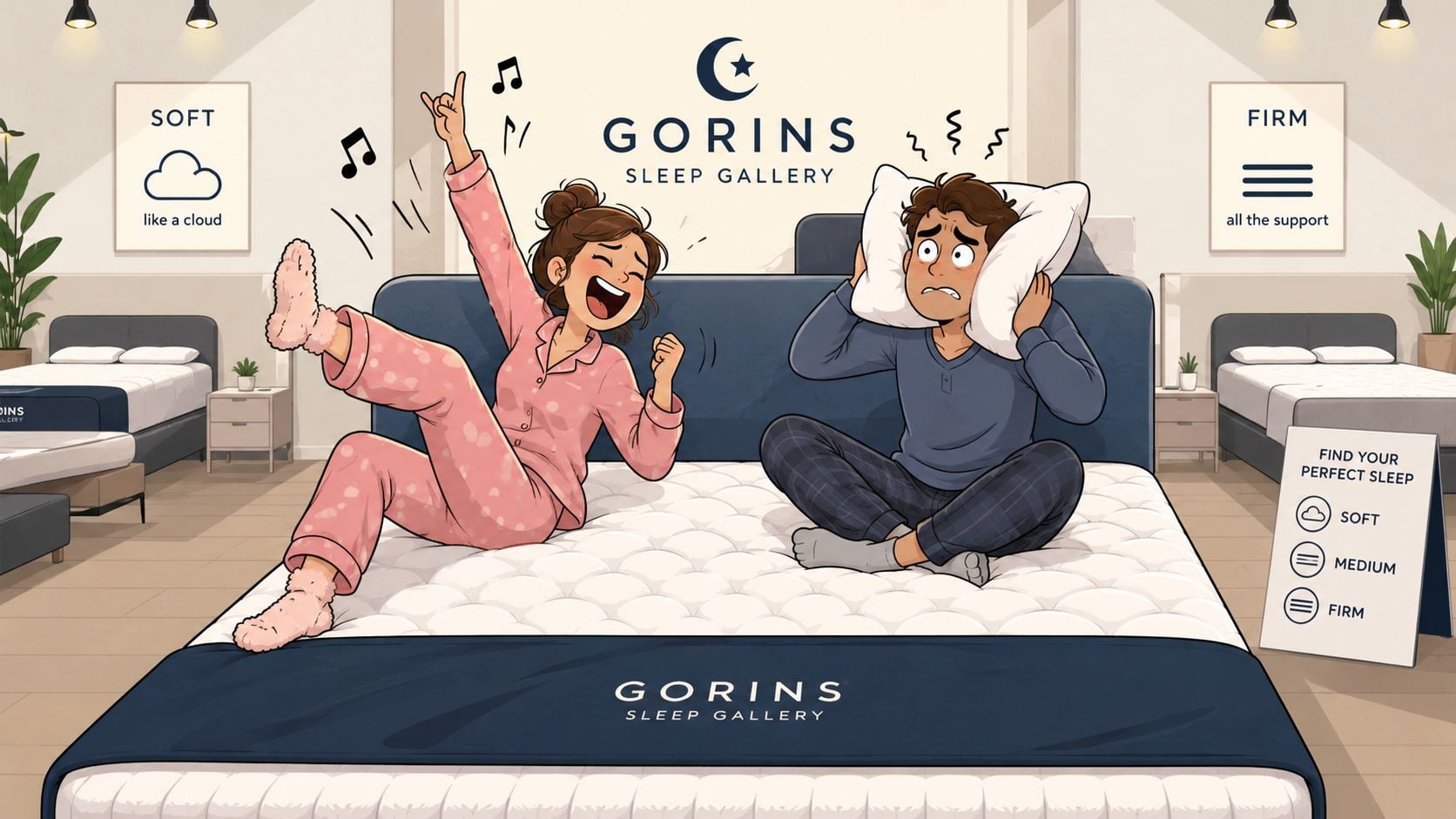
A Norwich couple stands in the Sleep Gallery. One partner presses a hand into a plush top, the other sits on the edge and asks how much movement the bed will pass through. That is the real couple's mattress question. The point is not what looks popular on a tag. It is what lets two people sleep without waking each other up. More than 60% of adults sleep with a partner, and one-quarter to one-third of those adults say their intimate relationships are harmed by their own or their partner's sleep problems, according to the National Council on Aging summary cited by NCOA's couples mattress guide.
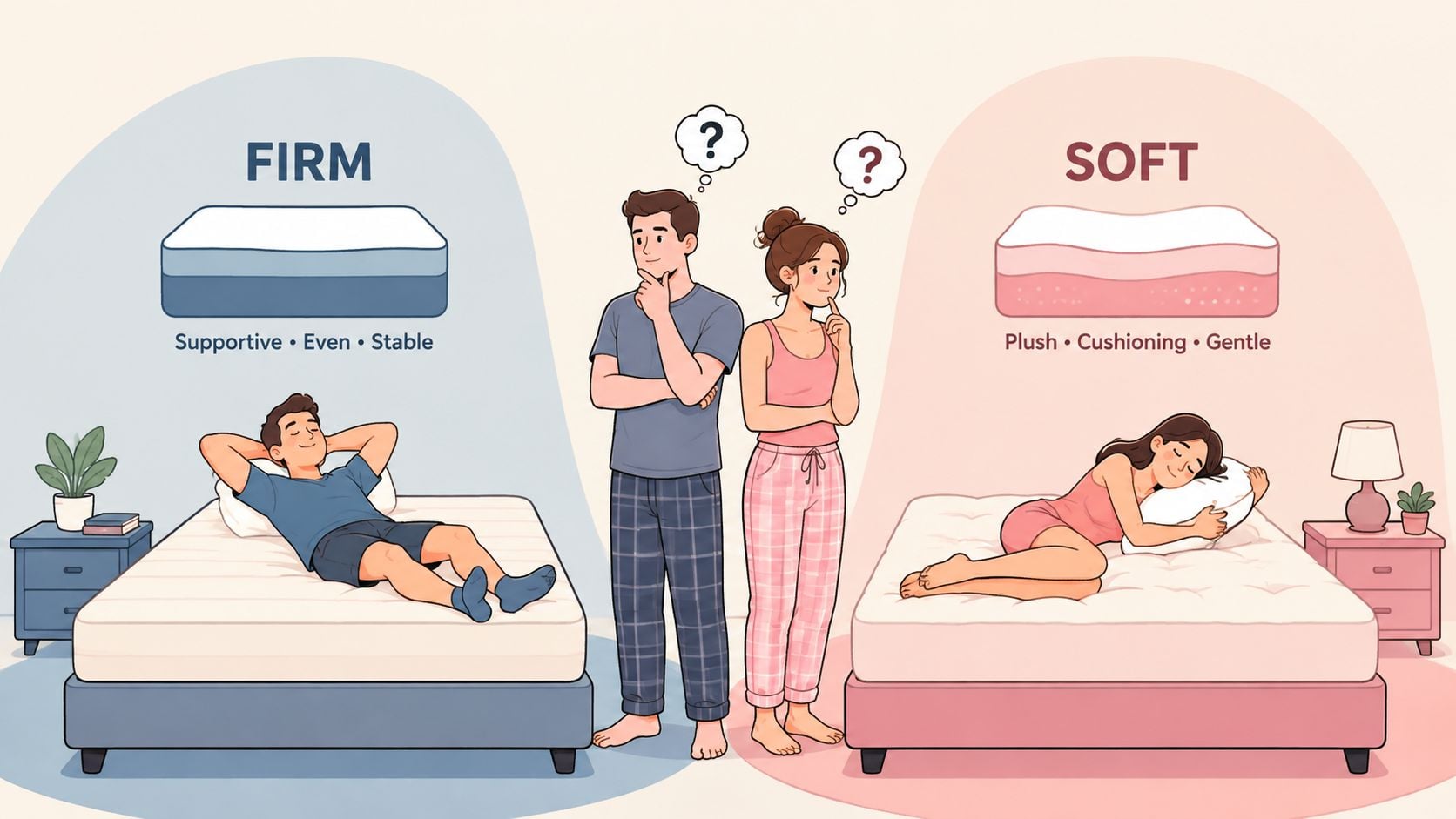
The mismatch starts before a couple even lies down. Better Sleep Council data cited by the National Council on Aging shows a near-even split, 51% prefer firm or very firm, while 49% prefer soft or very soft. So the showroom question is not whether both people will magically agree. It is how to set up a workable compromise without leaving both sleepers irritated.
Practical rule: if one partner sleeps lightly, the mattress has to protect that more sensitive sleeper first.
At Gorins' mattress and sleep selection, the associates start with five filters, not one. Motion isolation, firmness, cooling, edge support, and size each change the equation the moment a second sleeper gets in the bed. A model that feels fine solo can turn into a nuisance with two people on top of it.
For our neighbors in Norwich, New London, Plainfield, Waterford, and the surrounding Eastern CT and Rhode Island communities, the right way to shop is to treat the mattress like shared infrastructure. It has to support sleep, preserve closeness, and hold up under real nightly use. That is the standard, and anything less is just a bedroom compromise dressed up as comfort.
The Five Features That Matter Most for Two Sleepers
Motion isolation first
Motion isolation is the feature couples feel immediately. Think of pocketed coils as independent shock absorbers, each one taking its own hit instead of sending the bounce across the whole bed. Foam does a similar job by swallowing vibration before it spreads, which is why a restless sleeper matters so much more when there's another person beside them.
Edge support second
Edge support is the guardrail. Without it, the bed loses usable square footage where couples sit, tie shoes, and sleep near the perimeter. A strong edge also makes the mattress feel bigger, which matters when two bodies are sharing the same surface.
Firmness isn't just preference
Firmness is where couples run into trouble because the same feel doesn't land the same way for both bodies. A softer surface can cushion shoulders and hips, while a firmer one can keep the spine from sinking too far. The right answer is rarely “soft” or “firm” in the abstract, it's whether the surface matches both sleepers' positions and body types.
Cooling and size close the gap
Cooling matters because two sleepers trap more body heat than one. Gel, latex, breathable covers, and ventilated builds help the bed release heat instead of collecting it under quilted fabric. Size matters just as much, because a shared bed that's too narrow forces elbows, knees, and shoulders into the same space all night.
Use this quick self-check: mark which problem shows up most in your bedroom, movement, heat, edge roll-off, or a simple lack of space. That answer should drive the mattress search before brand name or price ever do.
For Norwich shoppers who want a simple guide to firmness language, Gorins' firmness guide is a useful starting point. It helps couples separate what feels pleasant in a five-minute test from what will reliably hold up at 2 a.m. after one partner rolls over.
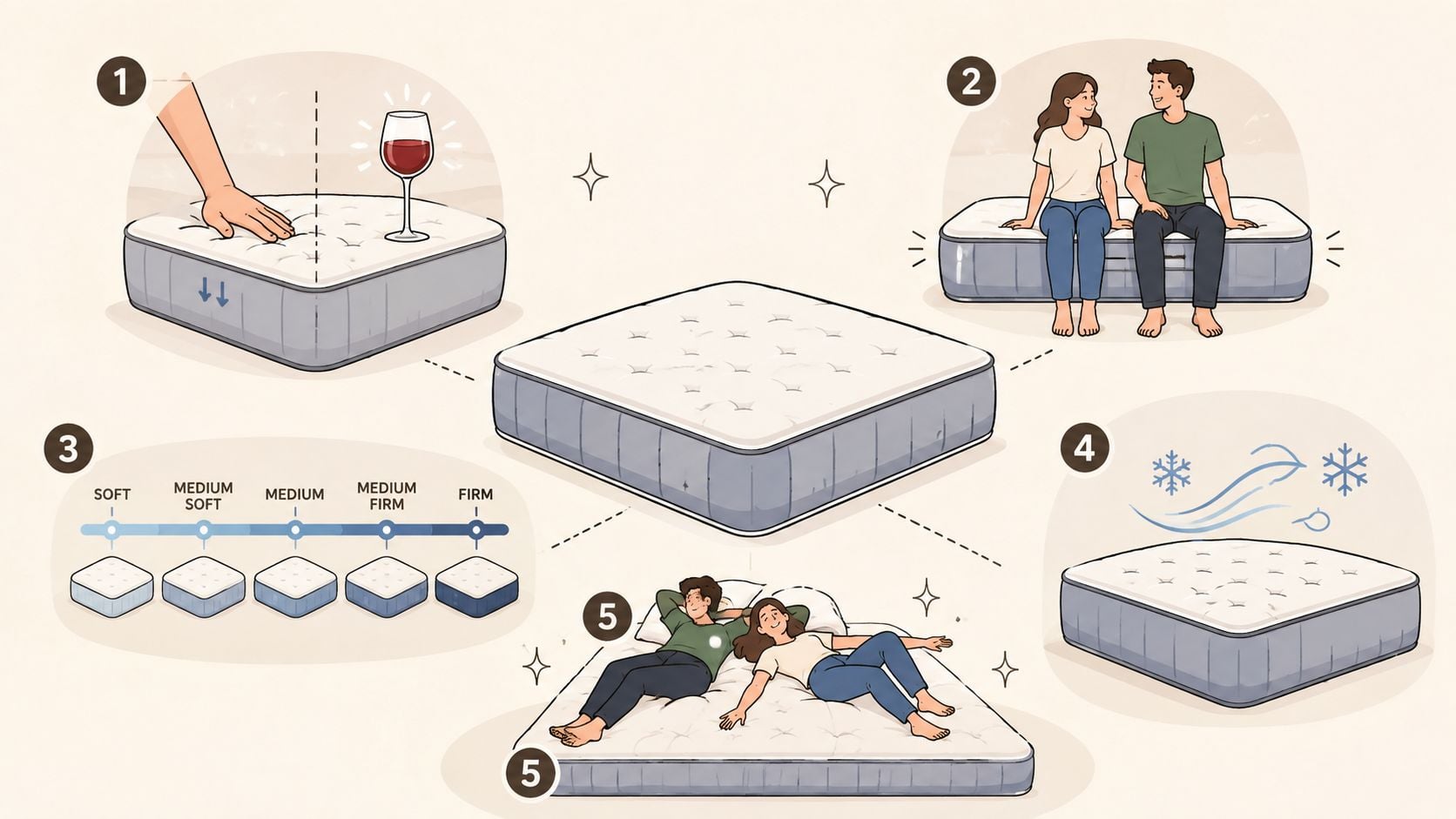
A couple doesn't need every feature at the top level, but they do need to know which one is most important. If motion transfer is the deal-breaker, the rest of the mattress can't compensate for it. If heat is the issue, no amount of plush comfort will matter if both people wake up overheated.
Comparing Mattress Types Available in the Sleep Gallery
Couples who share a bed usually find the choice narrows fast once you match the mattress to the actual problem. If one sleeper wakes up at every shift, memory foam is the straightforward answer because it absorbs movement instead of sending it across the surface. In our Sleep Gallery, that style is the one we most often point restless couples toward, especially when the test goal is calmer sleep rather than extra bounce.
Hybrid mattresses sit in the middle for a reason. They combine foam comfort layers with a coil base, which gives couples pressure relief without stripping away responsiveness. That build is often the right middle ground for shared beds, and our own hybrid mattress vs innerspring comparison helps shoppers see why coil support changes the feel so much from one category to the next.
Traditional innerspring mattresses still earn a place in the conversation. They make sense for couples who want a more familiar surface, firmer pushback, and stronger airflow through the bed. They are usually the easiest category to move around on, which helps if one partner changes positions often, but they can also pass more motion than foam-heavy builds, so they need a harder in-store test for partner disturbance.
Latex deserves a spot here too because it holds up well and breathes better than many dense foam designs. It does not hug the body as tightly as memory foam, and plenty of couples prefer that cleaner, more lifted feel, especially if heat is part of the complaint. The trade-off is simple, latex feels springier and less enveloping, so couples chasing a deep sink usually rule it out after a few minutes lying down.
For readers who want a deeper technical lens, founder sleep optimization is worth a look because it frames mattress design around how support changes sleep quality, not just how a bed feels in the first minute. That lines up with what we see on the showroom floor. The mattresses that work best for two sleepers usually solve one clear problem well, then stay stable enough for both bodies to use the full surface without constant adjustment.
The couples roundups backed by verified data keep pointing to motion isolation, balanced support, and strong edge stability as the features that matter most, and they also show that the category spans mainstream and premium price points (AARP). That matters because a good shared bed is not about chasing the fanciest name or the softest top. It is about matching the build to the way two people sleep, then testing whether the mattress stays steady when one partner rolls, sits up, or gets out of bed.
Choosing the Right Mattress for Your Specific Mismatch
Opposite firmness preferences need real separation
When one partner wants firm and the other wants soft, a “meet in the middle” mattress usually disappoints both people. Better Sleep Council data cited by Bryte shows the market is basically split down the middle, 51% firm or very firm and 49% soft or very soft, which is exactly why compromise often fails (Bryte). The cleanest answer is a dual-zone or split-adjustable design, because each sleeper gets their own feel without forcing the same surface on both bodies.
A meaningful weight gap needs zoned support
Weight differences change how the same mattress performs from one side to the other. A heavier sleeper sinks deeper into comfort layers, which means a mattress can feel even and supportive to one person and sagging to the other. The practical rule is to look for firmer zoned support and, when the build allows it, a mattress with at least 500 pocket springs in a 135 × 190 cm mattress and higher-density foams around 30 kg/m³ or more, because that structure helps prevent early sagging and improves support where the body loads the bed hardest.
Two hot sleepers need airflow, not just softness
When both sleepers run warm, the fabric choice and internal airflow matter more than most sales pitches admit. Cooling covers, ventilated latex, and breathable coil builds are the right places to start, because they keep heat from pooling under two bodies. A mattress that traps warmth alone can feel fine for the first ten minutes and miserable by midnight.
A restless sleeper paired with a light sleeper should prioritize damping
This is the mismatch that ruins the most sleep. The right answer is foam-forward motion isolation, or a hybrid with very strong motion control, because the goal is to mute the other person's turns before they travel across the bed. Independent-style buying guidance is clear that pocket springs and viscoelastic foam reduce movement transfer, and hybrid designs combine both ideas to balance support and disturbance control.
At Gorins, that often means steering the conversation toward the build that solves the mismatch rather than the one that sounds nicest on paper. A couple who needs softness on one side and stronger support on the other should be looking at adjustable or zoned options. A couple who argues about motion should care less about spring count as a slogan and more about whether the bed keeps one sleeper from waking the other.
The key is to match the solution to the problem. A medium-firm hybrid is a reasonable starting point for many people, but it's not a universal fix. If the mismatch is real, the mattress has to be chosen for that mismatch, not for a generic average.
How to Test a Couples Mattress Before You Buy
The strongest online review can't replace a proper showroom test. Couples learn more in fifteen minutes on a floor model than they do from a hundred opinions, because the bed either transfers movement or it doesn't, and the edge either supports or it sags. The Norwich showroom setting matters here because both partners can test the same mattress at the same time and call out what they feel.
Start with the edge, because that's where a lot of couples lose usable space. Sit on the side and see whether the mattress collapses or holds its shape. Then take turns rolling over while the other partner watches for bounce and motion transfer, not just hears about it later.
After that, lie in the position each person uses at night. Three minutes is enough to tell whether shoulders, hips, or lower back are settling correctly, and whether the surface feels balanced or forced. If both partners sleep with their arms behind their heads, they should check whether the mattress allows that posture without crowding each other.
Showroom rule: if one partner feels unsettled during the test, the bed doesn't get a pass just because the other partner likes it.
In-store guidance earns its keep. Associates can point couples toward Tempur-Pedic, Beautyrest, or Serta models that match the exact mismatch, instead of leaving them to decode specs alone. The value of that conversation is simple, because the couple gets to compare motion, edge feel, and support side by side before any money changes hands.
A smart test also means thinking beyond the first five minutes. The bed should feel good in your primary sleep position, not just when sitting upright. Couples who use the showroom well leave with a decision they can defend, not a guess they hope will work out later.
Trial Periods Warranties Delivery and Financing
A mattress purchase doesn't end at checkout. Couples need time for their bodies to settle into the bed, and that's where in-home trial periods matter, because the first night rarely tells the whole story. For warranty basics, the details are worth reading closely, and Gorins' warranty information is the right place to check the terms before delivery day.
The delivery side should be just as clear. Gorins 5-Star Delivery handles setup, removes the old mattress, and gives post-delivery support if something needs attention. That kind of service matters most for couples because a shared bed is a bigger logistical project than a solo purchase, and the setup has to be right from the start.
For financing, the practical option is promotional payment structure, not pressure. Protect-A-Bed's overview of how BNPL works for beds is a useful reminder that spreading payments can make a quality investment easier to manage. At Gorins, that translates into promotional financing, including equal monthly payment programs through the Nest Credit Card and partnerships with TD Bank, subject to credit approval.
That matters because a premium mattress isn't only about price on the tag. It's about whether the couple can choose the construction they need without cutting corners on sleep quality. For Norwich shoppers, the useful question is whether the store can make the whole process simple, from the first test lie-down to the first night at home.
Finding Your Best Fit at Gorins Sleep Gallery
The couple from the opening usually leaves with a clearer answer than they expected. The decision comes down to five filters, motion isolation, edge support, firmness, cooling, and size, then gets narrowed by opposite firmness, weight gap, heat, or a restless sleeper. After that, the in-store test tells the truth fast.
Keep this short checklist on a phone, then use it in the showroom.
Motion transfer: does one partner wake when the other rolls?
Edge feel: does the side hold up when someone sits or sleeps near it?
Firmness mismatch: do both sleepers like the same surface?
Heat: do both people stay comfortable under a shared cover?
Space: can both partners lie naturally without crowding?
For Norwich shoppers, the next step is simple. Visit the Sleep Gallery to feel Beautyrest, Tempur-Pedic, Serta, Sealy, Stearns & Foster, and King Koil in person, take the online style quiz before the trip, and browse Clearance for value-driven savings on floor models and previous-floor pieces. Gorins' mattresses page is a good place to start before the drive in.
Since 1936, Gorins Furniture & Mattress has helped Norwich and Eastern CT families create homes they love. From custom-designed Canadel dining sets to the latest in Tempur-Pedic sleep technology, the store combines a massive selection with the personalized care only a local, family-owned business can provide.
Gorins Furniture & Mattress helps couples sort out mattress problems, movement, firmness, heat, and space, without the guesswork. Visit Gorins Furniture & Mattress to test the Sleep Gallery in person, compare the brands that fit shared beds, and talk through a mattress choice that works for both sleepers.