Innerspring Mattress for Back Pain: A Norwich Buyer’s Guide


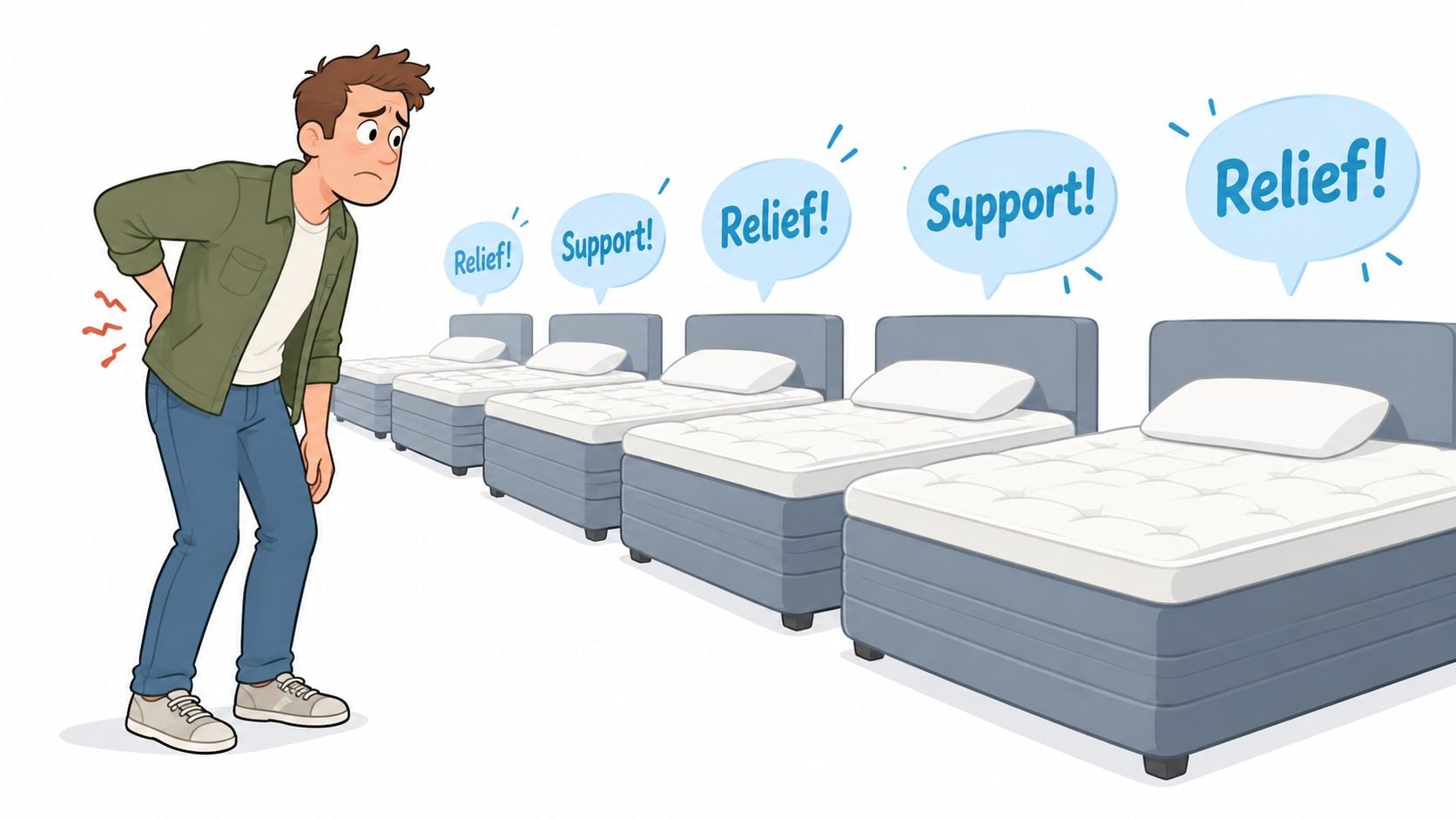
A Norwich shopper with a stiff lower back can spend a long, uncomfortable night, then face a showroom full of mattresses claiming to offer the right kind of support. One model feels like a board; another lets the hips sink. A bigger coil count may sound reassuring, but it doesn't tell the whole story about how the mattress will feel under a sleeping body.
For an innerspring mattress for back pain, the useful question isn't how firm it feels or how many coils it contains. It's whether the finished mattress keeps the spine relaxed and aligned while cushioning pressure points, and whether it can keep doing that as it wears. This guide offers a practical way to assess fit, construction, and durability before choosing a bed in Norwich.
What Back Pain Sufferers Actually Need From a Mattress
A mattress should support the body without forcing it into an unnatural position. That means the firmest mattress isn't automatically the most supportive, and the one with the most coils isn't automatically the best choice. Alignment and pressure relief have to work together.
Think of the spine as a shelf that needs to stay level, with pillows filling the gaps rather than propping one end up too high. For a side sleeper, the shoulder and hip need enough give to settle into the comfort layer, while the waist still needs support. If the surface is too hard, those pressure points may feel compressed. If it's too soft, the body may sink unevenly and pull the spine out of line.
A back sleeper needs a different kind of balance. The mattress should cushion the curve of the lower back without letting the hips drop far below the rest of the body. The goal isn't a perfectly flat shape. It's a relaxed posture that doesn't leave the sleeper bracing against pressure or sinking into a hammock-like dip.
Support and cushioning do different jobs
Support describes how the mattress holds the body and helps maintain spinal alignment. Cushioning describes how the upper layers soften contact at the shoulders, hips, and other pressure points. A mattress can feel plush on top yet still support the body, or feel hard at the surface without providing the right alignment.
That distinction matters on an innerspring mattress. The coils form the support system, but padding and upholstery shape the surface feel. A shopper who tests only the firmness of the top layer may miss whether the body settles evenly. Someone who focuses only on the coil unit may overlook pressure building at the shoulder or hip.
A useful showroom check is to lie down in the usual sleep position and notice whether the body feels held rather than pushed upward or allowed to drop. Side sleepers can check whether the shoulder settles without the waist collapsing. Back sleepers can notice whether the lower back feels supported without the hips sinking.
Practical rule: A comfortable first impression is helpful, but the deciding question is whether the body feels relaxed and aligned in its normal sleeping position.
Think beyond the bed when assessing back comfort
Back comfort can involve more than the mattress. Walking, standing, and daily movement also affect how the back feels, so it may help to consider supportive footwear alongside a sleep setup. For a separate perspective on choosing shoes, see this guide to finding supportive running shoes for back pain.
The mattress remains a sensible place to start when sleep itself is uncomfortable. But no coil system can promise to resolve every cause of back pain. The practical aim is to choose a surface that feels supportive in the sleeper's actual position, then pay attention to how comfort and symptoms respond over time.
That's why a good comparison focuses on alignment, conformity, and staying power, not a single label or specification. The rest of the decision follows from observing how the whole mattress behaves under the body.
How an Innerspring Mattress Supports the Spine
An innerspring mattress uses a coil unit as its main support structure, typically with comfort materials layered above it. The coils respond to body weight; the upper layers affect how directly the sleeper feels that response. Neither the coil system nor the cushioning layer tells the whole story by itself.
For a side sleeper, the shoulder needs room to settle while the waist stays supported. Coils that resist movement strongly can feel firm, but if the comfort layer doesn't cushion the shoulder, that firmness may become uncomfortable. A more conforming surface can let the shoulder settle while the support system helps keep the middle of the body from dropping too far.
A useful posture analogy is a gently supported bridge. The mattress should yield where the body presses into it, but it shouldn't allow a deep dip through the middle. That balance comes from the complete construction: coil type and layout, upholstery, comfort-layer thickness, and the way the mattress suits the sleeper's position and body shape.
Read the coil type as a feel clue
Coil designs can suggest how a mattress may respond, but they don't guarantee how it will feel. The table offers a starting point for questions, not a substitute for lying down on the finished mattress.
| Coil Type | Typical Feel | Best For | Trade-Off |
|---|---|---|---|
| Bonnell | Traditional, connected spring response | Shoppers who prefer a familiar, responsive feel | May transfer more movement across the surface |
| Pocketed | Coils respond more independently | Sleepers seeking a more conforming feel around pressure points | The upper layers still determine much of the surface comfort |
| Offset | Connected support with a more articulated response | Shoppers comparing traditional coil support with a shaped feel | Feel varies with the rest of the mattress construction |
Coil count alone is an incomplete measure of performance. Coil shape, gauge, arrangement, and the material above the coils all affect the feel. If a spec sheet lists coil details, ask how those features translate into support at the shoulders, hips, and lower back, rather than treating a higher count as an automatic advantage.
For a clearer explanation of one common design, see this overview of how a pocket-coil mattress works.
Check the layers above and around the coils
Comfort layers change the effective firmness of the mattress. A thin pillow-top may soften the surface while leaving much of the coil response noticeable. A thicker layer may offer more cushioning, but it still needs to keep the body from sinking unevenly.
Zoned support and reinforced edges are also worth discussing. A mattress may be designed to respond differently across areas or to feel steadier near its perimeter, but the shopper should test those features rather than assume they'll solve a particular problem. Sit near the edge as if putting on shoes, then lie near it and see whether it feels stable enough to get in and out of bed comfortably.
Ask direct questions: What is the coil construction? How does the comfort layer affect the feel? What supports the perimeter? Those answers, followed by an in-position test, help turn a spec sheet into a realistic feel prediction.
Innerspring Compared to Memory Foam, Hybrid, and Latex
Mattress construction is a trade-off, not a contest with one universal winner. An innerspring may feel lively and easy to move on, while foam or latex can offer a different kind of contouring and response. A hybrid combines coils with comfort materials, so its feel depends on how those parts work together.
Consider a hypothetical 170-pound side sleeper comparing these constructions. That example doesn't predict how every person will feel. It makes the trade-offs easier to picture: the shoulder and hip need cushioning, the waist needs support, and the sleeper may want to turn without effort.
Innerspring and memory foam
A traditional innerspring often feels more buoyant and responsive. That can suit sleepers who dislike feeling enveloped or who want to change positions without much resistance. The trade-off is that some innerspring surfaces may feel less conforming around the shoulder and hip, depending on the comfort layers.
Memory foam usually contours more closely around the body and can reduce the sense of movement travelling across the surface. For a side sleeper, that close conformity may feel relieving at pressure points. Some sleepers, however, dislike the warmer feel or the sensation of being held in place, especially when they change positions often.
Neither construction label settles the question. A well-cushioned innerspring could feel more accommodating than a firmer foam mattress, while a suitable foam model may provide more pressure relief than a thinly padded coil bed. The comparison has to happen in the intended sleep position.
Hybrid and latex
A hybrid combines coils with foam or latex comfort layers. That can provide a useful middle ground for someone who wants coil responsiveness but needs more cushioning than a traditional innerspring offers. For a sleeper with persistent discomfort, the added conformity may matter more than preserving a purely traditional feel. A hybrid still needs to be tested for alignment, because combining materials doesn't guarantee the right fit.
Latex tends to feel buoyant and responsive rather than slow to recover. Some back sleepers may find that quality makes it easier to shift position, while side sleepers still need enough surface give at the shoulder and hip. The actual feel depends on the finished mattress, not the material name alone.
A comparison of hybrid and innerspring mattresses can help organize the options before a showroom visit.
Compare the experience, not the trend
| Construction | Support and conformity | Movement and temperature feel | Main trade-off |
|---|---|---|---|
| Innerspring | Responsive support, with conformity shaped by its upper layers | Often feels springy and easy to move across | May not cushion pressure points enough |
| Memory foam | Close contouring can cushion shoulders and hips | Can feel less responsive and warmer to some sleepers | The enveloping feel may frustrate combination sleepers |
| Hybrid | Coil support paired with a more substantial comfort surface | Often balances bounce with surface cushioning | The exact feel varies widely by layer design |
| Latex | Buoyant, responsive surface with a distinct lift | Position changes can feel easier than on slow-response foam | Some sleepers may prefer a softer, more contouring feel |
The 170-pound side sleeper should test each option by checking whether the shoulder can settle, the waist remains supported, and turning feels comfortable. A back sleeper should pay closer attention to the lower-back area and whether the hips sink. The better choice is the construction that fits the sleeper's body and habits, not the one with the most fashionable label.
Finding the Right Firmness and Support for Back Pain
Start at medium-firm, then let your body cast the deciding vote. For many shoppers with chronic, nonspecific lower-back pain, a medium-firm mattress is a sensible starting point. That doesn't mean every sleeper needs the same feel, and it doesn't mean an innerspring earns its keep by being hard. The finished surface has to hold your spine in your actual sleep position, and it has to keep doing that job years after delivery, when the comfort layers have settled and the showroom freshness has worn off.
A randomized, double-blind, multicenter trial published in 2003 included 313 adults with chronic nonspecific low-back pain and compared firm with medium-firm mattresses over 90 days. The study found better outcomes with medium firmness for pain while lying in bed and disability; its result for pain on rising was less definitive because the confidence interval included no difference. The trial supports a practical point: very firm shouldn't be treated as automatically better for back pain. The 2003 mattress trial tested firmness categories, not a universal innerspring design.
A 2022 evidence review synthesized 9 studies involving 808 adults, with varied study designs and sample sizes. It found that intermediate or medium-firm mattresses generally produced better disability outcomes than firm mattresses, while also emphasizing uncertainty across the evidence. The NCBI evidence review reinforces the case for testing a balanced feel rather than buying on the assumption that harder means healthier.
Run a real-position showroom test
Lie down in the position used most often at home and stay there for 10 to 15 minutes. That interval is a practical shopping benchmark, not a clinical test. A quick hand press or a brief sit on the edge can't show whether the mattress supports the whole body in sleep.
For a side-sleeping test, check whether the shoulder settles without pressure building and whether the waist still feels supported. For back sleeping, notice whether the hips remain level with the torso and whether the lower back feels gently held rather than forced upward. If possible, have a companion check the spine's line from behind while the sleeper lies on their side.
Showroom question: "Can this mattress keep my usual sleep position comfortable while supporting my waist and hips?"
Firmness labels aren't standardized across every maker. "Medium-firm" is useful as a starting description, but one mattress's label may not feel like another's. For a deeper walkthrough of labels and feel, see this guide to how to pick mattress firmness. In the showroom, compare the actual surface response and ask the associate to explain how the comfort layers and coil unit shape that feel.
Adjust the test to sleeping position and body
A heavier sleeper compresses the upper layers more, so the bed can feel softer under their body than it did during a quick showroom sit. That shopper may want a substantial comfort layer over a supportive coil unit, and the answer should still come from testing alignment and pressure relief. A side sleeper often needs more give at the shoulders and hips. A stomach sleeper usually does better on a surface that keeps the middle from sinking too far.
Here's the part most shoppers skip. Ask how that feel holds up. A surface that tests medium-firm today can drift softer as comfort layers compress and impressions form where the body rests night after night, which changes how the spine is held.
A systematic review of controlled mattress studies associated medium-firm mattresses with improved comfort, sleep quality, and spinal alignment. The review also describes individual variation, so those findings are a reason to test carefully, not a promise that one firmness suits everyone. The mattress review on firmness and alignment supports judging the complete surface rather than relying on coil construction alone. Pick the firmness that keeps you aligned now, and favor the construction that looks built to keep it that way.
How Durability and Sagging Affect Long-Term Back Support
A mattress that feels right when it's new may not keep that feel as the materials wear. Sagging and uneven impressions matter because they can change where the body settles, which may change spinal posture during sleep. Back support is therefore a durability question as well as a comfort question.
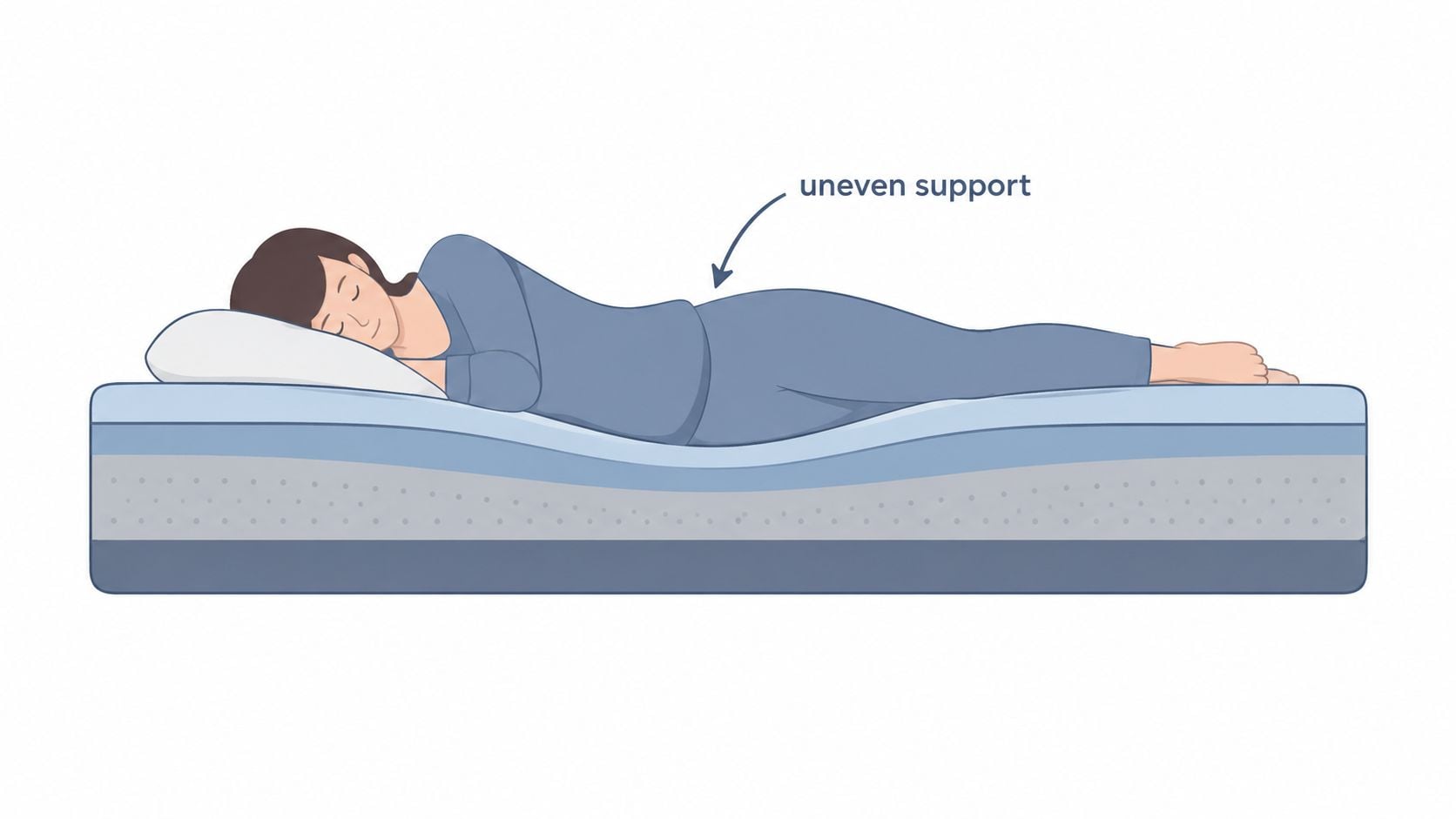
Comfort layers can develop impressions where the body applies repeated pressure. If one area compresses more than the rest, the sleeper may settle into an uneven surface even when the mattress still looks presentable from across the room. Edge breakdown can create a separate problem: sitting down or getting out of bed may feel less stable, especially for someone who relies on the perimeter for support.
Look for changes in the sleeping surface
A body impression may be visible, but changes in feel can show up first. Pay attention if the bed feels different from one side to the other, if the hips seem to sink more than before, or if getting out of bed has become noticeably harder. A couple with different body weights should check whether each side maintains a similar sense of support, rather than assuming the mattress wears evenly.
The research leaves important durability questions open. A 2025 evidence summary discusses a 313-person study with 90 days of follow-up, which can't establish how an individual innerspring model will hold alignment over years. The evidence summary on mattress longevity and back pain highlights the limited basis for predicting long-term performance across different constructions.
Ask about upkeep and warranty terms
Check whether a mattress is designed to rotate, flip, or remain in one orientation. Those instructions vary, so the care label and retailer guidance matter more than a generic maintenance rule. The foundation also matters: an appropriate base helps the mattress perform as designed, while a weak or unsuitable foundation can undermine its support.
Before buying, ask what the warranty defines as a covered defect, how it measures a visible impression, and what conditions apply to the foundation. A long warranty isn't a clinical promise that the mattress will maintain the same feel or relieve pain for that period. It's a contract with specific terms, so the shopper should understand what it does and doesn't cover.
For practical lifespan questions, review this guide to how long a mattress should last. The key is to treat durability as part of the back-support decision: ask about the coil unit, comfort-layer materials, perimeter construction, and recommended care before choosing.
Shopping the Gorins Sleep Gallery in Norwich
A Norwich showroom visit works best as a body-comfort comparison, not a race through price tags. In the Gorins Sleep Gallery, shoppers can compare Tempur-Pedic, Stearns & Foster, Sealy, Serta, Beautyrest, and King Koil by lying down and noticing how each mattress feels. The point is to find a surface that suits the sleeper, not to assume that a brand name or construction type can diagnose back pain.
Gorins Furniture & Mattress is a locally owned, family-operated business founded in 1936. The showroom serves Norwich and nearby communities, including New London, Plainfield, and Waterford, as well as surrounding Eastern Connecticut and Rhode Island communities. The family's emphasis on helpful guidance fits a practical sleep purchase: shoppers can compare options without treating a quick sales pitch as a substitute for testing.

Make the visit useful
Wear clothing that lets the sleeper lie down and change positions comfortably. Bring a pillow used at home if its height and feel affect sleep posture. Then ask to compare mattresses side by side, ideally in the same sleep position and for long enough to notice whether pressure builds.
The lineup offers different feels to investigate. Tempur-Pedic is an option to test for close conformity, while Beautyrest offers traditional coil-based choices to compare for responsive support. Other lines on the floor, including Stearns & Foster, Sealy, Serta, and King Koil, broaden the comparison. These are starting points for lying down, not guarantees about which model will suit a particular back.
A useful associate can help decode what the body is reporting. If the shoulder feels compressed, ask whether another comfort layer changes that pressure. If the lower back feels unsupported, ask whether the mattress surface or the sleeper's position is contributing. Keep the questions specific, and compare the whole mattress rather than one feature.
For directions and showroom details, visit the Gorins Furniture & Mattress Norwich store page. A visit can also help shoppers weigh comfort against investment and ask about promotional financing with equal monthly payments, subject to approval and applicable terms.
Bringing It All Together in the Showroom
A mattress decision becomes clearer when the shopper keeps the test focused. The coil count, firmness label, and brand can all help start a conversation, but the final choice should answer three practical questions: Does the spine feel neutral? Do pressure points feel relieved? Does the construction appear suited to sustained use?
Take this checklist into the showroom:
- Check alignment: Lie in the normal sleep position and notice whether the waist and hips feel supported without the body sagging.
- Check pressure: Side sleepers should pay attention to the shoulders and hips. Back sleepers should notice whether the lower back feels supported without strain.
- Check movement: Turn and settle again. The surface should feel workable for the way the sleeper changes positions.
- Check construction: Ask about coils, comfort layers, edge support, foundation requirements, and care instructions.
- Check terms: Review delivery, trial or comfort-exchange policies if offered, and warranty conditions before committing.
A mattress is a personal fit, and symptom response can differ. Give the body time to adapt after a change, but don't ignore persistent discomfort or worsening symptoms. Radiating pain, numbness, or weakness calls for clinical evaluation, not mattress selection alone.
Plan around value, not pressure
A supportive mattress can be a substantial household investment. Gorins offers Promotional Financing with equal monthly payments through its financing options, subject to credit approval and the terms of the specific plan. Shoppers should ask how the payment schedule works and review the agreement rather than assuming all plans have the same conditions.
Gorins also offers custom home-furnishing options beyond the Sleep Gallery. Its Canadel Custom Dining partnership and F9 Custom Sofa series offer thousands of combinations, and its digital Style Quiz can help shoppers explore preferences. Those services reflect the same practical idea: choose for the home and the people who use it, rather than buying from a label alone.
For back pain, though, the decision remains straightforward. Choose the mattress that feels aligned and comfortable in the sleeper's usual position, understand how it's built, and know what to watch for as it wears. If the choice still feels uncertain, make a side-by-side comparison in the Norwich showroom and ask for help translating construction details into a real-world feel.
Gorins Furniture & Mattress offers a Norwich Sleep Gallery where shoppers can compare mattress feels and ask practical questions about support, comfort, and care. Visit Gorins Furniture & Mattress to plan a showroom visit, take the online Style Quiz, or browse the Clearance section for value-driven savings.