How to Reduce Motion Transfer in Bed


You know the scene. One person rolls over to shut off the alarm, and the other shoots upright like the mattress threw a punch. That's motion transfer, and it's usually not one big problem. It's a chain of small ones, from the comfort layer to the foundation under the bed.
If the goal is how to reduce motion transfer in bed, the fix starts with the idea that every layer either soaks up movement or passes it along. A stable mattress can still feel noisy on a springy frame. A good topper can still fail on a sagging base. The smart move is to find the weak link and correct that first, instead of assuming the whole bed has to go.
For a deeper look at why restlessness can keep the whole night unsettled, finding relief for restlessness is a useful companion read. And if the problem keeps coming back, Gorins' couples guide on finding the mattress that works for two sleepers fits neatly with the practical fixes below.
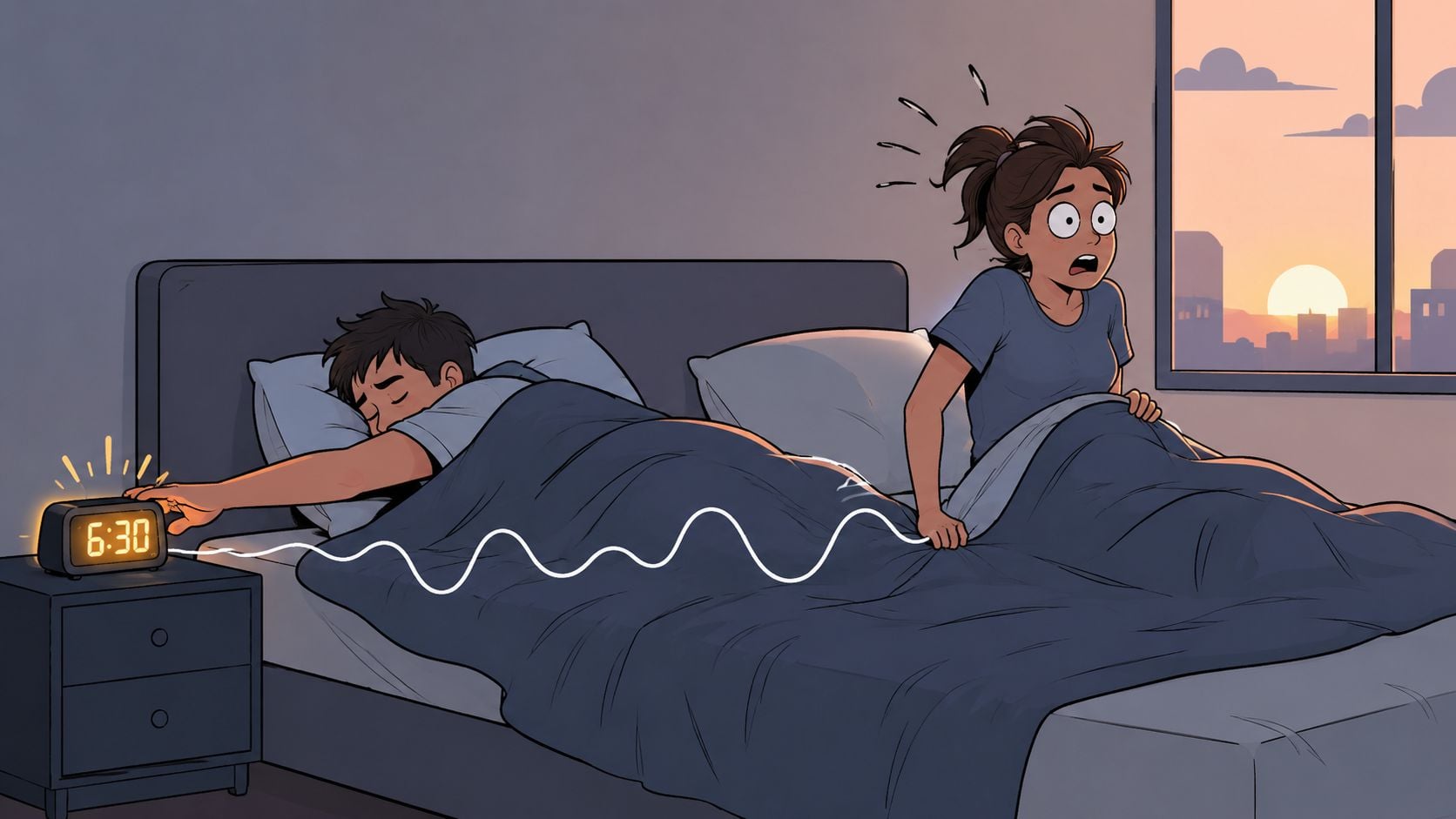
Why a Restless Partner Keeps Waking You Up
A restless partner doesn't just move, they push force through the bed, and that force keeps traveling through the layers under them. Comparative mattress testing shows how different the results can be, with traditional innerspring beds transferring more motion than budget hybrids, and premium all-foam mattresses transferring the least (PubMed study). That spread is why one bed feels calm and another feels like every turn gets broadcast.
The sleep problem is real. A sleep-laboratory study reported that movements showed up across a small share of sleep epochs, and some of those movements were shared by both partners (PubMed study). Another review linked lateral motion transfer across a mattress with more Stage 1 sleep and less Stage 3/4 sleep, which means the bed can chip away at restorative sleep even when nobody fully wakes up (PubMed study).
The bed is a chain, not a single surface
That's why the mattress is only part of the fix. If the frame rocks, the foundation flexes, or the bedding pulls too tightly, the movement spreads farther than it should. The cheapest win is usually to correct the loosest link first.
Practical rule: if a bed shifts when one partner climbs in, that bed is already helping the motion travel.
Older guidance points to the same idea, so check the bed system before you blame the mattress. A shaky frame or tight bedding can do more damage than people expect, and finding relief for restlessness is a useful companion read for anyone trying to understand why the whole bed keeps feeling unsettled. If the issue keeps coming back, a guide to choosing a mattress for two sleepers fits the practical fixes that follow.
How Mattress Construction Shapes Motion Transfer
Construction matters more than advertising copy. The strongest motion isolation usually comes from dense foam, then pocketed coils with foam layers, and only then from traditional connected spring systems. One motion-isolation guide notes that the thicker the foam and the higher its density, the better isolation tends to be, and that Dunlop latex generally isolates better than Talalay latex.
The reason is simple. Memory foam absorbs and dissipates kinetic energy instead of sending it sideways through the bed, and one review reports typical memory foam peaks below 0.05 g at 36 inches from the disturbance source, a level most observers rate as imperceptible. Pocketed coils do better than open systems because each coil moves on its own, instead of dragging its neighbors with it. Traditional Bonnell and open-coil systems are the noisiest choice for couples.
A second historical point matters here, modern motion-reduction strategies grew out of viscoelastic foam developed from NASA-era materials research in the 1960s, later adapted for sleep products. That's why foam still sets the standard for quiet sleep.
| Construction Type | Motion Absorbed | Feel | Best For |
|---|---|---|---|
| Memory foam | Highest | Slow, contouring | Light sleepers, restless partners |
| Latex | Moderate to high | Bouncier, more responsive | Couples who want some lift |
| Pocketed coils with foam | Moderate | Balanced | Sleepers who want airflow and decent isolation |
| Traditional innerspring | Lowest | Springy, lively | People who care more about bounce than quiet |
For a mattress-specific breakdown, Gorins' memory foam mattress guide lines up with what couples usually feel on the floor: foam tends to stay calmer when one sleeper moves.
Dialing Down Motion Without Replacing Your Mattress
A lot of beds can be quieted without a full replacement. The trick is to improve the parts that are amplifying movement, not just pile on softness and hope for the best.
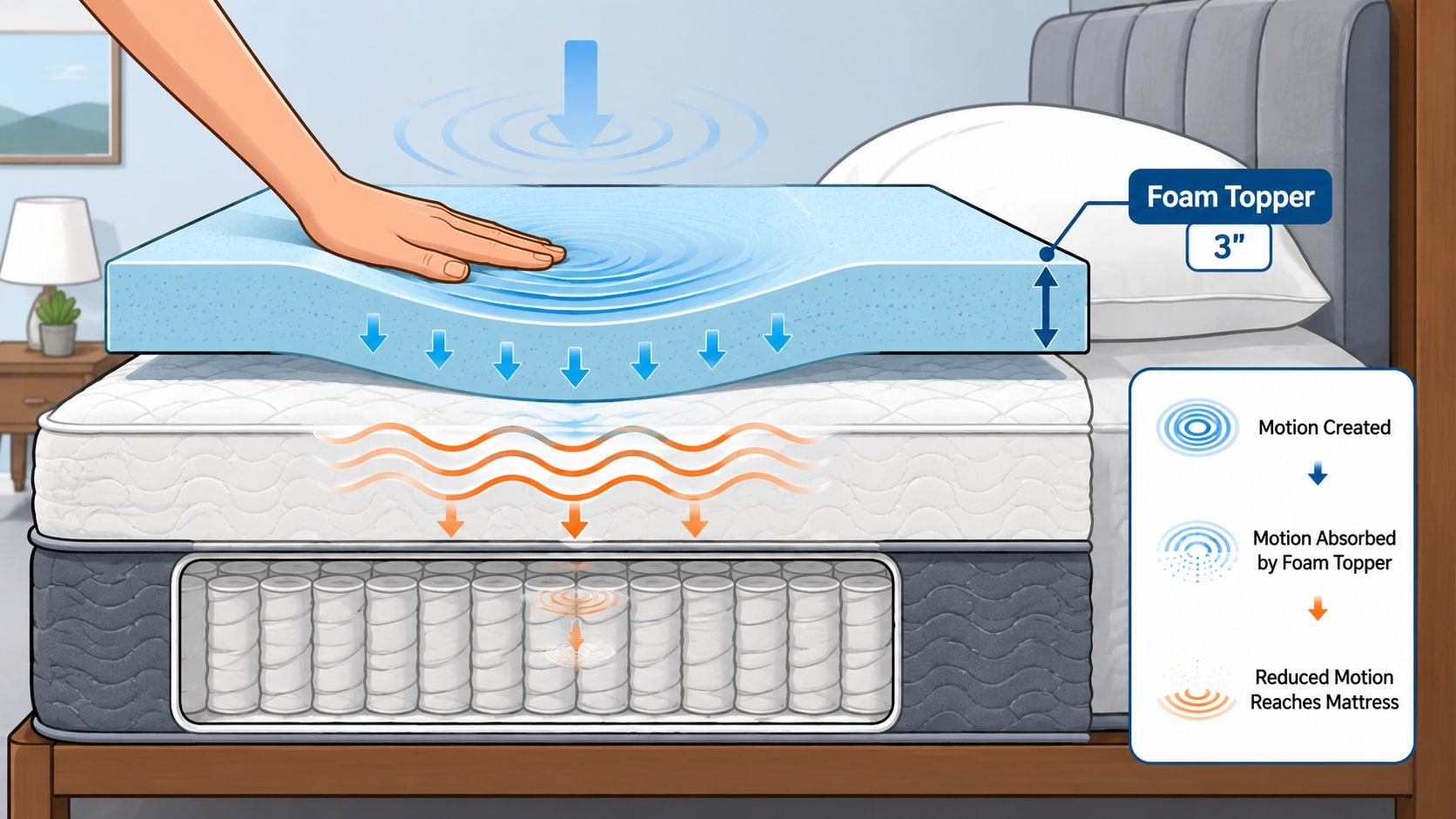
Four fixes that actually change the feel
- Add a cushioning topper: A 2 to 4 inch memory foam or latex topper can add a dampening layer right where motion starts. It works best on a mattress that's still structurally sound, not one that already sags.
- Replace a springy base: A flexible slat system or worn box spring can echo movement back into the mattress. A rigid foundation or solid platform cuts that rebound.
- Tighten the frame: Loose bolts, a missing center support on larger beds, or a frame that doesn't sit flush can turn a small shift into a full-bed wobble.
- Audit the bedding: Heavy mattress pads, layered sheets, and a heavier blanket can absorb leftover vibration before it reaches the other side.
If the bed rocks when one person sits on the edge, the frame needs attention before the mattress does.
The right order matters. Start with the frame, then the base, then the topper, then the bedding. That keeps the fix targeted instead of muddying the problem. For shoppers comparing surface upgrades, Gorins' mattress topper benefits fit this same logic, add dampening only where the mattress is still worth saving.
Do this tonight: tighten, level, and stabilize. Not that: buy a soft topper for a sagging bed and call it solved.
Why Pocketed Coils Are the Quietest Spring Build
A restless partner does not automatically mean you need to ditch springs. Pocketed coils give couples some bounce without the wave effect. Each coil sits in its own fabric sleeve and compresses on its own, so one sleeper's movement stays local instead of pulling the whole row with it. That is why they handle motion better than older connected coil builds, as explained in Gorins' pocket coil mattress guide.
What to look for on the showroom floor
Ask for individually wrapped coils, a comfort layer that keeps the surface from feeling too lively, and zoned lumbar support if one partner needs firmer middle support. A calmer build also feels more controlled at the edges because the support is better contained. Traditional Bonnell and open-coil designs are the ones to avoid, especially if the bed feels springy the moment someone sits down.
Showroom rule: if the mattress springs back fast and the whole surface moves with it, that is not a quiet spring build.
Pocketed coils are the middle ground. They are not as still as dense foam, but they keep more airflow and a more familiar spring feel than all-foam construction. For sleepers who hate the trapped feeling of pure foam, that tradeoff matters. It also helps to check the full bed setup. A steady frame, the right base, and a sensible topper can calm a coil mattress even more, so you are not blaming the springs for a shaky foundation.
Matching the Right Mattress Brand to Your Sleep Style
The best mattress choice depends on what each sleeper can tolerate, not just what sounds premium. In Gorins' Sleep Gallery, Tempur-Pedic, Serta, and Beautyrest each solve a different version of the same problem. One partner might need maximum stillness, another may want more bounce, and a third may care most about support and airflow.
Side by side, the choice gets clearer
| Brand Line | Motion Isolation | Feel | Best For |
|---|---|---|---|
| Tempur-Pedic | Highest | Contouring, low bounce | Couples with a very restless sleeper |
| Serta | Moderate | Balanced foam-over-coil feel | Shoppers who want a middle ground |
| Beautyrest | Moderate to high | Supportive, responsive | Combination sleepers and heavier partners |
Tempur-Pedic is the strongest fit when one partner moves constantly and the other wakes easily. Serta is the practical compromise when a couple wants isolation without giving up all spring. Beautyrest works when the bed needs more lift and zoned support while still staying calmer than a basic innerspring.
That's where in-store testing matters. A couple can feel the difference side by side, lie still, shift, and pay attention to how much of that movement reaches the other side. The right answer is the one that feels quiet enough for the lighter sleeper and supportive enough for the other.
Gorins' mattress brands comparison gives shoppers a clean way to narrow the field before they ever get to the showroom.
Pillow and Sleep Position Tricks That Quieter Nights
The mattress matters, but the sleeper's setup matters too. A spine that stays aligned needs less fidgeting, and less fidgeting means less motion spread through the bed. Small changes in pillow height and sleep position can reduce the chain reaction before it starts.
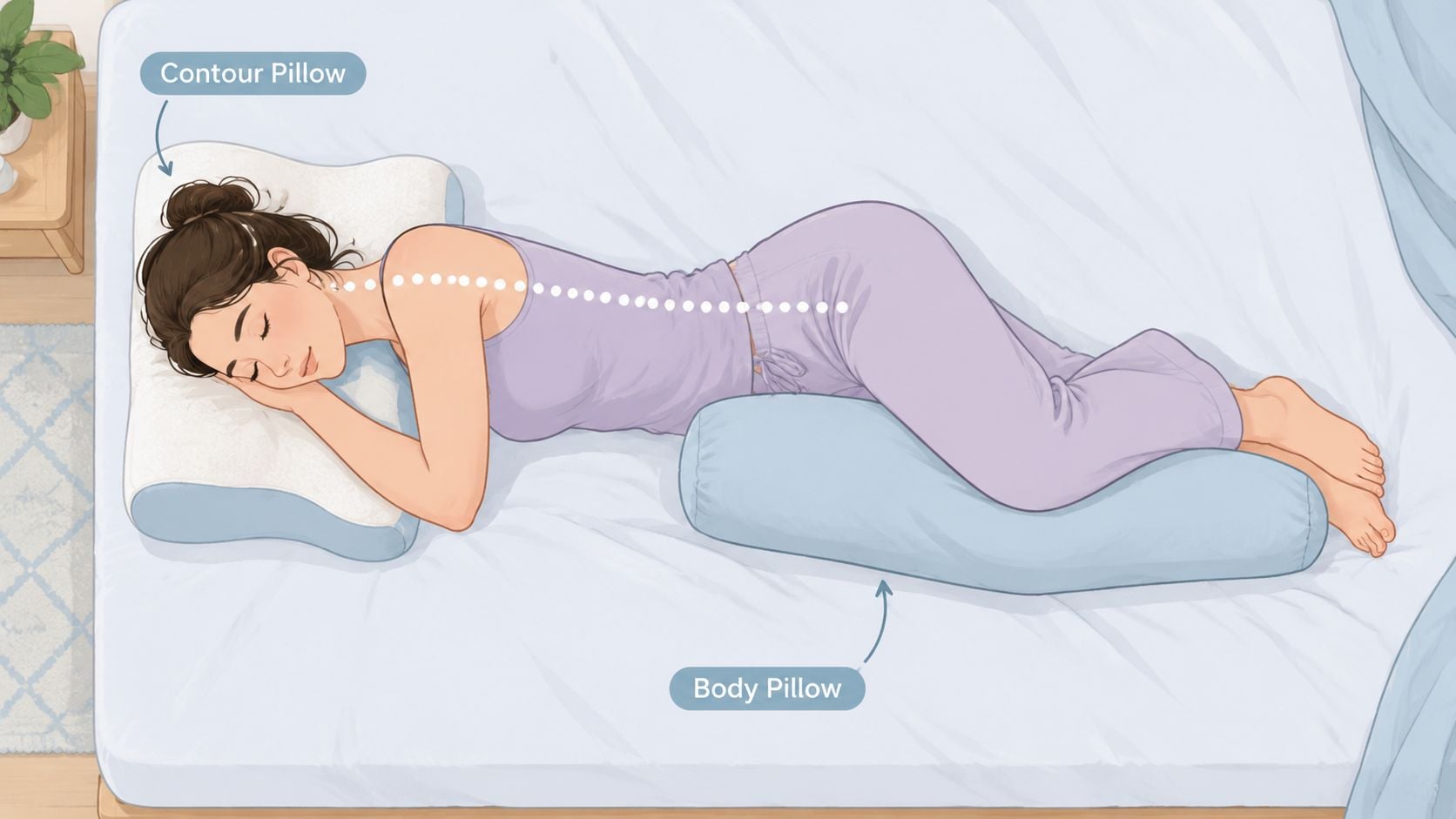
The nightly checklist that helps fastest
- Use the right pillow height: Side sleepers usually do better with a medium-loft memory foam pillow. Stomach sleepers usually need a lower-loft latex option so the neck doesn't crane and trigger extra shifting.
- Sleep back-to-back when possible: Partners who face each other tend to create more movement exchange than partners who settle back-to-back.
- Anchor the heavier sleeper toward the center: Edge sleeping makes the bed feel more unstable, especially when the frame or mattress already has a little give.
- Add a body pillow barrier: A long body pillow gives the restless sleeper a place to settle and can cut down on contact movement.
- Keep loose items off the mattress: Water bottles, phones, and charging cables belong on a nightstand, not on the bed where they add tiny vibrations and snagging.
For couples who want better air quality in the room while they fine-tune sleep habits, a quiet purifier for your bedroom from EcoQuest Purifiers can sit in the background without adding noise or clutter.
A heavier blanket can help some restless sleepers feel more settled, but the point is control, not weight for its own sake. A two-week trial is fair. One night proves nothing, especially when a couple has spent months sleeping on a noisy setup.
Your Plan for a Calmer, Less Disruptive Bed
Start with the bed you already own. Check whether the frame wobbles, whether the foundation flexes, and whether the mattress itself still has decent structure. If the setup is sound, test whether a topper or bedding change lowers the disturbance before moving to a full replacement. A lot of couples spend money too early because they skip that basic check.
A simple in-store lay-down is the next smart move. Gorins' Norwich showroom lets shoppers compare feel, support, and movement side by side, which is exactly how couples figure out whether memory foam or pocketed coil construction makes more sense for their sleep style. That's also the right time to use the style quiz, since it narrows the field before anyone gets pulled into a dozen irrelevant options.
Straight answer: if the bed is old, noisy, or sagging, replace it. If the bed is structurally fine, quiet the weak links first.
For budget-minded shoppers, the clearance area can be a practical place to find motion-quieting value without giving up the right construction. And when the mattress arrives, the 5-Star Delivery team should set up the frame, base, and mattress correctly so the fixes hold. A shaky install can undo a good purchase in one night.
A small bit of skepticism helps here too. Just as common dental misconceptions debunked reminds readers not to trust every easy answer, couples shouldn't trust every “one-size-fits-all” sleep claim either. The quietest bed is the one matched to the sleepers, the frame, and the room.
Gorins Furniture & Mattress helps Norwich and Eastern CT families choose beds that fit real sleep habits, not showroom guesses. Visit Gorins Furniture & Mattress to compare quiet mattress options, test motion isolation in person, and get the frame, base, and setup advice that makes a difference for two sleepers.