Are Serta Mattresses Made in Usa


Yes, Serta mattresses sold for the U.S. market are generally assembled at U.S. facilities, but the more accurate description is “made in the U.S.A. with global components” rather than fully sourced from American materials. For a Connecticut shopper, the key question isn't just whether Serta is American-made in a broad sense, it's which exact model, at which exact plant, and what the law tag says on the mattress that's arriving at the door.
The Short Answer on Serta and U.S. Manufacturing
If someone asks are Serta mattresses made in USA, the plain answer is yes, in the sense that Serta says its mattresses are made in the United States. The more careful answer is that Serta also says those mattresses use global components, so the label doesn't mean every foam layer, fabric, spring unit, or fire-barrier material came from the U.S. Serta's own site makes that distinction, and that's the part many shoppers miss.
That difference matters because country-of-origin language often gets treated like a single yes-or-no stamp. In practice, it can describe where the mattress was finally assembled, not where every input was grown, manufactured, or finished.
For a buyer trying to compare models, the useful follow-up is simple: ask where the specific mattress is assembled and what the law tag says. A brand can manufacture domestically and still source components globally, so the headline claim is only the starting point.
For a deeper consumer-style breakdown of origin wording, the practical side of mattress removal and replacement planning is covered in this Get n Go Removals Melbourne guide, and Serta's own model-by-model language becomes clearer when paired with an internal reference like how Serta compares with other mattress options.
Practical rule: treat “made in the USA” as a statement about final assembly first, not a guarantee about every material inside the mattress.
What Made in USA Actually Means on a Mattress
A mattress label can sound more definitive than it really is. Made in USA usually points to where the final product is manufactured or assembled, while global components tells shoppers the supply chain may cross borders before the mattress reaches the showroom floor.
A helpful way to think about it is a kitchen analogy. A chef can prepare a dish locally, plate it locally, and still use ingredients from several farms. The meal is made in that kitchen, but not every ingredient started there. Mattress manufacturing works the same way when a brand assembles the final product domestically from finished inputs.
Serta's own language follows that pattern. The company says its mattresses are made in the United States, and also says they use global components. That means the honest reading is not “100% U.S.-sourced materials,” because that wording is stronger than what the company publicly supports.
The right consumer move is to separate three ideas:
- Assembly location. Where the finished mattress is put together.
- Component origin. Where the foam, fabric, coils, and other parts came from.
- Retail labeling. What a particular model's hang tag and compliance paperwork say.
For shoppers who want a plain-English rulebook, the language in this compliance policies for customers resource helps show why labels often describe manufacturing differently from sourcing. A matching internal guide on how to read furniture product descriptions and buy with confidence is useful for spotting the same kind of wording on product pages and tags.
Bottom line: if a mattress is assembled in the U.S. from imported and domestic parts, it can still be described as made in the USA, but that does not mean every raw material began in the U.S.
Where Serta Builds Its Mattresses
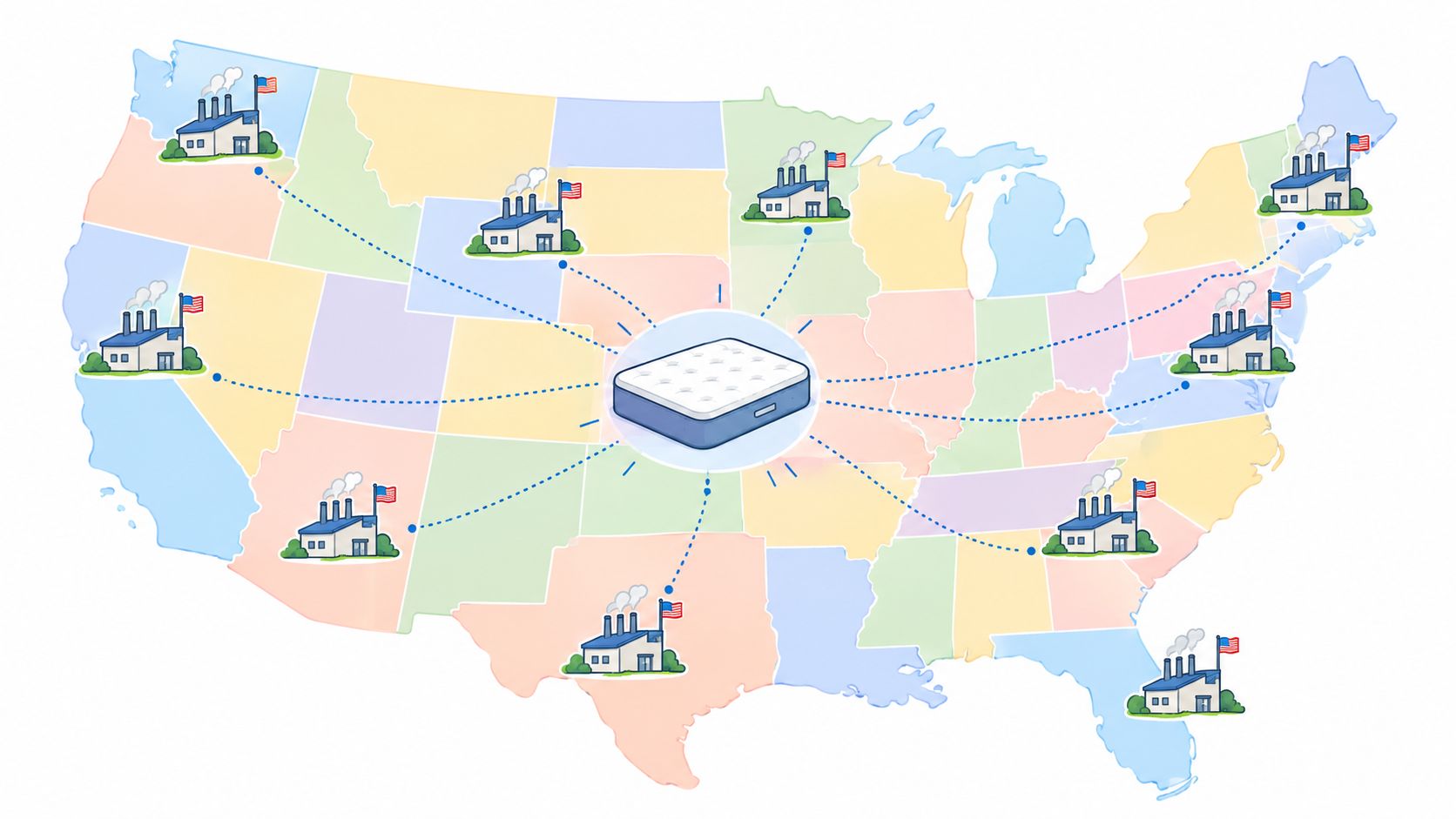
Where does a Serta mattress come from before it reaches a Connecticut bedroom? Serta uses a distributed manufacturing network rather than one factory serving every order. Its current materials identify 27 facilities in the U.S.A., plus four in Canada and 33 additional facilities internationally. That network helps explain why the country of manufacture can differ by model, size, or destination.
Serta's compliance documentation lists facilities in Colorado, Florida, Georgia, Iowa, Massachusetts, Michigan, New York, North Carolina, Ohio, Pennsylvania, Texas, Washington, and Wisconsin, along with Puerto Rico. The list is useful context, but it does not identify the plant for every mattress. A specific product's law tag remains the product-level reference.
For a Connecticut shopper, a regional network can affect logistics. Inventory may be assigned to a plant that serves a particular area, which can influence the route and timing before delivery. It also means a mattress sold in Connecticut may be assembled closer to the Northeast than another mattress with the same brand name.
Serta's public compliance materials identify a Windsor Locks, Connecticut facility. That detail shows why “made in America” describes a manufacturing network, not a single universal location. Different products can move through different domestic sites as production and inventory needs change.
The practical question for a buyer is specific: which facility is connected to the model and order in front of you? A retailer's team can often confirm that information before delivery, while the mattress's law tag provides the final product-specific check. This distinction turns a broad corporate statement into an answer about your mattress.
How to Read the Law Tag on Your Specific Mattress
The law tag is the label that turns a broad brand claim into a specific mattress fact. That tag is the best place to start because it ties the actual product in the room to a place of manufacture, not just to a corporate webpage.
For a Serta mattress, the smartest question is direct: What plant is named on the law tag for this specific model and size? Serta's compliance system says the facility certificate should match the plant listed for the product's place of manufacture, so the tag is not just paperwork, it's the bridge between the mattress you ordered and the factory that built it.
A buyer can make the check simple:
- Confirm the model name. A collection name alone is not enough if there are multiple builds.
- Confirm the size. Different sizes can be produced or allocated differently.
- Write down the plant name. Match it to the facility certificate.
- Ask about substitutions. A retailer should explain whether the production run could change before delivery.
That last point matters more than many shoppers realize. A model name can stay the same while the manufacturing location changes, especially when inventory is moving through a distributed plant network. For a plain-language walkthrough of mattress shopping details, an internal guide like how to choose a mattress can help buyers stay focused on comfort while still checking origin.
Useful habit: don't stop at the brand claim, read the hang tag and keep the model, size, and plant written down until delivery is complete.
Why the Same Model Can Ship from Different Plants
Serta describes its mattresses as made to retailer or hotel orders at U.S. plants and tested for quality before leaving the factory. That sounds like standard manufacturing language, but it tells shoppers something important: the company's production is tied to demand, not a fixed shelf of identical mattresses waiting in one warehouse.
In everyday terms, that means the same model can come from different plants depending on the order, the destination, and the current flow of inventory. A retailer in one region might receive a batch assembled at one facility, while a similar order elsewhere comes from a different plant in the network. The model name stays familiar, but the origin on the tag can change.
Serta also says its products are assembled from finished components and that no chemical processing is introduced at its manufacturing facilities. That distinction helps shoppers separate assembly conditions from material sourcing. A mattress can be built domestically under controlled manufacturing procedures without every raw input originating domestically.
That's why a single brand statement can never answer every buyer's question. One shopper may care mainly about domestic labor and final assembly. Another may want deeper supply-chain transparency. The same label can satisfy the first question and leave the second one open.
For a practical lens on what delivery looks like once the mattress leaves the factory, an internal resource on mattress delivery and set up is a useful companion to the origin question.
Made in USA Does Not Mean Every Component Is American
What does made in the USA tell you about the parts inside a Serta mattress? Primarily, it identifies where the mattress was assembled. It does not establish that every supplier made its foam, steel coils, fabric, or fire barrier in the United States.
A useful example is a mattress with a steel coil unit, gel foam comfort layer, and fire-barrier fabric. Those three components may follow different supply routes before arriving at a domestic plant. The finished mattress can still carry a U.S. assembly claim, while the origin of each component remains a separate question.
Serta's public materials do not identify the country of origin for every component in every model. Ask about the parts that matter to you: Where was the coil unit produced? Where did the foam come from? Was the fire barrier made domestically? A retailer may need the specific model and current inventory details to seek a meaningful answer.
The law tag describes assembly origin. Component origin requires additional sourcing information, so shoppers should avoid treating “American-made” as a complete supply-chain description.
For a Connecticut buyer comparing two mattresses, this distinction helps explain why identical-looking products can have different answers about their materials. The practical takeaway is simple: read the tag for the manufacturing location, then ask targeted questions about the components inside.
How Recent Closures Affect the Made in USA Picture
Could a factory closure change what “made in the USA” means for your next Serta mattress? Yes. Production networks shift, so the plant connected to a model can change even when the brand's broader U.S. manufacturing claim remains.
In June 2025, Furniture Today reported that Serta Simmons Bedding planned to close its 533,000-square-foot Moreno Valley, California, plant, affecting 180 workers. Production was expected to move to other regional facilities, leaving 15 U.S./Puerto Rico factories and two Canadian factories in North America.
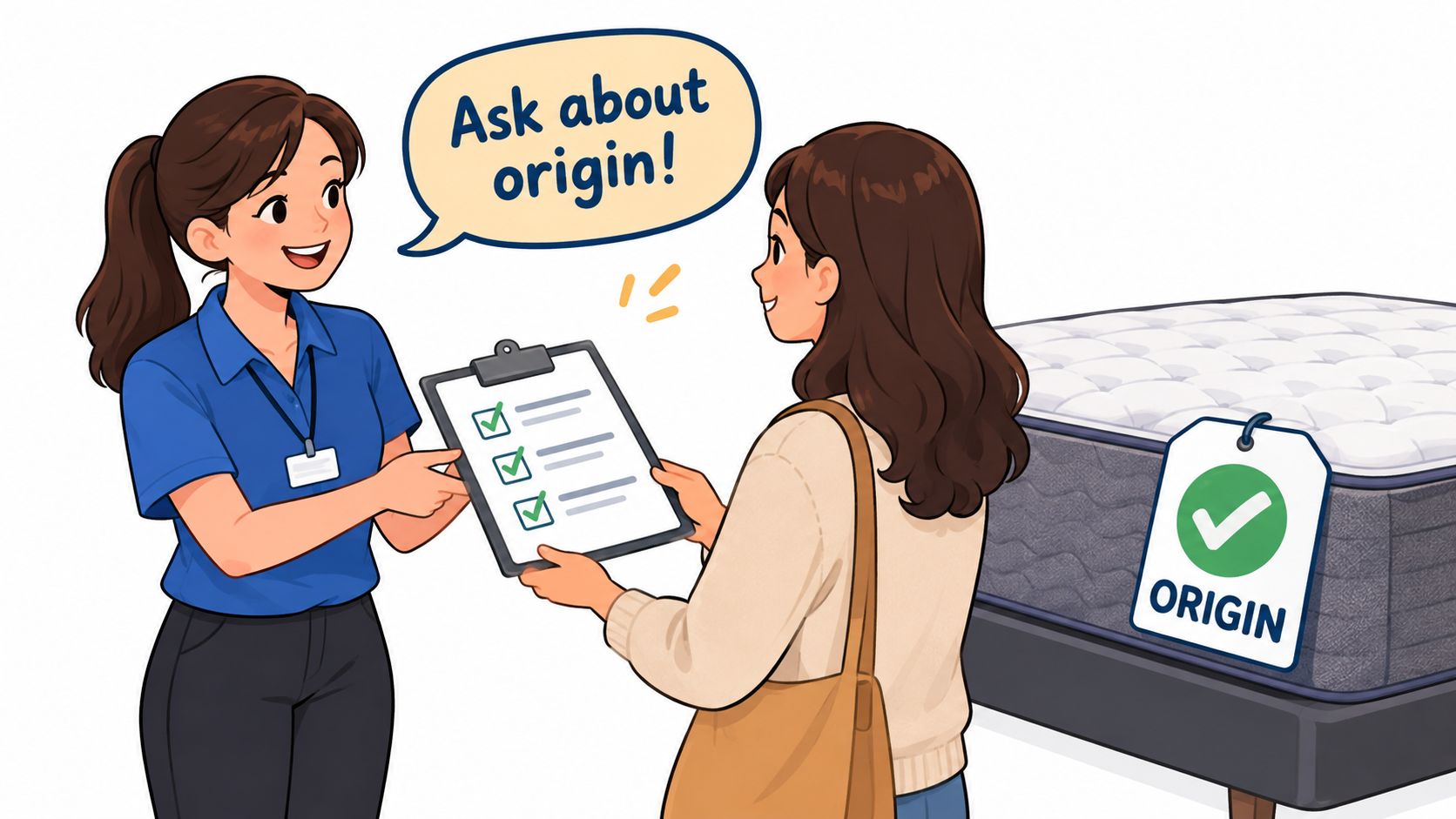
The practical point is simple: a closure does not mean Serta stopped making mattresses in the United States. It means factory assignments, available inventory, and delivery routes can change. A special-order mattress may come from a different facility than an identical model already on a showroom floor.
That difference matters for a Norwich-area shopper. Two mattresses from the same collection can look alike yet carry law tags naming different plants. The tag is like an address label for that specific finished mattress, not a permanent map of the entire brand's manufacturing network.
Recent plant news therefore gives “made in the USA” useful context. Treat the phrase as a current claim to confirm on the mattress you are ordering, rather than as a timeless description of every Serta production location.
How to Verify Origin When Shopping at Gorins
A showroom visit makes this question easier, not harder. Gorins has been a locally owned, family-operated Norwich, CT showroom since 1936, and its Sleep Gallery includes Serta alongside Tempur-Pedic, Stearns & Foster, Beautyrest, Sealy, and King Koil. A neighborhood specialist can help a shopper check the actual model name, confirm the law tag, and compare comfort by feel instead of relying on a generic country-of-origin line.
The best questions are straightforward:
- What plant is listed on the law tag for this mattress?
- Is this exact size and model coming from the same facility as the floor sample?
- Can the retailer confirm the tag before delivery?
A nearby team can also explain how comfort preferences, support feel, and budget fit together without turning the conversation into pressure. That matters for shoppers comparing Mattresses Norwich CT options, especially when promotional financing, equal monthly payments, or clearance value can make a higher-quality mattress easier to bring home on a practical timeline.
For a direct showroom reference, the locations page helps identify where to visit in person. A local conversation is the fastest way to turn a broad claim into a specific answer about the exact Serta mattress sitting in the cart.
Since 1936, Gorins Furniture & Mattress has helped Norwich and Eastern CT families make confident home choices with expert guidance and a low-pressure showroom experience. If this question about Serta's U.S. manufacturing footprint is on your mind, visit Gorins Furniture & Mattress to check the law tag, compare comfort by feel, and get straightforward help choosing the right mattress for your home.