Norwich, CT: Best Mattress for Combination Sleepers


A lot of Norwich-area shoppers know this feeling. They fall asleep on one side, wake up on their back, then spend the early morning half on their stomach with a twisted blanket and an annoyed lower back. The mattress didn't seem terrible in the store, but at home it never feels right for very long.
That pattern usually points to combination sleeping. In plain language, that means a person moves between two or more sleep positions during the night instead of staying mostly on the side, back, or stomach. The hard part is simple. One mattress has to handle different jobs without making any one position feel unsupported or painfully firm.
Since 1936, this family-operated Norwich business has helped local households sort through confusing mattress choices with practical guidance instead of pressure. That matters because mattress shopping gets muddy fast. One label says plush, another says firm, and online advice often gives the same answer to everyone.
Sleep habits matter beyond the mattress too. For readers building a more calming bedtime routine, this guide to essential oils good for sleep can help explain how scent and routine may support a quieter wind-down before bed.
Table of Contents
- Tired of Tossing and Turning All Night
- The Combination Sleeper's Dilemma
- A Guide to Mattress Firmness and Materials
- Our Top Mattress Types for Restless Sleepers
- How to Test a Mattress in Our Showroom
- The Gorins Advantage Investment Grade Sleep
- Your Path to Better Sleep Starts in Norwich
Tired of Tossing and Turning All Night
A restless sleeper usually isn't being difficult. The mattress may be asking the body to choose one position and stay there. Combination sleepers can't do that comfortably, so they keep shifting, trying to find a spot where the shoulders, hips, and lower back all feel settled at the same time.
That's why the search for the best mattress for combination sleepers can feel frustrating. A bed that feels nicely cushioned on the side may let the hips sink too far on the stomach. A bed that feels supportive on the back may press too hard into the shoulder when the body rolls sideways.
Why this sleep style feels harder to shop for
Combination sleepers need balance more than extremes. They usually do better with a mattress that gives enough support for alignment but also enough surface comfort to avoid pressure points. If either side of that equation is missing, the body starts negotiating all night.
Practical rule: If a mattress feels good in one position but noticeably wrong in another, it probably isn't versatile enough for a combination sleeper.
Many local shoppers often start to second-guess themselves. They wonder whether they need softer foam, stronger coils, a cooler cover, or a firmer feel. The honest answer is that all of those factors can matter, but they only make sense when tied to how that person moves at night.
A local way to simplify the decision
For neighbors in Norwich and across Eastern CT, the goal isn't to memorize mattress jargon. The goal is to connect the construction of a mattress to the way the body sleeps. That means looking at movement, posture, and pressure relief together instead of chasing a trendy label.
A useful mattress should make movement easier, not make the sleeper feel stuck. It should support a neutral spine on the back, prevent too much dip on the stomach, and cushion the shoulder and hip on the side. That's the roadmap that helps combination sleepers shop with more confidence and less guesswork.
The Combination Sleeper's Dilemma
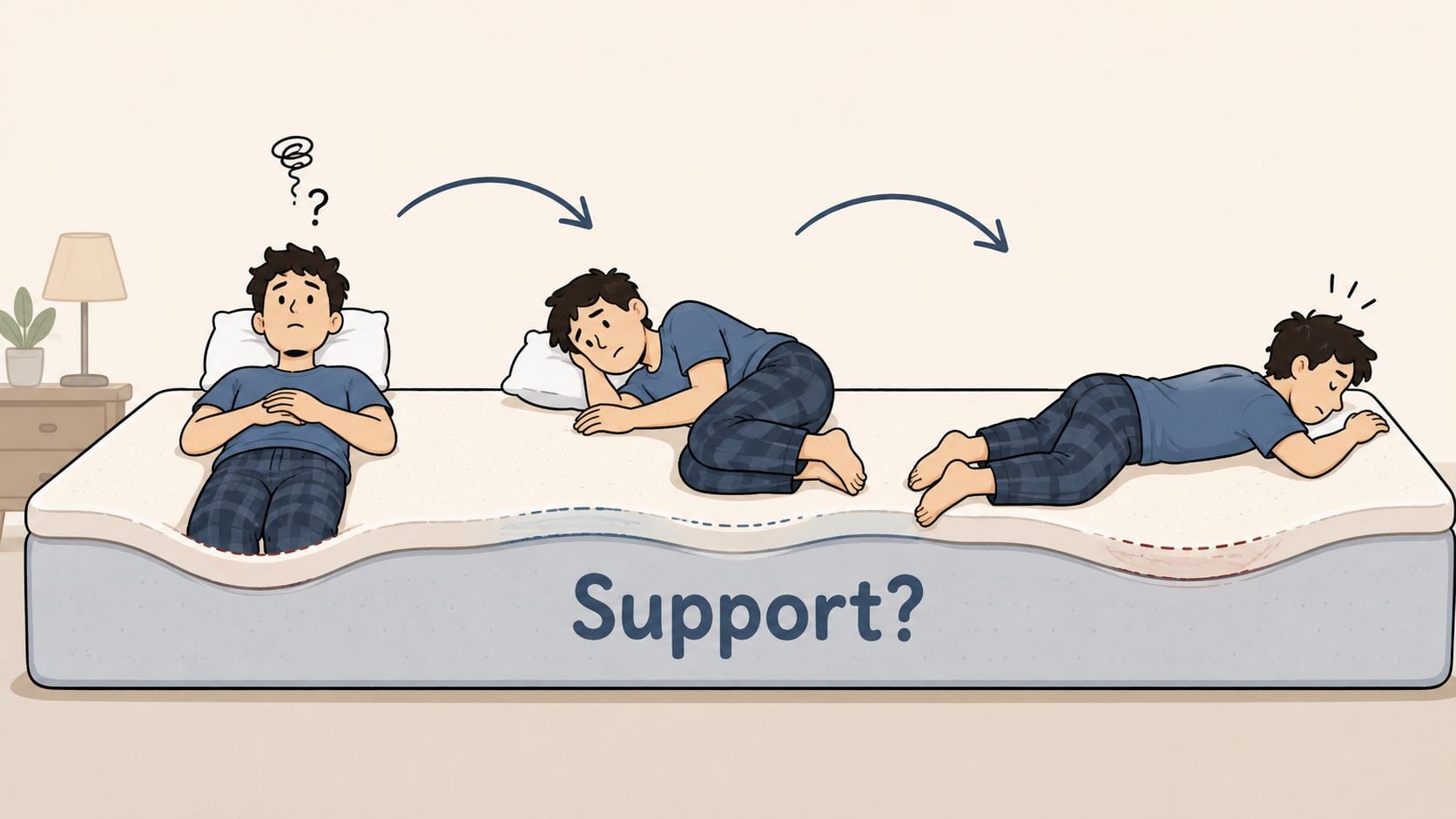
A combination sleeper asks one mattress to do several jobs in the same night. On the side, the bed needs enough cushion for the shoulder and hip. On the back or stomach, it needs steadier support so the torso does not dip out of line.
Why one simple answer often falls short
Many mattress guides repeat the same answer: medium-firm hybrid. That can be a reasonable starting point, but it does not finish the job. Shoppers in Norwich often find that the advice sounds clear online, then feels fuzzy the moment they lie down on an actual bed.
The missing piece is fit. A side/back sleeper usually needs more pressure relief at the surface. A back/stomach sleeper usually needs a flatter, more supportive feel through the middle of the mattress. Both people change positions. Both count as combination sleepers. They still may need very different comfort levels.
Body weight changes the picture too. A lighter sleeper may stay more on top of the mattress and experience the bed as firmer. A heavier sleeper may sink deeper into the comfort layers and feel more of the support core underneath. That is why one label on a showroom tag does not guarantee the same experience for every person.
For readers who want a fuller breakdown of posture and position needs, this guide on choosing the right mattress for your sleeping style can help frame the decision before you test beds in person.
The variables that change the feel
A good way to sort through the confusion is to look at three details together, not one at a time.
- Body weight: Weight affects how far the body presses into the comfort layers and how firm the mattress feels in real use.
- Primary position pattern: Side/back sleepers often notice shoulder or hip pressure first. Back/stomach sleepers often notice hip sag or lower-back strain first.
- Ease of movement: Some sleepers change position once or twice. Others roll often and need a surface that responds quickly instead of holding them in place.
A mattress works a bit like a pair of shoes. Two people can wear the same size on paper, but the right fit still depends on shape, support, and how the shoe feels in motion.
That is the core dilemma for combination sleepers. The goal is not to find one universal mattress type. The goal is to find the firmness and construction that match your weight, the positions you spend the most time in, and how often you move. That is also why in-person testing matters so much. A quick try in a local showroom like Gorins can reveal whether a bed handles your actual sleep pattern, not just a broad category label.
A Guide to Mattress Firmness and Materials
Firmness and material are related, but they answer two different questions. Firmness is how the mattress feels when you lie down. Material is what creates that feel and how the bed reacts when you roll from your side to your back at 2 a.m.
That difference matters for combination sleepers because the goal is not one catch-all answer. A mattress that feels just right for a lighter side and back sleeper can feel too soft for a heavier back and stomach sleeper. The better approach is to match firmness and construction to your body weight and the positions you use most often.
What medium-firm really means
Medium-firm gets recommended often because it usually sits in the middle of two common needs. Side sleeping asks for enough cushioning at the shoulder and hip. Back or stomach sleeping asks for enough support to keep the midsection from dipping too far.
Test-lab results for strong combination sleeper mattresses often score well for responsiveness, which helps explain why this range gets recommended so often. In plain language, responsiveness is the mattress's ability to adjust quickly when you move. A bed with too much slow sink can feel like wet sand under your body. A bed that feels too hard can create pressure points before morning.
That middle feel is a starting point, not a final answer.
A lighter sleeper may get better pressure relief from something a touch softer. A heavier sleeper, or someone who spends more time on the stomach, may need a firmer feel to keep the hips from dropping. Readers who want a clearer picture of those comfort ranges can use this guide on how to pick mattress firmness.
Mattress Material Comparison for Combination Sleepers
| Material Type | Responsiveness (Ease of Movement) | Pressure Relief | Cooling | Best For |
|---|---|---|---|---|
| Innerspring | High | Light to moderate | Good airflow | Sleepers who want bounce and a more traditional feel |
| Memory Foam | Low to moderate, depending on design | Strong contouring | Varies by construction | Sleepers who want closer body-hugging comfort |
| Latex | High | Moderate with buoyant cushioning | Often breathable | Sleepers who want quick response without deep sink |
| Hybrid | High | Moderate to strong, depending on top layers | Often strong due to coil airflow | Combination sleepers who need balanced support and easier movement |
Materials change the personality of a mattress. Two beds can both be labeled medium-firm and still feel very different in motion.
- Innerspring mattresses usually feel easy to move on and stay cooler because air moves well through the coil system. Some sleepers, especially side sleepers, find that simpler models do not cushion the shoulder and hip enough.
- Memory foam mattresses often shine at pressure relief because they contour closely to the body. That same contouring can make frequent position changes feel slower or more effortful.
- Latex mattresses have a buoyant, springy feel. They tend to support movement well without the deeper hug many people associate with memory foam.
- Hybrid mattresses combine coils with foam or latex comfort layers. That mix is why they fit so many combination sleepers. They can cushion the body while still making movement easier.
A simple way to picture it is this. Firmness is the number on the thermostat. Material is the heating system behind the wall. The room may reach the same temperature, but it gets there in a different way and feels different while it does.
How shoppers can use this information
Start with the problem you notice in bed, then trace it back to the mattress feature most likely to help.
- Shoulder pressure after side sleeping: Choose a model with more pressure relief near the surface.
- Lower-back strain after stomach sleeping: Choose a model with firmer support under the hips and midsection.
- Feeling stuck when turning: Choose a more responsive material, such as latex, coils, or a responsive hybrid.
- Sleeping warm: Choose breathable construction and cooling features that help heat escape.
That framework gives combination sleepers a more useful path than chasing the phrase "medium-firm hybrid." It helps narrow the field. An ideal fit still needs to be felt in person, because your body weight, your preferred positions, and the speed of your movements all change how a mattress performs once you lie down on it.
Our Top Mattress Types for Restless Sleepers
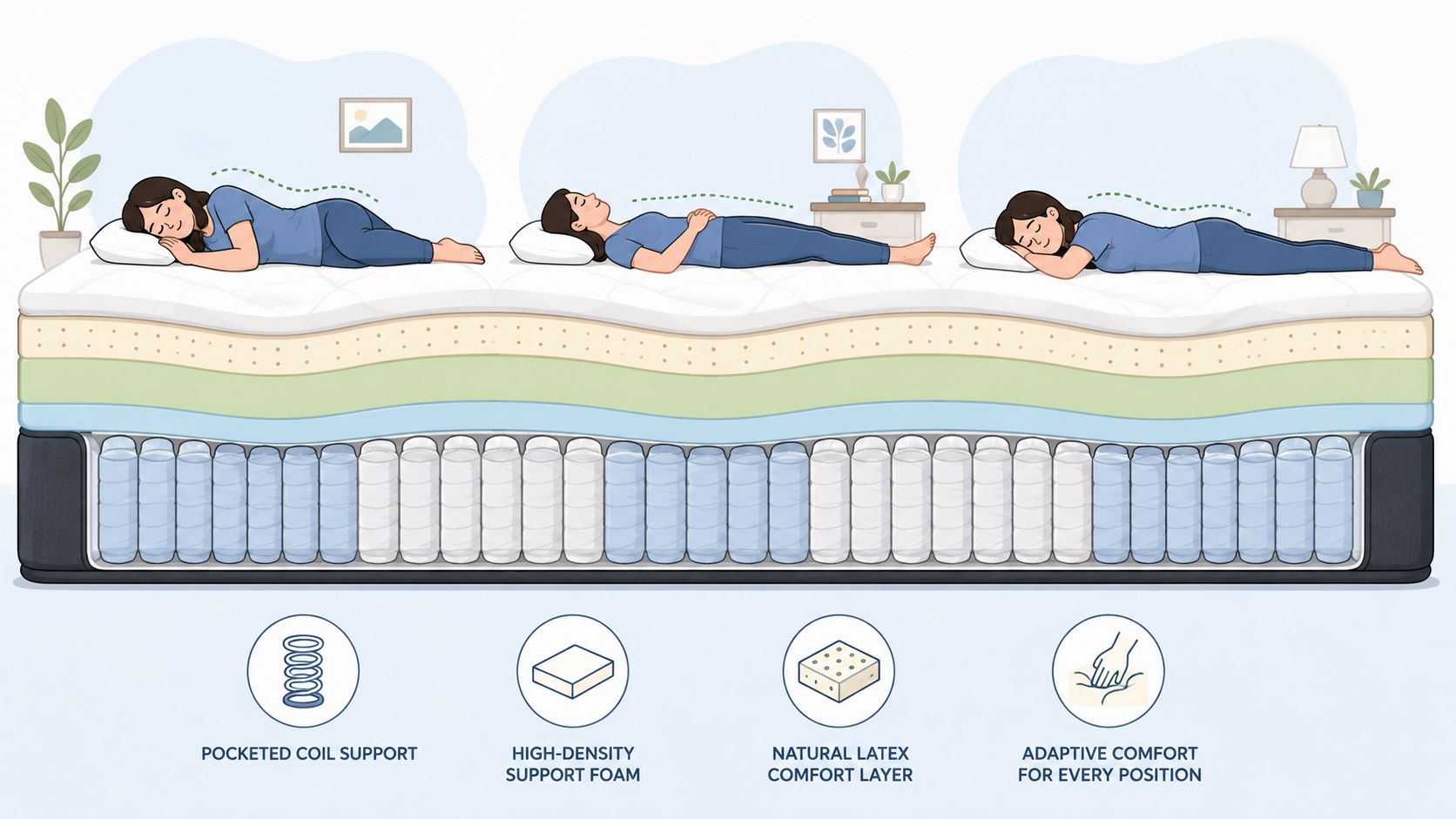
Combination sleepers usually do best on a mattress that can do two jobs at once. It needs enough cushion to avoid pressure build-up in one position and enough pushback to keep the body from sagging in another. That balance is why hybrids often end up as the strongest starting point.
Why hybrids fit so many combination sleepers
A strong technical benchmark is a hybrid with individually wrapped coils and a transition foam layer. That build matters for a practical reason. It helps the mattress respond in stages instead of all at once.
The coil unit acts like the support system underneath a good pair of work boots. It keeps the foot from collapsing and gives each area better support. On a mattress, that means the hips, shoulders, and midsection can get support that feels more precise, which is helpful for people who shift from side to back or back to stomach during the night.
The transition foam above the coils has a different job. It softens the handoff between the comfort layer and the support core, so the body does not drop too abruptly as weight shifts. For a restless sleeper, that can make position changes feel easier and more controlled.
Cooling also matters here. A sleeper who changes positions often creates more friction against the bed and may notice heat build-up sooner. Breathable covers, airflow through the coil system, and temperature-aware foams can make the mattress feel more comfortable over the full night, not just in the first few minutes.
For a closer look at this construction, this guide explains what a hybrid mattress is.
A good hybrid usually feels stable first and cushioned second. Combination sleepers often prefer that order because support helps every position, while comfort needs vary by body shape and sleep style.
When foam can still be the right fit
Foam can work well for the right person. The question is not whether foam is good or bad. The better question is how quickly it responds and how far you sink into it.
A lighter side/back sleeper may enjoy foam because the surface can cradle the shoulder and hip without making movement difficult. A heavier back/stomach sleeper often needs a mattress that feels more lifted through the middle, so a slower, deeper foam feel may be less comfortable over time.
That is where the usual one-size-fits-all advice falls short. “Get a medium-firm hybrid” is a decent headline, but it is not a personal recommendation. Body weight changes how firm a bed feels, and your two most common positions change what kind of support pattern you need.
At Gorins, shoppers in the Sleep Gallery can feel those differences directly across Tempur-Pedic, Serta, and Beautyrest models. Pressure relief is easier to judge when your shoulder is on the bed. Ease of movement becomes obvious the moment you roll from your side to your back.
A simple decision framework
Use these pairings as a starting map, not a final verdict:
- Mostly side and back, lighter to average weight: Look for balanced cushioning with enough support underneath so the hips do not sink too far.
- Mostly side and back, higher body weight: Look for a sturdier support core and comfort layers that relieve pressure without letting the body settle too far.
- Mostly back and stomach, lighter to average weight: Look for a firmer feel with steady support under the hips and midsection.
- Mostly back and stomach, higher body weight: Look for stronger pushback, dependable edge support, and a surface that keeps the spine from bowing.
- Frequent mover in any weight range: Prioritize responsiveness, surface stability, and a feel that makes turning easy.
The best mattress for a combination sleeper is usually the one that matches both your build and your usual position mix. That is why in-person testing matters so much. Two people can lie on the same mattress and feel two completely different versions of “firm” and “supportive.”
How to Test a Mattress in Our Showroom
A quick sit on the edge tells you almost nothing if you sleep in more than one position. Combination sleepers need a mattress test that works like a short road test, not a glance at the dashboard. Your body has to roll, settle, and stay still long enough to show where support holds and where pressure starts to build.
A better way to test than a quick sit-down
Online reviews can help narrow the field, but they cannot tell you how your shoulder, lower back, and hips will react on the same bed after a few minutes in different positions. That matters even more for combination sleepers, because the right fit is rarely a one-size-fits-all “medium-firm hybrid” answer. A mattress can feel pleasant for sixty seconds and still become frustrating by minute ten.
If you want more background before visiting, this guide on how to choose a mattress can help you understand the basics. The showroom test is where those basics become personal.
A useful in-store test usually looks like this:
- Start in your most common sleep position. If you begin where you spend the most time at home, your body gives clearer feedback.
- Stay there for several minutes. Pressure points often show up slowly, especially at the shoulder and hip.
- Roll into your second position. Notice whether the mattress helps the turn or makes you work for it.
- Pause again after the roll. A bed can be easy to move on but still miss the mark once you settle.
- Test near the edge while lying down. Combination sleepers use more of the mattress surface during the night than they may realize.
- If two people share the bed, test movement together. One person should change positions while the other notices how much motion carries across.
What to pay attention to on the bed
The easiest way to judge a mattress is to let each position ask its own question.
- On your side: Do the shoulder and hip sink in enough to avoid a jammed, sharp feeling?
- On your back: Does the area under the lower back feel supported instead of hollow or flat?
- On your stomach: Do the hips stay level, or do they dip low enough to strain the midsection?
- While turning: Can you move without feeling stuck in the comfort layers?
One more detail helps many shoppers. Notice the difference between “soft” and “pressure relief.” They are not the same thing. A mattress can feel plush at first touch and still let the body sink out of alignment. Another can feel more supportive at first and end up more comfortable ten minutes later.
That is why in-person testing at Gorins matters for Norwich-area shoppers. The goal is not to find the mattress with the nicest first impression. The goal is to find the one that keeps your common position mix workable, your spine supported, and your movements easy through the night.
The Gorins Advantage Investment Grade Sleep
A mattress purchase isn't just about what happens on night one. It's also about what happens after delivery, during setup, and if questions come up later. For many households in Norwich, New London, Plainfield, Waterford, and nearby Eastern CT and Rhode Island communities, that local follow-through matters just as much as the initial comfort test.
Why local support matters after the purchase
A showroom relationship can make the process easier to live with. A shopper choosing Gorins Furniture & Mattress gets access to a local mattress department, known as the Sleep Gallery, with brands such as Tempur-Pedic, Serta, and Beautyrest, plus in-person guidance built around comfort by feel and healthier sleep.
The same business has served local families since 1936, and that long-standing local presence shapes the overall experience. Delivery support matters. Service access matters. Having a nearby team matters when a mattress is a major household purchase rather than an impulse buy.
Readers thinking long term may also find this article useful on why investing in a high-quality mattress is essential for long-term health.
Making better sleep easier to budget
Investment-grade sleep doesn't have to mean a rushed financial decision. Promotional Financing with equal monthly payments can help households spread out the cost of a better mattress in a way that feels manageable.
That matters for shoppers considering premium constructions and established sleep brands, including Stearns & Foster and Tempur-Pedic. Instead of settling for a mattress that only sort of works, financing can open the door to a more suitable fit for the way the body sleeps.
A purchase like this also sits inside a broader home story. Some shoppers come in focused on sleep and later explore other custom options for the home, including Canadel dining with thousands of combinations or the F9 Custom Sofa series designed for lifestyle and room layout. The common thread is the same. A home works better when the fit is personal.
Your Path to Better Sleep Starts in Norwich
For combination sleepers, the clearest starting point is usually a responsive, medium-firm feel, often in a hybrid design. That said, a more specific answer emerges once body weight and primary position pattern enter the picture. A side/back sleeper often needs a different balance than a back/stomach sleeper, even though both fall under the same label.
That's why personal testing matters so much. The best mattress for combination sleepers isn't the one with the most impressive buzzwords. It's the one that keeps the spine supported, cushions the right pressure points, and lets the sleeper move naturally through the night.
Since 1936, Gorins Furniture & Mattress has helped Norwich and Eastern CT families create homes they love. From custom-designed Canadel dining sets to the latest in Tempur-Pedic sleep technology, they combine a massive selection with the personalized care only a local, family-owned business can provide. Visit today to experience quality, value, and 5-Star Delivery service.
For neighbors ready to narrow the search, Gorins Furniture & Mattress offers three practical next steps. Visit the Norwich showroom to compare mattress feels in person, take the online Style Quiz for more personalized guidance, or browse the Clearance section for value-focused savings on quality home furnishings and sleep products.