Sheet Thread Count: How to Choose the Right Sheets

You're standing in the bedding aisle, reading labels that all seem to promise the same thing. One says 200, another says 600, and a third shouts 1,000, so it's easy to assume the biggest number must be the best pick. That's where a lot of shoppers get tripped up, because sheet thread count is only one part of how a sheet feels, wears, and breathes.
At Gorins Furniture & Mattress, the same kind of confusion shows up all the time with neighbors in Norwich and Eastern CT who just want straight answers. Since 1936, this family-owned, locally operated business has focused on making the home-furnishing process easier through practical guidance and personalized service. The good news is that sheet labels make a lot more sense once the numbers are tied to real fabric construction, not marketing hype. For a broader bedding overview, the complete guide to bedding, mattress protectors, and comforters is a useful companion once the basics click.
Staring at the Bedding Aisle, Wondering What All Those Numbers Mean
A bedding label can look more complicated than it needs to be. One package leans on a high number, another on a softer-looking weave name, and a third adds terms like “premium” or “luxury” without much context.
That's why the first step is simple, separate the number from the marketing. Thread count tells part of the story, but it doesn't tell the whole story about comfort, cooling, or durability. A shopper who knows that going in can compare sheets with a calmer eye and avoid paying for a number that sounds impressive but doesn't match the way the fabric is built.
Practical rule: If the label gives only a huge number and nothing about fiber type, weave, or ply, there's still not enough information to judge quality.
A better way to shop is to treat the number as one clue among several. That's how an experienced sales associate would handle it on the showroom floor, not by pushing the highest number, but by helping someone match the sheet to how they sleep and what kind of feel they want. If the rest of the bedding system matters too, the practical bedding care guide can help with the bigger picture of upkeep and replacement.
What Thread Count Actually Measures and What It Doesn't
The basic calculation
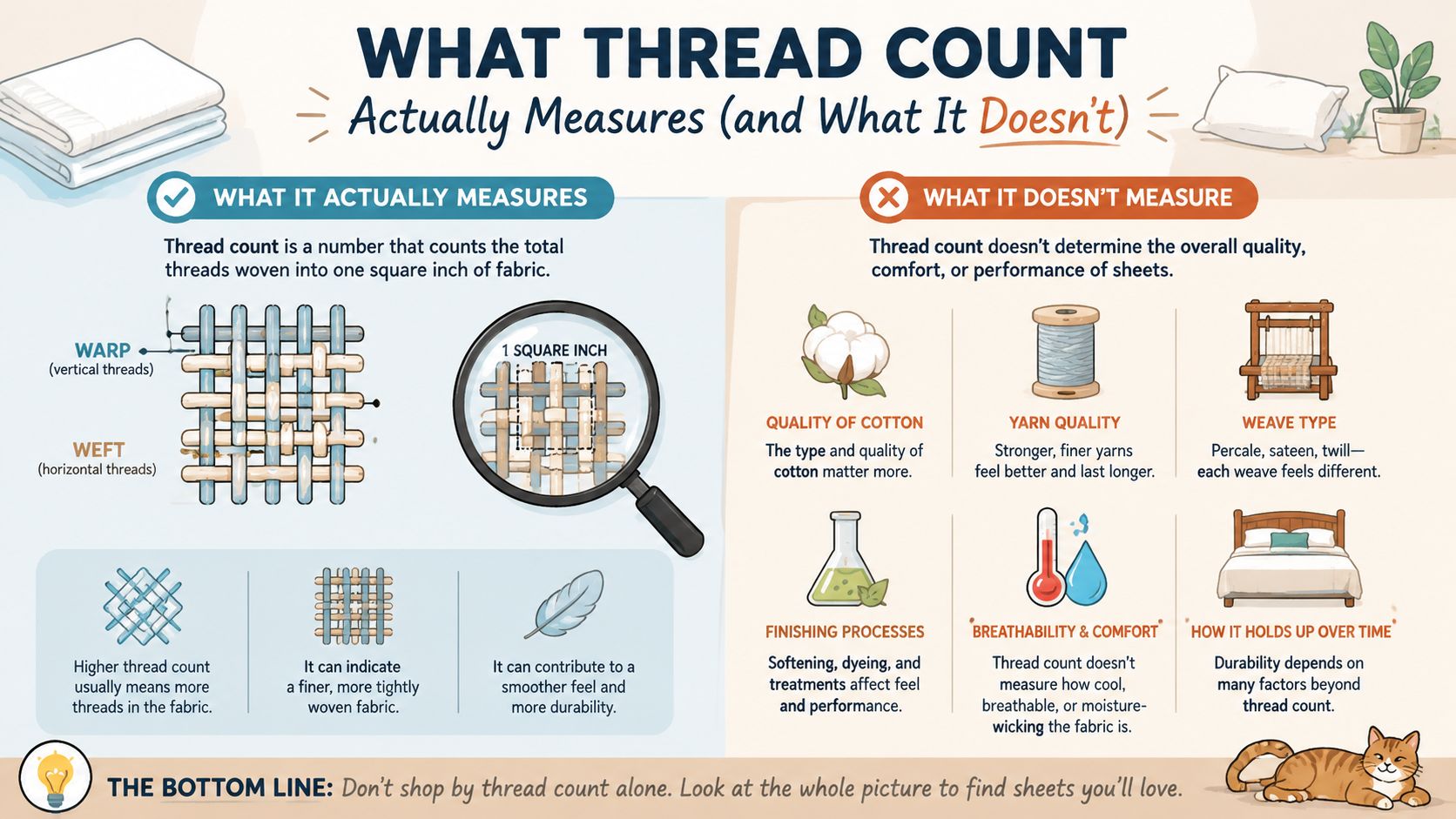
Thread count is a fabric-density measure, not a softness score. It counts the number of warp threads, which run lengthwise, plus the number of weft threads, which run crosswise, in one square inch of fabric. So if a sheet has 100 warp threads and 100 weft threads, the thread count is 200.
That is the clearest way to read the label, because it turns a fuzzy number into something concrete. A higher count means more threads packed into the same space, which can change how the sheet feels in your hand and how heavy it feels on the bed. It still does not tell you what the yarns are made from or how the cloth was finished.
Why the number stops short of quality
A sheet can have a respectable thread count and still feel ordinary if the yarns are poor or the weave is unbalanced. A sheet can also feel excellent at a moderate count when it uses good fiber and careful construction. That is why thread count works best as a starting point, not a final judgment.
A 200 thread-count sheet is effectively 100 yarns in each direction, so the number is about density, not luxury by itself.
That is the part people often miss when they treat thread count like a full rating system. It works more like a measurement of how tightly the cloth is built, useful on its own only when you pair it with the rest of the label and the way the fabric feels in hand. The Sleep Foundation's explanation of sheet thread count makes the same basic point, that the number only means much alongside weave and fiber quality, and not as a stand-alone promise of comfort. The same idea shows up in the how to change your sheets guide for shoppers who want to think about sheet care alongside comfort. Local guidance at Gorins' Sleep Gallery can make that easier, since you can compare fabric samples in person, ask questions without pressure, and sort through financing options before you decide what fits your home best. The bigger picture is clearer when someone talks you through it at the counter instead of leaving you to guess from a tag.
The Big Myth Why Higher Thread Count Isn't Always Better
The biggest mistake shoppers make is assuming the largest number always means the best sheet. That idea got a lot of traction in the early 2000s, when higher numbers became a major selling point and inflated claims started showing up all over the bedding market.
There's also a long history behind the skepticism. Consumer guidance notes that sheets once commonly had thread counts around 120, roughly 60 warp and 60 weft threads per square inch, while today many premium products advertise much higher numbers. The problem is that a higher headline number can come from counting yarn plies separately, not from making the fabric denser or better. In a 2002 study, the Good Housekeeping Research Institute found 7 out of 8 sheets had exaggerated thread counts, often by 3 to 5 times the true number, which is why inflated labels still deserve a skeptical eye today. That history is laid out well in the sheet thread-count background from Dwell, and the same warning shows up in the Fabric Company apparel fabric guide, which helps show how ply counting can distort a label.
What inflation looks like in practice
Manufacturers can separate a yarn into multiple plies and count each ply as if it were its own thread. That can make a sheet look dramatically denser on paper without changing how it feels in the bedroom. A label that says 1,000 thread count is not automatically better than one that says 400.
The more dependable historical standard is moderate thread count plus good cotton and smart weave construction. That combination tends to balance softness, breathability, and longevity better than chasing the highest figure on the shelf. For warm-weather sleepers, the guide to mattresses and bedding for warmer months is a helpful reminder that comfort usually comes from balance, not extremes.
Recommended Thread Count Ranges by Fabric Type
The range depends on the fabric
A thread count number only makes sense when it's tied to the fabric type. Percale, sateen, linen, and cotton blends all behave differently, so a good number for one weave can be the wrong target for another. That's why a shopper looking for the “best” thread count will usually get a better answer by first choosing the feel they want.
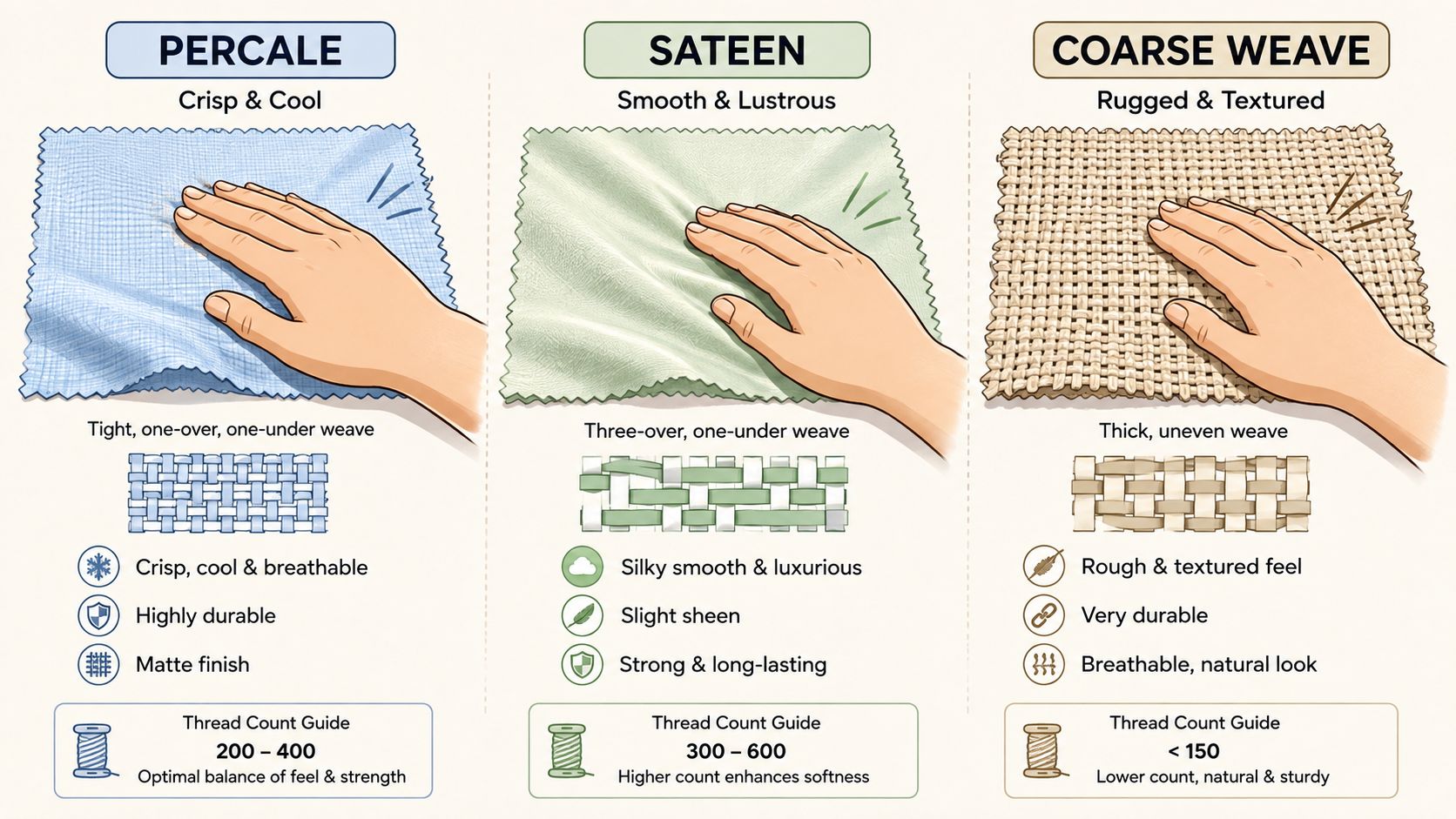
For crisp, cool sheets, percale usually lives in a lower range. For smooth, silky sheets, sateen usually runs higher. Linen is a different animal altogether, because its texture and breathability matter more than trying to chase a cotton-style count.
Quick reference for common sheet fabrics
| Fabric Type | Ideal Thread Count Range | Why This Range Works |
|---|---|---|
| Cotton Percale | 200 to 300 | Crisp, breathable, lightweight, and typically gets softer with wash and use |
| Cotton Sateen | 300 to 600 | Smoother hand feel and a denser surface without giving up all airflow |
| Egyptian Cotton | 300 to 400 | Extra-long fibers can support a refined feel at moderate counts |
| Pima Cotton | 300 to 400 | Long-staple fibers help create softness and strength without chasing extreme numbers |
| Linen | Up to 200 | Breathability and texture matter more than a high count |
| Cotton-Polyester or Cotton-Bamboo Blends | 150 to 300 | Blend ratio and construction matter more than the number alone |
A useful detail to remember is that the same count can feel different depending on the yarn and weave. Good Housekeeping places the best cotton sheets often between 300 and 500, while The New York Times' Wirecutter says good sheets generally range from 200 to 600, depending on weave and material. That sits comfortably alongside the practical ranges above and helps explain why a single “perfect” number doesn't exist.
Helpful shortcut: Start with the feel first, crisp, silky, textured, or light, then use thread count to narrow the options within that category.
For shoppers who sleep hot, the cooling bedding guide for hot sleepers can make the percale-versus-sateen choice easier before any in-store comparison.
How Thread Count Affects Feel, Durability, and Breathability
A shopper can hold two sets of sheets with the same thread count and still feel a clear difference right away. One may feel crisp and airy, another smooth and weightier. That happens because thread count changes the way fabric is built, but it does not tell the whole story on its own.
Feel changes with density, but only up to a point
Thread count can change how a sheet feels against the skin. As more threads fit into the same space, the surface can feel smoother and more substantial. That only helps to a point, because once the fabric becomes too dense, it can start to feel heavier instead of more comfortable.
That tradeoff matters most for people who sleep warm. A sheet with a very high count may feel rich at first touch, but the tighter construction can cut down airflow and hold more heat. The Sleep Foundation notes that good-quality cotton and percale sheets often land around 200 to 400, while sateen commonly runs 300 to 600, which fits the idea that there is a comfort range, not a race to the biggest number.
Durability depends on more than the number on the label
Durability comes from the whole sheet, the fiber quality, the yarn quality, and the way the fabric is woven. Fine, long-staple cotton yarns can support a higher count because more threads fit into the same area, but that still does not mean every high-count sheet will wear better. If the count is padded by multi-ply tricks, the fabric may look impressive without really improving how it holds up.
A showroom test helps here. Check the drape and the weight together. A good sheet should feel substantial, but not stiff or boardlike. The weave should also match the room, because a warmer sleeper in a dense sateen may notice heat retention long before softness becomes the main issue.
The best clue is how the fabric hangs in hand, not how loudly the package announces the number.
That is why sheet thread count works best as a performance clue, not a final answer. For people who care most about sleeping cool, the guide to sleeping cooler at night is a practical next stop because breathability and weave matter as much as density. If you are matching sheets to a particular mattress, the top sheets for Purple bed can also help you compare what tends to work with that kind of surface.
Practical Buying Guidance and Care Tips for Local Shoppers
What to ask before buying
A good showroom conversation starts with simple questions. What is the fiber content. Is the cotton long-staple. Is the construction single-ply or multi-ply. Those answers usually tell more about sheet quality than the flashiest number on the package.
When comparing samples, it helps to touch more than one weave in the same visit. Percale feels crisp, sateen feels smoother and a little denser, and linen feels textured and airy. If a sheet feels substantial but still flexible, that's often a better sign than a label that sounds bigger than the fabric feels.
Best in-store test: Lift the corner, let the fabric drape, and notice whether it falls with ease or feels overly heavy.
How to care for the sheets once they're home
Simple care helps preserve softness and shape. Wash sheets in cool or warm water with a mild detergent, skip fabric softeners that coat the fibers, and tumble dry on low heat. Those habits help protect the fabric finish and reduce unnecessary wear.
It also helps to think about the whole sleep setup, not just the sheet itself. A proper mattress surface, pillow choice, and sheet fabric all work together, especially for hot sleepers or people who are sensitive to texture against the skin. A set that feels right in the store usually needs the right care at home to stay that way.
For readers exploring fit around a specific mattress surface, the top sheets for Purple bed can offer another example of how sheet choice changes with the sleep system. The broader lesson stays the same, matching the weave and fiber to the bed and the sleeper matters more than chasing a headline number.
Your Next Steps Bringing It All Together
Choosing sheets gets much easier once the number is put in context. Thread count is useful, but only alongside fiber type, weave, ply construction, and finishing. That's why a moderate, honest label often beats a flashy one that sounds better than it feels.
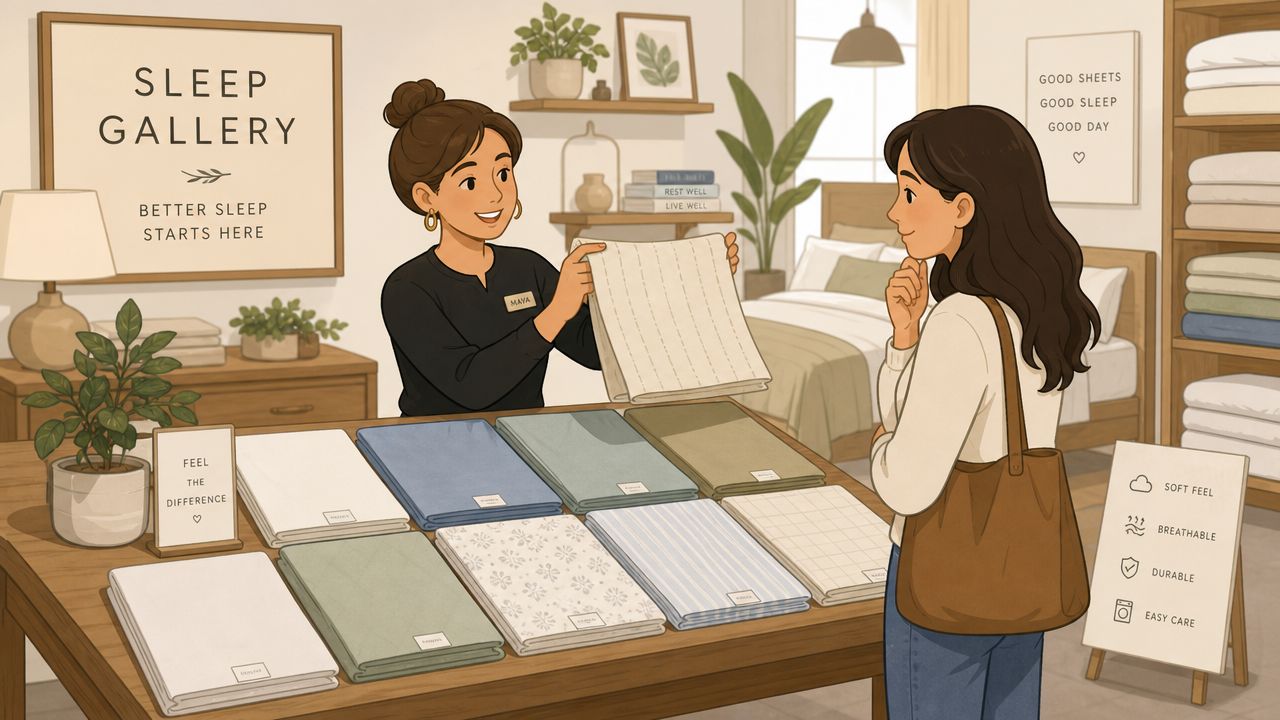
For many shoppers, the smartest move is to compare a few fabrics side by side and pay attention to touch, weight, and airflow. Top sleep brands in a dedicated showroom can help make that decision less abstract, and personalized guidance keeps the process from feeling like guesswork. The same goes for larger home purchases, where customization and financing can make quality more approachable without adding pressure.
Since 1936, Gorins Furniture & Mattress has helped Norwich and Eastern CT families create homes they love, from custom dining and custom sofa programs to sleep collections built around comfort by feel and healthier sleep. Visit the Norwich showroom, take the online Style Quiz, or ask about equal monthly payment options if you're ready to make investment-grade quality fit your budget.
Visit Gorins Furniture & Mattress to compare bedding with help from a local team that knows how to make sheet shopping simpler. The Norwich showroom is a good place to feel the difference between weave types, ask about care, and find a setup that fits your sleep style.