Ultra Luxury Mattress: A Complete Buyer’s Guide


An ultra-luxury mattress typically starts around $1,000 at retail, while true ultra-luxury tiers rise toward $5,000 to $10,000 or more, with hand-stitched natural models extending to $10,000-plus. The right purchase isn't necessarily the most expensive bed, but the one whose construction, feel, and service match the sleeper's body and lifestyle.
That distinction matters in Norwich and across Eastern Connecticut. A high-ticket mattress can be a meaningful investment in healthier sleep, but price alone doesn't guarantee pressure relief, stable support, cooling, or durability. The practical question is whether the materials and craftsmanship solve a specific problem, such as shoulder pressure, overheating, partner disturbance, or early sagging.
For shoppers visiting a local furniture store in Norwich CT, the Sleep Gallery experience should feel less like guessing between labels and more like working with a local expert designer. A knowledgeable associate can help translate technical terms into comfort by feel, then connect the mattress to the right base, bedding, delivery plan, and budget.
What Makes a Mattress Ultra Luxury
The most useful dividing line is construction, not decoration. A market report defines luxury mattresses as retail products priced at $1,000 or more, and values the global category at $8.2 billion in 2025, with a projection of $14.2 billion by 2035 and an implied 5.6% CAGR from 2026 to 2035. These figures and the segment definition appear in the luxury mattress market analysis.
For a Norwich sleeper, that threshold signals a change in buying logic. A basic mattress purchase often focuses on immediate softness and an accessible price. A premium purchase adds better materials, more deliberate support, and stronger finishing. An ultra-luxury mattress goes further with specialized construction, highly customized comfort, natural or advanced materials, and a service experience designed around a long ownership period.
Premium, luxury, and ultra-luxury tiers
A premium mattress may use improved foam, stronger coils, breathable textiles, or a more generous comfort layer. A luxury mattress typically adds zoned support, higher-grade upholstery, a pillow-top design, natural latex, or a longer trial and warranty package. Consumer guidance places many queen-size luxury mattresses around $2,000 to $4,000, depending on materials and construction, as described in this luxury mattress buying guide.
Ultra-luxury models occupy a narrower category. Independent mattress guidance commonly places them at around $10,000 and above, especially when they feature hand-stitching, all-natural materials, and specialized single-factory production. Some can weigh 200 pounds or more, a consequence of dense natural fills and compression-based construction, according to this guide to luxury mattress types.
A shopper who sleeps hot may value breathable latex and airflow more than elaborate surface quilting. A side sleeper may need pressure distribution around the shoulders and hips. A couple may prioritize motion control and independent comfort. The best ultra-luxury choice is therefore the one that improves daily sleep, not the one with the most impressive showroom story.
Materials and Construction That Define Premium Beds
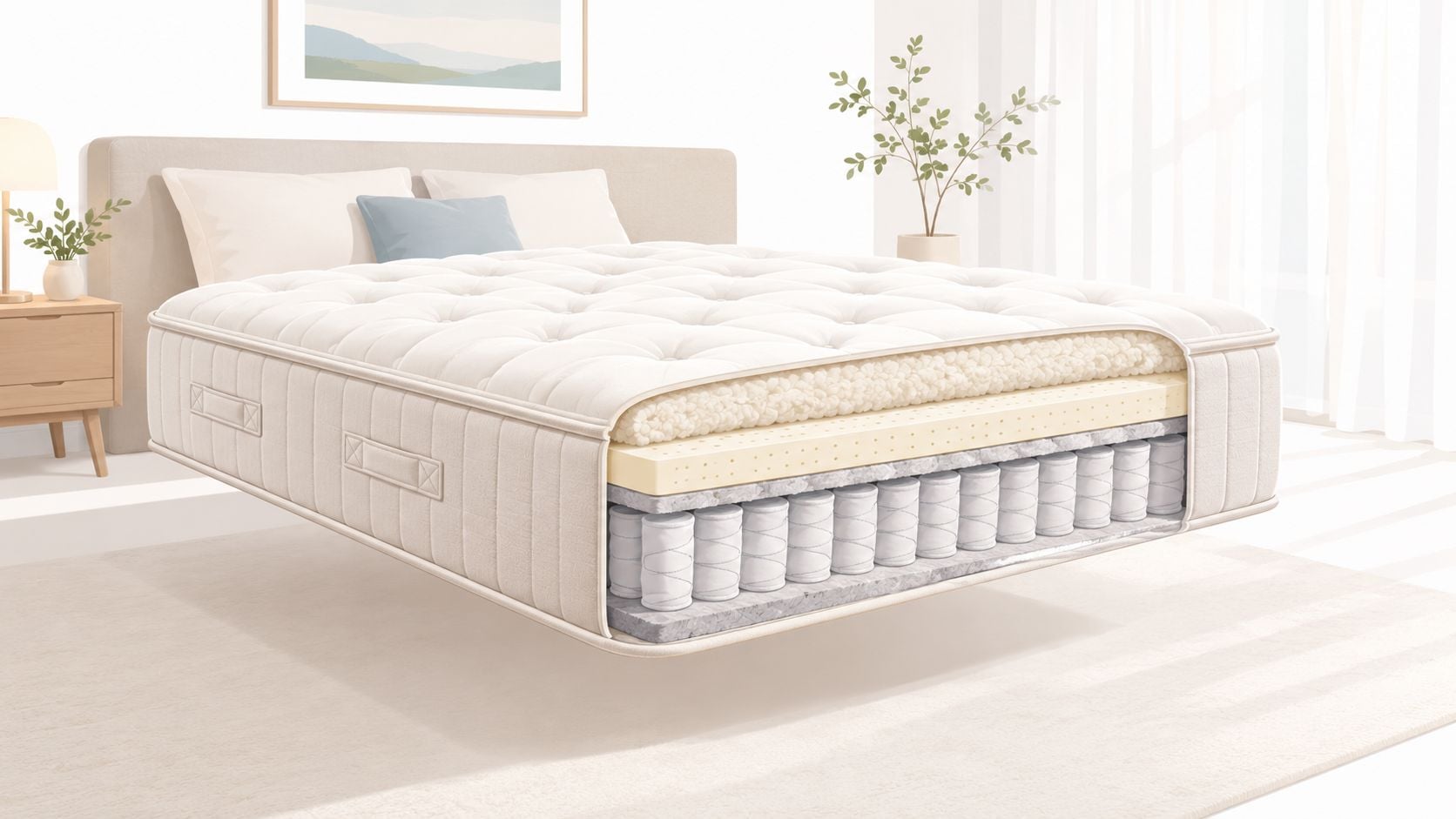
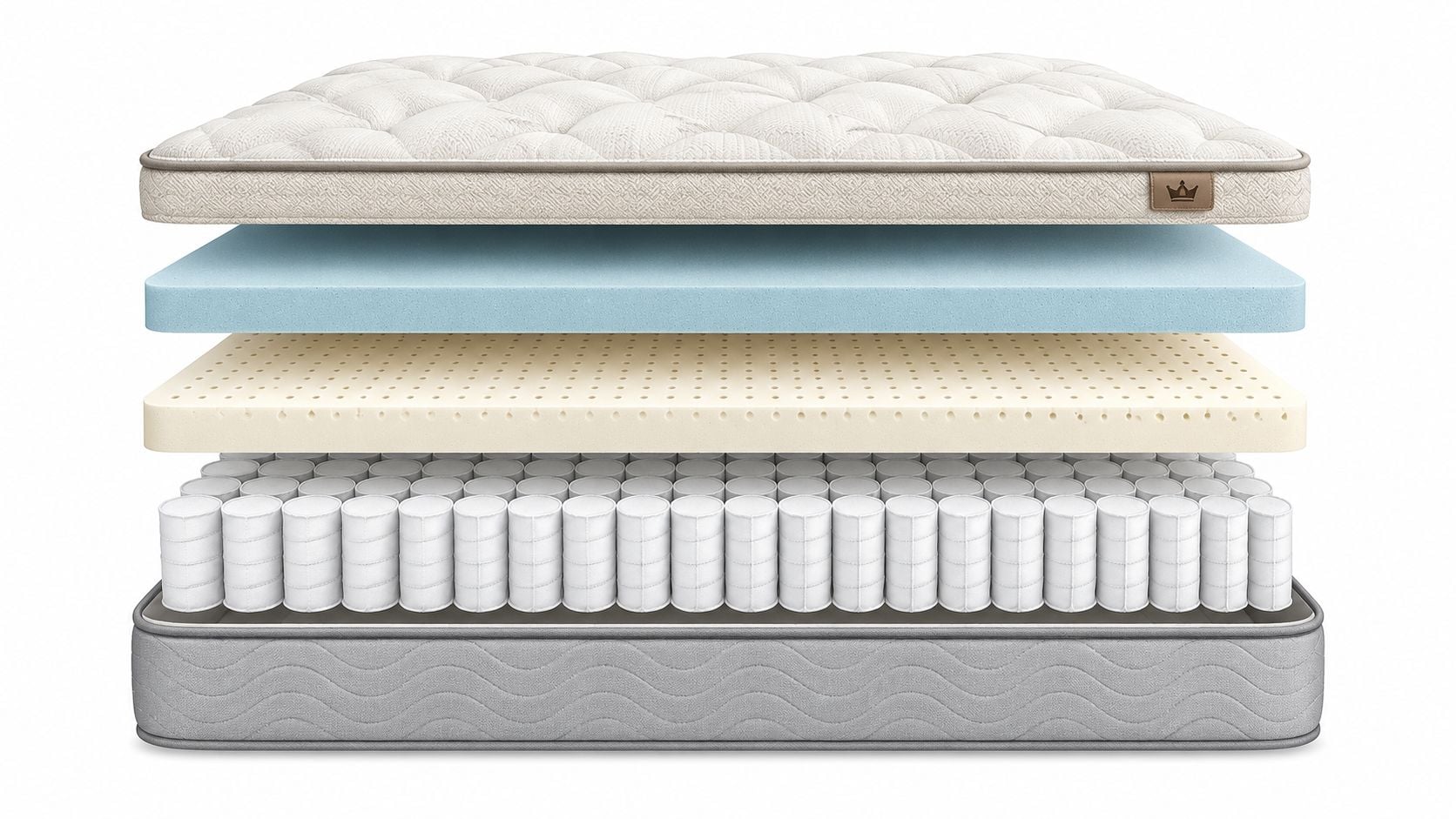
An ultra-luxury mattress earns its price through the way its layers work together. The cover, upholstery, comfort materials, support core, edge reinforcement, and foundation should create one coherent sleep system rather than a collection of expensive ingredients.
The support core sets the character
Coil gauge is one of the clearest examples. Lower-gauge steel is thicker, firmer, and generally more durable, while higher-gauge wire flexes more easily and can create a softer contouring feel. Quality innerspring designs commonly fall in the 12- to 15-gauge range, but gauge alone doesn't determine performance. Coil shape, spacing, zoning, and the comfort layers above the springs all affect the final feel, as explained in this coil count and mattress support guide.
A 13-gauge support core under dense latex or wool will usually feel more stable and firmly supportive than a lighter 15- or 16-gauge system topped with softer foam. That difference can matter to back and stomach sleepers who need a steadier surface, while side sleepers may prefer a more adaptive upper section.
Coil count should never be treated as a standalone quality score. A mattress with many coils can still feel poorly balanced if its comfort layers compress too easily or its edge support is weak.
Comfort layers determine pressure relief
Natural latex has a buoyant feel. It cushions the body without creating the deep, slow sink associated with some memory foams. Premium memory foam can provide close contouring and motion isolation, while hybrid designs combine foam or latex comfort layers with an innerspring support system.
Wool, organic cotton, Tencel, and natural latex appear frequently in premium and luxury builds. Some manufacturers also use certifications such as GOTS or OEKO-TEX Standard 100 to document material and chemical-emission standards. An industry explainer describes premium queen mattresses with roughly 800 to 1,300 or more coils, lower-gauge steel around 13 to 14, and ultra-premium models in the $5,000 to $10,000-plus range, with stated lifespans of 10 to 15 or more years. Those details are summarized in this luxury mattress construction overview.
Finishing details reveal the build
Hand-tufting pulls internal layers together through the mattress, helping reduce shifting and preserving the intended shape. Strong stitching, a sturdy border, reinforced handles, and a well-finished cover also signal attention to long-term handling.
A local buyer can learn more by examining the side panel, pressing across the edges, and asking what materials sit beneath the top quilting. Further guidance on latex construction is available through latex mattress benefits, where the focus should remain on how the material feels and supports the sleeper.
How Latex, Hybrids, and Premium Foams Compare
Three material paths dominate the practical conversation: latex, hybrid construction, and premium foam. None is automatically superior. Each solves a different comfort problem.
A peer-reviewed comparison found that latex reduced peak body pressure on the torso and buttocks and increased the proportion of low-pressure regions across multiple sleeping positions. That makes latex especially relevant for side sleepers and anyone who feels pressure at the hips or shoulders. The findings are available in this peer-reviewed mattress pressure study.
| Material | Best For | Pressure Relief | Cooling | Durability |
|---|---|---|---|---|
| Natural latex | Sleepers seeking buoyant support and responsive movement | Strong pressure distribution without a deep sinking sensation | Generally breathable, especially in an airy hybrid build | Often positioned as longer-lasting than memory foam |
| Hybrid | Couples and sleepers wanting a balance of cushioning and support | Foam or latex softens the surface while coils stabilize the body | Coil airflow can help reduce heat buildup | Depends on coil quality, foam density, and upholstery |
| Premium foam | Sleepers seeking close contouring and motion isolation | Deep conformity can cushion sensitive areas | Advanced foams may include temperature-regulating materials | Depends heavily on foam density and foundation support |
Latex often suits sleepers who change position and want to move easily. A hybrid may feel more familiar to someone transitioning from a traditional innerspring, while still adding pressure relief. Premium foam can be useful for couples who want less motion transfer, although some sleepers find close contouring warmer or harder to move through.
Thermal technology needs careful evaluation. Laboratory work on phase-change-material-infused polyurethane foam reported temperature differences of 6.98°C in one configuration and a 7.31°C reduction in mattress temperature in another test condition. Those results come from controlled testing, so showroom feel and bedroom performance may differ, but they show why cooling materials can be more than a marketing phrase.
Sleep position and personal preference should guide the choice:
- Side sleepers often benefit from adaptable shoulders and hips with enough support to prevent the body from collapsing.
- Back sleepers generally need even support through the lumbar area without excessive sink.
- Stomach sleepers may prefer a steadier surface that keeps the midsection from dipping too far.
- Hot sleepers should assess airflow, cover fabric, foam composition, and whether the entire system traps heat.
- Couples should test motion isolation together rather than assuming a premium price guarantees it.
A useful comparison of these material paths appears in this guide to memory foam, hybrid, and innerspring mattresses.
Benefits You Get From an Ultra Luxury Mattress
The value of an ultra-luxury mattress appears in repeated nights, not in the first few minutes of pressing a showroom surface. Better support can help maintain a more neutral spinal position. Better pressure distribution can make side sleeping feel less concentrated at the shoulders and hips. A stronger edge can make sitting down, standing up, and using the full sleep surface easier.
Comfort should remain consistent
Lower-quality comfort layers may feel impressive at first and then lose resilience. Higher-density foams, stronger coils, sturdier covers, and well-secured upholstery are intended to preserve the original balance for longer. That doesn't make any mattress permanent. Foundations, body weight, room conditions, rotation practices, and care still affect performance.
Market commentary commonly places premium models at 10 to 20 years, depending on materials and care. Research-style market data estimates natural latex at 10 to 12 years and memory foam at 7 to 9 years, while heavier use and poor foundations can accelerate wear. These comparisons are included in this luxury mattress durability guide.
A simple cost-per-year calculation can clarify the decision. If a higher-ticket mattress keeps its support and comfort for a longer replacement cycle, its value may compare favorably with repeatedly buying less durable beds. The calculation should use the actual purchase price, expected care, foundation requirements, and realistic service terms rather than assuming the longest possible lifespan.

The health value is practical, not magical
An expensive mattress won't diagnose or cure pain. It can, however, give the body a more stable surface, reduce pressure concentration, and make it easier to maintain a comfortable sleep position. Shoppers dealing with persistent discomfort should treat mattress selection as one part of a broader health conversation, not a substitute for professional care.
The long-term health guidance on quality mattresses offers useful context for evaluating sleep as an investment. For value-conscious homeowners in Eastern CT, the strongest case for premium construction is consistency, serviceability, and reduced pressure to replace the bed prematurely.
How to Test and Choose in a Local Showroom
A showroom test works best when shoppers treat it like a short evaluation rather than a quick bounce. The body needs time to notice whether a mattress supports the usual sleep position, allows easy movement, and distributes weight evenly.
A repeatable testing process
Bring the actual sleep context. Shoppers should know whether they primarily sleep on the side, back, stomach, or a combination. Couples should test together, because one person's ideal firmness may not suit the other.
Lie down in the normal position. A side sleeper should check whether the shoulder and hip feel cushioned without the waist dropping. A back sleeper should look for even contact through the lumbar area. A stomach sleeper should notice whether the midsection sinks excessively.
Check spinal alignment. The body should feel supported rather than twisted or bowed. An associate can observe posture from the side and help identify whether the surface is too soft, too firm, or properly balanced.
Test the edges. Sit on the side as if getting dressed, then lie near the edge. Stable reinforcement expands usable space and can make transfers easier for aging buyers.
Change positions. Rolling should feel possible without fighting through a deep impression. Partners should also assess whether movement on one side disturbs the other.
Ask about the whole sleep system. The foundation, adjustable base, protector, sheets, delivery process, trial terms, and warranty can all affect ownership.

Comfort by feel matters more than labels
Firm, plush, cooling, and luxury are useful starting points, not final answers. Two mattresses with similar labels can feel completely different because their coil gauge, foam density, zoning, quilting, and surface materials interact differently.
The Sleep Gallery at the Norwich showroom includes respected names such as Tempur-Pedic, Serta, and Beautyrest, allowing shoppers to compare comfort by feel and focus on healthier sleep rather than relying on a specification sheet. A practical preparation guide is available through how to choose a mattress.
Practical rule: A mattress that feels impressive for a few seconds may not be the mattress that supports the body through a full night.
Financing, Delivery, Warranty, and Service Options
A high-ticket mattress purchase has two parts. The first is selecting the right feel and construction. The second is making sure the payment, delivery, setup, and service terms work in real household conditions.
Promotional financing commonly uses equal monthly payments, but the terms vary by retailer and approval status. One published example offers 50 months of no-interest payments on qualifying mattress purchases of $2,299 or more. Another plan requires 60 monthly payments equal to 2.0406% of the original special-terms balance at 7.99% APR. These examples are described in the published promotional financing terms, and shoppers should read the actual offer before signing.
Equal payments can reduce sticker shock, but financing shouldn't encourage a household to exceed its comfortable budget. The responsible calculation includes the mattress, foundation, adjustable base if needed, protector, delivery, and any required accessories.
Questions worth asking before purchase
- Payment terms: Is the offer interest-free only when paid in full, and what happens if the balance remains?
- Foundation requirements: Does the warranty require a specific platform, slat spacing, or adjustable base?
- Sleep trial: How long is the trial, who pays for transportation, and are comfort exchanges limited?
- Warranty coverage: Which defects qualify, and how does normal softening differ from a covered failure?
- Delivery and setup: Does the team place the mattress in the bedroom, remove the old bed, and carry it up stairs?
- Service response: Who handles a concern after delivery, and can a local team inspect the issue?
A local showroom can make ownership easier to understand because the conversation includes the bedroom itself, not just an online product page. Gorins Furniture & Mattress provides a Norwich Sleep Gallery, promotional financing with equal monthly payment options, and 5-Star Delivery as part of its local furniture and mattress service.
The delivery route also deserves attention. Ultra-luxury mattresses may be unusually heavy, so room measurements, stair access, door clearance, and the condition of the existing foundation should be reviewed before delivery day.
For more guidance on payment decisions, shoppers can read whether financing a mattress makes sense.
Common Misconceptions About Ultra Luxury Mattresses
The first misconception is that a higher price automatically means better sleep. Price can reflect handwork, natural materials, complex zoning, thicker upholstery, or a specialized support system. It can also reflect presentation and branding that do little for a particular sleeper.
The second misconception is that smart sleep features are always an upgrade. Recent market coverage describes adjustable bases, AI-enabled comfort tuning, embedded sensors, temperature regulation, and personalized sizing as part of the luxury category. One 2025 shopper survey found that 33% of higher-priced mattress buyers also purchased an adjustable base, suggesting that many luxury purchases now involve a complete sleep system rather than a mattress alone. The details appear in this luxury and premium mattress market outlook.
Which features deserve attention
An adjustable base can make sense for a couple with different elevation preferences, an aging buyer who wants easier entry and exit, or someone who benefits from changing the upper-body position. Zoning can help when shoulders, hips, and lumbar areas need different support. Climate-control features may appeal to hot sleepers who have already addressed bedding, room temperature, and mattress protector choices.
A simpler premium build may be the better value when the sleeper already feels comfortable, doesn't need elevation, and prefers natural materials over connected features. Apps and sensors should answer a real sleep concern. They shouldn't become the reason for buying a bed that doesn't feel right.
Hotel styling creates another trap. A tall pillow-top and polished fabric can look luxurious while failing to provide stable support. Shoppers should ask what is inside the mattress, how the layers are secured, and what happens if the feel isn't suitable after delivery.
Sleep discomfort can also have causes unrelated to the mattress. Readers investigating misunderstandings about sleep and TMJ may find helpful context before treating every morning ache as a mattress problem.
Where to Shop for an Ultra Luxury Mattress in Eastern Connecticut
A Norwich shopper doesn't need to make an ultra-luxury decision from a product label alone. The local process can begin with a sleep-position conversation, continue with side-by-side testing, and finish with a review of foundation compatibility, financing, delivery, and warranty terms.
The showroom serving Eastern Connecticut can also help households coordinate the bedroom with the rest of the home. Since 1936, Gorins has operated as a locally owned, family-operated business serving Norwich, New London, Plainfield, Waterford, and surrounding Eastern CT and Rhode Island communities. Its Sleep Gallery includes Tempur-Pedic, Serta, Beautyrest, Stearns & Foster, Sealy, and King Koil, with premium choices such as advanced cooling and adjustable sleep systems.
That local design approach extends beyond mattresses. Canadel Custom Dining offers thousands of combinations for dining furniture, while the F9 Custom Sofa series allows extensive choices for arms, backs, welt details, and cushion firmness. Those programs reflect the same principle used in sleep shopping: the right result should be customized to the household rather than selected from a generic feature list.
A shopper preparing for a visit can bring mattress dimensions, bedroom measurements, sleep-position details, partner preferences, and a clear comfort budget. The online Style Quiz can help narrow broader design preferences, while the Clearance section can provide value-driven savings for buyers who want investment-grade quality without choosing the highest tier.
The Norwich showroom gives Eastern Connecticut households a place to test premium sleep technology, ask direct questions, and arrange professional delivery before committing to an ultra-luxury mattress.
Eastern Connecticut shoppers can visit Gorins Furniture & Mattress in Norwich to compare comfort by feel, discuss premium sleep systems, and review promotional financing and 5-Star Delivery options. The showroom also offers custom furniture guidance, a Style Quiz, and Clearance choices for households seeking personalized value.