Tempur Pedic Mattress for Side Sleepers


Roughly 69% of Americans primarily sleep on their side, yet more than 75% of side sleepers say their mattress doesn't adequately relieve pressure at the shoulder and hip. That makes a Tempur-Pedic mattress for side sleepers a promising option, but only when the model's feel, depth, and responsiveness match the sleeper's body and habits.
Side sleeping creates a very specific comfort challenge. The mattress must cushion the shoulder and hip without letting the waist or midsection sag, and it must offer enough responsiveness for the sleeper to turn without feeling trapped. The right choice is not just the softest Tempur-Pedic bed. It's the one that balances pressure relief, spinal alignment, body weight, and ease of movement.
| Collection | Feel level | Best for | Key feature |
|---|---|---|---|
| TEMPUR-Adapt | Medium to soft options | Side sleepers seeking balanced cushioning | Latest models provide up to 20% more pressure relief than earlier versions |
| TEMPUR-ProAdapt | Soft to medium options | Sleepers wanting deeper contouring with support | More adaptive comfort for pronounced shoulder and hip pressure |
| TEMPUR-LuxeAdapt | Soft to medium options | Sleepers prioritizing plush cushioning | Deepest contouring among the primary collections |
Why Side Sleepers Need Specialized Pressure Relief
Side sleeping puts the shoulders and hips in direct contact with the mattress. Unlike back sleeping, which spreads body weight across a broader area, side sleeping concentrates more load on two relatively small points. If the surface is too firm, the shoulder and hip can feel compressed, while the spine angles away from a neutral position.
That discomfort often appears in familiar ways. A sleeper may wake with a numb shoulder, a sore hip, or the urge to shift repeatedly during the night. The problem isn't always that the mattress lacks support. It may provide plenty of support underneath while failing to give the pressure-sensitive areas enough room to settle into the comfort layers.
The AARP guidance on choosing a mattress for side sleepers notes that side sleepers generally benefit from soft to medium-firm comfort that cushions the shoulders and hips while supporting alignment. Tempur-Pedic's own sleep-position guidance similarly recommends a medium-to-soft feel that conforms around those pressure points.
Pressure relief isn't the same as softness
A soft mattress can reduce initial pressure, but excessive softness can allow the body to sink unevenly. The shoulder and hip may settle comfortably while the waist drops too far, leaving the spine out of line. A useful side-sleeper surface has to adapt to different body areas rather than yielding everywhere.
That distinction explains why a Tempur pedic mattress for side sleepers should be judged by contouring quality, not by a firmness label alone. A medium model may feel supportive and comfortable for one person, while a lighter sleeper may experience the same surface as too firm.
Readers looking for broader guidance on pressure management can also review Gorins' mattress guide for pressure relief. A properly matched pillow matters too. Side sleepers who need additional support between the mattress and the body may benefit from learning how to choose a lumbar pillow, especially when lower-back comfort is part of the overall sleep setup.
Why Tempur-Pedic's design philosophy matters
Tempur-Pedic's identity comes from viscoelastic foam, not a traditional innerspring approach. NASA scientists began developing the underlying material in the late 1960s to cushion astronauts and test pilots. The U.S. Tempur business was officially founded in 1992 after nearly a decade of research and development, following the commercial introduction of the first viscoelastic mattress and pillow under the TEMPUR brand in 1991. The technology later received the NASA Certified Space Technology Seal and was inducted into the Space Technology Hall of Fame in 1998. Tempur Sealy's company information also describes TEMPUR as a global platform sold in more than 90 countries and served through 22 key markets.
That heritage doesn't guarantee that every model will suit every side sleeper. It does explain why the brand focuses so strongly on pressure-relieving foam and adaptive contouring. Gorins Furniture & Mattress gives Norwich-area shoppers a place to evaluate that feel in person rather than relying on a firmness description alone.
Understanding How Memory Foam Helps Side Sleepers
Traditional innerspring mattresses can feel too abrupt for side sleepers when the comfort layer above the coils doesn't provide enough cushioning. The springs support the body, but a thin or firm surface may push back against the shoulder and hip instead of allowing those areas to settle gradually.
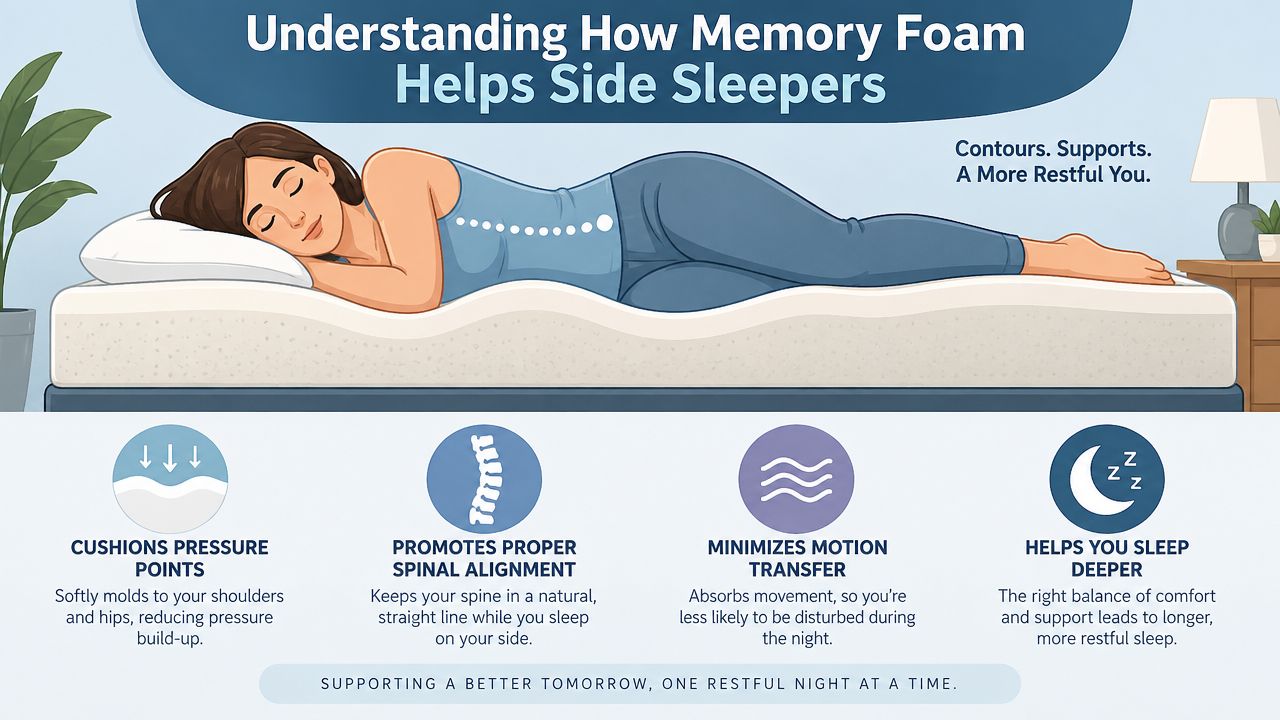
Memory foam takes a different approach. It compresses under body heat and weight, creating a closer fit around the body. That can spread contact across more of the shoulder and hip rather than leaving the sleeper balanced on a few hard pressure points. The result is often described as a hugging or cradling feel.
Adaptive comfort and neutral alignment
Tempur-Pedic's foam is designed to respond gradually rather than immediately springing back. As the shoulder and hip press into the surface, the material can conform around those areas. The comfort benefit comes from the difference between being cushioned into the mattress and being pushed away from it.
The sleeper still needs support beneath the contouring layers. If the body sinks at different rates, the mattress can feel comfortable at first but leave the spine tilted. The best fit allows the shoulder to settle, the hip to receive cushioning, and the waist to remain supported.
The deeper contouring feel can also reduce motion transfer between partners. That may appeal to couples who want a steadier sleep surface, although the same slow response can make turning more deliberate. Anyone who wants a wider explanation of foam construction can read Gorins' guide to what a memory foam mattress is.
Foam versus springs and hybrid support
All-foam construction generally emphasizes pressure relief and close body contact. A coil-based mattress usually offers more bounce and faster recovery, which can make changing positions easier. Hybrid designs combine cushioning material above a spring support system, creating a middle ground between the deep hug of foam and the lift of coils.
That difference matters for side sleepers with different priorities:
- Deep contouring: All-foam construction tends to suit sleepers who want the mattress to closely follow the shoulder and hip.
- Easier repositioning: Spring support can help sleepers move across the surface with less effort.
- A balanced feel: Hybrid construction may suit people who want pressure relief without feeling fully surrounded by foam.
- Shared-bed comfort: Foam can provide strong motion isolation, while a hybrid may feel more responsive to both partners.
Tempur-Pedic's history gives its foam a credible foundation, but history is only one part of a buying decision. Comfort by feel still determines whether the sleeper can relax, turn, and wake without new pressure complaints.
Comparing Tempur-Pedic Models for Side Sleeping
The main Tempur-Pedic collections differ less in their basic purpose than in how closely they contour and how much cushioning they place between the sleeper and the support core. For side sleepers, that difference can decide whether a mattress feels gently supportive or excessively restrictive.
The TEMPUR-Adapt collection is the practical starting point. Tempur-Pedic states that the latest Adapt models deliver up to 20% more pressure relief than earlier versions. The collection uses a 4 cm TEMPUR-Material comfort layer and a 5 cm Advanced Relief Material layer, a combination intended to give the shoulder and hip more room to settle while maintaining support. Tempur-Pedic's Adapt collection details provide the brand's current positioning.
| Collection | Feel level | Best for | Key feature |
|---|---|---|---|
| TEMPUR-Adapt | Medium or soft, depending on model | Average-weight side sleepers who want balanced comfort | Pressure-relieving construction with a familiar Tempur feel |
| TEMPUR-ProAdapt | Soft or medium, depending on model | Sleepers with stronger shoulder and hip pressure | Deeper adaptive comfort without abandoning support |
| TEMPUR-LuxeAdapt | Soft or medium, depending on model | Sleepers who want the plushest contouring | The most enveloping pressure-relief experience in this group |
TEMPUR-Adapt for balanced support
Adapt makes sense for sleepers who want recognizable Tempur contouring without immediately choosing the deepest-feeling tier. It can work well for a side sleeper who wants cushioning but still prefers a more stable surface. The Medium option may suit sleepers who shift positions occasionally or dislike a mattress that feels too soft.
That doesn't make every Adapt model a safe default. Wirecutter's Tempur-Pedic assessment classifies the TEMPUR-Adapt and TEMPUR-Adapt Medium Hybrid as not recommended for side sleepers, despite describing them as sturdy and pressure relieving. That conflict is useful. It shows why a collection name alone can't replace an in-person test.
TEMPUR-ProAdapt for deeper contouring
ProAdapt is the stronger candidate for a sleeper whose shoulder or hip remains uncomfortable on a balanced medium surface. The Soft version is especially relevant for lighter side sleepers and people who want a pronounced cradling sensation.
Independent testing identifies the TEMPUR-ProAdapt Soft among the strongest Tempur-Pedic choices for side sleeping. The Medium version may provide more stability, but it won't necessarily offer enough give for a petite sleeper with narrow shoulders or prominent pressure points. More detail on how the collections differ is available in Gorins' mattress brand comparison.
TEMPUR-LuxeAdapt for plush cushioning
LuxeAdapt is intended for sleepers who prioritize deep pressure relief and a softer, more immersive feel. It can be appealing when the main complaint is a shoulder or hip that never seems to settle comfortably.
The trade-off is movement. A sleeper who turns frequently may find the deepest contouring less convenient, particularly when getting out of bed or moving from one side to the other. Independent guidance also identifies the TEMPUR-LuxeAdapt Soft as a strong side-sleeping option, but “strong” doesn't mean universal. The right choice depends on whether pressure relief or easy movement has greater value during a normal night.
How Body Weight Changes Your Mattress Choice
Body weight changes how far a sleeper compresses the comfort layers. The same Tempur-Pedic mattress can feel firmer to a lighter person and softer to a heavier person, so a side-sleeping recommendation based only on position misses a major part of the decision.
A practical starting point looks like this:
- Under 130 pounds: Softer models often provide the give needed at the shoulder and hip. Independent testing notes that lighter side sleepers often prefer softer Tempur-Pedic models, while Medium versions can feel too firm for petite sleepers.
- Between 130 and 230 pounds: Many sleepers in this range can begin with the standard Medium or Soft options, then choose based on whether they prefer a stable surface or deeper contouring.
- Over 230 pounds: Softer models may allow too much sinkage for some sleepers. Sleep Foundation testing found that the TEMPUR-Cloud provided excellent support for side sleepers up to 230 pounds, while support became more limited above that threshold. Sleep Foundation's TEMPUR-ProAdapt review also highlights the importance of matching the feel to the individual sleeper.
A simple selection process
Start with the current mattress. If the shoulder and hip feel bruised or compressed, move toward a softer comfort layer. If the body sinks far, the waist feels unsupported, or turning requires effort, test a firmer option or a construction with more responsive support.
Next, consider shoulder width and body shape. A broader shoulder may need more surface give than a narrower shoulder, even when two sleepers weigh the same. A pronounced hip can also create a different pressure pattern than a straighter body shape.
Practical rule: A side sleeper should feel the shoulder and hip settling into the mattress, not hitting a hard surface and not disappearing into a deep depression.
The goal isn't to assign every sleeper to a strict category. Weight ranges are useful starting points, not guarantees. Sleepers should test the mattress in their usual position and check whether the spine appears level, the shoulder feels uncompressed, and the hips remain supported.
Gorins' guidance on choosing a mattress for different body types can help shoppers organize those questions before visiting a showroom. A mattress is an investment-grade purchase, so the feel should make sense for the sleeper's present body, usual sleep position, and expected movement throughout the night.
Addressing Movement and Repositioning Concerns
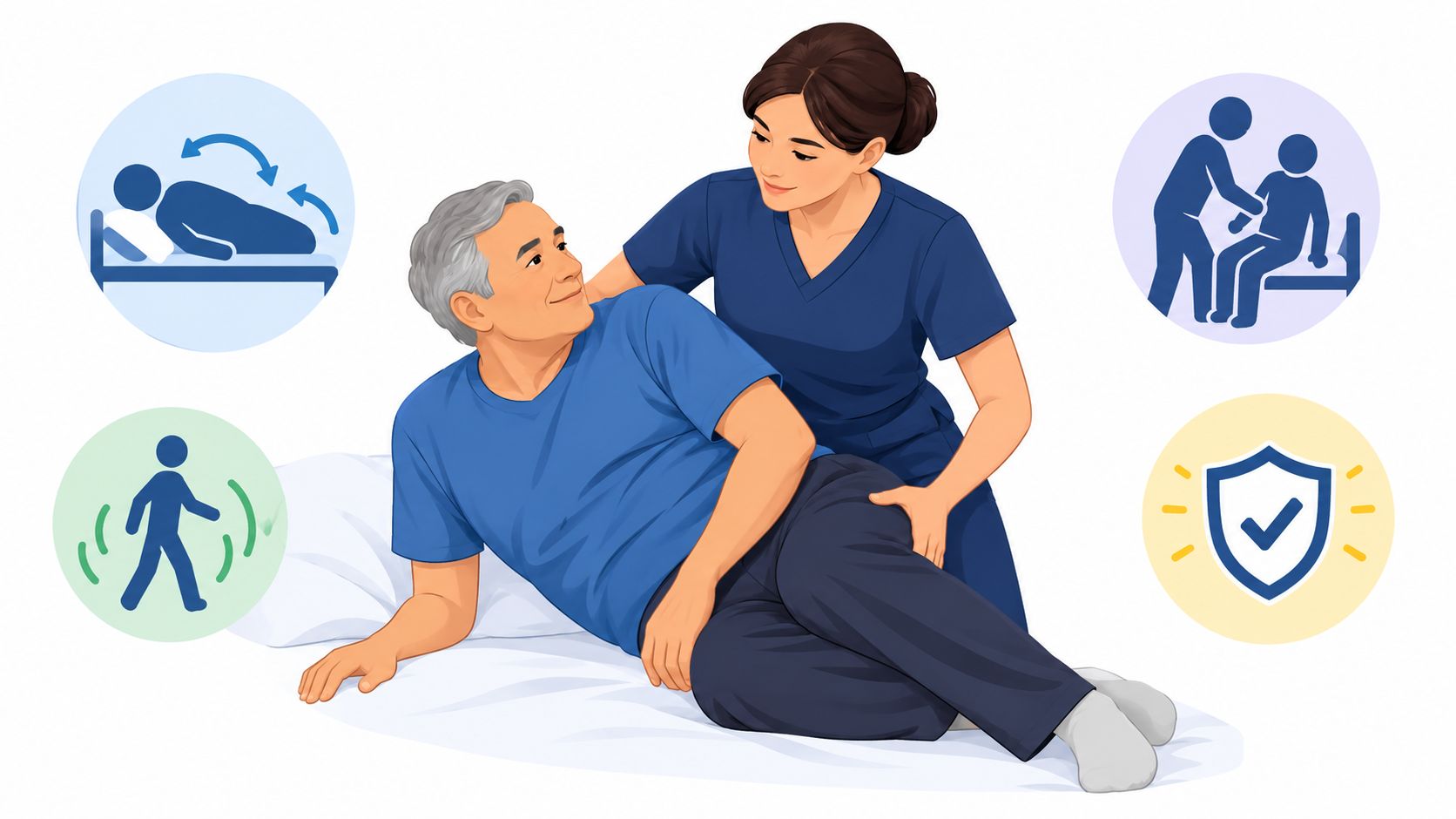
Deep contouring solves one side-sleeper problem while creating another. The foam that cushions the shoulder and hip can also hold the body in place, making it harder to roll, push up, or switch sides. That slow-response feel is central to the Tempur-Pedic experience, and shoppers should test it before committing.
This matters most for combination sleepers. Someone who begins on the side but regularly moves to the back may appreciate pressure relief at the shoulder, yet resent the effort required to escape the contour. A sleeper who changes sides whenever a shoulder becomes numb may also prefer a surface with more bounce.
When a hybrid may make more sense
Recent guidance on shoulder-pain mattresses increasingly points toward hybrids and medium-firm constructions for sleepers who need a balance between cushioning and responsiveness. The AARP guide to mattresses for shoulder pain describes the importance of shoulder and hip pressure relief while recognizing that a responsive support system can matter for changing positions.
That doesn't make a hybrid automatically better. A side sleeper with persistent pressure at the shoulder may prefer the closer hug of all-foam construction. A hot sleeper, an active combination sleeper, or a couple with different movement patterns may prefer the lift and easier repositioning of a hybrid.
Test the movement, not just the pressure relief
A showroom test should include more than lying still for a moment. A side sleeper should roll from one side to the other, move toward the edge, sit up, and change into a back-sleeping position if that happens during the night.
Pay attention to four signals:
- Shoulder comfort: The shoulder should feel cushioned rather than pinned.
- Hip stability: The hip should settle without creating a twisting sensation.
- Turning effort: Repositioning shouldn't feel like lifting the entire body out of a hollow.
- Partner disturbance: Couples should notice whether one person's movement travels across the surface.
A comfortable sleep environment also depends on maintenance and surrounding bedding. Readers who want practical household guidance can review when to deep clean a mattress, while shoppers focused on shared-bed movement can explore Gorins' advice on reducing motion transfer in bed.
Tempur-Pedic remains a strong fit for side sleepers who value stillness and deep pressure relief. It isn't the right fit for every person who sleeps on a side, especially when easy movement carries equal weight.
Shopping at Gorins for Your Perfect Sleep Solution
Norwich-area shoppers can learn more from a mattress test than from a product description. In Gorins' Sleep Gallery, a side sleeper can compare the feel of TEMPUR-Adapt, TEMPUR-ProAdapt, and TEMPUR-LuxeAdapt while lying in a normal sleeping position. That makes it easier to distinguish surface softness from deeper contouring and to notice whether turning feels natural.
A useful consultation should focus on the sleeper's actual routine:
- Which side carries the most pressure?
- Does the sleeper change positions often?
- Does the current mattress feel too firm, too soft, or too warm?
- Does the sleeper share the bed?
- Is the priority deep contouring, easier movement, or a balance of both?
The Sleep Gallery includes brands such as Tempur-Pedic, Serta, and Beautyrest, with comfort judged by feel rather than by a label alone. That same practical approach extends beyond mattresses. Gorins also offers Canadel Custom Dining with thousands of combinations, along with the F9 Custom Sofa series, where households can tailor details to their lifestyle.
A local purchase with flexible planning
Gorins Furniture & Mattress has operated as a locally owned, family-operated business since 1936. Its Norwich showroom serves shoppers from Norwich, New London, Plainfield, Waterford, and surrounding Eastern Connecticut and Rhode Island communities.
Promotional Financing through the Nest Credit Card can provide equal monthly payments, with available plans subject to credit approval. That option can make an investment-grade mattress easier to plan for without reducing the decision to a search for the cheapest price. Customers furnishing more than a bedroom can also consider the showroom's broader Living Room Furniture Eastern CT selection and value-focused Clearance section.
A comfortable mattress works best within a comfortable home routine. For readers balancing sleep decisions with household projects, this guide for busy homeowners offers practical organization ideas.
Gorins Furniture & Mattress offers in-person access to Tempur-Pedic mattresses, Sleep Gallery guidance, custom furnishings, and Promotional Financing with equal monthly payments for qualifying purchases. Visit Gorins Furniture & Mattress in Norwich to test the right pressure relief and movement balance, or take the online Style Quiz before planning a showroom visit.